Page 79 of 102
1 77 78 79 80 81 102

Premios Internacionales de Alfabetización de la UNESCO, ahora abiertos para aplicaciones

Mundo/09 de junio 2016/Fuente: UNESCO

La UNESCO está llamando a candidatos para sus dos Premios de Alfabetización, con un enfoque particular en la innovación. Desde 1967, los Premios Internacionales de Alfabetización de la UNESCO han premiado la excelencia y la innovación en el campo de la alfabetización. A través de estos prestigiosos premios, la UNESCO tiene como objetivo apoyar las prácticas de alfabetización eficaces y fomenta la promoción de las sociedades alfabetizadas. Se han reconocido más de 470 proyectos y programas llevados a cabo por los gobiernos, organizaciones no gubernamentales e individuos de todo el mundo.

Hay dos Premios Internacionales de Alfabetización de la UNESCO :

  • La UNESCO-Rey Sejong Premio (2 premios), creada en 1989, con el apoyo del Gobierno de la República de Corea. Se presta especial atención al desarrollo y uso de la alfabetización en la lengua materna y la formación.
  • El Premio UNESCO de Alfabetización Confucio (3 premios) el Premio UNESCO-Confucio de Alfabetización, establecida en 2005, con el apoyo del Gobierno de la República Popular de China. Se presta especial atención a la alfabetización entre los adultos de las zonas rurales y los jóvenes fuera de la escuela, especialmente las niñas y las mujeres.

Cada uno de los cinco ganadores recibe una medalla, un diploma y US $ 20,000 para su proyecto o programa. Cada año, los premios están organizados en torno a un tema específico. El enfoque de este año es el: «Innovación en la Alfabetización». Los Premios Internacionales de Alfabetización de la UNESCO se conceden en una ceremonia oficial en la sede de la UNESCO en París, con motivo del Día Internacional de la Alfabetización (8 de septiembre).

Cómo aplicar

Las solicitudes deben presentarse al Director General de la UNESCO por los gobiernos de los Estados Miembros y las organizaciones no gubernamentales en la sociedad oficial con la UNESCO. Cada organización gubernamental o no gubernamental puede hacer hasta tres nominaciones para el Premio UNESCO-Confucio de Alfabetización, y hasta dos nominaciones para el Premio UNESCO-Rey Sejong.

programas o proyectos elegibles deben tener un historial probado de trabajo innovador en el campo de la alfabetización durante al menos tres años. Como todas las aplicaciones requieren una carta de nombramiento formal, no se acepta la auto-nominación. Los programas o proyectos que han sido otorgados los Premios Internacionales de Alfabetización de la UNESCO en los últimos cinco años tampoco son elegibles. Las candidaturas deben tener en cuenta el tema de este año – «Innovaciones en la Alfabetización», mientras que también teniendo en cuenta la especificidad de cada premio.

La fecha límite para las nominaciones: 4 Julio de 2016.

Puede descargar el formulario de presentación  (disponible en Inglés y Francés), la guía de aplicación y otra información relevante de la página web de los Premios Internacionales de Alfabetización de la UNESCO .

Fuente de la Noticia:

http://www.unesco.org/new/en/education/resources/online-materials/single-view/news/unesco_international_literacy_prizes_now_open_for_applications-1/#.V1msejXhCUm


Comparte este contenido:

Australia abre convocatoria para optar a becas para posgrado, investigación y prácticas

Australia/08 junio 2016/Autor: Humany/ Fuente: América Economía

l Gobierno de Australia lanza anualmente el programa Endeavour dirigido a estudiantes internacionales que pretendan realizar estudios de posgrado, investigación o realizar prácticas en Australia. Se requieren conocimientos avanzados en inglés y estar en posesión de un título universitario. La beca incluye matrícula, estancia, viaje y otros conceptos.

El mismo comprende cuatro convocatorias:

-Beca Endeavour de Posgrado (Endeavour Postgraduate Scholarship)

Proveerá ayuda financiera para completar un máster o doctorado en cualquier área de estudios. Quienes deseen obtener un título de magíster podrán permanecer en Australia por un periodo máximo de 2 años y recibirán alrededor de $AUD 140.500. Mientras tanto, quienes deseen obtener un título de doctorado permanecerán durante un periodo máximo de 4 años y recibirán alrededor de $AUD 272.500.

-Beca Endeavour de Investigación (Endeavour Research Fellowship)

Otorgará ayuda financiera a alumnos de posgrado y posdoctorado interesados en realizar breves estancias de investigación (de entre 4 y 6 meses de duración) en Australia. Los becarios recibirán hasta $AUD 24.500.

-Beca Endeavour de Educación y Capacitación Profesional (VET) (Endeavour Vocational Education and Training Scholarship)

Brindará ayuda financiera (hasta $AUD 131.000) para realizar estudios vocacionales a nivel de Diploma, Diploma Avanzado o Título de Asociado en cualquier área de estudios. Cabe destacar que los cursos contemplados por esta convocatoria no son dictados por universidades ni poseen valor académico de grado, sino que proporcionan conocimientos y habilidades para el desempeño laboral del becario.

-Beca Endeavour para Ejecutivos (Endeavour Executive Fellowship)

Por último, esta proporcionará oportunidades de desarrollo profesional a estudiantes y profesionales del área de los negocios, la industria, la educación o el gobierno. Los becarios recibirán hasta $AUD 18.500 y podrán permanecer en Australia por un período de entre 1 y 4 meses.

Fuente:

http://mba.americaeconomia.com/articulos/notas/australia-abre-convocatoria-para-optar-becas-para-posgrado-investigacion-y-practicas

Comparte este contenido:

Australia y Asean amplían proyecto educativo de cooperación mutua

Austria/03 de Junio de 2016/Prensa Latina

El comité de cooperación Australia-Asociación de Naciones de Sudeste Asiático (Asean) anunció hoy un nuevo proyecto educativo de colaboración entre escuelas de ambas partes.

Un reporte de la cadena ABC aseveró que la idea involucra a partir del segundo semestre de 2016 a centros australianos Bridge, que desde 2008 ya materializan nexos en la esfera de la educación con naciones del sudeste asiático.

La iniciativa radica en fortalecer la interacción entre Australia y los 10 países miembros de la Asean, así como mejorar los conocimientos sobre diversidad cultural en la región, reiteró la nota.

Indicó que a través del uso de las tecnologías digitales, Bridge podrá organizar las clases a distancia de manera similar a la presencia física en un aula.

En el primer año del programa, 15 centros de enseñanza Bridge coordinarán y ofrecerán cursos de formación a distancia con cinco escuelas en Malasia, Tailandia y Vietnam, puntualizó la información.

En 2017, afirmó, la medida debe ampliarse a Singapur, Filipinas y Brunei; y en 2018 abarcará Laos, Cambodia y Myanmar.

Fuente: http://prensa-latina.cu/index.php?option=com_content&task=view&idioma=1&id=4940161&Itemid=1

Fuente de la Imagen: https://www.google.co.ve/search?q=Australia+y+Asean+ampl%C3%ADan+proyecto+educativo+de+cooperaci%C3%B3n+mutua&client=firefox-b-ab&source=lnms&tbm=isch&sa=X&ved=0ahUKEwjJk83HzJHNAhVBOiYKHbaeBjkQ_AUICCgC#tbm=isch&q=++proyecto+educativo++&imgrc=I5VwRfctpRQA6M%3A

Comparte este contenido:

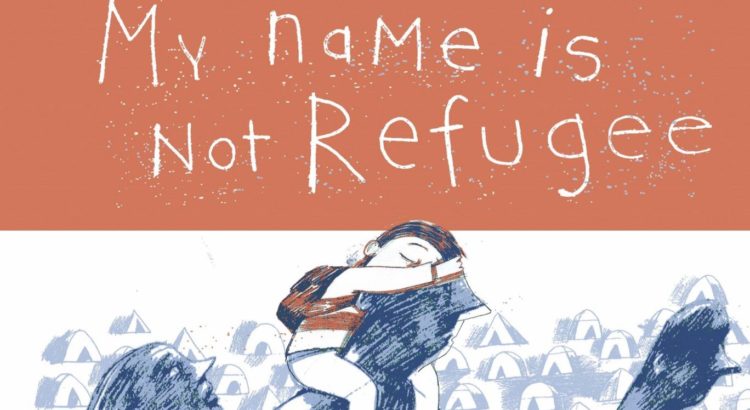
Student’s refugee crisis book for children wins V&A Illustration Award

Fuente independent / 6 de junio

Author says book asks young children ‘from a safe, comfortable background’ to think about what it must be like to ‘leave your home and make a journey into the unknown’

A Cambridge student who created a picture book to help young children understand more about the refugee crisis has won a prestigious award at the world’s leading museum of art and design.

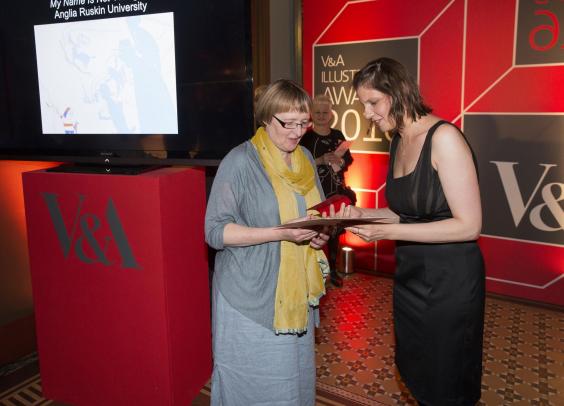
Kate Milner received the £3,000 Student Illustrator of the Year prize at the V&A Museum’s Illustration Awards 2016 in London for her book My Name is Not Refugee which follows a mother telling her son a story about what is going to happen once they are forced to leave their home country.

The mature student, who will graduate with an MA in children’s book illustration from Anglia Ruskin University in October, said the idea for the book came about when her daughter, a schoolteacher, said the children in her class were asking about the refugee crisis.

Milner said: “They didn’t understand what was being discussed in the news and she had nothing to show them. The book is a story which asks children from a safe, comfortable background to think about what it must be like to leave your home and make a journey into the unknown.”

katemilner.jpg

Kate Milner, pictured left, collects her award for Student Illustrator of the Year at V&A’s Illustration Awards

Children’s author Dame Jacqueline Wilson was one of several judges to feature on the panel who, above all, were unanimously impressed by Milner’s bold attempt to tackle a subject outside the prevailing conventions of commercial children’s publishing.

Speaking to the Independent about the mother-son relationship in the book, Milner said: “She gives him a positive view, like we all would with our children. She tells him things will probably be a bit boring – even a bit frightening – but, as long as they keep hold of each others’ hand, they will be alright and that, in the end, they will reach a place where they can feel safe again.

refugee8.jpg
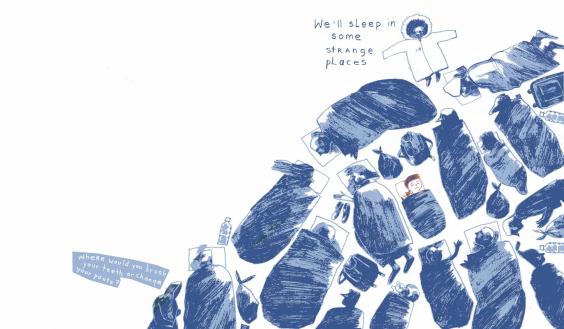
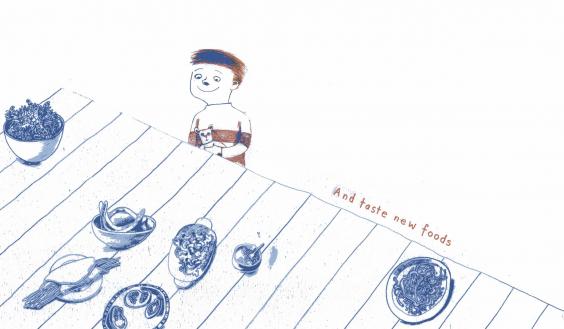
An extract from the book showing a mother trying to put a ‘positive spin’ on the refugee crisis for the sake of her son

“It doesn’t include the fear, the hunger, and the exhaustion which must be part of a refugee child’s real experience. You wouldn’t, though, would you?”

As a parent herself, Milner said that, throughout the book’s creation, she felt sympathy with the mothers because she could imagine what it must be like to not know how they were going to feed their children, or keep them warm.

refugee9.jpg
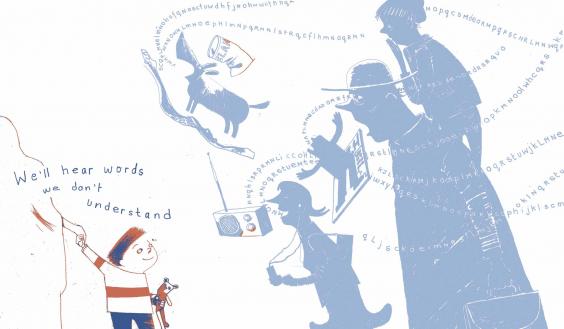
(My Name is Not Refugee by Kate Milner)

Milner added that she was also affected by a series on BBC Radio 4about a family trying to get from Syria to Germany. She said: “The mother said her children had been eating crisps for days because there was nothing else. All she wanted to do was cook her family a proper meal. I could really understand that – it’s such a basic thing.”

Speaking more about her hopes for the book’s message, and describing how it will most likely be used in classrooms to educate children about the crisis, she said it’s mainly aimed at children in European countries who might meet a refugee child in their school, or their street.

refugee10.jpg

(My Name is Not Refugee by Kate Milner)


Milner continued: “It asks them to think what it must be like to leave your home with only what you can carry. It’s about imagination and empathy. It asks questions like: ‘If you could only take one thing to remind you of home, what would it be?’, or: ‘If you had to sleep in a railway station, where would you brush your teeth or change your pants?’.

“It concentrates on the everyday details of a child’s life, not on the big political question about this current crisis. However, if there is anything I can do to counteract the prevailing view of refugees as ‘invading hoards’ trying to destroy our way of life, then I’m not sorry.


Enlace original: http://www.independent.co.uk/student/student-life/books/student-s-refugee-crisis-book-for-children-wins-va-illustration-award-a7051776.html

Comparte este contenido:

Australia: Reinstate Roz Ward! Stand Up for Safe Schools!

Resumen: Roz Ward, es el cofundador del programa de escuelas seguras en la Universidad de La Trobe y ha sido suspendido luego de los ataque continuos por parte de políticos de derecha y medios de comunicación. El Programa de Escuelas Seguras se ha convertido en un estandarte en la defensa de las personas homosexuales y transexuales presentes en las escuelas, con una considerable disminución de los casos de acoso, discriminación, initimidación y maltrato a los LGBTI. La suspensión lleva por trasfondo la homofobia presente en los representantes de la Universidad y los medios


Roz Ward, co-founder of the Safe Schools program has been suspended from her role at La Trobe University following sustained attacks by right wing politicians and the Murdoch press.

This program has had tremendous success in reducing homophobic and transphobic bullying at schools. Young LGBTI people are starting to feel better about themselves and the conservative right can’t handle it.

Roz has been the most strident and courageous defender of the program and young people struggling with anti-LGBTI discrimination and bullying. La Trobe university management used the pretext of a political opinion on Roz’s private facebook page for the suspension, which is itself a serious attack on her freedom of speech. But we know that what really motivated this is the hounding of Murdoch’s press and extreme homophobes & transphobes.

We demand that Roz Ward be reinstated to her position and that the Safe Schools program be rolled out everywhere!

Tomado de: https://www.change.org/p/la-trobe-university-reinstate-roz-ward-stand-up-for-safe-schools?recruiter=2627348&utm_source=share_petition&utm_medium=facebook&utm_campaign=autopublish&utm_term=des-lg-no_src-no_msg&fb_ref=Default

Comparte este contenido:

En el Día Mundial sin Tabaco, Noruega y Nueva Zelanda quieren adoptar el paquete de tabaco neutro

NOR OSLO| 31/05/2016 – 15:27

Noruega y Nueva Zelanda han dado un paso hacia la adopción del paquete de cigarrillos neutro este martes durante el Día Mundial Sin Tabaco, en detrimento de las industrias que han fracasado en sus diligencias judiciales.

«Debemos proteger a los niños y a los adolescentes de la tentación del tabaco», declaró el ministro noruego de Sanidad, Bent Høie, antes de la publicación en Oslo de un informe de la Organización Mundial de la Salud (OMS) sobre el paquete neutro.

Su gobierno va a introducir en la primera quincena de junio un proyecto de ley que prohíbe cualquier signo distintivo o logotipo en los productos tabacaleros, anunció, lo que debería incluir el «snus», un polvo de tabaco mascado húmedo que se consume en el Norte de Europa.

Todavía no hay fecha para la entrada en vigor de esta prohibición. La medida se inscribe en una política más extensa de lucha contra el tabaco que ha provocado la disminución de la tasa de fumadores diarios de un 25% en 2005 a un 13% en 2015 en Noruega, país donde el precio del paquete es prohibitivo (más de 12 euros, 13,4 dólares).

El gigante Philip Morris perdió un proceso en 2012 contra el Estado noruego por protestar contra la prohibición de la presentación comercial de los productos tabacaleros en los puntos de venta, entrada en vigor dos años antes.

Australia es el primer país del mundo en haber impuesto, en diciembre de 2012, este tipo de paquete. Los paquetes neutros aparecieron hace algunos días en Francia y en Gran Bretaña.

Según el consejo canadiense del cáncer, otros muchos países como Canadá, Singapur, Bélgica y Sudáfrica pretenden adoptar el paquete neutro.

En Nueva Zelanda, son necesarios dos meses de consultas antes de que las recomendaciones sobre la aplicación de la medida sea propuesta al gobierno antes de que acabe el año.

Fuente de la imagen: http://www.who.int/entity/campaigns/no-tobacco-day/2016/main_story_BABY_630x331px_ES.png

bur-phy/gab/ggy

Comparte este contenido:

Australia: Larger classes would free $1.5 billion a year to improve schools

Oceanía/Australia/Junio 2016/Autor: Tim Dodd / Fuente: afr.com

ResumenUn movimiento político para aumentar el tamaño de clases en las escuelas (cantidad de estudiantes por aula) por no más de dos estudiantes ahorraría más de $ 1.5 mil millones al año, lo suficiente como para financiar la promesa electoral de Trabajo de $ 4.5 millones de dólares de la escuela en el próximo período de gobierno, sin dañar los estándares educativos.

A politically-bold move to increase class sizes in schools by no more than two students would save over $1.5 billion a year, enough to fund Labor’s $4.5 billion school’s election promise in the next term of government without harming educational standards.

But on Friday both sides of politics ducked the issue of class sizes with Labor’s education spokesperson Kate Ellis and Education Minister Simon Birmingham saying class sizes were a matter for state governments.

If Labor was willing to push for reduce class sizes it could fund its school election promise without increasing government debt. Similarly the Coalition could use smaller class sizes to find the money to prove its contention that effective school reforms can be made without the major boost to school funding promised by Labor.

The Australian Financial Review reported this week that Australia’s dramatic cut in school class sizes over the past five decades had led to a 25 per cent increase in school funding while school standards deteriorated.

Education experts said a small increase in class size was a reform worth considering because it would free up time to allow teachers to improve their skills and introduce teaching methods which are proven to work.

Catholic schools, which already have larger than average class sizes, said that they did not affect education standards.

«We believe – and the research supports the view – that the greatest impacting factor on student achievement is teacher quality,» a spokesman for the Brisbane Catholic Education Office said.

He said there was no deliberate trade-off in the Catholic system to opt for larger classes to fund other schooling priorities.

«Catholic schools are the most efficient managers of financial resources of the three educational sectors, but this is not at the expense of academic performance,» he said.

However private schools and the teacher’s union defended smaller class sizes saying they allowed teachers to support students individually.

The chief executive of the Association of Heads of Independent Schools of Australia, Beth Blackwood, said the smaller class sizes in private schools enabled the schools to deliver important non-educational outcomes to students.

There’s a capacity for teachers to give individual attention and get to know students. Parents are looking for that individual attention for the pastoral side of education,» she said.

The federal president of the Australian Education Union, Correna Haythorpe, agreed. «Small class sizes are vital because we need to ensure that teachers are able to provide individual support to students who need it,» she said.

Ms Haythorpe said that schools also needed Gonski funding to allow them to choose which strategies to improve education outcomes suited them best.

Australia’s student-teacher ratio fell from 25-to-1 in 1964 to 14-to-1 in 2015, adding more than 25 per cent to the cost borne by government for school education. While most of the fall occurred in the 1960s and 1970s, the ratio has continued to drift downwards in the last 15 years.

Analysis by The Australian Financial Review shows that a 5 per cent productivity increase in the student-teacher ratio in Australian schools (currently 13.9) would lift the student teacher ratio back to its 2002 level of 14.6 and save about $1.6 billion a year from the teacher salary bill.

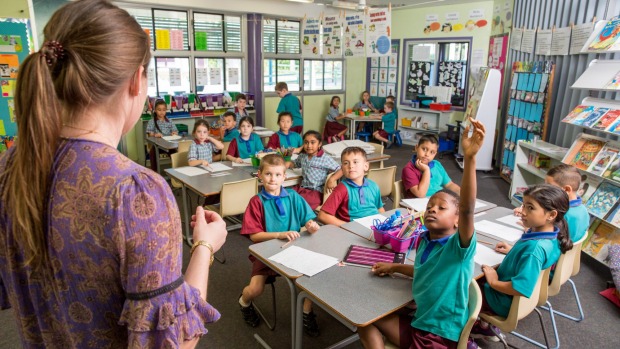
The average class size, currently 24 (which is larger than the student-teacher ratio because of time spent by teachers on other duties) would rise by no more than two students per class.

According to the Productivity Commission Australian governments (both federal and state) spend $50 billion a year on schools and that 64 per cent of funding of government schools goes to teacher salaries. This means about $32 billion of government school funding is spent on teacher salaries and a 5 per cent productivity improvement would save $1.6 billion.

Fuente de la noticia: http://www.afr.com/leadership/innovation/larger-classes-would-free-15-billion-a-year-to-improve-schools-20160603-gpb0wm

Fuente de la imagen: http://www.afr.com/content/dam/images/g/p/b/c/6/p/image.related.afrArticleLead.620×350.gpb0wm.png/1464943421979.jpg

Comparte este contenido:
Page 79 of 102
1 77 78 79 80 81 102