Page 6 of 6
1 4 5 6

México: Colima será sede de Foro Internacional de Educación

América del Norte/México/12 de Agosto de 2016/Autor: Edgardo Zamora/Fuente: Colima Noticias

La Secretaría de Educación organiza un Foro Internacional para supervisores, directores y maestros, referente a un antes y un después para la educación en Colima el próximo 15 y 16 de agosto.

El titular de la dependencia, Óscar Hernández Rosas, expresó que el ciclo escolar 2016-2017 será el parteaguas en Colima para la educación porque se iniciará la implementación de la política educativa de la administración de Ignacio Peralta Sánchez.

“Un momento en que se inicia con fuerza en la Educación Básica; en este foro participarán más de ocho mil maestros que tienen el interés y la disposición por formarse”.

Además podrán conocer la opinión de expertos relacionados con el trabajo que realizan cada día en las aulas y reforzarán los modelos educativos con los que trabajan.

Al foro asistirán, la maestra María Antonia Casanova, española que hablará de la evaluación educativa; la doctora Pilar Hossnes, que es experta en gobernanza de centros educativos; Silvia Conde, experta en el manejo de violencia en los contextos escolares; Irma Fuenlabrada, para hablar sobre la enseñanza de las matemáticas, comprenderla y enseñarla y Ricardo Valdez, experto en ciencias.

Por otro lado, ya se concretó la respuesta económica de parte de las autoridades con el pago del aumento salarial que ya recibieron los docentes del sistema federalizado y que se pagará próximamente a los del sistema estatal; recursos que tienen que ver con las negociaciones entre la SEP y el SNTE.

Fuente: http://colimanoticias.com/colima-sera-sede-de-foro-internacional-de-educacion/

Comparte este contenido:

Nueva Zelanda: Nelson school kids enthused with sign language

Oceanía/Nueva Zelanda/12 de Agosto de 2016/Autora: Samantha Gee/Fuente: Stuff

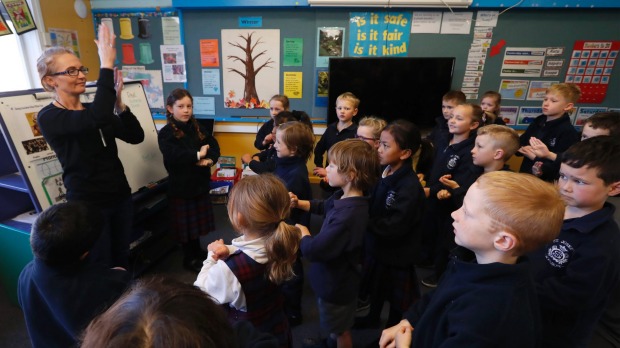
RESUMEN: El lenguaje de señas de Nueva Zelandia en el programa de Escuelas está a cargo de la Asociación Audiencia Nelson y posible gracias a un legado de la Fundación Benéfica O’Brien para ayudar a los niños con deficiencias auditivas o sordas en la región de Nelson. Las clases comenzaron en 2012 y ahora se imparten en seis escuelas en Nelson. Durante las clases semanales, de media hora, los niños a aprender las señales para diferentes palabras, el modo de firmar canciones y el dedo deletrear sus nombres. Gutschlag ha sido la enseñanza de clases de la escuela la noche durante los últimos ocho años. Creció con sus familiares sordos y aprendió a firmar hace 15 años.
Desde que comenzaron las clases, se dio cuenta de la lengua de signos pop-up en toda la comunidad. Le habían dicho a sí mismos de los niños que introducen a los miembros de la comunidad sorda y tenía padres dedo deletrear sus nombres a ella después de haber sido enseñado el lenguaje de signos por parte de sus hijos.Se alimentó su pasión para continuar la enseñanza. Mientras que los niños estaban siempre entusiasta, ella dijo que era la entrada de los profesores que hicieron un éxito. maestro de la Escuela de San José Michelle McLeod comenzó a aprender el lenguaje de signos de este año y ahora lo usa todos los días en el aula.

Hunt was born deaf, she wears a hearing aid that helps her to communicate and this year she has begun to learn sign language with her class.

Other than the occasional giggle or exclamation, the classes are «voice off» which means there is no speaking unless Gutschlag asks a question.

When things get a bit unruly, she stamps her foot.

The students respond straight away when Gutschlag signs for them to sit down or stand up, they recognise it when she signs their names and they join in when she signs

In this class, they are learning the signs for different sports. Netball, rugby, tennis.

Primary school students in Nelson are the only ones in the country who have weekly sign language classes of this kind at school.

The children can sing the national anthem in English and Te Reo Maori while using sign language, encompassing all three of the country’s official languages.

When the class is over, Hunt joins Gutschlag next door, helping teach other kids to learn the language too.

Hunt’s mother Emma King also attends the classes and she also goes to night classes to further her understanding of sign language.

She said it was «absolutely incredible» to do something that encompassed the whole family to benefit Hunt.

«It is becoming something that Greta isn’t being disadvantaged for, it is becoming like her superpower,» King said. «Suddenly she is not disabled, she is bringing this special talent.»

The New Zealand Sign Language in Schools programme is run by the Nelson Hearing Association and made possible by a bequest from the O’Brien Charitable Trust to help deaf or hearing impaired children in the Nelson region.

The classes first began in 2012 and are now taught at six schools in Nelson.

During the weekly, half hour lessons, kids learn the signs for different words, how to sign songs and finger spell their names.

Gutschlag has been teaching night school classes for the last eight years. She grew up with deaf family members and first learnt to sign 15 years ago.

Since classes began, she noticed sign language pop up all over the community.

She had been told of children introducing themselves to members of the deaf community and had parents finger spell their names to her after being taught sign language by their children.

It fuelled her passion to continue teaching.

While the children were always enthusiastic, she said it was the input of the teachers that made it such a success.

St Joseph’s School teacher Michelle McLeod began learning sign language this year and now uses it every day in the classroom.

«Greta has been a huge blessing to our class, we have learnt so much from her,» she said.

«Signing is something I am trying to make as normal in the day as I can so that in the playground, if the children want to speak with Greta they have a way of communicating with her.»

Gutschlag said the classes were a taster that she hoped encourage people to continue learning sign language as it would benefit the community.

«The more hearing people that can sign, the more inclusive our community is for deaf.»

Fuente: http://www.stuff.co.nz/national/education/83039640/nelson-school-kids-enthused-with-sign-language


Comparte este contenido:

Chile: Líder mundial en Educación encabezará seminario gratuito en Rengo

América del Sur/Chile/12 de Agosto de 2016/Fuente: El Rancaguino

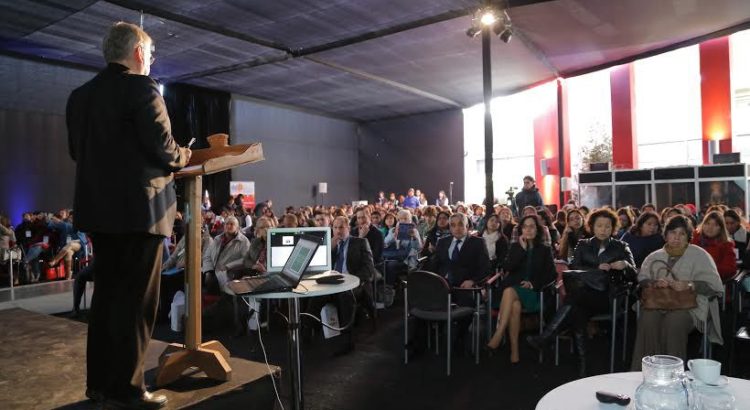
La ciudad de Rengo será una de las cuatro sedes de  la segunda versión del  Seminario Internacional sobre el uso pedagógico del juego “Compartiendo  Experiencias”, organizado por Seigard  y patrocinado por la Municipalidad de Rengo.

 “Para nosotros es un orgullo organizar un seminario de este nivel  con líderes mundiales en materia educacional. Es una gran oportunidad  para que los profesores de nuestra región conozcan las nuevas metodologías que se utilizan para motivar a los niños dentro de la sala de clases y lograr aprendizajes significativos y profundos”, señaló Ilia García, gerenta general de Seigard.

El seminario está dirigido a profesores de enseñanza básica, directores y  educadoras de párvulo de establecimientos públicos y privados.  Participarán también autoridades y distintos actores vínculados a la temática de la educación.  Se realizará el lunes 22 de agosto en Rengo y los días 23 y 24 en Valparaíso y Santiago para concluir el viernes 26 en Concepción.

Dentro de los expositores se encuentra la destacada psicopedagoga mexicana Greta Papadimitriou,  especialista en temas de prevención de violencia escolar, ambientes escolares seguros, mediación, resolución no violenta de conflictos y educación para los derechos humanos. Papadimitriou es además miembro de la red latinoamericana de convivencia escolar.

Liderará el seminario, el reconocido psicólogo holandés Jef Van Kuyk, creador de  una nueva metodología educacional conocida internacionalmente como método de aprendizaje piramidal.  Su creación ha logrado resultados excepcionales en las áreas de matemáticas y lenguaje.

En sus inicios el método piramidal fue utilizado con mucho éxito para trabajar con los niños inmigrantes que llegaban a  Europa, pero desde el 2003 fue incorporado en los modelos educativos en Bélgica, Alemania, Japón y Estados Unidos. El 2004 Van Kuyk obtuvo una distinción real por su aporte a la educación de los niños y desde el 2006 recorre el mundo dando conferencias para entregar sus conocimientos en post de mejorar la educación.

El 2015, la primera versión del seminario Internacional “Compartiendo Experiencias” reunió más de mil educadoras de párvulo y profesores en Rengo, Santiago y Villarrica. Este año espera repetir el éxito de convocatoria y la excelente evaluación de todos los asistentes.

El encuentro se realizará en la casa matriz de Seigard, ubicada en Quintalba 141, Rengo. Lo  interesados en asistir deben inscribirse  en  la página web www.compartiendoexperiencias.cl

Fuente: http://elrancaguino.cl/2016/08/09/por-primera-vez-en-chile-lider-mundial-en-educacion-encabezara-seminario-gratuito-en-rengo/

Comparte este contenido:

México: Inicia IPN diplomado virtual para docentes sobre sustentabilidad ambiental

América del Norte/México/07 de Agosto de 2016/Autora: Rocio Méndez Robles/Fuente: NoticiasMVS

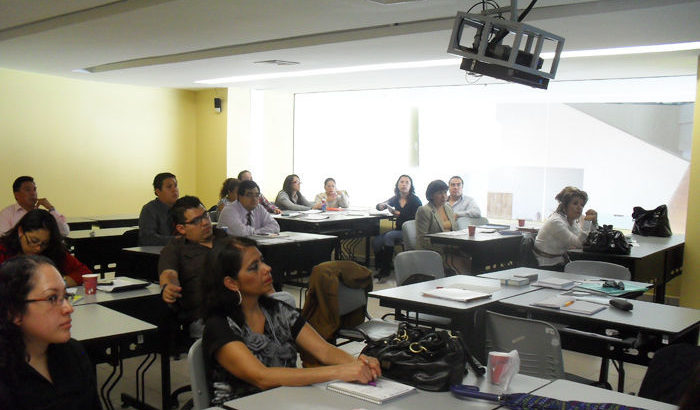
Con el propósito de proporcionar a los docentes las estrategias de análisis y componentes teóricos básicos sobre el desarrollo sustentable, la tecnología y el currículum como parte del nuevo modelo educativo, el Instituto Politécnico Nacional (IPN) creó el diplomado virtual Formación Tecnológico Ambiental para la Sustentabilidad (Fortas).

El proyecto académico está enfocado a formar profesionistas que contribuyan a la construcción de una sociedad más justa y equitativa, que oriente y fortalezca los contenidos de las unidades de aprendizaje porque se requiere de la formación de politécnicos que coadyuven al desarrollo nacional, para que la sociedad reconozca la importancia del conocimiento tecnológico en la solución de los problemas que los aquejan.

El Politécnico desarrolla estrategias para fortalecer capacidades docentes como detonador del fortalecimiento de la inserción del desarrollo sustentable en las currículas del Instituto.

Este diplomado tambien se concibe como un medio para garantizar la utilidad y aceptación social para la toma de decisiones en materia de sustentabilidad ambiental.

Además de promover el debate, este diplomado, impulsado por la Coordinación Politécnica para la Sustentabilidad, tiene como propósito que sus egresados propongan alternativas de solución a los problemas que aquejan a la sociedad para garantizar la convivencia con el medio ambiente y el respeto a la diversidad. También sentará las bases para generar propuestas de enfoque educativo para el rediseño curricular de los planes y programas de estudio del IPN.

La capacitación concluirá en enero de 2017; participan 71 docentes (coordinadores Fortas) de 42 unidades académicas de los niveles medio superior, superior y posgrado.

Fuente: http://www.noticiasmvs.com/#!/noticias/inicia-ipn-diplomado-virtual-para-docentes-sobre-sustentabilidad-ambiental-896


Comparte este contenido:

Zimbabwe: 13 000 Technical Teachers Wanted

Africa/Zimbabwe/07 de Agosto de 2016/Autora: Samantha Chigogo

RESUMEN: Zimbabwe tiene 13 000 vacantes para profesores de materias técnicas.  Durante una ceremonia de graduación en Belvedere Técnica Colegio de Maestros (BTTC) en Harare ayer, el ministro de Educación Superior Ciencia y Tecnología Superior y el profesor Jonathan Moyo dijo que los maestros de los estudiantes deben tomar ventaja de las oportunidades disponibles y formarse en temas técnicos. Dijo que el Gobierno está trabajando en iniciativas para mejorar la disponibilidad de puestos de trabajo de los maestros en el país.

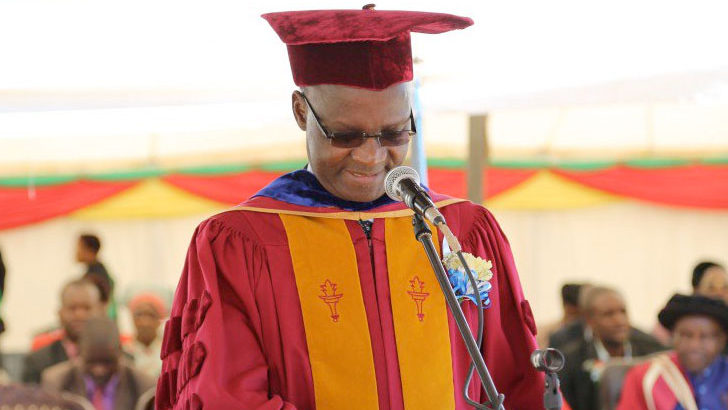
Zimbabwe has 13 000 vacancies for technical subject teachers and students were encouraged to train in such programmes in order to promote the country’s economic blueprint Zim-Asset. Speaking during a graduation ceremony at Belvedere Technical Teachers College (BTTC) in Harare yesterday, Higher and Tertiary Education Science and Technology Minister Professor Jonathan Moyo said student teachers should take advantage of the available opportunities and train in technical subjects.»Zimbabwe has 13 000 vacancies for technical subject teachers,» he said.

«Today’s graduating class of 951 has only 376 technical and vocational subject teachers, and this leaves the vacancy for technical subject teachers at 12 624.»

He said the Government was working on initiatives to improve the availability of teachers’ jobs in the country.

Prof Moyo said the plan to build 2 000 primary, secondary schools and tertiary institutions across the country was still being pursued vigorously.

«For Belvedere College to realise its objective of developing and training properly grounded techvoc teachers, the time has come for the college to review its mandate,» he said, «in order to align it with the policy of one state university, one teachers’ college, one polytechnic and one industrial training centre in each province.»

He said to achieve their industrialisation and modernisation quest, institutions had to train skills capable of producing technological and engineering solutions to challenges, which exploit opportunities for the country’s economy.

Prof Moyo called on colleges to refrain from dual systems of higher and tertiary education where polytechnic and teacher education programmes exist under one roof.

«The management and responsibility structure of a dual system is problematic and unworkable,» he said.

«It is difficult to achieve equitable distribution of human, financial and material resources when institutions offering technical and teacher education are operating together as currently prevailing at Belvedere and J M Nkomo colleges.»

He said doing away with dual systems would reduce duration of programmes from five to four years as well as enhance the efficiency and effectiveness of the teaching and learning activities.

«We expect Belvedere to redesign its curriculum for technical teacher education programmes and the new curriculum should therefore infuse industrial attachment as well as teaching practice,» Prof Moyo said.

College principal Ms Ruramai Mbofana called on graduates to reinforce the teaching of technical subjects across the country.

«With this ceremony, graduates must take note that the skills and knowledge gained from this college are critically important for national development and, I evoke you to be good examples in nation building,’ she said.

The graduation ceremony was celebrated under the theme: «Promoting Science, Technology, Engineering and Mathematics (STEM) through Education and Training.»

Since 1982, a total of 12 961 skilled persons have graduated from the college with 162 technicians graduating with a Higher Education Examinations Council qualification.

Fuente: http://allafrica.com/stories/201608060056.html

Fuente de la imagen: http://bulawayo24.com/index-id-news-sc-education-byo-93762.html

Comparte este contenido:

Unesco capacitará a docentes peruanos para mejorar práctica pedagógica

América del Sur/Peru/31 de Julio de 2016/Fuente: La República.pe

La capacitación de docentes para mejorar el aprendizaje en el aula es una prioridad para elevar la calidad de la educación. En esta línea, 13 mil docentes de todo el Perú serán parte del Programa de Actualización Docente en Didáctica, un evento de capacitación que organiza la Unesco Perú en alianza con el Ministerio de Educación.

“El Programa de Actualización Docente en Didáctica (PADD Virtual) es muy importante para que los profesores puedan contar con mayores herramientas en su práctica pedagógica, y llevar a cabo de mejor manera sus cursos en las aulas”, destacó la directora del programa virtual, Patricia Ugaz.
Los expertos que participarán en el cuarto módulo de aprendizaje como coordinadores con profesionales de la Universidad Peruano Cayetano Heredia, así como de la Pontificia Universidad Católica del Perú.
En plan de trabajo para los módulos PADD Virtual consiste actualizar a los docentes en el uso de las nuevas tecnologías de la información, desarrollando sus capacidades para el manejo de TICs, para que estos puedan ser replicados en los centros de estudio.
“Algunos docentes han desarrollado habilidades y estrategias para aprender y llevar cursos online, sin haber ingresado a un instituto especializado. Les hemos dado una herramienta más a los docentes: aprender a llevar cursos online y mejorar su práctica pedagógica”, agregó George Sotomayor, Coordinador de Tutores de la UPCH.
Fuente: http://larepublica.pe/sociedad/789871-unesco-capacitara-docentes-peruanos-para-mejorar-practica-pedagogica
Comparte este contenido:

India’s New Education Policy: What Are The Priorities?

Asia/India/31 de Julio de 2016/Autor: Padmapriya Govindarajan/Fuente: The Diplomat

RESUMEN: De acuerdo con el Ministerio de Desarrollo de Recursos Humanos informe (de MHRD) de entrada, el proyecto de la nueva política de Educación  tendrá como objetivo hacer frente a siete áreas de preocupación con respecto al sector de la educación de la India – el acceso y la  participación, la calidad, la equidad, la eficiencia del sistema, la gobernabilidad y la gestión, la investigación y el desarrollo y compromiso financiero para el desarrollo de la educación. Los mismos serán tratados mediante intervenciones de política en términos generales en la educación preescolar y la adolescencia, el desarrollo curricular y la reforma de los exámenes, el profesor y la formación del profesorado, la alfabetización de toda la vida, la educación superior y el aprendizaje a distancia.

According to the Ministry of Human Resource Development’s (MHRD’s) Input report, the draft of the New Education Policy (which is in the pipeline as discussed earlier) will aim to address seven key areas of concern with respect to the Indian education sector – access and participation, quality, equity, system efficiency, governance and management, research and development and financial commitment to education development. These will be addressed through policy interventions broadly into preschool and adolescent education, curriculum development and examination reform, teacher and faculty training, lifelong literacy, higher education and long distance learning. Here is a quick glance at the direction of reform in some of the identified areas of concern:

Access, Participation and Equity

The main issue in this realm can be characterized as very slow progress in reducing the number of non-literate people and a need to expand access to more early childhood education. States will be encouraged to ensure that the Right to Education Act is extended well enough to cover secondary education. Beyond this, expansion of open schooling facilities has been suggested in order to help drop-outs and working children who cannot find the space to attend formal schooling.

A National Fellowship Fund to support fees, material and living expenses for 1,000,000 students will be created to cater to economically weaker sections, with separate national talent scholarships in all subject areas for meritorious students. Linkages and mentorship systems between schools are also being developed. Further, an autonomous body to oversee Open and Distance Learning (ODL) as well as Massive Open Online Courses (MOOCs) will be set up to boost better access and participation and also be in charge of maintaining quality standards in this realm.

Under the aim of equity, curriculum reform is being undertaken with broad goals of ‘social cohesion, religious amity and national’ integration and will include teaching students their fundamental rights and duties in order to be responsible citizens. The curriculum will specifically cover issues of social justice (like gender, social, cultural and regional disparities) and their means of redressal but with an express emphasis also on ‘unity in diversity.’ The input draft also opens up the possibility of ‘alternate’ schools which offer interventions for particularly deprived children, like those migrating or under difficult circumstances.

Multilingual education will be offered at several levels to aid tribal students who lack familiarity in the regional language/language instruction. Current central funding will be augmented to identify and support students with special learning needs. This will be supported by dedicated research and development to strengthen disability studies in higher education and social and research audits of disability access.

Quality and System Efficiency

The aim here is to ensure that learning levels match expected learning levels and tackle deficiencies of educators, curriculum and pedagogy. At the preschool level this will involve priority programs for children in the age group of four to five years alongside the Ministry of Women and Child Development and training of cadres of pre-primary teachers at the State Government level. While a common national curriculum will be developed in science, mathematics and English, in other subjects there will be a partially common curriculum with the rest developed by individual states. More emphasis will be placed on practical components within science subjects from grade six upwards.

Concentrated efforts are being suggested to make Information and Communication Technologies (ICTs) an important part of the education cycle – from teaching methods, to record maintenance to monitoring and review mechanisms geared towards both teachers and students.

Teachers at all levels of school education will be given a thorough module covering child rights and the stipulations in place as well as what constitutes a violation as part of their training programs. This will be supplemented by self-learning online programs for students and parents on similar themes. Uniform norms for better learning outcomes will be applied to private and government schools alike. Beyond the upper primary stage, the current policy of ‘no-detention’ (not detaining students in a grade if they have not acquired adequate marks to advance) will be removed and instead be replaced with a policy of identifying weaker students and providing remedial instructions.

Academic aptitude tests and helplines with professional counselors have been floated with the idea of targeting students with special needs but also the larger student body in order to help identify areas of interest and potential. Procedural blocks that stand in the way of students migrating from one school to another will be done away with to ease mobility between schools.

The entire 43-page report has been made available for public comments until the end of the month. A separate section has been allocated to the issue of ‘Language and Culture in Education’ in addition to the identified areas of concern. This includes placing emphasis on both regional language as well as English, no matter what the school’s medium of instruction is. In addition to this however special importance has been accorded to the teaching of Sanskrit in schools and expansion of facilities for the same. Culture education now includes ‘ethics education’ – broadly centered around lessons of equality, equity, liberty, justice and national integration.

The complete policy along with a framework for implementation is expected in the upcoming months. Although an input draft cannot be expected to fully explain how each intervention will be implemented, several points that seem to call for greater efforts or more extensive research do not actually tell the reader what these efforts may be or to what extent they are determined by the government at center or at the state level – cases in point would be the inputs concerning gender discrimination and better support for students with disabilities.

While the input draft is extensive in the areas it addresses, it does not go into specifics in a lot of them – leaving the public to wait for the complete policy in order to know what forms many of the relatively more vague interventions will take.

Fuente: http://thediplomat.com/2016/07/indias-new-education-policy-what-are-the-priorities/
Comparte este contenido:
Page 6 of 6
1 4 5 6