Page 188 of 228
1 186 187 188 189 190 228

La contaminación de los océanos por los combustibles fósiles equivale a cuatro vertidos como el de BP al mes

Fuente: elmundo.es  / 8 de junio de 2016

La quema de combustibles fósiles, principalmente petróleo y carbón, tiene un impacto generalizado en los océanos del planeta. La polución que genera cada mes sería equivalente a la que producirían cuatro vertidos de petróleo como el que en 2010 causó el grave accidente petrolero de la plataforma Deepwater Horizon de BP en el Golfo de México (EEUU).

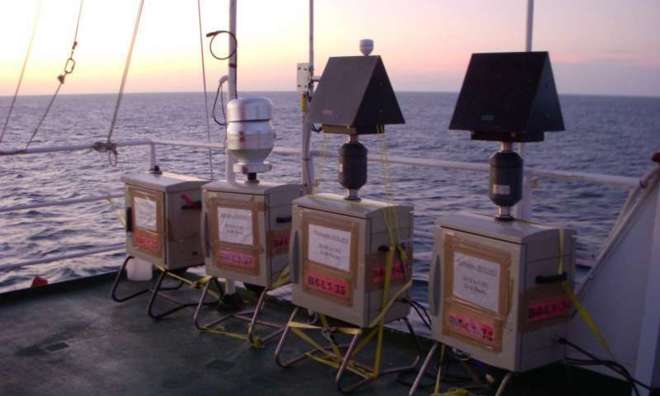
Así lo asegura un equipo de investigadores que durante la expedición oceanográfica española Malaspina , del CSIC, cuantificó la cantidad de sustancias contaminantes que llegan al Atlántico, al Índico y al Pacífico procedentes de la atmósfera.

Los resultados del análisis de las muestras de aire (gases y aerosoles), del agua de lluvia y de las aguas superficiales del océano que recogieron cuando viajaban a bordo del buque Hespérides, entre diciembre de 2010 y julio de 2011, se publican esta semana en la revista Nature Geoscience. Los análisis se realizaron en laboratorios de Madrid y en Barcelona.

Según detalla por teléfono Jordi Dachs, coautor del estudio e investigador delInstituto de Diagnóstico Ambiental y Estudios del Agua (CSIC), en Barcelona, su equipo midió un grupo de sustancias denominadas hidrocarburos aromáticos policíclicos: «Se producen sobre todo durante la quema de petróleo y carbón. Cuando la combustión es incompleta, es decir, que no se queman bien, se generan estos hidrocarburos».

Cada mes, aseguran, llegan a los océanos procedentes de la atmósfera unas 90.000 toneladas de hidrocarburos aromáticos policíclicos, es decir, cuatro veces más que las que generó el vertido en el Golfo de México, considerado el mayor de la Historia.

La expedición Malaspina no llegó a Asia, por lo que en esta cifra no estaría incluida la polución generada por la quema de combustibles fósiles en países como China o India.

Un problema generalizado

No obstante, según Jordi Dachs, más relevante que la cantidad de sustancias contaminantes producidas por la combustión incompleta de carbón o petróleo es que éstas parecen estar presentes en todas partes: «Es un problema generalizado», sostiene.

Debido a su cercanía, en las proximidades de los continentes había mayor concentración que en mar abierto. Y también había más hidrocarburos en los 100 metros superficiales que en el fondo. Aunque en este estudio no han tomado muestras de aguas profundas, saben por otras investigaciones que los más persistentes llegan a los 4.000-10.000 metros de profundidad.

A pesar de que no estudiaron específicamente las concentraciones de estos hidrocarburos en aguas próximas a España, los niveles detectados, señala el científico, eran similares a los encontrados en otras zonas.

Por lo que respecta al efecto que tienen en la vida marina, Dachs recuerda que «todavía existen pocos estudios. Los hidrocarburos más persistentes van al fondo del océano, hay otros que se degradan y otros que tienen efectos tóxicos», explica. De hecho, algunos de ellos, como el benzopireno, son cancerígenos.

Sin embargo, el investigador no cree que estos contaminantes supongan un riesgo para las personas si consumen pescado expuesto a estas sustancias: «Los peces pueden incorporarlos a su organismo y metabolizarlos, es decir, transformarlos en otras sustancias que pueden eliminar. Pero en esa transformación sí pueden sufrir efectos tóxicos».

La única forma de reducir las emisiones, señala el investigador, es disminuir la quema de combustibles fósiles, a los que los científicos atribuyan un papel clave en el aumento de temperaturas, y mejorar la eficiencia de los procesos de combustión. Sin embargo, Dachs lamenta que la tendencia a nivel global sea la contraria: «A nivel planetario, estamos aumentando el consumo de combustibles fósiles».


Enlace original: http://www.elmundo.es/ciencia/2016/05/16/5739e3d146163f13788b4647.html
 

Comparte este contenido:

Experts sound alarm over mental health toll borne by migrants and refugees

Fuente: .theguardian / 8 de junio de 2016

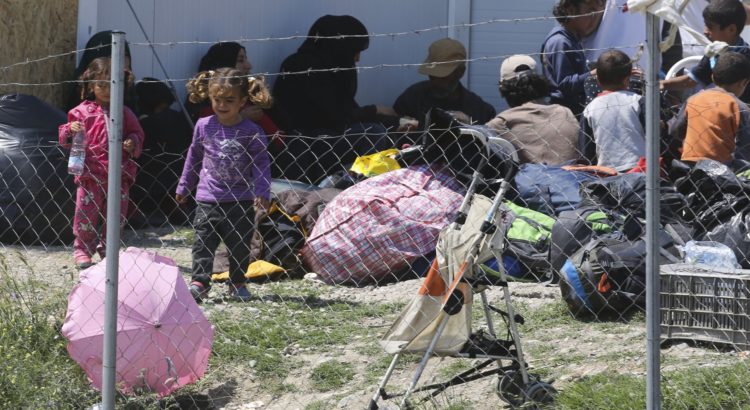
The grief of losing a child made more unbearable by the knowledge that you decided to take them in a boat that capsized; nightmares about torture;depression induced by the awfulness of living in a camp, unable to go forward or back.

As concern mounts about the conditions faced by refugees and migrants in camps across Europe, and more people die trying to reach the continent, the mental health of those who have risked everything in the hope of starting a new life inEurope is gaining more attention.

A report last year by the German Federal Chamber of Psychotherapists said 40%-50% of people arriving in Germany suffered from post-traumatic stress disorder (PTSD), with half also suffering from depression.

“They have nightmares or flashbacks to pictures or scenes. These memories feel very intense, and it is just like they are reliving the traumatising experience,” the report said. Other symptoms include jumpiness, sleep disorders, problems with concentration, and emotional numbness.

“It is shameful that people suffering with such psychological injuries do not get the help they need,” the report said.

Post-traumatic stress is just the tip of the iceberg. “PTSD is very important, but it is also the disorder that everyone jumps to, including the media. We see much more depression and anxiety disorders, and also, surprisingly, a lot of epilepsy and psychotic disorders, including schizophrenia,” said Dr Inka Weissbecker, global mental health and psychosocial adviser at the International Medical Corpsin Washington.

“There are huge amounts of anxiety – we see children bursting into tears when helicopters or airplanes fly over the camps, and we can’t understand why, until we realise what they’re associating it with,” said Harriet Zych, a nurse who worked in Idomeni – site of Europe’s largest informal refugee camp, on Greece’s northern border with Macedonia – before Greek police moved people to other locations in May.

“We came across many people in a state of collapse, whose problems turn out to be psychological rather than physical,” she said. “One man hit himself with a rock on his head until he became unconscious when he found out he couldn’t cross the border.”

Nikos Gionakis, a psychologist with the Athens-based mental health unit Babel, tells the story of Hassan, 34, who fled Syria with his four children. “Passing from Turkey to Greece, he was forced to get into a boat by smugglers. Two of his kids drowned as the boat sank. He was referred to Babel because of depression. He blames himself for not having been able to protect his kids,” Gionakis said.

The UN refugee agency, the UNHCR, says mental health disorders can hinder integration into host populations, creating long-term problems for European countries that are accepting refugees fleeing from conflicts in Syria and elsewhere.

In a paper to the European commission last year, the European Psychiatric Association said: “Acute and long-term psychiatric care needs to be provided to all asylum seekers in order to avoid reaching chronic conditions of mental disorders.”

Aid workers in Greece say diagnosis, never mind treatment, is almost impossible in the chaos of the camps and detention centres in southern Europe.

“You cannot say how many people are suffering from PTSD because diagnosis takes too long, and with such a stream of people, it is impossible. I am a trained psychologist with 40 years’ experience; it would take me two and a half hours to diagnose someone with PTSD,” said Renos Papadopoulos, director of the Centre for Trauma, Asylum, and Refugees at Essex University, who recently returned from Greece. “There is no evidence [on the prevalence of PTSD] because there cannot be evidence. The situation is complete chaos.”

“We don’t do diagnosis,” said Zoi Marmouri, a psychologist working for Médecins Sans Frontières in Idomeni. Even if diagnosis were possible, World HealthOrganisation (WHO) guidelines stipulate that clinical treatment is not appropriate for refugees on the move.

“Therapies should not be started without assurances that there can be follow-up. You have the potential to retraumatise people,” said Claire Whitney, Middle Eastmental health and psychosocial support adviser at the International Medical Corps.

The most effective treatments for PTSD include cognitive behaviour therapy with a trauma focus, eye movement desensitisation and reprocessing therapy, as well as narrative exposure therapy. But these take time as they involve slowly exposing people to their trauma, while building up their capacity to deal with it. “It cannot be rushed,” said Whitney. “When people actually have PTSD, it is one of the most complex problems to treat.”

The WHO says refugees and migrants needing diagnosis should be referred to existing non-governmental or state services. But even for those who make it into host communities, cost, stigma and language problems can lock them out of treatment.

“We have serious lacks in the services we can provide. If they need hospitalisation, there aren’t any specialised units for this,” said Gionakis.

International funds have been pledged for psychosocial support, although neither Britain’s Department for International Development nor the EU were able to provide a full breakdown.

Some experts warn there is a risk of overdiagnosing PTSD. “They are distressed, yes, but is this PTSD? Often it will not be. These are instead normal reactions to an abnormal situation,” said Papadopoulos.

The UNHCR and other agencies say much of the emotional suffering experienced by refugees and migrants is directly related to present-day stresses and concern about the future.

“People live in very difficult and inhumane conditions here in camps that are too crowded. Basic needs are not met,” says Gionakis.

The UNHCR advocates “psychological first aid”, which encourages those interacting with refugees to respond in a culturally sensitive and humane way that avoids distressing people further.

“The humanitarian principle of ‘do no harm’ is a huge part of it,” said Whitney. “What everyone was advising, for the most part, was really to focus on the most basic kinds of support, which do contribute to mental health. Often, basic needs must be provided before people are ready – and willing – to engage with therapy.”


Enlace original: http://www.theguardian.com/global-development/2016/jun/08/experts-sound-alarm-mental-health-toll-migrants-refugees-depression-anxiety-psychosis?CMP=twt_a-global-development_b-gdndevelopment

Comparte este contenido:

Cash Transfer Programs Succeed for Zambia’s Poor, Offer Lessons for Battling African Poverty, AIR Finds

Fuente AIR / 8 de junio de 2016

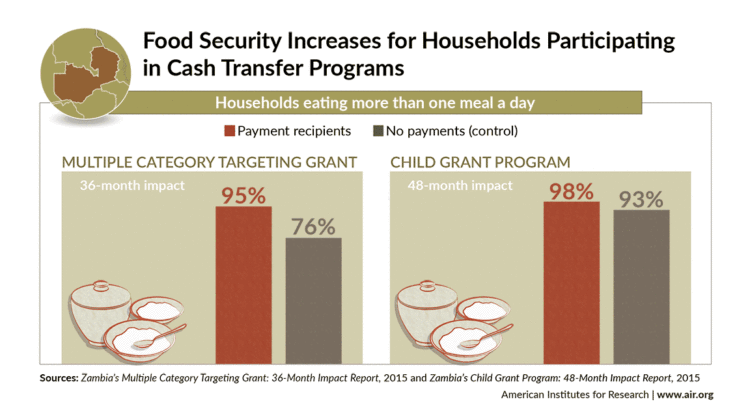
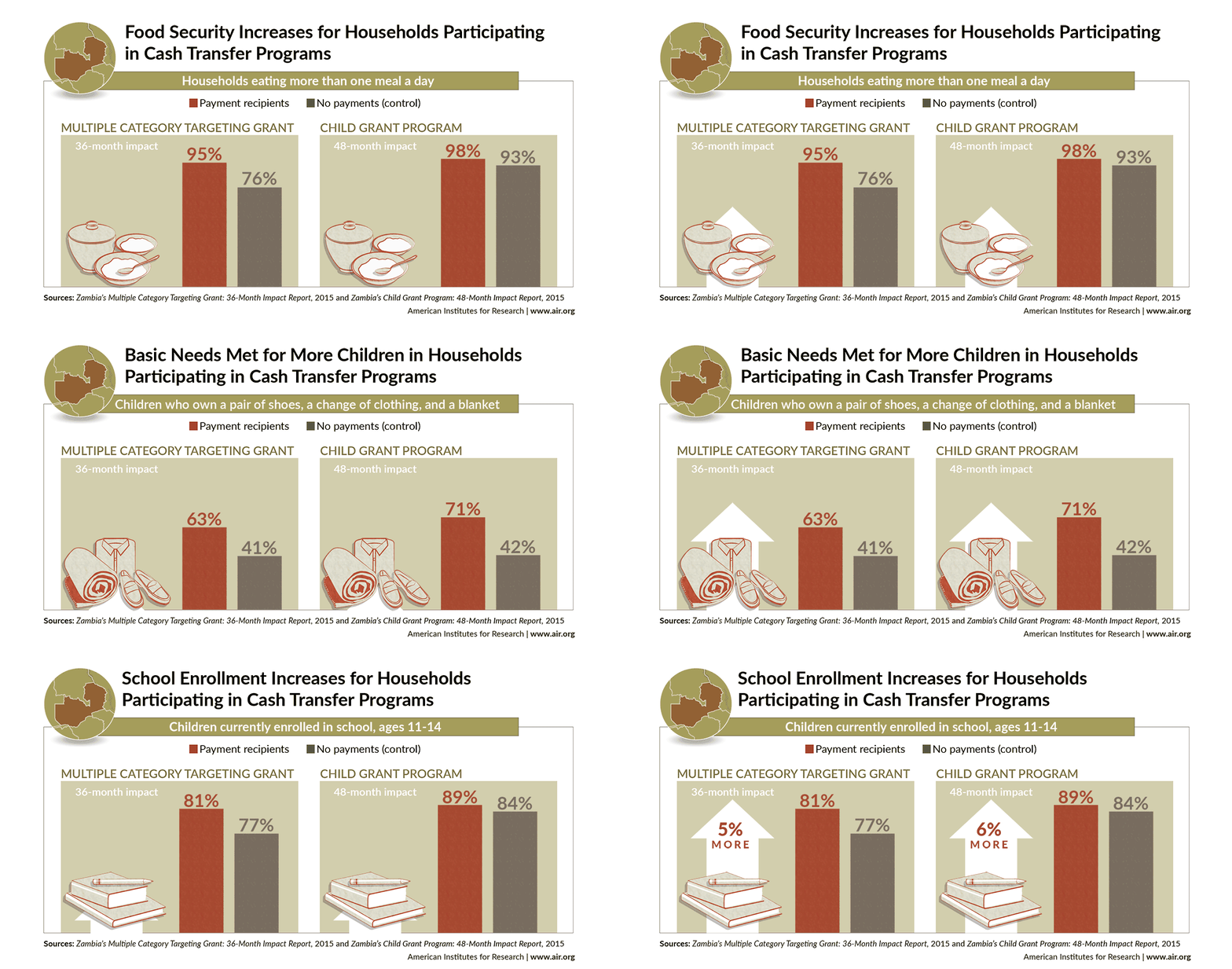
Programs designed to alleviate hunger and increase food supply through cash transfers to some of Zambia’s poorest families achieved those goals and more, final evaluations conducted by the American Institutes for Research (AIR) revealed.

Overall, researchers found that a cash-transfer program geared toward families with at least one young child had effects that amounted to a net benefit of 1.5 kwacha—Zambia’s currency—for each kwacha transferred. A second program for households with fewer able-bodied people to farm had effects that amounted to a net benefit of 1.68 kwacha for each kwacha transferred.

Besides eating more meals and building more reliable food reserves, families used the money to improve their housing, buy additional necessities for their children, acquire more livestock and reduce debt.

The studies, commissioned by UNICEF, are likely to be closely watched as African nations increasingly embrace cash transfers to combat the continent’s cycle of poverty. South Africa’s program is the largest, with roughly 16.1 million people—about a third of its population—receiving some kind of social grant.

Notably, the two Zambian programs were unconditional—providing small, consistent sums of money with no strings attached on how they were spent. The programs bucked general criticisms that cash transfers spark dependency. Rather, the discretionary approach empowered families, who used the grants to improve their living standards in ways that made sense given their individual circumstances. At no point during the multiyear grants did alcohol consumption increase. Nor was there any impact on fertility, according to the evaluations.

“The unconditional approach worked,” said Stanfield Michelo, director of social welfare at Zambia’s Ministry of Community Development and Social Welfare. “And because it did, the region is making positive strides. Without a doubt, the changes would not have been possible without AIR’s rigorous evaluations.”

Animated infographic: Zambia cash transfer results

The evaluation of the Child Grant cash-transfer program (CGP) lasted four years, and the evaluation of the Multiple Category Targeting Grant (MCTG) lasted three years. Begun in 2010 in three of Zambia’s poorest districts, the CGP was open to all households with at least one child under age 4. Half were randomly assigned to receive cash transfers of 60 kwacha ($12) a month, and half to a control group that did not receive funds. The MCTG was aimed at poor households with fewer able-bodied people to farm, due largely to a “missing generation” of parents in their 30s and 40s and disproportionally high numbers of adolescents and orphans cared for by widows and grandparents. As with the CGP, half the MCTG participants received the equivalent of $12 a month and half were in a control group that didn’t.

The studies were notable not only for their duration, but also for their use of randomization and control groups to tease out the program’s true effects.

“Few evaluations of cash transfer programs can make such strong causal claims with as much certainty as these two evaluations,” said David Seidenfeld, AIR’s senior director of international research and evaluation and lead study author. “The design of the study, which extended over several years, allowed us to see that the beneficiaries do not grow complacent over time, but instead find ways to grow the value of the transfer beyond benefits related to food security and consumption.”

Although the studies revealed persistent successes, they also offered future researchers and policymakers an idea of cash transfers’ limitations. The studies did not show consistent successes in education or child nutrition, possibly due to large-scale infrastructure issues—namely, the supply of social services, access to clean water, and a lack of health care and education facilities.

Among the studies’ principal lessons, researchers found that the degree of positive impact depended largely on the participants’ characteristics. For example, the multiple-category grants had large impacts on schooling because participating households had more school-age children. Overall, school enrollment jumps of 8 percent for children ages 11–14 and 11 percent for children 15–17 were attributed to the program, and these age groups are at the greatest risk of dropping out in Zambia, according to the report. By contrast, four years into the program, the child grants had no enrollment or attendance impacts for children in three groups: ages 4–7, 8–10 and 15–17.

“Another lesson is that the unconditional nature of the grants gave participants the flexibility to use the money to combat principal life challenges,” said UNICEF Zambia Representative Hamid El-Bashir Ibrahim. “For example, the CGP significantly affected many indicators commonly associated with resiliency—the ability to manage and withstand shocks. Households with transfers significantly improved housing quality and tools, livestock procurement, and opportunities to diversify income-generating activities so they could better withstand emergencies.”

“The overall results demonstrate unequivocally that common perceptions about cash transfers—that they are handouts and cause dependency, or lead to alcohol and tobacco consumption, or increases in pregnancy—are not true in Zambia,” Seidenfeld said. “Quite the contrary. Due to the unconditional nature of the grants, households had the flexibility needed to meet their most pressing challenges head on.”

The final reports on the Child Grant cash transfer program and the Multiple Category Transfer Grant program can be found on AIR’s website. The site also features a video of David Seidenfeld discussing lessons learned from the multiyear studies.

About AIR
Established in 1946, with headquarters in Washington, D.C., the American Institutes for Research (AIR) is a nonpartisan, not-for-profit organization that conducts behavioral and social science research and delivers technical assistance both domestically and internationally in the areas of health, education and workforce productivity. For more information, visit www.air.org.

###

Comparte este contenido:

Reino Unido: Education in the media

Fuente: dfemedia.blog.gov.uk / 8 de junio de 2016

Education in the media: 8 June 2016

Today’s news review includes a stories about A level take-up across the country, evidence heard by the Women and Equalities Select Committee on incidents of alleged sexual harassment in schools and an Ofsted letter on East Midlands school performance.

A level take-up

On Wednesday, 8 June, the New Schools Network published new analysis looking at areas of the country that have the lowest numbers of young people studying A levels, claiming there is a deep-seated problem in ensuring that young people in poorer areas are able to take A levels.

The New Schools Network’s analysis is inaccurate as it only takes into account those young people that studied within their own borough and fails to acknowledge those students that travel to a different area to study, therefore creating an unrealistic picture of the areas they say have a low take-up. The figures suggest that 48 16-to-18 year olds in 2015 which lived in Knowsley studied A levels, when in fact the actual figure is 654.

BBC Online is the only outlet to cover the story using the figures to highlight the regional differences in the proportion of pupils studying A levels.

A Department for Education spokesperson said:

These figures are completely misleading – they do not reflect those young people who study A levels in a neighbouring borough, the actual levels of participation are far higher because many will choose to study in other areas. The primary reason the uptake of A levels differs from area to area is because demand varies across the country. Where there is demand, provision is always available.


We want to see high quality A level provision across the country so that all children have access to a good education. Our ambitious reforms are driving up standards and spreading educational excellence everywhere – a key part of this is ensuring post-16 providers have the resources they need to ensure young people can reach their full potential, and leave well prepared for life in modern Britain with the skills that employers value.

Sexual harassment

On Tuesday, 7 June, the Women and Equalities Select Committee held an evidence session as part of its ongoing inquiry into sexual harassment in schools. During the session, calls were made by a number of experts for children as young as four to be taught about sexism, harassment and sexual abuse.

The Guardian covers the story today focusing on the comments made regarding children as young as four being taught about sexism and harassment, while the Sun and Daily Mail look at calls to make sex education compulsory and for four-year-olds to be taught about this issue to stop children being abused.

A Government spokesperson said:

We welcome this inquiry, and are playing a full part in it. We know that teachers and schools are already doing excellent work on this issue, but no young person should be made to feel unsafe or suffer harassment in any circumstance. Schools are safe places and fortunately crime in schools is very rare but sexual assault of any kind is an offence and must always be reported to the police.


Sex and relationship education is already compulsory in all maintained secondary schools and we expect academies and free schools to teach it as part of the curriculum. We are also working with leading headteachers and practitioners to look at how to raise the quality of PSHE teaching, which includes sex and relationship education.

East Midlands school performance

The Guardian ran a story today based on a letter from Ofsted’s regional director to East Midlands MPs, local authorities, multi-academy trusts and dioceses to highlight the poor performance of the region.

We have made clear that we want to ensure all pupils are receiving a good education and have announced a series of ambitious reforms in our recent White Paper to tackle underperformance and drive up standards.

Education Secretary Nicky Morgan said:

Every child deserves a great education and that’s why our White Paper has spreading educational excellence everywhere at its heart.


The East Midlands has improved drastically since our reforms began and there are now 119,000 more pupils in good or outstanding schools than in 2010 – an increase greater than the English average. This is a testament to the hard work of teachers across the region in implementing our reforms.


But some parts of the country are not yet good enough. That is why, in common with other areas of underperformance, we are working with groups like Teach First to place great teachers where they are needed most, returning power back to the profession through our White Paper reforms and introducing schemes like the National Teaching Service which will develop even more brilliant leaders.

Find out more about our White Paper reforms.

Comparte este contenido:

End child labour in supply chains – It’s everyone’s business!

Fuente:  OIT / 8 de junio de 2016

This year, the focus for World Day Against Child Labour – marked on 12 June – is on child labour and supply chains. With 168 million children still in child labour, all supply chains, from agriculture to manufacturing, services to construction, run the risk that child labour may be present.

Child labour has no place in well-functioning and well regulated markets, or in any supply chain. The message that we must act now to stop child labour once and for all has been affirmed by the Sustainable Development Goals. Acting together, it is within our means to make the future of work a future without child labour.»

Guy Ryder, ILO Director-General

This year, the focus for World Day Against Child Labour  – marked on 12 June – is on child labour and supply chains. With 168 million children still in child labour, all supply chains, from agriculture to manufacturing, services to construction, run the risk that child labour may be present.

“Child labour has no place in well-functioning and well regulated markets, or in any supply chain. The message that we must act now to stop child labour once and for all has been affirmed by the Sustainable Development Goals. Acting together, it is within our means to make the future of work a future without child labour,” said ILO Director-General Guy Ryder.

To support businesses in their actions to remove child labour from their supply chains, the ILO and the International Organisation of Employers (IOE) have jointly created the Child Labour Guidance Tool , a resource for companies to increase their knowledge and ability to conduct business in line with international labour standards on child labour.

The tool draws on the long experience of the ILO’s International Programme on the Elimination of Child Labour (ILO-IPEC) in collaborating with employers to combat child labour in supply chains and incorporates contributions from the a wide variety of companies including Coca-Cola Company, AngloGold Ashanti, Vale, Japan Tobacco and Sterling Manufacturing.

In addition, the ILO provides peer-to-peer best practice and knowledge sharing through the Child Labour Platform , which aims to identify the obstacles to the implementation of the ILO Conventions on child labour in supply chains, develop practical ways of overcoming these obstacles, and catalyse collective action.

Examples of good practise case studies of addressing child labour in supply chains are available here .

“With globalization, supply chains have become increasingly complex, involving workers, small producers, and enterprises around the world. Ending child labour in this context is everyone’s.business,” said Beate Andrees, Chief of the ILO’s Fundamental Principles and Rights at Work Branch.

World Day Events

The ILO is organizing a series of events on the occasion both in Geneva and throughout the world.

Geneva

A high-level event to mark the World Day will be held on 8 June 2016 in the Human Rights Council room of the Palais des Nations from 13:30 to 15:00. This event will take place during the 105th Session of the International Labour Conference .

The panel discussion will start at 2:00 p.m. and the panellists include:

  • Guy Ryder: Director-General, International Labour Organization
  • MaryAnn Mihychuk: Minister of Employment, Workforce Development and Labour, Canada
  • Jacqueline Mugo: Executive Director, Federation of Kenya Employers and Secretary General of Business Africa
  • Philip J. Jennings: General-Secretary, UNI Global Union.
  • Katharine Stewart: Director, Ethical Trade and Sustainability Division, Primark
  • Andrews Tagoe: Head of Program, Rural Workers, General Agricultural Workers Union of Ghana and Anglophone African Coordinator for the Global March Against Child Labour,
  • Vicky Bowman: Director, Myanmar Centre for Responsible Business

The panel discussion will be moderated by Nomia Iqbal from the BBC.

The Minister of Labour, Employment and Social Security of Argentina, Jorge Triaca, will make an announcement about the next Global Conference on Child Labour.

The panel discussion will be preceded by a musical performance by the “Choeur pour l’abolition du travail des enfants”, a group of artists and media professionals that joined together in 2013 to sensitize the public on the worst forms of child labour. The Group led by:

Guy Valery Constant NEZA, includes: Akissi Delphine LOUKOU (aka Akissi Delta), Ami Sarah BAMBA, Valley Ahou Manuella ETTE (aka Nuella), Odia Sidimé, Général Sead, Alain Amani GOLY (aka. Spyrow), Diarra Adama Dujiminika Koné (aka Jimmy James), Arthur Oswald Koya (aka Thura), Prisca Melaine Koffi (aka Prisk), and Dali Eva Christelle Kouko.

Their song “Mon enfant” is available on YouTube .

UN Geneva correspondents as well as ILC-accredited journalists are welcome to attend the event.

Globally

Over 30 events will be taking place around the world in support of the 2016 World Day Against Child Labour, including In New York hosted by UNICEF and in Rome hosted by FAO.

Musical concerts will also be performed around the world as part of the Music Against Child Labour Initiative  (MACLI).

Media

Interviews by print, web or broadcast media can be scheduled in advance via the ILO Department of Communication: newsroom@ilo.org , +4122/799-7912.

Social media

Please support an end to child labour with the hashtag #childlabour

ILO’s Facebook: https://www.facebook.com/ILO.ORG/  
ILO’s Twitter: https://twitter.com/ilo  

Comparte este contenido:

Inglaterrra: Teaching assistants could take industrial action

Fuente: tes.com / 8 de junio de 2016

GMB union to consult on a campaign against the ‘dismantling’ of terms and conditions

Teaching assistants in England are to be consulted by the GMB union over a campaign of action in a row about terms and conditions – a move that raises the prospect of coordinated industrial action by teachers and other staff.

The annual conference of the GMB in Bournemouth agreed to support efforts to retain «hard-fought» terms and conditions of school staff, including a campaign of industrial action if necessary.

The NUT teaching union is balloting its members over strike action against threats from academisation, deregulation of pay and funding cuts.

‘We will not stand by’

The GMB union said schools continued to be privatised, leading to the threat of cuts to the terms and conditions of staff. It is campaigning against schools being turned into academies.

An agreed motion read: «We will not stand by and let this Tory agenda dismantle our members’ terms and conditions brick by brick, class by class, where schools will be left with no alternative but to compete against one another.»

Enlace original: https://www.tes.com/news/school-news/breaking-news/teaching-assistants-could-take-industrial-action


Comparte este contenido:

EEUU: Federal Data Show Unequal Access to Challenging Math and Science Courses

Fuente: edweek / 8 de junio de 2016

New federal civil rights data released Tuesday show that black and Latino high school students are being shortchanged in their access to high-level math and science courses that could prepare them for college.

An early preview of the latest U.S. Department of Education’s Civil Rights Data Collection, based on the 2013-14 school year, lays out sharp racial and ethnic disparities in access to challenging high school courses:

Calculus offered in:

  • 33 percent of high schools with high black and Latino enrollment
  • 56 percent of high schools with low black and Latino enrollment

Physics offered in:

  • 48 percent of high schools with high black and Latino enrollment
  • 67 percent of high schools with low black and Latino enrollment

Chemistry offered in:

  • 65 percent of high schools with high black and Latino enrollment
  • 78 percent of high schools with low black and Latino enrollment.

Algebra 2 offered in:

  • 71 percent of high schools with high black and Latino enrollment
  • 84 percent of high schools with low black and Latino enrollment.

Particular inequities emerge when looking at course access by race and ethnicity. But there are many neighborhoods where those courses aren’t available to anyone, the civil rights data show.Only 48 percent of the country’s high schools offer calculus, 60 percent offer physics, 72 offer chemistry, and 78 percent offer Algebra 2.

The numbers are among the first batch to emerge from the Civil Rights Data Collection, which is conducted every two years. The federal education department’s Office for Civil Rights released a 13-page preview of a small slice of the information it uncovers in mandatory surveys of a huge swath of the U.S. K-12 system: 99 percent of schools and districts, representing 50 million students.

For more from EdWeek on what this early batch of data found, see this story by Evie Blad and this post by Sarah Sparks. In addition to the findings on college readiness, today’s data covers school discipline, the use of restraint and seclusion, early learning, chronic absenteeism, teachers and staffing, and education in justice facilities.

Many more results of the survey, which is intended to gauge how well schools and districts are providing equal opportunity to education as required by federal law, will be released this summer. Much of it will update previous releases, such as the ones we brought you in 2014 (which included the question of access to high-level courses). But there will be new elements covered this time, too, such as student access to distance education, credit-recovery and dual enrollment programs.

Today’s data also shows patterns in Advanced Placement enrollment by race, ethnicity, disability, and native language. For instance: English-learners represent 5 percent of the students in schools that offer AP courses, but only 2 percent of those actually enrolled in one or more of AP courses, the federal data show.

Black and Latino students are 38 percent of the students in schools offering AP, but only 29 percent of those enrolled. Students with disabilities under the Individuals with Disabilities Education Act represent 11 percent of the students in schools offering AP, but less than 2 percent of those taking such a class.

The federal data also showed that students who are multiracial, black, Latino, Native American, Native Alaskan, or Native Hawaiian, are more likely than students of other racial or ethnic descent to be held back a grade in high school. Students with disabilities and English-learners are also held back disproportionately.

Get High School & Beyond posts delivered to your inbox as soon as they’re published. Sign up here. Also, for news and analysis of issues that shape adolescents’ preparation for work and higher education.

Comparte este contenido:
Page 188 of 228
1 186 187 188 189 190 228