Page 1123 of 6198
1 1.121 1.122 1.123 1.124 1.125 6.198

Japón: To Honor the Victims of Hiroshima and Nagasaki 75 Years on, We Must Lay Down Our Nuclear Weapons

To Honor the Victims of Hiroshima and Nagasaki 75 Years on, We Must Lay Down Our Nuclear Weapons


AUGUST 4, 2020 9:03 AM EDT
Ban Ki-moon is former Secretary General of the United Nations and Deputy Chair of The Elders
When the U.S. military first detonated an atomic bomb in the desert of New Mexico in July 1945, the programme’s chief physicist Robert Oppenheimer quoted lines from Hindu scripture: “Now I am become Death, the destroyer of worlds.”

A few weeks later, two nuclear weapons destroyed the worlds of the inhabitants of the Japanese cities of Hiroshima and Nagasaki, on Aug. 6 and Aug. 9 respectively. These attacks heralded the end of Japanese colonial rule and the Second World War, and signaled the dawn of the nuclear age.

More than one hundred thousand people lost their lives as a result of those bombs, including victims of radiation poisoning and related illnesses caused by the fallout. Yet seventy-five years on, we still live in the shadow of those horrendous mushroom clouds.

Reckless policies in the U.S. and Russia risk starting a new global arms race and a collapse of international treaties to limit the spread of weapons of mass destruction. In February next year, the New Strategic Arms Reduction Treaty (New START) will expire — leaving the world’s two nuclear superpowers without a binding agreement on arms control.

We are now closer to global catastrophe than at any time since 1945, according to the Doomsday Clock of the Bulletin of Atomic Scientists in Washington D.C. In January, I was there when the hands of the clock were moved forward to 100 seconds to midnight, nearer to doomsday even than we were at the heights of the Cold War.

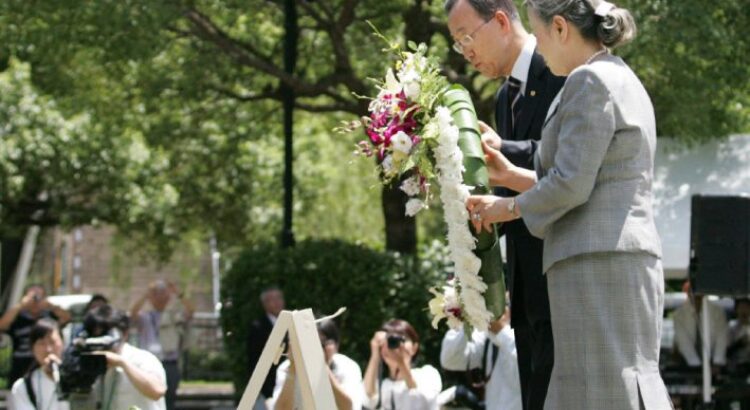
I was the first UN Secretary-General to visit Hiroshima and Nagasaki, for the anniversary of the bombings ten years ago. I was deeply moved, particularly when I met the victims and got to know their continued sufferings across the generations. I resolved that no atomic bomb should ever be used again, and that we should do our utmost to make the world free of nuclear weapons.

A decade on we are as far away from that goal as ever. According to the latest report from the Stockholm International Peace Research Institute, the global nuclear weapons stockpile still stands at 13,400 warheads.

2020 should have been a critical year for global efforts to make substantive progress to rid the world of these weapons. Not only did the 75th anniversaries of Hiroshima and Nagasaki offer high-profile opportunities for commemoration, but the Non-Proliferation Treaty (NPT) Review Conference scheduled for April 2020 offered a chance for the top nuclear powers to commit to real progress.

Instead, COVID-19 has muted or canceled global public gatherings, and has put on hold the habitual rhythms and practices of international diplomacy. The NPT Review Conference has been postponed to early 2021, and the UN General Assembly will not take place in physical form this year. This disruption puts an onus on the leaders of the five Permanent Members of the UN Security Council, including the United States, to show initiative and keep momentum going.

I particularly urge Presidents Trump and Putin to extend New START for another five years until 2026. The U.S. has suggested it wants to broaden New START and negotiate a new agreement that would include China. While it is important for China to be engaged in the global disarmament discussion, it is disingenuous to make New START’s extension dependent on Beijing, given that its stockpiles are one-twentieth the size of those of the U.S. and Russia.

It is also unrealistic to think that a complex new arms control agreement could be negotiated and ratified in the next six months, with Chinese participation. The U.S. should instead accept the offer of President Putin and immediately agree to an extension. This would provide time to negotiate a more ambitious successor treaty, and efforts to include China and other nuclear states can be seriously explored at this stage.

More broadly, I hope the coming months will see a revival in the United States of the spirit of multilateralism that its leaders showed when constructing the United Nations and the other pillars of the post-war political and economic order in 1945.

As a former Secretary-General of the United Nations, it has grieved me greatly to observe a sustained and targeted assault on the multilateral system in recent years. This has made it harder for leaders and institutions to respond effectively and save lives, not only in the context of Covid-19 but also in the face of the climate emergency, conflicts and economic inequality.

I deeply regret that the United States has deliberately weakened the multilateral system across several fronts over the past four years: from nuclear non-proliferation and climate change to respect for human rights, free trade and health security. Such a unilateral and isolationist approach weakens the security of the United States and of the whole world.

We owe it to the victims of Hiroshima and Nagasaki, and those who survived to tell the tale, to focus all human ingenuity and expertise on the cause of peace and disarmament.

Fuente de la Información: https://time.com/5875424/ban-ki-moon-hiroshima-nagasaki-nuclear/
Comparte este contenido:

Washington: Secretary DeVos Issues New Distance Learning Regulations to Spur High-Quality Distance and Competency-Based Programs, Better Serve Diverse Population of Higher Education Students

Secretary DeVos Issues New Distance Learning Regulations to Spur High-Quality Distance and Competency-Based Programs, Better Serve Diverse Population of Higher Education Students

WASHINGTON — U.S. Secretary of Education Betsy DeVos issued final rules today that govern distance learning in higher education and promote educational innovation to better serve the needs of an increasingly diverse population of students. While work on the Distance Learning and Innovation regulation started more than a year ago, the COVID-19 national emergency underscores the need for students to have access to high-quality remote learning options.

“While we moved quickly at the start of the pandemic to provide temporary distance learning flexibilities for students, these new regulations provide a permanent upgrade to online and competency-based education,” said Secretary DeVos. “The COVID-19 pandemic has shown that a video call is not enough, and our outdated rules did not comport with 21st-century realities. These regulations are a true ‘rethink’ of what is possible for students so that they can learn in the ways and places that work best for them.”

Crafted by a diverse group of experts during the Department’s 2019 negotiated rulemaking, the Department’s Distance Education and Innovation regulations were forged by historic rulemaking consensus, enhance educational quality, and reduce barriers to innovation while maintaining safeguards to limit the risks to students and taxpayers. These regulations build upon Secretary DeVos’ call for institutions, educators, and policy makers to “rethink higher education” and find new ways to expand educational opportunity, demonstrate the value of a postsecondary credential and lifelong learning, and reduce costs for students and schools.

The final regulations:

  • Emphasize demonstrated learning over seat time.
  • Remove confusion over whether a course is eligible for Title IV aid by defining «regular and substantive» interaction between students and instructors.
  • Clarify and simplify the requirements for direct assessment programs, including how to determine equivalent credit hours.
  • Add a definition of «juvenile justice facility» to ensure that incarcerated students remain Pell eligible.
  • Allow students enrolled in Title IV, Higher Education Act (HEA)-eligible foreign institutions to complete up to 25% of their programs at an eligible institution in the United States. This provision is particularly important for students temporarily unable to attend courses abroad due to the COVID-19 pandemic.
  • Encourage employer participation in developing educational programs.
  • Create a new, student-centric system for disbursing Title IV, HEA assistance to students in subscription-based programs.
  • Require prompt action by the Department on applications to participate, or continue to participate, as an eligible institution in the HEA, Title IV program. In the past, these applications have been stalled for months or even years.
  • Allow clock hour programs, which often lead to state licensed occupations, to utilize innovative learning models.

The Distance Education and Innovation rule was the result of a months-long negotiated rulemaking effort that began with public hearings and engaged a subcommittee of subject matter experts to formulate recommendations that were ultimately considered by a panel of representatives from the higher education and consumer protection communities. Negotiators reached consensus on the language, which strikes a balance between fostering innovation and protecting students and taxpayers from waste, fraud, and abuse.

The regulations will officially take effect July 1, 2021, but institutions have the ability to voluntarily utilize the new flexibilities as soon as the regulation is officially published in the Federal Register.

Fuente de la Información: https://www.ed.gov/news/press-releases/secretary-devos-issues-new-distance-learning-regulations-spur-high-quality-distance-and-competency-based-programs-better-serve-diverse-population-higher-education-students


Comparte este contenido:

Gran Bretaña: Study Suggest Best Way to Drive Away Seagulls; Eye Contact

Study Suggest Best Way to Drive Away Seagulls; Eye Contact

A new study suggests that if you find yourself annoyed by seagulls at the beach or, more increasingly, urban areas, the best way to discourage them is to make eye contact.

Researchers at Britain’s University of Exeter observed 155 herring gulls – the most common variety of seagull, and a variety, they say, that is becoming more common in urban areas.

The gulls tend to be seemingly fearless around people in either setting when it comes to stealing food. They have been known to fly off with whatever a person might be eating if it is left unguarded.

For their study, the researchers approached the seagulls while either looking directly at them or facing toward them, while keeping their eyes to the ground.  They found when their eyes were locked with the gulls, the birds tended to flee.

The gulls reacted the same way in both beach and urban areas.

A similar 2019 study led by University of Exeter PhD student Madeleine Goumas, examined how the gulls reacted when people looked at them or looked away. The study found looking directly at birds while they ate prompted them to fly away sooner.

Goumas is lead author on the new study, which refined the methodology by having experimenters only move their eyes as they approached the gulls. She said the study shows the gulls responded specifically to human eye direction. It was as true in young gulls as it was mature ones, indicating it was innate behavior, not the result of any one gull’s negative interaction with people.

The researchers suggest the behavior reflects the gull’s large brains that have allowed them to adapt to survive a life of interacting with humans.

The study was published online on September 4 and will appear in the October 2020 issue of the journal Animal Behavior.

Fuente de la Información:  https://www.voanews.com/science-health/study-suggest-best-way-drive-away-seagulls-eye-contact


Comparte este contenido:

Asia: Coronavirus: How the lockdown has changed schooling in South Asia

Coronavirus: How the lockdown has changed schooling in South Asia

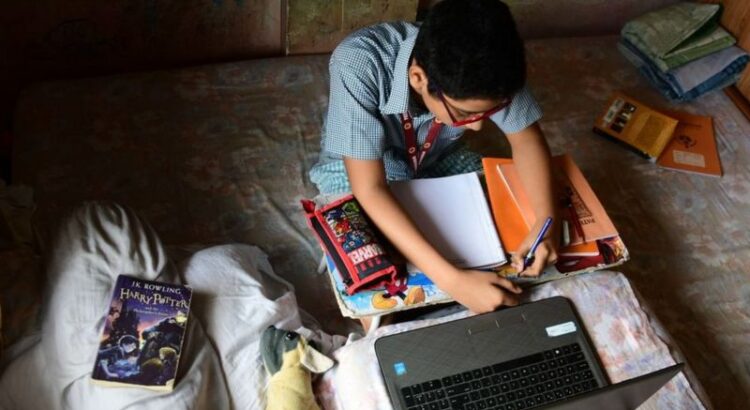
Children across much of Europe have been going back to school for the start of a new year, but in many other parts of the world, coronavirus restrictions have kept classrooms closed.
We’ve taken a look at the situation in India and its neighbours in South Asia where the United Nations estimates nearly 600 million children have been affected by lockdowns.

Who’s not going back to the classroom?

When coronavirus restrictions were first imposed in March and April, it was at the start of the academic year in many South Asian countries.
School classrooms across the region were closed down, and these restrictions have largely remained in place.
Currently:
  • In India, classrooms are largely closed, with teaching being done remotely. However, the government says students from grade 9 to 12 can go into schools on a voluntary basis with their parents’ consent from 21 September if they need support
  • Bangladesh and Nepal have extended school closures and will continue to rely on remote learning
  • Sri Lanka‘s schools reopened in August after trying to reopen in July, but then closing after a spike in cases
  • Children in Pakistan will return to school in phases, starting on 15 September as coronavirus case numbers have fallen

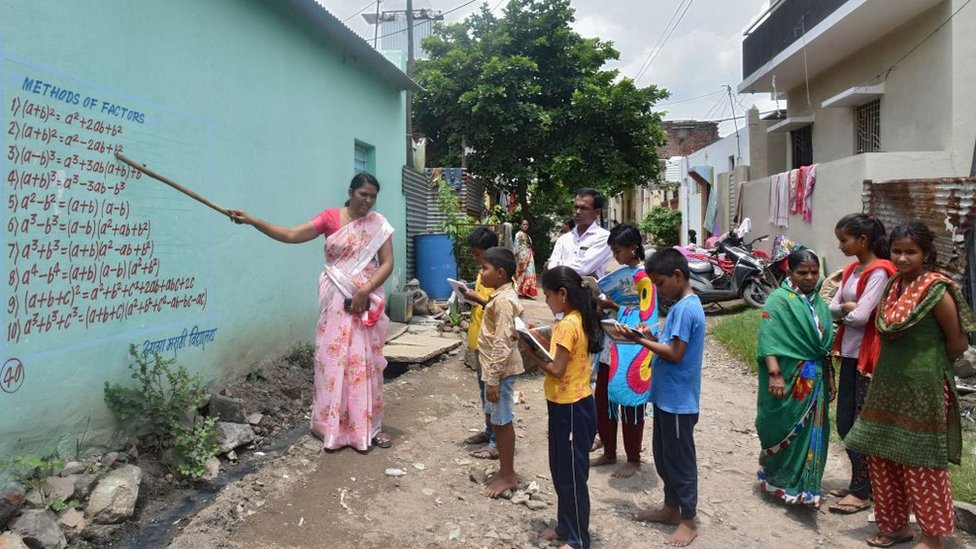
New ways of teaching in rural areas of South Asia

Who has access to the internet?

Remote learning involves either live online classes for students, or digital content which can be accessed at any time – offline or online.
But many South Asian countries lack a reliable internet infrastructure and the cost of online access can be prohibitive for poorer communities.
The UN says at least 147 million children are unable to access online or remote learning. In India, only 24% of households have access to the internet, according to a 2019 government survey.
In rural parts of India, the numbers are far lower with only 4% of households having access to the internet.
Bangladesh has better overall connectivity than India. It’s estimated that 60% can get online, although the quality of broadband internet is often very poor.
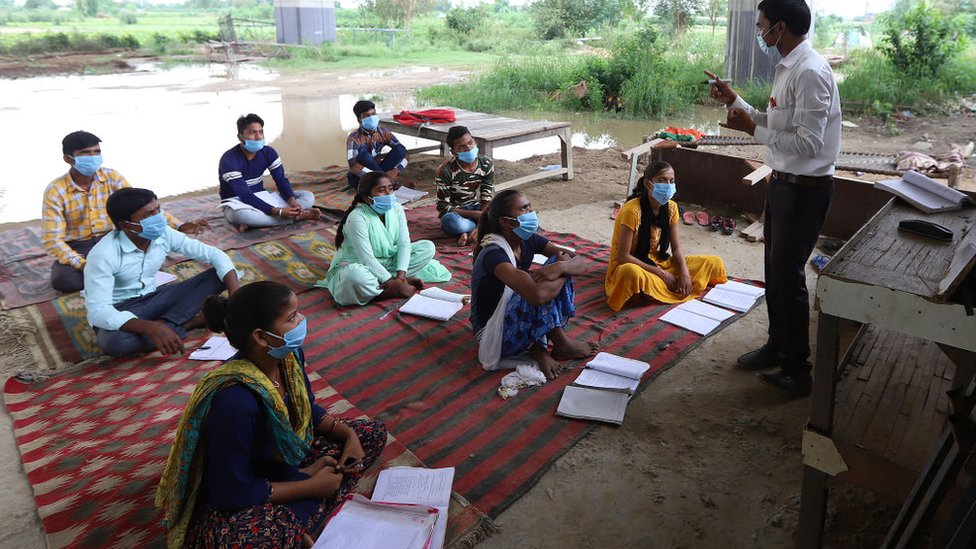
Classes take place with masks and social distancing during school closures
There is also a lack of basic equipment in many schools.
Nepal’s latest Economic Survey report says that of the nearly 30,000 government schools, fewer than 30% have access to a computer, and only 12% can offer online learning.
Some countries have turned to television and radio for those with no internet-enabled devices or broadband access. These platforms have much greater penetration per head of population.
India’s public broadcaster, Doordarshan, has been broadcasting daily educational content through its television channels and radio services.
Bangladesh’s government broadcaster, Sangsad television, also airs recorded classes on its channels.
«These were among the most successful approaches… in terms of reaching the largest proportion of children,» Jean Gough, Unicef’s South Asia director told the BBC.
Nepal adopted a similar approach, but fewer than half of households have access to cable television.

Opening schools ‘risks infection’

In Sri Lanka, where schools have now reopened, no social distancing is being maintained and only some have made it mandatory to wear a mask, according to Joseph Stalin, general secretary of the Ceylon Teachers’ Union.
Basic safety measures are difficult to implement «as no special funding has been allocated», he told the BBC’s Sinhala service.
The All Pakistan Private Schools Federation has opposed the reopening of schools in September saying they need government funding to help carry out testing and to implement coronavirus safety guidelines.
In India, there are similar concerns about the prospect of schools starting classes again.
«With the reopening of schools, parents, transportation, teachers other service providers will also start functioning and will increase public movement,» Priti Mahara, of Child Rights and You, told the BBC.
There is also a lack of basic equipment in many schools.
Nepal’s latest Economic Survey report says that of the nearly 30,000 government schools, fewer than 30% have access to a computer, and only 12% can offer online learning.
Some countries have turned to television and radio for those with no internet-enabled devices or broadband access. These platforms have much greater penetration per head of population.
India’s public broadcaster, Doordarshan, has been broadcasting daily educational content through its television channels and radio services.
Bangladesh’s government broadcaster, Sangsad television, also airs recorded classes on its channels.
«These were among the most successful approaches… in terms of reaching the largest proportion of children,» Jean Gough, Unicef’s South Asia director told the BBC.
Nepal adopted a similar approach, but fewer than half of households have access to cable television.

Opening schools ‘risks infection’

In Sri Lanka, where schools have now reopened, no social distancing is being maintained and only some have made it mandatory to wear a mask, according to Joseph Stalin, general secretary of the Ceylon Teachers’ Union.
Basic safety measures are difficult to implement «as no special funding has been allocated», he told the BBC’s Sinhala service.
The All Pakistan Private Schools Federation has opposed the reopening of schools in September saying they need government funding to help carry out testing and to implement coronavirus safety guidelines.
In India, there are similar concerns about the prospect of schools starting classes again.
«With the reopening of schools, parents, transportation, teachers other service providers will also start functioning and will increase public movement,» Priti Mahara, of Child Rights and You, told the BBC.
The long period of closure has also led to serious financial shortfalls for those private schools relying on tuition fees.
In Bangladesh, more than a hundred private schools have been put up for sale.
«I have already borrowed money to pay salaries and rent,» Taqbir Ahmed, owner of one such school in Dhaka told BBC Bengali.
Several charities in the region have tried to help the most vulnerable and marginalised schools.
Dr Rukmini Banerji, of the Pratham Education Foundation in India, says: «Efforts have been made by state governments and schools to connect with children who have at least one mobile phone in the household.»
In some cases, students have dropped off the educational roll as the authorities have been unable to establish contact with them.
This could cause the school dropout rate in these countries to rise «exponentially», says Unicef’s Jean Gough, if effective communication isn’t put in place.
«Projections based on previous school shutdowns due to Ebola and other emergencies suggest that there can be very significant losses in terms of learning,» Ms Gough told the BBC.
Additional research by Waliur Rahman Miraj, Muhammad Shahnewaj and Saroj Pathirana
Fuente de la Información: https://www.bbc.com/news/world-south-asia-54009306
Comparte este contenido:

Jerusalem: Israel to set new nationwide lockdown as virus cases surge

Israel to set new nationwide lockdown as virus cases surge

September 13 2020

JERUSALEM — Israeli Prime Minister Benjamin Netanyahu on Sunday announced a new countrywide lockdown will be imposed amid a stubborn surge in coronavirus cases, with schools and parts of the economy expected to shut down in a bid to bring down infection rates.

Beginning Friday, the start of the Jewish High Holiday season, schools, restaurants and hotels will shut down, among other businesses, and Israelis will face restrictions on movement.

«Our goal is to stop the increase (in cases) and lower morbidity,» Netanyahu said in a nationally broadcast statement. «I know that these steps come at a difficult price for all of us. This is not the holiday we are used to.»

The tightening of measures marks the second time Israel is being plunged into a lockdown, after a lengthy shutdown in the spring. That lockdown is credited with having brought down what were much lower infection numbers, but it wreaked havoc on the country’s economy, sending unemployment skyrocketing.

The lockdown will remain in place for at least three weeks, at which point officials are expected to relax measures if numbers are seen declining. Israelis typically hold large family gatherings and pack synagogues during the important fast of Yom Kippur, settings that officials feared could trigger new outbreaks.

A sticking point in government deliberations over the lockdown was what prayers would look like during the holidays. The strict limits on faithful prompted Israeli Housing Minister Yaakov Litzman, who represents ultra-Orthodox Jews, to resign from the government.

Israel has had more than 150,000 confirmed cases of the coronavirus and more than 1,100 deaths. Given its population of 9 million, the country now has one of the world’s worst outbreaks. It is now seeing more than 4,000 daily cases of the virus.

Israel earned praise for its initial handling of the coronavirus outbreak, moving quickly to seal the country’s borders and appearing to bring infections under control. It has since been criticized for opening businesses and schools too quickly and allowing the virus to spread unchecked.

Much of that criticism has been aimed at Netanyahu, who has faced a public outcry over his handling of the crisis and has seen thousands of protesters descend on his Jerusalem residence every week. While lauded for his decisive response following the spring outbreak, Netanyahu appeared distracted by politics and personal matters, including his trial for corruption allegations, as infections rose over the summer.

Netanyahu has also been lambasted for seeming to cave to pressure from various interest groups, including most recently his ultra-Orthodox governing partners, who appeared to have convinced him to abandon a pinpointed, city-based lockdown plan that would have mostly affected ultra-Orthodox and Arab communities.

At the press conference Sunday announcing the lockdown, Netanyahu defended his response, saying Israel’s economy had emerged from the first lockdown in a better state than many other developed nations and that while cases were high, the country’s coronavirus mortality numbers were lower than other countries with similar outbreaks.

The country’s power-sharing government, made up of two rival parties who joined forces in a stated aim to combat the virus, has also been chided for the new outbreak. The government has been accused of mismanagement, failing to properly address both the health and economic crises wrought by the virus and leading the country to its second lockdown.

Some government ministers meanwhile have pointed fingers at what they’ve called an undisciplined public, who they have accused of violating restrictions against public gatherings and mask wearing.

Fuente de la Información: https://www.startribune.com/israeli-minister-resigns-to-protest-expected-virus-lockdown/572398712/

Comparte este contenido:

República Dominicana: Crearán voluntariado técnico de jóvenes estudiantes para trabajar en oficinas gubernativas

América Central/República Dominicana/13-09-2020/Autor(a) y Fuente: acento.com.do

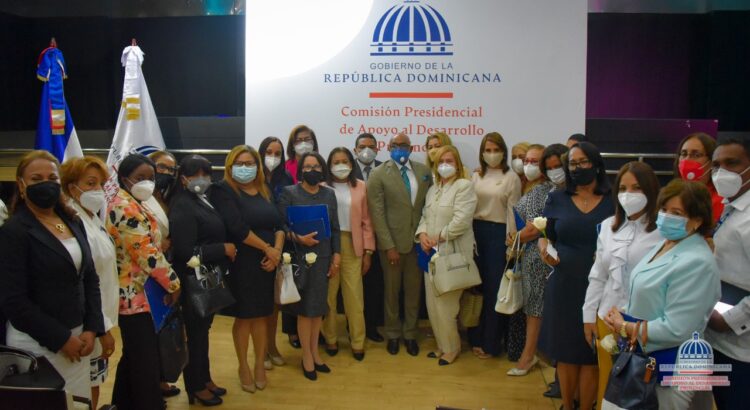
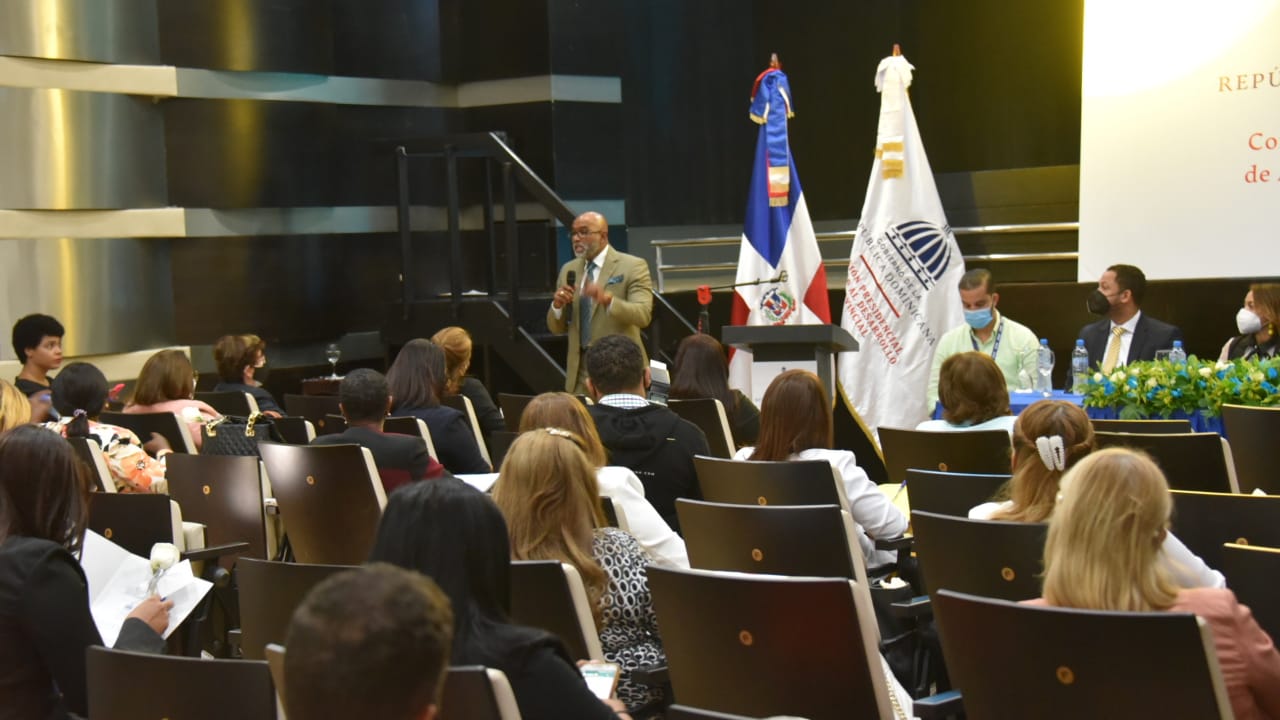
Estas declaraciones fueron ofrecidas en un encuentro con las 31 gobernadoras provinciales del país, con el objetivo de presentar los proyectos que impactarán a cada una de las demarcaciones.

SANTO DOMINGO, República Dominicana.- El titular de la Comisión Presidencia de Apoyo al Desarrollo Provincial (CPADP), Ángel de la Cruz, aseguró que está trabajando en el presupuesto de la institución, con el fin de restaurar la autoridad de los consejos provinciales y crear un voluntariado técnico de apoyo compuesto por jóvenes estudiantes de término de cada provincia para trabajar en las oficinas gubernativas.

“Vamos a hacer una inversión, dándole becas estudiantiles, con una remuneración económica, porque no queremos crear nóminas que carguen más el presupuesto del Estado”, expresó.

Estas declaraciones fueron ofrecidas en un encuentro con las 31 gobernadoras provinciales del país, con el objetivo de presentar los proyectos que impactarán a cada una de las demarcaciones.

Dicha reunión se realizó con el interés de reactivar todos los consejos de desarrollo de todas las provincias del país y así producir un levantamiento de pequeñas obras en coordinación con los gobernantes, oficinas legislativas, gobiernos locales y las instancias de la sociedad civil, influyendo de manera prioritaria la recuperación de zonas afectadas por la recién pasada tormenta Laura.

“Este encuentro demuestra nuestra responsabilidad de dar fiel cumplimiento a las disposiciones del excelentísimo señor presidente de la República, Luis Abinader Corona de ir en auxilio de las comunidades más vulnerables”, afirmó De la Cruz.

En el acto que se realizó en el Auditorio de la de la Oficina de Ingenieros Supervisores de Obras del Estado (OISOE), De la Cruz, se comprometió a visitar y rehabilitar el estado físico de cada una de las gobernaciones y a construir edificaciones en aquellas demarcaciones donde no hay.

Las gobernadoras presentes aplaudieron la iniciativa de la Comisión Presidencial de Apoyo al Desarrollo Provincial ya que no se les tomaba en cuenta.

Desde su designación, Ángel de la Cruz, junto a su equipo de trabajo ha visitado varias provincias del país, donde se ejecutan obras auspiciadas por la CPADP en La Vega, Puerto Plata, Santiago, Villa Altagracia, Bahoruco, Neiba, Pedernales, entre otras, escuchando los reclamos.

Fuente e Imagen: https://acento.com.do/actualidad/crearan-voluntariado-tecnico-de-jovenes-estudiantes-para-trabajar-en-oficinas-gubernativas-8859091.html

Comparte este contenido:

México: En 2021 castigarán a maestros: recortan 95% de presupuesto a normales y 49% a capacitación

América del Norte/México/13-09-2020/Autora: Nayeli Roldán/Fuente: www.animalpolitico.com

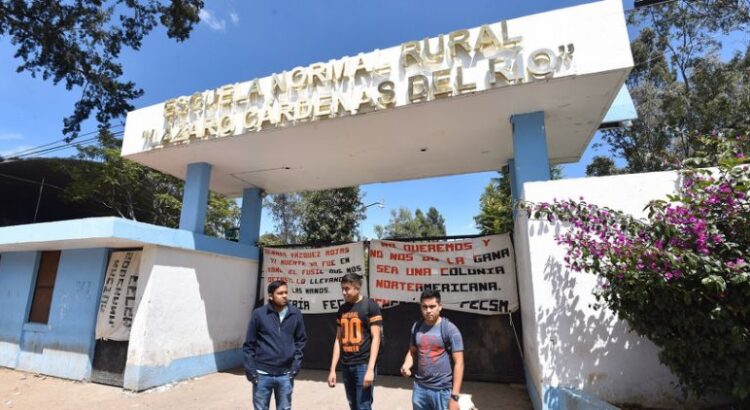
El presupuesto para las escuelas normales será de 20 millones 597 mil pesos, mientras que en 2020 tuvo 461 millones 390 mil pesos. Se trata del recorte más drástico en los últimos 16 años a este rubro.

El magisterio será uno de los sectores afectados por los recortes presupuestales del próximo año en materia educativa. Las escuelas normales del país que forman a los nuevos maestros recibirán 95% menos presupuesto, mientras que el programa de capacitación para los docentes en activo tendrá 45% menos recursos en términos reales.

En el proyecto de presupuesto para 2021, la Secretaría de Hacienda prevé que la Dirección General de Dirección General de Educación Superior para Profesionales de la Educación (DGSPE), es decir, el presupuesto para las escuelas normales, sea de 20 millones 597 mil pesos; mientras que en 2020 tuvo 461 millones 390 mil pesos.

Se trata del recorte más drástico en los últimos 16 años a este rubro. Si bien había tenido una caída permanente desde 2015 cuanto tuvo mil 195 millones de pesos, pero en la administración del presidente Andrés Manuel López Obrador se acentuó el recorte, pues de tener 783 millones de pesos en 2018, pasó a 447 millones de pesos en 2019.

El presupuesto proyectado para 2021 equivaldría a entregar 229 pesos anuales a cada alumno de una escuela normal, afirma la Junta de Coordinación Nacional del Consejo Nacional de Autoridades de Educación Normal del país (CONAEN) en una carta enviada al secretario de Hacienda, Arturo Herrera, y al presidente de la Comisión de Presupuesto de la Cámara de Diputados, Erasmo González, para pedir que reconsideren dicho presupuesto.

“Esto toma de mayor sentido cuando se habla de una cuarta transformación que enarbola entre sus prioridades el derecho al acceso a una educación pública de excelencia, así como la ampliación de la cobertura en Educación Superior”, dice la carta.

De hecho, el presidente Andrés Manuel López Obrador ha declarado en diversas ocasiones la importancia de las Escuelas Normales y sus estudiantes, a quienes otras administraciones atacaron. “No se van a cerrar escuelas normales, al contrario, se van a abrir más y el que salga de ahí va a salir con su plaza. Ya se acabó la política privatizadora en materia de educación”, dijo en septiembre de 2019.

Mientras que en marzo de ese año también dijo que había dado instrucciones al secretario de Educación, Esteban Moctezuma, para “que se lleve a cabo un programa para fortalecer a las escuelas normales, a las escuelas normales públicas. Por eso se está reabriendo El Mexe y vamos a crear nuevas escuelas normales, y se le va a dar preferencia a maestras y maestros egresados de estas normales”.

En tanto, el Organismo Coordinador de las Universidades del Bienestar Benito Juárez García, que se hará cargo de crear las 100 nuevas universidades, promesa del presidente López Obrador, tendrá mil millones de pesos para 2021, lo mismo que en el año anterior.

Recorte a capacitación docente y eliminación de programas 

Después de la pandemia de coronavirus que ha obligado a los maestros a dar clases a distancia y responder al reto aún sin herramientas tecnológicas, el Gobierno Federal prevé recortar en 49% en términos reales el presupuesto para el programa de capacitación docente.

Se trata del programa para el Desarrollo Profesional Docente que, según el proyecto de egresos, tendrá 240 millones 481 mil pesos; mientras que en 2020 tuvo 469 millones 810 mil pesos.

El programa busca contribuir para que el personal docente y personal con funciones de dirección, de supervisión, de asesoría técnico pedagógica y cuerpos académicos de todo el país “accedan o concluyan programas de formación, actualización académica, capacitación o proyectos de investigación para favorecer el perfil idóneo”.

Además, también se prevé la eliminación de 13 programas educativos, de acuerdo con un análisis de la Iniciativa de Educación del Tec de Monterrey y México Evalúa, dirigido por el investigador de ambas instituciones, Marco Fernández.

Entre los programas eliminados está Escuela de Tiempo completo, una estrategia transexenal que inició en la administración del presidente Felipe Calderón y continuó con Enrique Peña Nieto.

La estrategia incluía clases y actividades extracurriculares en horario extendido, sobre todo para estudiantes cuyas madres trabajan, y un incentivo económico para los maestros, pero la actual administración disminuyó a la mitad el presupuesto para 2020 con respecto a 2019.

También se eliminaría el programa de Formación y Certificación para el Trabajo; el Fortalecimiento a la excelencia educativa y el programa de Expansión en la oferta educativa en educación media superior.

Mientras que el aumento presupuestal al sector educativo está enfocado en las becas para diferentes grados y el programa de infraestructura La Escuela es Nuestra, que entrega recursos directamente a los padres, con 63% más presupuesto, que ascenderán a 12 mil 280 millones de pesos.

Fuente: https://www.animalpolitico.com/2020/09/2021-castigaran-maestros-recortan-a-normales-capacitacion/

Imagen: CRISANTA ESPINOSA AGUILAR /CUARTOSCURO.COM

Comparte este contenido:
Page 1123 of 6198
1 1.121 1.122 1.123 1.124 1.125 6.198