Page 1457 of 6195
1 1.455 1.456 1.457 1.458 1.459 6.195

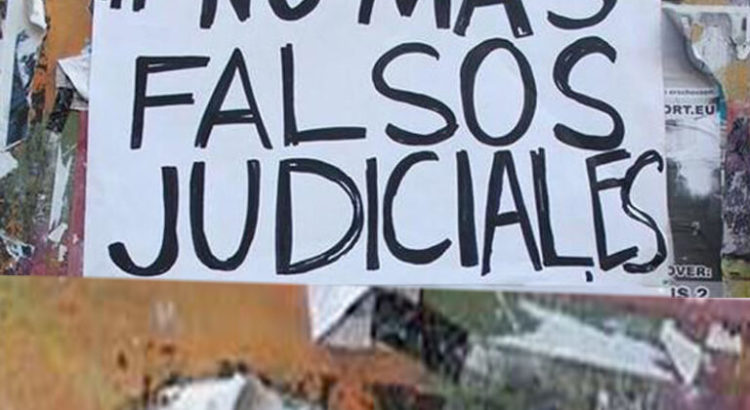
Solidaridad con académicos colombianos que denuncian montajes judiciales en su contra

América/Colombia/Autor y fuente: rebelion.org

Académicos e investigadores que llevamos a cabo nuestra actividad científica en distintas universidades de Europa, Estados Unidos, América Latina y el Caribe, manifestamos nuestra solidaridad con los profesores de la Universidad Nacional de Colombia Rosembert ArizaMiguel Ángel Beltrán y Nubia Ruíz, y el profesor Renán Vega Cantor de la universidad Pedagógica Nacional, quienes han denunciado la preparación de un montaje judicial en su contra, el cual tiene el objetivo de desacreditar la importante labor académica e investigativa que realizan, así como perseguir y censurar el acompañamiento docente que han hecho al proceso de formación universitaria de estudiantes prisioneros políticos en cárceles Colombianas.

Los amedrentamientos denunciados por los profesores están relacionados con los ataques criminales en contra de líderes sociales, defensores de derechos humanos, políticos de oposición y periodistas en todo el país. Ataques que han generado un ambiente de zozobra y miedo entre todas aquellas personas que cuestionan las políticas del gobierno colombiano o se comprometen con revelar públicamente hechos de corrupción que involucran funcionarios del Estado.

La persecución contra los profesores representa un ataque contra la labor docente y el pensamiento crítico en general. Por lo tanto, quienes reconocemos la importancia de garantizar la libertad de cátedra y la libertad de pensamiento como bases fundamentales para la labor universitaria, nos solidarizamos al ver en riesgo la libertad, la vida y la labor de nuestros colegas en Colombia, pues un hecho como estos debe despertar la solidaridad entre toda la comunidad académica a nivel internacional, la cual debe hacer el mayor esfuerzo para impedir que el caso del profesor Miguel Ángel Beltrán, quien por años fue sometido injusta y cruelmente a un proceso judicial que lo privó de su libertad y su trabajo docente, se repita en Colombia.

Quienes con nuestra firma respaldamos esta carta de solidaridad, le pedimos al gobierno del presidente Iván Duque que las denuncias de los profesores mencionados sean atendidas de la manera más urgente, ofreciendo a los docentes la protección que requieran, así como las garantías para el desarrollo de su actividad académica e investigativa en el marco de la libertad de cátedra, la libertad de pensamiento y la autonomía que caracterizan el ambiente universitario.

Atilio Borón

Dr. En Filosofía, Universidad de Harvar. Ex Investigador superior del CONICET y Vicerrector de la Universidad de Buenos Aires. Profesor de la Universidad Nacional de Avellaneda y Director del PLED del Centro Cultural de la Cooperación Floreal Gorini

Iratxe Perea Ozerin

Profesora de Derecho Internacional Público y Relaciones Internacionales/ Nazioarteko Zuzenbide Publikoa eta Nazioarteko Harremanetako Irakaslea. Department of International Public Law, International Relations and History of Law. University of the Basque Country (UPV/EHU)

Hernán Ouviña

Profesor e investigador IEALC-UBA

Mabel Thwaites Rey,

Profesora y directora del IEALC-UBS

Dr. Detlef Balschun

Emeritus Professor, Emeritus Professor with formal duties

Brain and Cognition

KU Leuven – Belgium

Dr. rer. nat. Lisa Baumann

Research Group Leader

Centre for Organismal Studies (COS)

University of Heidelberg – Germany

Prf. Dr Jun Borras

International Institute Social Studies

Erasmus University Rotterdam

Netherlands

Daniel Inclán

Investigador titular, Instituto de Investigaciones Económicas, UNAM

Prf. Dr Thomas Kuijper

Department of Environmental Sciences

Wageningen University and Research

Dr. Daniel Cieza.

Profesor titular

Facultad de Ciencias Sociales. Universidad de Buenos Aires, Argentina

Michael Ryckewaert

Professor

Associate Director of the Cosmopolis Centre for Urban Research

Programme Coordinator SteR. Vrije Universiteit Brussel – Belgium

Luis Tapia

Docente Investigador CIDES-UMSA. Bolivia

Ana Daniela Nahmad Rodríguez

Investigadora CETMECS-Centro de Estudios Teóricos y Multidisciplinarios en Ciencias Sociales, FCPyS-UNAM

Dr. Pieter de Vries

Professor

Wageningen University

The Netherlands

Dr. Joost Dessein

Professor

Ghent University

Belgium

Gábor Szabó

Assistant professor

Department of Mathematics

KU Leuven – Belgium

Juan Hernández Zubizarreta

Profesor titular. Universidad del País Vasco. Estado Español.

Dr. Kristina Dietz

Frei Universität Berlin

Berlin- Germany

Carles Feixa Pàmpols

Profesor Asociado

Departamento de Comunicación

Universidad Pompeu Fabra, Barcelona

José Sánchez García

Profesor investigador

Departamento de comunicación

Universidad Pompeu Fabra

Barcelona

DVM James J Elliott

Diplomat, American College of Laboratory Animal Medicine

Diplomat, American College of Veterinary Preventive Medicine

San Antonio TX

Dr. Yunan Xu

Post Doc

International Institute of Social Studies

Erasmus University Rotterdam –

Netherlands

Moges Belay

PhD Researcher

International Institute of Social Studies

Erasmus University Rotterdam –

Netherlands

Sai Sam Kham

PhD Researcher

International Institute of Social Studies

Erasmus University Rotterdam –

Netherlands

Natalia Lozano

PhD Researcher

International Institute of Social Studies

Erasmus University Rotterdam –

Netherlands

Amod Shah

PhD Researcher

International Institute of Social Studies

Erasmus University Rotterdam –

Netherlands

Jovana Obradović

Postdoctoral Researcher

Institute of Mathematics AS CR – Czech Republic

Oscar Aponte

PhD Student, Latin American and Caribbean History

The Graduate Center – CUNY

New York City, U.S.A.

Marlly Guarin

PhD Researcher

Laboratory for Molecular Biodiscovery

KU Leuven – Belgium

Lise Boey

PhD Researcher

Environment and Health

KU Leuven – Belgium

Nicolás Martínez Rivera

MA Public Policy – governance and development

Erasmus University – Netherlands

University of York – England

Arianna Giusti

PhD Researcher

Laboratory for Molecular Biodiscovery

KU Leuven – Belgium

Pieter Van Brantegem

PhD Researcher

Laboratory for Drug Delivery and Disposition

KU Leuven – Belgium

Ewelina Kozioł

PhD Researcher

Department of Pharmacognosy with Medicinal Plant Laboratory

Medical University of Lublin – Poland

Carla Ríos Luci

Lab Manager

Nanohealth and optical imaging Group

KU Leuven – Belgium

Dr. Adrián Gonzalez Perez

Postdoctoral Researcher

Laboratoire de Mathématiques Blaise Pascal

University of Clermont-Auvergne – France

Leidy Cubillos Pinilla

PhD Candidate

School of Management

Technical University Munich – Germany

Johann Sebastian Reyes Bejarano

MSc. Natural Resources Management and Development

Cologne University of Applied Sciences – Germany

Silke Janssen

Master Student

Biomedical Science

KU Leuven – Belgium

Natalia Giraldo Cano

PhD Researcher, Law and Political Science

University of Barcelona, Spain

Arne Vincken

Master Student

Biomedical Science

KU Leuven – Belgium

Rodrigo Chaverra A.

PhD Researcher, Law and Political Science

University of Barcelona, Spain

Itayosara Rojas M.Sc.

PhD Researcher

International Institute of Social Studies

Erasmus University Rotterdam –

Netherlands

Teresita de Avilés

Maestra en Ciencias en Recursos Naturales y Desarrollo Rural

El Colegio de la Frontera Sur, México

Alejandro Betancourth

Maestro en Ciencias en Recursos Naturales y Desarrollo Rural

El Colegio de la Frontera Sur, México

João Gabriel Rodrigues Telles Almeida

PhD Researcher

Universitat Pompeu Fabra, Barcelona

Investigador

Instituto de Pensamiento y Cultura en América Latina, México

Sergio Coronado

PhD Researcher

Freie Universität, Berlin

Yamid Gomez Rueda

PhD Researcher

Applied Mechanics and Energy Conversion Section

KU Leuven – Belgium

Andrea Zárrate

MSc. Molecular and Cellular Biology

Université Grenoble Alpes – France

E. Alexander V. Morea-van Berkum

PhD Researcher

Faculty of Theology

VU Amsterdam – The Netherlands

Alejandro Osorio Forero

PhD candidate

Department of fundamental neuroscience

University of Lausanne – Switzerland

Evelin Caterine Mancera Hernández

Licenciada en humanidades y lengua castellana

Universidad Distrital Francisco José de Caldas

Dr. Rodrigo Madeiro

Post Doc

Stem Cell Institute

KU Leuven – Belgium

Lizeth López Rodríguez

MA Policy Education for Global Development

University of Glasgow – UK

Universidad Autónoma de Barcelona

Julián Cortés

Candidato a doctor

Social Sciences

Wageningen University

The Netherlands

Violeta Rodríguez Vargas

PhD Researcher

Universitat Pompeu Fabra, Barcelona

Martin Dudr

PhD Researcher

Sustainable Metals Processing and Recycling

KU Leuven – Belgium

Joana Rita Faneca Santos

PhD Researcher

NeuroElectronics Research Flanders – NERF

KU Leuven – Belgium

Peter Rosset

Profesor

El Colegio de la Frontera Sur (ECOSUR)

Chiapas, México

Taranjitsingh Singh

PhD Researcher

Robotics, Automation and Mechatronics

KU Leuven – Belgium

Fortunato Morales

PhD Student

Universitat Pompeu Fabra, Barcelona

Sabina Šturm,

PhD student

Veterinary Faculty

University of Ljubljana – Slovenia

Mateo Mier y Terán GC

Profesor

El Colegio de la Frontera Sur (ECOSUR)

Chiapas, México

Diana Angel

PhD Researcher

Biomoleculas and healthy products

University of Parma – Italy

Cristian Alejandro Vergara

PhD candidate

Robotics research group

KU Leuven

Matias Clasing Villanueva

PhD candidate

Mecha(tro)nic System Dynamics

KU leuven

Karen Melissa Serna

Master Student

Tropimundo

Luisa Cajamarca

Phd Sciences Politique

ULB-CEVIPOL

Belgium

Miriam Aldasoro Maya

Investigadora

Colegio de la Frontera Sur Villahermosa

México

Camila Olarte Parra

PhD student

Statistical Data Analysis

Ghent University

Belgium

Juan Aspromonte

PhD Researcher

Pharmaceutical Analysis

KU Leuven – Belgium

Juan Sebastián Vélez

Phd student

Institute of Development Policy

University of Antwerp

Donatella Sadriaj

PhD Researcher

Pharmaceutical Analysis

KU Leuven – Belgium

Grant Garren January

PhD candidate/MSCA early stage researcher

Institute of Cellular Biology and Biochemistry,

National Research Council of Italy (IBBC-CNR)

Nathalie Agudelo

PhD student

Institute of Science and Technology,

Austria

Evangelia Christodoulou

PhD Researcher

KU Leuven – Belgium

Dr. Alessandra Piersigilli

DVM PhD DECVP –

Assistant Professor of Pathology

Weill Cornell Medicine – New York, NY, USA

Paola Arango Pontón

PhD Researcher

Department of Chemistry

University of Lille – France

Giles Vermeire

PhD Researcher

Therapeutic and Diagnostic Antibodies

KU Leuven – Belgium

Prusothman Yoganantharajah

PhD Researcher

Metabolic Genetic Diseases Laboratory

Deakin School of Medicine – Australia

Catherine Acosta

PhD Researcher

Department of accounting, corporate finance and taxation

Ghent University – Belgium

Gastón Silveira Dorta

Research Associate

Department of Chemical Engineering

KU Leuven – Belgium

Tea Pihlaja M.Sc.

PhD Student

Division of Pharmaceutical Chemistry and Technology

University of Helsinki – Finland

Robin Verwilligen

PhD Candidate

Cardiovascular and Metabolic Therapeutics

Universiteit Leiden – The Netherlands

Fabian Gruss

Postdoctoral Researcher

Hubrecht Institute, Utrecht – Netherlands

Pablo Winzer

PhD Researcher

Vetsuisse Faculty

University of Bern – Switzerland

David Bondia García.

Profesor titular de Derecho Internacional Público y Relaciones Internacionales en la Universidad de Barcelona. Presidente del Instituto de Derechos Humanos de Catalunya.

Larissa Kernen

PhD Researcher

Vetsuisse Faculty

University of Bern – Switzerland

Dirk Adriaensens

Researcher

Belgium

An Schreurs

PhD Researcher

Brain and Cognition

KU Leuven – Belgium

Asmin Andries

PhD Researcher

Pharmaceutical Analysis

KU Leuven – Belgium

Jorge Andres Moncada Escudero

Postdoctoral Researcher

Applied Mechanics and Energy Conversion Section

KU Leuven – Belgium

Oscar Alvarado

PhD Researcher

Computer Sciences

KU Leuven – Belgium

Adrianna Skiba

PhD Researcher

Department of Pharmacognosy with Medicinal Plant Unit

Medical University of Lublin – Poland

Heike Schmidt-Posthaus

Lecturer

Vetsuisse Faculty

University of Bern – Switzerland

Dr. med. Stéphanie Wagner

Stv. Oberärztin pädiatrische Nephrologie

Universitary Hospital of Bern

Inselspital – Switzerland

Luca Sangiuliano

PhD Researcher

Mecha(tro)nic System Dynamics

KU Leuven – Belgium

Andrea Pallares Pallares

Postdoctoral Researcher

Centre for Food and Microbial Technology

KU Leuven – Belgium

María Ruiz Aranguren

Profesora en la Facultad de Ciencias Sociales y de la Comunicación.

Universidad del País Vasco-Euskal Herriko Unibertsitea.

Antxoka Agirre Maiora

Profesor en la Facultad de Ciencias Sociales y de la Comunicación.

Universidad del País Vasco-Euskal Herriko Unibertsitatea.

Adrián Piva

Profesor e Investigador CONICET-UNQ-UBA

Angélica Gunturiz

Investigadora GESHAL-UBA

Florencia Clara Mazzola

docente e investigadora IEALC-UBA

Silvia Garro

Profesora e investigadora IEALC-UBA

Ariadna Gallo

Investigadora Conicet-UBA

Hugo Paternina Espinosa.

Doctor en Antropología Social. Miembro del Instituto de las Migraciones, la Etnicidad y el Desarrollo Social de la Universidad Autónoma de Madrid.

Luz Ángela Rojas Barragán

Magister Interdisciplinar en Estudios Latinoamericanos, UNILA, Brasil

Nicolás Armando Herrera Farfán

Investigador IEALC-UBA, Argentina

Lucas Biagetti

Cientista de la Educación UNR, Argentina-UNICAL, Italia

Fernando Lázaro

Profesor adjunto e investigador. Departamento Educación, Universidad Nacional de Luján, Argentina.

Carlos Santos

Doctor, Universidad de la República de Uruguay

Bartolotto Mario

Ing. Electrónico, JTP FCEIA-UNR, Argentina

Silvana Rolando

Docente Facultad de Psicología, UBA, Argentina

Emilio Abecasis

Profesor y licenciado en Ciencias de la Educación. Docente de Institutos Superiores de ciudades de la provincia de Santafé, Secretario gremial de Nivel Superior de Amsafe (gremio docente). Rosario, Argentina

Marcelo Alejandro Muñoz

Lic. En Piscología. Docente en Esc. 11.

Dr. Carlos Juan Rodríguez

San Luis, Argentina.

Luis Carlos Vargas Rodríguez

Licenciado en educación comunitaria con énfasis en Derechos Humanos. Universidad Pedagógica Nacional de Colombia. Estudiante Maestría en Estudios Sociales Latinoamericanos. Universidad de Buenos Aires, Argentina.

Andrés Carminati

Dr. En Historia. Docente de la Universidad Nacional del Rosario (UNR), Argentina.

Francisco Farina

Editorial El Colectivo, Argentina

Mariano Algava

Educador popular. JTP. Departamento de Educación. Universidad Nacional de Lujan, Argentina.

Santiago Morales

Educador Popular y sociólogo. IEALC-UBA, Argentina

Santiago Torres Acosta

Politóloga Universidad Nacional de Colombia. Estudiante del Doctorado en Historia y Estudios Contemporáneos. Universitat Jaume I, España.

Alba Pereyra Lanzillotto

Socióloga y educadora popular. Asesora Espacio para la Memoria EXCCD Virrey Cevallos-Sec. DDHH de la Nación. Prof. Instituto Superior Sagrado Corazón y docente del Departamento de Educación de la Universidad Nacional de Luján, Argentina.

Felipe Polanía

Educador artístico y gestor cultural. Manager de proyectos en la Radio Local. Alternativa Radio LorA. Zúrich, Suiza.

Lic. Gustavo Brufman

Prof. Adjunto Director del CEIDE. Facultad Humanidades y Artes, UNR, Argentina

Dra. Judith Naidorf

Investigadora Independiente de CONICET. Instituto de Investigaciones en Ciencias de la Educación. Docente regular del Departamento de Ciencias de la Educación. Facultad de Filosofía y Letras. Universidad de Buenos Aires, Argentina.

María Marta Bunge

Técnica en Jardinería. Especialista en planificación del paisaje. Educadora popular. Docente universitaria, Facultad de Agronomía, UBA, Argentina.

Victoria Lihué Da Silva Jouve

Lic. Y prof. En Ciencias de la Comunicación Social. Programa de Capacitación y Fortalecimiento para Organizaciones sociales y comunitarias. Facultad de Ciencias Sociales, UBA, Argentina.

Marisol Valencia Orrego

Profesora del Servicio Social UFRRJ. Universidad Federal Rural de Río de Janeiro, Brasil.

Fernando Guzmán

Coordinador Continental del área de Solidaridad y Misión. Claretianos Argentina.

Mg. Fernando Stratta

Docente e Investigador de la Universidad Nacional de Lanús, Argentina.

Miguel Mazzeo

Dr. En Ciencias Sociales. Docente-Investigador. IEALC/UBA Y UNLA, Argentina.

Juan Wahren

Investigador y Docente Universidad de Buenos Aires, CONICET, Argentina

Alcira Argumendo

Socióloga UBA, Argentina

Amaia del Río Martínez

Equipo de educación de Hegoa

Universidad del País Vasco

Eduardo Maturano.

Doctor en Medicina y Cirugía. Profesor Asistente. Cátedra de Parsitología y Micología Médica, Facultad de Ciencias Médicas. Universidad Nacional de Córdoba

Denise de Fátima da Silva Zambonato

Magister en Estudios Latinoamericanos, UNILA: Profesora de sociología y filosofía en Escuela Media. Estado de San Pablo Brasil.

Erik Arellana Bautista

De Human Rights Everywhere (HREV)

Víctor Cobo Medina

Historiador Universidad del Valle

Estudiante maestría en investigación en Sociología. Flacso-Ecuador

Adriana Patricia Lozano Daza.

Dra. Desarrollo Rural, Universidad Autónoma Metropolitana, Xochimilco, Ciudad de México.

Dra. Alma Guadalupe Melgarito Rocha

Universidad Autónoma de Ciudad Juárez

Dra. Tania Libertad Elíaz Guevara

Universidad Bolivariana de Venezuela

Dr. Luis Fernando Ávila Linzan

Profesor de derecho constitucional del Ecuador

Dr. Daniel Sandoval.

Profesor Investigador. Universidad Autónoma Metropolitana. Unidad Cuajimalpa, México D.F.

Dr. Esteban Rodríguez Alzueta

Profesor Investigador de la Universidad Nacional de Quilmes. Argentina

Dr. Marco Alexandre de Souza Serra

Profesor de la Pontificia Universidade Católica do Paraná, Brasil

Mgtr. Adriana Segura

UNAM-México

Dra. Josefina Napa

Facultad de ciencias jurídicas y sociales de la Universidad Nacional de La Plata, Argentina

Dra. Marina Correa de Almeida

Posdoctorado en el programa universitario de Derechos Humanos, UNAM-México

Mtra. Blanca Estela Melgarito Rocha

Programa de Posgrado en Estudios Latinoamericanos. Asociación Nuestroamericana de Estudios Interdisciplinarios en Crítica Jurídica.

Dr. Aurelio Morales Posselt

Programa de posgrado en estudios latinoamericanos. UNAM-México

Dr. Carlos del Valle Mayaguez

Universidad de Puerto Rico

Dra. Alcira Bonilla

Filosofía y Letras. Universidad de Buenos Aires, Argentina

Dr. Enrique del Percio.

Derecho

Universidad de Buenos Aires, Argentina

Dr. Jorge Alejandro Santos

Filosofía y Pedagogía. Universidad de Buenos Aires, Argentina y Unichapeco, Brasil

Mtra. Gisela M. Ponce

Universidad Nacional de Río Negro. Universidad Nacional de Comahue.

Juan Martín Della Villa

Facultad de Filosofía y Letras. Universidad de Buenos Aires, Argentina.

Mtra. Daniela Godoy

Investigadora Instituto de Filosofía. Universidad de Buenos Aires, Argentina

Mtro. Augusto Romano

Lic. Filosofía y Psicología UBA y UNLAM

Mtra. Martín Bolaños

Universidad de Buenos Aires y UNAM, Argentina

Paula Churquina

Antropóloga, Universidad de Buenos Aires, Argentina

Dr. Adriana Churampi Ramírez

Lecturer Latin American Studies

Leiden University – The Netherlands

Dr. Pablo Isla Monsalve

Lecturer Latin American Studies

Leiden University – The Netherlands

Dr. Ana Paula Cardozo de Souza

Lecturer Latin American Studies

Leiden University – The Netherlands

Dr. Eduardo Alves Vieira

Lecturer Latin American Studies

Leiden University – The Netherlands

Dr. Maria Victoria Alcalde

Lecturer Latin American Studies

Leiden University – The Netherlands

Dra. Soledad Valdivia Rivera

Lecturer Latin American Studies

Leiden University – The Netherlands

Dr. Nanne Timmer

Lecturer Latin American Studies

Leiden University – The Netherlands

Sebastián Rumie

PhD Candidate, Latin American Studies

Leiden University – The Netherlands

Marcela Cecilia Marín

CIFFYH, Conicet, Universidad Nacional de Córdoba, Argentina

Elsa Usandizaga.

Profesora jubilada de la carrera de sociología. Facultad de Ciencias Sociales. Universidad de Buenos Aires, Argentina

Marta Danieletto.

Profesora de a Facultad de Ciencias Sociales, UBA, Argentina

Dunia Mocrani

Doctorante ICSH- Puebla

Eva Capece

Colectiva MLM

Nayibe Arboleda. Docente H.C.

Universidad ICESI-Universidad del Valle

Claudia Leal Valencia

Lic. Ciencias Sociales. Universidad Autónoma de occidente

María del Carmen Muñoz Millán.

Historiadora y Antropóloga. Universidad Autónoma de Occidente

Facultad de Humanidades y Artes

Fuente e imagen: https://rebelion.org/solidaridad-con-academicos-colombianos-que-denuncian-montajes-judiciales-en-su-contra/
Comparte este contenido:

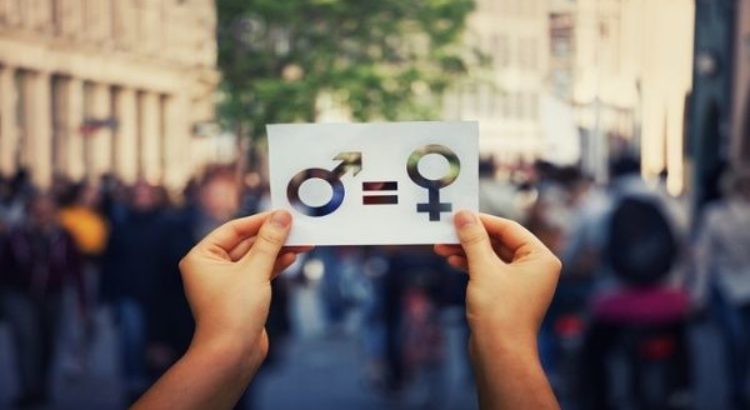
Demandan en ONU más esfuerzos para avanzar en temas de género

América/Estados Unidos/11/03/2020/Autor y fuente: telesurtv

El mundo precisa de un mayor impulso en cuanto a la igualdad de género.

La 64 Comisión de la Condición Jurídica y Social de la Mujer, se pronunció en Nueva York, por continuar empoderando a mujeres y niñas para protegerlas contra la violencia de género en cualquiera de sus manifestaciones.

Los estados miembros de Naciones Unidas, expresaron este lunes en una declaración política su voluntad de actuar para avanzar en la igualdad de género y reconocieron también que urgen mayores esfuerzos ante los nuevos retos.

Entre los aspectos que se deben priorizar, la declaración política de la 64 Comisión de la Condición Jurídica y Social de la Mujer (CSW, por su sigla en inglés) incluye la educación y el papel del liderazgo de la mujer.

Otras cuestiones que han de recibir atención jerarquizada, a juicio de quienes asistieron a la sesión, son la participación de la mujer en los procesos de paz, su derecho a la cobertura médica, al empoderamiento económico y su trabajo en la acción climática.

Aprobada por consenso, esta declaración retoma las líneas principales de la Declaración de Beijing que, desde 1995, impulsa la emancipación y la promoción de la mujer en todo el mundo y define objetivos para la igualdad de género.

De acuerdo con fuentes diplomáticas, para evitar un fracaso en la adopción del documento se eliminó cualquier referencia a la salud sexual reproductiva, mención a la que se opone desde hace años la representación de Estados Unidos.

En materia de violencia, el documento convoca a eliminar, prevenir y responder a todas las formas de violencia y prácticas nocivas contra las mujeres y las niñas, ya sea en ámbitos públicos o privados, incluso a través de las redes sociales.

Asimismo, demanda combatir la trata de seres humanos y la esclavitud moderna, y garantizar el acceso a la justicia y la prestación a todas las mujeres víctimas de violencia de servicios de apoyo, incluidos los legales, de salud y sociales.

La 64 sesión se realizó de forma reducida por motivos de seguridad relacionados con el Covid-19.

Fuente: https://www.telesurtv.net/news/demandan-onu-esfuerzos-temas-genero-20200309-0052.html

Imagen: Prensa Latina

Comparte este contenido:

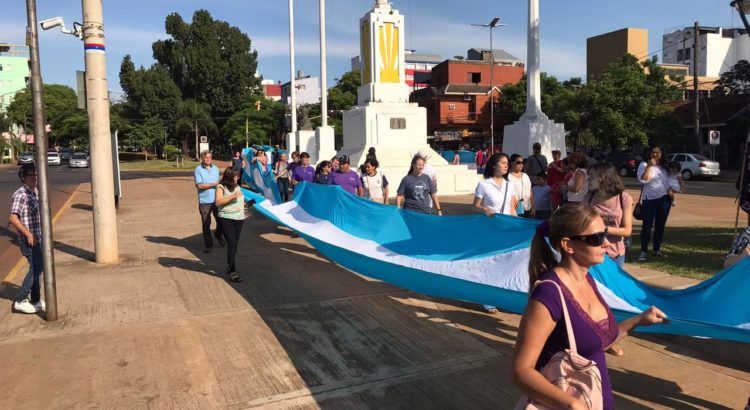
Argentina: El paro docente se hizo sentir con masiva marcha en Posadas

América del Sur/ Argentina/ 10.03.2020/ Fuente: misionescuatro.com.


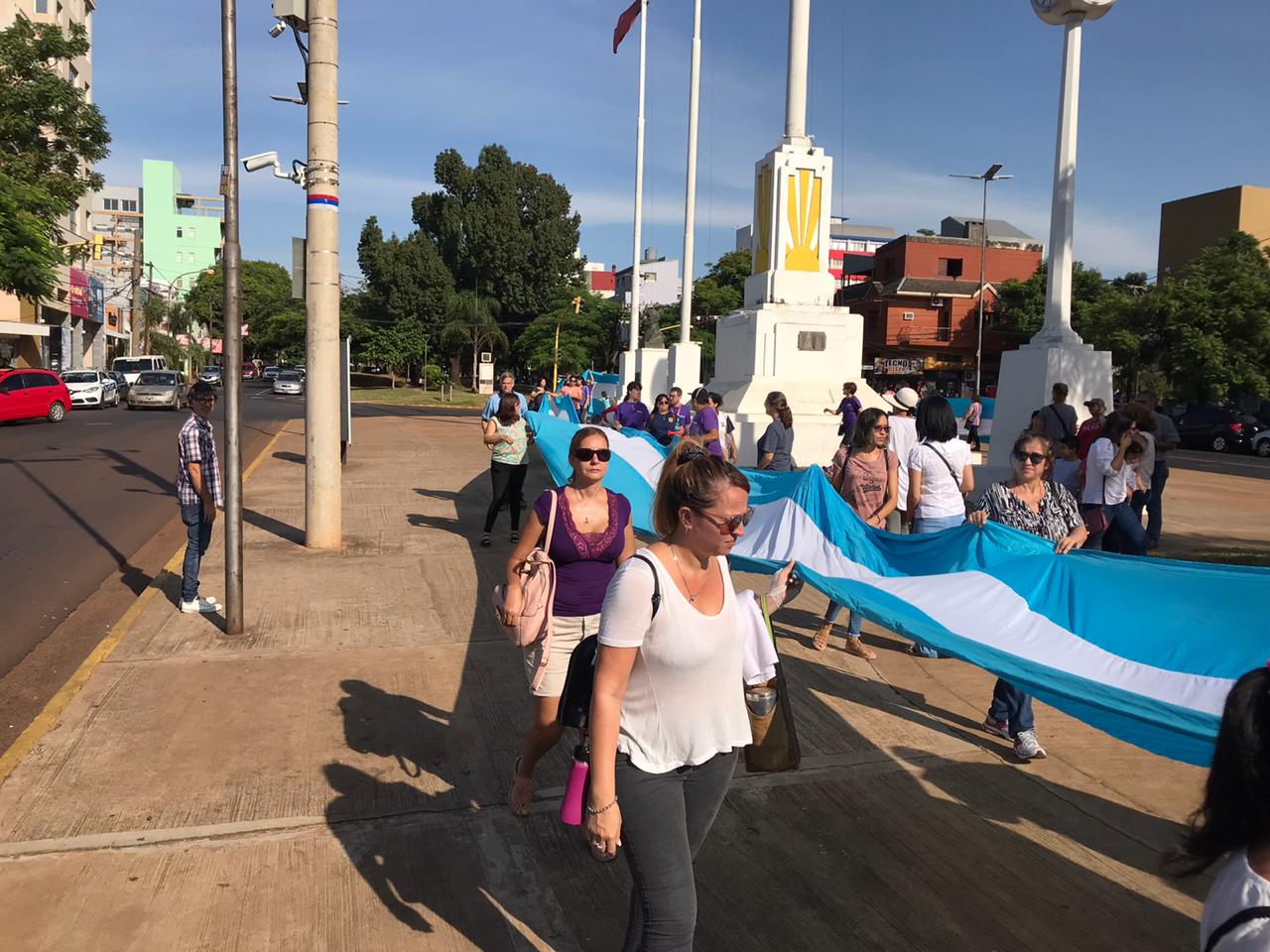
En el marco del paro de 72 horas lanzado para este lunes, en el inicio formal del ciclo lectivo en Misiones, los docentes autoconvocados y los afiliados a los sindicatos en lucha, se congregaron masivamente en el Mástil de Posadas, desde donde marcharon a la gobernación provincial para presentar un nuevo pedido de apertura de una mesa paritaria con la patronal del gobierno provincial.

Mientras se desarrollan distintas actividades en diversos puntos cardinales de la provincia –marchas, protestas y cortes de ruta-, en Posadas, estiman que la adhesión a la medida de fuerza es altísima en el nivel secundario, pese a las amenazas de descuentos lanzadas este domingo por el gobernador Oscar Herrera Ahuad, quien encabezó un congreso de UDPM, el sindicato cooptado por el partido gobernante misionero a partir de la agrupación Adomis.

Un breve repaso de los niveles de adhesión al paro docente que manejan desde Udnam (Unión de Docentes Nueva Argentina Misiones), habla de porcentajes del 90% o superior en Bachilleratos de Orientación Polivalente (BOP), Escuelas Provinciales de Educación Técnica (EPET) y hasta en Núcleos Educativos de Educación Inicial (NENI).

Críticas a las maniobras del gobierno para impedir la huelga

En diálogo con MisionesCuatro, Juan Carlos Díaz, profesor en la Escuela 122 y afiliado de Udnam, sostuvo que las medidas de fuerza y marchas buscan las mejoras del salario y la garantía para ejercer el derecho a huelga.

“El ministro (de Educación, Miguel Sedoff) y el gobernador (Oscar Herrera Ahuad) dicen que van a descontar. O pecan de ignorantes o tienen malicia. Tienen que entender que son parte de un gobierno democrático donde impera la ley. Si no hablamos de una dictadura. Llamarnos ‘ilegales’ cuando el Ministro de Trabajo de su propio gobierno, jamás nos ha dicho que nuestro paro es ilegal, me parece que no corresponde”, puntualizó.

A su tiempo, Franco Albín, un profesor de Música afiliado al sindicato que lidera Estela Genesini, explicó: “Entre los docentes hay mucho miedo, pero también, bronca e impotencia. En los últimos dos años perdimos el 60% de nuestro poder adquisitivo producto de la inflación y los acuerdos a la baja. Este año se proyecta una inflación del 40% y nos dieron un aumento inferior al 20%”, precisó.

En la misma línea que Díaz, el profesor de música cuestionó las maniobras anunciadas desde el Consejo General de Educación, de controlar qué docentes estuvieron dando clases y quienes se sumaron al paro. “El panorama es desolador, no nos alcanza. Hay muchos autoconvocados”, sostuvo Albín, añadiendo que todo docente se puede adherir al paro lanzado por Udnam y los sindicatos de base de la CTA, que cuentan con personería gremial en trámite.


Fuente de la noticia: https://misionescuatro.com/provinciales/el-paro-docente-se-hizo-sentir-con-masiva-marcha-en-posadas/

Comparte este contenido:

Defensoría peruana pide al Estado garantizar educación a 1,2 millones de niños indígenas

América del Sur/ Perú/ 10.03.2020/ Fuente: mundo.sputniknews.com.


 La Defensoría del Pueblo de Perú ha solicitado al Estado que garantice para el año escolar 2020 dar las condiciones adecuadas para la educación bilingüe de cerca de 1,2 millones de niños indígenas, dijo Nelly Aedo, jefa del Programa de Pueblos Indígenas del organismo, en entrevista con Sputnik.

«A inicios de año la Defensoría ha invocado para que al inicio del año escolar el Estado cumpla con dar condiciones adecuadas para la educación intercultural bilingüe de los niños indígenas, enviando oficios a todos los gobiernos regionales que atienden la educación de alrededor de 1,2 millones de niños», indicó Aedo a Sputnik.

Según la funcionaria, en el país existen 27.000 colegios con educación bilingüe en 23 de los 24 departamentos.

En ellos, los niños tienen derecho a recibir clases en su idioma original como primera lengua, y en castellano como lengua como lengua complementaria; siendo las lenguas originarias más habladas el quechua y el aymara.

Aedo explicó que hay dos demandas que le hicieron al Estado.

La primera es que «se cumpla con contratar docentes bilingües, que dominen el idioma originario y el castellano a nivel oral y escrito».

La segunda es que «se cumpla con distribuir el material educativo oportunamente, antes del inicio del año educativo, a fin de que los educandos puedan contar con todas las facilidades propias del modelo de educación intercultural bilingüe».Asimismo, de manera complementaria se ha pedido que se revisen las condiciones de infraestructura, especialmente en 80 centros educativos que cuentan con residencia (internado) en el país, ubicados en los departamentos amazónicos de Loreto y Amazonas (nororiente).

«En 2015, la Defensoría encontró una realidad bastante dramática en estos lugares que exponía la integridad física, emocional e inclusive sexual de los estudiantes», indicó la funcionaria

Fuente de la noticia: https://mundo.sputniknews.com/entrevistas/202003021090654457-defensoria-peruana-pide-al-estado-garantizar-educacion-a-12-millones-de-ninos-indigenas/

Comparte este contenido:

Nigeria to secure N45 billion grant to help out-of-school children

Africa / Nigeria/ 10.03.2020/ Source: www.premiumtimesng.com.


The federal government has said it is planning to secure a N45 billion grant from the Global Partnership for Education (GPE), to strengthen the fight against out-of-school children syndrome in the country.

The government also said it has secured a facility funding of N220 billion through the World Bank, under the Better Education Service Delivery for All (BESDA) to help tackle the problem of out-of-school children.

The Minister of Education, Adamu Adamu, said this on Monday in Abuja during the occasion of the 2020 Commonwealth Day celebration in Nigeria.

The commonwealth theme for 2020 is “delivering a common future” highlighting how the 54 member countries in the Commonwealth family are innovating, connecting and transforming, to help achieve some of its goals.

Mr Adamu said the ministry will also, begin the implementation of a five-year special project known as Adolescent Girls Initiative for Learning and Empowerment, specifically targeted at out of school girls between the ages of 10 and 20 at the secondary school level.

He said the project on girls’ education is supported by the World Bank and is aimed at reducing the out-of-school children scourge within the next two years.

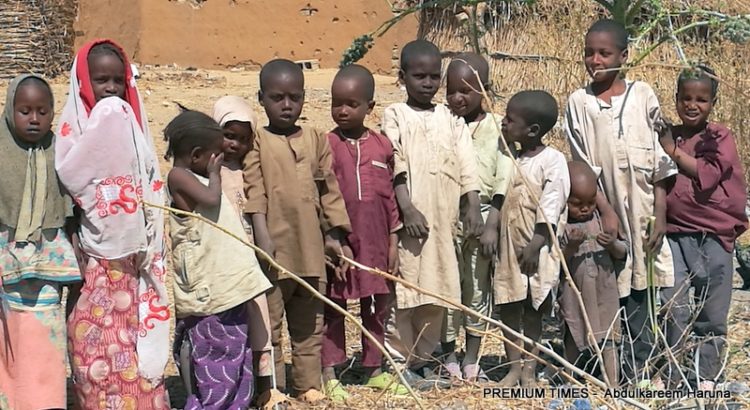
Currently, Nigeria has over 10 million out of school children.

The Minister said the collective task of delivering to all Commonwealth member countries a cherished common future marked with togetherness, was with a functional way of doing things.

Speaking on the connection of Nigeria to the common future, Mr Adamu said Nigeria reveres her cultural, economic and educational exchanges as it has contributed immensely to the common future the countries desire.

COMMONWEALTH SCHOLARSHIP

Meanwhile, he said more than 2000 Nigerians have benefited from Commonwealth scholarship since its inception, with an average of 12-18 beneficiary scholars every year.

“Besides these, the Federal Ministry of Education coordinates other bilateral schemes in which there are at least 450 beneficiary scholars.”

The Minister said the common threat to member states includes an existential threat to life by climate change and not limited to disruptive forces to the peace of members nations.

Mr Adamu, however, said Nigeria is committed to the peace of member nations and the entire world.

Also speaking, the Minister of State for Education, Emeka Nwajiuba, said various activities were organised by the Federal Ministry of Education, which he outlined as flag parade, theme song, dance drama and cultural display.

Mr Nwajiuba said they were planned to stir the interest of Nigerian youths towards connecting, innovating and transforming themselves towards achieving a developed nation in line with the Year 2020, theme.

Queen’s message

In her message on 2020 Commonwealth Day, Queen Elizabeth said the Commonwealth occasions are always inspiring and aimed at reminding of the diversity of the people and countries that make up the worldwide family.

The message was delivered by the Director of Education Support Services, Linda Giginna.

“We are made aware of the many associations and influences that combine through Commonwealth connection, helping us to imagine and deliver a common future.

“This is particularly striking when we see people from nations, large and small, gathering for the Commonwealth Games, for meetings of Commonwealth governments, and on Commonwealth Day.”

The Queen said she was encouraged to see how the countries of the Commonwealth “continue to devise new ways of working together to achieve prosperity, whilst protecting the planet”.

“As members of this very special community, on this Commonwealth Day, I hope that the people and countries of the Commonwealth will be inspired by all that we share, and move forward with fresh resolve to enhance the Commonwealth’s influence for good in our world.”

Source of the notice: https://www.premiumtimesng.com/news/more-news/381011-nigeria-to-secure-n45-billion-grant-to-help-out-of-school-children.html

Comparte este contenido:

China: Millions of children across the world aren’t going to school. It’s not just their education that could suffer

Asia/ China/ 10.03.2020/ Source: edition.cnn.com.


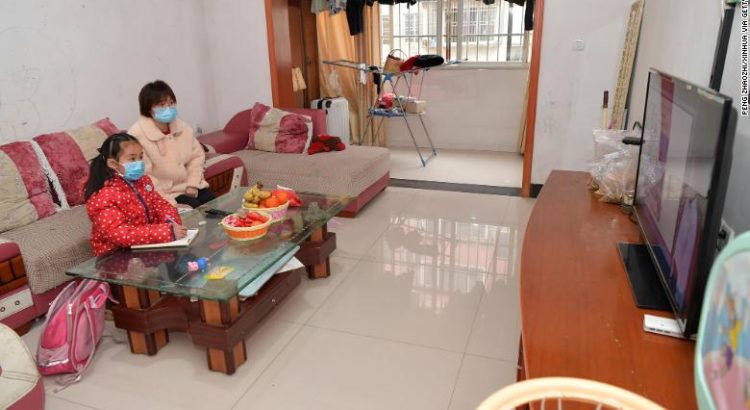
For 18-year-old Huang Yiyang, school starts when she opens up her laptop.

Over the past two weeks, there have been no school bells, bustling corridors, busy canteens or uniforms. Instead of physically traveling to her public school in Shanghai, Huang sits at her laptop from 8 a.m. until 5 p.m. often in her pajamas, watching livestreamed class after livestreamed class.
For physical education class, her teacher performs exercises for students to follow. For English, she sits silently through lectures to virtual classrooms of 20 to 30 students.
She puts stickers or tissues over her webcam, so her classmates can’t see her if a teacher calls on her to answer a question. «We’re at home, so we don’t look so good,» she says.
Huang barely leaves the house, and she hasn’t seen her friends for a month. But while she is isolated, she’s also part of what may be the world’s largest remote learning experiment.
An English teacher gives online tuition to students at Lushan International Experimental Primary School in Changsha, central China's Hunan Province, Feb. 10, 2020.

China is battling a deadly coronavirus outbreak that has killed more than 2,700 in the country alone. In a bid to stop the spread of the disease, schools across the country are closed, leaving about 180 million school-aged children in China stuck at home.
And mainland China is just the start. Millions of students in Hong Kong, Macao, Vietnam, Mongolia, Japan, Iran, Pakistan, Iraq and Italy have been affected by school closures. For some, that means missing class altogether, while others are trialing online learning. Authorities in the United States, Australia and the United Kingdom have indicated that, if the outbreak gets worse, they could shut schools, too.
But while online learning is allowing children to keep up their education in the time of the coronavirus, it’s also come with a raft of other problems. For some students, the issues are minor — shaky internet connections or trouble staying motivated. For others, the remote learning experiment could come at a cost of their mental health — or even their academic future.

What it’s like doing school from home

The components are the same: a laptop, an internet connection, and a bit of focus. But thetype of online study differs from school to school, and country to country.
For Huang, learning at home means spending hours in front of a computer with little social interaction. There’s no discussion in class, and she often can’t hear her teacher because of the poor internet connection. She feels her classmates — and their teachers — are struggling to stay motivated.
«We cannot give (the teachers) a response even though they want it. So they feel bad and we feel awkward as well,» she said.
Teacher Zhang Weibao shoots a video course at a middle school in Urumqi, northwest China's Xinjiang Uygur Autonomous Region, on February 3, 2020.

Even after class, her work isn’t over. She usually stays up until about 10 p.m. each night, completing homework which she submits online. Although she doesn’t see her friends face-to-face, Huang says she actually feels closer to them — they talk more than they would usually on Chinese online messenger apps such as WeChat and QQ because they’re all hungry for contact.
«Because we can’t meet anyone our age in reality, so we have to go online.»
Across China, primary and middle school students are required to provide online learning, according to state media agency Xinhua. China has started broadcasting primary school classes on public television, and launched a cloud learning platform based on its national curriculum that 50 million students can use simultaneously.
In Hong Kong, where schools have been closed for a month, some teachers are doing things differently.
At the International Montessori School, students work together in small groups on Google Hangouts so they can all see and talk to each other.
The school started off just posting videos and activities for students on their website, but quickly realized that it was crucial for children to see each other and speak with their teachers. Now they study together in small online groups.
«They were all getting cabin fever — they were all locked inside in apartments,» said principal Adam Broomfield. «I’ve never experienced a school closure like this.»
The different learning style has actually led to innovation, he said — a student made a video explaining how they solved a math problem, and a teacher made a video from a beach to help with a geology lesson.

Schooling in Italy

Students in Hong Kong and mainland China have been isolated for weeks already, but in Italy, where the number of people infected with coronavirus soared past 800 this week, remote learning has just started.
What to know about the coronavirus

The novel coronavirus is spreading globally and has killed at least 2,800 people, the vast majority in mainland China. There have been more than 83,000 global cases, with infections on every continent, except Antarctica.

Here’s what’s happening:

Schools closed this week in the northern regions of Lombardy and Veneto, which include the cities of Milan and Venice, and together have a combined population of about 15 million.
In Milan, Gini Dupasquier’s two daughters have been learning through a combination of live PowerPoint presentations, group work with other students over Google Hangout, and a live chat with teachers.
«Emotionally, they’re fine,» Dupasquier said. «They’re having fun with this new method. So far I see no problem at all.»
A bigger problem for her — like other working parents — is having to balance being at home with her child with the demands of her job as a consultant. «I need to adapt my working hours,» she said. «The balance is a bit tough.»
In Casalpusterlengo, a northern Italian town in the so-called «red zone» where tens of thousands of residents have effectively been cut off from the rest of the country, Monica Moretti’s 15-year-old daughter doesn’t have access to livestreaming — instead, she’s doing homework using an electronic notebook. Unlike many children in mainland China, every afternoon she goes for a walk.

Future-defining exams

Students in senior grades are potentially facing bigger problems than falling behind on their schoolwork.
Jonathan Ye, an 18-year-old high school student in his final year at international school Shanghai Pinghe, has conditional entry to university in the United Kingdom. He still needs to do well on his final International Baccalaureate exam in May if he wants to start university overseas — something he’s been working toward for years.
«If I do not do well on that exam, then I’m screwed,» he said. «I think I’ll be OK because I like to self-study, but I’m not sure. I still get nervous because we are not going to school right now, so we might be missing information from the teacher.»
But Ye’s situation is better than most.
High school students take part in a rally for relieving stress two days ahead of the upcoming annual gaokao or college entrance examinations in China, in Haikou in China's southern Hainan province.

In June, the vast majority of final year students in mainland China are due to sit the gaokao — the notoriously intense and ultra competitive university entrance exams. Even at the best of times, those exams can change lives — they can be the difference between a prestigious university and no university at all.
Students become consumed by studying for the test, and teachers sometimes tell them to focus on nothing else. While it’s possible to resit the gaokao, that would require studying your whole final year again.
The Ministry of Education said it will assess and decide whether to delay the gaokao. Beijing authorities have already said there will be an online mock exam ahead of the gaokao — although that isn’t the actual gaokao exam.
Although Hong Kong schools are shut until April 20, the city will still hold its university entrance exam on March 27 as planned. The only difference: students will be required to wear face masks and desks will be moved further apart than normal.
A teacher gives a lecture with her smart phone during an online class at a middle school in Donghai in China's eastern Jiangsu province on February 17, 2020.

That’s also an issue for students sitting other exams. Hong Kong-based Ruth Benny found home study just wasn’t working for her 14-year-old daughter, who is sitting GCSEs this year. «There was no learning happening. It was just like a big long holiday,» she said. Her daughter has now transferred to boarding school in the United Kingdom.
Some parents have raised concerns over paying expensive international school fees when their child isn’t doing regular schooling.
Benny, who runs education consultancy Top Schools, said that if schools are doing the best they can, there’s no need for reimbursement.Her 12-year-old son normally boards during the week at Harrow International School in Hong Kong, but they’ve reimbursed the cost of boarding while her child is out of school. «It’s really as good as it can be, but I know that it’s not like that for all schools.»
Broomfield, the principal of International Montessori School, said that if schoolsreimbursed parents, the schools might not survive.
«We still have to run, we still have to pay our staff. We still want a school here when all this is over,» he said. «I just don’t see how those refunds can be provided.»
And he pointed out that it had been a difficult time for teachers too, with much longer hours than usual, and a steep learning curve, particularly for the «tech dinosaurs» on their staff.
In a way, the situation was like trying to plumb a bathroom with the water still running, he said. «We had very little preparation for this,» he said. «If you’re going to renovate your bathroom, you turn your water off first. This was a whole replumbing of education, but we had to do it on the run.»

Psychological effects

There’s also a risk that studying from home could impact children psychologically.
Hong Kong-based mental health expert Odile Thiang said the loss of routine and the loss of social activity could have a big impact on children, who were also stuck inside with their parents during an already stressful time. «There’s also that general fear of contamination that people are feeling, so everything is adding up.»
«(The psychological lessons) is yet to be learned, to really see what is going to come out of this major public health experiment that we’re doing here,» she said, adding that children tend to be very resilient.
Chris Dede, a professor at Harvard University’s Graduate School of Education, said there were plenty of studies showing the negative psychological effects on students who had been isolated from their peers after suffering serious illnesses.
Children studying from home could experience the same effects. But he pointed out that, in this situation, whole schools were studying remotely — not just one single student who might feel lonely and left out.
«The shared problem becomes a way of having shared support,» he said.

Is studying remotely a good thing?

It’s not the first time that schools have had to shut down or experiment with remote learning. In countries with particularly harsh winters, children sometimes find their school canceled for «snow days.» In Hong Kong, some schools canceled classes last year over the ongoing pro-democracy protests.
And it’s not like education experts have never thought of studying without a face-to-face teacher before. Children in remote parts of Australia have long taken lessons via education programs over the radio. And, in China artificial intelligence has been touted as a way to ensure students in rural communities get a better education.
A teacher gives a lecture in front of a camera during an online class at a middle school in Donghai in China's eastern Jiangsu province on February 17, 2020.

According to Dede, a mix of online and face-to-face teaching is better than learning entirely offline, or entirely online. But the crucial thing isn’t the medium, he said — it is the quality and the method of teaching.
«The worst thing for children would be just to be isolated, at home, without emotional support from their friends, without the opportunity to have a skilled educator to help them learn,» he said.
He sees this as a chance for educators to experiment with new teaching approaches, and then take what works back into the physical classroom.
Regardless of the teaching style, students were still lucky in a sense that this was happening now.
«We have social media, and the internet, and we have smart phones. So the degree of isolation and the degree of lost opportunity to learn would have been much greater if this happened two decades ago,» he said.
Source of the notice: https://edition.cnn.com/2020/02/28/asia/remote-school-education-intl-hnk/index.html
Comparte este contenido:

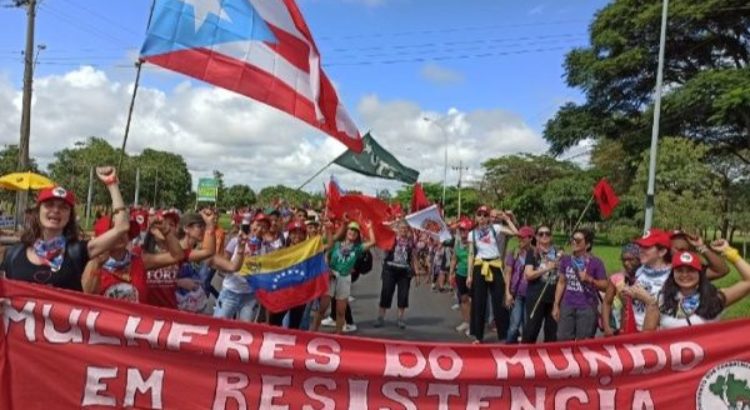
Marchan Mujeres sin Tierra de Brasil contra la opresión

América del Sur/ Brasil/ 10.03.2020/ Fuente: www.telesurtv.net.

Además del Distrito Federal, las Mujeres sin Tierra se movilizan en todos los estados del país con marchas, ocupaciones, debates y capacitación.

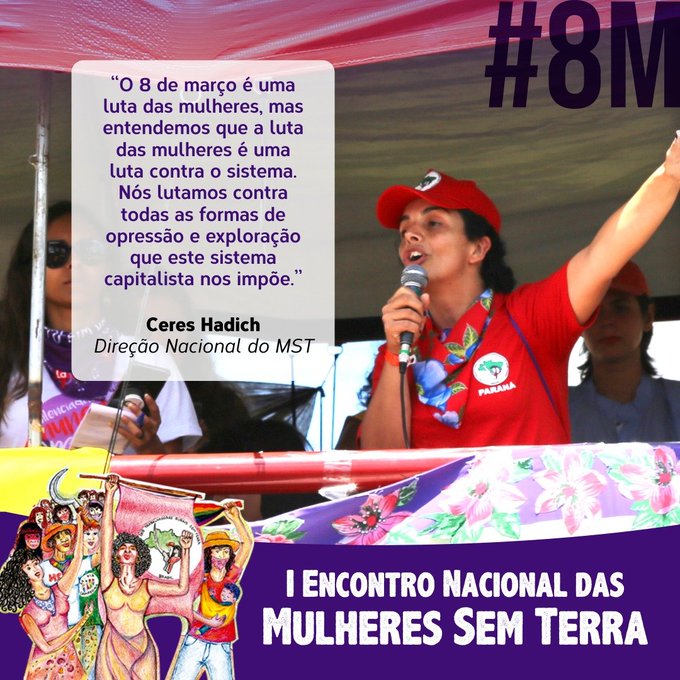
En el contexto del primer encuentro nacional de Mujeres Sin Tierra, más de 3.500 féminas marcharon en Brasilia contra el racismo, el machismo, la violencia y todas las formas de opresión contra la clase trabajadora.

“Caminaremos juntos contra todas las formas de violencia, por el derecho a la diversidad, por la autonomía, por la libertad, por el derecho y la soberanía de nuestros cuerpos, por el derecho a existir”, consta en la convocatoria de la manifestación.

Precisa además que “estamos en defensa de los avances en derechos logrados por la clase trabajadora que han sido retirados. Lucharemos contra la violencia y el recorte de fondos promovido por el Gobierno de Bolsonaro para programas sociales, que debilitan y ponen en peligro la vida de las personas más pobres”.

MST Oficial

@MST_Oficial

✊🏾O Ato Unitário do em Brasília fez parte da programação do I Encontro Nacional das Mulheres Sem Terra.
🚩As Mulheres do MST marcharam ao lado de companheiras de mais de 50 organizações, numa luta contra o machismo, o racismo e o fascismo.
Ver imagen en Twitter

La concentración partió desde el Parque de la Ciudad hacia el Palacio de Buriti (sede del gobierno del Distrito Federal) y enrumbó después para la Fundación Nacional de las Artes, situada junto a la torre de televisión de Brasilia.

Además del Distrito Federal, las Mujeres sin Tierra se movilizan en todos los estados del país con marchasocupacionesdebates capacitación.

Como parte de encuentro, la expresidenta de Brasil Dilma Rousseff destacó el coraje y la voluntad de luchar en todos los frentes del movimiento, en defensa de la soberanía y contra todas las formas de violencia.

Fuente de la noticia: https://www.telesurtv.net/news/marchan-mujeres-tierra-contra-formas-opresion-20200308-0018.html

Comparte este contenido:
Page 1457 of 6195
1 1.455 1.456 1.457 1.458 1.459 6.195