Saltar al contenido principal
Page 1747 of 6195
1 1.745 1.746 1.747 1.748 1.749 6.195

.Sweeping education ballot initiative OK’d for signatures

A voter initiative that calls for what supporters say is an Alaska Students’ Educational Bill of Rights  was approved by Lt. Gov. Kevin Meyer today, upon advice of the Department of Law.

The group behind the measure can proceed with gathering signatures in petition format, and that would lead to a question being put to voters.

The initiative outlines lofty, undefined, and unquestionably expensive goals that include certain vague outcomes, such as pre-K programs, and a “quality” education for all children in a state where education spending is the highest in the nation per student, but which has some of the poorest outcomes.

The initiative goes so far as to mention that learning begins at infancy, suggesting that in future years, litigation could occur if programs for infants are not implemented statewide. The initiative also mentions better pay for teachers and seems to grant authority that is now at the district level to the state:

The initiative says the State should ensure:

“students of all ages have access to a continuous system of high-quality public education;

“incentives are in place to make voluntary pre-elementary programs as available, affordable, and high-quality as possible;

“investments are made in high-quality, voluntary pre-elementary programs that reflect the best available data on outcomes for students throughout their academic careers;

“public schools are safe, accessible, and modern in order to facilitate an environment conducive to learning;

“public schools receive the tools, including salaries and benefits, to attract and retain highly-qualified professionals in a manner that is competitive with other jurisdictions;

“public schools provide a classroom environment, including class-size, caseloads, and educator workload, that is conducive to frequent one-on-one interactions with educators;

“public schools offer a comprehensive education that includes career and technical education; engineering; world languages; language arts; mathematics; physical education; science; social studies; technology; visual and performing arts; consistent with the provisions of AS 14.35.010-030; and other electives offering enrichment;

“voluntary pre-elementary programs and public schools offer access to extracurricular activities that enhance skillsets beyond the classroom;

“voluntary pre-elementary programs and public schools prepare students to be good citizens and productive members of society;

“public schools provide culturally sensitive curricula, including programs, experiences, and teaching methods that speak to and preserve Alaska Native identity and history, and reflect the needs and cultures of diverse student populations;

“where practicable, voluntary pre-elementary programs and kindergarten through twelfth-grade public education are available at or near each student’s place of residence; and

“voluntary pre-elementary programs and public schools provide for the social and emotional needs of students in order for them to succeed in their program expectations and academic studies.

UNIVERSITY INVESTMENTS

In addition to birth through 12th grade overhaul of education, the initiative calls for an undefined and non measurable investment in university programs, to ensure:

“quality public university education is affordable and accessible to Alaskans of all economic means and provides a clear value when compared to universities in other jurisdictions;

“provide for the maintenance of university facilities; ensure that academic programs and educational technology, including connectivity among university campuses, support lifelong learning opportunities for Alaskans in urban and rural Alaska; encourage research, discovery, and creative activities and, where appropriate, the commercialization of those activities in support of economic development and diversification; ensure coordination with Alaska’s schools in the preparation of educators and education leaders, and through provision of dual enrollment opportunities for academically qualified students; collaborate with the Alaska Department of Education and Early Development and the Alaska Department of Labor and Workforce Development to ensure that Alaska’s students are prepared for a productive career that meets the needs of Alaska’s employers; provide programs and services that build on and contribute to the rich cultural diversity of Alaska’s people.”

The group of educators promoting the measure will need to collect 28,501 signatures and has a year to do so.

Comparte este contenido:

.PNG: Has education policy reform worked?

The ambition to improve the quality of teaching and
provide free education has not entirely matched reality.

Papua New Guinea continues to reform its education sector. In recent years, the spotlight has been on teaching quality. Research by the World Bank indicates that teacher effectiveness is the most important school-based predictor of student learning. Despite this, PNG has lacked a clear roadmap and funding for the upskilling of teachers.

The Tuition Fee Free (TFF) policy was launched in PNG in 2012. It was the fourth attempt at providing free education. Initial reviews of the policy found it to be successful in reducing financial costs to families, with most schools surveyed having received the subsidy. In recent years, however, it has become evident that implementation of the policy has varied significantly between provinces, and contradictory approaches to financial management have caused confusion and inefficiencies.

While a main priority of the TFF policy is to reduce costs to households, TFF subsidies have not always been paid in full, requiring parents to contribute additional funds. In 2016, the subsidy was separated into three buckets – a cash administration component, a teaching and learning component, and an infrastructure component. Previously, schools had been issued TFF subsidies directly, but following the 2016 reforms, only the administration component was given to schools, with the other two components going to the provincial government.

Partly, this was born of concerns that schools were not managing the funds properly and required greater oversight from provincial administrators. Anecdotal evidence suggests that some administrators police the funds rigidly and have implemented their own compliance requirements for schools in order to issue funds.

As of 2019, the TFF policy continues to operate successfully in some provinces, with limited success in others, particularly remote and island provinces such as Gulf and Milne Bay. The main concerns raised by educators are that TFF subsidies are not received on time, and parents are having to contribute their own fees, which in some instances keeps them from sending their children to school at all.

In 2016, the National Department of Education announced that it would terminate the contracts of more than 3000 partially trained elementary teachers within 12 months if they didn’t complete their certification. After the Kokoda Track Foundation and the PNG Education Institute committed to training them, the Department agreed to extend the deadline for certification to the end of 2018.

Between 2016 and 2018, 3685 partially trained teachers across 14 provinces received their elementary certification. In most case, the teachers had completed one of three parts of their training, which then varied the length of the training required for completion. After additional training, they were certified to teach all three years of elementary schooling.

The Government of PNG has remained focused on teacher quality, in order to see large-scale improvements to teaching outcomes. Elementary teachers in some provinces reportedly remain unpaid and have no indication of when they can expect to be on the payroll. There has been confusion around the accreditation process, and ongoing delays, which have prevented teachers who work full-time from being paid, including in Milne Bay and Southern Highlands provinces.

The current system of education in PNG is known as 3-6-4, which involves three years of elementary, six years of primary, and four years of secondary school. In alignment with the Australian system, and other education systems, the PNG has committed to transitioning to 1-6-6, meaning one year of elementary and six years of primary and secondary, respectively.

Minister for Education Joseph Yopyyopy announced at an education conference in Goroka in July 2019 that the 1-6-6 transition would be rolled out by 2030. In order to make this transition, teacher qualifications will need to be upgraded, alongside improvements to school infrastructure. The newly trained cohort of elementary teachers will lose two-thirds of their students, requiring them to retrain as primary teachers, teach only first-year students, or prepare for incoming pathways into newly proposed early-childhood care and education.

Although 1-6-6 makes sense in theory, implementation of the policy is causing concern. Schools are concerned they don’t have adequate infrastructure as is, and classes are already overcrowded. Opportunities for further training and professional development for teachers are scarce, and monitoring of teacher performance is equally uncommon. Thus, there is very little baseline data on teacher quality across the country, nor any plan on how the national population of teachers will be upskilled in readiness for 1-6-6.

In the wake of PNG hosting Asia-Pacific Economic Cooperation (APEC), questions have been raised about whether expenditures intended for the education budget were reallocated to APEC spending, including the purchase of luxury vehicles for delegates. In July 2019, the then–Shadow Treasurer and now Treasurer Ian Ling-Stuckey asked parliament why there had been an education underspend of up to 50%.

There is continued concern regarding teacher salaries, and a fear of further pay cuts. Deterring high-performing young people from entering teaching careers, out of a belief that the salary and benefits will be limited, is a risky step in the wrong direction for PNG.

Despite these concerns and challenges, anecdotal evidence suggests that there is widespread commitment among teachers to the profession and that many identify alternative pathways in which to support their schools and their positions, including partnerships with communities, Churches, and NGOs.

Further reform is needed. A nationwide stock-taking of school infrastructure needs would be a possible starting point. Further, teachers and trainers require greater performance monitoring, as well as further opportunities for training and professional development. For PNG to achieve its vision of having a world-class education system, teachers need to be appropriately trained, resourced, and supported, and other stakeholders in the education sector need clear and evidence-based directives from the top to promote collaboration and consistency, rather than contradiction and confusion.

Fuente de la Información: https://www.lowyinstitute.org/the-interpreter/png-has-education-policy-reform-worked
Comparte este contenido:

‘Political partisanship’ in NI prevents improvements to education

«Political partisanship» has prevented meaningful improvements to education during the period of devolution.

That is according to research from Northern Ireland think tank Pivotal.

«Education, Equality and the Economy» by Professor Tony Gallagher of Queen’s University Belfast was launched on Monday.

It said that Northern Ireland’s «fractious» political system has prevented changes in education for the «common good.»

‘Affluent backgrounds’

«Has our education system provided the generation of the ‘ceasefire babies’ with better options and possibilities than the generations which preceded them?» it asked.

«To what extent has devolution and local control of education had an impact on education and educational outcomes?»

Professor Gallagher said that political disagreement had prevented progress on key challenges.

For instance, children from affluent backgrounds in Northern Ireland are much more likely to achieve better qualifications than disadvantaged children.

‘Scandalous circumstance’

In 2017/18, according to the Department of Education, more than half of children (51%) entitled to free school meals achieved 5 GCSEs including English and Maths at grades A*-C.

That compared to almost four in five pupils (79%) who were not entitled to free school meals.

While the gap has closed in recent years, it remains significant.

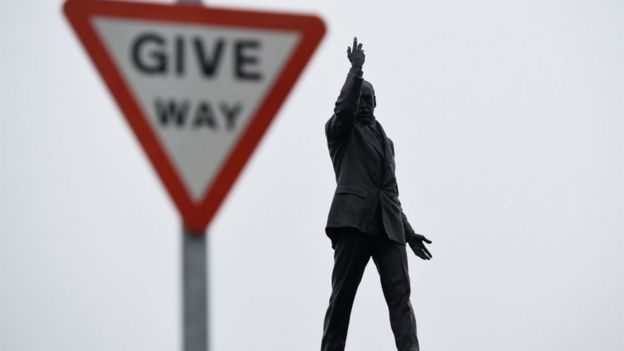
The statue of Edward Carson at Stormont next to a 'Give Way' road signImage copyrightREUTERS
Image captionNorthern Ireland has been without an executive since January 2017

«It is difficult to understand why this is not perceived more generally as a scandalous circumstance and subject to urgent and immediate interventions,» Professor Gallagher said.

«Pupils entitled to free school meals are much less likely to go into higher education, in comparison with pupils not entitled to free school meals, and this effect is greater for boys than girls.»

Professor Gallagher was also critical of some schools for «gaming» the system to make their exam results look better in unofficial ‘league tables’ published by newspapers.

He claimed that some schools removed «low performing» pupils from their data or prevented some students from moving from AS to A-level year if their performance was not deemed good enough.

According to the Department of Education, almost 7% of year 12 pupils were deemed ineligible for inclusion in GCSE exam results data in 2017/18.

‘Abject failure’

This, Professor Gallagher said, reflected a narrow focus on exam performance rather than the wider values of education.

«What if we were to commit to a goal that, by the time every young person completed their time in education, they would have the qualifications, attributes and attitudes that would allow them to live fulfilled lives as citizens?» he wrote.

«This would involve a recognition that we would not necessarily provide all with the same outcomes, but that all outcomes would be valued.»

On academic selection, Professor Gallagher accused the political parties of «abject failure.»

«The outcome of this debate represents the inability of shared government to find the compromises that might have allowed them to pursue a solution, and an abject failure by them to work cooperatively toward an agreed outcome and the common good,» his paper said.

«The level of inequity in outcomes based on social background remains extreme.»

He further argued that a failure to reform the way schools are funded has led to a «crisis,» especially in primary schools where pupil numbers are rising.

Other reforms – to the number of sectoral bodies in education, for instance – had also been hampered by political parties pursuing their own narrow interests, he said.

«It is hard to escape the conclusion that education could do a lot more to empower young people to believe that a better, shared world is not only possible but achievable,» he concluded.

«We can see so many examples of education policy where political partisanship has got in the way of the common good and a positive response to challenges that have such negative consequences for the whole of society.»

Pivotal is a Northern Ireland think tank independent of government.

Its partners include Queen’s University and Ulster University.

Fuente de la Información: https://www.bbc.com/news/uk-northern-ireland-49880647

Comparte este contenido:

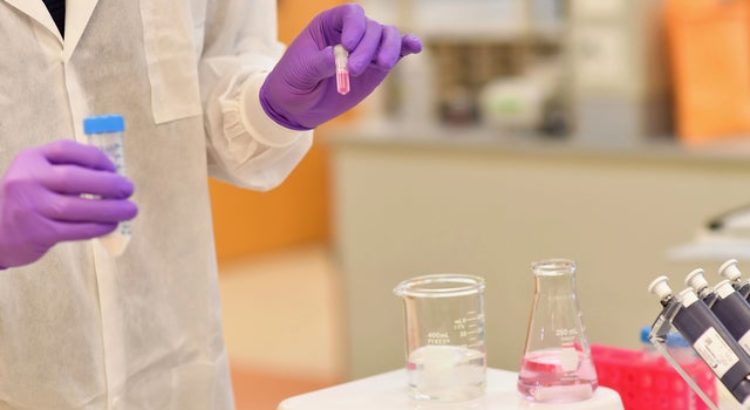
Reino Unido: UK schools will soon be able to ‘tailor education to children’s DNA profiles

Professor Robert Plomin said DNA testing could be used for ‘predicting and preventing’ learning problems such as reading difficulties

Schools in the UK will soon be able to tailor the education they provide based on information about their pupils’ genetic profiles, an expert has said.

Professor Robert Plomin, a geneticist from King’s College London, said DNA testing could be used for “predicting and preventing” learning problems and to move away from a «one size fits all» curriculum.

In a talk for the Headmasters’ and Headmistresses’ Conference (HMC) – an association of private school heads – he said: “It’s very important for parents to recognise that kids are genetically different and to go with the flow of it, rather than pre-ordaining the way you want your children to come out.

“In education, I think a universal, one size fits all national curriculum can’t work because kids are genetically different.”

Polygenic scores

He said that genotyping is already available privately – and will soon be offered on the NHS – allowing people to “measure millions of DNA differences across the genome”.

This can be used to create a “polygenic score” which shows an individual’s likelihood of having different health conditions, as well as certain psychological and education traits.

Professor Plomin said: “You will be having parents coming to you – it’s happening in America – saying ‘my kid has a strong genetic risk for a reading disorder and needs special services’, for example.”

“The thing with these polygenic scores is there’s no tutoring, there’s no bias, there’s no test anxiety, and you can make these predictions at birth, because your DNA does not change during your life. So this is a very big deal, and it’s happening now.”

When Mr Cummings was a special adviser in the Department for Education, he invited Professor Plomin to give a series of lectures to civil servants about genetics.

At the HMC event, Professor Plomin was asked whether schools might just give up on certain students if their DNA profiles suggested their prospects for educational attainment were low.

He said: “This is a concern a lot of people have, that if you find out about a genetic propensity you say ‘oh well there’s nothing I can do about it.’”

‘Roll up your sleeves’

However, he said he thought this would not happen. He pointed out that he had a genetic propensity towards obesity, but used this information to make sure he controlled his weight.

“My highest polygenic score is for Body Mass Index… I’m a genetic fatty,” he said.

“I find it very motivating because I know I’m in a lifelong battle of the bulge, I have to arrange my environment properly, I can’t have junk food around the house.

“I think the same thing is true of education… does that mean you give up? Absolutely not. It means you roll up your sleeves and you put a lot more effort in.”

Fuente de la Información: https://inews.co.uk/news/education/uk-schools-tailoring-education-dna-639043

Comparte este contenido:

México: Pide fomentar igualdad de género desde primera infancia

América del Norte/ México/ 01.10.2019/ Fuente: www.imagenradio.com.mx.


La coordinadora del PRD en la Cámara de Diputados, Verónica Juárez Piña, presentó una iniciativa para modificar de la Ley General de los Derechos de Niñas, Niños y Adolescentes, con el propósito de fomentar desde la primera infancia el derecho de la educación y una interacción con mayor equilibrio e igualdad entre los géneros.

Juárez Piña propuso que se defina una instancia multidisciplinaria responsable que establezca mecanismos para la prevención, atención y canalización de los casos de maltrato, perjuicio, daño, agresión, abuso o cualquier otra forma violenta de relación entre las niños y adolescentes.

Refirió que el artículo tercero de la Constitución Política establece que “toda persona tiene derecho a la educación”, de calidad en condiciones de equidad, además de que todos los habitantes del país deben contar con las mismas oportunidades de acceso, tránsito y permanencia en el sistema educativo nacional.

La legisladora expuso que si bien se ha avanzado en la cobertura escolar, se ha descuidado la calidad de la infraestructura de los planteles educativos, lo que influye de manera significativa en el aprendizaje de los estudiantes.

Dijo que el proceso educativo también debe incluir calidad en la forma en que la niñez recibirá una educación con visión de igualdad de género, sociedad futura más equilibrada, menos violenta y equitativa, por niños y adolescentes que en el futuro tengan más oportunidades y sean más libres en una sociedad con igualdad sustantiva.

Por ello, propuso reformar los artículos 57 y 59 de dicha ley, a fin de garantizar servicios educativos en infraestructura óptima para el buen desempeño de la tarea docente y el logro del aprendizaje que coadyuve al pleno desarrollo y una adecuada integración social de los estudiantes.

Planteó que se deben elaborar protocolos especiales de actuación sobre situaciones de emergencia por fenómenos naturales, acoso o violencia escolar para el personal y para quienes ejerzan la patria potestad, tutela o guarda y custodia.

Fuente de la noticia: https://www.imagenradio.com.mx/pide-fomentar-igualdad-de-genero-desde-primera-infancia

Comparte este contenido:

Finlandia no ha prohibido los colegios privados

Por: Marisa López González.

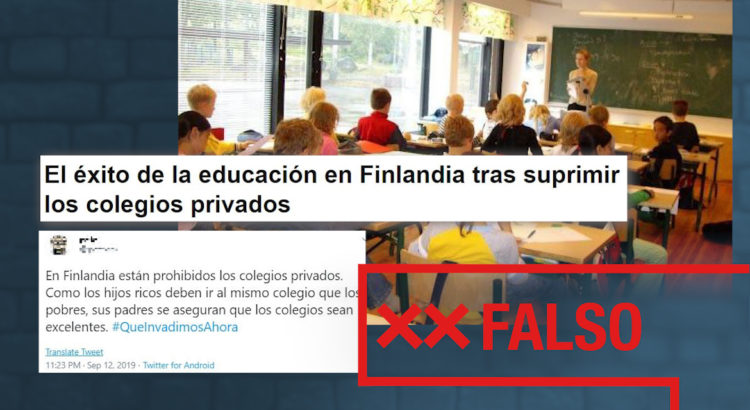
Titulares y mensajes aseguran que Finlandia ha suprimido la educación privada. Esto es falso. El Ministerio de Educación del país ha desmentido a Newtral esta información.

Diferentes publicaciones aseguran que el éxito de la educación en Finlandia – un país que siempre obtiene buenos resultados en los trienales informes PISA– está en la abolición de la educación privada. «Como los hijos ricos deben ir al mismo colegio que los pobres, sus padres se aseguran que los colegios sean excelentes», afirma un usuario en Twitter. Esto es falso. El Ministerio de Educación de Finlandia ha confirmado a Newtral que no han prohibido los colegios privados.

Finlandia tiene colegios privados aunque no son muy comunes, sólo representan un 2% del total«El gobierno puede autorizar el ejercicio de la enseñanza a una asociación y/o fundación. Este permiso se aplica a la educación básica (de los 7 a los 16 años), la educación pre-primaria (6 años), la educación básica adicional voluntaria y la educación para la preparación de inmigrantes para la educación básica», explican desde el Ministerio.

Los requisitos

La autorización está condicionada a que haya una necesidad educativa o cultural específica y un acuerdo entre la fundación y/o asociación y la autoridad local. En ciertos casos, el gobierno podrá concederla aunque no exista este acuerdo, por motivos de necesidad educativa y cultural, regional o nacional.

Además el solicitante de la autorización tiene que cumplir con determinados requisitos profesionales y financieros y está prohibido el ánimo de lucro. «Sin embargo, en ningún caso, el gobierno está obligado a conceder la autorización y puede revocarla si las organizaciones no cumplen con las condiciones o si se proporciona la educación en contra de la ley de educación básica del país», añaden.

Todos estos requisitos se aplican a las fundaciones y/o asociaciones que quieren recibir fondos del gobierno y tener el derecho de otorgar diplomas. «De lo contrario, no hay limitaciones respecto a establecer una escuela privada«, señalan a Newtral desde el Ministerio de Educación del país nórdico.

La educación básica privada, pero gratuita

El artículo 16 de la Constitución finlandesa reconoce el «derecho a una educación básica gratuita», es decir, aquella que comprende desde que los niños cumplen 7 años hasta los 16. Por ello, está prohibido que los colegios públicos y los privados que se financian con dinero público cobren la matrícula. Los únicos que pueden exigir un precio son los privados. «Sin embargo, este tipo de escuelas privadas son muy poco frecuentes en Finlandia», aseguran desde el Ministerio.

Fuente de la noticia: https://www.newtral.es/zona-verificacion/fakes/bulo-finlandia-no-ha-prohibido-los-colegios-privados/

Comparte este contenido:

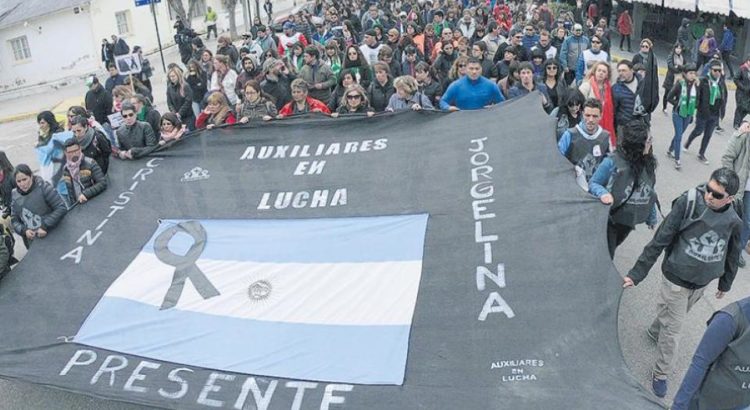
Argentina: Chubut: la huelga docente entró en su semana once

América del Sur/ Argentina/ 01.10.2019/ Fuente: www.pagina12.com.ar.


Los docentes chubutenses anunciaron formalmente la continuidad del paro de actividades, por lo que serán once semanas sin clases en la provincia. La Asociación de Trabajadores de la Educación del Chubut ingresó la nota formal ante las autoridades locales en la que informaron sobre «la continuidad del plan de lucha por 144 horas desde las 0 horas del lunes 30 de septiembre y hasta las 24 del sábado 5 de octubre». El gobierno de Chubut los citó a una reunión para hoy a las 18.

Los gremialistas le anticiparon formalmente al ministerio de Educación y a la secretaría de Trabajo locales que continuarán «la retención de servicios hasta que se abonen los aumentos previstos en los acuerdos celebrados y homologados legalmente, tanto en lo concerniente a infraestructura escolar como a lo salarial».

Los docentes reclaman por la falta del pago completo de los salarios de parte del gobernador Mariano Arcioni, situación en la que se encuentran casi todos los empleados estatales de la provincia.

Por su parte, el gobierno provincial trabaja en un cronograma para convocar a los empleados del Estado y avanzar en las negociaciones. Los docentes serán recibidos hoy a las 18. El gobernador se reunió con sus legisladores para dar forma al proceso de diálogo, así lo anunció el diputado provincial Jerónimo García, quien destacó que había sido «una reunión fructífera. Hoy se convoca a gremios de educación. Es fundamental arreglar un acuerdo para lograr la prestación de educación, salud y justicia».

El Gobierno provincial habría establecido un cronograma para convocar en cierto orden a los distintos sectores estatales. El primero será el gremio docente, convocado a una reunión este lunes a las 18 horas para intentar avanzar en la búsqueda de una salida al conflicto educativo provincial.

Según los gremios el paro tiene un acatamiento que supera el ochenta por ciento y desde el ministerio de Educación se reconoció que algunas escuelas no tienen clases desde el inicio del receso invernal.

Fuente de la noticia: https://www.pagina12.com.ar/222388-chubut-la-huelga-docente-entro-en-su-semana-once
Comparte este contenido:
Page 1747 of 6195
1 1.745 1.746 1.747 1.748 1.749 6.195
OtrasVocesenEducacion.org