Saltar al contenido principal
Page 1976 of 6193
1 1.974 1.975 1.976 1.977 1.978 6.193

Afgamistán: ‘Education is Under Fire’ in Afghanistan, the U.N. Children’s Agency Says’

By: Hillary Leung/time.com/29-05-2019 

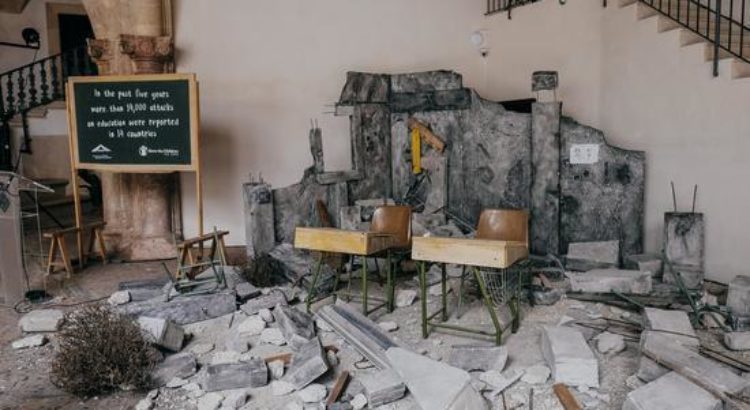
Schools in Afghanistan saw the number of attacks triple in a year, according to UNICEF, stoking further concern of deteriorating security and access to education in the country.

According to a report released Monday, there were 192 attacks on schools in 2018, up from 68 in 2017.

UNICEF Executive Director Henrietta Fore called the attacks senseless, adding that “education is under fire” in Afghanistan.

“The killing, injury and abduction of teachers, and the threats against education, are destroying the hopes and dreams of an entire generation of children,” Fore said.

The number of attacks was previously seeing a decline up till 2015. The 2018 parliamentary elections, which led to the closure of schools to be used as voter registration and polling centers, was one factor that caused the spike in violent incidents, the report said.

According to the report, close to half of all school-aged children in Afghanistan between the ages of 7 and 17, totaling an estimated 3.7 million, do not attend formal schools.

Girls account for about 60% of the children not attending school; Human Rights Watch cites discriminatory attitudes towards girls, child marriage and administrative barriers as among the reasons for the disparity. For five years under hardline Islamist Taliban rule, nearly all female education was prohibited in the country.

Afghanistan has one of the lowest literacy rates in the world at 31%, according to the World Bank.

Write to Hillary Leung at hillary.leung@time.com.

Fuente de la información: http://time.com/5596809/afghanistan-education-school-attacks-unicef/

Comparte este contenido:

Educación sexual integral: docentes y estudiantes reclaman que se implemente en todas las escuelas

América del Sur/ Argentina/28.05.2019/ Fuente: laizquierdadiario.com.

La acción tuvo como objetivo exigir la capacitación en servicio obligatoria para docentes y espacios de formación en las carreras terciarias y universitarias. A 13 años de sancionada la Ley de Educación Sexual Integral se continúa reclamando su plena implementación de acuerdo a lo establecido en la Ley de identidad de género.

Voces en defensa de la ESI y el aborto legal

De la radio abierta participaron diferentes organizaciones sociales y políticas, centros de estudiantes secundarios, colectivas feministas y docentes y estudiantes independientes.

Les estudiantes del colegio Vergara relataron el proceso de construcción del libro “¿Dónde está mi ESI?”. La presidenta del centro de estudiantes tomó la palabra para hacer la exigencia concreta de la formación en ESI para niñes y adolescentes y planteó “nosotres no podemos esperar nada de nuestro futuro si no peleamos en este presente por nuestros derechos”.
 
Maria Julia Constant, como parte de la Campaña Nacional por el Derecho al aborto legal, seguro y gratuito,explicó que la actividad se dio en el marco de la octava presentación de la ley por la Interrupción Voluntaria del Embarazo que se realizará hoy por la tarde en la Cámara Nacional de Diputados. Explicó el marco electoral, donde todos los candidatos de los partidos tradicionales, vienen haciendo declaraciones que van absolutamente en contra de un derecho tan elemental como es decidir sobre nuestros propios cuerpos.
 
María Diaz Reck, referente de Pan y Rosas y del PTS, participó planteando que la demanda de Educación Sexual Integral es urgente y que, a pesar de ser una Ley sancionada desde el año 2006, en las escuelas de los distintos niveles, no se implementa. Señaló también que muchas compañeras docentes y estudiantes están siendo perseguidas y amedrentadas por las autoridades educativas por hablar de la Ley de Educación Sexual Integral.

Agregó también “El Estado está presente, compañeres. Este viernes hay una movilización para reclamar justicia por les pibes que fueron masacrados por la policía del gatillo fácil en San Miguel del Monte. El Estado está presente atacando al conjunto de las y los trabajadores. Así lo hace este gobierno derechista de Macri, de Vidal y del conjunto de los gobernadores en sus provincias.”


Claudia Añazco San Martín, Secretaria de Género y Diversidad del SUTEBA Ensenada y referente de Pan y Rosas y del PTS, saludó la jornada y destacó la presencia de la cantidad de pibes y pibas. En su intervención, contó que el cuerpo de delegades del SUTEBA Ensenada, votó participar y convocar a esta jornada en defensa de la Educación Sexual Integral. “No podemos permitir que no se dé Educación Sexual Integral. Que las iglesias se metan en nuestra educación pública y que la escuela sea reproductora de esta lógica que las iglesias quieren imponer, donde no existen los cuerpos gestantes, donde no existen otras identidades de género, ni otras orientaciones sexuales.

Tenemos que levantar este reclamo como también el reclamo por el derecho a la Interrupción Voluntaria del embarazo. Nosotres, desde Ensenada, vamos a movilizar mañana por este reclamo. Pero, lamentablemente, nuestro sindicato SUTEBA y el Frente de Unidad Docente no convocan a parar ni a movilizar masivamente mañana a las puertas del Congreso.”


La gran repercusión en los medios locales demostró la urgencia de los reclamos.

Durante toda la jornada, se trabajó un petitorio impulsado por la Red, para lograr la ESI en todos los niveles educativos y el cese de la persecución a les docentes y estudiantes que intentan llevarla adelante en sus escuelas.
 
Como cierre se realizó un pañuelazo con el llamado a ser miles hoy, frente al Congreso para que el derecho al aborto sea ley.

Fuente de la noticia: http://laizquierdadiario.com/Educacion-sexual-integral-docentes-y-estudiantes-reclaman-que-se-implemente-en-todas-las-escuelas

Comparte este contenido:

Anuncian paro de maestros en Bogotá para el 30 de mayo

América del Sur/ Colombia/ 28.05.2019/ Fuente: www.rcnradio.com.

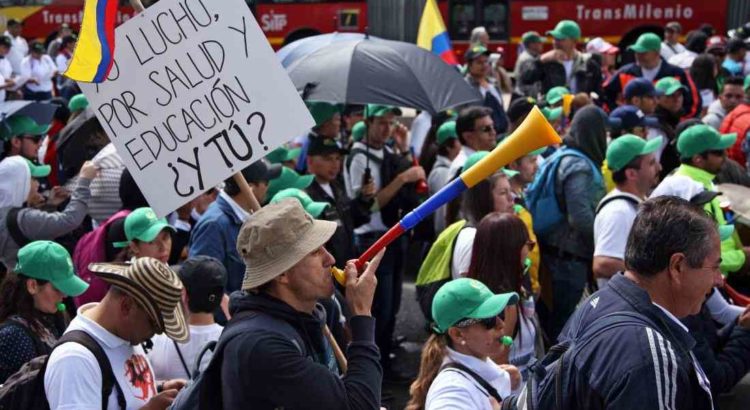
La Asociación Distrital de Trabajadores y Trabajadoras de la Educación (ADE), ratificó que el próximo 30 de mayo realizarán un paro distrital debido a la negligencia de la Secretaría de Educación, la cual no les ha dado respuesta a un pliego de peticiones presentado el pasado 28 de febrero, en el que exigen garantías tanto para los estudiantes de colegios oficiales, como para los trabajadores, en cuanto a temas de salud e infraestructura.

El presidente de la asociación, William Agudelo, manifestó que aproximadamente 33 mil docentes y 700 mil estudiantes participarán en la jornada de protesta. Asimismo, puntualizó que la Secretaría de Educación, tras 40 días de negociaciones, aún no ha dado respuesta. “Los diálogos se presentaron de manera simulada por parte del Distrito, sin ofrecer soluciones hacia el déficit por el que actualmente atraviesa el sector de la educación en la capital colombiana”.

La ADE resaltó que el paro se desarrollará con el fin de que el Gobierno dé garantías en cuanto a los temas de salud, infraestructura, jornada única y la educación nocturna.

“Exigimos al alcalde Enrique Peñalosa una negociación inmediata con el sindicato más grande del país. Ya no damos más espera porque hasta el momento no se ha analizado ninguno de los 38 puntos expuestos al Gobierno”, sostuvo el representante.

De igual manera, aseguró que hoy por hoy los profesores no tienen acceso a las urgencias médicas ni a los medicamentos que les son formulados por el sistema de salud.

“La situación del servicio de la salud para los docentes cada día se agrava más, pues no tenemos médicos especialistas ni garantías para la protección de los profesionales, por ello estamos planteando una ‘quejatón’, para que el Gobierno solucione esta crisis”, manifestó Agudelo.

Finalmente, el funcionario manifestó que aunque el paro será de 24 horas, ese será el inicio de una serie de protestas contra el Distrito y advirtió que a las 9 de la mañana empezará el plantón frente a las instalaciones de la Secretaría de Educación, donde se dictarán clases en la calle como símbolo de protesta.

Fuente de la noticia: https://www.rcnradio.com/estilo-de-vida/educacion/anuncian-paro-de-maestros-en-bogota-para-el-30-de-mayo


Comparte este contenido:

3 apps importantes que todo profesor debería utilizar

América del Sur/ Venezuela/ 28.05.2019/ Fuente: elsiglo.com.ve.

Las siguientes apps solo va destinada a profesores, maestros y alumnos. Para los que no pertenecen a ninguno de estos roles sociales, no importa, la información les va a encantar.

Los años pasan y la tecnología avanza no tanto a la velocidad de la luz, pero hay ocasiones que da saltos tan gigantes que pareciera que corriera esta evolución. Es por ello que los líderes de las aulas, mejor conocidos como profesores, deben adaptarse a esos cambios e introducir con ayuda de las instituciones educativas estas herramientas.

Como los profesores lo que quieren es enseñar a través de juegos para que el aprendizaje sea más fácil, te mostraremos algunas apps que son infaliblespara divertirse y absorber conocimientos.

Kahoot

Introduce tus preguntas y respuestas preparadas en el sitio para crear un juego que se pueda jugar al instante

Seesaw

Con esta aplicación los estudiantes pueden almacenar y publicar sus mejores trabajos para compartirlos con sus padres. Los profesores, por su parte, pueden proporcionar ejemplos concretos de las fortalezas de los estudiantes.

Google Classroom

Llegas a tus alumnos con mayor facilidad con esta aplicación, podrás organizar todos los materiales de clase en Google Drive y realizar anuncios.

Fuente de la noticia: https://elsiglo.com.ve/2019/05/28/3-apps-importantes-que-todo-profesor-deberia-utilizar/

Comparte este contenido:

Argentina: El Frente Gremial Docente también hará paro el 29

América del Sur/ Argentina/ 27.05.2019/ Fuente: www.diarionorte.com.

La medida es por 24 horas y se instan al conjunto de los docentes de todos los niveles y modalidades a adherir en todo el ámbito de la provincia.

Liberales del gobierno nacional, a los tarifazos “producto de políticas erráticas de Nación y Provincia” y ante la pérdida “estrepitosa del poder adquisitivo de los salarios”.

Los sindicatos que integran el frente son Atech, Federación Sitech, Utre Ctera, Sadop, Setproch y Ugrebi.

Las razones

En un pronunciamiento el sector señala a la nación como responsable máxima de los costos de la energía eléctrica que resolvió liberar a las distribuidoras para que incrementaran las tarifas, y la provincia también incrementó tarifas generando agravando el problema para los usuarios chaqueños.

“A principios de mayo se ha destrabado el conflicto con medidas tomadas por la mayoría de la docencia a través del frente, pero la respuesta salarial aún es insuficiente”, señalan al reivindicar la discusión de una cláusula gatillo para evitar una pérdida mayor del poder adquisitivo.

Lo que falta

Para junio se prevé una nueva convocatoria de la comisión de política salarial y condiciones de trabajo para definir ese aspecto. Además se subrayan medidas en marcha como dos resoluciones (2217/19 y 2188/19) que permitieron solucionar problemas en reconocimientos médicos, y poner freno durante 2019 al cierre de cargos y divisiones.

Fuente de la noticia: https://www.diarionorte.com/179384-el-frente-gremial-docente-tambien-hara-paro-el-29-

Comparte este contenido:

School choice increases social segregation and inequity in education

Oceania/ Australia/ 28.05.2019/ Source: au.educationhq.com.

A new OECD report, Balancing School Choice and Equity, shows that school choice policies have increased social and academic segregation between schools which, in turn, reduced equity in education

Australia is a prime example of the impact of choice on social segregation in schools. School choice has been at the centre of education policy for the last 20 or more years. Australia now has one of the most socially and academically segregated school systems in the OECD and has highly inequitable education outcomes.

The OECD report looks at changes in school enrolments in countries that participated in the Programme for International Student Assessment (PISA) and examines the extent to which schoolchoice policies impacted on the social and academic segregation of students and on equity in education outcomes.

It concludes that school choice can benefit some students but, overall, it increases social segregation of students as choice is mostly used by middle-class and wealthy families:

Empirical results in this volume suggest that weakening the link between place of residence and school allocation is related to a higher level of school segregation by social status. Some resilient disadvantaged students may have access to schools that would otherwise be inaccessible if a strict residence-based policy were applied. But that, in itself, does not offset the social-sorting effects that result when it is mostly middle- or upper-class families that take advantage of school-choice policies. [pp. 11-12]

This social segregation is associated with increased inequity in education outcomes for disadvantaged students:

Panel estimates in this report show that an increase in the isolation of high achievers from other students is associated with lower scores in PISA amongst socio-economically disadvantaged students, without any significant impact on advantaged students. [p. 12]

Extent of school choice

The report considers school choice in terms of changes in the proportion of students in private schools and the extent to which students are allocated to schools according to residence. It also considers the degree of local school competition as perceived by school principals and the extent to which parents are actually able to exercise some form of school choice in systems where schools select students based on socio-economic status or academic ability.

According to PISA data, an average of 18 per cent of 15-year-old students across OECD countries were enrolled in a private school in 2015. This compares with 44 per cent in Australia. Australia has one of the highest proportions in the OECD and is only exceeded in Chile, Netherlands, Ireland and the UK. The report found little change in the proportion in most OECD countries between PISA 2000 and PISA 2015. However, the proportion in Australia increased by three percentage points between 2009 and 2015 which was one of the largest increases in OECD countries, exceeded only in Chile, the Czech Republic and the UK.

In almost all school systems, students are assigned to schools based, at least partly, on their home address. In Australia, 48 per cent of students are enrolled in schools where residence is considered for admission. This is larger than the average of 40 per cent across OECD countries but far lower than in many countries such as Canada (69 per cent), Finland (67 per cent), Norway (70 per cent) and the United States (66 per cent). In the majority of OECD countries that participated in PISA 2000 and PISA 2015, the proportion of students attending schools that consider residence for admissions fell, but there was no statistically significant change in Australia.

Despite a relatively high proportion of Australian students enrolled in schools where residence is a factor in admissions, there is also a very high degree of competition between schools. The report shows that Australia has the highest percentage of students in schools that compete with at least one other local school of all OECD countries except Belgium. Some 94 per cent of students in Australia are enrolled in such schools compared to the OECD average of 77 per cent and 35 per cent in Norway.

However, local competition does not always translate into more choice for parents. Choice may be restricted by several factors such as tuition fees as in private schools, access to transport and using prior student achievement as part of admission criteria. As the report notes:

Because of local competition, schools may be tempted to skim off the most affluent or highest-achieving students. Restricting enrolment to the most able students makes it easier for a school to rank high in public evaluations, thus maintaining its attractiveness to parents…. Low-achieving students may have little opportunity to choose schools if schools base their admissions on prior academic performance. [p. 34]

In Australia in 2015, 34 per cent of students were enrolled in secondary schools in which academic performance is always considered for admission. This was slightly lower than the average for the OECD of 39 per cent. In Denmark, Finland, Greece, Norway, Spain and Sweden less than 10 per cent of students were enrolled in selective schools. The rates are similar for public and private schools in Australia – 34 per cent and 35 per cent respectively – whereas it is much more common in private schools in most OECD countries. In 2015, selection of students on academic criteria was used more by private schools (56 per cent) than public schools (39 per cent) on average in OECD countries.

There was a large increase in the proportion of secondary schools in Australia using academic performance in admissions since 2009 when the percentage was 24 per cent In the case of lower secondary schools, the proportion doubled in Australia from 16 per cent to 33 per cent. The report notes that selectivity in admissions increased in many OECD countries over this period.

Thus, choice and competition between schools in Australia appears to have increased over the PISA cycles, certainly since 2009. A higher proportion of students are enrolled in private schools and a very high proportion are enrolled in schools facing competition from other schools in the local area. Concurrently, selectivity in enrolments by all schools, public and private, has increased significantly.

Choice and segregation

A major issue about increased school choice is the impact on the segregation of students by ability or socio-economic status. The evidence presented in the OECD report suggests that choice increases segregation because it is mostly middle- or upper-class families that take advantage of school-choice policies.

Empirical evidence from systems with country- or state-wide school-choice policies, such as Chile, New Zealand, Sweden and the United States, suggests that providing more opportunities may increase school stratification based on students’ ability, socio-economic status and ethnicity. [p. 20]

In addition, choice means a greater likelihood that the schools most in demand will screen (“cream skim”) for the most promising students – resulting in greater sorting of students by academic results. Evidence shows that selective admissions are a source of greater inequality and stratification within a school system.

The international evidence suggests that schools that are selective in their admissions tend to attract students with greater ability and higher socio-economic status, regardless of the quality of the education they provide. Given that high-ability students can be less costly to educate and their presence can make a school more attractive to parents, schools that can control their intake wind up with a competitive advantage. Allowing private schools to select their students thus gives these schools an incentive to compete on the basis of exclusiveness rather than on their intrinsic quality. [p. 82]

The OECD report uses a dissimilarity index to measure the extent of academic and social segregation between schools. This index ranges from 0 (no segregation) to 1 (full segregation). A high dissimilarity index means that the distribution of disadvantaged students across schools is different from that of students who are not considered to be disadvantaged.

Social segregation of disadvantaged students in Australia is extremely high compared to most other OECD countries. Australia has the 4th highest degree of social segregation amongst 35 OECD countries. Only Mexico, Chile and Hungary have greater social segregation of disadvantaged students than Australia.

The report also uses two other measures of social segregation between schools – the isolation index and the no-diversity index. Australia has a high degree of social segregation on both measures. It has the 5th highest degree of social segregation as measured by the isolation index for disadvantaged students and equal 4th highest as measured by the no-diversity index.

The no-diversity index allows for decomposition of sources of segregation. It shows that social segregation between public and private schools and social segregation between private schools is high compared to most other OECD countries while social segregation between public schools is less than the OECD average.

Segregation and equity in education

The report notes that there is widespread evidence that the social composition of a school impacts on the academic performance of its students. It says that a clear consensus has emerged from research studies on the detrimental impact of attending schools with many low achievers and the benefits of having high-achieving schoolmates.

….this evidence suggests that sorting students into schools by ability or social status may adversely affect both the efficiency and equity of the school system…. social and academic segregation in schools may create additional barriers to success for disadvantaged children and reduce equity in education. [p. 20]

Moreover:

School stratification may also have long-term negative consequences for social mobility. Disadvantaged students may develop biased education and career aspirations because of the absence of inspiring role models that are usually found in schools with a greater social mix. More generally, social stratification amongst schools may threaten social cohesion, as children are not accustomed to social or ethnic diversity. [p.21]

The report found added evidence of these effects from PISA 2015. It found that countries where schools were more socially segregated also had less-equitable education systems. Increasing social segregation amongst schools tends to widen the achievement gap between disadvantaged and advantaged students.

In 2015, countries where schools were less socially diverse also had less-equitable education Systems. [p. 67] Empirical evidence suggests that social segregation across schools is negatively correlated with equity in education…[p. 68]

Australia is one of those countries. It has high levels of choice, high competition between schools, high social segregation between schools and high inequity in education.

Balancing choice and equity

Choice of school is highly desired by many families. There can be no going back to totally residencebased admissions to schools. It would also mark a return to segregation in schools based on housing segregation. The issue is how to reduce social segregation and inequity in the presence of choice.

The report considers how school systems can combine sufficient flexibility to fulfil the aspirations of many parents to choose a school for their children and provide enough incentives for schools to improve the performance of all students without reducing equity in education. It says that governments should provide checks and balances to prevent choice from leading to more segregation of students.

One option is to design school catchment areas to ensure the equitable distribution of students between schools. This can be done by combining districts with different socio-demographic characteristics within a single catchment area.

Another option is to introduce specific criteria for the allocation of students across local schools. The criteria used by oversubscribed schools to select their incoming students should be monitored and regulated to prevent “cream skimming”.

Different forms of “controlled choice” have been used to reduce high levels of student segregation, for example, by reserving a given number or share of places in oversubscribed schools to students from different socio-demographic backgrounds to maintain a balanced distribution of students. The use of lottery systems to assign places in oversubscribed schools or formulae aimed to maintain a diverse student composition can also be considered.

Incentives can also be provided to schools to select disadvantaged students, such as weighted student-funding schemes that fund schools according to the socio-economic profile of their student populations. Many governments around the world have adopted such schemes. The Gonski funding model in Australia is one.

The report also suggests that in order to avoid unfair competition between public and private schools, all publicly funded schools should face the same regulations regarding tuition and admissions policies.

The conditions under which private schools are eligible for public subsidies influence the ways in which school-choice programmes affect the accessibility, quality and equity of the school system. Risk to equity can be mitigated if all publicly funded providers are required to adhere to the same regulations regarding tuition and admissions policies, and compliance with these regulations is monitored. Adequate accountability and transparency requirements are also important to ensure that subsidised private schools serve the public interest in providing high-quality education, and to provide parents with the information they need to evaluate different schools’ processes and outcomes. [p. 84]

Governments in Australia should consider how to minimise/reduce the impact of choice on social segregation and equity in education. Some key changes to consider are:

  • Tighten registration requirements for private schools;
  • Eliminate over-funding of private schools;
  • Increase funding loadings for disadvantaged students;
  • Investigate controlled choice models for public schools;
  • Review admission policies for high demand public schools;
  • Contain the growth of selective public schools;
  • Use urban planning and housing policy to develop more socially integrated neighbourhoods

Save Our Schools

Source of the notice: https://au.educationhq.com/news/59848/school-choice-increases-social-segregation-and-inequity-in-education/

Comparte este contenido:

Somalia will turn off social media access to stop high school exam cheating

Africa/ Somalia/ 28.05.2019/ Source: 

African nations have increasingly taken to blocking social media access during protests and contentious elections. Now, Somalia is doing the same—to stop students cheating.

The government has announced it will shut down social media during upcoming national high school exams after officials at the ministry of education discovered papers were being sold and shared on social media platforms. Education cabinet secretary Abdullahi Godah Barre canceled tests that began last Saturday (May 11), postponing them to May 27 through May 31.

“During those five days, no social media outlet will function in the country,” Abdullahi said (link in Somali) during a broadcast on state television. Abdullahi didn’t specify which platforms were used to share the papers and which ones will be blocked.

The decision to delay the exams has sparked nationwide protests. The rescheduling will affect over 31,000 students across the Horn of Africa nation, which is struggling to rebuild (pdf) its education system after decades of war. Unqualified teachers, multiple curricula in different regions, and limited financial and technical resources are among the challenges, with many of the primary and secondary schools in the country managed by non-state providers.

Cutting off social media access to try control events is a growing trend across Africa. Just this year, DR CongoAlgeriaSudan, and Benin all cut off connectivity to platforms like Twitter, Facebook, and WhatsApp during crucial elections or anti-government protests. Citizens of Chad, meanwhile, haven’t had access to social networks for over a year. Recent research has shown that internet disruptions in Africa were correlated with authoritarianism, with dictatorships blocking access more than partial or full democratic states.

Mogadishu’s decision isn’t the first time social networks have been blocked in the country. Somaliland, the self-declared republic in northwestern Somalia, also restricted access to social media during its 2017 elections. Activists and entrepreneurs say the move will negatively impact the nation’s nascent but growing tech space.

Amnesty International has dubbed the social media blackout “unjustified,” saying officials were “ridiculous” to block access when they failed on their duty to safeguard exam papers.

“They should instead explore ways to secure the integrity of the exams without resorting to regressive measures that would curtail access to information and freedom of expression,” said Amnesty’s deputy regional director for East Africa, the Horn and the Great Lakes Seif Magango.

Source of the notice: https://qz.com/africa/1619810/somalia-to-block-social-media-during-national-high-school-exams/

Comparte este contenido:
Page 1976 of 6193
1 1.974 1.975 1.976 1.977 1.978 6.193
OtrasVocesenEducacion.org