Page 2319 of 6195
1 2.317 2.318 2.319 2.320 2.321 6.195

Education can help protect sawfishes in Mozambique and Madagascar

Africa/Madagascar/10-102018/Fuente: menafn.com.

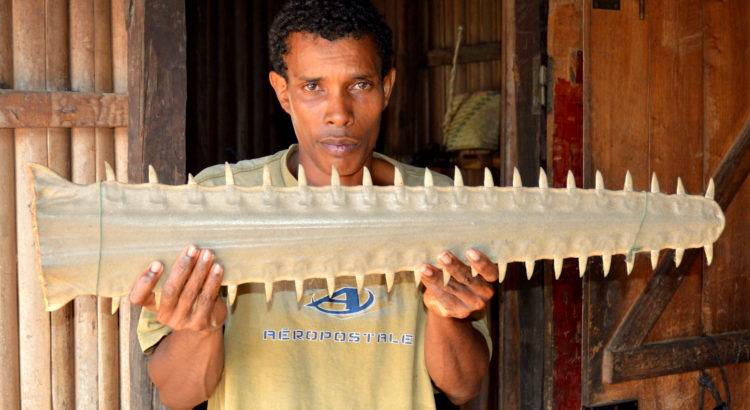
Of all sharks and rays worldwide, sawfishes – related to stingrays and manta rays – are considered to be the family at greatest risk of extinction . The long, toothed saw – which gives them their unique appearance – also makes them extremely vulnerable to entanglement in fishing nets. Their numbers have fallen because they are caught accidentally in industrial fishing nets. In addition to that, they are targeted by some fishermen because their fins can fetch high prices.

There are five species of sawfish globally. Two can reach around seven metres in total length (including the saw), making them the third largest members of the shark and ray family.

Sawfishes were formerly common along both the west and east coasts of Africa. Until a few years ago there was no knowledge of whether they still inhabited these waters, or if populations had plummeted as they have done elsewhere.

I set about addressing this gap six years ago. Since then, I have interviewed more than 500 fishers in six different African countries. I collected information on when and where people last caught sawfishes, how they used them and what their local value was. My research showed that sawfishes are now locally extinct from many parts of West Africa, but are still encountered – at least occasionally – by fishers in Madagascar and northern Mozambique .

Working in fishing communities and engaging in the lives of fishers has provided me with some insights into how sawfishes can best be protected in countries like Madagascar, as well as an understanding of the approaches that won’t work.

In the two developed countries where sizeable sawfish populations still exist – Australia and the US – an important step in preventing further declines of these endangered species is to declare them protected under national law and to prohibit activities that threaten them. So catching and killing of sawfishes is banned.

This is an effective approach in countries with the capacity and funding to enforce such laws. But in developing countries, a different approach is needed – a ‘bottom-up’ approach in which communities take the lead. And for that to happen, scientists need to convey the implications of their research to the people who rely directly on the natural resources around them, in relevant, easy-to-digest ways.

The challenge

Sawfishes are not legally protected in most African nations. And even if they were, legislation is rarely an effective approach in countries with little or no capacity to enforce species protection laws.

In addition, fishers who catch sawfishes value them as sources of income (through the sale of their fins, meat, and occasionally other parts) and food. Artisanal fishers along the coasts of Madagascar and Mozambique are some of the poorest communities in these countries; they often live in remote rural areas and have few alternatives to fishing as a way to make a living.

Unless fishers are provided with livelihood alternatives, any efforts to prevent sawfish mortality could be considered to compromise their immediate wellbeing. Fishers are unlikely to sign up to an approach which will mean more hardship for them.

What can be done

We need to reduce the number of sawfishes being caught in fisheries, and ensure that their habitats, especially coastal waters and mangroves, are protected. These two steps would have far-reaching and long-term benefits.

But in my view, the only way to achieve these goals is by encouraging communities to become caretakers of the natural resources they rely on for their own survival. And to achieve this, they first need to understand why these goals should matter to them.

The right educational tools can be used to explain that freshwater and marine ecosystems, fished responsibly, provide food and saleable goods, while mangroves protect coastal communities from storm surge and erosion. The communities themselves can then understand the trade-off between short-term, personal gain and longer-term, communal value, and can choose which path they wish to take.

My insight from working in fishing communities is that as a scientist, I have a duty to explain my findings, their implications and encourage communities to engage in developing strategies to address conservation issues. This benefits the communities as well as the species and habitats that need protection.

To this end I developed a short educational film and a story book . These both aim to convey the importance of sharks and sawfishes as part of healthy marine and freshwater ecosystems. They also point out the many ways in which communities stand to benefit from the sustainable use of sawfishes and other aquatic resources.

The film was made in multiple languages for both Mozambican and Malagasy audiences to ensure it could reach the widest possible audience. These resources have also given audiences beyond Africa insight into the lives of fisherfolk and the specific challenges facing sawfish conservation in these places.

The experience has taught me that we may be missing opportunities to use stories built around our work, to inspire interest and change where it is most needed: at community level. Armed with the right knowledge and understanding of why protecting mangroves, coastal waters and their inhabitants is important, communities can be the caretakers of these natural resources, both for their own benefit and for the planet’s.

Fuente de la noticia: https://menafn.com/1097445836/Education-can-help-protect-sawfishes-in-Mozambique-and-Madagascar

Comparte este contenido:

Education can help parents understand risks in sports

North America/United States/10.10.2018/Source: www.dailyitem.com.

Sports, of any kind and at any level, come with inherent risks of injury. No helmet or pad or repetitive training exercise can compensate for the unknown.

Despite this, sports are as popular as ever. According to the National Federal of High School Associations, more high school students participated in a scholastic sport during the 2017-18 school year than ever before.

Those kids take to the fields, pools and courts with the understanding the next play could be their last. No one thinks about it, but that is the reality.

The reality is that football, despite increases in concussion awareness, safer helmets and increased coaching tools to teach proper blocking and tackling, is a dangerous sport. It always will be.

So are soccer and basketball, where collisions are common place and knee ligaments can give out without warning. So is lacrosse, with players swinging sticks, and ice hockey with its checks. In baseball and softball, hard balls are thrown at high speed in all directions.

What we are learning as sports medicine advances is that these sports can become safer. As Tyler Hanson, athletic trainer for Evangelical Community Hospital and the Miller Center and part of Bloomsburg University’s concussion clinic said, we are just touching the surface of concussions.

“Ten to 20 years ago, the ACL was a career-ending injury,” Hanson said. But through years of study and medical advances, athletes are often back in less than a year. “What we learned then is that we needed more days of rest, more strengthening. We’re coming full circle now with concussions. We have to lower the impact rate, allow more time for rest.”

Today, the NFL, the NCAA and the Pennsylvania Interscholastic Athletic Association are all offering teaching tools to youth football programs in an attempt to make the game safer. The thought process makes sense: Teach kids the proper technique and coaches how to diagnose specific injuries, you can make the declining — numbers-wise — game of football safer.

Participation in collision sports like football, ice hockey and lacrosse must come with the understanding that an injury could occur at any moment.

Evaluating those risks needs to be part of conversations parents have with their children. Weighing all the options, both positive and negative, should be part of an honest dialogue.

There is little doubt sports represent positive life-building experiences. They can build confidence, camaraderie, life skills and friendships that will carry far off the field.

Do those positives outweigh the risks? That is the question we all need to answer.

Source of the notice: http://www.dailyitem.com/opinion/education-can-help-parents-understand-risks-in-sports/article_164951ce-dfe0-5f16-9a91-5ae0229f005f.html

Comparte este contenido:

Vietnam: Schools that lack teachers not allowed to expand staff

Asia/ Vietnam/ 09.10.2018/ Fuente: english.vietnamnet.vn.

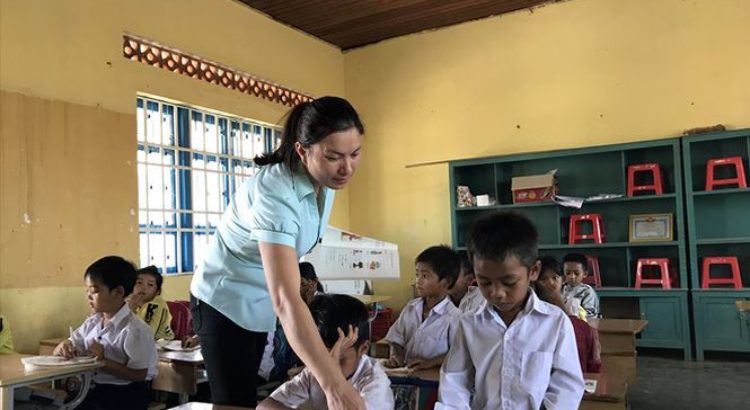
VietNamNet Bridge – Schools have repeatedly complained to the Ministry of Education and Training (MOET) about the lack of teachers, but the Ministry does not have the right to recruit teachers.

MOET’s Deputy Minister Nguyen Duy Thang said at an event held by the National Assembly’s Committee for Culture, Education, the Youth and Children on September 24 that 29 provinces want an additional 40,447 civil servants for the education sector this year. Thanh Hoa province alone needs 7,519.

According to MOET, schools now lack 80,000 teachers, including 43,000 for preschools.

The shortage has forced schools to employ teachers under short-term labor contracts. They are not official civil servants and do not receive salaries from the State.

Dang Thi My Huong, a National Assembly deputy, has raised questions about the responsibilities of MOET and the Ministry of Interior Affairs (MIA) for teacher shortage.

29 provinces want an additional 40,447 civil servants for the education sector this year. Thanh Hoa province alone needs 7,519.

According to Huong, the teachers working under labor contracts signed with schools receive “starvation” salaries, about VND2 million a month.

The jobs are unstable because schools may terminate the contracts at any time.

In reply, MOET’s Minister Phung Xuan Nha said MOET is aware of teacher shortage, but the ministry does not have the right to recruit teachers. MIA is in charge of recruiting civil servants.

He said this was a difficult question to solve as schools want to recruit more teachers, while Vietnam is trying to cut out waste in organizations to ease the burden on the state budget.

Tran Hong Quan, deputy chair of Ca Mau province, also said that while the number of students increases every year (the population of the province increases by 10,000 each year), the number of teachers do not.

Van Thi Bach Tuyet, a National Assembly deputy from HCMC, commented that the solutions mentioned by MOET and MIA cannot settle the problem quickly. She suggested a mechanism under which cities and provinces have self-determination, with no need to wait for MIA’s approval on the personnel list.

Meanwhile, most National Assembly deputies agree that the problem lies in the recruitment scheme.

Nha said that under current laws, MOET and local education departments can only make suggestions, while it is MIA which makes final decisions in recruiting teachers.

Tran Thi Tam Dan, former chair of the National Assembly’s Committee for Culture, Education, the Youth and Children, said: “Those who use workers need to be given the right to recruit workers. It is unreasonable to assign teacher recruitment to MIA.”

“Only education establishments know how many teachers they need and what they have to do to settle the problem,” she said.

Fuente de la noticia: https://english.vietnamnet.vn/fms/education/209484/schools-that-lack-teachers-not-allowed-to-expand-staff.html

Comparte este contenido:

Ta’allum educators speak about ‘engaged learners’

Asia/ Qatar/ 09.10.2018/ Source: www.thepeninsulaqatar.com.

Three Ta’allum educators spoke at the national Teaching and Learning Forum sponsored by Qatar Foundation’s Education Development Institute.

The conference took place on October 7 at the Qatar National Convention Center. The theme of the forum was engagement, with keynote speeches and workshops by international educationalists like Steve Francis and Joy Marchese.

Aimed at motivating teachers to reach for the highest level of student, staff and parent engagement and achievement, participants gained tools to inspire young people to excel personally and academically.

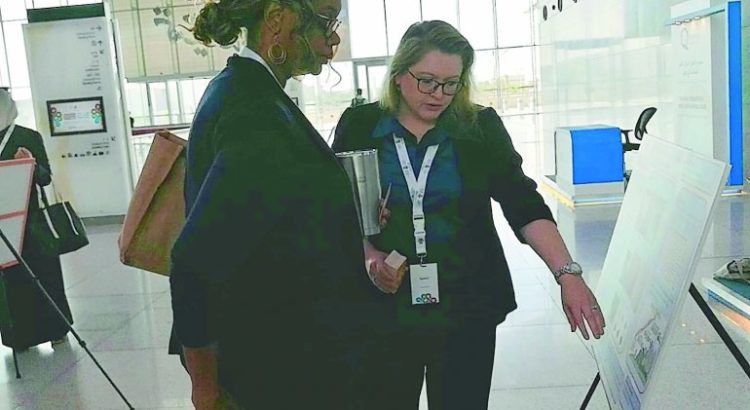
Ta’allum delegates Jude Ensaff, Samera Kouser, and Rukshana Begum spoke to visitors about the great work that has been achieved in Ta’allum academies over the past three years.

Taallum’s contribution, a poster presentation entitled ‘Moving learners from passive to engaged: a strategic approach’ outlined the steps taken in the three academies to move Early Years and Primary classrooms from teacher-directed to learner-centred approach.

The delegates further described the ongoing journey in Al Maha Academy for Girls, Al Maha Academy for Boys and Al Jazeera Academy to learner-driven classrooms.

Some of the key methods that make the transition to learner-driven classrooms are the professional development of staff, use of hands-on resources and approaches, and the introduction of more speaking opportunities through practicals.

Mohammed Saefan, Ta’allum Director of Education, said: “At the three academies, we are harnessing our resources in training our students to become independent learners. We are acquiring new technology and instructional materials to promote enquiry-based learning. As our presentation described it at this important forum, the learner is at the centre of the learning process.”

Ta’allum schools have made great strides forward for student engagement and achievement. This first foray into national and regional forums in education opens doors of opportunities in future for more sharing of Ta’allum successes.

Source of the notice: https://www.thepeninsulaqatar.com/article/09/10/2018/Ta%E2%80%99allum-educators-speak-about-%E2%80%98engaged-learners%E2%80%99

Comparte este contenido:

Brasil y Colombia, batalla por la calidad educativa

América del Sur/ Brasil/ 09.10.2018/ Fuente: www.educacionyculturaaz.com.

Los sistemas educativos de Brasil y Colombia enfrentan, al igual que nuestro país, el enorme reto de elevar la calidad educativa, así lo comentaron las ex ministras de educación de ambos países, María Do Pilar Lacerda y Nohemy Arias Otero, respectivamente, en su participación en el Foro Nacional de consulta que pasó revista al modelo educativo de la Educación Básica convocado por la Secretaría de Educación Pública (SEP).María Do Pilar Lacerda ex secretaria nacional de Educación Básica del Ministerio de Educación de Brasil, de 2007 a 2012, señaló que el Plan Nacional de Desarrollo de la Educación (PDE) que empezó en 2007, respondió a las demandas sociales que exigían una mejor calidad educativa para combatir los bajos índices de logro académico señalados por pruebas nacionales e internacionales.

Entre los retos que enfrenta el sistema educativo brasileño, señaló Lacerda que les hace falta incluir a 3 millones 400 mil niños y jóvenes, que están fuera de la escuela con edades entre 4-5 15 y 17 años.

El PDE fue criticado al principio, reconoció la ex ministra de Educación de Brasil, pero éste ganó legitimidad cuando el ministro de educación fue a los 27 estados de la República de aquel país. Con ello se logró articular un plan de acciones interrelacionadas para que a partir del conocimiento del estado de la educación brasileña, se elaborara un plan para transferir recursos con un mejor criterio.

A partir de ahí, se creó el Programa “Dinero Directo a la Escuela”, señaló María Do Pilar Lacerda, programa en el que se destina dinero adicional a las escuelas con los peores resultados educativos por un periodo de dos años, explicó la ex funcionaria carioca.

Entre otros desafíos que contempla el sistema educativo brasileños están garantizar la carga horaria mínima de 800 horas al año a mil 400. Además, fortalecer la formación continua para los maestros, transformar la escuela en un espacio público comunitario y lo más trascendente, invertir 10 por ciento del PIB en educación, como ya lo había advertido Educación Futura.

Colombia, saber para mejorar

En su oportunidad, Nohemy Arias Otero, ex ministra de Educación de Colombia (2002 y 2011), señaló que en su país, en 2005, se realizó un ejercicio similar al que México realiza ahora (los foros de consulta); derivado de esta convocatoria surgió el Plan Decenal de Educación en 2006.

En el devenir del sistema educativo colombiano, señaló que a partir de 2001 emprendieron una descentralización educativa que en 2002 continuó con la profesionalización docente, expuso Arias Otero.

La ex ministra señaló como indispensable contar con un sistema de información sobre el sistema educativo, así como con una buena infraestructura tecnológica para su consulta. Entre las simetrías del sistema educativo colombiano con el mexicano, Arias Otero señaló que 80 por ciento del gasto educativo de Colombia se destina a la nómina docente.

Ahora al sistema educativo colombiano le queda por delante perseverar en una comunicación permanente con todos los actores incluyendo el sindicato, así como distribuir recursos con un criterio de equidad y eficiencia; en suma, establecer una relación directa entre gasto, cobertura y calidad.

Fuente de la noticia: http://www.educacionyculturaaz.com/educacion/brasil-y-colombia-batalla-por-la-calidad-educativa

Comparte este contenido:

Cuba: Estudiantes universitarios que den clases no tendrán que aprobar asignaturas básicas

Centro América/ Cuba/ 09.10.2018/ Fuente: www.cibercuba.com.

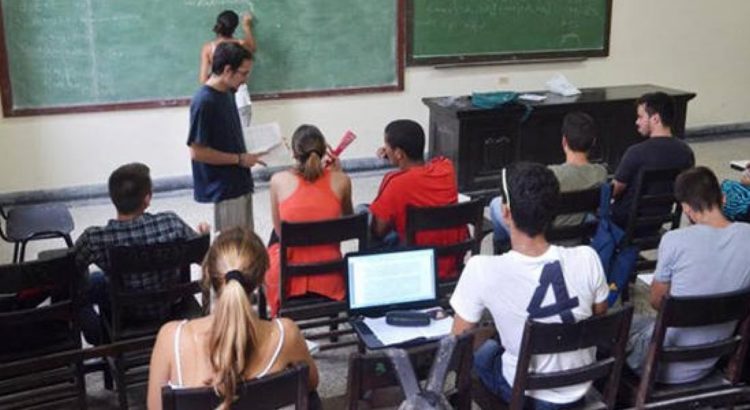
Estudiantes universitarios que dan clases no estarán obligados a aprobar asignaturas básicas como Matemática, Español e Historia, según la nueva medida aplicada por autoridades de la Educación en la provincia de Sancti Spíritus.

Cerca de 90 estudiantes que se forman en una licenciatura por el programa de curso por encuentros y quienes además ejercen una labor pedagógica frente a las aulas, se eximen de aprobar las asignaturas básicas, informó esta semana el periódico local Escambray.

De acuerdo con declaraciones al medio de la doctora en Ciencias Pedagógicas Maité Suárez Pedroso, la medida será adoptada por estos estudiantes durante en primer año de la carrera.  En un principio, los alumnos beneficiados con la medida corresponden a las facultades de Ciencias Pedagógicas y Ciencias Técnicas y Empresariales.

Dicha transformación en la Educación Superior, indicó, tiene como objetivo favorecer la cobertura docente del territorio, “que representa la mayor dificultad del Ministerio de Educación en Sancti Spíritus”. Al igual que en el resto del país, los maestros espirituanos cobran un salario mensual por debajo de la media, equivalente a 21 dólares.

Suárez Pedroso señaló que esta alternativa tiene como antecedente que -desde hace dos cursos- se trasladaron los requisitos del ingreso y se establecieron como parte del contenido a vencer durante el primer año de curso todos los matriculados en este sistema, que tiene 24 carreras.

“A pesar de que la Matemática constituye la materia de mayor dificultad para los estudiantes en general, ellos disponen de varias opciones para vencer las asignaturas básicas, ya que pueden presentarse al examen ordinario, extraordinario, mundial, e incluso pueden repetir el año solo por una sola”, dijo.

Según datos aportados por el periódico, al cierre del curso escolar pasado, el índice de alumnos aprobados en estas asignaturas osciló entre apenas un 54% y 62%, cifra que mostró -no obstante- un avance en las calificaciones registradas años anteriores.

En agosto pasado, autoridades del sector educativo en Cuba confirmaron que el país abriría el nuevo curso escolar con un déficit de más de 10.000 profesores, con énfasis en provincias como La Habana, Matanzas y Artemisa.

La ministra de Educación, Ena Elsa Velázquez Cobiella, confirmó que el Mined evaluó unos 12 territorios y en cada recorrido debió insistir en el tema de la cobertura. Provincias como Sancti Spíritus y Pinar del Río, que no declaran déficit de educadores, comenzaron a implementar varias “alternativas”.

“Eso siempre nos pone un bombillo rojo, porque son maestros fuera de la plantilla de la escuela y en determinado momento puede existir inestabilidad, detalló la titular del ramo”, dijo la titular.

Fuente de la noticia: https://www.cibercuba.com/noticias/2018-10-07-u73624-e73624-s27061-cuba-estudiantes-universitarios-den-clases-no-tendran

Comparte este contenido:

In Neighborhoods Without Public Schools, Zimbabwe’s Students Rely on Illegal Schools

Africa/ Zimbague/ 09.10.2018/ Fuente: globalpressjournal.com/africa/zimbabwe/neighborhoods.

It’s noon on a windy Friday in Caledonia, a neighborhood along Harare’s eastern edge. Children roam the schoolyard at Ngodza Primary School, excited for the weekend ahead.

This for-profit school has three classrooms. Together, those classrooms accommodate 118 children, who each pay $10 per month to attend. The school is not registered with the government. It operates illegally.

Teclar Chengedzai lives in Caledonia and says her 6-year-old must learn there because there are no government schools nearby.

This is a common problem as Harare expands far beyond its original boundaries. Unregistered schools now outnumber registered schools in the city, according to government data.

There were an estimated 1.48 million Harare residents in 2012, according to census data. It’s not clear how many schools operate in the city, but locals say the government doesn’t come close to meeting their education needs.

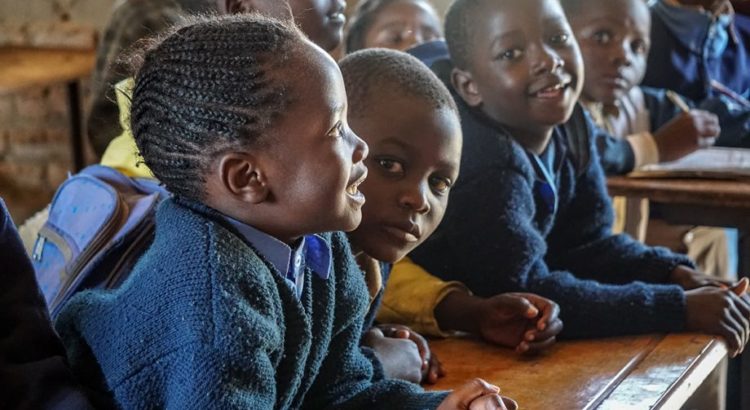
Children attend class at Ngodza Primary School, an unregistered school in Harare, Zimbabwe.

Gamuchirai Masiyiwa, GPJ Zimbabwe

As a result, unregistered schools, both primary and secondary, are opening in areas such as Caledonia, where there are no public schools. That’s a far cry from Zimbabwe’s educational heyday in the early 1980s, when a new government under Robert Mugabe abolished a long-standing system that favored the country’s white minority with high-quality schools while black students’ education was neglected. Under Mugabe’s leadership, Zimbabwe attained a literacy rate of nearly 100 percent and the government boasted of having the best school system on the continent. But over time, those gains dissolved under a corrupt and brutal regime, leaving Zimbabwean students with few options for quality education (See a timeline of Zimbabwe’s education system here.)

Now, some areas have more unregistered schools than government ones, says Christopher Chamunorwa Kateera, director of the Harare Provincial Education Office in the Ministry of Primary and Secondary Education, but the government can’t close the illegal schools because it would leave entire neighborhoods without options for education. An amendment to the country’s Education Act obliges the government to provide students in such areas with a formal alternative.

According to government data, there are 205 registered schools and 219 unregistered schools in Harare, Kateera says.

The government has closed some unregistered schools and enrolled their students in registered schools, but in other cases, officials seek to formalize unregistered schools, Kateera says.

“Wherever we identify unregistered colleges, we call them in and have meetings with them informing them of the procedures they should follow to regularize their establishments,” he says.

Parents say unregistered schools come with their own challenges. The school that Chengedzai’s child attends doesn’t provide textbooks. It also doesn’t offer grades six or seven because, unlike registered schools, it doesn’t have access to the exams required to attend secondary school.

“They want parents to buy these books, which are expensive to get as well,” Chengedzai says.

A teacher leads students at Ngodza Primary School in the Caledonia neighborhood of Harare, Zimbabwe.

Gamuchirai Masiyiwa, GPJ Zimbabwe

Another problem is that a student must be enrolled at a registered school in order to take standardized exams, which are required for entrance into university and also for many jobs.

Godfrey Hozo, the school’s headmaster, says the school opened in 2016. It’s difficult to keep teachers, he says, because of the school’s low pay. Right now, the school has four teachers, including himself.

“We end up having composite classes, because at times you might have five students for grade three and 16 students for grade four,” he says. “The teacher then has to plan what they teach for each level, but they will be in the same room.”

The school charges $10 per month for fees, he says. About 70 percent of the enrolled children are able to pay. Those who can’t pay the fees are eventually dismissed.

A major problem, he adds, is getting information from the national education ministry about the government-approved curriculum. Hozo says he asks teachers in government schools to help him access syllabi and textbooks.

Hozo says the government should relax what he calls the “stringent conditions” for school registration, so that institutions like his can fully engage in the nation’s educational system.

There’s no indication that the government will ease those conditions. Instead, Kateera says, unregistered schools need to improve their standards and formally register with the government.

Fuente de la noticia: https://globalpressjournal.com/africa/zimbabwe/neighborhoods-without-public-schools-zimbabwes-students-rely-illegal-schools/

Comparte este contenido:
Page 2319 of 6195
1 2.317 2.318 2.319 2.320 2.321 6.195