Page 2476 of 6179
1 2.474 2.475 2.476 2.477 2.478 6.179

México: Aplican descuentos a 69 mil docentes de educación básica

El monto alcanzado por los descuentos por faltas injustificadas es 46 millones 300 mil pesos y se aplicaron a profesores de Chiapas y Oaxaca, mayoritariamente.

América del Norte/Mexico/NOTIMEX

CIUDAD DE MÉXICO.- Entre el 1 de enero y el 25 de junio de 2018, las entidades federativas han aplicado descuentos a 69 mil docentes de educación básica que por razones injustificadas dejaron de asistir a cumplir con sus labores docentes y administrativas.

La Dirección General del Sistema de Administración de la Nómina Educativa Federalizada (DGSANEF), de la Oficialía Mayor de la Secretaría de Educación Pública (SEP), detalló que los descuentos aplicados equivalen a 46 millones 300 mil pesos.

De acuerdo con la información enviada a la dependencia federal, Chiapas, Chihuahua, Jalisco, Estado de México, Michoacán, Nuevo León, Oaxaca, San Luis Potosí, Sonora y Veracruz fueron las entidades que acumularon el mayor número de faltas injustificadas de profesores a las aulas.

En un comunicado, indicó que Chiapas encabeza la lista de los estados con la mayor cantidad de maestros con faltas injustificadas, con 14 mil 203 docentes, seguido de Oaxaca, con 11 mil 220 profesores.

La SEP recordó que, de acuerdo con la normatividad vigente, las administraciones estatales son las titulares de la relación laboral con los docentes federalizados pertenecientes a educación básica.

En ese sentido, están obligadas a comunicar a la dependencia federal, cada quincena, los datos de los trabajadores docentes que de manera injustificada incumplieron con el desempeño de la función educativa, «en virtud de que la SEP paga por cuenta y orden de los estados».

Puntualizó que los artículos 26 de Ley de Coordinación Fiscal, y 75 de la Ley General de Educación, establecen que «…no proporcionar información veraz y oportuna» relacionada con la función docente a efecto de garantizar el pago de la nómina educativa, es una infracción que podrá ser sancionada tanto administrativa como económicamente.

Refirió que las «disposiciones específicas que deberán observar las entidades federativas para registrar cada nómina» precisan en su numeral 62 que las autoridades educativas locales son las únicas responsables de la información que sobre este particular presenten a la SEP de manera veraz, verificable, exacta y transparente.

«La SEP estará muy atenta a la observación de las anteriores disposiciones y, en su caso, a informar a la Auditoría Superior de la Federación, a la Secretaría de la Función Pública y demás órganos fiscalizadores federales y estatales sobre su posible incumplimiento», detalló.

Fuente: http://www.elfinanciero.com.mx/nacional/aplican-descuentos-a-69-mil-docentes-de-educacion-basica
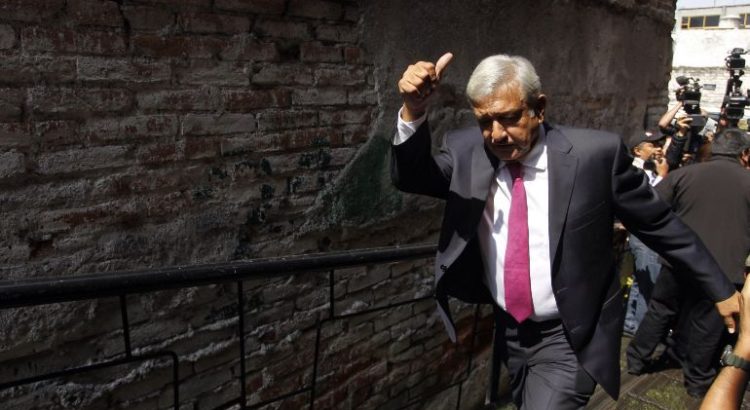
Imagen tomada de: http://amqueretaro.com/wp-content/uploads/2018/07/Aplican-descuentos-por-faltas-a-69-mil-maestros-de-educacion-basica-750×430.jpg
Comparte este contenido:

Venezuela: Ministro Jaua llama a fortalecer la educación como referente de solidaridad e identidad

La educación venezolana debe fortalecerse como un referente de patriotismo, de solidaridad, de amor y de identidad, indicó este miércoles el ministro del Poder Popular para la Educación, Elías Jaua.

América del Sur/Venezuela/diariodeguayana
“Uno siempre encuentra en el liceo, en la escuela, en la maestra, en el profesor, en los estudiantes que le ponen todo, todos los días el hacer de la educación pública venezolana un referente de solidaridad, de amor, de patriotismo, de identidad. Yo cada día me siento más orgulloso de la educación pública venezolana, de sus maestros, maestras, educadores, trabajadores y de sus estudiantes”, expresó en el acto de graduación de 396 venezolanos en las misiones Robinson y Ribas.

La actividad, transmitida por VTV, se celebró en la Casa Andrés Bello, ubicada en la esquina de Salas, centro de Caracas, donde además se entregaron 38 certificados del Instituto de Capacitación y Educación Socialista (Inces).

La Misión Robinson, ideada e impulsada hace 15 años por el comandante Hugo Chávez, logró erradicar el analfabetismo en Venezuela. Con el lema “Yo sí puedo” y gracias al apoyo de facilitadores cubanos, quienes trajeron a Venezuela su método de enseñanza, se instruyó a casi dos millones de personas.

Este programa, además, fue reconocido por la Organización de las Naciones Unidas para la Educación, la Ciencia y la Cultura (Unesco), que certificó a Venezuela como país libre de analfabetismo en 2005.

La Misión Ribas fue creada en 2003 por el líder de la Revolución Bolivariana, Hugo Chávez, para promover la formación gratuita de media y diversificada. El 17 de noviembre de ese año comenzaron las clases los primeros 400 mil estudiantes de este programa social. AVN 

Fuente: https://www.eldiariodeguayana.com.ve/ministro-jaua-llama-a-fortalecer-la-educacion-como-referente-de-solidaridad-e-identidad/

Comparte este contenido:

Germany: united for a greater investment in quality education

Europa/Alemania/PrensaIE

Reseña: La Gewerkschaft Erziehung und Wissenschaft (GEW) y la Verband Bildung und Erziehung(VBE) han subrayado que Alemania finalmente debe invertir más dinero en educación de calidad. «Las recomendaciones confirman que todavía estamos por debajo del promedio de la UE y aún gastamos muy por debajo del 10 por ciento del producto interno bruto (PIB) en educación. Para un país tan rico que es un signo de pobreza «, criticó el presidente de VBE, Udo Beckmann. «Resulta que los sindicatos están siendo respaldados por la Comisión de la Unión Europea (UE) y la Organización para la Cooperación y el Desarrollo Económico (OCDE), y todos piden una mayor inversión en educación de Alemania», dijo. Acordando que los políticos finalmente deben actuar e invertir más dinero en educación, la presidenta de GEW Marlis Tepe señaló que «la profesión educativa debe hacerse más atractiva para contrarrestar con éxito la grave escasez de personal, especialmente en las instituciones de educación infantil y las escuelas primarias». Denunciando «un escándalo sociopolítico», deploró que hasta hoy no haya sido posible resolver el problema fundamental del sistema educativo alemán, es decir, el estrecho vínculo entre el origen social y el éxito educativo, la brecha social cada vez más amplia. Tepe siguió insistiendo en que el gasto en educación de calidad valía la pena: conduce a una mayor igualdad de oportunidades y participación en la sociedad, mejora las perspectivas profesionales y de vida de las personas y fortalece su salud. «La política ahora debe tomar un rumbo diferente, de lo contrario estamos claramente dirigiéndonos hacia una crisis educativa», subrayó. El Semestre Europeo es parte del marco de gobernanza económica de la Unión Europea.Es un ciclo anual durante el cual los Estados miembros de la UE coordinan sus políticas económicas y fiscales. Con este fin, la Comisión de la UE realiza periódicamente recomendaciones específicas para cada país. Una vez más, la Comisión de la UE le ha dado a Alemania malas notas porque el país está invirtiendo muy poco dinero en educación. En sus recomendaciones específicas para 2018, la institución de la UE observa una considerable falta de inversión para Alemania, y que el gasto público en educación del país en 2016, al 4,2 por ciento del PIB, no alcanzó la media de la UE del 4,7 por ciento. Con solo el nueve por ciento del PIB, el gasto total en educación e investigación también estaría por debajo del objetivo nacional del diez por ciento. La Comisión de la UE también reconoce que el gasto adicional en educación, investigación e innovación es crucial para el potencial de crecimiento de Alemania. Los desafíos, de acuerdo con esta institución, tales como el número creciente de estudiantes, la escasez de docentes y el mayor desarrollo de la educación de la primera infancia solo pueden abordarse si la financiación pública de la educación aumenta significativamente. Más información aquí También puede leer el «Comité de Sindicatos Europeos para la Educación» «Recomendaciones específicas para el país 2018 – Evaluación, contexto y recomendaciones del Semestre Europeo en el campo de la educación y la formación»aquí


Reacting to the recommendations of the European Union’s Commission in the framework of the “European Semester”, German teachers’ unions have insisted on the need to provide public education with adequate funding.

The Gewerkschaft Erziehung und Wissenschaft (GEW) and the Verband Bildung und Erziehung (VBE) have stressed that Germany must finally invest more money in quality education.

“The recommendations confirm that we are still below the EU average and still spend well below 10 percent of gross domestic product (GDP) on education. For such a rich country that is a sign of poverty,” VBE President Udo Beckmann criticised.

“It turns out that trade unions are being backed up by the European Union (EU) Commission and the Organisation for Economic Cooperation and Development (OECD), and everyone is calling for more investment in education from Germany,” he welcomed.

Agreeing that politicians must finally act and invest more money in education, GEW President Marlis Tepe noted that “the education profession must be made more attractive in order to successfully counter the serious staff shortage, especially in early childhood education institutions and primary schools”.

Denouncing “a socio-political scandal”, she deplored that until today it has not been possible to solve the fundamental problem of the German education system, i.e. the close link between social origin and educational success, the social gap getting even broader.

Tepe went on stressing that spending on quality education was worthwhile: it leads to more equality of opportunity and participation in society, improves people’s professional and life perspectives, and strengthens their health. “Politics must now take a different course, otherwise we are clearly steering towards an educational crisis,” she underlined.

Background

The European Semester is part of the European Union’s economic governance framework. It is a yearly cycle during which EU Member States coordinate their economic and fiscal policies. To this end, the EU Commission regularly makes country-specific recommendations to the Member States.

Once again, the EU Commission has given Germany bad marks because the country is investing too little money in education. In its 2018 country-specific recommendations, the EU institution notes a considerable lack of investment for Germany, and that the country’s public expenditure on education in 2016, at 4.2 per cent of GDP, fell short of the EU average of 4.7 per cent. At only nine percent of GDP, the total expenditure on education and research furthermore would be below the national target of ten percent.

The EU Commission also acknowledges that additional spending on education, research and innovation is crucial for Germany’s growth potential. Challenges, according to this institution, such as the growing number of students, the shortage of teachers and the further development of early childhood education can only be tackled if the public financing of education rises significantly.

More information here

You can also read the European Trade Union Committee for Education’s “Country Specific Recommendations 2018 – Assessment, Context and Recommendations of the European Semester in the education and training field” here

Fuente: https://www.ei-ie.org/en/detail/15888/germany-united-for-a-greater-investment-in-quality-education

Comparte este contenido:

The imperativeness of re-assessing the quality of nigerian educational system

Asia/Nigeria/thechronicleofeducation.com/

Resumen: Nigeria se ha ganado la designación del Gigante de África por el buen valor del tamaño, la población y sus vastos recursos. Sin embargo, el lamentable estado de la infraestructura, el bajo nivel de educación, la erosión del sistema de valores, la falta de buena gobernanza y muchas otras tribulaciones prevalecientes en la sociedad nigeriana han causado que el país pierda rápidamente el respeto en la esfera.Es preocupante que mientras algunos países han reconocido el valor de invertir fuertemente en educación como un vehículo para un crecimiento irremediable y una economía robusta, las prioridades de Nigeria todavía se encuentran en la lucha contra la corrupción, sosteniendo un sistema excesivamente costoso de gobierno y seguridad nacional.


Nigeria has earned the designation of the Giant of Africa by good worth of Nigeria’s size, population and vast resources. However, the pitiable state of infrastructure, low standard of education, erosion of our value system, lack of good governance and many other tribulations prevalent in Nigerian society has caused the country to be fast losing the respect across the sphere.

It is worrying that while some countries have recognised the value of investing heavily in education as a vehicle for irremediable growth and brawny economy, Nigeria’s priorities are still found in fighting corruption, sustaining an excessively expensive system of governance and national security.

Nigeria is blessed amply with all the resources to be the best in all ramifications but yet the educational system is in shambles just because it is a product of the Nigerian structure where in most cases normal things are abnormal and abnormal things normal. The stakeholders in our educational system which includes the government, teachers, administrators, parents, students and the society all have a share of the blame due certain action or inactions.

The function of the family as an institution has been eroded and people fail to realise that children’s exposure to cultural norms determines their level of conformity. The society no longer questions any process but accepts the product no matter how ethically erroneous or terrible they appear, merit and hard work are not longer acknowledged and rewarded but rather easy access and admiration to fraudulent wealth, culture of disorder and defective value system is gradually becoming the order of the day.

A lot of factors seem to be playing a negative role towards improving the quality of the educational system; prominent among the identified influencing factors includes Government disappointing investment in education signified by financial crises between staff and management or government, which often degenerate to various reactions such as strike action.

Another reason for low quality standard in the education system is shortage of teaching staff leading to very high staff-student ratio and overcrowded classrooms resulting in work overload, ineffective instructional delivery, poor supervision, examination malpractices etc thereby affecting quality of instructional process and output. The poor state of facilities which is evidence of poor funding in many schools in Nigeria is not cheering.

Apart from shortage of these amenities many of the available ones either obsolete or in deplorable conditions thereby hindering the achievement of the intended educational goals. The interlink between politics and the society prompts the government at all levels in Nigeria to invests some resources in education so as to control quality and quantity of output from the system. This gesture intends to maintain standard and uniformity in all aspects of education.

To this end, the relevance of quality assurance in the education system which provides a framework for shaping the focus of educational administrators to specific areas of needs, enables continuity in standard of service of any educational system, building quality control mechanism into educational administration Nigeria should be strengthened.

Persistent insecurity remains a social menace that resulted from the weak institutions and social organisation within the country, it is appalling that even with the current security challenges that has led to the kidnap of some school girls so many  schools are still operational without a perimeter fencing thereby exposing the learners and learning facilities to danger and security threats.

In other to improve quality of the educational system the essential factors and actors required to facilitate good policy implementation, quality school administrative practise, effective teaching-learning process, proper accountability mechanism and regular evaluation of educational outcomes needs to be organized and mobilized to the education sector to enhance professional development and expertise.

The funding of the education sector needs to be augmented and should not be left in the hands of the governments alone. Since education is capital expensive; the private institutions and multi-national organizations should play a contributory role in funding education programmes in Nigeria through a robust, workable and beneficial public-private partnership.

Training and development of staff which is as well necessary condition for quality assurance in educational system in Nigeria should be accorded the right attention. Similarly, Provision of more physical facilities and supporting facilities would go a long way to enhance quality administration of learning institutions.

In addition, regular monitoring, supervision and evaluation of educational programmes and processes will assist in identifying lapses in implementation process and equally guide in employing the appropriate remedial measures to improve service delivery and educational outcome. Community participation in the administration of schools should be encouraged so as to foster a harmonious school-community relationship that will enhance the security of learners and learning facilities.

It is hoped that confronting the problems affecting the education system promptly will to a large extent assist in setting up the remedial strategies that will confidently modify the value system and re-model education administration towards meeting the aspiration of the nation to build a veritable standard of education with quality and acceptable products.

In other words before we complain that our school products are not employable, we must confirm if our learning environments are all right, if our evaluation processes are reliable, if our teachers are well trained and committed, if our investment in education is rational and whether our schools are universally acceptable.

© 2018, The Chronicle of Education. Permission to use parts of this article is granted provided that www.thechronicleofeducation.com is properly acknowledged.

Fuente: http://thechronicleofeducation.com/2018/07/03/the-imperativeness-of-re-assessing-the-quality-of-nigerian-educational-system/

Comparte este contenido:

MALAWI President warns students not to expect free education

Africa/Malawi/universityworldnews.com

Resumen:El presidente de Malawi, el profesor Peter Mutharika, instó a los estudiantes a aprovechar el sistema ampliado de préstamos estudiantiles del gobierno, pero no a esperar educación gratuita.  Hablando en la ceremonia de graduación número 19 de la Universidad estatal de Mzuzu recientemente, Mutharika dijo: «Muchos de ustedes están destinados a tener éxito en esta vida. Pero el éxito no es gratis. Siempre se debe luchar por el éxito … La educación universitaria es uno de los mejores tesoros que puede obtener. ¡Úselo bien! «. Mutharika dijo que nadie debería dejar de acceder a la educación universitaria porque son pobres y esa es la razón por la cual su gobierno puso en práctica un plan de préstamos estudiantiles. Dijo que el sector privado siempre puede jugar un papel crítico en el financiamiento de la educación universitaria si se cuenta con la dirección correcta de la política. 
Sin embargo, dijo que los estudiantes deben entender que la educación superior no se puede proporcionar de forma gratuita.


Malawi’s President Professor Peter Mutharika has urged students to take advantage of the government’s expanded student loan system, but not to expect free education.

Speaking at the 19th graduation ceremony of the state-run Mzuzu University recently, Mutharika said: “Many of you are destined to succeed in this life. But success does not come for free. Success must always be fought for … University education is one of the best treasures you can get. Use it well!”

Mutharika said no one should fail to access university education because they are poor and that is the reason why his government had put in place a student loan scheme. He said the private sector can always play a critical role in financing university education if the right policy direction is in place.

However, he said students must understand that higher education cannot be provided for free.

“What we pay to universities through subvention is what the public contributes to education. Money paid from Treasury is taxpayers’ money paid by Malawians, including those who did not get university education themselves.

«Therefore, parents, guardians and students who have resources must always remember that it is primarily your responsibility to pay for your university education. The public funds are there only to support you, or to supplement you,” he said.

“This year, we have increased the budget allocation for student loans from MWK4 billion [US$5.3 million] to MWK8 billion [US$10.5 million] – a 100% increase because we want more needy students to access the loans. This facility remains a loan because the state cannot assume your responsibility to pay for your education. In short, repay your loan when it matures!”

He said his administration was building new universities such as Mombera University to improve access to higher education.

The government was also building new infrastructure at almost all public institutions of higher learning such as Mzuzu University, Lilongwe University of Agriculture and Natural Resources, Chancellor College and The Polytechnic. He said most of the projects are being funded by local resources.

Mutharika said his government has been successfully developing open, distance and e-learning as part of its skills development programme, hence people can now access university education on their mobile phones and laptops while at home.

He said his government was delinking the University of Malawi for it to evolve into independent universities that can grow and accommodate as many Malawians as possible while operating on the basis of competition.

Last year, Mutharika approved the splitting of the University of Malawi’s four constituent colleges into separate institutions – a move first mooted more than a decade ago.

The unbundling will see the four colleges – Chancellor College, College of Medicine, the Polytechnic, and Kamuzu College of Nursing – operating as stand-alone entities. He said each new university must be allowed to grow following its own models.

Mutharika said universities must go beyond giving students knowledge and skills. “Apart from knowledge and skills, we must remember to teach character. A well-educated person must have the right knowledge, useful skills and the right character. Education must teach the head, the hand and the heart – what is called the 3Hs,” he said.

The president also urged academics to continue to put research at the core of the university. “Universities exist to generate new knowledge and disseminate that knowledge. Thus, research generates both knowledge and resources,” he said.

Fuente: http://www.universityworldnews.com/article.php?story=201806270539303

Comparte este contenido:

Noruega: La evaluación más extensa de las ciencias sociales publicada

Europa/Noruega/universityworldnews.com

En la evaluación más grande de las ciencias sociales en Noruega, cinco instituciones de investigación y 22 grupos de investigación han sido evaluados como líderes mundiales en una o más asignaturas. Sin embargo, la ciencia social noruega es «introvertida» y debería «fortalecer significativamente» su alcance internacional, concluyó la evaluación.

La evaluación , publicada el 19 de junio por el Consejo de Investigación de Noruega, involucró a 48 miembros del panel, principalmente de otros países nórdicos pero con un número significativo del Reino Unido, Italia, los Países Bajos, Austria y Alemania, y se llevó a cabo en el pasado dos años. Fue presidido por la profesora Katarina Eckerberg del departamento de ciencias políticas de la Universidad de Umeå, Suecia.

La evaluación abarcó seis áreas de investigación: geografía, economía, ciencias políticas, sociología, antropología social y el área de investigación económico-administrativa. Incluía 3.005 científicos sociales y 42 instituciones: 26 facultades o departamentos en universidades y colegios universitarios, y 16 institutos de investigación de ciencias sociales financiados con fondos públicos. La evaluación incluyó además 136 grupos de investigación dentro de esas instituciones.

Se publicaron seis informes de panel de aproximadamente 1.500 páginas y un informe principal escrito por el presidente Eckerberg más el presidente de cada uno de los seis paneles, junto con informes estadísticos sobre la producción científica y el impacto. El informe principal contiene 17 recomendaciones para las universidades, 12 recomendaciones para el Consejo de Investigación de Noruega y seis recomendaciones para el Ministerio de Educación e Investigación.

Los evaluadores usaron una escala de cinco grados, donde la posición más alta se caracterizó como: «Investigación original a la vanguardia internacional. La unidad tiene una productividad muy alta. La unidad [la institución o grupo de investigación] emprende una investigación excelente y original y la publica en canales internacionales sobresalientes para publicaciones científicas y académicas.Sus investigadores presentan regularmente investigaciones periódicas en reconocidas conferencias científicas internacionales. »

Cinco instituciones noruegas obtuvieron las mejores notas en algunos temas, dirigidas por la Universidad de Oslo con cuatro calificaciones principales en tres materias: economía, sociología y antropología social, con dos facultades que lograron la mejor grado en sociología – sus facultades de derecho y estudios sociales.

La Escuela Noruega de Economía (NHH) en Bergen logró dos calificaciones principales, en economía, economía y administración.

Las otras mejores calificaciones fueron logradas por BI Norwegian Business School, en economía y administración; el Peace Research Institute Oslo (PRIO), en ciencias políticas; y la Universidad de Bergen, en antropología social.

Veintidós grupos de investigación también obtuvieron un puntaje máximo. De ellos, siete están en la Universidad de Oslo, cinco en la NHH, tres en la Universidad de Bergen y tres en la BI Business School de Noruega.

Además, un puntaje máximo cada uno fue logrado por grupos de investigación de PRIO, la Universidad Noruega de Ciencias de la Vida (NMBU), el Centro de Investigación Climática Internacional (CICERO) y el Instituto Noruego de Asuntos Internacionales (NUPI).

Los 22 grupos de investigación se encuentran en Oslo o Bergen o en las afueras de Oslo (NMBU).

«Tenemos que mirar más allá de las fronteras de Noruega», dijo el Director General del Consejo de Investigación de Noruega, John-Arne Røttingen, durante el lanzamiento del informe. «Los temas de investigación noruegos deberían verse en un contexto teórico más amplio ya que la investigación realizada a menudo también es muy relevante internacionalmente», dijo. «Y las instituciones noruegas también deberían mejorar en la contratación de investigadores internacionales».

Introversión a ser desafiada

«La evaluación demuestra que la antropología social es» la joya de la corona «entre las ciencias sociales noruegas. Esta investigación es de muy alta calidad y está a la vanguardia de la investigación internacional en este campo «, afirmó.

«También se nos dice que la movilidad de los científicos sociales noruegos es baja.En primer lugar, rara vez cambian el trabajo entre los sectores y las instituciones a nivel nacional. En segundo lugar, el comité de evaluación afirma que muchas de las instituciones no tienen buenas estrategias para la contratación internacional. Y tercero, los científicos noruegos viajan muy poco fuera de la región nórdica. »

Las principales recomendaciones están dirigidas a las instituciones para encontrar mecanismos para cambiar esto», dijo. «No nos sirve ser tan introvertido como esto.Tenemos que levantar los ojos más y más de lo que lo hacemos hoy «.

Superficial en investigación interdisciplinaria

Tanja Storsul, directora del Instituto de Investigación Social, dijo que la evaluación habría sido más interesante si hubiera sido» menos desequilibrada «.

Al escribir en su página de blog, dijo: «No evalúa todos los aspectos de las ciencias sociales noruegas. Es principalmente una evaluación disciplinaria de las seis ciencias sociales realizada por expertos de estos campos, que ha evaluado la calidad científica de la investigación dentro de cada disciplina. »

Dijo que hubiera sido interesante si la evaluación se hubiera centrado no solo en cómo la investigación interdisciplinaria en el las ciencias sociales son un desafío para las disciplinas, pero también evaluaron «cómo se posicionan las ciencias sociales noruegas con respecto a la investigación interdisciplinaria y qué se necesita para mejorar».

Ella se opuso a la afirmación del informe de que la investigación interdisciplinaria genera análisis mecanicistas y que los científicos sociales que trabajan en un equipo interdisciplinario durante un largo tiempo correrán el riesgo de perder el contacto con su disciplina.

Fuete: http://www.universityworldnews.com/article.php?story=20180629085944951

Comparte este contenido:

China to establish first nuclear research university

Asia/China/universityworld

Resumen: China establecerá la primera universidad nacional dedicada a la investigación nuclear, la capacitación y el intercambio académico con el apoyo del desarrollador estatal de energía nuclear del país, haciéndose eco de la apremiante necesidad de talento especializado.  China National Nuclear Corporation (CNNC), el conglomerado líder que supervisa todos los programas nucleares militares y civiles de China, invertirá y construirá la Universidad de Tecnología Nuclear de China en Tianjin, en el noreste de China, anunció la corporación la semana pasada.  Como parte de un acuerdo estratégico entre la CNNC y el gobierno municipal de Tianjin, la nueva universidad funcionará como base para la capacitación técnica, los programas de posgrado y doctorado, así como para la investigación y el desarrollo de tecnología básica. Según el anuncio, también se está creando una base de desarrollo industrial de alta gama.


China will establish the first national university dedicated to nuclear research, training and academic exchange with support from the country’s state-owned nuclear power developer, echoing a pressing need for specialised talent.

China National Nuclear Corporation (CNNC), the leading conglomerate that oversees all of China’s military and civilian nuclear programmes, will invest in and build the China Nuclear Technology University in Tianjin in China’s Northeast, the corporation announced last week.

As part of a strategic agreement between the CNNC and the Tianjin municipal government, the new university will function as a base for skills training, postgraduate and PhD programmes, as well as core technology research and development. A high-end industry development base is also in the making, according to the announcement.

China is actively trying to fill a talent gap in nuclear technology as it rolls out dozens of reactor units and power plants, expected to come online within the next few years. According to the Carnegie Endowment for International Peace, China iswell on course to lead the world in nuclear power deployment, but Chinese experts say universities and colleges are now struggling to keep up with a rapidly rising demand for labour.

«China has many nuclear power projects and will continue to develop, which has led to a severe shortage of nuclear talent in power plant design, engineering construction, operations and security control,» says Wan Gang, director of the China Institute of Atomic Energy.

Earlier this year, Wan had urged that a nuclear tech university be built at the national level and by international standards, because existing programmes can only satisfy “less than half” of the demand for talent from the national developer.

“In 2016, only 20.29% of the 2,300 graduates CNNC hired majored in nuclear-related courses,” Wan said.

China has outlined an ambitious target for installed nuclear capacity in its blueprint for 2016-20, also known as the 13th Five-Year Plan. Many Chinese universities now offer nuclear technology related programmes, including Tsinghua University, Peking University and the University of Science and Technology of China.

Tsinghua University has the biggest nuclear research capacity among Chinese universities and colleges with a comprehensive research and development centre, the Institute of Nuclear and New Energy Technology, and three nuclear reactors. The institute now has about 500 faculty members and over 200 graduate students, according to Tsinghua University.

Institutions also recruit as part of the Thousand Talents Program, which lures top Chinese and foreign experts to scientific research and innovation in Chinese academia. However, international recruitment for nuclear programmes is difficult as the subject is “sensitive in nature”, says a report by CNNC highlighting talent cultivation on campus.

A lack of qualified and well-trained nuclear labour can come with dire consequences wherever safety is concerned. In 2016, for example, the National Nuclear Safety Administration made public 16 safety failures in nuclear plants nationwide, and all of them were caused by mistakes made by staff members.

«Not enough qualified personnel is threatening nuclear power security,” says Wang Yinan, a researcher at the State Council’s Development Research Center.

Experts say an estimated 30,000 to 40,000 additional nuclear professionals are needed in China within the next decade, when the nation could only produce “a few hundred” nuclear-major graduates every year.

Fuente: http://www.universityworldnews.com/article.php?story=20180628130750547

Imagen tomada de: https://www.straitstimes.com/sites/default/files/articles/2018/06/21/bp_cnnc_210618_74.jpg

Comparte este contenido:
Page 2476 of 6179
1 2.474 2.475 2.476 2.477 2.478 6.179