Page 2510 of 6193
1 2.508 2.509 2.510 2.511 2.512 6.193

Pakistan: Education and sanity

Asia/Pakistan/26.06.18/Source: nation.com.pk.

Education is prioritized on such a huge level that important tools needed to survive in the society are often ignored

We have been raised in an environment where we are made to believe that education is essential and the path to a successful life. We have heard Urdu sentences like “Parhoge likhoge banoge nawab, kheloge kudo ge banoge kharab”, “Parho takay baray aadmi ban sako” with regards to study all our lives and children often think of it as boring as it may seem education is indeed important. Children and adults alike believe that education is so important to the point that nothing else is supposed to come in between and in some cases not even your own life.

While many people might be of the view that education does indeed come first above everything else and every other aspect even if it is important or a favorite pastime is something secondary which can only come after education or be successfully achieved after it, but I tend to disagree, education has often been confused with gaining knowledge or perhaps even gaining some degree. For me education is not important as people think it is, gaining knowledge on the other hand is.

The importance of education has been pressurised upon people through different institutions of society like educational institutions and even parents. This mindset can be traced to even the smallest of things for example most people might remember that back in school, it was a common practice among teachers to take games, P.E. or a free period in order to complete their syllabus. While teachers might have been of the view that it was for the benefit of the students, the truth is it was done in order to just wrap up things quickly. If schools were really concerned about the benefit of the students, they would have made it against the rules to do such a thing because it doesn’t give students the time to relax but instead most schools are now just a money-making business that puts up information in brains of students for which they don’t even get enough time to process.

Another issue is that of tuition centers. It’s one thing if a child doesn’t go to school and is attending a tuition centre but what is the point of wasting your money on a school if you’re going to send your child to a tuition centre anyway? Even the excuse that your child is weak in a certain subject is not a valid one because isn’t it the incompetence of the school and teachers or their parents in the first place if the child is weak in a certain subject?

Not only that but while most parents, teachers and schools emphasise on studies, they either very rarely or never take into consideration things like sports or arts. Their misconception is that those are things that are simply useless and can be done at a later time or is something extra that does not need any time at all. The person’s time is fully prioritised on studying that they do not have the time to do anything else.

Education is prioritized on such a huge level that important tools needed to survive in the society are often ignored such as how to pay your bills, how to cook, how to buy a house or how to drive. A disagreement to this might be that without education you might not able to even know this but the thing is a formula in physics is not going to help you solve these problems; someone has to educate you on this stuff. Not everyone is going to learn from YouTube tutorials.

Then there comes another problem; the question what are you studying? If you’re not doing medical or engineering, your education is invalid. It is true that people have become more acceptable towards other disciplines today but the mindset which disregards other disciplines still exists today and is unfortunately pretty common. People need to realise that every person is different and they all have their qualities and flaws, but the society unfortunately tends to focus on the latter as if their flaws are the only things they see in a person.

Formal education and gaining knowledge is necessary. It is not something that should be done to impress the society but to have a successful path for one’s self. Pressurising people on studying in order to become a better person in a society on the other hand is wrong and should be discouraged. There should be a certain time for studying with breaks in between. This is something that should be realised by parents, teachers and schools. Having four periods with one break followed by another four periods is unhealthy and helping none. There needs to be a more open and liberal approach to education with a focus on other important things as well. Only then will the person and the society in general be on the path to successful road.

Source of the notice: https://nation.com.pk/24-Jun-2018/education-and-sanity
Comparte este contenido:

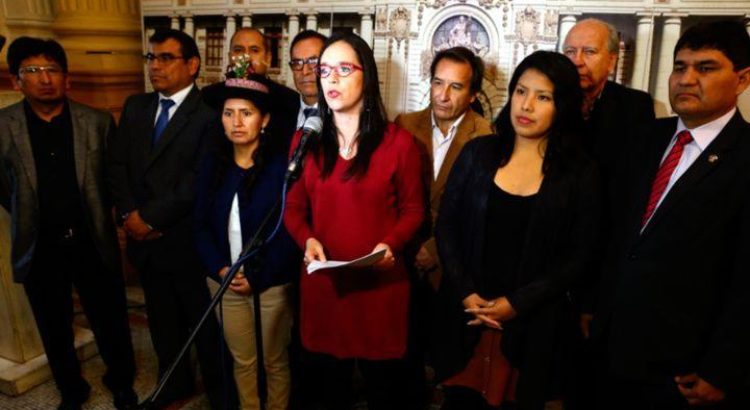
Minedu: Nuevo Perú pide dejar sin efecto cambios en textos escolares

América del Sur/Perú/26.06.18/Fuente: larepublica.pe.

Pedido se da luego que un informe periodístico revelara que el Minedu está elaborando nuevos libros que tienen opiniones conservadoras y omiten historia del terrorismo.

La bancada de Nuevo Perú envió un oficio al Ministerio de Educación (Minedu) para que deje sin efecto los cambios que se quiere hacer en los textos escolares, luego que un informe periodístico revelara que se está elaborando el material educativo con opiniones conservadoras y omitiendo la historia del terrorismo.

Así lo dio a conocer a través de Twitter, la parlamentaria Tania Pariona, quien señaló que “los niños, niñas y adolescentes tienen derecho a la verdad y a un futuro sin violencia”.

En el documento- dirigido al ministro de Educación, Daniel Alfaro– Nuevo Perú considera que “los textos escolares que pretenden publicarse presentan una visión sesgada de la historia reciente, abordando el terrorismo que vivió nuestro país de forma descontextualizada, inconsciente y en base a un uso arbitrario y tendencioso de las fuentes”.

Asimismo, señala que “es deber y competencia del Ministerio de Educación garantizar la formación de los estudiantes y ello implica desarrollar debidamente lo anotado en el Curriculum, respetando los instrumentos y enfoques asumidos por el Estado Peruano”.

Por ello, solicitan dejar sin efecto el proceso de revisión de los textos educativos sobre los hechos del periodo de violencia 1980-2000 y se archiven los textos en consulta. Además, piden una reunión de trabajo con el titular de Educación para abordar estos y otros temas de interés de la bancada.

Fuente de la noticia: https://larepublica.pe/politica/1266144-minedu-nuevo-peru-pide-efecto-cambios-textos-escolares

Comparte este contenido:

United Kingdom: Parents have clear views on the education system, it’s time they were heard

Europe/United Kingdom/26.06.18/By Charles Parker/Source: www.telegraph.co.uk.

On an almost daily basis we hear from educators, politicians and commentators on what needs to change in education. But we rarely hear from parents, despite the fact they have a clear perspective on the outcomes. It’s their children that the system teaches and they see first hand whether it’s working.

Recent research from the Baker Dearing Educational Trust shows that 80 per cent of parents think the current education system needs to change to reflect 21st century Britain, which suggests they have concerns.

The research surveyed 1,000 parents with teenagers at mainstream schools and their responses were compared with 450 parents whose children attend University Technical Colleges (UTCs), technical schools for 14-18 year olds.

The results found that for two thirds (66 per cent) of parents their biggest fear is that their child will not find a job when they leave education and nearly half (48.1 per cent) of parents said they felt stressed about their child’s education.

It is completely understandable that parents are concerned about the future and whether their children will secure the careers they deserve.

Parents are hearing about high youth unemployment and graduates not being able to find jobs. Their children are staying at home longer and finding it harder to rent, let alone buy, their own homes.

«It is completely understandable that parents are concerned about the future and whether their children will secure the careers they deserve.»

Futurist, Rohit Talwar says that youngsters need to be ready to have 40 jobs during their career and work, potentially, up to the age of 100.

Although no one really knows what’s in store it’s clear that the way we’ve been working and living is going to change greatly. So for UTC parents it must be reassuring to know that their child is confident and has a clear understanding of the industry they want to work in.

Nearly two thirds (64 per cent) of mainstream school parents surveyed said they wanted a greater variety of choice in the type of school for their child and 69 per cent said they wanted the option to select a technical education if it reflected their child’s talents.

It’s really hard for schools to keep pace with the modern world of work, where the skills requirements are changing all the time. In order to cope with these changes, young people will need to be well grounded in basic behaviour, social skills, communication and teamwork. They will need to have the ability to adapt, learn new skills and master technologies that haven’t even been conceived yet.

Recently, Nicky Morgan showed she had been listening to working parents when she offered them the right to request childcare from their school that reflects a full working day.

I agree that it is important that schools align themselves with the working day for three reasons. First, it helps children in their transition between school and work. Second, parents will be pleased that children remain in school where they are safe and supervised to do their homework and extra-curricular activities.

But finally it makes sense on a social level for everyone’s quality of life. It keeps learning and homework within the working day rather than dragging into the evening when parents and children are too tired to concentrate.

UTCs are ahead of the curve on this as they have been operating on a working day since the first one opened.

Schools are working hard to deliver the talent employers need but employers need to change too. They need to take a long-term view of their skills requirements and integrate better with the education system.

In Europe, collaboration is normal, but in the UK the worlds of education and employment are largely separate.

Employers and the university control the governing bodies of UTCs. This means they are required to understand more about education and it helps the senior leaders of the school to better understand the needs of employers. It’s testing for both sides, but it seems to be paying off.

The research showed that about eight out of 10 parents believed the UTC was preparing their child for the world of work compared to just over 6 out of 10 parents with children at mainstream schools.

The skills challenge we face will not be solved by one single system or education program. This is not just a problem for the Government, educators or industry. Our research show parents have clear ideas and should play a larger role in engineering future solutions.

Source of the notice: https://www.telegraph.co.uk/education/educationopinion/11960332/Parents-have-clear-views-on-the-education-system-its-time-they-were-heard.html


Comparte este contenido:

Guatemala: Volcán de Fuego deja a más de 15 mil niños fuera de las escuelas

Centro América/Guatemala/25.06.18/Fuente: www.telesurtv.net.

La tragedia en Guatemala desincorporó de clases a los niños de las zonas afectadas, mientras el Gobierno busca alternativas para que puedan recibir escolarización en medio del desastre.

El desastre en Guatemala ocasionado por la erupción del Volcán de Fuego dejó a 15 mil 115 niños sin clases desde la suspensión formal el pasado 3 de junio por parte del Ministerio de Educación guatemalteco (Mineduc).

Por el momento, las instituciones educativas de las zonas afectadas sirven de albergues para los damnificados.

“Mientras se construyen los albergues de transición, muchos colegios han ofrecido sus instalaciones sin costo para que los niños vayan a estudiar”, puntualizó el Ministerio de Educación de Guatemala.

El ministro de Educación de Guatemala, Óscar Hugo López, realizó una segmentación de los niños afectados por la tragedia del volcán, y los dividió en tres grupos.

>> OMS evaluará efectos del volcán de Fuego en los guatemaltecos

El primer grupo de infantes está conformado por 668 menores de edad quienes han paralizado sus actividades escolares ya que la tragedia destruyó sus casas y sus centros educativos, en segundo lugar se agrupó a 2.237 niños quienes están junto a sus padres en zonas de alto riesgo sin intenciones de desalojar sus lugares de residencia.

Por último se encuentran 12.110 pequeños que no tiene posibilidad de retomar las actividades escolares porque sus escuelas están siendo utilizadas como refugios y centros de acopio.

En este sentido, el primer grupo de infantes serán ubicados temporalmente en carpas donadas por la comunidad internacional, mientras transcurre el periodo de recuperación y reconstrucción de las comunidades abatidas por el Volcán de Fuego.

“Se colocarán entre 25 y 30 carpas. El plan es que se ubiquen donde se construirán las residencias, pero se analiza si se puede hacer en lugares cercanos a los albergues”, informó el ministro López.

Asimismo, la prensa local informó que estos niños desplazados como consecuencia de la tragedia serán atendidos por psicólogos voluntarios antes de retomar las clases.

“Con estos niños se trabajará con una atención psicosocial antes de empezar el currículo. No podemos entrar de lleno con las materias, pues los niños pasan por una pérdida de territorio y familia”, señaló el ministro.

Fuente de la noticia: https://www.telesurtv.net/news/volcan-fuego-deja-ninos-fuera-escuelas-guatemala-20180625-0020.html

Comparte este contenido:

Chile: Superintendencia de Educación ordena que colegios incorporen ciberbullying en protocolos

América del Sur/Chile/25.06.18/Fuente: www.ahoranoticias.cl.

Con la masificación de las redes sociales y el uso de tecnología, creció también la preocupación de los padres con sus hijos en ese aspecto. Los casos de ciberbullying son más frecuentes y menos controlables fuera del ámbito escolar, por lo que la Superintendencia decidió obligar a los colegios que lo incluyan en sus protocolos.

La medida está dispuesta para todos los colegios del país, tanto públicos como privados, quienes deberán actualizar sus manuales de convivencia para incluir el uso de redes sociales y cualquier clase de hostigamiento por esa vía.

Durante la jornada del viernes, la Superintendencia indicó a los establecimientos la nueva medida. Según indica La Tercera, a través de una circular el organismo busca entregar las instrucciones a los sostenedores sobre las consideraciones mínimas que deben ser parte de los reglamentos del colegio.

En ese sentido, el documento señala que «todo reglamento interno deberá incorporar estrategias de información y capacitación para prevenir el maltrato, acoso escolar, o violencia física o psicológica, manifestada a través de cualquier medio, material o digital entre miembros de la comunidad educativa».

El instructivo también aclara que en los reglamentos internos, los colegios tendrán que determinar la manera de actuar ante una situación de ciberbullying o semenjante.

Por otro lado, según las cifras de la Superintendencia de Educación, durante el primer trimestre de 2018 se recibieron 213 denuncias de hostigamiento o bullying, de las que el 6.5% se ha hecho a través de medios digitales.

Fuente de la noticia: http://www.ahoranoticias.cl/noticias/nacional/228266-superintendencia-de-educacion-ordena-que-colegios-incorporen-ciberbullying-en-protocolos.html

Comparte este contenido:

INCAE traslada sus programas educativos al campus de Costa Rica

Centro América/Nicaragua/25.06.18/Fuente: www.laprensa.com.ni.

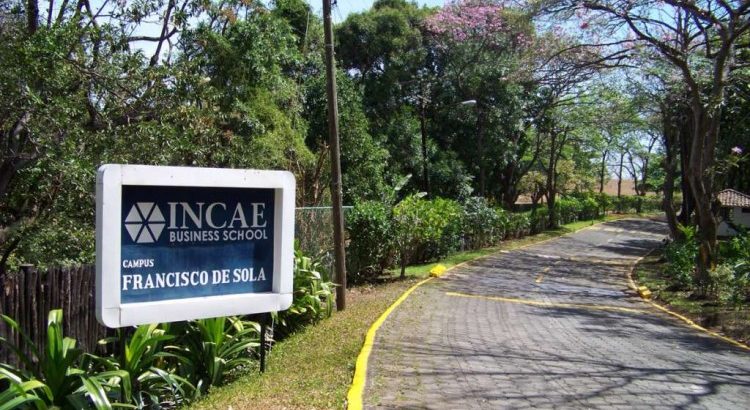
Mediante el comunicado el INCAE informó que el campus de Nicaragua continuará operando de manera administrativa y el campus de Costa Rica realizará todos los programas

El Instituto Centroamericano de Administración de Empresas (INCAE) dio a conocer que dada la difícil situación que vive en el país, el Master of Business Administration (MBA) programado a iniciar en agosto en Nicaragua, será trasladado al campus de Costa Rica, para brindarle seguridad a los estudiantes.

Mediante el comunicado INCAE informó que el campus de Nicaragua continuará operando de manera administrativa y el campus de Costa Rica realizará todos los programas.

“Por esto, algunos de nuestros programas ejecutivos deberemos moverlos fuera del campus. Todo lo acontecido, incluyendo estos cambios, representan un impacto financiero significativo… Sobrepasar estas dificultades financieras requiere compromiso de una comunidad incaista fuerte”, se lee en el comunicado.

El INCAE, también recordó que desde su fundación han pasado por periodos similar al actual, pero eso solo los ha fortalecido.

“INCAE es una institución fuerte; ya hemos pasado períodos similares en el pasado en Nicaragua con el terremoto de 1972, la guerra civil de 1978-79, el colapso económico e institucional de los 80, y el Huracán Mitch de 1998, y siempre hemos regresado con más fuerza y esta vez no será la excepción”, se lee.

Incae entre los mejores

El año pasado el Incae Business School fue seleccionado por Financial Times de Londres, como la escuela de negocios número 11 en las América y la escuela no estadounidense mejor calificada.

En el 2017 Incae figuró en posiciones destacadas en los cuatro rankings globales del Financial Times. Su MBA full-time y el Executive MBA ocuparon la posición número 1 en América Latina, mientras que Custom Programs (programas corporativos) aparece en un destacado puesto 10 en las Américas.

Fuente de la noticia: https://www.laprensa.com.ni/2018/06/23/economia/2439306-incae-traslada-sus-programas-educativos-al-campus-de-costa-rica

Comparte este contenido:

Polémica en Perú por libros escolares que apelan a «virginidad conservada»

América del Sur/Perú/25.06.18/Fuente: www.lavanguardia.com.

Una intensa polémica se desató hoy en Perú por la difusión de textos escolares de las escuelas públicas que apelan a la «virginidad conservada» y al abstención sexual, como medidas para evitar el embarazo adolescente e impartir posturas más conservadoras entre la población escolar.

El Centro de Promoción y Defensa de los Derechos Sexuales y Reproductivos (Promsex) expresó su preocupación por algunos contenidos que, a su parecer, refuerzan estereotipos machistas, como incluir el texto de «Cómo resistir la tentación?» de tener relaciones sexuales y ejercer una «virginidad conservada», en trabajos de Comprensión Lectora para los alumnos de secundaria.

El «texto sobre la «inmoralidad» del sexo es repartido en las escuelas», indicó Promsex en su cuenta de Twitter.

Agregó que el ministro de Educación, Daniel Alfaro, admitió que hay que promover el pensamiento crítico, y que los textos están bajo revisión, cuando se le mostró, en una entrevista dominical, las guías de educación en las que se califica de «inmoralidad» al sexo antes del matrimonio.

Alfaro confirmó que el ministerio se ha reunido con legisladores de diversas tendencias para llegar a una postura consensuada en temas de educación sexual, así como en hechos recientes de la historia peruana como el conflicto interno desatado por el terrorismo entre 1980 y 2000.

Para la ong feminista Flora Tristán, «es preocupante» la postura de Alfaro «poco clara, temerosa y nada acorde con los derechos de la niñez».

«El embarazo adolescente no se combate con falsos moralismos sino con educación sexual integral y prevención de la violencia», anotó Flora Tristán en su cuenta de Twitter.

Las críticas de las organizaciones defensoras de los derechos de la mujer responden además al hecho de que el embarazo adolescente afecta al 13,4 % de la población de 15 a 19 años en Perú, y donde cada día cuatro menores de 15 años quedan embarazadas.

Respecto a la supuesta omisión en los textos escolares de sonadas matanzas cometidas por militares encubiertos durante el gobierno de Alberto Fujimori (1990-2000), la legisladora izquierdista Indira Huillca expresó que el ministerio de Educación «no puede ceder ante la campaña negacionista iniciada por el fujimorismo desde el Congreso».

«Educación de calidad también es conocer toda nuestra historia», anotó la parlamentaria en su cuenta de Twitter.

El ministro de Educación declaró ayer que los textos difundidos por los medios de comunicación «se van a mejorar», a pesar de que ya figuran en los libros que usan actualmente los estudiantes de educación secundaria.

A través de un comunicado, el ministerio explicó que ha convocado a mesas de consulta con expertos, políticos, colectivos de padres y asociaciones de padres de familia, investigadores y fuerzas armadas para abarcar «la mayor pluralidad de opiniones» en los nuevos textos.

Los cambios se harán efectivos en los textos que se imprimirán para el año escolar 2019 «tomando como insumo los aportes de los participantes», precisó el ministerio.

Fuente del artículo: http://www.lavanguardia.com/vida/20180625/45402418831/polemica-en-peru-por-libros-escolares-que-apelan-a-virginidad-conservada.html

Comparte este contenido:
Page 2510 of 6193
1 2.508 2.509 2.510 2.511 2.512 6.193