Page 2610 of 6196
1 2.608 2.609 2.610 2.611 2.612 6.196

EEUU: Lessons learned from the Arizona teachers strike

Por: peoplesworld.org/08-05-2018

The weeklong strike by Arizona teachers ended in a pretty handsome victory for teachers and supporters.  They won a 19 percent salary increase over three years which is quite something for hard working teachers grown accustomed to tiny raises, if any, that never kept up with the cost of living.

Yet some are criticizing the educators for ending the strike before winning every one of their demands. They are not understanding how important was the victory that the teachers and their allies actually did win.

To understand the magnitude of the victory it’s important to look at what educators are up against.  You may have noticed that when teachers strike, which isn’t often, they usually walk out in the fall when classes begin.  First days of school in the fall get more attention, when teachers, students, and staff are knuckling down for the school year.  Teachers’ unions have had time to prepare for job actions over the summer and everybody is more energetic.

This latest wave of teacher strikes, however, took place late in the school year precisely because it wasn’t a narrowly planned action.  Arizona teachers reacted spontaneously, inspired by teachers’ strikes in West Virginia, Oklahoma, and other states.  The main organizers formed a loose online organization called Arizona Educators United which grew like a prairie fire.  It was joined by the two teachers’ unions, parents, students, school boards, the labor movement, and the public at large.  It was a lesson about the need to be creative and always look for new ways to advance the struggle.

In Tucson on May Day,  thousands celebrated International Workers’ Day with a massive rally and march down to the State Building in solidarity with the striking educators.  With strong support from the Pima Area Labor Federation, teachers, and community supporters and all wearing red in solidarity it looked like a real May Day.  To many it was a lesson about the workers’ holiday, labor history and the importance of international solidarity.

The large concessions won by teachers and the promised infusion of more money into schools is a huge reversal from years of neglect and severe cuts in school funding.  The Arizona Republicans, who control the legislature and all statewide offices, haven’t merely cut and slashed education. They have been out to destroy public education.

Since public schools are such a basic part of American democratic tradition they couldn’t just abolish the schools outright without a public outcry.  Instead they have been weakening public education by supporting private school vouchers, and contracting out education through use of charter schools.  They figured if they damaged schools enough the public might eventually agree to replacing the schools with state subsidized private and charter schools.  Their main weapon has been large tax cuts to the rich, draining funds from education and that was another lesson learned.  When they ended the strike teachers began a petition campaign for a ballot initiative to tax the rich to fund future education.  Hundreds of thousands learned who the enemy of education is and where the funding must be found.

I worked for a decade in Arizona schools and was an active member of the American Federation of Teachers.  Our union local’s president was a Reagan Republican, and many of the school employees were quite conservative with no experience or knowledge of trade unionism.  In my school most were not union members.

The strike movement has changed that.  Now teachers have learned the importance of organization and unity, and the need to fight back if they want to save public education.  It was another lesson learned, one about the importance of allying with parents, students, and their communities for a broader front against the right wing.

Most importantly, Arizonans learned that small struggles by local unions for small concessions, while important, are not enough.  They learned that working people need to get political and take on the corporate class and their right-wing puppets in the streets, in the legislature and governor’s mansion. Yes, it’s important to win concessions, even small ones, but they will take them back unless we organize and strengthen our peoples’ coalitions.  It’s important to defeat the ultra-right in the November elections.  These struggles are where working people learn about class struggle and, hopefully, where they will eventually learn about the need to abolish capitalism once and for all.

So aside from winning some good economic concessions our teachers and the public also gained a class struggle education which, together with the new organizational forms, will strengthen us for the battles ahead. We have nothing to lose but our chains.

*Fuente: https://www.peoplesworld.org/article/lessons-learned-from-the-arizona-teachers-strike/

Comparte este contenido:

Australia: Education reforms must address youth unemployment

Por: portnews.com.au/09-05-2018

The Federal Government’s commitment to revamp the national education curriculum and accept the reform proposals put forward under Gonski 2.0 should be aimed at both international competitiveness and ensuring more young people have the skills and preparation necessary to continue their education or enter the workforce, according to the state’s peak business organisation, the NSW Business Chamber.

“Since the year 2000, across a range of measures, the performance of Australian schools has fallen against international benchmarks, and businesses are finding it even harder to fill vacant positions,” said Mid North Coast NSW Business Chamber Regional Manager, Kellon Beard.

“Our school system is failing too many young people and is a handbrake on the potential of our economy and business across a range of sectors. It’s clear the educational outcomes required from our school system are not being achieved and both our young people, and the economy, is suffering,” Mr Beard said.

In 2017, the NSW Business Chamber released its Old School/New School: Transforming school education for the 21 st century Report Developed in consultation with business and education leaders, teachers, parents and, importantly, students themselves.

Old School/New School called for a radical rethink of our approach to school education to properly prepare our kids for a satisfying career and life after school.

“The Chamber has highlighted the need for a school system that provides better support for teachers, more flexible models of learning and which provides a range of learning pathways including a greater focus on vocational education training.

“A lot of local business complain to me that school leavers do not have the soft skills that are required in the workplace and this is something that needs to be addressed” Mr Beard said.

“The Gonski 2.0 proposals to develop an independent national body to assess educational approaches, empowering teachers and principals with a greater ability to focus on individual student attainment and providing a more flexible senior curriculum with apprenticeships and work experience is the shake up our school system needs to deliver better outcomes,” Mr Beard said.

*Fuente: https://www.portnews.com.au/story/5388845/education-reforms-must-address-youth-unemployment/

Comparte este contenido:

Uganda: Janet Museveni tells parents to prioritise education

Por: http://observer.ug/09-05-2018

The first lady and minister of Education and Sports, Janet Museveni, is concerned that most parents are not actively involved in the education of their children, thus leading to poor performance.

Ms Museveni said while it the responsibility of government to provide education, parents have abandoned their responsibility of providing essential items such as lunch, scholastic materials and shoes for learners.

“Why are families failing to feed our children? Someone produces a child and they are unable to feed them, what does this mean? When I talk about this, I am not talking about only mothers but also the fathers,” Ms Museveni said.


She added that during her term as MP for Ruhaama County in Ntungamo, most children in the constituency walked bare feet to school.

“When I went to Ruhaama, I said, ‘I will not leave when its children have no shoes.’ I was shocked that I spent 10 years in Ruhaama and left its children without shoes. I had done everything there but parents were not helping themselves. Why should someone spend a whole year without engaging in anything generating income? What should we do to such people?” she asked.

The minister was speaking to parents, district leaders and politicians after officially handing over new structures to Birere mixed primary school in Isingiro district on May 2, 2018.

Museveni said replacing the dilapidated structures with new ones will not be meaningful if parents don’t prioritize their children’s education.

Birere mixed primary schools is one of the 138 schools countrywide that have received a facelift with support from Global Partnership for Education (GPE) grant worth $100m under the Uganda Teacher and School Effectiveness Project (UTSEP) supervised by the World Bank. The grant agreement was signed on August 27, 2014 and became effective on March 24, 2015.

In Isingiro, 20 schools were selected with each receiving seven new classroom blocks, one administration block, five and two-stance latrines and a 5,000-litre water tank.

Ms Museveni also commended schools for implementing the thematic curriculum insisting that it when children study in their mother tongue up to primary three, they understand better as opposed to being instructed in English language.

“I know there are some people de-campaigning that programme [thematic curriculum] but that is being very short-sightedness. It is much easier for young children to study in their local language,” she said.

According to the ministry’s schedule, handover of all the schools which started on May 2 will end on May 30, 2018 in the respective districts.

JOB WELL DONE

While handing over more structures in Ibanda district, the state minister for primary education, Rosemary Seninde, said contractors did a commendable job with no building found with cracks as it is known for most new buildings.

“We are satisfied that the work is perfect and real. I call upon parents to love, cherish and maintain what has been given to them because it is not going to be the responsibility of government to maintain the infrastructure,” Seninde said.

Of the 11 schools constructed in Ibanda, she visited and handed over new structures at Kijongo PS, Rwenkobwa PS, Ishongororo PS, Kashambya PS, Kemihoko PS, Rwanyabihuka PS and Kyeibumba PS to the relevant school heads. Seninde reiterated the first lady’s message by encouraging parents in Ibanda to provide lunch and shoes for their children.

“It is a shame that children come to school bare-feet in this era. If you cannot afford modern shoes, buy for them plastic shoes or sandals. How will they enter into such new beautiful classes? This attitude that education of Ugandan children is for President Museveni must change,” she said adding that all classrooms in the 54 completed schools countrywide out of the 138 will be furnished with desks before the beginning of second term.

The remaining 84 schools will be furnished and handed over when completed. Speaking to The Observer, Julius Atwijukye, the head teacher Kashambya PS, applauded government on the latest development at his school although he remained not convinced on whether parents will provide shoes for learners.

“Our children are not used to putting on shoes. When we call parents to address such issues, they tell us that they are poor while others threaten to withdraw their children from school if we impose such conditions on them,” Atwijukye said.

“Maybe now that we have a new environment, parents have promised to buy shoes. But if we can get some sponsors to buy some shoes, it is highly welcome because according to the understanding of my parents, I know most will not buy them next term [two].” Out of the 560 pupils at Kashambya, about 50 study in proper shoes.

For Justine Tukashaba, a parent at Kashambya, some parents think shoes are meant for children in urban settings.

“I am a catechist of our church but whenever I teach about such things, parents ignore me. Many of the children have one pair of shoes they use only when going to church. Parents are poor and not bothered about the situation,” she said.

By the time minister Seninde left the school on Thursday May 3, most parents, some of whom had no shoes at this function, pledged to buy shoes for children and they requested her to visit the school next term to check on their progress.

*Fuente: http://observer.ug/news/headlines/57633-janet-tells-parents-to-prioritise-education.html

Comparte este contenido:

UK: Welsh education being used for propaganda, says UKIP AM

UK/May 08, 2018/Source: http://www.bbc.com

Wales’ education system is being used as a tool of propaganda, UKIP’s Welsh leader has alleged.

Neil Hamilton claimed that parts of the Welsh Baccalaureate on topics like inequality are being taught from a «centre-left disposition».

He said there was a «potential danger» that teachers may be biased, suggesting they may favour the Labour party.

First Minister Carwyn Jones said he saw no examples of «bias» in the curriculum.

The UKIP Wales leader said the qualification included a «global citizen challenge which deals with issues such as cultural diversity, fair trade, future energy, inequality and poverty».

«These are all highly political topics which need to be taught in a balanced way if education is not to degrade itself into mere propaganda,» Mr Hamilton told First Minister’s Questions in the Senedd.

He said he had seen the materials being used in teaching the courses which are all, he claimed, «from a centre-left disposition».

The comment drew heckles from other AMs.

Kirsty Williams
Image captionEducation Secretary Kirsty Williams looked on aghast as Neil Hamilton made his claims

«The false indignation coming from the other side proves the point I’m trying to make here,» Mr Hamilton replied, «that because they control the education system it is being used as a tool of propaganda.»

Mr Hamilton said the «mindset of a teacher is very important» and, quoting polling figures suggesting many secondary school teachers vote Labour, he said: «Even if bias is subconscious it must be regarded as a potential danger».

‘Revisionism’

But the first minister said «anything is centre-left» from Mr Hamilton’s perspective, alleging that he had supported the now-repealed Section 28 law that had banned local authorities from intentionally promoting the acceptability of homosexuality.

Mr Jones said: «We prefer balance. He wants right-wing revisionism.»

«I trust our teachers, bluntly, and I trust our students to able to think critically for themselves,» he told Mr Hamilton.

«There will be different views on how to address inequality, different views on how to address poverty.

«Nevertheless they are hugely important issues that I think every young person needs to think about.

«But I’ve seen no examples at all of any kind of bias being introduced into the curriculum.

«For my perspective I think it is hugely important that our students do have the ability to go beyond academic subjects because I think it makes them more rounded individuals when they do think more critically and more widely.»

Source:

http://www.bbc.com/news/uk-wales-politics-44038903

Comparte este contenido:

How A People-First Culture Is Transforming Education In India

India/May 08, 2018/By: Laura Garnett /Source: https://www.forbes.com

Since 2005, when he became president and later CEO of HCL Technologies, Vineet Nayar has led a remarkable turnaround that saw the company triple its revenues and income growth. He wrote about this in his book, Employees First, Customer Second. The value-based leadership simultaneously resulted in the company being ranked by Hewitt Associates as the Best Employer in India and by BusinessWeek among the top five most influential companies in the world.

Nayar is now trying to transform the education of India’s children. He’s taking on a huge goal, and I’ve always admired his focus on people. I wanted to sit down with him and talk about his current work with his own fund and figure out how he plans to transform education.

Laura Garnett: What is the problem that you’re trying to solve and what is your goal?

Vineet Nayar: In India, government-led primary school education systems suffer from a myriad of issues, not only preventing families from sending their children to these schools but also affecting the learning outcomes for those 144 million children who attend. Most children in grade 5 can’t do basic math or construct simple sentences in English.

Sampark Foundation was founded with a belief that “frugal innovation,” along with relentless execution in partnership with the government, can drive large scale change in learning outcomes. Our goal is to design and implement frugal innovation ideas that will transform learning outcomes for 20 million children studying in 200,000 rural government schools by 2025, at less than $1 per child per annum. As of today, we have touched the lives of 7 million children across 76,000 schools.

Garnett: How did you come up with the Innovative ideas that you speak about?

Nayar: While many educational change initiatives are in-flight in India currently, we realized they have not been able to deliver impact because they are either sub scale or resource intensive, or they ignore the ground realities surrounding these kids. For example, you can’t just solve this problem by giving away iPads to children in an environment that lacks electricity.

We believe that for any long-lasting change to happen it has to be driven by practical and sustainable solutions that are frugal but at a large scale. Our area of investment and focus was on design thinking and coming up with frugal innovation ideas (low on resources, high on impact) and leveraging them to deliver a comprehensive, multi-fold improvement in learning outcomes that can be sustained.

This led to Sampark Smart Shala: a learning-outcome focused, frugal innovation-led initiative that uses audio technology, a voice mascot called “Sampark Didi,” toys, folklore, board games and teacher training modules combined with rigorous monitoring in collaboration with state governments.

Garnett: What allowed you to have these innovative ideas?

Nayar: Our design thinking was inspired by three ideas. The first came from an unlikely source: Bollywood! Going to a movie in an Indian village is an open-air three-hour deeply immersive experience of life enacted through dance, songs and dramatic scripts. We asked ourselves – could we bring that experience to the classroom too?

The second came from watching people in villages charge cell phones using their bicycles. Could this battery drive an audio device with a big speaker that could be used in a class? And the third inspiration came from Teaching Learning Materials (TLM’s). Students retain 70% of what is said in the first 10 minutes of class and only 20% of what is said in last 10 minutes. Adding visual aids and stories increases retention by 250% even in the last 10 minutes.

Garnett: How are these ideas making an impact on your goal?

Nayar: The results have been nothing short of magical – a 56% increase in learning outcomes measured through an independent assessment study. This is also now a case study at the Harvard Business School, showcasing how frugal innovation can create large scale social impact.

Garnett: How are you bringing people first customer second to your foundation and how does it operate?

Nayar: Since Sampark Foundation is a small not-for-profit organization, it has barely 100 people, or ‘Sparks’ as we call them. In this model, it is the government schoolteachers who are the front-line workers in the value zone, the classroom. Therefore, following the EFCS principles, our role is to enthuse, encourage and empower them. So, we set our eyes on enhancing the teacher’s power to teach and bring excitement into the classroom through Sampark Smart Shala.

Our 100 Sparks travelled over 15,000 kilometers within 100 days into remote interiors of the country to help train 100,000 teachers each year on the use of Sampark Smart Shala teaching aids to bring excitement back into the classroom and drive significant transformation in learning outcomes. The one thing that brings a smile to my face is the fact that the impact and learning outcome has been achieved by enthusing the teachers, empowering them with the teaching aids, encouraging and mentoring them through helplines and periodic training sessions – and most importantly, by transferring the ownership of change to them. This is employee-first at its best.

Garnett: What is your biggest challenge now and how can people that read this that want to help, get involved?

Nayar: The biggest challenge now for us is if we should focus on higher grade levels with the 7 million children already in the program in the existing four states, or should we add more children to the grade 1-3 program by scaling up to more states. Doing both could break the back of operations, and there is a limit to how far our resources can take us. Our foundation is inviting new ideas, new approaches, new and frugal ways to improve learning levels which will help us go the extra mile and provide a path for millions of children studying in government-funded primary schools to see the light at the end of the dark tunnel.

Source:

https://www.forbes.com/sites/lauragarnett/2018/05/08/how-a-people-first-culture-is-transforming-education-in-india/2/#2898c849303d

Comparte este contenido:

México: Enseña IEEPO a niños de preescolar cómo actuar ante un sismo

México/08 de mayo de 2018/Fuente: https://www.oaxacacapital.com

Como medida de prevención y para enseñar a los niños y niñas del nivel preescolar sobre cómo actuar en caso de un sismo, el Área de Protección Civil y Emergencia Escolar del Instituto Estatal de Educación Pública de Oaxaca (IEEPO), realizó un simulacro en el Jardín de Niños “Guillermina Carriedo Banuet”.

Como medida de prevención y para enseñar a los niños y niñas del nivel preescolar sobre cómo actuar en caso de un sismo, el Área de Protección Civil y Emergencia Escolar del Instituto Estatal de Educación Pública de Oaxaca (IEEPO), realizó un simulacro en el Jardín de Niños “Guillermina Carriedo Banuet”.

Las autoridades del plantel ubicado en el municipio de San Bartolo Coyotepec, previamente recibieron la capacitación en materia de Gestión Integral de Riesgos de Desastres que les ayudó en la integración del “Plan Escolar de Gestión Riesgos y Desastres” donde se describen los riesgos que presentan las escuelas, así como un calendario de trabajo para eliminarlos o mitigarlos.

Asimismo, se conformó el “Comité Escolar de Gestión de Riesgos y Desastres” y se otorgó capacitación en materia de Brigadas de Protección Civil, con la finalidad de que el Jardín de Niños cuente con las herramientas para que funcionen y operen las Brigadas de: Evacuación, Búsqueda y Rescate y Primeros Auxilios, Combate de Conato de Incendios, Apoyo Emocional y Prevención y Mitigación.

Estos elementos sirvieron de base para la implementación del simulacro en el que participaron las autoridades municipales y de la representación del sector salud, además del personal de Protección Civil y Emergencia Escolar del IEEPO.

El simulacro consistió en un evento de sismo magnitud 7.5 con epicentro en las costas de Pinotepa Nacional que derivó en tres niños lesionados por caída de objetos no asegurados; adicional se supuso un conato de incendio en la bodega de la institución educativa para que las brigadas pusieran en práctica los conocimientos adquiridos.

Cabe señalar que en Oaxaca, de acuerdo a lo establecido en la Guía para elaborar o actualizar el Programa Escolar de Protección Civil, diseñada a nivel nacional, las autoridades educativas promueven entre los responsables de los Comités las acciones preventivas y de auxilio que es necesario efectuar en las escuelas.

Para mayor información y capacitación sobre este tema los directivos o docentes de las instituciones educativas, así como los Comités de Padres de Familia, pueden llamar o acudir al Área de Protección Civil y Emergencia Escolar del IEEPO a los teléfonos 35 1 40 50 y 35 1 4595, donde se atenderá las solicitudes.

Fuente de la Noticia:

https://www.oaxacacapital.com/2018/05/07/ensena-ieepo-a-ninos-de-preescolar-como-actuar-ante-un-sismo/

Comparte este contenido:

Argentina: Unamos la lucha por la educación a la pelea contra el tarifazo

Argentina/8 de mayo de 2018/Por: Matías Hof/ Fuente: https://www.laizquierdadiario.com

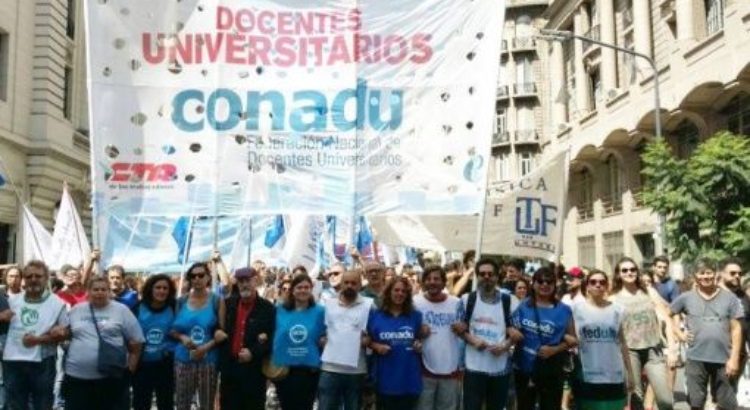
Este miércoles están convocadas dos movilizaciones, una en defensa de la educación pública, contra el cierre de los profesorados de la Capital, y otra contra los tarifazos. Es el momento de unir las luchas contra el ajuste del macrismo.

La lucha contra el cierre de los terciarios viene despertando cada vez más apoyo en los distintos sectores y niveles del sistema educativo. Los mismos vienen organizando una marcha para este miércoles 9 desde Palacio Pizzurno a la Legislatura porteña, buscando visibilizar las demandas en defensa de la educación pública.

En la tarde de este lunes se comenzó a difundir por redes sociales la convocatoria “9M, 18 horas, todos al Congreso, #basta de tarizafos”, impulsada por un grupo de organizaciones gremiales y políticas enroladas en el llamado agrupamiento “21F” referenciado en el moyanismo.

Según varias versiones, adherirían a la convocatoria las CTA, la Corriente Federal, y otras organizaciones políticas y barriales, entre ellas el Frente de Izquierda, miles de personas se concentrarán en Plaza Congreso para mostrar su descontento con los tarifazos. Ambas situaciones son expresiones del ajuste del macrismo y están generando una enorme bronca que va a ser expresada en las calles. Sería un gran golpe al gobierno si ambas confluyeran.

El proyecto de la UniCABA (que de aprobarse implicaría el cierre de los 29 profesorados de la Capital) tiene como uno de sus objetivos recortar gastos en la educación pública, es parte del plan de Cambiemos para hacerle pagar a los estudiantes y trabajadores los costos de la crisis económica. Junto con las paritarias muy por debajo de la inflación ofrecidas a los docentes, los cambios en los menús y la baja inversión en infraestructura, son los principales ataques a la educación pública en función de recortar gastos. El ataque a la educación pública es parte del avance de la privatización en todos los ámbitos dependientes del Estado.

La semana pasada el escenario nacional en que este conflicto se está desarrollando cambió de forma abrupta, la suba del dólar, combinada con la escalada de los tarifazos, están poniendo a la mayoría de la población en grandes dificultades económicas. Los tarifazos son la fuente de enormes ganancias para las empresas que administran la prestación de servicios, mientras millones cada vez tienen más dificultades para llegar a fin de mes. Los estudiantes y docentes no son nada ajenos a esta situación, por el contrario, se encuentran entre los sectores más afectados.

En los profesorados la deserción ya venía en aumento, fruto de la imposibilidad de poder pagar el transporte, los apuntes y todo lo que implica mantener la cursada. Casi el 80% de los futuros docentes debe trabajar para mantener su carrera, soportando todo tipo de trabajos precarizados. El avance del ajuste vía devaluación, inflación y tarifazos empeora aún más estas condiciones.

La lucha contra el Gobierno de Larreta para evitar el cierre de los institutos terciarios viene de lograr una primer ruptura del cerco mediático que llevó a un cambio de discurso por parte de los funcionarios del PRO. Consiguió ganarse a parte de la opinión pública para fortalecer el rechazo a esta intervención privatista del macrismo en la formación docente. En muchas de las últimas asambleas de los terciarios los estudiantes votaron exigirle a la conducción de UTE (principal sindicato docente de la CABA) que convoque al paro en defensa de la educación pública, como un primer paso para luchar junto a los trabajadores.

En el marco de que gremios del transporte, los bancarios, entre muchos otros van a salir a las calles, queda al alcance de la mano fortalecernos todavía más aliándonos también con ellos. La UTE y La CET (Coordinadora de estudiantes terciarios) como organizadores de la marcha del 9 deberían abrir los espacios de debate necesarios para que podamos decidir democráticamente si nos unimos a los trabajadores en una gran manifestación frente al Congreso.

Si logramos coordinar y confluir con todos los sectores que manifestarán contra los tarifazos frente al Congreso, podría ser un enorme avance en que miles de personas apoyen la defensa de los profesorados y al mismo tiempo dar la pelea contra el ajuste del gobierno de conjunto mostrando la unidad de las luchas y de los distintos sectores en las calles, forzándolo a retroceder.

Fuente de la Noticia:

https://www.laizquierdadiario.com/Unamos-la-lucha-por-la-educacion-a-la-pelea-contra-el-tarifazo

Comparte este contenido:
Page 2610 of 6196
1 2.608 2.609 2.610 2.611 2.612 6.196