Page 2657 of 6193
1 2.655 2.656 2.657 2.658 2.659 6.193

Nigeria: As History Returns to the Curriculum

Africa/ Nigeria/ 16.04.2018/ From: allafrica.com.

Finally, the future of Nigeria looks a little brighter because the nation has decided to begin to look, again, into its own past.The erstwhile removal of History from the school curriculum, or its so-called integration into that of Social Studies, was a mindless and uncharitable act of disservice to the generation of Nigerian pupils/students to which it was denied, a deprivation of the human need to understand its origin and trajectory in order to chart a worthy and viable course for its continuity. Thankfully, however, History has been restored, and Nigeria is no longer doomed, like the proverbial river that forgets its origin, to dry up and crack in its bed.

As far back as 1999, in a meeting with the then newly elected President Olusegun Obasanjo who had made a reference to the problem of youth violence across the country, one of Nigeria’s historical icon J. F. Ade-Ajayi had made it clear that this problem stems from the lack of the knowledge of history in the Nigerian youth population. A host of other things, both positive and negative, happening in the country now can be better understood and engaged if they were traced back into history. The paucity of a sense of nationalism or patriotism can be directly tied to the lack of a sense of history, for it is difficult, perhaps even impossible, to love a country that one does not know.

Moreover, there is a sense of identity, culture, ownership and responsibility among other things that can be taught or given only through an immersion in the history of one’s people. Once again, therefore, the re-introduction of History as a stand-alone subject in the basic and junior secondary curriculums across the country must be greeted with joy and renewed hope. The government must be commended for listening to the criticisms and pleas of its people on this particular matter and reshaping its policy to suit the reasonable stance of its citizens.

In implementing or executing this very commendable policy, however, the need for vision and responsibility must not be overlooked. History being as long and wide as human reality itself, the study of the history of Nigerian peoples and their connections with the greater world must be emphasized as the core of the new curriculum. The greater portion of school children in the country nowadays, perhaps by virtue of their exposure to the history-laden comics and sitcoms of the West, are conversant with the exploits of such figures as Benjamin Franklin and Joan of Arc while questioningly cringing their noses at the mention of Ovonramwen and Queen Amina. This is not a desirable state of affairs. History, like charity, must begin at home, and it is time for Nigeria to also begin to utilise the products of technology and innovation in teaching its children its own history.

Culture, being intertwined with history, must share in this rebirth. There is thus nothing wrong with the making of cartoons and other animations that tell the stories of Ogun, Sango, Chaka the Zulu, Amadioha and Mandela, all made colourful with toned-down representations of the personages and rites of passage without which these stories will not be complete. Since these children, as research has shown, respond better to visuals, then let them be given visuals.

The history of a people must also be taught in line with the particular vision that that people has for itself. The Executive Secretary, Nigerian Educational Research and Development Council, Prof. Ismail Junaidu, has said that one of the purposes of this policy is the promotion of Afro-Nigerian history so that the challenges of globalisation can be better understood, appreciated and negotiated. This is a goal that is worth pursuing, and the starting point must be for that which is Nigerian/African to be posited as strong and valuable on its own, able to inter-connect with the outside world on its own terms and as an equal. For this task to be achieved, the employment of history teachers (i.e. teachers who actually studied history and are trained to teach it rather than makeshift instructors from perhaps other disciplines) is imperative. If this is taken along with the use of new media, the study of history in Nigeria will know no limitation in its fruits.

In conclusion, the return of History to schools as an independent subject must be recognised also as a clarion call to parents, teachers, and guardians to first take up the responsibility to educate themselves in their own history and then teach their younglings the same. To be practical, the history of particular tribes and clans (which is also very important) is best taught at the level of the family. It is, therefore, time to bring back the culture of an oral transmission of tribal history.

From: http://allafrica.com/stories/201804110187.html
Comparte este contenido:

España: La educación diferenciada, una batalla que dura casi veinte años

Europa/España/ 16.04.2018/ Fuente: sevilla.abc.es.

Fue Manuel Pezzi allá por 1999 el primero en iniciar en Andalucía la batalla contra la diferenciada. «Si no aceptan la coeducación le retiraremos la subvención». La frase, la misma que hoy mantienen los dirigentes de la Junta de Andalucía, la pronunció hace cerca de veinte años. Lo dijo iniciando una batalla del ejecutivo andaluz contra los colegios concertados que separaban a niños y niñas. Unos centros cuyos dirigentes y los padres que los eligen denominan «diferenciados» y que la Junta tilda de «segregada».

Son muy pocos los que quedan en Sevilla con ese modelo que sí existe en otros países de la UE sin problema y cuyo debate esconde un trasfondo ideológico con defensores y detractores. En Sevilla hay seis concertados con este modelo: Ribamar, Albaydar, Altair, Angela Guerrero, Elcható de Brenes y Nuestra Señora de Lourdes en Carmona.

Son centros que, como dice Javier Delgado, director de Altair, se alejan del concepto que muchos tienen de centro elitista al estar en el distrito Tres Barrios-Amate que engloba «Los pajaritos», uno de los barrios más pobres de España. Y tienen más demanda que oferta. En pleno proceso de escolarización Altair tiene 63 solicitudes para las 50 plazas en 3 años y 35 para 30 en la ESO.

Pero la Junta emprendió su batalla. «Fue el consejero de Educación Pezzi que abrió un expediente a Altair diciéndonos que teníamos que admitir a alumnos y alumnas», recuerda Delgado. En el centro se opusieron, decidieron que no estaban dispuestos a aceptarlo y se fueron a los tribunales a defender el derecho de los padres a defender el modelo de educación que querían para sus hijos.

A partir de ahí todos y cada uno de los titulares de Educación han seguido la misma batalla cuyo punto álgido llegó cuando en febrero de 2017. la anterior consejera, Adelaida de la Calle, decidió retirarles el concierto. Semanas después se veía obligada a rectificar tras la sentencia del Tribunal Supremo que avalaba este modelo y debía devolverles el concierto.

Pese a ello, la Junta de Andalucía se adhería al recurso que presentaron los diputados socialistas a la LOMCE y seguía en sus trece. Esta semana seguía insistiendo en que defenderá una educación «no segregadora». A la Junta le quedan dos recursos: uno del TC prácticamente igual al del PSOE y otro, de 2013, en el TS. Dos tribunales que han avalado la diferenciada y que raramente se pronuncian en contra de sus propios criterios.

Es una maraña judicial de recursos que ha provocado más de cuarenta resoluciones y que esconde un trasfondo ideológico. Por eso Angustias García Guillén, directora de Albaydar, un centro que ofrece bachillerato y FPa chicas, está harta de que la educación esté tan influenciada por las «tendencias políticas» que, a su juicio, «no dejan ver lo bueno que tiene esta educación». Una educación que, como recuerda la directora, se aleja del concepto elitista que tienen. «Estoy harta de que llamen a este centro elitista y luego comprueben que no es así». Albaydar se considera un centro «que trabaja por y para la mujer» y que lucha por su inserción laboral.

Fuente de la noticia: http://sevilla.abc.es/sevilla/sevi-educacion-diferenciada-batalla-dura-casi-veinte-anos-201804142021_noticia.html

Comparte este contenido:

Uganda: New Curriculum Good, but Beware of Pitfalls

Africa/Uganda/ 16.04.2018 / From: allafrica.com.

The government has rolled out a revised curriculum for Ordinary Level with ambitious reforms that have seen 20 subjects either dropped or consolidated with others to bring down the number of examinable units to 13. Even among the retained subjects, there have been changes. Topics that are deemed irrelevant have been scrapped.

Teachers have expressed reservations on the implementation of the curriculum, saying they were not consulted as the tail-end implementers, which may impede the execution and realisation of the objective.

 But that aside, the most critical reform in the new curriculum, which might bring more challenges than the intended good, is the change of grading system in the final Ordinary Level examinations for the lower secondary learners.

From: http://allafrica.com/stories/201804120152.html

Comparte este contenido:

England: Many parents face disappointment over primary school places

England/ 16.04.2018/ From: www.theguardian.com.

Parents in England will find out on Monday whether their child got into their top choice of primary school to begin reception class in September, with many likely to face disappointment owing to the pressure on places in some areas of the country.

On what has become known as national offer day for primary schools, about half a million families will receive emails during the course of the day and letters later in the week confirming whether they have been offered a place at their first-choice school.

Despite fewer applications this year as a population bulge moves into secondary schools, thousands of families are still likely to miss out on their top choice, particularly in London, where just 86% got into their first preference last year, with that figure dropping to 68% in Kensington and Chelsea.

Early data suggested a slight improvement on last year’s figures in some areas. In York, for example, 94.2% of children were awarded places in their first-preference school this year – up from 92.9% last year – and just 11 children failed to secure a place at one of their preferred schools, down from 25 last year.

Last year, 97.2% of four-year-olds in England were offered a place at one of their top three primary schools. Many parents go on to lodge appeals in a last-ditch attempt to secure a place at their first choice of school.

According to the Good Schools Guide, the success rate of primary school appeals varies widely. In 2016-17, a third of appeals in the north-east went in the child’s favour, while the success rate was just 7% in London.

Elizabeth Coatman, the guide’s state education consultant, said: “Children are still being offered places which their parents consider to be inappropriate. Appealing is an option, but with huge regional disparities in the success rates, you shouldn’t count on it going your way.

“However unfair it may feel, the length of your school run, having siblings at other schools, super-sized classes and poor Ofsted reports are unlikely to be successful grounds for appeal.”

Paul Whiteman, the general secretary of the National Association of Head Teachers, said “In an increasingly fragmented school system, we lack a coordinated approach to place planning. The government’s own figures show that an extra 654,000 school places will be needed in England by 2026 to meet the 9% rise in pupil population.

“Until the government creates a national strategy to guarantee there are enough school places for every child in England, the annual anxious wait for families will continue.”

From: https://www.theguardian.com/education/2018/apr/16/many-parents-face-disappointment-over-primary-school-places

Comparte este contenido:

Kenya: Lecturers’ Strike to Continue as Talks Fail

The National Treasury wants striking university lecturers to withdraw a case they have filed against the salaries commission before talks on their pay demands can begin.

Principal Secretary Kamau Thugge told the National Assembly’s Education committee that the salaries commission could only finalise its job evaluation and create a basis for increasing the lecturers’ salaries and allowances in the 2017-2021 collective bargaining agreement if the case is withdrawn.

«The determination of the offer to the universities will be subject to the recommendation of the Salaries and Remuneration Commission (SRC),» Dr Thugge, who insisted that nothing would be done outside the Constitution, said.

Union officials, university representatives and Ministry of Education officials also appeared before the committee chaired by Tinderet MP Julius Melly, in efforts to end the one-month strike.

COUNTER-OFFER

Despite the directive by Mr Melly that the parties resume talks, each appeared adamant that its conditions must be met first.

University Education Principal Secretary Japheth Ntiba said lecturers should call off the strike and allow negotiations to take place.

He said the SRC is yet to be reconstituted to enable the new commissioners «to endorse the payment bacon».

However, University Academic Staff Union (Uasu) Secretary-General Constantine Wasonga maintained they will only call off the strike once a counter-offer is tabled.

«If they give us the counter offer today, we will return to class by Monday,» he said.

JOB EVALUATIONVice-chancellors committee chairman Francis Aduol, however, blamed the National Treasury and the Ministry of Education for the stalemate.

Prof Aduol said the talks had collapsed after the ministry failed to authorise the universities to give an offer to the lecturers and other staff.

«Even if they give us a counter-offer of zero per cent, we will present it to the lecturers. But they have not done so,» he said.

A report on staff audit, he said, was available for the government to use to give lecturers an offer.

Dr Wasonga said a job evaluation that was done by SRC should not impede the provision of a counter-offer by universities and the government.

NEGOTIATIONS

He told the committee that the Employment and Labour Court, in a 2016 case involving nurses, ruled that job evaluation by the SRC should not be linked to collective bargaining.

«The SRC, in a letter to Uasu dated March 18, indicated that the government had not sought its advice on the parameters for negotiations of the CBA,» he said.

Uasu asked Parliament to direct the government to present a counter-offer and engage in negotiations so that the deal could be signed.

The union also wants the Education ministry and the National Treasury to nominate representatives to sit in a joint committee with Uasu to facilitate negotiations to «overcome the many bureaucratic layers involved».

PAYROLL AUDIT

Lecturers are demanding Sh38 billion for the four-year deal.

However, Dr Thugge insisted that the ministry must carry out a payroll audit to establish the actual number of university employees and the cost of their compensation.

«The State Department should also conduct a financial audit on the expenditure and revenues, including the internal controls in the universities in order to establish how funds released from the Exchequer and those generated internally, are applied and accounted for,» he said.

From: http://allafrica.com/stories/201804130185.html

Comparte este contenido:

México: Brinda la UTEZ educación continua

América del Norte/México/ 16.04.2018/ Fuente: www.elsoldecuernavaca.com.mx.

La Universidad Tecnológica Emiliano Zapata (UTEZ) ofrece cursos de educación continua a egresados y estudiantes, a fin de proporcionar actualizaciones e innovaciones de conocimiento.

El próximo 28 de abril iniciará el curso con certificación en Solid Works, considerada una de las de mayor demanda en la industria automotriz, la cual permite a través del modelado mecánico en 2D y 3D potenciar habilidades fundamentales de diseño.

A partir del 5 de mayo se realizará el curso GNU/Linux I, el cual es un sistema operativo libre que ha alcanzado gran popularidad entre sus usuarios y que constará de una duración de 40 horas.

De igual manera, el 26 de mayo iniciará el taller Aspel COI, el cual permitirá a los participantes agilizar, a través de la automatización, el registro contable personal o empresarial.

Por último, se impartirá el curso sabatino de inglés el cual incluye un taller de preparación para el examen TOEFL en el cual pueden participar personas a partir de los 12 años de edad.

Todos los cursos ofertados en la UTEZ son impartidos por docentes certificados en cada una de las áreas específicas. Quienes tengan interés en algún curso pueden obtener mayor información a los teléfonos 101 0238 0 777 368 1165 extensión 280 o al correo electrónico: educacioncontinua@utez.edu.mx

Fuente de la noticia: https://www.elsoldecuernavaca.com.mx/local/brinda-la-utez-educacion-continua-1615071.html

Comparte este contenido:

España: Educación da la alerta ante la falta de alumnos de Formación Profesional (FP) para puestos con pleno empleo

Europa/España/ 16.04.2018 / Fuente: www.diariovasco.com.

Las necesidades del tejido productivo en el País Vasco se están transformando y de forma más acelerada con la salida de la crisis económica. Lo mismo que están desapareciendo puestos de trabajo aparecen nuevos que necesitan otro tipo de preparación. Desde el Departamento Vasco de Educación se trabaja en ajustar la oferta formativa a esa demanda, pero se está encontrando con el problema de que no hay alumnado suficiente.

La FP industrial cuenta con unas magníficas estadísticas en las que se refleja que prácticamente el 100% de los alumnos de los grados superiores encuentran empleo al poco de concluir sus estudios y en muchos del resto de grados se supera el 90%. Pero al parecer esas cifras no resultan del todo atractivas para los jóvenes porque en estos momentos el 20% de las plazas de los institutos donde se imparte esta familia de la FP se encuentran sin cubrir.

6.228 alumnos estudian en Gipuzkoa Formación Profesional Industrial, de un total de 13.534, lo que supone el 46%. Solo 557 chicas han optado por ciclos industriales, un 8,9%.

La disfunción que esta situación crea en la sociedad es preocupante porque en un futuro bastante cercano no se podrá hacer frente a la demanda de profesionales cualificados por parte de las empresas. Algo que puede resultar paradójico en un territorio como el guipuzcoano donde la FP ha sido la cantera de la platilla de muchas empresas. Esas plazas vacías en la actualidad, supondrán puestos de trabajo sin cubrir a corto plazo, en 2020, cuando los jóvenes que ahora cursos los estudios se habrán graduado.

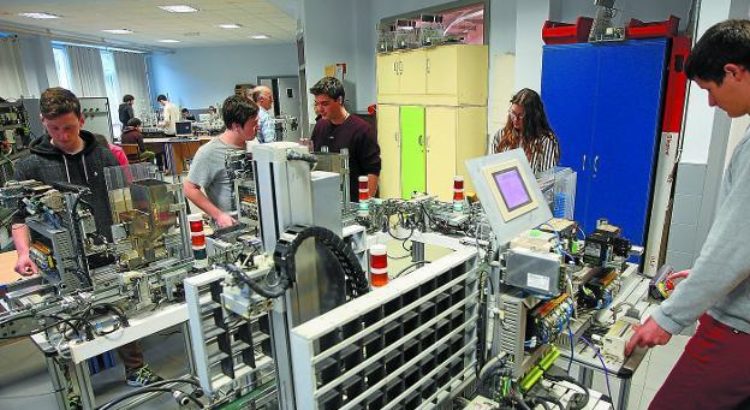
La FP industrial ya no es sinónimo de buzo azul y grasa, ahora prima el componente tecnológicoLas empresas cada vez reclaman perfiles más completos, con una base cultural y científica

En estos momentos, de los 13.534 alumnos guipuzcoanos que estudian un ciclo de Formación Profesional, 6.228 se han decantado por la rama industrial, lo que supone un 46% del total. El 8,9% son chicas, con 557 alumnas.

Jorge Arévalo, viceconsejero de Formación Profesional, muestra su preocupación porque «no podemos dar respuesta al tejido productivo. Ahora las empresas necesitan trabajadores con una cualificación alta, en empleos que son de mayor calidad que en otros sectores con mejores sueldos. En la actualidad se está generando de nuevo un tejido industrial muy potente, orientado a la fabricación avanzada, la industria 4.0, que genera una necesidad de perfiles diferentes». En cuanto a la preparación y adecuación de los ciclos a esas nuevas demandas, la FP vasca está dando una rápida y respuesta, pero «necesitamos más personas». Esto, aclara, «no significa que haya descendido el número de alumnos, sino que nosotros creamos las plazas para cubrir las peticiones de las empresas que han aumentado».

No existe una razón concreta que explique esta situación que tiene un tanto desconcertados, no solo a los responsables de Educación sino también a las patronales, que en los últimos años han realizado una apuesta decidida por apoyar la FP, como se reflejará en del Acuerdo Marco de colaboración por el empleo y la cualificación en Euskadi 2018-2020 que mañana firmarán las consejeras Arantxa Tapia, Beatriz Artolazabal y Cristina Uriarte, el presidente de Confebask, Roberto Larrañaga y los presidentes de SEA, Cebek y Adegi, Pascal Gómez, Iñaki Garcinuño y Pello Guibelalde, respectivamente,.

En el acto de firma, el lendakari hablará de las necesidades del tejido productivo. En este sentido, el viceconsejero de FP reflexiona que «tenemos que sustituir a un número de personas importante por edad y porque ahora que la economía se está acelerando, y más en concreto el sector industrial, están surgiendo nuevos empleos».

Para Arévalo «con la cuarta revolución industrial va a haber más cambios y los jóvenes tienen una visión diferente del trabajo, ni mejor ni peor. Nuestra labor es saber orientarles hacia lo que la sociedad va a necesitar. A la idea de qué quiero ser hay que añadir qué puedo hacer». Para ello es necesario poner en marcha «itinerarios de éxito», con el más alto nivel de formación que den una alta capacidad de impermeabilidad. Esas rutas deben facilitar recursos para que pueda buscar alternativas de empleo. «Ya no vale eso de ‘esto es lo que he estudiado y algo haré’».

Mucha formación general

La imagen del estudiante de FP industrial en buzo azul y cubierto de grasa, manejando grandes máquinas, ha desaparecido -«puede que ese estereotipo esté perjudicando y sea una de las causas de que no se incrementen los alumnos»- . Ahora, los ‘industriales’ son casi de bata blanca. El tipo de profesional que se necesita debe contar con una importante componente cultural, científica y tecnológica, «es decir que deben tener una formación general de base lo más alta posible; que tengan como mínimo la Secundaria y en la mayoría de los casos el Bachiller». La componente profesional debe estar orientada a una alta cualificación y a una especialización para poder trabajar con tecnologías complejas. También son fundamentales los valores para cuando la inteligencia artificial esté mucho más desarrollada, el individuo siga tomando las decisiones. «Un título solo ya no sirve, hay que demostrar lo que se sabe hacer», apunta el viceconsejero.

Capacidades, habilidades y destrezas han sido las bases de la Formación Profesional. Ahora hay que añadir saber analizar y entender. «Los trabajos manuales a los que hasta ahora optaban los estudiantes de la FP industrial los van a realizar los robots. Las personas tienen que tener la capacidad para tomar decisiones.

Crear más itinerarios que comiencen en la FP y termine en la Universidad, intensas campañas de orientación en ESO y Bachiller, refuerzo de la FP dual y de los programas de especialización son algunas de las iniciativas que se han tomado hasta el momento para mantener la cantera de futuros profesionales industriales.

Fuente de la noticia: http://www.diariovasco.com/sociedad/educacion-formacion-profesional-gipuzkoa-20180415001325-ntvo.html

Comparte este contenido:
Page 2657 of 6193
1 2.655 2.656 2.657 2.658 2.659 6.193