Page 2732 of 6193
1 2.730 2.731 2.732 2.733 2.734 6.193

África: Apostando por una educación inclusiva en la que todos los niños tienen cabida

África/Europa Press

Ir a la escuela da a estos niños capacidades que les permiten socializar y llegar a ser independientes.

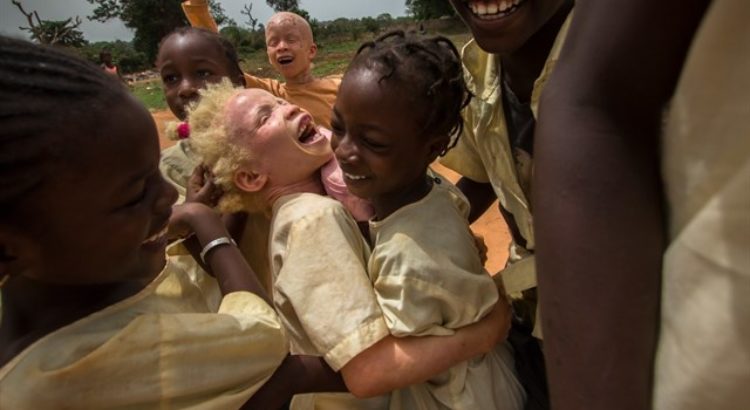
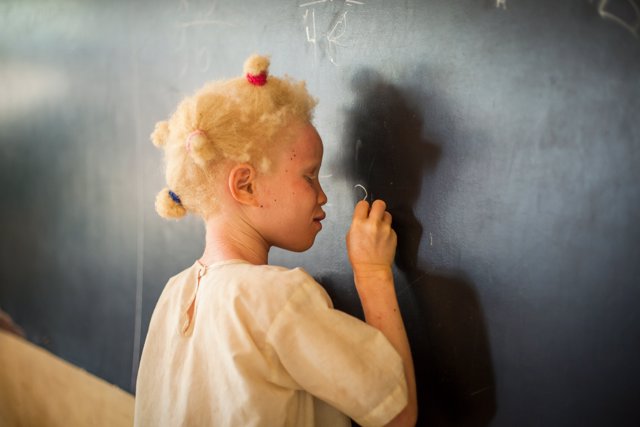
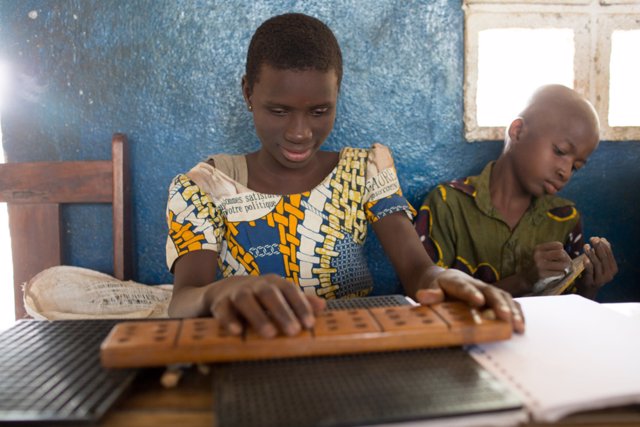
Hasta hace dos años Aicha no iba a la escuela. Sus padres pensaban que por sus problemas de visión y de piel debido a su albinismo era lo mejor para ella, pero se equivocaban. Gracias a Humanity & Inclusion Aicha va a clase, tiene amigos y se ha convertido en el alma del patio en su escuela en Guinea-Bissau.

«Una educación de calidad inclusiva es fundamental para todos los niños, especialmente los niños con discapacidad», defiende Julia McGeown, asesora técnica de educación inclusiva de Humanity & Inclusion (la antigua Handicap International). «Una vez los niños son aceptados en las escuelas, y los profesores son formados para enseñarles, esto abre las puertas a muchas potenciales oportunidades para su futuro», subraya en una entrevista con Europa Press.

Como Aicha, «muchos niños con discapacidad se ven confinados en sus casas y nunca aprenden las capacidades que necesitan para prosperar en la sociedad, para conseguir medios de vida y para ser independientes», lamenta McGeown.
 M. MOREIRAS/HI – Archivo

El hecho de que estos niños no adquieran dichas capacidades y puedan llegar a valerse por sí mismos «no solo impacta en las vidas de los propios niños, sino también en las de sus familias, ya que muchos familiares tienen que quedarse en casa para cuidarles, continuando así el círculo vicioso de pobreza y discapacidad», explica la responsable de H&I.

Según datos del Fondo de la ONU para la Infancia (UNICEF), unos 264 millones de niños y adolescentes de todo el mundo no van a clase, de los que un tercio son niños con discapacidad. Se estima que a nivel mundial uno de cada 20 niños menores de 14 años presenta una discapacidad moderada o severa.

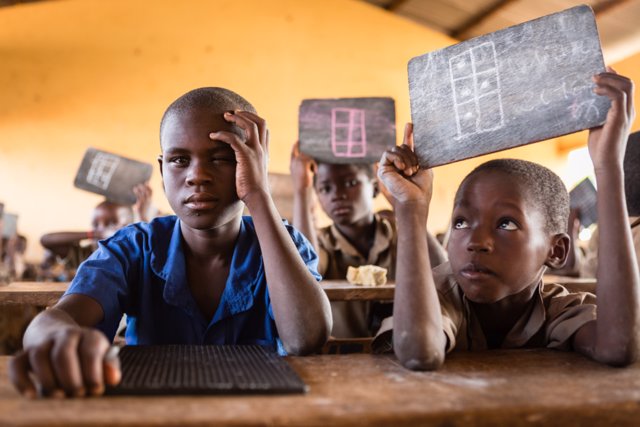
En el caso de África Central y Occidental, unos 32 millones de niños no van a la escuela. Humanity & Inclusion, que trabaja en educación inclusiva desde 2004, ha puesto en marcha el proyecto regional ‘Promoviendo la plena participación de los niños con discapacidad en la educación’, gracias al cual más de 13.000 niños, entre ellos Aicha, tienen acceso a educación en más de 1.000 escuelas socias en Benín, Burkina Faso, Guinea Bissau, Liberia, Malí, Níger, Senegal, Sierra Leona y Togo.

INCLUIR A NIÑOS CON TODO TIPO DE DISCAPACIDAD

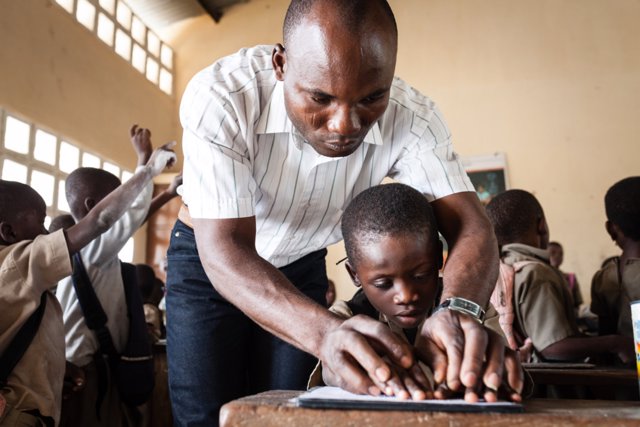
El deseo de la ONG, especializada en el trabajo con personas con discapacidad, «es incluir a niños con todo tipo de discapacidad en escuelas ordinarias siempre que es posible», defiende McGeown, explicando que se ha logrado integrar con éxito a niños sordos o ciegos junto con niños sin discapacidad, al igual que a niños con discapacidades intelectuales, físicas o de comunicación.

 Sin embargo, la inclusión suele resultar más complicada para aquellos que además de una discapacidad «tienen necesidades sanitarias adicionales», y también del lugar en el que viven estos niños y la actitud mostrada por el personal docente a la hora de incluir a niños con «necesidades complejas», añade la asesora.
Dominique y Maria Cabrelli

Para que la inclusión sea posible, es necesario formar a los docentes. En general, explica McGeown, dada la escasa formación con la que muchos de ellos suelen contar, reciben con agrado «culquier formación adicional, sobre todo si es práctica». «Nuestro objetivo en educación inclusiva es introducir métodos de enseñanza activos que sean beneficiosos para todos los niños, además de para los niños con discapacidad», subraya. «Normalmente están muy interesados en aprender a leer idioma de  signos o braille por ejemplo», agrega.

 Otro elemento clave de la labor de H&I es el trabajo con las propias comunidades y la concienciación. En este sentido, explica la responsable de la ONG, se llevan a cabo sesiones «apoyadas por adultos con discapacidad que tienen historias inspiradoras de éxito gracias a la educación, algo que realmente puede ayudar a cambiar actitudes, que inicialmente pueden ser bastante negativas».

COMBATIENDO EL ESTIGMA

En algunos casos, indica la asesora de H&I, «hay un fuerte estigma negativo hacia los niños con discapacidad y falsas creencias de que la discapacidad puede ser contagiosa por ejemplo». En el caso de los niños como Aicha, con albinismo, en algunos países de África son perseguidos para extraerles los órganos por creencias espirituales, lo que les pone en peligro.

«Los niños con albinismo también son acosados, discriminados y no se sienten queridos en sus comunidades, por eso es muy importante enseñar a los docentes y trabajar con las comunidades para abordar estas asociaciones negativas y creencias falsas», defiende McGeown.

Como en el caso de Aicha, una vez que estos niños «reciben apoyo para sus problemas de visión, protección contra el sol y se conciencia a los demás niños, profesores y las comunidades de la realidad de su condición», su inclusión es posible, incide la asesora. Aicha ahora está terminando su segundo año de primaria, le encantan las matemáticas y escribir, pero sobre todo cantar y jugar.
Régis Binard/HI

Es importante cambiar la mentalidad de la gente, que piensa que «los niños con discapacidad no deberían ser educados o deberían ser educados solo de forma separada». Algunos niños con necesidades más complejas acuden a escuelas especiales, pero la mayoría pueden acudir a escuelas normales, lo único que hace falta es lograr que estas sean «más inclusivas».

Asimismo, Humanity and Inclusion también cuenta con proyectos para apoyar a las familias y que puedan educar a sus hijos en sus casas, así como iniciativas de educación informal en las comunidades, a las que se intenta enlazar con las escuelas.

Para vencer la distancia, se busca organizar sistemas de transporte o apoyar iniciativas locales en este sentido, como autobuses escolares que recogen a los niños con discapacidad que viven alejados. Otra de las soluciones que se ha buscado es que compañeros de los niños con discapacidad vayan a sus casas a recogerles y acompañarles a la escuela «si usan una silla de ruedas, un bastón para invidentes o cualquier otro artilugio de ayuda», señala McGeown.
Régis Binard/HI

Fuente: http://www.europapress.es/internacional/noticia-apostando-educacion-inclusiva-todos-ninos-tienen-cabida-20180311084246.html



Comparte este contenido:

Argentina: Gremios docentes bonaerenses reclaman a Vidal una “urgente convocatoria” a paritarias

Por: elcomercioonline.com.ar/14-03-2018

El Frente de Unidad Docente Bonaerense reclamó hoy al Gobierno de María Eugenia Vidal la “urgente convocatoria” a una nueva ronda de paritarias, y denunció el “cierre de cursos y escuelas”, aunque no lanzó medidas de fuerza.

Dirigentes de los gremios FEB, SADOP, SUTEBA y UDOCBA brindaron este martes una conferencia de prensa, en esta capital, en la que volvieron a reclamar a la administración de María Eugenia Vidal por un incremento salarial superior a la meta oficial de inflación.

La secretaria general adjunta de SUTEBA, María Laura Torre, expresó: “denunciamos, como se está haciendo en cada distrito de la Provincia, el cierre de los bachilleratos de adultos: miles de ellos se quedan sin estudiar y cientos de docentes sin trabajo”.

“Paralelamente, más de 80.000 niños del nivel inicial no tuvieron la posibilidad de iniciar sus clases: no tienen acceso a la Educación Inicial y la única respuesta frente a esta grave situación es amontonar a niños de 2, 3 y 4 años en una misma aula”, enfatizó.

Según Torre, “el cierre de cursos y escuelas muestra que para las autoridades los estudiantes y trabajadores sólo somos un número más. Basta ver la situación de escuelas de islas y de escuelas rurales. Como dijo la gobernadora (Vidal) lo importante es que los chicos aprendan. Y para esto tienen que haber aulas, condiciones dignas, escuelas terminadas, sillas y bancos”.

“La Gobernadora debe cambiar la lógica de la discusión.Exigimos que suspendan el cierre de los bachilleratos, que abran todas las escuelas que se necesitan, que nombren a todos los docentes necesarios para poder garantizar en serio una educación de calidad. Y que nos convoquen para discutir nuestro salario. Le pedimos a Vidal que reconozca y valore nuestro trabajo. Somos parte de la solución de cualquier problema que haya en la educación”, enfatizó.

Torre recordó que este martes, “se realizan en varios distritos de la Provincia distintas actividades para denunciar esta situación, como: radios abiertas, marcha de antorchas, volanteadas, charlas con la comunidad educativa, permanencia en las Jefaturas Distritales, entre otras”.

*Fuente: http://www.elcomercioonline.com.ar/articulos/50084520-Gremios-docentes-bonaerenses-reclaman-a-Vidal-una-urgente-convocatoria-a-paritarias.html

Comparte este contenido:

Canada: Education Reform Act headed for final vote following changes

Por: cbc.ca/14-03-2018

The McNeil government’s Education Reform Act is a step closer to becoming law — a step that followed several amendments resulting from all-party co-operation.

Bill 72 moves to third and final reading with amendments that include language guaranteeing students the option of an inclusive education at their neighbourhood school with kids their own age, as well as adding a seat to the provincial advisory committee on education for a first-voice representative of people with disabilities.

NDP education critic Claudia Chender, who proposed the latter amendment, said she feels the changes address the key concerns disability advocates expressed during law amendments on Monday.

«I do think after some fits and starts, the government seems to have gotten it right,» she said Tuesday night at Province House.

Claudia Chender

NDP education critic Claudia Chender says amendments to the Education Reform Act successfully address concerns disability advocates raised about the bill. (CBC)

The amendment about language came from the Liberals, and added the word «shall» to the bill in reference to the requirement to provide inclusive education.

Chender repeatedly proposed amendments throughout Tuesday’s committee of the whole, including multiple calls to change the term «manager» as it relates to principals and vice-principals to «administrator.»

Education Minister Zach Churchill said the government didn’t support the change because it wasn’t reflective enough of the duties principals, in particular, play within schools.

«Management is a key component of our administrators and I think it’s important to have that reflected in the legislation,» he said.

While principals and vice-principals might be «teachers first,» Churchill said «there needs to be clarity on those roles and responsibilities.»

Nova Scotia Municipal Affairs minister Zach Churchill

Education Minister Zach Churchill says the amendments Tuesday show the government’s willingness to listen to concerns raised about Bill 72. (CBC)

Likewise, an amendment to ensure that meetings of the new advisory committee on education are open to the public and its minutes are publicly available was defeated by the Grits.

Chender said she’s concerned about the shift happening with the loss of public school board meetings, and drew a comparison to the closed meetings of the Nova Scotia Health Authority’s board.

Churchill disagreed with the suggestion that blocking the amendment means the system will be less transparent. He said the new approach would enhance local voices.

«I think that we’re going to further involve our school communities at the local level and ensure that they have the capacity regionally to provide open advice to our regional offices as well as connecting that network provincially.»

Another of Chender’s amendments was also accepted, which changed the word «demoted» to «reassigned» as it relates to an administrator returning to the classroom.

‘People’s voices can be heard’

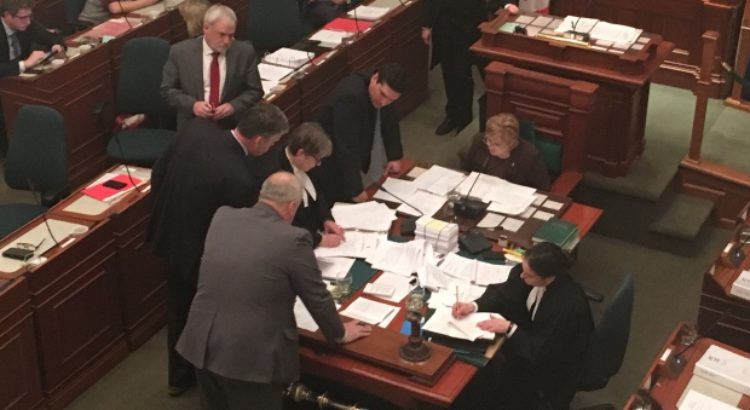
Co-operation hasn’t exactly been a hallmark of the Liberals since they came to power in 2013, so it was an unusual scene Tuesday as Premier Stephen McNeil, government House Leader Geoff MacLellan and NDP House Leader Dave Wilson huddled around the clerk’s table in the middle of the legislative chamber discussing Chender’s amendments before versions of them were ultimately passed with unanimous support of all three parties.

Churchill said all of the amendments the House passed Tuesday show the government’s responsiveness to «questions and concerns that have been raised.»

«I think that’s demonstrating that this legislative process works and that people’s voices can be heard as we build laws that impact people in this province.»

The bill moves to third reading where it will be debated for a final time, likely on Thursday.

 *Fuente: http://www.cbc.ca/news/canada/nova-scotia/education-reform-act-legislation-bill-72-churchill-chender-1.4565262
Comparte este contenido:

México: Concentran 25 municipios 30% de analfabetas del estado.

Por: Ana Lilia Velázquez. Sin Muros. 14/03/2018

En 25 municipios se concentran más del 30 por ciento de los analfabetas y Xalapa es uno de ellos, informó la diputada local de MORENA, Daniela Griego Ceballos.

Para abatir este rezago, principalmente en las mujeres indígenas “reportan muchas dificultades, sobre todo ya mayores, pero eso implica que no puedan acceder a la educación en la adultez”.

En entrevista, la legisladora de MORENA lamentó que no haya presupuesto etiquetado para ese sector de la población “hay para educación básica, no encontramos a nivel estatal ni federal”.

En ese sentido, aclaró que el Instituto Veracruzano de Educación para Adultos (IVEA), ejerce recursos del Instituto Nacional para los Adultos (INEA), pero el presupuesto es limitado.

*Fuente: http://sinmuros.com.mx/movil/resumen.php?id=14057#&panel1-1

Comparte este contenido:

Australia: In the fourth industrial revolution, we need an education overhaul

Por: theaustralian.com.au/ Helen Zimmerman/14-03-2018

We have entered the fourth industrial revolution, a world of automation, machine learning and networked cognition where technologies link the physical, digital and biological spheres.

Progress with artificial intelligence is contributing to a social transformation happening 10 times faster and at 300 times the scale of the first industrial revolution.

Manual, routine and rule-based jobs that can be done better and faster with networked cognition are being automated. Seventy-five per cent of future jobs will involve science, technology, engineering and mathematics, using skills in data science, coding, software architecture, data analytics, cybersecurity and bioinformatics, among others.

We also know workers will require transferable enterprise skills in future workplaces. These are not role or industry-specific but enduring capabilities such as problem solving, multidisciplinary teamwork, cross-cultural competency, user-centred system design, communication skills, creativity, and social, emotional and digital intelligences. These are the human skills that augment artificial intelligence and cannot be automated.

The human cost of moving to the new industries and workplaces will be profound. Changes will affect workers in all industries and at all levels but particularly those with low levels of educational attainment and those working in industries and jobs that will no longer exist.

Globally, we are talking about upwards of 100 million people requiring skilling, reskilling and upskilling in a short time.

To meet this challenge we will need new ways of learning, new skills and new mindsets that are continually refreshed across our lifetimes.

The delivery of higher-order technical skills and expert knowledge, as well as transferable enterprise skills, cannot be satisfied solely by our present tertiary systems, which were designed for a different era.

These are not skills or mindsets embedded in our traditional systems or in the capability sets of many of our teachers, trainers and academics.

Our education systems are interdependent, powerful forces developed in response to the second industrial revolution which required mass standardised instruction and assessment. In their present form they no longer are fit for purpose. Moving to the future world of work requires on-demand learning that is able to be personalised and differentiated in a meaningful, consistent and scalable way.

We know there is much innovation and change occurring within many vocational and higher education institutions. Universities are at the frontiers of new knowledge, undertaking research that seeks to address many of the world’s “wicked problems”. Higher education and vocational institutions also are working with industry to deliver applied, industry relevant training.

However, we need to recognise that traditional models of education and training do not allow us to respond at the speed and scale demanded of us by learners and industry. We need fast, collaborative, “joined-up” action. We do not have the luxury of incremental innovation and development.

In late 2016 Navitas Ventures, in collaboration with Quid, began researching digital educational innovation, mapping 15,000 education technology companies across 50 countries. The research identified 26 organic clusters of educational innovation, measuring scale, investment, traction and disruptive potential. Navitas Ventures then grouped these clusters into a next-generation learning life cycle that explains the learning journey of the future.

Traditional higher education institutions are most active in engaging in the earlier phases of this cycle; for example, using digital technologies for courseware, student and teacher management systems, and enrolment and admissions systems, all of which enhance the student experience.

Learners increasingly are focused on ways of financing education, career planning and new ways of learning, such as boot camps, that develop the skills and capabilities employers need. The research also showed that ed-tech innovators are moving ahead of traditional educational institutions in providing solutions that put learners in control, connecting them directly to learning that meets their needs.

The increasing importance of aligning with career skills and employability has been a message from learners across several years.

In 2013, iGraduate presented survey results of 161,800 international students from 13 countries, including Australia. Consistently, learners were least satisfied with their study institutions in the areas of work experience, career advice and employability.

Business is key in the identifying where the skills shortages are now and where they will be into the future.

In 2016, the Business Council of Australia put out a guide to what employers want. Increasingly, multinational companies are not recruiting on an applicant’s undergraduate degree but on their portfolio of experience, skill sets and demonstrated capabilities. Companies such as IBM, Cisco and PricewaterhouseCoopers have integrated reskilling and continuous learning into their workplaces.

To match this trend, we are seeing the rise of credentialling systems that recognise formal and informal sources of knowledge; that are open, flexible, portable and personalised. If our vocational and higher education systems are not able to meet the needs of industry, these large businesses will do it themselves or use the products and services of the ed-tech innovators. Small to medium businesses, which employ about 68 per cent of Australians, rely on our vocational and higher education systems for skilled workers. If our systems cannot meet their future needs they will turn increasingly to low-cost “just in time” digital solutions.

Australia’s future productivity and prosperity hinges largely on our ability to harness education and training to deliver the knowledge, skills and new mindsets required by industries and workplaces of the future. This is a national imperative; a call to arms.

The scale and urgency of transforming our industries, work­forces and education and training systems require collaborative action now. We need to put aside partisan politics, ideological-based policy design and systems that allow only incremental rather than transformational responses.

If our vocational and higher education systems fail to deliver learning and skills for future workforces, there is a world of others who will do so. Learners and industry will not wait.

Helen Zimmerman is an adviser at Navitas.

*Fuente: https://www.theaustralian.com.au/higher-education/opinion/in-the-fourth-industrial-revolution-we-need-an-education-overhaul/news-story/6a7705967731f3413d6bb52c0872e8fa
Comparte este contenido:

EEUU: Region’s options bring variety, choice in early childhood education

EEUU/March 13, 2018/By Stacy Ryburn/Source: http://www.nwaonline.com

Pre-K options are steadily increasing as Northwest Arkansas’ population grows and parents want more choices, early childhood education professionals say.

About 300 licensed preschools or day cares in the region are licensed with the state Division of Child Care and Early Education. Facilities run the gamut of public, private, nonprofit, home and faith-based.


Parents often face tough decisions when it comes to balancing work schedules with finding the right day care or preschool, said Doug Walsh, executive director for business and operations at the Jean Tyson Childhood Development Center at the University of Arkansas. The difficulty compounds for lower-income families who can’t afford a traditional preschool and need a place for their children to go during the day, he said.

«The private sector, both nonprofit and for-profit, is certainly popping up to try to fill in the gap,» Walsh said. «You see the variety across the board.»

Greater investment and variety in pre-K education equates to a net positive effect on the community, Walsh said.

Studies show children who attend preschool are better prepared academically by age 5, remain committed to school at 14 and have higher high school graduation rates than those who don’t, according to the Center for Public Education, a national database on public education.

Early education can make a huge difference in a child’s life, especially those who don’t speak English in a primarily English-speaking community, said Darlene Fleeman, director of Springdale’s pre-K program.

Springdale children entering school often haven’t experienced group care where they can hone English language skills, which better prepares them for kindergarten and onward, she said. Of the district’s 21,516 students, 46 percent come from a Spanish-speaking home, 12 percent come from a Marshallese home and 3 percent speak a language other than English, according to Springdale Public Schools spokesman Rick Schaeffer. That doesn’t mean the students aren’t proficient in English; it’s just not the primary language spoken in the home, he said.

State money has played a key role in increasing the quality of early childhood education, Fleeman said. Springdale pre-K is paid for through grants and follows the Arkansas Better Chance program rules and regulations under the state Department of Human Services.

Early child care providers can become accredited through the state’s Better Beginnings program, which is based on a three-star system. One star means the provider is ready to pursue accreditation. Two stars mean written plans have been put in place and three stars mean those plans have been implemented, said Sunny Lane, director of development with the Helen R. Walton Children’s Enrichment Center in Bentonville. The center is a nonprofit organization dedicated to high-quality care and education for children six weeks through pre-K. It also has a training wing called the Early Childhood Initiative Center.

Just more than 60 percent of the licensed early child care providers in the region are accredited, Lane said. Next year, the Children’s Enrichment Center will expand its training and resource wing when it moves into a new building on J Street near the Amazeum and Crystal Bridges Museum of American Art.

With its current capacity the center can work with about 150 early child care providers, effectively training about 1,400 service professionals affecting more than 12,000 children, Lane said.

Accredited centers have a higher demand than those that don’t and almost always have a significant waiting list. The more and better training preschool teachers receive, the more accredited schools will emerge and the waiting lists will get shorter, Lane said.

«We’re helping them lay the groundwork,» Lane said.

Access is the biggest barrier to families seeking pre-K opportunities, said Candice Sisemore, founder of Teeny Tiny Preschool in Fayetteville. The school opened in October at the former community building of the Willow Heights public housing complex.

Teeny Tiny Preschool has scholarship opportunities for lower-income families and uses the Reggio Emilia approach to learning. The style respects a child’s sense of self and encourages expression through painting, sculpting, acting and other self-guided methods.

Finding the right preschool can be difficult enough, but the wait can last even longer for a lower-income family. It becomes a matter of what’s available, as opposed to which early education method is right for a child, Sisemore said.

However, the trend in Northwest Arkansas seems to be headed in the right direction, Sisemore said.

«There are lots of options,» she said. «It’s getting those to be accessible for all families that is the trick.»

Source:

http://www.nwaonline.com/news/2018/mar/11/region-s-options-bring-variety-choice-i/?news-arkansas-nwa

Comparte este contenido:

What kind of school education and health development interventions do Indian adolescent girls require?

Indian/March 13, 2018/By: Dr. Lalit Kishore/Source: http://www.merinews.com/

The education and development of adolescent children in India has been most neglected and most interventions had been beamed at either at the primary or higher education level. Adolescent period has been the most important transitional period from childhood to adulthood but least attended to and more so for the girls in our country.
According to UNFPA-India – an agency of the United Nations that works with the government and partners to advocate for adolescents and youth’s rights and investments, including education, livelihood skills and health, including sexual and reproductive health, India has its largest ever adolescent and youth population and a  demographic window of opportunity, a ‘youth bulge’ that will last till 2025.
India’s youth population faces several development challenges, including access to education, gainful employment, gender inequality, child marriage, youth-friendly health services and adolescent pregnancy. Yet, with investments in their participation and leadership, young people can transform the social and economic fortunes of the country, informs the agency that  works with the government and partners to advocate for adolescents and youth’s rights and investments, including education, livelihood skills and health, including sexual and reproductive health.»The practice of gender-biased sex-selection in India has manifested in highly skewed sex ratios over past few decades. The preference for a son over a daughter is rooted in socio-economic and cultural factors: sons are seen to provide economic security in old age, perform the religious last rites and carry on a family name, whereas a daughter is considered a burden due to the practice of dowry. Further, the practice of gender-biased sex selection has increased with a decline in fertility and preference for at least one son, and the misuse of modern technology,» writes UNFPA-India on its website.

Since, currently, India has its largest ever adolescent and youth population, as mentioned in various reports and on different forums, but young people often face barriers in trying to get the information, education, skills or care they need; the right kind of adolescent education, health issues arising out of biological changes in them, and learning life and employable skills need to be the key focus areas for the adolescent and the youth.

I feel research based curriculum adjustments need to be done so as to have at least one third of language, life sciences and physical education content geared around life skills education with focus on employable communication skills, reproductive health issues and human rights. A mix of rights and life-skilled based education integrated with various upper-primary and high school subject areas can be answer. Some projects and experiments which have successfully done with adolescents need to be mainstreamed and contextualized to vulnerable and marginalized population and carried out.

Source:

http://www.merinews.com/article/what-kind-of-school-education-and-health-development-interventions-do-indian-adolescent-girls-require/15929522.shtml


Comparte este contenido:
Page 2732 of 6193
1 2.730 2.731 2.732 2.733 2.734 6.193