Page 3457 of 6196
1 3.455 3.456 3.457 3.458 3.459 6.196

África: Conversación con Toumani y Sidiki Diabaté

África/ Agosto del 2017/Noticias/http://www.unaids.org


Conversación con Toumani y Sidiki Diabaté

Apenas una hora antes de que les esperaran para tocar en el Festival de Jazz de Montreux, Toumani Diabaté, ganador de dos premios Grammy, intérprete de kora y embajador de buena voluntad internacional de ONUSIDA, y su talentoso hijo, Sidiki, se sentaron para hablar sobre música, diversidad, cero discriminación y sobre poner fin al sida en África Occidental y Central.

Amable y reflexivo, Toumani responde a las preguntas con simpatía y buen humor y, de una manera totalmente natural, la conversación va fluyendo entre el inglés, el francés y el bambara. Es evidente que hay mucho respeto entre el padre y el hijo mientras se transmiten las tradiciones y se fomenta la innovación. Bromean con desenfado: Toumani aconseja a Sidiki que se siente recto y mire a la cámara, mientas que Sidiki ofrece alternativas más modernas a las repuestas de su padre.

ONUSIDA: Estáis aquí para tocar con Lamomali en una colaboración musical con el artista francés Matthieu Chedid. En el escenario os acompañan más de 15 personas, entre las que están, por ejemplo, la cantante de Malí Fatoumata Diawara. ¿Cómo llegasteis hasta aquí?

Toumani: Siempre he querido participar, ser parte, de la tradición de los griot como historiadores, narradores y músicos. Mis antepasados, todos en mi familia de una dinastía de 700 años de antigüedad venimos de ese ambiente, lo hemos mamado y somos los depositarios de la cultura de nuestro país.

La música hermosa une a la gente y rompe las barreras, como en Lamomali. El mundo necesita ser más abierto y ser más cooperativo, y necesitamos más comunicación. Esa es la única manera de que las cosas puedan ir mejor en el futuro.

ONUSIDA: Recientemente la Unión Africana aprobó un plan de recuperación para África Occidental y Central para acelerar el acceso a los servicios para el VIH.  ¿Cuáles son vuestras esperanzas para la región?

Toumani: Es evidente que no podemos aceptar un enfoque de dos velocidades para poner fin al sida en África.  No podemos perder ni un momento, tenemos las herramientas y debemos trabajar juntos para poner fin al sida.

ONUSIDA: Esta noche vais a llevar el lazo rojo durante el concierto. ¿Qué significa para vosotros?

Toumani: Vida, simplemente vida, amor y solidaridad.

Durante la vibrante actuación, que celebraba tanto lo tradicional como lo nuevo, Toumani habló sobre su papel como embajador de buena voluntad internacional de ONUSIDA, y destacó la importancia de la cero discriminación. Compartió un refrán de Mali, su patria:

Si sabes lo que no sabes, lo sabrás.

Si no sabes lo que no sabes, nunca lo sabrás.

Si lo sabes, haz que lo sepan.

Esta es una muestra del papel de Toumani como griot y también como embajador. Sabe la importancia de celebrar la diversidad y la dignidad y de conseguir que la cero discriminación se convierta en una realidad para todos. A través de su animada música y de sus mensajes, él está haciendo que todos lo sepan.

Fuente:http://cartoonnetwork.com.ve

Imagen:https://lh3.googleusercontent.com/stOyUCGC-Q6UG2QEujd9MoJFkPxF5TAnXs32KSBh-QWhi8IJ2NReXsJK_S30LoFG6w60JNE=s85

Comparte este contenido:

Italia: Descubren que los bebés nacen con ciertos conocimientos numéricos

Europa/Italia/Agosto del 2017/Noticias/https://www.bebesymas.com/

Aquellos que hasta hace unos años pensaban que el cerebro del bebé era una tabula rasa vieron pronto que estaban muy equivocados, y es que los niños nacen con un cerebro muy inmaduro, pero ya preparado para ciertos aprendizajes.

Ya hace un par de años confirmamos que son capaces de reconocer el idioma materno incluso si dejan de oírlo, porque ya nacen con cierta predisposición a aprender dicha lengua.

Pues bien, investigaciones recientes demuestran que, además, vienen al mundo con ciertos conocimientos numéricos que nadie antes puede haberles enseñado.

Prefieren los números pequeños a la izquierda

Según leemos en NewScientist, investigadores de la Universidad de Padua, en Italia, han realizado una investigación gracias a la cual han llegado a la conclusión de que a los recién nacidos les gusta que los números más pequeños estén a la izquierda, y los más grandes a la derecha, sugiriendo que es una manera precoz de ordenación de menor a mayor en una línea que va de izquierda a derecha.

Ese es precisamente el patrón que utilizamos los occidentales para realizar secuencias, de izquierda a derecha, y aunque podemos variar al situar los valores de mayor a menor, o de menor a mayor, nuestros números a la hora de contar van desde las unidades a las decenas y centenas, en una progresión que va de un solo número a luego dos, tres y así sucesivamente.

Para llevar a cabo la investigación cogieron a un grupo de recién nacidos con entre 12 y 117 horas de edad, siendo la edad promedio de 55 horas (dos días de edad).

A estos bebés se les mostró una serie de imágenes con cuadrados blancos que contenían un número de cuadrados negros más pequeños. La mitad del tiempo les pusieron delante una ficha con dos cuadrados blancos que contenían** cuatro cuadrados negros cada uno**, en un lado y en el otro (izquierda y derecha); la otra mitad del tiempo les pusieron otra ficha con dos cuadrados blancos que contenían 36 cuadrados negros, a ambos lados.

Con un dispositivo de rastreo ocular observaron que miraban más hacia la izquierda cuando tenían la ficha con menos cuadrados dentro, y que miraban más a la derecha cuando tenían la que contenía más cuadrados negros.

El cerebro derecho está más desarrollado

Según los expertos, la respuesta a este fenómeno podría ser porque el lado derecho del cerebro es más grande en los bebés. Este lado es el que domina el ojo izquierdo, y quizás por eso los bebés tienen más atención a lo que se ubica en ese lado como el inicio de las cosas, o de las progresiones.

Aunque hay quien considera que podría no tratarse de una línea numérica innata, sino de una posible cuestión de lateralidad o similar: que los bebés asocien las imágenes más simples con la izquierda y las más complejas con la derecha, que suele ser la mano dominante.

En cualquier caso, es una investigación increíble que abre la puerta a un mayor y mejor conocimiento del cerebro humano a pocas horas de nacer, cuando aún no ha podido ser apenas influido por los sucesos y principios teóricos de nuestro conocimiento actual.

Fuente: https://www.bebesymas.com/recien-nacido/descubren-que-los-bebes-nacen-con-ciertos-conocimientos-numericos

Imagen :https://lh3.googleusercontent.com/y3SwrkNi8UCZaFhMjUBt_VReOqrTD9s0dLwweA28s0Nq4q_laxS94plzEGOMrqE2VJo7cQ=s85

Comparte este contenido:

Canadá: How to help your kids transition to high school

América del Norte/Canada/Agosto del 2017/Noticias/https://theconversation.com/

At this time of year, it can sometimes be hard to tell who’s more excited about returning to school, youth or their parents.

But the excitement for kids about new friends, teachers and ventures can be overshadowed by anxiety and stress, particularly if they’re moving into high school.

The sheer size of a high school building can be overwhelming to the uninitiated. The potential loss of social status among a larger group of peers and the increased number of teachers — each having different styles and expectations – can be intimidating for newcomers. Add to this the hormonal changes that accompany puberty and drive physical, emotional and cognitive growth, and the demands on young people can be overwhelming.

In high school, teachers tend to stay in one place while the students rotate through their classrooms. This can be difficult for students who are used to having a homeroom teacher for the majority of their subjects.

Some high schools have instituted homerooms for core subjects such as language arts and social studies. These allow students to connect daily to at least one key adult who knows them and ostensibly has their best interests in mind. Regrettably, this practice is rare past Grade 8.

Fortunately, parents and their children can take some steps to make the transition easier. As an educator and a psychologist from the Werklund School of Education at the University of Calgary, I offer you a few simple strategies:

1. Get to know the school space

Familiarity helps to reduce anxiety. If possible, youth should try to tour the school halls in advance to get to know where specific rooms are located. Of course, it helps if they can have a school map to help them navigate. It’s always important to learn where key spaces are such as the administrative offices, washrooms, cafeteria and water fountains.

2. Make the leap with a few friends

The adolescent years are significant in the transition from relying on parents to learning to trust and rely on peers. During this time, peer socialization becomes critically important and being part of a peer collective can make the transition smoother while helping to ease stress. Confidence in social interactions with peers contributes to positive self-evaluation and successful school transitions.

Youth can identify friends from their previous school who plan to attend the same high school. If they live close together, they can travel together to school or plan to meet up before school, at lunch breaks and during times when they might not have scheduled classes. Among other things, this will give them the opportunity to share and compare experiences — essentially normalizing what they are going through, while brainstorming solutions to challenges they might be facing.

3. Identify clubs and interest groups

These hobby-based groups tend to be smaller than regular classes and have supportive teacher sponsors with an interest in the subject area. This can be an easy way to connect with others who have similar interests, while building a support network at school.

Since the high school years are ones of exploration, novelty seeking and even risk-taking, such groups offer an opportunity to explore interests in a safe environment.

4. Help with planning and organization

In high school, there’s an increased expectation for students to take responsibility for planning and organizing materials for themselves, as well as getting to class on time, handing in homework and assignments and coming prepared for quizzes and exams. This also includes managing class materials, unique clothing for sports and clubs, musical instruments and other school equipment. Most schools offer a personal planner booklet that can help students to overcome some of these challenges. However, most will require support to be able to use and maintain them properly.

It’s true that adolescence is a time of cognitive growth and consolidation. This comes from the myelination of nerves (insulation for faster signals) and the pruning of neural networks (specialization for efficient brain function) that improve thinking capacities. However, the adolescent brain keeps developing well into the early 20s. Higher order thinking, planning and foresight can take time to develop.

5. Organize a study schedule

Family support and parental engagement are linked to academic success. It’s important to start building study habits early, even if there is no assigned homework to do. Students should plan for 30 to 60 minutes of study, homework and project work per night. It is often best to schedule a regular time, such as just before or after the family dinner.

Whatever the schedule, it’s also important to take breaks after school. And try to plan time carefully so that such work does not drag on and become demotivating.

6. Monitor stress

Even after settling into the new environment, getting to know teachers and their expectations and collecting a group of friends, the level of stress in high school can still be intense. Schools can be competitive environments. Exams (particularly high-stakes final exams) can be stressful to the point of debilitation. And social demands can be overwhelming.

Challenges like these can be exacerbated if students have unique needs such as physical or sensory impairments, learning disabilities, attention deficit hyperactivity disorder (ADHD) or a mental health condition such as anxiety or depression. In cases where such challenges are known in advance, it is important to connect to the receiving school’s specialized supports, which often come in the form of guidance and counselling services and accessibility services.

Kids should also be monitored to ensure they’re coping with the demands being placed on them. Their ability to cope can change day to day and month to month, and parents should be ready to offer support when it’s needed. In some cases, stress can become overwhelming or persistent to the point of immobilization. If they aren’t experiencing reduced anxiety within a month, they likely need help.

If so, specialized professional support may be needed to identify the underlying problem and intervene appropriately. School counsellors can be a good place to start, while family doctors can often point the way toward a good child psychologist or counselling specialist.

With the right kind of planning and support, the transition to high school can be a life-changing and empowering one that can set your youth on the path toward an amazing future. Start now to plan for success.

Fuente: https://theconversation.com/how-to-help-your-kids-transition-to-high-school-81018

Imagen: https://lh3.googleusercontent.com/lROQhGjLfBOsrAltdUJg2uAR30IoOw2s2w_AT-Uhd76JBZjk_qfr_AhUXoQdKnSJSIOntw=s85


Comparte este contenido:

Sudáfrica: South African universities need to rethink how they invest their millions

África/Sudáfrica/Agosto del 2017/Noticias/https://theconversation.com/

Universities are no longer simply institutions of learning. Over the past 50 years, they have also become important players in global financial markets. They have become institutional investors.

Universities have to decide what to do with the pension fund contributions of their staff. They also receive large monetary donations from alumni and other private donors. This money – millions, sometimes billions of dollars – goes into university investment funds. These can be managed internally or delegated to investment managers.

Harvard University in the US has the biggest endowment fund in the world with USD$32.7 billion, while university endowment funds in the UK hold between £2.5 million and £1 billion. Pension funds in the US and UK are even more substantial. For example, the California University pension fund boasts more than USD$70 billion.

University funds in southern Africa are much smaller, but some are still significant. According to our calculations, the universities with the largest endowments are all in South Africa, with the top five representing a little less than USD$1 billion collectively. The pension funds of the top 10 universities in the region come to around USD$3,6 billion.

The question of how universities choose to invest all this money is increasingly coming under scrutiny. In the US, Europe, Australia and New Zealand universities’ pension funds and endowment funds are starting to align their investment portfolios with the social concerns of their students and staff.

Putting assets to work for a better world

In the 1970s student and staff activists at US universities put serious pressure on their managements to stop investing in companies involved in the Vietnam war or, later on, in apartheid South Africa.

Today climate change is the issue that’s increasingly dominating the activist agenda on university campuses. Since 2012, 350.org, a climate change activist movement, has been pushing for total disinvestment from fossil fuels – with some significant victories . Student activists in the US have also called successfully for disinvestment from prisons.

In 2005 the UN established a responsible investment coalition called the Principles for Responsible Investment. Signatories pledge to invest according to six principles, aiming to achieve long-term sustainable investment returns and benefits for society as a whole. So far over 1000 investment managers have signed up, making it the biggest coalition of this kind in the world.

A few academic institutions have signed up too. Harvard’s USD$35 billion University Endowment Scheme joined in 2014. And at least four retirement funds, endowment funds or foundations linked to tertiary education institutions in the US and Europe signed up this year. As was the case with Harvard, this has often happened under pressure from student activists.

Progress at South African universities

So far no universities in South Africa or Africa have signed the principles. But there are signs that the idea of responsible investment is starting to gain some traction – especially within the heightened activism at South African universities.

For example, the South Africa fossil free disinvestment campaign has made significant progress at the University of Cape Town. After a four-year campaign, the university’s convocation of alumni and students this year voted to support a motion to disinvest from fossil fuels.

The Rhodes Must Fall movement also brought the issue of workers’ exploitation into focus. It accused leadership at the University of Cape Town of having blood on its hands for being invested in Lonmin at the time of the Marikana Massacre.

This was closely followed by nationwide Fees Must Fall protests. Protesters called on government to provide free education for all. In doing so, they challenged the idea that universities should operate as businesses according to free market principles. They also challenged the role of the university in society by calling for decolonisation of the institution.

Since then the University of Cape Town’s council has agreed to design a responsible investment policy. This makes it the first known Southern African university to do so.

Paradigm shift

For this movement to truly take off in Southern Africa’s universities, there needs to be a paradigm shift at the level of university management.

As stressed by the University of California, becoming a responsible investor is not about giving up on financial returns. Rather it’s about finding ways to achieve these while addressing societal challenges and opportunities. A responsible investor can decide to disinvest from environmentally and socially harmful sectors, but also to support new investment opportunities such as renewable energy.

An institutional investor that takes its responsibility towards future generations seriously should reflect on its values to take informed decisions on how financial returns can be better achieved. Fortunately it’s becoming easier to do this thanks to a surge in innovative investment strategies and funds that seek to achieve both good financial returns and positive social impacts. The African Investing for Impact Barometer – a research project that we run for the Bertha Centre for Social Innovation and Entrepreneurship at the UCT Graduate School of Business – charts the rise of opportunities like this and shows that impact investing on the continent is booming.

This trend, combined with activism, can persuade universities to become more proactive, creative and responsible investors.

Student and staff activists have clearly begun to interrogate the links between social and environmental issues and their universities’ investment choices. For university management, these questions present an opportunity to think about how their investment portfolios can be used address the social concerns of their students and staff. Universities – being both institutional investors and places of education – can ultimately find improved investment solutions that create a more sustainable future for the generations of learners to come.

Fuente: https://theconversation.com/south-african-universities-need-to-rethink-how-they-invest-their-millions-81306

Imagen: https://lh3.googleusercontent.com/oOHtvbKOtVstXaSILz8k5IUnf6HxdcznBCg46Av-iOEgmQVQPkxJb79kDV0EnZ071aV-pg=s85

Comparte este contenido:

India: Raghuram Rajan pens book on RBI stint in ‘turbulent times’

Asia/India/Agosto del 2017/Noticias/http://www.thehindu.com/

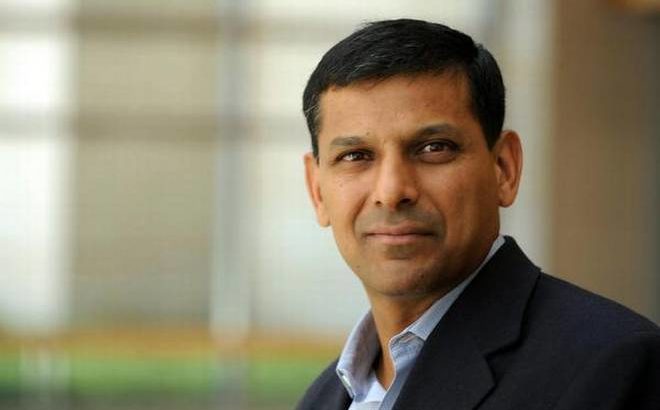
Raghuram Rajan explains economic concepts and talks of issues like tolerance and connection between political freedom and prosperity in his new book, which is a collection of essays and speeches during his stint as RBI head.

When Mr. Rajan took charge as governor of the Reserve Bank of India in September 2013, the rupee was in free fall, inflation was high, India had a large current account deficit, and exchange reserves were falling.

As measure after measure failed to stabilise markets, speculators sensed a full-blown crisis and labelled India one of the Fragile Five economies.

Mr. Rajan’s response was to go all out, not just to tackle the crisis of confidence, but also to send a strong message about the strength of India’s institutions and the country’s ongoing programme of reform, publisher HarperCollins India said.

Mr. Rajan’s commentary and speeches in “I Do What I Do: On Reform, Rhetoric & Resolve” convey what it was like to be at the helm of the central bank in those turbulent but exciting times, it said.

The book will hit stores on September 4.

“Rajan outlined a vision that went beyond the immediate crisis to focus on long-term growth and stability, thus restoring investor confidence. Boldness and farsightedness would be characteristic of the decisions he took in the ensuing three years,” the statement by HarperCollins said.

“Whether on dosanomics or on debt relief, Rajan explains economic concepts in a readily accessible way. Equally, he addresses key issues that are not in any banking manual but essential to growth: the need for tolerance and respect to assure India’s economic progress, for instance, or the connection between political freedom and prosperity,” it added.

This is not Mr. Rajan’s first book. He co-authored “Saving Capitalism from the Capitalists” with Luigi Zingales and wrote “Fault Lines: How Hidden Fractures Still Threaten the World Economy”, for which he was awarded the Financial Times-Goldman Sachs prize for best business book.

Fuente: http://www.thehindu.com/books/raghuram-rajan-pens-book-on-rbi-stint-in-turbulent-times/article19546543.ece

Imagen: https://lh3.googleusercontent.com/4ZICRvg-z1m4U7FFtY9eIbh6V8DZ4gnn0fml7F6km1xlD0AwqvDcdlL7tZNxNYSgzy9xsg=s85

Comparte este contenido:

EEUU: 3-day open innovation hackathon from Aug. 29

América del Norte /Asia/EEUU/India/Agosto del 2017/Noticias/http://www.thehindu.com

Chief Minister to present awards for best prototypes during the event

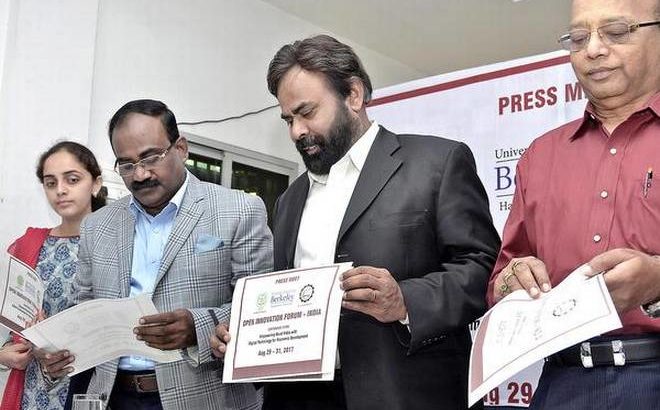
Students of University of California (UC) Berkeley will work together with the students of Indian universities on ‘UC Berkeley-Andhra Smart Villages’ programme and an agreement has been made in this regard.

The US university has partnered with Koneru Lakshmaiah University (KLU) and other Indian universities to evaluate and find solutions to the problems in the rural areas, according to Solomon Darwin of University of California and chairman of Open Innovation Forum.

As part of the project, the open innovation hackathon would hold a convention for students, entrepreneurs, businessmen and heads of different global banks on KLU campus at Vaddeswaram in Guntur district from August 29 to 31, said Darwin at a press conference held here on Tuesday. “The hackathon designing team has identified categories, including agriculture, education, health, aquaculture, digital technology, transportation, entrepreneurship, skill development, communication, safety and security, proposed to develop in villages.

Chief Minister N. Chandrababu Naidu will present awards for best prototypes in each category,” said Prof. Darwin. The theme of the programme was to empower rural India with digital technology for economic development by creating a platform to converge knowledge centres, academicians, administrators, researchers and students, said KL University Vice-Chancellor L.S.S. Reddy. Chief Advisor of Berkeley-Andhra Smart Villages Project I.V. Murali Krishna said as many as 22 students worked on different technologies and challenges would share their ideas with the Indian students. KLU Registrar T. Uma Maheswara Rao and university open forum chairman M. Kishore Babu said arrangements were on for the event.

“As many as 2,300 student teams from different institutions got registered for the three-day open innovation forum, of which 30 best teams were selected for the meet, in which representatives of various technical institutions in India, professors from UC-Berkeley and Stanford Universities, corporate executives of Silicon Valley and other firms will address the delegates”, Mr. Murali Krishna said.

Fuente: http://www.thehindu.com/news/national/andhra-pradesh/3-day-open-innovation-hackathon-from-aug-29/article19543789.ece

Imagen: https://lh3.googleusercontent.com/Db-nqRCd3GqZbDUqx0Afryany3zt0Zc-oztsY27L02wU8PKJP0opIVCOmtLyI0yf7eWhrA=s85

Comparte este contenido:

Ecuador: Augusto Barrera y Fander Falconí evaluarán a Yachay

America del Sur/Ecuador/Diario El Comercio

El Gobierno hará las gestiones para que las cuatro universidades emblemáticas del Ecuador no estén aisladas del resto del sistema educativo, sino que sean un complemento. La decisión fue presentada en una exposición sobre el diagnóstico de la educación media y superior, ayer, 22 de agosto de 2017.  El acto se realizó en la sede de la Universidad Nacional de Educación, en Azogues.

Las conclusiones fueron presentadas ayer por el presidente Lenín Moreno, el ministro de Educación, Fander Falconí, y el secretario nacional de la Senescyt, Augusto Barrera. Sobre la situación de las universidades de Yachay, de las Artes, de Educación e Ikiam, Barrera dijo que la decisión del presidente Moreno es consolidar, profundizar y continuar estos proyectos, “pero debemos ser más rigurosos”. Él y Falconí tienen previsto visitar la próxima semana Yachay para evaluar y proyectar este centro, “para que no sean las redes sociales los escenarios de evaluación sino se haga un trabajo objetivo y claro de qué hemos encontrado y cómo vamos a consolidar y recuperar el sentido fundamental de este proyecto”.

En el diagnóstico de la educación media y superior, también se determinó que de casi 290 000 aspirantes para ingresar a la universidad este año, un 43% era nuevos bachilleres y el resto estaba represado de años anteriores. Según Barrera, responder a esta demanda social representa un desafío. “No es un problema de campaña”. Además, se determinó que más de 31 000 aspirantes tienen más de 25 años. Por ello, se necesitan modelos de profesionalización y formación de adultos.

En el país hay 59 universidades y escuelas politécnicas y 278 institutos técnicos y tecnológicos públicos y privados. “No regresaremos a la universidad de garaje ni desestructurará la gobernabilidad del sistema”, expuso Barrera. Según él, si bien aumentó la cantidad de matriculados en las universidades al pasar de 521 424 a 571 860 estudiantes, entre 2012 y 2016, hay una particularidad. El aumento se sustentó en los centros privados y “estos años prácticamente se estancó la oferta de la universidad pública”.

Para Barrera, durante este Gobierno se logró incrementar un 32% la oferta en universidades y escuelas politécnicas y 5% en institutos superiores. Además, aseguró que se mejoró el modelo de asignación de cupos y se iniciará el proceso de nivelación general para quienes no pudieron ingresar. Será gratuito y se presentará durante la segunda semana de septiembre.

En su intervención, el presidente de la República, Lenín Moreno, resaltó que el diálogo es importante para avanzar el proceso de mejoramiento de la educación y agregó que el acceso a la educación superior es un desafío para su administración. Dos reuniones mantuvo con la Directiva de País de Cañar y con los alcaldes y Prefecto de esa provincia. Las citas se cumplieron la tarde y noche en la Gobernación cañarense. La Directiva provincial respaldó la gestión de Moreno.

:http://www.elcomercio.com/tendencias/augustobarrera-fanderfalconi-evaluacion-yachay-educacion.html.

Comparte este contenido:
Page 3457 of 6196
1 3.455 3.456 3.457 3.458 3.459 6.196