América del sur/Chile/08 Julio 2017/Fuente: La nación
Estudios afirman que las chilenas comienzan su vida sexual a la edad de 16, mientras que hace sólo pocos años, lo hacían a los 24.
Según cifras del Ministerio de Salud, 22.349 adolescentes quedaron embarazadas durante 2016, de las cuales 678 eran menores de 14 años. Ante la cifra, la Asociación Chilena de Protección de la Familia (Aprofa) manifestó su inquietud no sólo por los costos sociales de esa situación, sino que también por el hecho de que la edad de inicio en la vida sexual activa es cada vez más temprana.
Según estudios realizados por el Centro de Estudios Sociales Experimentales Oxford y la Universidad de Santiago, la edad promedio de iniciación sexual para las mujeres en Chile es a los 16 años, mientras que en el grupo que hoy tiene 55 años y más, estaba cerca de los 24 años.
La directora ejecutiva de la entidad, Débora Solís señala que esa baja tiene más de una explicación, “pero sin lugar a dudas, el no tener acceso a educación en sexualidad de calidad y servicios de salud pertinentes, aumentan las posibilidades de tomar decisiones que puedan poner en riesgo sus vidas y proyecciones futuras”.
La institución ha indicado en varias ocasiones la necesidad de que la educación en sexualidad forme parte de los currículos escolares desde los primeros cursos y no sólo en la Educación Media, como se suele abordar. Para la entidad hacerlo en niveles superiores es llegar tarde.
“Hace muchísimo tiempo que nuestro país no cuenta con una política dedicada a la educación en sexualidad en los establecimientos educativos chilenos. Las niñas, niños y jóvenes que asisten a la educación pública no tienen la posibilidad de recibir de manera permanente y como parte de la tarea educativa, los contenidos y habilidades necesarias para asumir su vida sexual de manera plena, pero también informada y responsable”, señaló.
Además desde Aprofa aseguraron que estudios dan cuenta que en Chile existe una relación directa entre nivel socio económico y comportamiento en sexualidad en general, incluida la iniciación sexual. A menores ingresos económicos la exposición es mayor a iniciación sexual a edades tempranas, probabilidades de embarazo en la adolescencia y contagios de infecciones de transmisión sexual, incluido el VIH.
Solís también señaló que fortalecer la educación sexual desde los inicios de la escolaridad es importar a aprender a tomar decisiones y resistir a presiones de sus pares, adultos o ambientes en los que crecen, y a negociar si efectivamente quieren iniciarse y en qué condiciones lo van a hacer. “Por ejemplo el uso del condón, como una requisito para tener relaciones sexuales”, indica la experta.
América del Sur/Argentina/08 Julio 2017/Fuente: Prensa Latina
Los docentes de la Unión de Trabajadores de la Educación (UTE) de esta capital podrían convocar a un nuevo paro ante la falta de respuestas del gobierno local a una nueva convocatoria para discutir un aumento salarial.
Según declaró el titular de ese gremio, Eduardo López, si el Ejecutivo porteño no hace un llamado a las negociaciones para convenios salariales (paritarias), vamos ‘camino a un paro’.
En el más reciente diálogo, el gobierno ofreció a los maestros de esta capital elevar el sueldo a un 19 por ciento, una cifra que consideran ‘por debajo del promedio’ de lo que han acordado distintos sindicatos docentes en otras provincias.
En declaraciones a la emisora La Mañana, de AM750, López recordó que la contraparte se había plantado en el 19 por ciento de aumento que ofreció en febrero pasado.
Con el 27,4 por ciento acordado la víspera entre el Gobierno y los docentes de la provincia de Buenos Aires, el porcentaje que proponen las autoridades porteñas ‘ya explotó’, subrayó el representante de la UTE.
La oferta del 19 por ciento es tanto para los docentes de las escuelas públicas como las privadas. Para un maestro que cobra 10 mil pesos (585 dólares), la propuesta implicaría mil 900 pesos más (111 dólares).
A mí me llegó una boleta de pago de electricidad de dos mil pesos (116 dólares), lo cual quiere decir que el aumento que nos ofrecen es menor al pago de este servicio, subrayó el dirigente sindical.
La lucha de los maestros porteños, al igual que los otros de diferentes partes del país, se enfoca en lograr un salario digno, superior al umbral de la pobreza, con un alza al menos de un 30 por ciento para compensar el incremento de la inflación, indicador que en 2016 alcanzó más del 40 por ciento.
Europa/Francia/Julio del 2017/ Noticias/https://theconversation.com/
There is a growing crisis within children’s mental health, and this is not a term used lightly – between 2010 and 2015 there was a 50% increase in hospital admissions because of children self-harming. And in 2016 Childline reported the highest ever number of callers expressing suicidal thoughts. This is a figure that has doubled over the last five years.
A report by the Children’s Commissioner for England warned that more than 800,000 children were living with mental health issues in the UK, with a large proportion from vulnerable families. Issues they face include parents with alcohol addiction, involvement in the care system, as well as dangers posed by street gangs and modern slavery.
As children’s mental health becomes one of society’s most pressing issues, many teachers find themselves on the frontline – with the effect being felt in schools across the country. In 2017, 79% of teachers in both primary and secondary schools reported seeing an increase in stress, anxiety and panic attacks in their pupils as well as a rise in depression, self-harm and eating disorders. But without specialist training – which isn’t currently a requirement – a lot of those working in schools feel unprepared for the challenges they are facing.
With this in mind, below are a few ways schools can try and help.
1. Start talking about it
Mental health needs to be integrated into the school curriculum, which will help increase understanding and reduce stigma around issues. Without this, pupils may not be aware their mental health is deteriorating and feel silenced or shamed when seeking help.
If both pupils and teachers have more open discussions about mental health, issues will also be easier to identify early on, and this will help to build students’ knowledge and understanding of the subject.
Ideally, mental health needs to be talked about the same way physical education or healthy eating is, because research has found that when schools adopt a comprehensive approach to discussing mental health it supports all pupils – including those who are experiencing mental health difficulties already.
Sharing’s caring.Shutterstock
2. Create a safe space
Students do better in schools when they feel safe – this means ensuring that bullying incidents are low and addressed, including the rising incidents of cyberbullying.
The evidence also shows that when students feel a sense of belonging, have good peer and teacher relationships, and feel listened to when they raise concerns, also helps to support positive mental health in schools.
It’s good to talk.Shutterstock
3. Support for all
Everyone in schools from the teachers to the teaching assistants, the school lunch staff to the school nurse, all have a role to play in improving the school environment – and making it more open to discussions around mental health.
But they can do only do this if they are supported and healthy themselves. Looking out for the well-being of staff will itself have a positive impact on the students. And research shows that when staff are trained in mental health they are more confident in supporting their students. The same research also showed that this additional mental health training even helped to boost staff’s own resilience and job satisfaction.
It’s a team effort.Shutterstock
4. Make sure teachers know how to help
Headteachers should demand mental health training for all new teachers. And before a school takes on a new or trainee teacher, they should ask to see what mental health training they have. This could include an understanding of the risk and resilience factors for their students, how to spot the signs of mental ill health, along with how to support and get help for students at risk.
This will ensure that all new teachers have a basic understanding of the mental health challenges they will face, and will make it easier for them to help pupils in need.
Knowing how to help is half the battle.Shutterstock
5. Recognise that it takes a village
Looking after children’s mental health isn’t just something that can be done on a small scale, it involves a shift in the way everyone not only works together, but also communicates on issues.
The good news is there are lots of additional things schools are already doing in this area, including working with parents and having staff as mentors for vulnerable students. Many schools have also introduced peer mentoring, where children are partnered up with older children who can look out for them.
Running extracurricular social activities for pupils has also been shown to help have a positive impact on students, by providing a space for them to work through their emotions and develop strategies to address their challenges.
In conversations among politicians, college administrators, educators, parents and students, college affordability seems to be seen as a purely financial issue – it’s all about money.
My research into the historical cost of college shows that the roots of the current student debt crisis are neither economic nor financial in origin, but predominantly social. Tuition fees and student loans became an essential part of the equation only as Americans came to believe in an entirely different purpose for higher education.
Students took to the streets to protest their debt burdens as part of Occupy Boston in 2011.CampusGrotto/flickr, CC BY-NC
Cost of a college degree today
For many students, graduation means debt. In 2012, more than 44 million Americans (14 percent of the total population) were still paying off student loans. And the average graduate in 2016 left college with more than $37,000 in student loan debt.
The increase in student loan debt should come as no surprise given the increasing cost of college and the share that students are asked to shoulder. Decreasing state support for colleges over the last two decades caused colleges to raise tuition fees significantly. From 1995 to 2015, tuition and fees at 310 national universities ranked by U.S. News rose considerably, increasing by nearly 180 percent at private schools and over 225 percent at public schools.
The Stanford University crew team, between 1910-1915. Stanford was founded on the principle of providing a free education. The university did not start charging students tuition until 1920.Library of Congress
During the 19th century, college education in the United States was offered largely for free. Colleges trained students from middle-class backgrounds as high school teachers, ministers and community leaders who, after graduation, were to serve public needs.
This free tuition model had to do with perceptions about the role of higher education: College education was considered a public good. Students who received such an education would put it to use in the betterment of society. Everyone benefited when people chose to go to college. And because it was considered a public good, society was willing to pay for it – either by offering college education free of charge or by providing tuition scholarships to individual students.
Other colleges, such as the College of William and Mary, offered comprehensive tuition scholarship programs, which covered tuition in exchange for a pledge of the student to engage in some kind of service after graduation. Beginning in 1888, William and Mary provided full tuition scholarships to about one third of its students. In exchange, students receiving this scholarship pledged to teach for two years at a Virginia public school.
And even though the cost for educating students rose significantly in the second half of the 19th century, college administrators such as Harvard President Charles W. Eliot insisted that these costs should not be passed on to students. In a letter to Charles Francis Adams dated June 9, 1904, Eliot wrote, “I want to have the College open equally to men with much money, little money, or no money, provided they all have brains.”
College education becomes a private pursuit
The perception of higher education changed dramatically around 1910. Private colleges began to attract more students from upper-class families – students who went to college for the social experience and not necessarily for learning.
This social and cultural change led to a fundamental shift in the defined purpose of a college education. What was once a public good designed to advance the welfare of society was becoming a private pursuit for self-aggrandizement. Young people entering college were no longer seen as doing so for the betterment of society, but rather as pursuing personal goals: in particular, enjoying the social setting of private colleges and obtaining a respected professional position upon graduation.
John D. Rockefeller was instrumental in bringing about the modern day reality of college tuition and student loans.The Rockefeller Archive Center
In 1927, John D. Rockefeller began campaigning for charging students the full cost it took to educate them. Further, he suggested that students could shoulder such costs through student loans. Rockefeller and like-minded donors (in particular, William E. Harmon, the wealthy real estate magnate) were quite successful in their campaign. They convinced donors, educators and college administrators that students should pay for their own education because going to college was considered a deeply personal affair. Tuition – and student loans – thus became commonly accepted aspects of the economics of higher education.
The shift in attitude regarding college has also become commonly accepted. Altruistic notions about the advancement of society have generally been pushed aside in favor of the image of college as a vehicle for individual enrichment.
Dartmouth College students carving canes on campus in the early 1920s. In the early 20th century, as more students from upper-class families began attending college for the social – rather than educational – experience, many colleges began the practice of charging tuition.Council of the Alumni of Dartmouth College
A new social contract
If the United States is looking for alternatives to what some would call a failing funding model for college affordability, the solution may lie in looking further back than the current system, which has been in place since the 1930s.
In the 19th century, communities and the state would foot the bill for college tuition because students were contributing to society. They served the common good by teaching high school for a certain number of years or by taking leadership positions within local communities. A few marginal programs with similar missions (ROTC and Teach for America) still exist today, but students participating in these programs are very much in the minority.
Instead, higher education today seems to be about what college can do for you. It’s not about what college students can do for society.
I believe that tuition-free education can only be realized if college education is again reframed as a public good. For this, students, communities, donors and politicians would have to enter into a new social contract that exchanges tuition-free education for public services.
Oceanía/Austarlia/Julio del 2017/Noticias/https://theconversation.com/
Most parents view their children’s playing of electronic games as potentially problematic – or even dangerous. Yet many children are engaging with electronic games more frequently than ever.
Concerns about electronic gaming do not stack up against the research. So, how much gaming is too much for young children?
Electronic games (also called computer or digital games) are found in 90% of households in Australia. 65% of households have three or more game devices. Given this prevalence, it’s timely to look more closely at electronic game playing and what it really means for children’s development and learning.
parents reported on their children’s use of electronic games when their children were eight or nine years of age; and
teachers reported two years later on these children’s social and emotional development and academic achievement, when the children were 10 or 11.
How much time do kids spend gaming?
As the table below shows, there was wide variation in the number of hours per week the children spent playing electronic games.
Most children (52%) played electronic games for four or fewer hours per week. But nearly one-year of the children (24%) were reported as playing electronic games for more than seven hours per week.
How much time should kids spend gaming?
Taking into account family background and parental education, the good news is that low-to-moderate use of electronic games (between two and four hours per week) had a positive effect on children’s later academic achievement.
However, over-use of electronic games (more than seven hours per week) had a negative effect on children’s social and emotional development.
Children whose parents reported they played electronic games for two-to-four hours per week were identified by their teachers as showing better literacy and mathematical skills.
Surprisingly, children who were reported as playing electronic games infrequently or not at all (less than two hours per week) did not appear to benefit in terms of literacy or mathematics achievement.
However, children whose parents reported that they played electronic games for more than one hour per day were identified two years later by their teachers as having poor attention span, less ability to stay on task, and displaying more emotional difficulties.
As the graphs below show, moderate game playing was associated with the most benefits both academically and emotionally.
Are some games better than others?
It is likely that the relationship between the use of electronic games and children’s academic and developmental outcomes is far from straightforward. The quality of electronic games and the family context play important roles.
Social interactions are important in supporting children’s engagement in electronic games. A closer examination of children’s experiences at home may be beneficial in understanding the context of gaming in everyday life.
Often viewed as a leisure activity, studies show that when parents and siblings participate in the game playing, they offer opportunities to negotiate with each other, and engage in conversations and literacy practices. All of these potentially contribute to the child’s language, literacy and social development.
It is important to note that while we know the amount of time children spent playing electronic games, we do not know the detail of the kinds of games that were being played, with whom they were being played, or even the device on which they were played.
This contextual information is clearly relevant for consideration in any further research that explores the relationship across children’s electronic game playing, learning, and wellbeing.
Europa/Francia/Julio del 2017/Noticias/https://theconversation.com/
En ce moment même, vous êtes en train de lire ces mots sans avoir à y réfléchir, ni même à en être conscients. Dans un enchaînement extrêmement rapide, vos yeux se lancent de gauche à droite sur votre écran, décelant un sens dans ce qui apparaîtrait autrement comme une succession de gribouillis noirs.
Pour vous, la lecture n’est pas seulement facile, elle est automatique. Regarder un mot sans le lire vous est quasiment impossible, étant donné que les rouages du langage écrit se mettent en marche dès qu’un lecteur qualifié aperçoit des caractères.
Les premières traces du langage écrit dont nous disposons datent d’il y a environ 5 000 ans, ce qui représente une part infime des 60 000 années (ou plus) que les humains ont passées à utiliser le langage oral.
Cela signifie que notre espèce n’a pas eu suffisamment de temps pour développer des réseaux cérébraux à même de nous prédisposer à apprendre la lecture. Ainsi, ce n’est que grâce à des années de pratique et d’apprentissage que nous façonnons nous-mêmes ces réseaux.
Comment le cerveau apprend à lire
Le cerveau se réorganise constamment. À chaque fois que nous apprenons une nouvelle compétence, les connections neuronales qui nous permettent de la réaliser se renforcent. Cette plasticité est maximale lors de l’enfance, ce qui explique pourquoi nous avons tendance à surcharger les enfants d’apprentissage, avant qu’ils ne deviennent adolescents.
La lecture devient alors un moyen d’accéder au langage par la vue, ce qui signifie qu’elle utilise une architecture qui est déjà utilisée pour la reconnaissance de structures visuelles ainsi que pour la compréhension du langage oral.
Les mots et les lettres sont initialement stockés dans le cerveau comme des symboles.Shutterstock
Lorsque les mots voyagent dans le cerveau
Lorsqu’un lecteur expérimenté lit un mot imprimé, cette information voyage de ses yeux jusqu’à son lobe occipital (situé à l’arrière du cerveau), où elle est traitée comme n’importe quel stimulus visuel.
De là, l’information se déplace vers le gyrus fusiforme gauche, aussi appelé la « boîte aux lettres » du cerveau. C’est à cet endroit que les gribouillis noirs sont reconnus comme étant des lettres qui forment un mot. Cette boîte aux lettres représente une étape spéciale dans le parcours d’un mot, puisqu’elle ne peut se développer qu’à partir de l’apprentissage de la lecture.
Les mots et les lettres sont stockés dans cette boîte aux lettres et y sont mémorisés individuellement, non pas comme des formes ou des modèles, mais comme des symboles. C’est pour cette raison qu’un lecteur confirmé est en mesure de reconnaître rapidement un mot, quelque soit sa fonte, sa cAssE, ou sa police.
Afin de déterminer la signification et la prononciation d’un mot, l’information se déplace ensuite de la boîte aux lettres vers les lobes frontal et temporal du cerveau. Ce sont ces mêmes zones sont activées lorsque nous entendons un mot ; elles sont donc spécialisées dans le langage et non pas seulement dans la lecture ou l’écriture.
L’information pouvant se déplacer très rapidement sur les autoroutes synaptiques d’un lecteur expérimenté, l’ensemble de ce trajet prend moins d’une demi-seconde, .
Mais que se passe-t-il dans le cerveau d’un enfant de cinq ans, dont les autoroutes synaptiques sont encore en construction ?
Apprendre à lire demande beaucoup d’effort.Shutterstock
De l’apprentissage de la lecture chez les enfants
Pour les jeunes enfants, le processus qui consiste à comprendre la signification de caractères imprimés est lent et demande des efforts. Notamment parce que les lecteurs débutants n’ont pas encore développé un répertoire assez grand de mots familiers qu’ils peuvent reconnaître par la vue. Ainsi, ils doivent épeler phonétiquement chaque lettre ou chaque séquence de lettres.
À chaque fois que les enfants déchiffrent des mots, ils forment de nouvelles connexions entre les zones de langage visuel et oral du cerveau, ajoutant peu à peu de nouvelles lettres et des mots à la boîte aux lettres du cerveau.
Souvenez-vous, lorsqu’un lecteur confirmé reconnaît un mot par la vue, ils traite les lettres du mot plutôt que sa forme.
L’enseignement de la lecture peut donc être facilité pour les enfants si l’on souligne la nature symbolique des lettres ; en attirant leur attention sur les relations entre les lettres et les sons émis par la parole.
Des preuves tirées de la recherche en imagerie cérébrale et de la recherche éducative convergent et démontrent qu’un apprentissage phonétique précoce peut aider à construire un réseau neuronal de lecture efficace dans le cerveau.
Comment l’alphabétisation va-t-elle évoluer dans le futur ?
Notre définition de ce que veut dire « être alphabétisé » doit suivre l’évolution technologique. En effet, désormais les jeunes cerveaux doivent non seulement s’adapter au langage écrit, mais aussi à l’environnement médiatique numérique contemporain, dans lequel le langage écrit est aussi présent.
Le futur nous indiquera comment l’évolution technologique affecte le développement de notre cerveau, cette mystérieuse éponge située entre nos oreilles.
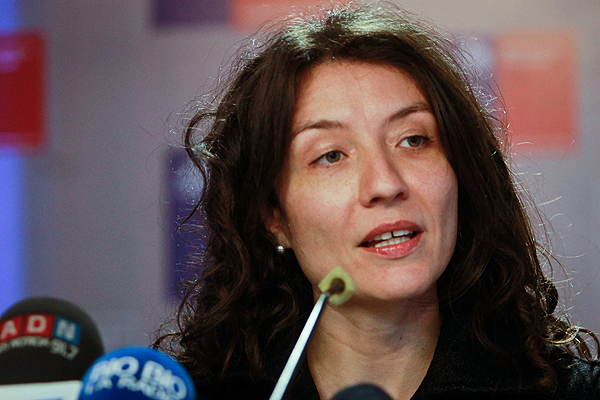
La subsecretaria de Educación, Valentina Quiroga, explicó las gestiones que realizará el ministerio con algunos de los establecimientos que informaron que pasarán a régimen particular pagado.
En entrevista con Expreso Bío Bío, Quiroga indicó del total de establecimientos, tan sólo un 2% tomó esta decisión, que se traduce en 77 recintos educacionales.
Si bien la subsecretaria indicó que ven con mucho optimismo las cifras, reiteró su preocupación por la comunidad educativa de los establecimientos que informaron el cambio de régimen, por lo que conversarán con los dueños por si hay alguno que quiera revaluar el proceso.
Esto, porque según indicó, “tenemos la impresión que el proyecto puede no ser sostenible en el tiempo”, considerando que hay establecimientos (2) que pasarán de ser gratuitos a pagados.
De no haber cambio de parecer de los sostenedores se inicia un segundo proceso de diálogo con las comunidades educativas para apoyar en la búsqueda de recintos de condiciones similares en casos que las familias no puedan pagar las nuevas cifras establecidas por cada establecimiento.
Finalmente, consultada sobre los cierres de algunos colegios, Quiroga fue clara en precisar que “todos los años cerca de 130 establecimientos cierran en promedio”, por lo que los 31 colegios que han informado su decisión de continuar el próximo año es bastante inferior a este número e históricamente los motivos suelen relacionarse a desequilibrios financieros.
OtrasVocesenEducacion.org existe gracias al esfuerzo voluntario e independiente de un pequeño grupo de docentes que decidimos soñar con un espacio abierto de intercambio y debate.
¡Ayúdanos a mantener abiertas las puertas de esta aula!










 Users Today : 28
 Total Users : 35490943
 Views Today : 35
 Total views : 3604383
