Page 3696 of 6195
1 3.694 3.695 3.696 3.697 3.698 6.195

South Africa: Target Schools to Offer African Language From Grade 1 in 2018

South Africa/03 de Julio de 2017/Allafrica

Resumen: El Ministerio de Educación dice que planea que las últimas escuelas ofrezcan una lengua africana como un sujeto que implemente su política de IIAL desde el grado 1 el próximo año.

The Department of Education says it plans to have the last remaining schools not yet offering an African language as a subject implementing its IIAL policy from Grade 1 next year.

The department gave a presentation to the portfolio committee on basic education this week, and said the Incremental Implementation of African Languages (IIAL) deadline for the remaining 3 558 schools had been moved up from 2020 to 2018.

 There are approximately 25 000 schools in the country, most of which already offer a previously marginalised African language as a subject, including many private schools, director general Mathanzima Mweli said.

The ministerial management committee had resolved in May to push the deadline up for the last remaining 3 558 target schools that don’t offer any indigenous language.

«At the core of this strategy is to contribute toward social cohesion. Schools are incubators of future citizens,» Mweli told the committee.

«Many people believe African languages don’t have currency, they won’t take you overseas, and so on. That’s the misconception, but languages can sell. You can exchange experiences.»

All the provinces were on board, and had committed to implementing the IIAL in all their target schools from Grade 1 next year, he continued.

Thereafter, in those remaining schools, Grades 4-6 would be implemented from 2021-2023, Grades 7-9 from 2024-2026, and Grades 10-12 from 2027-2029.

Department spokesperson Elijah Mahlangu told News24 on Thursday that the implementation rate had been slow in the final few schools.

The Western Cape had the worst implementation rate, with only 1% of the targeted 817 schools implementing isiXhosa so far.

The Northern Cape had the best, with 90% of its 29 targeted schools now offering either Setswana or isiXhosa.

Gauteng stood at 36% of its 682 targeted schools, and had a choice of six different previously marginalised languages.

Mweli said the teaching personnel for the remaining schools would be provided on a national basis. A group of qualified teachers would be drafted to the schools when requested.

The purpose of the IIAL is to develop a conversational competency for those who do not speak an indigenous African language as a second language.

It was borne out of the National Development Plan’s desire to promote and celebrate multilingualism.

A pilot was trialled in 264 target schools in 2014. The committee has previously expressed its unanimous support for the policy.

The department also updated the committee on plans to possibly introduce History as a compulsory subject.

History is currently compulsory from Grades 4-9. The plan would look at making it compulsory from Grades 10-12. An alternative could be to include aspects of History as part of Life Orientation, which is already compulsory.

The National Development Plan also highlights the importance of history, heritage and culture being taught to South African children to foster an understanding of our diverse past.

The department was also aware that the subject was losing popularity, and was aware that a lack of historical knowledge could make future citizens open to propaganda.

The plans were still developing, following the conclusion of a study of other countries’ best practices in Africa and Europe.

Fuente: http://allafrica.com/stories/201706300312.html

Comparte este contenido:

México: Violentas, 69% de las familias; maltratan para educar: UNICEF

México/03 de Julio de 2017/Excelsior

Sólo en 31% de los hogares la educación de los menores de edad se realiza sin ejercer agresión, revela encuesta.

En México siete de cada diez hogares son violentos con los niños, revela un estudio realizado por el Fondo de las Naciones Unidas para la Infancia (Unicef, por sus siglas en inglés), apoyado por la Secretaría de Salud (Ssa).

De acuerdo con la Encuesta Nacional de la Infancia en México 2015, en 53% de los hogares se ejerce agresión sicológica; en 44%, sicológica y física, y en 6% castigos severos.

De la investigación presentada ante la Comisión de Derechos Humanos del Senado,  se destaca que sólo en 31% de los hogares la educación de los menores de edad de entre uno y 14 años se realiza sin ejercer ningún tipo de violencia, y ahí destaca la clase media.

Además, se reporta que los niños sufren más castigos físicos severos en comparación con las niñas, y que la zona centro del país es la más violenta con los pequeños.

“No es una cuestión cultural (…) Es una cuestión de generar recursos que ayuden a los padres en el proceso de crianza”, dijo el director de Salud Reproductiva del Instituto Nacional de Salud Pública, Tonatiuh Barrientos Gutiérrez, ante senadores.

Maltratan a niños en 69% de hogares

La zona Centro del país es donde se registra la cifra más alta de agresión infantil.

México es un país violento con sus niños, pues en el 69% de los hogares del país, más los ricos que los pobres, los maltrata como una forma de educación, revela la Encuesta Nacional de la Infancia en México, realizada por Unicef, con apoyo de la Secretaría de Salud, y que muestra que en 53% de los hogares se ejerce agresión sicológica; en 44% agresión sicológica y física y en 6% castigos severos.

En promedio, sólo en el 31% de los hogares la educación de los niños de entre uno y 14 años se realiza sin ejercer ningún tipo de violencia y ahí destaca la clase media, pues tiene el mayor rango, dado que el 34.3% de sus hogares no maltratan a sus menores de edad.

El director de Salud Reproductiva del Instituto Nacional de Salud Pública (INSP), Tonatiuh Barrientos Gutiérrez, encargado de hacer la presentación oficial de la encuesta ante los integrantes de la Comisión de Derechos Humanos del Senado, dijo que “este es un nivel de agresión física que no es de ninguna manera deseable y esto tiene que invitar a la reflexión muy clara acerca de la enorme necesidad que hay en el país de generar opciones de mayor conocimiento y de mayor acceso a herramientas y de mayores capacidades de las madres y los padres para poder realizar una crianza no violenta para los niños.

“Sí me gustaría dejar muy claro que no es una cuestión cultural y que no tenemos que meternos. Para nada, me parece más bien que es una cuestión de generar recursos que ayuden a las madres y a los padres a resolver de manera no violenta y llevar a cabo este proceso de crianza mucho más pacífica”, destacó ante los legisladores federales, encabezados por Angélica de la Peña, presidenta de la Comisión de Derechos Humanos del Senado.

El detalle de la encuesta que del 6% de los menores de edad que sufren castigo severo físico, la sufren más los hombres que las mujeres; el mayor nivel de maltrato severo se registra en la zona Centro del país, con un 7.8% de hogares violentos y es más en las zonas rurales que las urbanas.

Por rango de edades, los menores más severamente maltratados son los que tienen entre cinco y nueve años, al alcanzar un porcentaje de 7.2% de hogares violentos, seguidos por los que tienen de diez a 14 años, con 6.5 por ciento.

Respecto a la preparación académica de los padres de familia que ejercen violencia severa sobre sus hijos, quienes sólo tienen primaria, tienen el primer lugar con 7.3%, seguidos de quienes tienen secundaria, con 6% y quienes tienen educación superior, con 5.4% de hogares agresivos.

La encuesta refleja que los hogares más pobres son más severos en los castigos.

Sin embargo, muestra que la violencia como método de disciplina hacia los hijos es practicada más por los hogares más ricos y con el mayor nivel de educación escolar y es más ejercida sobre mujeres.

Olvidan las vacunas de sus hijos

El Fondo de las Naciones Unidas para la Infancia (Unicef, por sus siglas en inglés) prendió sus alertas, porque en México las familias con más dinero comenzaron a dejar de vacunar a sus hijos, a pesar de contar con los medios para hacerlo. En contraste felicitó a México por aumentar la lactancia materna de 14% a 31% y disminuir la obesidad infantil de 9.7% a 5.2% en sólo dos años.

El director de Salud Reproductiva del Instituto Nacional de Salud Pública (INSP), Tonatiuh Barrientos Gutiérrez, explicó que en promedio, el 5.7% de los hogares con menores de edad de entre 24 y 35 meses de nacidos, no tienen una sola vacuna; para el caso de las zonas urbanas, esto ocurre en el 6.4% de los hogares, frente al 3.1% de los hogares de las zonas rurales; además, en el 8.1% de los hogares con el mayor nivel de riqueza.

Esto ocurre también en el 8.6% de los hogares con el menor nivel de ingresos o más pobres, pero de acuerdo con Tonatiuh Barrientos, esto tiene una explicación lógica en el hecho de que estas familias tienen problemas de accesibilidad a los servicios médicos, pero en el caso de las familias más ricas, no se explica.

Fuente: http://www.excelsior.com.mx/nacional/2017/06/28/1172399

Comparte este contenido:

España: La Junta destaca la importancia de la Educación para Adultos y su papel en la inserción laboral

España/03 de Julio de 2017/20 Minutos

  • La delegada de Educación de la Junta en Córdoba, Esther Ruiz, ha destacado ante la celebración el sábado de los exámenes para obtener la titulación de Educación Secundaria Obligatoria (ESO), la importancia que tiene la Educación de Adultos en la provincia y ha valorado «la capacidad y el esfuerzo de los estudiantes tanto para retomar los estudios no terminados como para adquirir nuevas competencias y obtener una titulación que les facilite la inserción laboral».

Según ha indicado la Junta de Andalucía, los contenidos de las pruebas de esta segunda convocatoria del curso, la primera fue en abril, tendrán como referente también lo dispuesto en la Instrucción 6/2016, de 30 de mayo, de la Dirección General de Ordenación Educativa.

La prueba para obtener el título de Graduado en la ESO para personas mayores de 18 años está compuesta por tres ejercicios referidos a los ámbitos que componen el currículo de la Educación Secundaria Obligatoria para personas adultas, es decir ámbito científico-tecnológico, de comunicación y social.

Cada una de ellos tendrá una puntuación máxima de 100 puntos y es necesario obtener un mínimo de 50 puntos en el conjunto de los ejercicios que componen cada ámbito para superarlo. Las pruebas se desarrollarán en sesión de mañana y de tarde. Así, de 9,00 a 11,30 horas se celebra la prueba del ámbito científico-tecnológico, de 12,00 a 14,30 la del ámbito de comunicación y, por último, de 17,30 a 20,00 la del ámbito social. Las pruebas contemplan preguntas de tipo test y de desarrollo, además de redacciones sobre algunos temas concretos.

Los 1.237 inscritos en las pruebas este año se distribuyen en cinco institutos de la capital (Alhaken II, Instituto Provincial de Educación Permanente de Córdoba, Averroes, Medina Azahara y Séneca), además de en el Centro Penitenciario.

Para obtener el título de graduado en ESO es preciso superar los tres ámbitos. En caso de superar solamente algún ámbito, la nota se guarda para futuras convocatorias. Cabe aclarar que los ámbitos de conocimiento superados en las diferentes convocatorias de las pruebas para la obtención del título de Graduado en ESO para personas mayores de 18 años no se convalidan en la ESO de régimen ordinario, solo en régimen de personas adultas.

En cuanto a datos, el curso pasado, en la convocatoria de abril, se matricularon 2.212, se presentaron 1.485 y aprobaron 270, es decir, un 18,18 por ciento, mientras que en la de junio se matricularon 1.464, se presentaron 809 y aprobaron 254, un 31,39 por ciento.

Fuente: http://www.20minutos.es/noticia/3069725/0/educacion-junta-destaca-importancia-educacion-para-adultos-su-papel-insercion-laboral/

Comparte este contenido:

Tanzania: Activists Want Magufuli to Reconsider Teen Mothers School Ban

Tanzania/03 de Julio de 2017/Allafrica

Resumen: Las sociedades civiles de Tanzania han instado al gobierno a escuchar el clamor público después de la decisión del presidente John Magufuli de que, durante su tiempo en la oficina, las madres adolescentes no se les permitirá volver a la escuela después de tener su hijos.

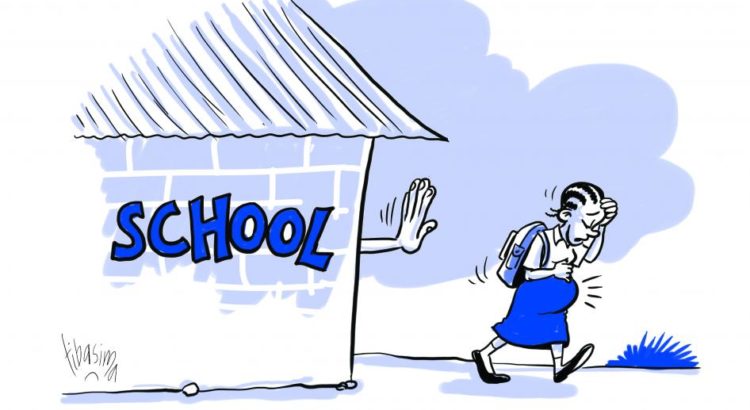
Tanzania’s civil societies have urged the government to listen to the public outcry following President John Magufuli’s decision that, during his time in the office, teen mothers will not be allowed back to school after having their babies.

Dar es Salaam — Civil society organisations (CSOs) say they will not be silenced in the current debate on whether to allow teen mothers back to school.

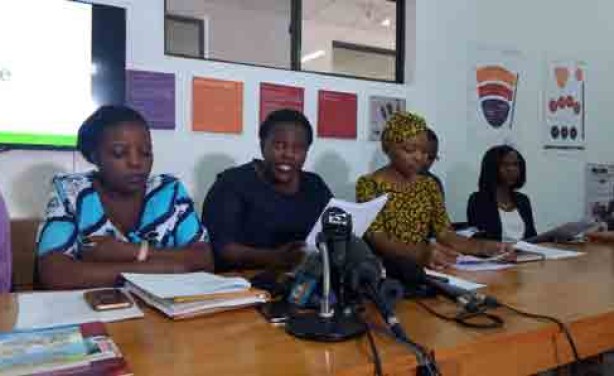
Speaking on behalf of a coalition of CSOs in Dar es Salaam on Thursday, acting Legal and Human Rights Centre executive director Anna Henga said the organisations were operating in line with the law, adding that no amount of intimidation would silence them.

The coalition was reacting to the recent threat by Home Affairs minister Mwigulu Nchemba to deregister non-governmental organisations that would continue to press for schoolgirls who became pregnant to be readmitted to school after giving birth even after President John Magufuli rejected the proposal last week.

Ms Henga said CSOs were not breaking the law by taking a stand that contradicts the President’s publicly declared position on the matter, adding that any attempt to register them must also be within the confines of the law.

«We cannot remain silent on this issue…we are fighting for girls’ rights. It should be remembered that women and girls comprise 51 per cent of Tanzania’s population.

 «What we are doing is perfectly legal because we are here to defend and advocate human rights. We will not stop doing our work just because we have been threatened with deregistration,» Ms Henga said.

She added that various studies showed that the majority of Tanzanians were in favour of girls being readmitted to school after giving birth, and urged the government to consider public opinion.

Ms Henga said the importance of education for teen mothers was mentioned in CCM’s 2015-2020 election manifesto and the 2014 Education and Training Policy. «Neighbouring countries including Kenya have adopted the reentry policy. Zanzibar has since 2010 been readmitting girls as part of a wider plan to reduce the rate at which girls were dropping out of school,» she said.

The executive director and founder of the girls’ rights advocacy organisation Msichana Initiative, Ms Rebecca Gyumi, called for continued public debate, saying this would help the government to come up with inclusive policies that considered the interests of all groups.

«Matters of public interest require exhaustive debate among stakeholders in order to find the best way forward for all,» she said.

Speaking during a fundraiser in Dodoma last Sunday, Mr Nchemba said NGOs that were critical of the government’s «official position» on various matters risked being struck off the register.

He also threatened to deport foreign representatives of international organisations that were «promoting homosexuality».

Mr Nchemba spoke a few days after President Magufuli said there was no way his government would allow schoolgirls who became pregnant to resume their studies after giving birth.

Opening the 64-kilometre Msata-Bagamoyo road during the final leg of his three-day tour of Coast Region, Dr Magufuli said the idea of allowing teen mothers back to school was a foreign concept «championed by NGOs and other people who do not wish this country well».

«There are many alternatives in life for teen mothers. They can join vocational training colleges or seek loans and become small-scale entrepreneurs.

«Let those NGOs that are making noise build schools for teen mothers. If we allow young mothers back into public schools we will one day have Standard One pupils rushing back home to breast-feed their babies. We will be destroying this nation,» Dr Magufuli said, adding that allowing teen mothers back to school would encourage more girls to engage in premarital sex.

The declaration was praised and condemned in equal measure.

Fuente: http://allafrica.com/stories/201706300519.html

Comparte este contenido:

Africa: Make Girls’ Access to Education a Reality

África/Julio de 2017/Fuente: Human Rights Wath

Resumen: Millones de adolescentes embarazadas y casadas de muchos países africanos se les está negando su educación debido a políticas y prácticas discriminatorias, dijo hoy Human Rights Watch en el Día del Niño Africano. Más de 49 millones de niñas están fuera de la escuela primaria y secundaria en el África subsahariana, 31 millones de ellas de educación secundaria, socavando sus derechos y limitando sus oportunidades. El matrimonio precoz y el embarazo en la adolescencia son factores importantes. En el África subsahariana, el 40% de las niñas se casan antes de los 18 años y los países africanos representan 15 de los 20 países con las tasas más altas de matrimonio de niños a nivel mundial. La región también tiene la mayor prevalencia mundial de embarazos de adolescentes. En 14 países subsaharianos, entre el 30 y el 51 por ciento de las niñas dan a luz antes de los 18 años. Las creencias culturales o religiosas a menudo estigmatizan a las niñas solteras y embarazadas, con el resultado de que muchas niñas embarazadas son forzadas a matrimonios tempranos.

Millions of pregnant and married adolescent girls across many African countries are being denied their education because of discriminatory policies and practices, Human Rights Watch said today, on the Day of the African Child. More than 49 million girls are out of primary and secondary school in sub-Saharan Africa, with 31 million of them out of secondary education, undermining their rights and limiting their opportunities.

Early marriage and teenage pregnancy are significant factors. In sub-Saharan Africa, 40 percent of girls marry before age 18, and African countries account for 15 of the 20 countries with the highest rates of child marriage globally. The region also has the world’s highest prevalence of adolescent pregnancies. In 14 sub-Saharan countries, between 30 and 51 percent of girls give birth before they are 18. Cultural or religious beliefs often stigmatize unmarried, pregnant girls, with the result that many pregnant girls are forced into early marriages.

“The African continent has one of the world’s highest rates of adolescent pregnancy, but many governments insist on tackling this social and public health challenge by punishing girls and jeopardizing their future,” said Elin Martínez, children’s rights researcher at Human Rights Watch. “Governments should focus on helping girls prevent unintended pregnancies and support their efforts to stay in school.”

Although most sub-Saharan African countries have made commitments to guarantee compulsory primary and lower-secondary education for all children, many exclude or expel pregnant girls and young mothers from school.

Tanzania and Sierra Leone are among the sub-Saharan African countries that have harmful policies and practices that discriminate against pregnant and married girls, Human Rights Watch research shows. In Tanzania, Human Rights Watch found that school officials conduct pregnancy tests and expel pregnant students. Nineteen-year-old Rita, from northern Tanzania, said she was expelled when she became pregnant at age 17. “Teachers found out I was pregnant,” she said. “I found out that no student is allowed to stay in school if they are pregnant … I didn’t have the information [sexual education] about pregnancies and what would happen.”

Some countries, including Cameroon, South Africa, and Zambia, have adopted “re-entry” policies so that adolescent mothers can return to school after giving birth. However, even if governments have these policies, school officials often fail to carry them out adequately or at all. Young mothers frequently lack support to re-enroll due to school fees and related costs, limited support from their families, stigma in school, and a lack of affordable childcare and related early childhood services.

Many adolescent girls become pregnant because they lack the information needed to make informed decisions about their sexuality, family planning, and their reproductive health, while others are coerced into sex and require protection and access to health services and support. According to the United Nations, 80 percent of women ages 15 to 24 who have HIV globally live in sub-Saharan Africa and across the continent, and girls aged 15 to 19 are five times more likely to be infected with HIV than boys.

Sexuality and reproduction are often not included in the national school curricula. In a handful of countries where they are included in HIV awareness or “life skills” programs or subjects, teachers are frequently unwilling to teach these subjects because of the sexual and reproductive health content, or due to constraints on teaching time and resources.

All African governments have made a commitment to the UN Sustainable Development Goals to guarantee gender equality and universal access to free primary and secondary education for all children by 2030. The African Union has recognized the importance of ending child marriage, understanding that it is a major impediment to regional development and prosperity, and of eliminating all forms of gender-based violence and discrimination.

African governments should guarantee that girls have equal access to free quality primary and secondary education and support to stay in school, Human Rights Watch said. Governments should reverse harmful policies and practices that stigmatize girls, including forced pregnancy testing and regulations that allow for the expulsion of pregnant or married girls. Governments should also adopt laws that clearly set 18 as the minimum marriage age for boys and girls.

They should also adopt clear guidelines that instruct schools to re-enroll young mothers, provide support services in schools, and ensure that young mothers have access to early childhood services. Governments should also ensure that all children have access to age-appropriate, comprehensive sexuality, and reproductive education. Where possible, school-based services should be connected to youth-friendly health services to ensure that adolescents receive impartial, nonjudgmental information.

“Governments have the prime responsibility to ensure that girls access free primary and secondary education, without facing stigma and discrimination,” said Martínez. “All governments should scrap policies that exclude pregnant or married girls, and put in place special measures to ensure that all adolescent girls can go to school.”

In Girls’ Own Words

Malawi
In Malawi, roughly half of all girls marry before age 18. Between 2010 and 2013, 27,612 girls in primary and 4,053 girls in secondary schools dropped out due to marriage. During the same period, another 14,051 primary school girls and 5,597 secondary school girls dropped out because they were pregnant.

Girls told Human Rights Watch that marriage interrupted or ended their education, and with it their dreams to be doctors, teachers, or lawyers. Many said that they could not return to school after marriage because of lack of money to pay school fees, childcare, flexible school programs or adult classes, and the need to do household chores. Others said that their husbands or in-laws would not allow them to stay in school.

Kabwila N., 17, said she left school in standard eight at age 15 because of poverty. She said she could not go back to school because she felt ashamed about her pregnancy: “I would not want to go back to school because I started having sex with my boyfriend while at school. I am not fit to go back.”

South Sudan
In South Sudan, 52 percent of girls marry before their 18th birthday. According to UNESCO, over 1.3 million primary-school-age children are out of school, and the country has the world’s lowest secondary school enrollment rate, at four percent.

Mary K., of Yambio County, said: “My father refused me to go to school. He said it is a waste of money to educate a girl. He said marriage will bring me respect in the community. Now I have grown up and I know that this is not true. I cannot get work to support my children and I see girls who have some education can get jobs.”

Anyier D., 18, said that her uncles forced her to leave school at 14 in 2008 to marry an old man she did not know: “I would wish to return to school even if I have children. People think that I am happy but I am not because I don’t have an education. I don’t have something of my own and I am only cleaning offices. If I had gone to secondary school, I would get a good job.”

Tanzania
In Tanzania, fewer than a third of girls who complete primary schooling complete lower-secondary school, and over 15,000 girls drop out annually due to pregnancy. Human Rights Watch found that in some cases adolescent girls dropped out of lower-secondary school due to sexual exploitation and violence by teachers.

Joyce, 17, from Shinyanga, said: “There are teachers who engage in sexual affairs with students – I know many [girls] it has happened to … If a student refuses, she is punished … I feel bad … even if you report the matter it won’t be taken seriously. It makes us feel unsafe. Three girls dropped out because of teachers and sex in 2015.”

Fuente: https://www.hrw.org/news/2017/06/16/africa-make-girls-access-education-reality
Comparte este contenido:

Estados Unidos:How Much American Parents Spend On Their Kid’s Education Will Make Your Jaw Drop

Estados Unidos/Julio de 2017/Autora:  Kaitlin Kimont/Fuente: Romper

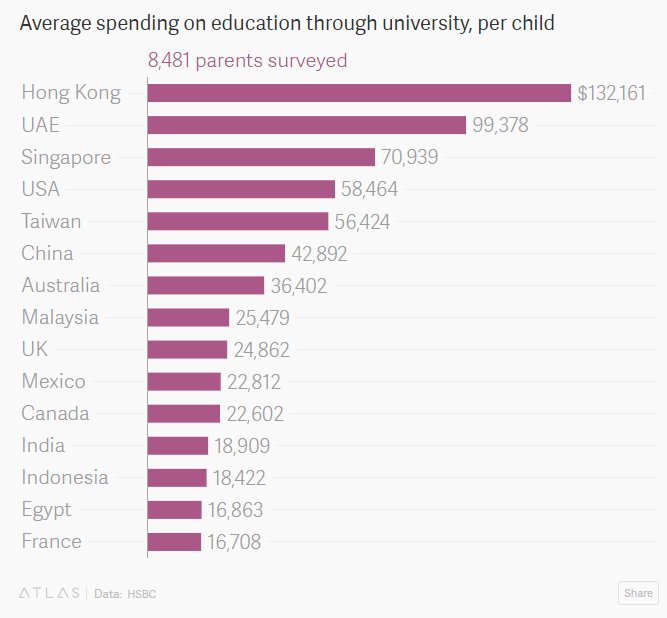
Resumen: Puede que no sea una sorpresa para la mayoría, pero su mandíbula puede llegar al suelo cuando vea exactamente cuánto gastan los padres estadounidenses en la educación de sus hijos. Desde la escuela primaria hasta el final de sus estudios de pregrado, el costo de la educación en los Estados Unidos no es necesariamente barato. ¿Cuánto cuesta? Los expertos en finanzas dicen que el precio promedio de la educación general de un niño estadounidense cuesta a sus padres 58.464 dólares. Mientras que los padres estadounidenses son algunos de los principales gastadores de educación, no pagan casi tanto como los de Hong Kong – $ 132.161 – y los Emiratos Árabes Unidos – $ 99.378 – según un nuevo informe de HSBC. Sin embargo, los estadounidenses gastan miles más en la escolaridad de sus hijos que el promedio mundial de 44.221 dólares. En el otro lado del espectro, los padres en Francia pagan sólo $ 16,708 por el curso completo de su hijo de educación. Y justo al otro lado de las fronteras, los padres canadienses bifurcan más de $ 22,602 y los padres mexicanos pagan un poco más con un promedio de $ 22,812.

It might not come as a shock to most, but your jaw might hit the floor when you see exactly how much American parents spend on their kid’s education. From primary school to the end of their of undergraduate studies, the cost of education in the United States isn’t necessarily cheap. How much? Finance experts say that the average price tag on an American child’s overall education costs their parents $58,464.

While American parents are some of the top spenders in education, they’re not paying nearly as much as those in Hong Kong — $132,161 — and the United Arab Emirates — $99,378 — according to a new report from HSBC. However, Americans are spending thousands more on their kids’ schooling than the global average of $44,221.

On the other side of the spectrum, parents in France pay just $16,708 for their child’s entire course of education. And just across the borders, Canadian parents fork over $22,602 and Mexican parents shell out a bit more with an average of $22,812.

HSBC came to these findings after surveying nearly 8,500 parents from 15 countries and territories around the world who had at least one child who was 23 years old or younger currently attending school. The results included the costs of school fees and university tuition as well as educational books, transport, and accommodation.

PublicDomainPictures/ Pixabay

The HSBC report also found that the overwhelming majority of parents will do whatever it takes to ensure their child succeeds. And these percentages prove it:

  • 87 percent of parents around the world are helping to fund their child’s education
  • 76 percent of parents expect to help pay for postgraduate education
  • 74 percent use day-to-day income to fund their child’s education costs
  • 82 percent are ready to make personal sacrifices for their child to succeed
  • 75 percent of parents worldwide are confident their child will have a bright future

«In today’s highly competitive global job market, education for young people has never been more important,» Charlie Nunn, HSBC’s Group Head of Wealth Management, said in a press release. «Parents across the world appreciate this and are willing to invest time and money to help their children get the best start in life… From forfeiting ‘me time’ to giving up hobbies or reducing leisure activities, parents are going the extra mile to help their child succeed.»

View image on Twitter

View image on Twitter

Factors like sending kids to publicly-funded schools or private schools can certainly fluctuate these averages and overall costs of a child’s education. For instance, in-state public universities in the United States can cost $20,090 a year while a private school can cost an average $45,370 per year, according to Top Universities.

While these numbers might startle new parents, finance experts advise coming up with a plan and saving from the moment their child is born until they head off to college, according to MarketWatch. With advanced planning and plenty of funds saved, hopefully parents won’t feel too strained when it’s time to hand over a big check.

Fuente: https://www.romper.com/p/how-much-american-parents-spend-on-their-kids-education-will-make-your-jaw-drop-67985

Comparte este contenido:

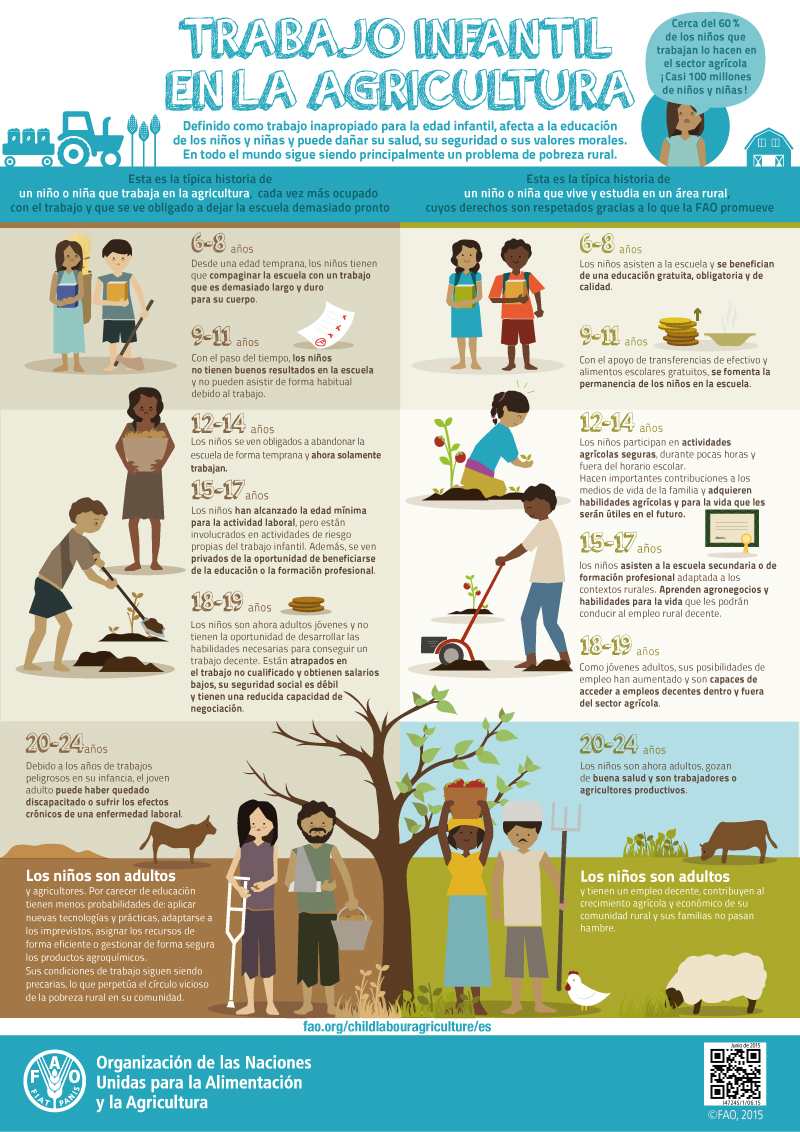
Infografía: Trabajo Infantil en la Agricultura

Trabajo Infantil en la Agricultura

Cerca del 60 % de los niños que trabajan lo hacen en el sector agrícola ¡Casi 100 millones de niños y niñas!

Definido como trabajo inapropiado para la edad infantil, afecta a la educación de los niños y puede dañar su salud, su seguridad o sus valores morales.

En todo el mundo sigue siendo principalmente un problema de pobreza rural.

Fecha: 12/06/2015
Descargar en PDF
Fuente: http://www.fao.org/resources/infographics/infographics-details/es/c/293551/
Comparte este contenido:
Page 3696 of 6195
1 3.694 3.695 3.696 3.697 3.698 6.195