Page 3752 of 6195
1 3.750 3.751 3.752 3.753 3.754 6.195

EEUU: Education Secretary Betsy DeVos suspends new rules cracking down on for-profit college abuses

EEUU/June 20, 2017/By: Jim Puzzanghera and Samantha Masunaga/Source: http://www.latimes.com

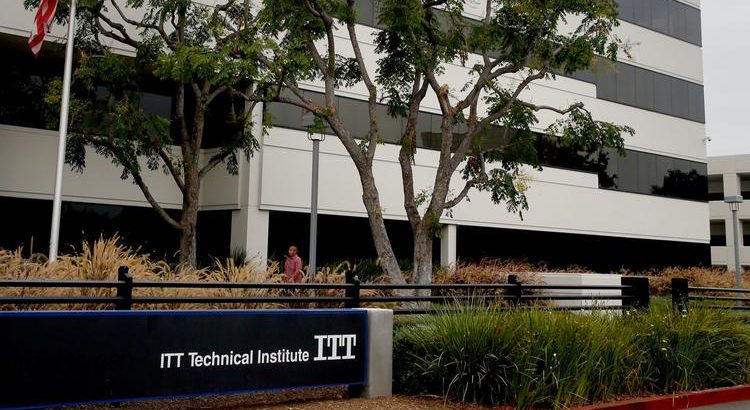
As Corinthian Colleges Inc., ITT Technical Institute and other for-profit schools collapsed in recent years, the Obama administration overhauled regulations to make it easier to forgive loans for stranded students and to try to prevent future abuses.

Now, the Trump administration is suspending those rules, which had been set to go into effect July 1. The Department of Education, under Secretary Betsy DeVos, also is launching an effort to rewrite the rules.

Both moves drew criticism from Democrats and student advocates.

For Claudia Chacon, 25, of Los Angeles, a former student at Corinthian’s Everest College, the decision could lead to more difficulties in her attempt to get loan relief.

“It’s been very frustrating for me because I can’t get a straight answer,” she said of her experience since applying to the Education Department about a year ago under the existing rules, which were scheduled to be streamlined. “We’re still expected to pay for something that … is not usable.”

Chacon took out $17,000 in loans to attend an eight-month medical administrative assistant program at Everest College on Wilshire Boulevard in Los Angeles. She completed the program in 2012. But when she later tried to enroll in general education classes at Santa Monica College, she was told that her Everest transcripts were invalid because the campus had closed.

DeVos said Wednessday that it was “time for a regulatory reset” on what she called “a muddled process that’s unfair to students and schools and puts taxpayers on the hook for significant costs.”

“Fraud, especially fraud committed by a school, is simply unacceptable,” she said. “Unfortunately, last year’s rulemaking effort missed an opportunity to get it right.”

And the department halted implementation of a key part of a new gainful-employment rule that would limit the amount of debt that students at career-training schools — for-profit and not-for-profit — can take out relative to the incomes they can expect to earn. Schools that exceed the limits risk losing their ability to offer federal student aid.

The changes came as critics complained that for-profit colleges, which expanded aggressively starting in 2000, over-promised their ability to give graduates the skills that would land good jobs. Those students, often minorities or those with low incomes, in many cases were loaded up with federally backed and private student loans.

Corinthian Colleges filed for bankruptcy in 2015 after the Education Department restricted its access to federal student aid amid concerns that the company was falsifying job placement rates for graduates. The same fate befell ITT Educational Services Inc. last year.

DeVos said she planned to hold public hearings next month in Washington and Dallas as part of the effort to rewrite the rules.

The Education Department said it intends to process nearly 16,000 pending student loan relief claims under the existing rules.

“Some borrowers should expect to obtain discharges within the next several weeks,” DeVos said.

The for-profit college industry had strongly opposed the new rules. Last month, the California Assn. of Private Postsecondary Schools filed suit in federal court in Washington, D.C., to block the borrower defense rules from going into effect.

DeVos cited that suit as a reason for postponing those rules.

Steve Gunderson, president of the Career Education Colleges and Universities, an industry trade group, commended Education Department officials “for moving forward to begin conversations that will really protect students from academic fraud. Our sector has consistently supported this premise.”

He said Obama administration officials had conducted an “ideological assault on our sector’s very existence.”

The Trump administration is much friendlier to the industry.

President Trump ran a for-profit school, the now-defunct Trump University, for which he paid $25 million to settle a class-action suit that alleged fraud. And DeVos is an advocate of for-profit schools; her government ethics forms showed she has investments in companies connected to the industry, according to the Center for American Progress, a liberal think tank.

Pauline Abernathy, executive vice president of the Institute for College Access & Success, which advocates to make higher education more affordable, blasted the Trump administration’s actions as “terrible news for students, taxpayers, and anyone concerned about rising student debt.”

California Atty. Gen. Xavier Becerra, a Democrat, had joined the attorneys general of seven other states and the District of Columbia in filing a motion to intervene in the Washington suit in order to keep the rules from being blocked.

“No student should have to worry about predatory schools destroying his or her future,” Becerra said Wednesday. “These new rules would help to protect them.”

Democratic lawmakers also criticized the Education Department’s move. In March, Sens. Elizabeth Warren (D-Mass.) and Bernie Sanders (I-Vt.) and 10 Senate Democrats asked DeVos to explain an earlier delay in deadlines for schools to appeal debt-to-earning rates set in January.

Those deadlines, in March and April, had been moved to July 1.

Now the Education Department plans to review the rules, which it said are “overly burdensome and confusing” for schools.

Under the Obama-era regulations, a school’s program would get a passing rating if the estimated annual loan payment of a typical graduate did not exceed 20% of the student’s discretionary income or 8% of total earnings. Programs that exceed these levels would risk losing their ability to participate in federal student aid programs.

The Education Department said in January that 1,239 of the 8,700 programs received warnings because annual loan payments were as high as 30% of discretionary income or between 8% and 12% of total earnings. Four straight years of warnings would make students in the programs ineligible for federal aid.

More than 800 programs received a failing grade by having annual loan payments greater than 30% of discretionary income or 12% of total earnings. Although for-profit schools had about 66% of the programs, they accounted for about 98% of those with failing rates, the Education Department said.

Programs would lose the ability to participate in federal student aid programs if they failed two years in a row.

Source:

http://www.latimes.com/business/la-fi-devos-for-profit-colleges-20170615-story.html

 

Comparte este contenido:

Donate! and Helps the OVE team to continue its work.

This portal is the result of the work of a team of volunteers for world education of inclusive quality. Your Donation will help us continue to do so.

To donate click on the following link that is on the main page of the portal.

We really appreciate what you can do for the OVE team.

Knowing Other Voices in Education:

It is a web portal of educational communication worldwide. OVE is conceived as a workshop-school where a group of volunteer teachers and volunteers from the five continents report, communicate and process information related to education as an emancipatory cultural process and as a human right.

Other voices in Education is an initiative independent of any government, national or international economic body, religious cult or political grouping. In OVE different perspectives converge on the educational fact that are expressed with freedom and responsibility.

Other Voices in Education is a communication effort of the International Observatory of Educational Reforms and Educational Policies (REPOD-OI) and the Global / Glocal Network for the Educational Quality that seeks to democratize information that teachers, ) And educational researchers interested in learning about the course of educational reforms and counter-reforms on a global scale. But fundamentally it is a space for teachers from all over the world to express their ideas, opinions and information associated with the educational fact seen in an integral way.

Comparte este contenido:

Ghana: Let’s be deliberate about education

Ghana/ June 20, 2017/Source: https://www.ghanamma.com

The just ended Basic Education Certificate Examinations (BECE) brings me a lot of fond memories. For me, like most people of my age, the examinations marked the end of a chapter.

I remember the late night studies. I remember the revision classes. I remember the group discussions. I remember the anxiety and uncertainty that underlay the preparations for the exam. We all understood that in a way, it marked a decisive moment in our lives.

The BECE determines whether you would get the school of your choice. And it also determines your career choice as well.

Those who ended up doing science and technical courses (with few exceptions) ended up in the university pursuing science related courses. Those who choose the arts ended up as humanities students at the various universities across the country.

But most importantly, the BECE marks the moment when the intellects of young ones are tested externally. This may be a source of joy and sadness.

But here is the letdown. Up until this moment, there is no deliberate attempt at infusing in the student any philosophy related to education. Ask a student at that age what he or she intends to do with education; and the answer will barely surprise you. They would definitely say “I want to be a doctor”; “I want to be a lawyer”, “I want to be a President” and so on.

Up until this stage, the essence of education is limited to the individual and his well-being. It does not go beyond that. Very few children will connect the essence of education to nation building. Therefore, the focus of education is itself not razor-sharp. It is just blunt and left to chance.

Let me put in my point in another way. The policy rationale for education may simply be resting easy in the minds of some director of education or official of the Ghana Education Service. Even in those cases, the reasons given for education are as blunt and vague as an unsharpened cutlass. You can hazard a guess.

The reasons may include reducing the literacy rate and poverty as well as to make persons employable and so on. That is where it ends. In fact, in the larger scheme of things it is level one thinking.

No deliberate attempt has been made to consider the labour needs of the country. We are not sure of how many more doctors we need. We are not sure of how many nurses we need. We are not sure of how many engineers we need. We are all locked up in some narrow capsule minding our own business.

Thought formation and conditioning is also on autopilot in this country. There is no deliberate effort to harness the hearts and minds of young people to fill in particular gaps in the economy.

There is absolutely no plan.  We just stand and hope that people will make good choices along the way; and if we are lucky, they would play some crucial role.

We can’t be lucky forever. At some point in time we must take the bull by the horn and move quickly. There are so many professions and expertise that we do not have in this country.

This means that there are so many opportunities that can be harnessed. This also means that there is a lot more to be done in terms of becoming better versions of our selves.

What are we doing about it? Nothing! If natural resources alone developed a nation, then certainly we would have been miles ahead of our neighbours and contemporaries at independence.

The reality however is that natural resources don’t grow nations. It is intellect that makes all the difference.

I read in a recent article in the Financial Times about how children in Singapore become so good at Mathematics. The answer was simple. There was a deliberate attempt at making them that good. They filled in the gaps where they needed to.

We are not hungry as a nation. We are almost directionless.  We have so much in terms of natural resources that we barely pay attention to the intellectual and mental resources that we have.

Who needs brains when we have cocoa, coffee and other export crops? That seems to be the line of thinking on which we have long been operating.

It is about time we considered our ways regarding education. We have to be thoughtful and deliberate in executing a strategy as to what we want to achieve with our mental faculties. It is not just going to happen. It would take a lot of time and effort.

We can’t continue any longer in our drunken stupor. We must stay alive to the challenges that confronts us as a nation and also the trends taking place in other countries.

Source:

https://www.ghanamma.com/2017/06/16/lets-be-deliberate-about-education/

Comparte este contenido:

Indian: Nawazuddin Siddiqui feels talent needs education to shape up

Indian/ June 20, 2017/ By: IANS/Source: http://indianexpress.com

Nawazuddin Siddiqui says the importance and role of education in shaping up one’s talent cannot be dismissed. «Education is very important. It is essential to understand life, and it simplifies a lot of things for you.» Nawazuddin studied at a Hindi medium school, and he says the language of education does not matter.

National School of Drama (NSD) alumnus Nawazuddin Siddiqui says the importance and role of education in shaping up one’s talent cannot be dismissed. “Education is very important. It is essential to understand life, and it simplifies a lot of things for you. If you are talented, you still need education to shape it up. There are a lot of kids who are talented and blessed with skills, but education is something that can shape them up, and make them distinct,” Nawazuddin told IANS here.

The actor was in the capital earlier this week to support consumer goods company P&G’s CSR initiative Shiksha, which promotes the idea of ‘Live, Learn and Thrive’ by helping to educate and impact the lives of the underprivileged children and support and build schools.

Nawazuddin, known for films like “Kahaani”, “Gangs of Wasseypur” and “Bajrangi Bhaijaan”, was happy to associate with the noble cause because he always wanted to do something in this regard.

The actor, who comes from a small town in Uttar Pradesh, graduated in science from an institute in Haridwar, before making his way to Delhi. It was in the capital that his talent found the right platform after he joined the NSD. Nawazuddin studied at a Hindi medium school, and he says the language of education does not matter.

“More than whether education has been given at a Hindi medium or English medium, it is important that at the starting level, children should be provided with the knowledge they need,” said the actor, who is proud of how his chaste dialogue delivery in Hindi helps him bag better roles. “It is a must to know your language well,” he stressed.

Source:

http://indianexpress.com/article/entertainment/bollywood/nawazuddin-siddiqui-feels-talent-needs-education-to-shape-up-4710233/

Comparte este contenido:

New Zealand: Shake-up of teacher training to smooth primary to secondary transition: Education Council

New Zealand/ June 20, 2017/ By: Nicholas Jones/Source: http://www.nzherald.co.nz

New teachers could soon be trained to teach at both primary and secondary levels to help smooth the transition between school levels for students.

Education Minister Nikki Kaye was open to the idea – saying the proposal was part of «an important discussion about flexibility».

In what would be a significant shake-up of how teachers are trained, the Education Council has proposed a number of changes to initial teacher education. Others include requiring would-be teachers to meet higher literacy and numeracy standards from 2020.

Currently most teacher education programmes prepared attendees to teach at a traditional education level such as early childhood, primary or secondary school.

The council proposes developing programmes to train new teachers to teach across different ranges of year levels than happens now. It says programmes could have a focus on particular years. For example, early childhood/primary (0 to 8 years of age), or middle school (9 to 14 years of age).

The latter would see a person trained to teach at year levels currently spanning primary, intermediate and secondary.

The council said this would let teachers take advantage of more diverse career opportunities within schools and «communities of learning» – local schools that work together and share some staff.

It would also let schools and early childhood centres better support children as they moved between traditional year levels, the council said.

Research has found that if a student had difficulty following a transition between school levels they were much more likely to drop out of education, and that poor transitions impacted on students’ wellbeing and future achievement.

Previous Education Minister Hekia Parata sought advice on how the transition between pre-school and school could be strengthened, and there was now a preference for new school builds to be in the campus style – offering ECE, primary and secondary schooling on one site.

Post Primary Teachers’ Association (PPTA) president Jack Boyle said any changes to teacher training needed to be supported by adequate professional development and support for the 60,000 current teachers in schools.

«The focus doesn’t need to be on structural change for the sake of saying, ‘we’re doing something different’. It needs to be on the people in the room. If every teacher in New Zealand had access to guaranteed professional learning and support then I think you’d see a lot more improvement in what is often called the achievement gap.»

Boyle said most new teachers learnt more in the classroom, and many secondary schools already employed teachers who had degrees in primary education.

The PPTA had already expressed concern at another council proposal, to eventually make all would-be teachers complete a degree in their chosen subject as well as a postgraduate qualification in teaching. The union said that could worsen teacher-supply issues.

Currently, secondary teachers generally have a degree in the subject they teach and a graduate diploma in teaching, with more primary teachers having degrees in education.

Any changes floated by the Education Council are significant, given its role as the professional organisation advocating on behalf of teachers. It has outlined the proposal and other possible changes in a discussion document and called for submissions, closing July 7.

Kaye said she had been briefed about the proposals, and it was important to respect the independent consultation process.

«Once the consultation has been completed, the council has confirmed that it will present its final report to the sector and Government. I’m advised that some of the proposals could have potential cost implications, so these would need to be considered by the Government as the process develops.»

Source:

http://www.nzherald.co.nz/politics/news/article.cfm?c_id=280&objectid=11878789&ref=rss

Comparte este contenido:

EEUU: Personal finance education is vital to our children’s success

EEUU/ June 20, 2017/By Shari Burnum/Source: http://www.al.com

If you read the current news about personal finance, it will come as no surprise that a majority of kids and teens in the United States are not well-versed in how to manage their money. What may surprise you, however, is that students in Alabama fare better than those in many other states.

According to WalletHub’s 2017 financial literacy survey, Alabama ranks 38th in the nation in overall financial literacy, and 15th nationwide in Knowledge and Financial Education. Thank the Alabama Council on Economic Education for helping to educate the state’s residents on how to manage their money. ACEE, a non-profit organization founded in 1969, works to ensure that students throughout the state have educational tools available to them that can help them become more financially savvy. High school students in Alabama are required to study both economics and personal finance as part of their graduation requirements, and ACEE provides both teacher training and resources for these courses.

ACEE also holds workshops to prepare teachers to coach teams in the Securities Industry and Financial Markets Association’s Stock Market Game, Invest It Forward and other activities, covered in detail in last month’s column. The group also oversees the National Personal Finance Challenge in schools throughout the state.

Teacher training has paid off locally; a team from Grissom High School in Huntsville, coached by teacher Suzanne Bailey, won the Alabama Economics Challenge this past school year. More important than the win, however, is knowing that the students are prepared to succeed financially throughout their lives.

Here’s more good news: Hundreds of lessons are available to both teachers and parents through ACEE’s affiliate website, The Council for Economic Education. The site features videos and activities on a multitude of economic and personal finance topics, including credit, taxes, gross domestic product. Does your teen want to buy a new car? There’s a lesson on that, too. There’s even a segment on learning economics with Minecraft. If you’re looking for something for the kids to do on a rainy summer day, this site is a great resource.

Personal finance education is vital to our children’s success, and there are plenty of resources to help you along as you teach them to become money savvy. You’ll be glad you give your kids this edge as they grow up.

Securities offered through Raymond James Financial Services, Inc. Member FINRA/SIPC. Investor’s Resource is not a registered broker/dealer, and is independent of Raymond James Financial Services. Investment Advisory Services are offered through Raymond James Financial Services Advisors, Inc. and any opinions are those of Shari Burnum and not necessarily those of RJFS or Raymond James. Investing involves risk, investors may incur a profit or loss. Third party website links have been provided for informational purposes only. Raymond James is not affiliated with and does not endorse, authorize or sponsor the listed websites or their respective sponsors. Raymond James is not responsible for the content of any website or the collection or use of information regarding any website’s users and/or members.


Shari Burnum, Financial Advisor, founder of Investor’s Resource, specializes in holistic wealth management for owners, professionals, and other high net worth individuals. www.invresource.com – Investor’s Resource, 100 Essex Court, Suite C, Madison, AL 35806

Source:

http://www.al.com/opinion/index.ssf/2017/06/personal_finance_education_is.html

Comparte este contenido:

Malaysia: Mahdzir. Early childhood education needs improvements

Malaysia/June 20, 2017/Source: http://www.themalaymailonline.com

Early childhood education will continue to be the government’s agenda to further enhance the national education system in these challenging times.

Education Minister Datuk Seri Mahdzir Khalid said the National Early Childhood Education Committee has been given the responsibility to plan a holistic education system.

“The National Early Childhood Education Committee has to find the best example, including from abroad, to put the education system on the right track,” he told reporters after handing over scholarship to children of rubber smallholders and Risda, at SM Kuala Nerang, here, today.

During the event, 48 outstanding Form Five students each received cheques for RM500 as incentive for them to continue studying hard to achieve good results in their examinations.

Mahdzir said the present early childhood education system was alright and only need some improvements and would not involve the formulation of a new system.

The ministry plans to ensure that teachers of childcare centres and those run by Kemas (Community Development Department) possess at least a diploma in early childhood education. — Bernama

Source:

See more at: http://www.themalaymailonline.com/malaysia/article/mahdzir-early-childhood-education-needs-improvements#sthash.tXfU42uZ.dpuf

Comparte este contenido:
Page 3752 of 6195
1 3.750 3.751 3.752 3.753 3.754 6.195