Page 3902 of 6179
1 3.900 3.901 3.902 3.903 3.904 6.179

Italy will make vaccines compulsory for school starters

Italia/Mayo de 2017/Fuente: The Local

Resumen: La ministra de Salud de Italia, Beatriz Lorenzin, dijo el viernes que el gobierno planeaba aprobar una ley que prohíba a los niños no vacunados de comenzar en las escuelas estatales «a finales de la próxima semana». Ella hizo el anuncio por primera vez en la televisión italiana el jueves por la noche, cuando dijo que había preparado un proyecto de ley obligando a las vacunas a asistir a la escuela.

Italy’s health minister Beatrice Lorenzin said on Friday that the government planned to approve legislation banning non-vaccinated children from starting at state schools «by the end of next week».

She first made the announcement on Italian TV on Thursday night, when she said she had prepared a bill making vaccinations compulsory in order to attend school.

On Friday morning, Lorenzin confirmed that she had presented the white paper to the Italian cabinet, and that it would be passed by decree within seven days.

She also described the fall in vaccination cover across Italy as «an emergency generated by fake news».

The minister has previously sounded the alarm over the recent rise in infectious diseases. In March, she called to «rapidly boost» vaccination cover and last November, she welcomed the decision of an Italian region to ban non-vaccinated children from public daycare centres.

Lorenzin has also shared photos of her three-month-old twins getting their vaccines, saying: «Mums, don’t be afraid».

However, the move on Friday appeared to cause friction within the government, with Education Minister Valeria Fedeli said early on Friday that she was «astonished» by the way Lorenzin had pushed through the bill.

Recently re-elected Democratic Party leader Matteo Renzi commented: «The government is giving an impression of no coordination, and everyone doing what they feel like», according to Il Sole 24 Ore.

Fedeli later said: «We will work together to create a concrete way of making vaccines obligatory without infringing upon the right to education».

Vaccination controversy in Italy

Measles cases rose more than fivefold across Italy in April, compared to the same month last year, the National Health Institute said at the start of May, with a growing anti-vaccine movement believed to have contributed to the increase.

Meanwhile, up to 20,000 children in Treviso, northern Italy, are thought to be at risk of infectious diseases following revelations that an Italian nurse ‘pretended’ to administer vaccines while really throwing away the phials.

Italy was one of the countries where discredited claims of a link between the combined measles, mumps and rubella (MMR) vaccination and autism had a significant impact on public perceptions of the safety of the jab.

But Italy’s Five Star Movement party has also been heavily criticized for its role in raising doubts over the efficacy of vaccinations.

Grillo accused the New York Times of «fake news» over an article titled ‘Populism, Politics and Measles’ in which the paper said he had «campaigned actively on an anti-vaccination platform».

«There is nothing to support this lie,» said Grillo in his blog, despite the fact that in 2014 the party proposed a law calling «for better information and possible denial of administering vaccinations» – with Grillo one of the signatories.

The proposal included the line: «Recent studies have brought to light the link between vaccinations and specific illnesses such as leukaemia, poisoning, inflammation, immunodepression, inheritable genetic mutations, cancer, autism and allergies.»

Fuente: https://www.thelocal.it/20170512/italy-vaccinations-compulsory-children-school-health

Comparte este contenido:

Japón: Liberating young minds with technology

Japón/Mayo de 2017/Autor: Michael Penn/Fuente: The Japan Times

Resumen: La educación en Japón, dentro del nexo de negocios, ciencia e internacionalización, está desarrollando iniciativas progresistas. Una de esas tendencias es trasladar la enseñanza universitaria de las aulas de ladrillo y mortero a la esfera en línea. Esto podría ser, en su forma más modesta, simplemente recursos suplementarios para la experiencia en el aula que los estudiantes pueden usar para estudiar mientras están en casa o viajando en el tren, pero potencialmente podría evolucionar a una forma más común de aprendizaje a distancia también. Los miembros del personal de las universidades japonesas de élite ya están desarrollando cursos en línea a gran escala a través de un proceso de ensayo y error. Jeffery Cross, profesor del Instituto Tecnológico de Tokio y uno de los líderes de este movimiento en Japón, dice que hay ventajas en el cambio a los cursos en línea. «Si un estudiante no puede llegar a clase, tienen ese material cuando quieren. Pueden controlar el contenido. Por ejemplo, puede reproducir los videos a dos o media velocidad «, explica. «También tenemos subtítulos, así que si su comprensión auditiva en inglés no es tan buena, pueden leer el texto y escuchar lo que se habla».

Education in Japan, within the nexus of business, science and internationalization, is currently developing progressive initiatives.

One such trend is to move university teaching out of brick-and-mortar classrooms and into the online sphere. This could be, in its more modest form, simply supplementary resources for the classroom experience that students can use to study while at home or commuting on the train, but potentially it could evolve into a more common form of long-distance learning as well. Staff members at elite Japanese universities are already developing full-scale online courses through a process of trial and error.

Jeffery Cross, a professor at the Tokyo Institute of Technology and one of those at the forefront of this movement in Japan, says there are advantages in the shift to online courses.

“If a student can’t get to class, they have that material whenever they want. They can control the content. For example, you can play the videos at twice or half speed,” he explains. “We also have captions, so if their English listening comprehension isn’t that good they can read the text as well as listen to the spoken.”

Cross’ team is not only developing course content, but also its own yuru-kyara (Japanese animated mascot character) — a cherry blossom-pink-haired young woman named Sakura Ookayama. Sakura helps to make the lessons more friendly to high school students and encourages them to be more inquisitive and to pay attention to how to use the content in the correct manner.

Of course, interaction with Sakura can never be the same as being in the same classroom as a human instructor, but Cross notes, “If you have 1,000 students in a class, there’s probably not that much interaction with a faculty member anyway.”

At present, only a minority of Japanese universities are involved in this shift to online teaching, but the number is expanding. If a system of cross-credit online courses were to develop, it could ultimately allow students to benefit from top-of-the-field professors even when those instructors are based at universities other than their own.

Beyond university studies, the Japanese company Coursebase looks to help manage the education of graduates. Traditionally, freshman entrants to Japanese companies undergo a substantial series of training sessions — whether it be to learn about their company’s products and those of their competitors; to understand manufacturing and sales techniques and legal compliance issues; or to prepare for further exams to gain official qualifications. Coursebase offers a “learning management system,” which helps companies keep track of which of their employees have completed what types of training.

Co-CEO John Martyn describes Coursebase as “content agnostic,” meaning that each company decides what it wants its employees to learn about. As an example, he cites a manufacturer that needs all of its 40,000 employees, who are spread across the country, to renew compliance training every six months. Instead of taking the enormous time and expense of transporting the employees to a brick-and-mortar classroom, online course material could be automatically managed and delivered via the Coursebase system, which can keep track of each individual employee and even send out reminders to those who are slow to respond.

“The human basically just watches the dashboard and exports reports,” Martyn says, “The whole process is automated.”

While this basic idea isn’t entirely new, Coursebase makes its system available on all internet browsers and it is optimized for mobile platforms to create a better user experience.

A more specific education technology company is Eigooo, which focuses on teaching the English language to Japanese students. The president of the company, Mizuki Nozue, explains that, for now, Eigooo’s program is based on a mobile-phone application that matches up Japanese students to English teachers, who then engage together in a chat.

“The truth is that most Japanese study English on their phone, like when they are on the train, or somewhere else where they can’t use their voices,” Nozue says.

There is no verbal communication with the Eigooo app, only the text chats. The objective is to build up the user’s English fluency by having them ask questions and give responses in real time. Teachers interact with the students and send them electronic feedback to improve their accuracy.

All of Eigooo’s English teachers are based outside of Japan; responding from many countries around the world, they are never in the same nation as their Eigooo students. The overall effect of the Eigooo system bears similarity to that of Tokyo Institute of Technology and Coursebase — collapsing physical distances by means of internet and mobile technologies, leaving institutions and individuals freer to accomplish other tasks wherever they may be, and to provide economic savings on travel, facilities and personnel.

Clearly, the possibilities of the new technologies are moving faster than the ability of the majority of the world to absorb and adapt. Japan is no exception in this regard, and the mainstream of its education system has barely begun to react. How most young people are being taught here is still more appropriate to a 20th-century industrial economy than to the developing 21st-century information technology society.

Nevertheless, there are some pioneers who are indeed preparing students to be technologically aware, innovative and responsible global citizens. Seisen International School in Tokyo’s Setagaya Ward is a particularly impressive example.

This school puts iPads in the hands of kindergarten students, and while teaching them about the four seasons it lets them do their coloring practices electronically. Use of such technology and the encouragement of teamwork and creativity blends seamlessly in small classes consisting of about half a dozen 5-year-olds. When the kindergarten students finish their assignments, they simply push a button to send their work to the teacher’s screen for review.

“We’re aiming to make possible a task that didn’t previously exist,” says David Towse, the information and communications technology integrator — the teacher — for the kindergarten students. “We really redefine and modify this task, which you just couldn’t do with pencil and paper.”

By the time these students are high school age, many of them will have become both proficient with technology and creative in their approaches to problems. They are clearly set to become leaders of the next generation.

Seisen International School’s current high school students are also encouraged to research their own science projects by looking into the latest academic journals online before actually building some of the devices that they themselves conceive. One such student summed up the trajectory of technology in education in her own words:

“I think that these days there’s so much technology around us, that simple facts can be obtained everywhere. There are so many things that before only people could do, but now computers and phones and all these other devices can do them for us.

“One of the only things I think that humans can do better than these things is to innovate and to be creative.”

Fuente: http://www.japantimes.co.jp/community/2017/05/14/issues/liberating-young-minds-technology/#.WRjZbbjau00

Comparte este contenido:

Zambia: Here’s one way of eradicating youth unemployment problem

Zambia/Mayo de 2017/Fuente: IOL

Resumen: A medida que el Foro Económico Mundial sobre África de 2017 se reunió en Durban bajo el lema «Lograr un crecimiento inclusivo a través de un liderazgo responsable», una de las preguntas que surgieron fue qué intervenciones podría hacer África para afrontar el reto del creciente desempleo juvenil. Una forma de erradicar este problema es a través de «educación con producción» y «aprendizaje a lo largo de toda la vida». El profesor Bethuel Setai lo definió como: «La educación con producción es un proceso de aprendizaje que combina el aprendizaje académico con el trabajo productivo. Este proceso establece un equilibrio entre los estudios académicos y la formación profesional. La ventaja de la educación con la producción es que combina el aprendizaje con el trabajo productivo, mientras que da poder al individuo para ser autosuficiente «. Según Longworth y Davies, «el aprendizaje permanente es el desarrollo del potencial humano a través de un proceso continuamente de apoyo que estimula y capacita a los estudiantes individuales para adquirir todos los conocimientos, valores, habilidades y comprensión que necesitarán a lo largo de su vida y aplicarlos con confianza, creatividad y disfrute en todos los roles, circunstancias y ambientes «.

As the 2017 World Economic Forum on Africa converged in Durban, under the theme “Achieving inclusive growth through responsible leadership”, one of the questions that arose was what interventions could Africa make to address the challenge of growing youth unemployment.

One way of eradicating this problem is through “education with production” and “lifelong-learning”. Development economics Professor Bethuel Setai defined it as: “Education with production is a learning process which combines academic learning with productive work. Such a process strikes a balance between academic studies and vocational training. The advantage of education with production is that it combines learning with productive work while it empowers the individual to be self-reliant”.

According to Longworth and Davies, “lifelong learning is the development of human potential through a continuously supportive process which stimulates and empowers individual learners to acquire all the knowledge, values, skills and understanding they will require throughout their lifetimes and apply them with confidence, creativity and enjoyment in all roles, circumstances and environments”.

In order to ensure that education and training programmes advance lifelong learning and education with production, educational goals and objectives must match the individual learner’s life experience and recognise relevant skills, which may have been acquired in both informal and formal learning environments. This implies that the employment sector should accept and recognise qualifications gained through this training approach. Furthermore, according to Voinovich, this implies that employers will have to give proper recognition to prospective employees by looking at their skills rather than their previous job titles and job descriptions.

The novelty of fusing education with production and lifelong-learning is that it calls for the creation of learning and working environments responsive to the needs of the students and it also enables them to capitalise on their individual life experiences and preferred learning styles within their chosen field of studies or industries.

The advocates of education with production argue that emerging evidence in countries such as China, Jamaica and Zambia demonstrate that it is possible to formulate pro-poor educational policies and to implement plans and strategies in order to reach a wide range of large numbers of “under-archievers” and to ensure that they acquire skills that may lead to self-reliance and the creation of inclusive societies. Clearly, in order to turn the vicious cycle of deprivation and exclusion, African countries would have to improve the living standards of their communities through the provision of an assortment of quality educational experiences and services.

The approach offers the best possible route to equipping unemployed youth with requisite skills for competitive economies and job markets as world leaders contrive to create a future with dignity for all through various means. The authorities have to create the right set of conditions that tap into individuals’ talents and experiences to enable students to reach their full potential and to be self-reliant.

Unless the disadvantaged majority of the African youth is emancipated from the injustices of lack of knowledge and skills, it will be difficult for the continent to play a meaningful role in the global economy. All factors considered, the continent must harness the advantages offered by technology to improve the skills and creativity of the workforce in order to address the impact of the Fourth Industrial Revolution with the potential to radically transform every industry.

It is only through co-operation and knowledge exchange that the widening unemployment, wealth and knowledge gaps among the youth can be overcome. Thus it is imperative to establish and to maintain mutually beneficial partnerships between African countries and other continents, because their economic environments and underlying cultural, educational, social and political ramifications and consequences are not unconnected due to globalisation.

Prospects for sustainability hinge on visionary leadership, financial commitment and on building ownership.

Fuente: http://www.iol.co.za/news/opinion/heres-one-way-of-eradicating-youth-unemployment-problem-9118713

Comparte este contenido:

Estados Unidos: Higher education notebook

Estados Unidos/Mayo de 2017/Autor: Aziza Musa/Fuente: Arkansas Online

Resumen: La Universidad de Arkansas Central tomará un pedazo levemente más grande del sueldo de su presidente en el próximo año fiscal. Houston Davis, quien comenzó como presidente el 23 de enero, y la junta directiva de la UCA había acordado un contrato de cinco años, pagando 347.330 dólares anuales con otros beneficios. La fundación de la universidad estaba pagando $ 40,000 del sueldo anual de Davis, mientras que UCA pagó el resto. La junta de la UCA acordó un contrato enmendado, en el cual la universidad pagará $ 343,750 el 1 de julio. La fundación de la escuela recogerá $ 3,580, de acuerdo con la enmienda. El cambio se produjo cuando la universidad recibió su presupuesto de partidas para el próximo año fiscal. Davis reemplazó a Tom Courtway, quien ganó $ 242,400 al año.

UCA to pay more of leader’s salary

The University of Central Arkansas will take on a slightly bigger chunk of its president’s salary in the coming fiscal year.

Houston Davis, who started as president Jan. 23, and the UCA board had agreed on a five-year contract, paying $347,330 annually with other benefits. The university’s foundation was footing $40,000 of Davis’ annual salary, while UCA paid the rest.

The UCA board agreed to an amended contract, in which the university will pay $343,750 come July 1. The school’s foundation will pick up $3,580, according to the amendment.

The change came about as the university received its line-item budget for the next fiscal year.

Davis replaced Tom Courtway, who earned $242,400 annually.

Business school at SAU gets dean

Southern Arkansas University has hired a new dean for its business school.

Robin Sronce will lead the Magnolia university’s David F. Rankin College of Business starting July 5. She will earn $155,000 annually, according to the university.

She is replacing Lisa Toms, who took a similar position at Arkansas Tech University in Russellville. Sronce is coming to Arkansas from Springfield, Mo.-based Drury University, where she works as business school dean.

In her role at Drury, Sronce started new programs, including a Cybersecurity Leadership Certificate at the graduate level, an international business degree at the undergraduate level and an Elite Career Prep program, which was created with Drury’s Career Planning and Development team, according to a news release.

Sronce has also led business students in the graduate school on study-abroad trips to China, led undergraduate students in trips to Greece and also strengthened partnerships with peers in Slovenia and the United Kingdom, the news release states.

Fuente: http://www.arkansasonline.com/news/2017/may/14/uca-to-pay-more-of-leader-s-salary-busi-1/?f=news-arkansas

Comparte este contenido:

Nueva Zelanda: Wellington’s Blue Dragon book fair helps kids and families in Vietnam’s capital

Nueva Zelanda/Mayo de 2017/Autor: Chelsea McLaughin/Fuente: The Dominion Post

Resumen: La feria del libro Blue Dragon, en Ngaio Town Hall  es una recaudación de fondos anual en Nueva Zelanda para el Blue Dragon Children’s Education Center. El dragón azul fue establecido en Hanoi por el profesor australiano Michael Brosowski en 2004 para ayudar a niños de la calle, niños víctimas de la trata y familias en crisis. En Nueva Zelanda,  la organización Blue Dragon Children’s Trust, fue establecida por seis mujeres Wellington en 2010 para apoyar el centro de Hanoi Brosowski. Una historia de Dominion Post en 2009 sobre el Centro de Educación para Niños de Blue Dragon en Vietnam ayudó a llevar a Chinh Van Do a Nueva Zelanda a vivir. Cuando el Centro de Lengua y Educación al Aire Libre de Taupo leyó el artículo, se puso en contacto con Blue Dragon y ofreció una beca de tres meses a uno de sus estudiantes.

Buying a book in Wellington next weekend can help a Vietnamese child in need.

The Blue Dragon book fair, in Ngaio Town Hall next Saturday, is an annual fundraiser in New Zealand for the Blue Dragon Children’s Education Centre.

Blue Dragon was set up in Hanoi by Australian teacher Michael Brosowski​ in 2004 to give kids a better chance at life. It helps street kids, trafficked children and families in crisis.

Blue Dragon supports rural children from poor families to stay in school. The Blue Dragon book fair in Wellington raises ...


Blue Dragon supports rural children from poor families to stay in school. The Blue Dragon book fair in Wellington raises money to help continue its work in Hanoi.

The New Zealand leg of the organisation, Blue Dragon Children’s Trust, was established by six Wellington women in 2010 to support Brosowski’s Hanoi centre.

A Dominion Post story in 2009 about the Blue Dragon Children’s Education Centre in Vietnam helped bring Chinh​ Van Do to New Zealand to live.

Blue Dragon also supports poor children with disabilities in its Step Ahead programme.


Blue Dragon also supports poor children with disabilities in its Step Ahead programme.

When the Taupo Language and Outdoor Education Centre read the article, it contacted Blue Dragon and offered a three-month scholarship to one of its students.

Van Do, a former street kid shining shoes on the streets of Hanoi, was selected to come to Taupo and has been studying and working in New Zealand ever since.

The 28-year-old has studied both English language skills and IT in Taupo and Auckland, and recently moved to Tauranga for an electrical apprenticeship.

Blue Dragon Children's Foundation has played more than 2200 games of soccer. Pictured are its gaelic football champions.


Blue Dragon Children’s Foundation has played more than 2200 games of soccer. Pictured are its gaelic football champions.

For the fifth year in a row, he plans to travel to Wellington to help at the Blue Dragon Book Fair.

Describing the children’s education centre as a «home of hope», he says he always visits Blue Dragon on trips to Vietnam.

«They always make me feel so welcome. I try to help them out by playing soccer with the kids and helping them with their schoolwork.»

The work Blue Dragon does is important. «They are helping the kids and giving chances and creating opportunities for them.

«It’s like home for the kids.»

All proceeds of the book fair go to the Vietnamese organisation.

Fuente: http://www.stuff.co.nz/dominion-post/news/wellington/92419053/wellingtons-blue-dragon-book-fair-helps-kids-and-families-in-vietnams-capital


Comparte este contenido:

Estados Unidos: Arkansas’ teacher of the year visits Washington

Estados Unidos/Mayo de 2017/Autor: /Fuente: Times Record

Resumen: La maestra de Arkansas del año está de vuelta en su aula en la Escuela Secundaria Van Buren «con los pies cansados ​​y un corazón lleno» después de un viaje torbellino a Washington, D.C.  Cochran, una profesora de español de VBHS, fue nombrada la maestra del año 2017 Arkansas por el Departamento de Educación de Arkansas. Fue elegida entre 14 finalistas regionales de los 30,000 maestros del estado. Durante el viaje de Washington, se unió a 55 maestros del año de todo Estados Unidos y sus territorios para el programa de una semana organizado por el Consejo de Jefes de Oficiales de la Escuela Estatal. CCSSO es una organización  sin fines de lucro, de funcionarios públicos que dirigen departamentos de educación primaria y secundaria en los Estados Unidos, el Distrito de Columbia, el Departamento de Educación de Defensa y cinco territorios de los Estados Unidos. «Estuvimos allí para celebrar a los maestros estatales del año y al profesor nacional del año, Sydney Chaffee de Massachusetts», dijo Cochran. «También aprendimos sobre una variedad de temas que afectan la educación y nos reunimos con los legisladores y legisladores para discutir políticas y establecer conexiones».

The Arkansas teacher of the year is back in her classroom at Van Buren High School “with tired feet and a full heart” following a whirlwind trip to Washington, D.C.

“I am ready to hit the ground running,” said Courtney Cochran after the April 22-29 trip to the national’s capitol.

Cochran, a VBHS Spanish teacher, was named the 2017 Arkansas teacher of the year by the Arkansas Department of Education. She was chosen from 14 regional finalists from the 30,000 teachers in the state.

During the Washington trip, she joined 55 teachers of the year from across the United States and its territories for the weeklong program organized by the Council of Chief State School Officers.

CCSSO is a nonpartisan, nonprofit organization of public officials who head departments of elementary and secondary education in the U.S. states, the District of Columbia, the Department of Defense Education Activity and five U.S. territories.

“We were there to celebrate the state teachers of the year and the national teacher of the year, Sydney Chaffee of Massachusetts,” Cochran said. “We also learned about a variety of topics affecting education and met with policy makers and lawmakers to discuss policies and make connections.”

She made the trip with her husband, Amos; daughter, Maddie, 12; and her father, Larry Cook of Benton.

As teacher of the year, Courtney Cochran utilized a portion of a $14,000 grant from the Walton Foundation to pay for her trip. Her family members had to pay for their trips out-of-pocket. Cochran said Hazel’s Haven in Fort Smith and South 28th Boutique in Van Buren helped her prepare for the trip to D.C.

“It was a busy week that started on Sunday evening with a bus tour of the monuments in Washington, D.C.,” Cochran said. “On Monday, after learning about family engagement we had lunch at the Smithsonian and received valuable materials to take back to the classroom.”

Teachers also toured the National Museum of African American History, which opened last year to confront head-on America’s history of slavery and racial oppression.

“The museum gives a completely different prospective of our history, one of which I feel is important here in Arkansas,” Cochran said. “As a teacher of culture, I feel like I have to have as many perspectives as I can including American history from the perspective of African Americans.”

The 400,000-square-foot building stands on a five-acre site on the National Mall, close to the Washington Monument. The building’s three-tiered shape evokes a traditional Yoruban crown. The exterior corona is made of 3,600 bronze-colored cast-aluminum panels.

“At the end of the tour of history you walk into a room with a waterfall coming from the ceiling where you can reflect on your place in the world and your contributions to society,” Cochran said. “It is a very moving experience.”

On April 25, teachers were welcomed to the headquarters for ASCD, a global community of educators dedicated to excellence in learning, teaching and leading, for an all-day learning session.

“They literally rolled out the red carpet with balloons. The hallway was lined with people who were cheering and young children were high-fiving,” Cochran said. “It was the best way to start our day.”

Teachers on Wednesday went to the White House Oval Office where they met with President Donald Trump and the first lady, Vice President Mike Pence and his wife and Education Secretary Betsy DeVos.

“It was overwhelming to be in the Oval Office with all the history it invokes,” Cochran said. “The opportunity to be there with the other state teachers of the year was incredible. We sang ‘Happy Birthday’ to the First Lady and sang ‘Lift Every Voice in Song,’ the African American National Anthem. We made history that day.”

On April 27, the teachers visited the Department of Education to learn about a variety of programs the department offers. DeVos and the national teacher of the year also spoke. An equity and education session was led by Anna Baldwin, the 2014 Montana teacher of the year; Nate Bowling, the 2016 Washington state teacher of the year; and Tom Rademacher, the 2014 Minnesota teacher of the year and author of the book, “It Won’t Be Easy.”

That night, CCSSO hosted a black-tie gala at the Willard Hotel, formally founded by Henry Willard when he leased the six buildings in 1847, combined them into a single structure, and enlarged it into a four-story hotel he renamed the Willard Hotel.

“It was fabulous to feel so honored and empowered as well as appreciated,” Cochran said. “We heard from a variety of speakers including Sydney Chaffee and Betsy DeVos.”

April 28 was a free day for the teachers. Cochran used the opportunity to meeting with Rep. Steve Womack, R-Ark.

Until the end of the 2016-17 school year, Cochran is in her classroom, giving speeches from time-to-time.

On July 1, she will be a full-time employee of the Arkansas Department of Education to travel the state in her role as teacher of the year. She will serve as a non-voting member on the state Board of Education.

Also on her agenda is a June forum on education policy in San Diego, space camp in July in Huntsville, Ala., a Next Step Conference in Princeton, N.J., in October and the college national football championship in Atlanta in January.

“I am ready to get my hands dirty and work for the kids of Arkansas,” Cochran said.

Fuente: http://www.swtimes.com/news/20170514/arkansas-teacher-of-year-visits-washington

Comparte este contenido:

La Educación Sexual Integral es un derecho de todos los niños y las niñas de la Argentina

Argentina/Mayo de 2017/Fuente: La Razón de Chivilcoy

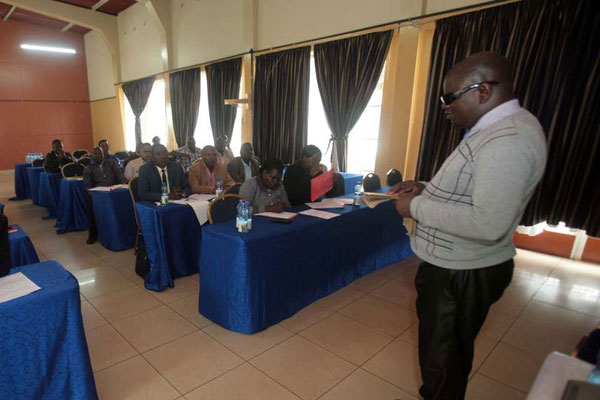
Una jornada taller de Promoción y Sensibilización para la aplicación de la Ley de Educación Sexual Integral (ESI), se llevó a cabo ayer en el Banco Credicoop, organizado por la comisión de asociados de la entidad y que estuvo a cargo de la licenciada en Psicología, Susana Garlarza.

Estuvo dirigido esencialmente a docentes así como a referentes de justicia, líderes políticos, funcionarios, aunque también fue abierto a la comunidad, con acceso libre y gratuito.

En una entrevista para LA RAZÓN, Laura Razzari, integrante de la Comisión de Asociados del Banco Credicoop, puntualizó que la idea es promover la Ley de Educación Sexual Integral. «Sabemos cuesta mucho que los y las docentes puedan construir sus transposiciones en el aula y visualizar en la diversidad curricular la posibilidad de abordar esta normativa”.

Añadió que «es un año muy complejo en el ámbito de las políticas públicas, sabemos que hay un abandono importante de la Ley de Educación Sexual Integral. Es por eso que el Banco Credicoop tomó la posta e invitó a Susana Galarza que es especialista, para que nos acerque la posibilidad de mejorar el rendimiento en el aula en el marco de esta ley”.

Por su parte, Susana Galarza, ratificó que «es una situación difícil en cuanto a políticas públicas a nivel nacional. La Educación Sexual Integral es un derecho de todos los niños y las niñas de la República Argentina. Debe darse en todos los establecimientos de todas las escuelas estatales, de nivel inicial, primario, secundario y terciario. No tenerla, es vulnerar un derecho humano”.

Preguntada cómo se traducen estas dificultades, la profesional lo ejemplificó con el cese de capacitación presencial. «Hay distritos en la República Argentina que no la han recibido, si bien la actual gestión de Macri tiene un curso virtual que dicta en la plataforma ‘Nuestra Escuela’ para capacitar a los y las docentes del país”.

Vale destacar que Susana Galarza fue una de las impulsoras de esta ley en las escuelas durante el anterior gobierno. «Uno no puede dejar de estar comprometida políticamente, sólo entiendo que la educación es un derecho de todas las niñas y niños de la república. Antes estábamos mucho más cercanos a nuevas conquistas en base a los derechos que actualmente. Ahora estamos más cercanos a vulnerar derechos”.

Luego, Galarza aseveró que «hay una demanda importante de las escuelas de educación sexual integral” y que «se sostiene gracias a militantes que le pone pasión, gente muy solidaria como el Banco Credicoop que nos ha abierto las puertas. Esto no va del lado del gobierno sino del compromiso que tiene la ciudad (de Chivilcoy) para con la educación sexual integral”.

Finalmente, ante la pregunta de los efectos que habría en la sociedad sobre la anulación de esta normativa educativa, la psicóloga enumeró: «Inequidades, femicidios constantes, ya hay muchísimos. Trabajar en educación sexual es trabajar por la equidad, menos asesinato de mujeres, menos noviazgos violentos, menos abusos sexuales infantiles y más placer para todos, porque todos tenemos sexualidad, es algo propio de nosotros y de nosotras”.

Fuente: http://www.larazondechivilcoy.com.ar/locales/2017/5/13/educacion-sexual-integral-derecho-todos-ninos-ninas-argentina-88015.html

Comparte este contenido:
Page 3902 of 6179
1 3.900 3.901 3.902 3.903 3.904 6.179