Page 3975 of 6193
1 3.973 3.974 3.975 3.976 3.977 6.193

Panamá: Científicos estudian la salud mental como producto de la interacción entre la biología y el ambiente

Panamá/02 de mayo 2017/ SENACYT

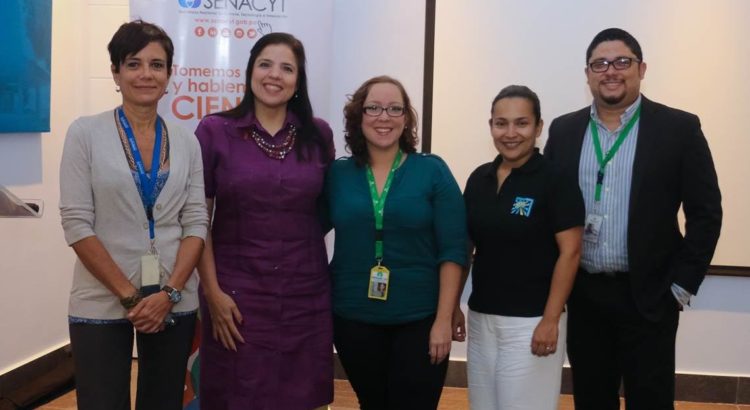
Un grupo de investigadores panameños presentaron los resultados de sus investigaciones en el Café Científico “La salud mental como producto de la interacción entre la biología y el ambiente”, actividad organizada por la Secretaría Nacional de Ciencia, Tecnología e Innovación (SENACYT). Este Café Científico es el sexto que se realiza en el año 2017, con el objetivo de fomentar la comunicación entre los investigadores y el público en general.

Esta actividad contó con la participación de la Dra. Gabrielle Britton, la Dra. María B. Carreira y el Dr. Alcibíades E. Villarreal, todos investigadores del Instituto de Investigaciones Científica y Servicios de Alta Tecnología (INDICASAT AIP). Además, se contó con la contribución de dos investigadoras del área clínica, la Dra. Emelyn Sánchez y la Dra. Cecilia Montiel Nava.

El café científico inició con una introducción general realizada por la Dra. Gabrielle Britton, quien explicó como el tema de la herencia vs. el ambiente ha sido comúnmente debatido en todas las ciencias, incluida la neurociencia. La Dra. Britton indicó que hay enfermedades que pueden ser explicadas por factores genéticos, como la enfermedad de Huntington y el Alzheimer familiar, que ocurren como resultado de heredar un gen afectado de la madre o el padre. Sin embargo, la evidencia indica que la mayoría de las condiciones neuropsiquiátricas y neurológicas no pueden atribuirse únicamente a factores genéticos o ambientales. Ahora sabemos que la genética y el medio ambiente, actuando juntos, determinan la susceptibilidad a la gran mayoría de condiciones neuropsiquiátricas y neurológicas, las cuales resultan de una combinación de predisposición genética y desencadenantes ambientales que conducen a la enfermedad. La investigadora agregó que a través de los panelistas se abordarán los temas de herencia, ambiente y neurociencias, a partir de ejemplos desde la clínica y la investigación.

Los siguientes panelistas aportaron evidencia sobre como las personas tienen la capacidad de influir en el desarrollo e incidencia de las enfermedades, a pesar de la herencia genética.

Por otra parte, la Dra. Emelyn Sánchez explicó que el cerebro es un órgano que se modifica constantemente. Por ejemplo, la aparición de la era tecnológica, los rápidos cambios en la forma de socializar, la posibilidad de vivir y crear realidades alternas, impactan y restructuran el cerebro.  Este impacto varía de acuerdo a la edad del sujeto y se ven conductas que dificultan la posterior adaptación al mundo real.

La Dra. Cecilia Montiel Nava inició su ponencia indicando que la evidencia acerca de interacción ambiente-genética en los trastornos del espectro autista (Autismo) es muy robusta, aun cuando los mecanismos en los cuales se manifiestan e impactan el desarrollo neuropsicológico del niño no están claros. Según la Dra. Montiel Nava, conocer el estado actual de la investigación en esta área produce consumidores educados de la oferta de tratamientos disponibles. Hasta el momento no hay una causa única identificable para el autismo, por lo cual cualquier aseveración de “curas mágicas” debe ser mirado con escepticismo. La investigadora clínica señaló que los tratamientos disponibles están orientados a disminuir los síntomas y aumentar el funcionamiento adaptativo de los individuos afectados y sus familias. La ponencia de la Dra. Montiel Nava se enfocó en discutir cuáles son los tratamientos que gozan de suficiente evidencia científica para el tratamiento del autismo, los protocolos emergentes que aún no tienen suficiente soporte pero que lucen prometedores y aquellos sin fundamento científico.  La Dra. Montiel Nava también destacó que incluso al no haber “cura” para el autismo, la identificación temprana y los protocolos de intervención apropiados disminuyen muchos de los factores de riesgo que pudieran tener un impacto en el funcionamiento general del individuo.

Por su parte, la Dra. Maria B. Carreira presentó sobre la investigación en neurociencia en Panamá. La investigadora del INDICASAT AIP, señaló que en la actualidad se cuenta con una caracterización de los mecanismos epigenéticos, definidos como aquellos que modifican la transcripción de los genes más no la información genética.  Este conocimiento ha proporcionado una base molecular para entender las interacciones de entorno (ambiente) y genética. Además, la Dra. Carreira explicó los mecanismos epigenéticos que modifican el comportamiento animal, primero desde intervenciones en las etapas tempranas del desarrollo y luego en la vejez. A través de su presentación, la Dra. Carreira indicó que estos hallazgos aportan al debate de herencia o ambiente en cuánto se relaciona comportamiento y enfermedades del sistema nervioso desde la neurociencia básica y preclínica.

El Dr. Alcibiades E. Villarreal explicó las principales diferencias entre el Alzheimer familiar (heredado) y el Alzheimer Esporádico (de inicio tardío). El científico hizo referencia a los biomarcadores clínicos, de imagen y de laboratorio para el diagnóstico de demencias. El Dr. Villarreal señaló el papel que desempeñan los biomarcadores genéticos para el seguimiento de la enfermedad de Alzheimer esporádica (Apolipoproteina E) y la identificación de los factores de riesgo que pueden ser modificables. A través de su ponencia, el investigador presentó los avances de investigación que indican como diferentes poblaciones muestran perfiles diferentes de biomarcadores (posibles diferencias étnicas) y compartió los resultados del primer estudio de una cohorte de adultos mayores en Panamá. Finalmente, el Dr. Villarreal mostró algunas de las características del adulto mayor en Panamá y algunos de los factores que predisponen a nuestra población al desarrollo de demencias.

Los Cafés Científicos continuarán a lo largo del año 2017, con más diversidad de temas, para así seguir fomentando el debate entre la comunidad científica y el público en general.

Sobre SENACYT: La Secretaría Nacional de Ciencia, Tecnología e Innovación (SENACYT), es una institución autónoma cuya misión es convertir a la ciencia y a la tecnología en herramientas para el desarrollo sostenible de Panamá. Nuestros proyectos y programas están enfocados en potenciar el desarrollo científico y tecnológico del país y de este modo, cerrar la brecha de la desigualdad y fomentar un desarrollo equitativo que mejore la calidad de vida de los panameños.

Para mayor información contactar a:

María Gabriela Alvarado de Townshend

Jefa de Comunicación

Secretaría Nacional de Ciencia, Tecnología e Innovación (SENACYT)

Tel.: 507.517.0004|6219.4842

malvarado@senacyt.gob.pa|www.senacyt.gob.pa

María Alejandra Almillátegui

Asistente de Comunicación

Secretaría Nacional de Ciencia, Tecnología e Innovación (SENACYT)

Tel.: 507.517.0058|6601.5867
malmillategui@senacyt.gob.pa|www.senacyt.gob.pa

Comparte este contenido:

El Dr. Rawiya destaca el crecimiento de la educación en Omán

Omán/02 de mayo 2017/ Fuente: http://timesofoman.com

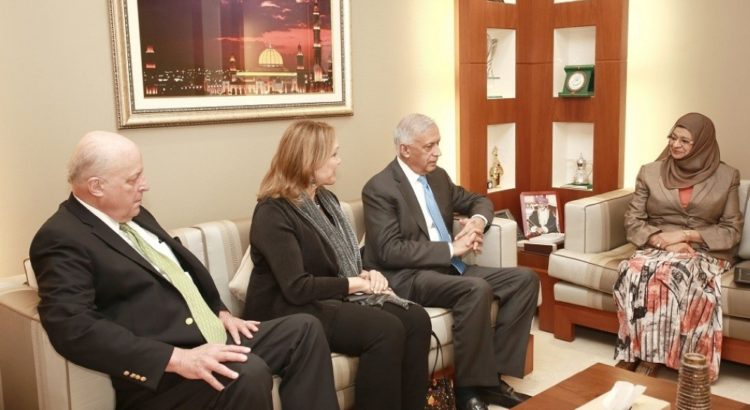
 El Dr. Rawiya bint Saud Al Busaidiyah, Ministro de Educación Superior recibió a Josette Sheeran, Presidenta y CEO de Asia Society en Nueva York y su delegación acompañante.
El Ministro de Educación Superior dio una visión general del desarrollo de la educación superior en la Sultanía desde el establecimiento de la Universidad Sultan Qaboos (SQU).
También habló sobre las becas anuales internas y extranjeras para universidades y postgrados. Explicó la cooperación académica entre las instituciones de educación superior en el Sultanato y sus pares en el extranjero, incluyendo Estados Unidos de América (EE.UU.).
También destacó el subsidio otorgado a instituciones privadas de educación superior por el Gobierno del Sultanato.
Josette Sheeran, presidenta y consejera delegada de Asia Society en Nueva York, afirmó que está deseando desarrollar la cooperación entre el Ministerio y la Sociedad en los campos de la educación superior y la investigación.
Fuente de la Noticia:
http://timesofoman.com/article/108001/Oman/Education/Dr-Rawiya-highlights-education-growth-in-Oman
Comparte este contenido:

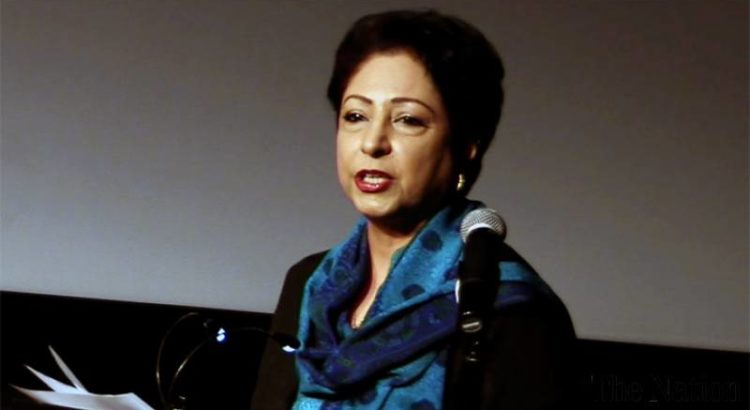
Pakistan: Maleeha lauds efforts of non-profit organizations for spreading education in country

Pakistan/ 2 May 2017/ Source: http://nation.com.pk

Pakistan’s Ambassador to the United Nations, Maleeha Lodhi, has lauded The Citizens Foundation (TCF), a charitable organization providing quality education to underprivileged children in Pakistan, for its contribution in addressing the country’s education crisis.

“Non-profit organizations that are educating the underprivileged in Pakistan are making a vital contribution to meeting the challenge of illiteracy in the country,” she said at a largely-attended reception hosted at her residence for TCF’s US Chapter.

Ambassador Lodhi said that TCF’s supporters in New York were mostly high net worth professionals, but more important than this was that they were ‘high net worked` people, joining together to help Pakistan spread education to all corners of the country.

She said that The Citizens Foundation’s contribution to the journey of Pakistan, especially in the 70th year of the country’s independence, is appreciated by the government of Pakistan.

The Pakistani envoy said there were many non-profit organizations doing excellent work in Pakistan. But The Citizens’ Foundation, she said, stands out not just because its one of the largest non-profits in Pakistan but because its work in making education accessible to those who cannot afford it will contribute to bringing about a real change in the country.

“Their work is especially important in the context of the demographic challenge Pakistan faces, which places the country at a crossroads.”

The ambassador said Pakistan’s population was the fastest growing in the region and the world.If current demographic trends hold, the country’s population was projected to reach 238 million in 2030.

Because this is predominantly a youthful population, millions of young people were entering the work force at a very rapid rate, the Pakistani envoy pointed out.

“These young people can and should be a vital resource for the country” an opportunity, she said. But that depends on whether they are educated and have the skills to find jobs and become productive members of society.

“We have to educate these young people and make them employable”, she stressed.

“If we can manage to educate them and provide then employment then Pakistan is poised for a demographic boom that can turn the country’s fortunes around, as we have seen happen in much of East Asia.

“Whether we can reap a demographic dividend will depend on the country’s ability to provide young people educational opportunities and equip them with the skills and training to find work. And in this endeavor The Citizens Foundation as indeed other educational NGOs have a vital contribution to make,” she added.

Ambassador Lodhi said that she has known the organization almost since its inception. She said she was impressed by the TCF schools she visited and was impressed by the quality of its teaching.

Welcoming TCF, USA Chapter and their guests and contributors, she said that the Pakistan House was always open to those overseas Pakistani organizations, which were assisting and contributing to the development of Pakistan through philanthropy.

Zarar Segal, President of TCF, USA, explained in detail the achievements of TCF and how it has grown exponentially, from its first schools in 1995 to 1141 schools today providing quality education to over 200,000 children, of which 50 percent were girls.

He also informed the audience that TCF provides career counseling and also supports their students for higher education after leaving TCF schools. TCF USA raised around US$ nine million last year. This is half of TCF’s total budget in Pakistan.

Source:

http://nation.com.pk/national/29-Apr-2017/maleeha-lauds-efforts-of-non-profit-organizations-for-spreading-education-in-country

Comparte este contenido:

Guyana: Commission finds fraudulent activities within education sector

Guyana/02 May 2017/Source: http://antiguaobserver.com

A Commission of Inquiry into the Education sector here has found that some persons were engaged in fraudulent activities and were paid salaries even though the head teacher does not know of their existence.

Chairman of the COI, Ed Caesar, who presented the preliminary findings to Education Minister Rupert Roopnaraine Friday, said that preliminary report also made recommendations for financial management to be seriously addressed highlighting what he said amounts to fraud in some parts of the country.

“We were in the Berbice River…we have seen pay sheets with names of teachers who -as far as the head teacher is concerned- don’t exist. We have seen ghost teachers so to speak,” Caesar said, adding that the Education Department must “keep abreast” of how finances are expended.

“Departments must know who the persons on the Ministry /Department payrolls are totally,” Caesar warned.

Roopnaraine acknowledged that this was a serious matter that would eventually require the involvement of the police. However, Caesar advised that the matter be thoroughly investigated by the education department before any criminal proceedings are undertaken

Roopnaraine said that the findings validate the COI’s need, and assured that there is sufficient information for the government to act in transforming the education sector.

“This preliminary report tells me that I was completely correct in establishing this commission. It has begun to do the kind of work that I feel needs to be done. I think this inquiry is in fact going to lay the basis for the kind of transformation that the entire country is awaiting and education has to play its part,” r Roopnaraine said.

Caesar said that the year-long consultations were held in all 10 administrative regions and with all Regional Democratic Councils (RDC), along with other stakeholders. There were also an estimated submissions, both orally and written to the commission with stakeholders sharing their views on the state of the education system.

At an administrative level, the preliminary report noted that there is a need to ensure that the relationship between the regional administration and the education department in all the Regions is enhanced.

Caesar called for an education committee at the RDC.

“The commission of inquiry, the members feel that there must be a structure so established that the education committee of the RDC must relate to the education department, must look at the needs of the region,” Caesar said.

The COI found that there has been a “disconnect” in the delegation of powers in the administrative structure.

“Some people said to us that some of the Regional Education Officers (REO) don’t seem to understand their responsibilities,” Caesar said, noting that the systems that exist to guide REOs lack sanctions. “Unless there is in place a system of sanctions, where people who are not preforming are either removed or disciplined, we will continue on this same road,” Caesar said.

The COI called for a reorientation of officers in the Regions that includes some form of contract that holds the officers accountable to their intended function. “Unless that is done, it is going to be business as usual,” Caesar advised.

The COI also called for the school feeding programme to be re-examined to ensure that the government is getting value for the money it is expending on the programme. Throughout the consultations, Caesar said that parents raised their dissatisfaction over the quality of the meals being given out.

Stakeholders, Caesar said, called for a change in the type of meal being offered. “Our suggestion…let there be a clear and ready investigation into this whole school feeding thing. The commissioners feel that we are not getting value for our money where that is concerned,” Caesar said.

The COI found that the treatment of teachers needed to be improved.

“At every level we must treat our teachers differently, we must treat our teachers better, we must empower our head teachers…let them understand that they can think outside the box, praise their creativity, we must encourage creativity,” Caesar said.

The age of retirement was also addressed in the report. The report recommended moving the age of retirement from 55 to 60 with a provision that persons can still retire if they meet relevant requirements.

The recommendation further suggests that if persons in the education system can “produce a clean bill of health” they should work until the age of 65.

“That is for consideration by the Ministry of Education and its departments,” Caesar noted.

Teachers also raised the issue of emolument and Caesar said some teachers indicated they would like to keep teaching, forsaking a management position. However, the teachers are asking that their salary increase nonetheless.

It is being recommended that we go back to an old position where there was thinking about the master teacher programme,” Caesar said, adding this programme allows a teacher to remain in the classroom with rising emoluments.

Source:

Commission finds fraudulent activities within education sector

Comparte este contenido:

Hungary education law: Orban ‘to meet EU demands’

Hungary/ 2 May 2017/Source: http://www.bbc.com

Hungarian PM Viktor Orban will comply with EU demands over an education law that could close a top university, the EU’s centre-right political group says.

The bloc threatened legal action over the law that could close the Central European University (CEU) in Budapest, founded by billionaire George Soros.

Mr Orban has condemned Mr Soros as an «American financial speculator».

The European Peoples Party [EPP] group, which includes Mr Orban’s Fidesz party, summoned him to a meeting on the issue.

«Prime Minister Orban committed himself in the EPP council to follow and implement all the demands of the European Commission within the deadline set by the commission,» said Siegfried Muresan, a spokesman for EPP President Joseph Daul.

Mr Orban, who has angered many in the EU with his hardline stance on asylum seekers, has not yet commented and a spokeswoman declined to say what he had told the meeting.

The EPP has threatened Fidesz with possible expulsion over the issue.

The education law has drawn large protests in Budapest and around the world
Image copyright AFP 

In a statement, Mr Daul said «a clear message» had been sent to Mr Orban and the Fidesz party «that we will not accept that any basic freedoms are restricted or that the rule of law is disregarded».

«The EPP demanded from Fidesz and from the Hungarian authorities that they take all necessary steps to comply with the commission’s request. Prime Minister Orban has reassured the EPP that Hungary will act accordingly,» he added.

The Hungarian government’s Higher Education Act would mean the CEU in Budapest would be unable to award diplomas because it is registered in the US.

But the European Commission ruled that the law was not compatible with the EU Charter of Fundamental Rights.

Last Wednesday it gave the government one month to adapt the law or face being taken to court.

The law has also led to some of the biggest protests in Hungary since Mr Orban came to power.

Thousands have attended demonstrations since the legislation was pushed through parliament earlier this month.

The CEU is considered a beacon of liberal values and is ranked among the top 200 universities in the world in eight disciplines.

Source:

http://www.bbc.com/news/world-europe-39757962

Comparte este contenido:

EEUU: Los Angeles School Board race takes center stage in battle for public education

EEUU/02 May 2017/By

On May 16 voters in Los Angeles, California will head to the polls to vote in a Los Angeles School Board runoff election that pits supporters of public education against the charter school industry and their allies in the corporate education reform effort.

The outcome of this critically important election could determine whether billionaire Eli Broad’s plan to turn half of Los Angeles public schools over to charter schools gains the support it needs on the LA School Board.

Broad and a plethora of wealthy corporate elite, along with a long list of owners, operators and executives of charter schools, are dumping millions of dollars into the race to unseat Los Angeles School Board President Steve Zimmer.

 The charter school advocates are also seeking to pick up control of an open seat on the LA School Board. During the earlier primary phase of the election, charter school proponents already won one of the other school board seats up for election this year.

 As for why these opponents of public education are working so hard to take control of the LA School Board, Diane Ravitch recently observed in a blog post:

“Why do they want to control it? None of them has a child in the system. They despise public schools and they want to turn Los Angeles into a charter school demonstration district. It is all about power and money.”

The truth is, the battle in Los Angeles, like the attacks that are taking place in at the federal, state and local level are nothing short of an unmitigated attempt to privatize public education in the United States.

Supporters of privately owned, but publicly funded charter schools see the Los Angeles school board race is another opportunity to buy up the policy makers who will then dutifully sell public education to the private sector.

And these opponents of public education are willing to spend millions to achieve their goals.

Zimmer is facing a well-financed assault by charter school ally Nicholas Melvoin.

Zimmer was elected to the Los Angeles Unified School District (LAUSD) Board of Education in 2009 after 17 years as a school teacher and counselor. Melvoin, a Teach For America alumnus, is closely associated with a variety of charter school advocacy groups including Teach Plus and Educators 4 Excellence.

The run-off election was set up when Steve Zimmer fell short of the needed majority, collecting 47.5 percent of the vote in the primary compared to Melvoin’s 31.2 percent.

Zimmer, has the support of the Los Angeles County Democratic Party, along with teacher and labor unions. He has also picked up the endorsements of a variety of Democratic elected officials including Rep. Judy Chu (D-CA), Rep. Karen Bass (D-CA) and Rep. Maxine Waters (D-CA); California Superintendent of Public Instruction Tom Torlakson and many members of the Los Angeles City Council.

Melvoin, on the other hand, has the support of the major players in the corporate education reform world including former Secretary of Education, Arne Duncan and Los Angeles Mayor Richard Riordan, who made a $1 million contribution to an independent campaign in support of Melvoin.

Melvoin’s donor list also includes billionaires John Arnold, Michael Bloomberg, Eli Broad, Bruce Karsh, Howard Marks, Lynn Schusterman and a who’s who of the hedge fund and corporate elite backing the national effort to undermine public education in the United States.

With more than a month to go before the election, the two sides have raised more than $5 million dollars in the race for the 4th District seat. Nicholas Melvoin has raised more than $584,000 to Zimmer’s $222,000, while independent expenditures for Melvoin have exceeded $1.8 million and outside group spending for Zimmer is in the $3 million range.

The other major battle is taking place in the Los Angeles School Board District 6 seat. Charter school teacher, Kelly Fitzpatrick-Gonez is battling it out with public school advocate Imelda Padilla. In the initial round, Fitzpatrick-Gonez collected 36 percent of the vote to Imelda Padilla’s 31 percent.

Like Zimmer, Padilla have the support of the United Teachers of Los Angeles and other labor groups, while the California Charter School Association and its allies are supporting Fitzpatrick-Gonez. Arne Duncan, and charter school billionaires like Eli Broad are also supporting Fitzpatrick-Gonez.

Breaking all records for the most expensive board of education races in the nation, billionaire Eli Broad and his allies are making an extraordinary effort to control the outcome of the election.

At stake is the very future of Los Angeles public school system.

Jonathan Pelto is a former state representative in Connecticut, and an education advocate. He is the founder and coordinator of the Education Bloggers Network, a confederation of more than 250 pro-public education bloggers from around the country. He was 2014 candidate for governor in Connecticut. Follow him on Twitter @jonathanpelto.

Source:

http://thehill.com/blogs/pundits-blog/transportation/331087-los-angeles-school-board-race-takes-center-stage-in-battle

Comparte este contenido:

En China, los robots ya participan en la educación de los niños

China/02 mayo 2017/Fuente: El Ideal Gallego

Estamos ya muy acostumbrados a ver robots en las cadenas de montaje de las fábricas, pero en China, líder mundial en la producción robótica, ya se les puede ver cuidando de ancianos en residencias.

Estamos ya muy acostumbrados a ver robots en las cadenas de montaje de las fábricas, pero en China, líder mundial en la producción robótica, ya se les puede ver cuidando de ancianos en residencias, o jugando con niños ya desde la etapa de guardería.
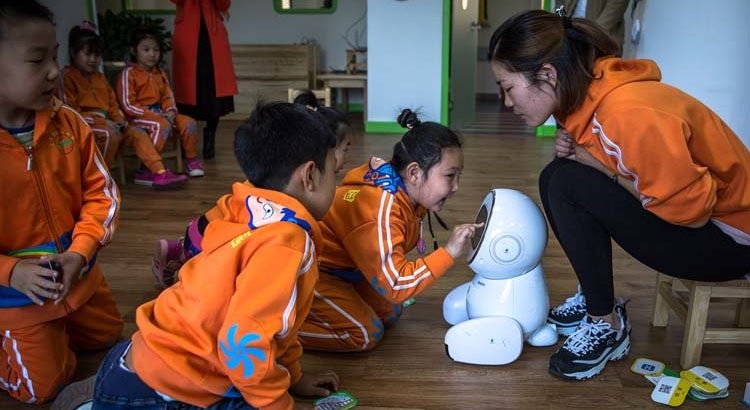
Un ejemplo de los nuevos roles de estos humanoides se puede encontrar en una de las mayores guarderías del país, llamada “Jardín Dorado” y situada a medio camino entre Pekín y Tianjin, donde tres robots blancos y de silueta curva, para que parezcan inofensivos a los niños, son los protagonistas de la clase.

Los niños, de cuatro y cinco años, se acercan a Keeko, que es como se llama el robot-cuidador, le cuentan distintas cosas cada uno, y él las ordena y une en un cuento al que pone música. En la guardería, donde los niños también aprenden kung-fu o caligrafía, la idea es “combinar lo tradicional con lo moderno”, explicó una de las profesoras, Gao Haiyan, y en medio de esa tarea Keeko “ayuda a mejorar la expresión oral, la lógica y la capacidad espacial de los niños”. Keeko, cuyo diseño recuerda al Wall-E de la película homónima de Pixar, también baila con los niños, hace cuentas matemáticas y está dotado de inteligencia artificial, por lo que él también aprende.

“Si todos le dijeran cosas negativas las tomaría como correctas, lo que no estaría bien para los niños, así que intervenimos mucho para que las clases sean positivas”, contó Chen Xiaodong, responsable de la firma Xiamen Zhitong, fabricante de los robots Keeko.
El papel de Keeko en los primeros años de vida de los niños chinos contrasta con el que a 1.200 kilómetros de allí, en la ciudad oriental de Hangzhou, desempeña A-Tai, otro robot en este caso encargado de ayudar a los cuidadores de un asilo y entretener a los más de 1.300 ancianos que viven allí. A-Tai, un poco más alto que Keeko y dotado con dos simpáticas antenas azules, es capaz de cantar ópera tradicional china, la música favorita de muchos ancianos, y de llamar por teléfono a los parientes de los residentes del asilo.

Fuente:http://www.elidealgallego.com/articulo/espazo-educativo/china-robots-participan-educacion-ninos/20170429224535331453.html

Comparte este contenido:
Page 3975 of 6193
1 3.973 3.974 3.975 3.976 3.977 6.193