Page 4037 of 6179
1 4.035 4.036 4.037 4.038 4.039 6.179

China: Inside the world’s largest higher education boom

Asia/China/Abril del 2017/Noticias/https://theconversation.com/

A record-breaking 8m students will graduate from Chinese universities in 2017. This figure is nearly ten times higher than it was in 1997 and is more than double the number of students who will graduate this year in the US.

Just two decades ago, higher education in China was a rare privilege enjoyed by a small, urban elite. But everything changed in 1999, when the government launched a program to massively expand university attendance. In that year alone university admissions increased by nearly 50% and this average annual growth rate persisted for the next 15 years, creating the largest influx of university educated workers into the labour market in history.

Annual enrolment of new students in higher education institutions. Author provided

Growth in the number of engineering students has been particularly explosive as part of the government’s push to develop a technical workforce which can drive innovation. But overall student numbers have increased in all subjects – even in the humanities and social sciences. New universities have sprung up and student enrolment numbers have rocketed. The second most popular subject major is in fact literature – and the fastest growing is law.

Underemployment

In 2013, Chinese citizens started blogging about the “hardest job hunting season in history” – and each year it seems to get harder for Chinese graduates. In 2017 there will be 1m more new graduates than there were in 2013. And yet, the graduate unemployment rate has remained relatively stable – according to MyCOS Research Institute, only 8% of students who graduated in 2015 were unemployed six months after graduating.

But if you delve a little deeper it’s clear that unemployment rates mask the more subtle issue of “underemployment”. While most graduates eventually find work, too many end up in part-time, low-paid jobs.

Six months after graduating, one in four Chinese university students have a salary that is below the average salary of a migrant worker, according to MyCOS data. History, law and literature have some of the lowest starting salaries, and also the lowest employment rates.

Graduation day. Xinxi Xu/flickr, CC BY

And for students who choose arts and humanities subjects in high school, the average starting salary after university is lower than that of their classmates who didn’t go to university, according to survey data. Of the 50 most common graduate occupations, 30% are low-skilled and don’t require a degree. For these students, low starting salaries and limited career progression call into question the value of their degree.

The high cost of living, particularly in big cities, has also forced millions of graduates into “ant tribes” of urban workers living in squalid conditions – often in basements – working long hours in low-paid jobs.

The big divide

But for a different group of graduates, the contrast is striking. Engineering, economics and science majors in China all enjoy high starting salaries and the top employment rates. These graduates fill the highest-paid entry positions in the most attractive employment sectors of IT, operations, real estate and finance. Chinese tech graduates do particularly well. In 2015 the top five highest paying graduate jobs were all IT related.

The government’s “Made in China 2025” strategy to become a global high-tech leader in industries such as advanced IT and robotics has created plenty of opportunities for graduates in these fields.

Top highest paying graduate jobs.

Not only are the starting salaries high, but long-term earnings follow a starkly different trajectory. Three years after graduating, the top 15% of engineering, economics and science graduates earn more than double the median salary for other graduates.

Wrong types of skills

Despite the rapid increase in the number of university graduates, Chinese companies complain of not being able to find the high-skilled graduates they need. The main deficit is in so-called “soft skills” such as strong communication, analytical and managerial skills. According to research by McKinsey, there is a short supply of graduates with these assets.

Chinese universities have a great track record of teaching students “hard skills”, but the test-focused education system has placed little emphasis on the development of anything else. So while graduates from technical or quantitative majors find employment because they have the necessary “hard skills”, graduates from less technical majors are hampered by their lack of both types of skills.

Two types of graduates

It seems then that the problem is not the rising number of students attending university, but that there is a mismatch between the skill composition of graduates and the skills employers need.

Demand for graduates with technical or quantitative skills has in fact risen faster than supply, resulting in attractive employment opportunities for graduates with these skills.

But for the rest, their education leaves them badly prepared for the jobs that are available. Until this changes, the polarisation in the graduate job market is likely to continue.

Fuente:

https://theconversation.com/inside-the-worlds-largest-higher-education-boom-74789

Fuente Imagen:

https://lh3.googleusercontent.com/SnXy9QvIlAhyEixOW7qDMfKl2XB2Q2pd7pZhh6_gTvM4zKnzvhYyBNpnOIA4w21qrsmU=s85


Comparte este contenido:

¿Sigue mereciendo la escuela pública de Argentina la admiración del resto de América Latina?

America del Sur/ Argentina/Abril 2017/Noticias/http://www.bbc.com/

Los argentinos estamos acostumbrados a que los demás latinoamericanos nos mofen o critiquen por diversas cosas… nuestro acento, nuestra arrogancia, nuestra obsesión con el psicoanálisis.

Pero hay una cosa que casi siempre se nos ha reconocido con admiración: nuestra cultura y educación.

La escuela pública argentina fue históricamente considerada de las mejores de la región, si no la mejor.

Por eso resultó tan extraño oír recientemente duras críticas sobre su estado, sobre todo por quién lo dijo: el propio presidente de Argentina, Mauricio Macri.

Macri sorprendió hace unos días, dando a conocer los resultados de la evaluación Aprender, un trabajo realizado a finales de 2016 para «conocer el estado» del sistema educativo argentino.

La evaluación -que el mandatario definió como la “más importante de la historia”- analizó los conocimientos educativos de alumnos de primaria y secundaria de 39.000 escuelas públicas y privadas de todo el país.

  • Pruebas PISA: ¿cuáles son los países que tienen la mejor educación del mundo?

Y los resultados, según él, fueron “dolorosos”.


Cinco de cada diez alumnos no comprenden textos”, resaltó Macri, quien también destacó que «siete de cada diez que terminan el secundario no tienen conocimientos de matemática”.

«La mejor manera de mejorar es saber adónde estamos parados, en qué estamos fallando”, señaló el jefe de Estado, al explicar por qué ordenó la evaluación.

  • 4 medidas que Macri revirtió en Argentina tras polémicas que lo dejaron mal parado

Paro docente

Sus palabras fueron dichas en el contexto de una dura batalla entre el gobierno y un grupo de sindicatos de maestros que mantuvieron un prolongado paro en reclamo de aumentos salariales.

La medida interrumpió el primer mes de clases en gran parte de las escuelas públicas del país, algo que ocurre cada año cuando comienza el ciclo escolar.

Y hubo una frase que dijo Macri durante su presentación que resultó particularmente controvertida.

Al resaltar que en los colegios públicos hubo el doble de alumnos que no entendieron textos que en los colegios privados dijo que eso “marca otro problema de fondo que es la terrible inequidad entre aquel que puede ir a la escuela privada versus el que tiene que caer en la escuela pública”.

El hecho de que usara la despectiva expresión “caer en la escuela pública” generó una oleada de críticas contra el presidente.

Miles se volcaron a las redes sociales -algunos bajo el hashtag #Yocaí– para contar, con orgullo, que ellos se habían graduado de esa escuela pública que Macri estaba denostando.

  • Qué ha mejorado, qué ha empeorado y qué sigue igual en Argentina desde que Macri llegó al poder“A la educación pública no se llega, no se elige, se cae por descarte, porque no queda otra”, escribió la periodista Nora Veiras en el diario Página 12, crítico con el gobierno.

    “(El partido de gobierno) Cambiemos está decidido a modificar la matriz cultural del país (…) Para lograrlo tiene que aniquilar lo constitutivo de la conformación de la Argentina: la escuela pública”, acusó la periodista.

    Y Vaieras no fue la única. Son muchos los que creen que las críticas de Macri a la educación pública esconden un deseo privatizador del ex empresario, famoso por haberse graduado de uno de los colegios privados de elite más prestigiosos del país, el Cardenal Newman.

    Sin embargo, otros tantos salieron a defender al mandatario, e incluso a felicitarlo por decir algo que pareciera ser tabú en Argentina: que la amada educación pública está en crisis.

    Desaprobado

    Esa crisis no solo la evidencia la evaluación Aprender.

    El Informe del Programa Internacional para la Evaluación de Estudiantes -más conocido como PISA– que cada tres años realiza la Organización para la Cooperación y el Desarrollo Económico (OCDE), también reveló los problemas en la calidad educativa.

    ver mas…….

Fuente:

http://www.bbc.com/mundo/noticias-america-latina-39535338

Fuente Imagen:

https://lh3.googleusercontent.com/c8WN-RezCNnwIIKMFAZV07AwA7FYj4NjHK7afBcD6k-vkRSjWp16YacgeBqpcyX5SXiuSQ=s85

Comparte este contenido:

Reino Unido: Hungary’s assault on academic freedom is a threat to European principles

 Europa /Reino Unido/Abril del 2017/Noticias/https://theconversation.com/

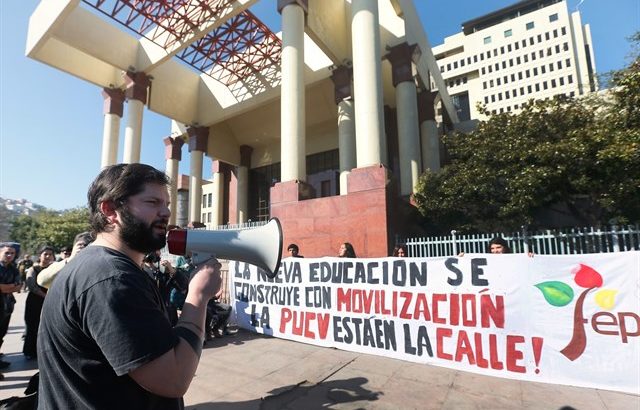
Tens of thousands of people recently demonstrated in the Hungarian capital of Budapest against attempts by their government to close the Central European University (CEU).

This was the second large-scale demonstration in Budapest in as many weeks – with protesters turning out en masse to challenge recent amendments to the national law on higher education that have been adopted by the Hungarian parliament.

As a university, CEU has a dual identity, and offers degrees accredited in both the US and Hungary. But the latest amendments make the university’s continued operation in Hungary virtually impossible. This is because the bill would require CEU to operate under a binding international agreement and to provide higher education programmes in its country of origin – the US – all within a very short time-frame.

At the time of writing, the legislation is on the desk of the Hungarian president for signature or referral to the Constitutional Court. Signature of the law would mean that the legislative changes would come into force, requiring a binding international agreement to be signed within six months of the publication of the law.

Referral to the Constitutional Court – a move which many of the protesters were calling for at the demonstration in Budapest – would mean that the law could be scrutinised for its legality and constitutionality.

Campaign against liberalism

CEU is a privately funded university with more than 1,400 students from more than 100 countries, that offers degrees accredited in both the US and Hungary. It is ranked among the top 200 universities in the world in eight disciplines. It excels in political science and international studies.

It has had its home in Budapest for more than 25 years, and is part of the life of the city. That CEU was founded after the fall of communism to promote democracy makes the current move against it all the more reprehensible.

The university, ably led by the rector Michael Ignatieff – a former Canadian politician and internationally renowned academic – has mobilised an impressive campaign for supporteSTADO DE dERECHO.

Michael Ignatieff, rector of the Central European University. Reuters.

The response has been huge – with leading academic institutions in Hungary and around the world, as well as governments, politicians and individuals condemning the moves by the Hungarian government. The hash-tag #IStandWithCEU has also been trending on Twitter.

Freedom to teach

This outpouring of support underscores the importance placed in institutions that promote education and critical thinking.

Academic freedom is also a prized European value, and countries across Europe rightfully take pride in the quality of their universities and support their development.

The freedom of universities to teach, research, and publish is fundamental to a free and open society. Article 13 of the Charter of Fundamental Rights of the European Union provides that:

The arts and scientific research shall be free of constraint. Academic freedom shall be respected.

The need for such explicit protection of academic freedom is clear: universities and academics have long been targeted by autocrats because of the threat that free and critical thinking poses to their continued existence. And for an attack of this nature to take place within the EU should be cause for concern across Europe.

This is because the precedent it would set puts all academic freedom at risk. It is also a stark reminder of the need for constant vigilance to safeguard European democracies.

Targeting European values

While CEU has said that it will take all legal steps available to it to challenge the Hungarian law, this is not just a legal fight.

This move to shut an independent university poses a fundamental question as to the extent to which European values can be ignored by an EU member state. Rule of law is supposed to be central to the operation of member states – and targeting freedom of expression through the closure of academic institutions runs directly counter to this.

Threat to academic freedom and European values. Reuters

This is not the only recent move by the Hungarian Government that potentially contradicts the rule of law. In October, a major national newspaper – Népszabadság – closed alleging government pressure. And the government has also recently targeted civil society with the proposed introduction of restrictive legislation justified by national security concerns and the need for additional transparency.

There also doesn’t seem to be much understanding within Hungary as to why the threatened closure of CEU is causing such outrage. Just a few days ago, in response to the protests and influx of letters in support of CEU, the Hungarian government spokesman called the situation a “storm of political hype” that was part of a “political circus”.

The European Commission has said it will discuss the situation in Hungary – and this is an important opportunity to reinforce fundamental EU principles.

But for now, individuals, institutions and governments in the UK, and across Europe, need to take note of what is happening in Hungary, and take action to make the closure of CEU a red line that cannot be crossed.

Fuente:

https://theconversation.com/hungarys-assault-on-academic-freedom-is-a-threat-to-european-principles-76042

Fuente Imagen :

https://lh3.googleusercontent.com/wWKNk55We2vyg0VNd8fe-ZZ_bKh-4_P8fLqNZioV2Pb3EHaESUiIku13-f6ZjYMOtGKf6Q=s85

Comparte este contenido:

Marchan en Argentina contra papel de EEUU en Siria y Venezuela

América del Sur/Argentina/Abril del 2017/http://www.2001.com.ve

Un grupo de activistas de agrupaciones de izquierda de Argentina marcharon este miércoles a la embajada de Estados Unidos en Buenos Aires, donde denunciaron el papel que juega Washington en las crisis de Siria y Venezuela.

Con grandes banderas y algunos con los rostros cubiertos, la protesta reclamó el respeto por «la autodeterminación de los pueblos», dijo Guillermo Caviasca, uno de los activistas.

«Cada pueblo tiene derecho a definir su futuro, ellos (el gobierno de Estados Unidos) no tienen por qué meterse en diferentes países generando golpes de Estado, maniobras desestabilizadoras o, literalmente, levantamientos armados de grupos de derecha o grupos terroristas», agregó Caviasca a la AFP.

Noemí Lamberti, integrante de la agrupación Movimiento Patriótico Revolucionario Quebracho, sostuvo que «los pueblos están siendo agredidos por el imperialismo a través de bombas, de explotación, a través de conspiraciones como la que desarrollan en nuestra hermana República de Venezuela, con la cual tenemos nuestra solidaridad y la hermandad como pueblo».

Quebracho dijo en un comunicado que «Estados Unidos y (el presidente Donald) Trump respalda a la derecha golpista de Venezuela y buscan voltear a (mandatario Nicolás) Maduro».

Trump ordenó la semana pasada la primera acción directa contra Siria, bombardeando con misiles una base siria en represalia al presunto ataque químico perpetrado por las fuerzas del presidente Bashar al Asad a una ciudad rebelde, que dejó 86 muertos.

Del lado venezolano, Washington urgió el lunes al mandatario Nicolás Maduro que «reconsidere» la decisión de inhabilitar durante 15 años a Henrique Capriles, uno de los líderes opositores más emblemáticos.

Además, pidió a Caracas garantizar que los ciudadanos ejerzan «su derecho a elegir a sus representantes en elecciones libres y justas» y que las fuerzas de seguridad «protejan la protesta pacífica» de los miles de venezolanos que salen a las calles desde principios de abirl en contra del gobierno.

Fuente:

http://www.2001.com.ve/en-el-mundo/157135/marchan-en-argentina-contra-papel-de-eeuu-en-siria-y-venezuela—video-.html

Fuente Imagen:

https://lh3.googleusercontent.com/3r_Z_sTXWZvnvwDHPorzQo7PZytlpIkMl7XShqrLzO9SvKq3Jm5Jd6_j0i2sf0By4pZj=s85

Comparte este contenido:

Australia: Why it’s the right time for Australia and India to collaborate on higher education

Oceanía/Australia/Abril del 2017/Noticias/https://theconversation.com

In 2060, India will be the most populous country, and likely have the largest economy, in the world. Roughly 20 million young people turn 18 every year, and according to some estimates, India’s middle class now numbers 300 million.

We have about 40 years in Australia to become a key partner of this future global centre. And there is no better starting point than higher education.

Prime Minister Malcolm Turnbull and Education Minister Simon Birmingham are currently visiting India, in part to promote higher education collaboration. Minister Birmingham has stated that his key objectives will include developing opportunities for Australian providers to deliver quality higher education in India, and emphasising Australia as an international education destination.

As higher education providers from competitor countries such as the UK are deepening their involvement in the Indian education sector, now is a crucial time for Australia to act.

University system in India

India contains a complex higher education landscape, with 760 universities and around 38,000 colleges.

Central government universities absorb just 3% of students and are relatively good quality. A wide range of state universities affiliate private and state colleges, which also award degrees. There is also a class of “deemed university” which was introduced fairly recently to cover private institutions established usually by business entrepreneurs.

…and the challenges it faces

As former Prime Minister Manmohan Singh stated – and as a new book shows in clear terms – the Indian higher education system faces major challenges.

This partly reflects a decision by India’s first Prime Minister Jawaharlal Nehru to channel research funds to independent non-teaching institutes, which has left central and state universities relatively starved of funds.

Indian universities – even elite institutions such as the Indian Institutes of Technology – do not feature in the top 100 universities in global rankings.

The upshot for the ordinary Indian student is that he or she is unlikely to be taught by a research active faculty member, unlikely to be able to acquire a good education with up-to-date curricula, and unlikely to have access to excellent facilities either in terms of teaching or extra-curricular activities.

Such deficits particularly affect the poor, women, rural areas, and north India.

So how does Australia fit into the picture?

The prospects for Australia to engage successfully with Indian higher education institutions are therefore not very high.

Certainly, the focus to date has been on working with the top institutions. But this means the mass of state-level universities and colleges do not typically receive the benefits of foreign collaboration.

Added to the problems are a relatively low knowledge base in Australia on Indian higher education and legal restrictions on foreign universities opening up campuses in India.

The Foreign Providers Bill, which would change the law in this regard, has been stalled. But India’s current government is keen to reform higher education.

Push for collaboration

Prime Minister Narendra Modi has indicated his desire to develop foreign collaborations.

The flow of Indian staff and students to Australia, and the beginnings of revitalisation of Indian studies in Australia, bodes well in terms of the development of partnerships and joint working.

There are success stories, too, such as joint PhD programmes at Monash University and the University of Melbourne, as well as comprehensive ties with Indian higher education developed at Deakin University – among a fairly wide range of examples.

Still, there is no sense in fudging. Such examples are – to use an Indian phrase – like the cumin seed in the camel’s mouth.

Five ways to do this

Australia, with a strong higher education sector and a particular strength in terms of the development of world-class full-spectrum universities, could expand collaborative efforts in several ways. These include:

  1. Agree on the mutual recognition of qualifications in India and Australia. There are currently issues with the recognition of Indian students’ prior learning when they come to study in Australia. India also does not recognise some Australian qualifications, such as accelerated masters’ degrees.
  2. Lobby the Indian government to allow Australian universities to open campuses in India where there is a compelling rationale for doing so. Apart from the direct benefits this would bring in terms of making foreign education available more cheaply to Indian students, it would allow the Indian government to benchmark their institutions against Australian counterparts.
  3. Develop a wide range of staff and student champions of the Australia-India relationship, building on programmes already running and activity already being generated among staff.
  4. Develop a comprehensive scholarship scheme for non-elite Indian students to facilitate the flow of talented students to Australia. This could be funded using a small percentage of the money universities receive from international students. It would help to build understanding of India in Australia, and also increase the diversity of Australian universities. A key advantage of this scheme is that it would allow Australian universities to develop reach into “ordinary India”.
  5. Develop a set of specialist collaborative research institutes in India around key challenges facing India and Australia, for example around water, infrastructure, poverty, security, health, and governance. These could serve as a basis for full spectrum campuses in the future.

Given the inventiveness of other countries in devising ways of collaborating with India, there will be real costs if Australia does not engage with these ideas in terms of opportunities for research collaboration and offering valuable learning experiences to Indian students.

The UK, in particular, has made great strides in this space, such as the Research Councils UK partnership with India, even as its visa restrictions hobble efforts to develop student mobility between India and the UK.

India and Australia have complementary strengths in higher education. A strategic approach could yield major benefits for both countries.

Fuente:

https://theconversation.com/why-its-the-right-time-for-australia-and-india-to-collaborate-on-higher-education-76011

Fuente Imagen:

https://lh3.googleusercontent.com/MnWIjNupglv1EWibdgmSDSKAen3Q6-KUxm7RmdEHC-l5YQPe7_T61W2Ca0XQIzO0DmEptg=s85

Comparte este contenido:

Unicef: Más de 140 millones de niños pierden a sus familias por motivos de guerras y catástrofes naturales

Fuente: trt.net.tr

El informe de UNICEF revela la situación muy terrible sobre estos niños que deben continuar a sus vidas como huérfanos.

El Fondo de Ayuda Para los Niños de la ONU, UNICEF y las organizaciones no gubernamentales revelan que más de 140 millones de niños pierden a sus familias por las guerras o las catástrofes naturales y estos niños tienen que continuar a sus vidas como huérfanos. Según las investigaciones las guerras, los conflictos, las sequías, las epidemias y las hambrunas que continúan en muchos países cada día dejan a cerca de 10 mil niños como huérfanos al día y así equivale a una población nueva cada año cerca de 3,5 millones de huérfanos. Es considerable el número alto de los niños sin padres en Irak y Siria comparando con otros países donde ocurren las guerras que se cobran la vida de millones de personas. Se estima que hay 2 millones de huérfanos en Afganistán, 5 millones en Irak, 1 millón en Siria que pierden a sus madres o padres o ambos dos.

En los informes de WHO, el Organismo Mundial de Salud, cada año pierden la vida cerca de 16 mil niños bajo 5 años de edad. Según las estadísticas de la UNICEF cerca de 5,9 millones de niños bajo 5 años de edad, perdieron la vida debido a las guerras, enfermedades, insuficiencia de medicamentos o mala nutrición. Especialmente surge adelante como un motivo de preocupación la situación de algunos niños y las familias que se trasladan a los países europeos huyéndose de las guerras o los conflictos en los países africanos, Irak, Siria.

Según las investigaciones de Europol, la organización policiaca de la UE, un 27% de los 1 millón de refugiados llegados a Europa en 2015 se compone de los niños. Además más de 10 mil niños que llegaron a Europa sin sus familias todavía quedan desaparecidos. No hay ni una sola información sobre la situación o la posición de los niños entre las edades 13 y 16. Se estima que cerca de 5 mil de estos niños fueron desaparecidos después de entrarse en el territorio italiano y otros 3500 en Alemania. Según los datos de Eurostat, la Oficina de Estadísticas de la UE, desde 2008 es de 198 mil el número de los niños huérfanos o sin un protector legal que llegaron a Europa como refugiados desde 2008.

La mayoría de estos niños entre 14 y 17 años de edades es de Afganistán, Somalia, Eritrea, Siria e Irak, los países donde ocurren los conflictos y las guerras.

Viven con necesidades de ayuda cerca de 9 millones 200 mil niños bajo 18 de edad debido a la guerra civil en Siria que forma la crisis más grande humanitariamente desde hace la Segunda Guerra Mundial.

Se ofrecen servicios de educación por AFAD, la Presidencia de Administración de Catástrofe y Estado de Emergencia a cerca de 82 mil niños sirios que viven en los centros de refugio en Turquía. Con el apoyo del Ministerio de Educación Nacional fue asegurado que 510 mil niños puedan continuar a la escuela desde kindergarten hasta el colegio, abandonando las calles. Los 245 mil de ellos continúan a sus educaciones en los centros de educación temporal y otros 183 mil en las escuelas estatales.

Turquía donde llegan a 25 mil millones de dólares las ayudas caritativas por parte de las organizaciones públicas, no gubernamentales y los ciudadanos para los sirios, es el único país con este número de refugiados, la mitad de todos los refugiados sirios en el mundo, fue proclamada como ‘el país que hospeda a más niños refugiados’ por la UNICEF y ‘el país que hospeda a más refugiados en solitario’ por parte de la Alta Comisaría de Refugiados de la ONU.


Fuente: http://www.trt.net.tr/espanol/vida-y-salud/2017/04/06/mas-de-140-millones-de-ninos-pierden-a-sus-familias-por-motivos-de-guerras-y-catastrofes-naturales-707178

Comparte este contenido:

Costa Rica: Tele educación crece en América Latina

Centro América/Costa Rica/Abril del 2017/Noticias/https://www.crhoy.com/

BRECHA DIGITAL EN ESCUELAS HA DISMINUIDO CONSIDERABLEMENTE

(La inclusión de Tecnologías de Información y Comunicación (TIC), permitió superar algunos de los principales desafíos en la educación latinoamericana.

Países como México, Argentina, Chile y Brasil optaron por hacer del desarrollo escolar un proceso más inclusivo

os resultados fueron una reducción de la brecha digital, la modernización de las técnicas de aprendizaje y mejoras en las posibilidades de los estudiantes.

Sin embargo, José Otero, Director de 5G Américas para América Latina y el Caribe destacó que no basta con instalar Internet en las escuelas o entregar a cada alumno una computadora para ver los beneficios.

“Sólo será posible si el proceso de integración de las TIC a la enseñanza cuenta con el apoyo de las autoridades encargadas de mejorar la educación. Son estas quienes conocen realmente cuáles son las falencias actuales en la enseñanza y las necesidades que deben ser solventadas”, indicó Otero.

En el 2016 el Ministerio de Educación Pública (MEP) indicó que en el país alrededor de 212 centros educativos tienen conexión a Internet por medio de fibra óptica, mientras que unas 4500 escuelas y colegios tienen algún otro tipo de enlace.

Fuente:

https://www.crhoy.com/nacionales/tele-educacion-crece-en-america-latina/

Fuente Imagen:

https://lh3.googleusercontent.com/i3Kvb7kAfMt1DqtF_VjUN5OyxNkhv7dC4NgLTTCDQw-kuuPFLxUaXCMWmvnzDjRl194jLWU=s85

Comparte este contenido:
Page 4037 of 6179
1 4.035 4.036 4.037 4.038 4.039 6.179