Page 4038 of 6193
1 4.036 4.037 4.038 4.039 4.040 6.193

10 tips de educación japonesa

Japón/18 de abril de 2017/Fuente: http://www.semana.com

La comida en las escuelas es preparada por personal especializado y médicos para que tengan los nutrientes necesarios para su desarrollo físico e intelectual.

La educación japonesa es considerada una de las mejores del mundo. Estas son algunas de sus prácticas para lograr tal reconocimiento. 

No hay evaluación en los primeros años

Los estudiantes japoneses no tienen exámenes hasta el cuarto grado de primaria. Es decir, cuando tienen entre 9 y 10 años.  Para ellos, en los primeros años de escuela los conocimientos académicos no son lo más importante; el enfoque es en valores como respeto, paciencia, generosidad, compasión, disciplina, control y cuidado de la naturaleza.

Las vacaciones se reparten durante el año

El inicio del año escolar es el 1 de abril, una fecha que coincide con la floración de Sakura (Cerezo) y que marca el comienzo de la primavera. Además, su año escolar permite que los japoneses descansan seis semanas en verano y dos en invierno y primavera. De esta forma tienen tiempos de receso para recuperar fuerzas durante todo el año.

Ellos limpian la escuela

Los japoneses aprenden a cuidar y mantener en orden sus salones ya que son ellos mismos los que limpian las aulas, los pasillos y los baños de sus escuelas. Ya que gastan una buena parte de su tiempo haciendo aseo, generalmente suelen cuidar mucho su entorno y respetar su trabajo como el de los demás.

Comida saludable

La comida de los estudiantes de primaria y secundaria de los japoneses es preparada especialmente por personal capacitado y por personal médico para que la alimentación sea la adecuada y les proporcione los nutrientes necesarios para desarrollo físico e intelectual de los estudiantes. Además, tienen la costumbre de comer en el salón con todos sus compañeros y con sus profesores, lo que les permite relacionarse en otro espacio más informal.

Educación adicional

 Desde pequeños los niños japoneses toman clases adicionales que van de acuerdo con sus capacidades. Por ejemplo, si un niño es bueno en música, entonces tomará clases particulares de algún instrumento. Los pequeños generalmente llegan a sus casas a eso de las nueve de la noche, después de sus clases extras.

La importancia de la poesía y la caligrafía

La poesía y la caligrafía son muy importantes en Japón. Estas materias se toman muy en serio para hacer que la cultura japonesa se mantenga y para recordar tradiciones milenarias, como escribir con una pluma de bambú sobre un papel de arroz.

Usar uniforme

En la secundaria es obligatorio el uso del uniforme, ya que permite que todos los japoneses vean al otro como igual, sin importar modo de pensar, personalidad, capacidad económica, etc.

Asistencia máxima

En Japón es casi impensable que un niño falte a la escuela o que llegue tarde. Esto es posible gracias a que la educación durante los primeros nueve años es obligatoria, pero el 97% de los alumnos continúa sus estudios superiores. La posesión de títulos es fundamental para ocupar cierta posición social en ese país. Por lo general, los alumnos tienen que someterse a varios exámenes para acceder a los institutos y a las universidades.

La importancia del examen final

Si bien cuando los japoneses son pequeños no son sometidos a muchas evaluaciones, para ingresar a la universidad deben pasar un examen que define si podrán continuar sus estudios académicos. Por eso, suelen prepararse durante meses para tener un buen puntaje.

Elección de la carrera

Como solo pueden aplicar a una universidad, es normal que busquen una profesión para la que se consideran realmente buenos o superiores. La idea no es mejorar aquello en lo que son malos, sino perfeccionar aquello para lo que ya tienen capacidades. Esto hace que sean los mejores en cada disciplina. Además, esta temporada en la que se dedican únicamente a aquello que les llama la atención significa un descanso después de tantas horas de estudio.

Fuente de la Información:

http://www.semana.com/vida-moderna/articulo/como-es-la-educacion-japonesa/521721

 

Comparte este contenido:

China tiene 428 centros de educación patriótica

China/18 de abril de 2017/Autor: Pueblo en Línea (China)/Fuente: http://mba.americaeconomia.com

China ha nombrado a 41 nuevos centros para educación patriótica, con lo que el número total se eleva a 428.

De acuerdo con un comunicado difundido por el departamento de publicidad del Comité Central del Partido Comunista de China (PCCh) hoy miércoles, los centros educativos abarcan los principales eventos, figuras y sitios revolucionarios desde la fundación del PCCh en 1921 hasta la creación de la República Popular China en 1949.

La mayor parte de los nuevos centros están relacionados con la Gran Marcha, agrega la nota.

Desde octubre de 1934 a octubre de 1936, soldados del Ejército Rojo de Obreros y Campesinos de China marcharon a través de ríos enfurecidos, montañas gélidas y prados áridos para romper el asedio del Kuomintang (Partido Nacionalista) y continuaron combatiendo a los japoneses. Algunos recorrieron hasta 12.500 kilómetros.

El comunicado también llama a que se haga más para proteger y mantener los sitios patrióticos, las tradiciones del PCCh y los valores socialistas fundamentales.

Fuente de la Noticia:

http://mba.americaeconomia.com/articulos/notas/china-tiene-428-centros-de-educacion-patriotica

Comparte este contenido:

Australia: OECD education chief Andreas Schleicher: great teachers more important than class size

OECD- PISA – Australia/18 April 2017/By: Kelsey Munro/Source: The Sudney Morning Herald

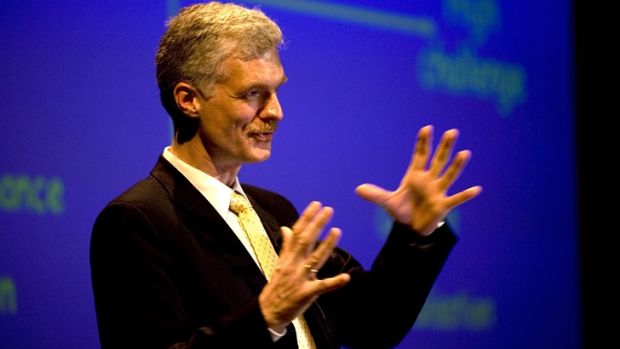
Australia should move to bigger class sizes if it wants to improve its education system without spending more money, according to the OECD’s top education guru Andreas Schleicher, and he has the data to prove it.

The highest performing countries in the OECD’s PISA tests have classes significantly larger than Australia’s average, he said.

But it’s not the class size that’s the key, he explains – it’s giving teachers less class time so they can focus on high-quality teaching.

The trade-off in a finite education budget for having teachers doing just 12-16 hours of class time a week is that you have to fit more kids into their classes.

The impact of class size on education quality is a highly contested issue within the research, while smaller class sizes tend to be popular with teachers, education unions and parents.

Mr Schleicher’s point is that the key factor is not the size of the class – it’s the quality of teaching strategies. Given the choice between a great teacher and a small class, pick the great teacher.

«Australian teachers have relatively little time for other things than teaching compared with their Asian counterparts,» he told Fairfax Media at an education conference in Dubai.

«If you’re a teacher in Hong Kong, China, Japan, you teach a lot less than Australian teachers, but you actually work more.

«You have a lot more time to engage with students individually, to work with parents, to work on reviewing lessons, analysing lessons, observing practice and so on. So there’s more emphasis on the professional development, particularly for higher order thinking skills.

«Those are very important. And the trade-off is bigger classes. The more popular trade-off is a smaller class, that’s what everybody likes. But if you ask me what is actually going to give better outcomes, Australia should think harder about this.»

According to the latest OECD data, the average class size in Australia for both primary and lower secondary was 24 pupils in 2014, compared with the OECD average of 23.

As policymakers have struggled to deal with Australia’s slipping performance in international benchmark tests like PISA and TIMSS, the perceived quality of teachers has come under fire.

Australia has not been as good at extending its top students, and has become less effective at mitigating socio economic disadvantage in its schools. But the OECD’s research suggests the problem is how our teachers are using their time.

«Australia has many ingredients of success,» Mr Schleicher said, speaking on the sidelines of the Global Education and Skills Forum in Dubai on Saturday, but our policy settings have been focusing on things that are not addressing the source of our achievement gap between students.

The reporter travelled to the Global Education and Skills Forum as a guest of the conference.

Source:

http://www.smh.com.au/national/education/oecd-education-chief-andreas-schleicher-great-teachers-more-important-than-class-size-20170320-gv1sr2.html

Comparte este contenido:

United Kingdom, Special report: ‘Money wasted on free school scheme’ as education cuts bite

United Kingdom/18 april 2017/By: Nina Swift/Source: www.yorkshirepost.co.uk

“We are not in a good situation in education in this country.”

These are the words of the former president of the National Union of Teachers, who stepped down from her leadership role yesterday.

 Anne Swift told The Yorkshire Post the growing number of academies, government “vanity projects” amid cuts to school budgets and intense pressures on pupils and teachers to “get results” have led to an increasingly fragmented education system.
 The former Scarborough headteacher, who has been president of the union for the last 12 months following two years as vice-president, handed over the medal of office at the opening meeting of the NUT’s annual conference.
 Reflecting on her time as leader, she said: “There has been a big rise in the number of academies and academy chains sponsored by businesses and commercial investors, who view education as a market where you can make a profit.

“Everything the Government has been doing is in preparation for companies to take over the education of pupils.

“We are fundamentally opposed to that. It is a public right and should be paid for through general taxation.”

Last year The Yorkshire Post revealed that Wakefield City Academies Trust paid close to £450,000 to companies belonging to its chief executive and his daughter.

Referencing this, Mrs Swift said: “There has been a rise in the number of CEOs, principals, or whatever they want to call themselves, who have the position of a headteacher, but pay themselves eight-figure sums, which is taking money away from pupils and education.”

Mrs Swift said the Coalition Government was able to put a “bit of a break” on some of the controversial schemes, and praised the introduction of free school meals for infants.

“It is good to see the Labour group is expanding that all primary pupils,” she said.

But it is the cuts to education funding that Mrs Swift said is the biggest issue facing the system, with unions warning that schools across Yorkshire could lose more than £312m from their budgets and up to 8,378 teachers facing the axe. She said: “This will have a massive impact on schools all over the country and it’s a big challenge for us at the moment.

“The Government is choosing to spend its money on vanity projects, like free schools, academisation and now it is talking about having grammar schools. These are red herrings to distract us from what’s really going on.”

Highlighting serious problems related to the growing number of schools which act as their own admission authorities, she added: “Academies are finding their own ways of excluding children. They can set criteria so children who won’t enhance their results won’t make it into their schools. I don’t think the public realise this is going on. They are not fully inclusive and that’s a scandal. I think the Government should hold it’s head in shame for allowing a system to develop that doesn’t meet the needs of all children in society.”

Mrs Swift said a “striking” change she had noticed during her time in office was the rest of the UK was going in a different direction with education and was moving away from the English system. She said: “We don’t even have a United Kingdom education service anymore. It is part of the Government’s plan to fragment the education system, whilst at the same time controlling it more totalitarity. They want schools taken out of the local authority and to be funded directly by Westminster.”

After spending her presidential year visiting schools and teachers across the UK, as well as travelling abroad to meet educators, she concluded: “We are not in a good situation in education in this country.

“The testing is not appropriate. The idea that all schools should achieve above average results, that’s not possible. At the moment if schools fall below average they can expect a poor Ofsted report.

“Staff are now demoralised because they are doing things they know don’t improve the education of pupils. It’s to satisfy requirements for evidence children are making progress.

“The workload is a massive issue. Teachers want to put their time and energy into planning exciting lessons for children, but they feel bowed down teaching things that are not suitable – an inappropriate curriculum.

“I know of at least five teachers who are going abroad to teach. The phenomenon seems to be growing. People are deciding it’s not worth their own health, the impact on relationships and the lack of opportunity to be with their families, and they are teaching elsewhere, where they are more respected and valued.”

However, she added: “Without exception everyone I have met wants to do their best for the young people they teach.”

A Department for Education spokeman said academies operated under a strict system of accountability and all transactions must be disclosed in academies’ audited accounts.

He said: “Thanks to our reforms there are now 1.8 million more children being taught in schools rated good or outstanding schools than in 2010. School funding is at its highest level on record.”

Source:

http://www.yorkshirepost.co.uk/news/education/special-report-money-wasted-on-free-school-scheme-as-education-cuts-bite-1-8495020

Comparte este contenido:

Sierra Leone: Separate Classes for Pregnant Girls Raise Questions

Sierra Leone/18 april 2017/By: Al Jazeera – African Media Agency/ Source: All Africa

A government programme for separate schools for pregnant students introduced two years ago in Sierra Leone is facing critical scrutiny.

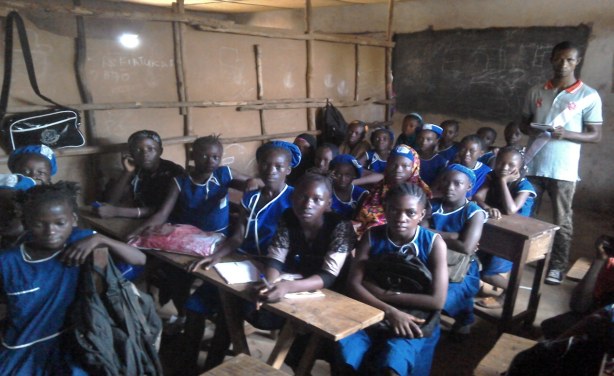
Pregnant students were not allowed to sit in the same class in the West African country as their peers because they are seen as a bad influence.

In April 2015, schools in Sierra Leone reopened after a nine-month break owing to the Ebola crisis. However, «visibly pregnant» girls were banned from returning to school, for fear of negatively affecting «innocent girls», according to the education minister.

The government offered them the option of attending alternative schools with a reduced curriculum.

Now, Amnesty International, the UK-based rights organisation, says denying pregnant girls mainstream education is a violation of their human rights.

«I am the one who should decide whether to go to the alternative or the mainstream school,» said 17-year-old Sarah Bassie, an alternative school student.

  A third of pregnancies in Sierra Leone are teenage pregnancies, according to official data.

«It [the move] doesn’t address any of the root causes of teenage pregnancy in Sierra Leone,» Sabrina Mahtani, an Amnesty International researcher, told Al Jazeera.

«It’s not addressing the high rates of sexual violence and abusive relationships that girls encounter every day, it’s not addressing fact that there’s no formal sex education in schools.»

However, Sierra Leone’s education ministry says the alternative school programme is working.

Out of 14,500 students who attended those schools, 5,000 have gone back to mainstream school after giving birth.

The ministry says that is progress because the girls would have most probably dropped out altogether because of the shame associated with pregnancy.

Author:
Al Jazeera English
Publisher:
Al Jazeera English
Publication Date:
11 April 2017

Pregnant students in Sierra Leone are not allowed to sit in the same class as their peers because they’re seen as a bad influence. In 2015, the government gave them the option of attending alternative schools with a reduced curriculum. Amnesty International says denying pregnant girls mainstream education is a violation of their human rights.

Source:

http://allafrica.com/stories/201704100733.html

Comparte este contenido:

Kenya: 1st Graduates from a Paid-Fellowship for African Content Creators

Kenya/18 april 2017/By:press release/Source: All Africa

Kenya Notches Top Spot at Amplify Fellowship Closing Event in Nairobi

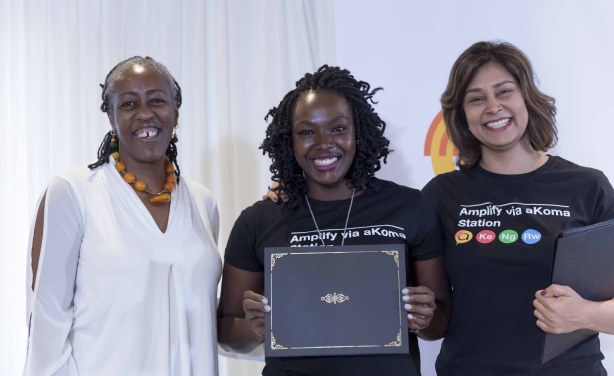
Amplify, Africa’s first paid-fellowship for content creators, held a graduation for its inaugural cohorts on Friday 7 April in Nairobi, Kenya. Three teams of young storytellers from Rwanda, Kenya and Nigeria presented their final projects to an all-star panel of Africa’s leading business, media and technology personalities. The Fellowship was launched in 2016 by Zain Verjee and Chidi Afulezi, the co-founders of aKoma, a content and storytelling platform focused on Africa.

The judging panel, comprising Professor Bitange Ndemo, Pamela Sittoni of Nation Media Group, Patricia Obozuwa of GE Africa and Google Kenya’s Charles Murito, commended the Amplify Fellows for a «bold, dynamic and provocative approach to storytelling.» Each country cohort was tasked with creating a branded content campaign for GE Africa. The judges singled out Kenya in particular for their attention to detail and their ability to bring to life some compelling stories about the impact GE Africa was having in Kenya.

Launched in September 2016 in partnership with The MasterCard Foundation, Amplify’s mission is to develop a fellowship of young, dynamic multimedia content creators who will craft compelling stories about Africa. The inaugural graduation, held in Nairobi was the culmination of an intensive six-month fellowship that saw 25 fellows – writers, photographers, animators, and videographers – learn technical, creative and business skills to enhance their careers in content creation for Africa.

Zain Verjee, aKoma Co-Founder & CEO says, «Seeing our first group of Amplify fellows flex their creative talent and take storytelling to new levels in their final presentations, both creatively and technically, has been an incredible experience. Our Fellows consistently delivered stories and insights, from across Africa, that are generally ignored by international media outlets. The entire process of this inaugural Fellowship has revealed the dynamic talent bursting out of every seam of the continent».

«Stories are so important to our perception of one another and our understanding of ourselves,» says Jamie Farshchi, Editorial Manager, The MasterCard Foundation. «Through aKoma, the Amplify Fellows are broadening our understanding by telling stories that may not otherwise be heard.»

Patricia Obozuwa, Director of Communications & Public Affairs of GE Africa expressing excitement at the graduation said «We are committed to skills development in Africa and as such, are proud to partner with aKoma on this first of a kind training initiative.

«There is no better time than now to invest in developing content creators who can help tell the African story in new and exciting ways» she added.

Verjee concludes, «Together with our partners, The MasterCard Foundation and GE Africa, we have been able to deliver mentorship, facilitate pan-African collaboration between young creatives and foster a community of learning, shared interests and, importantly, passion for authentic African storytelling. The Amplify Fellows are the next generation of influencers and thinkers for Africa, and we are thrilled to have been a part of their journey». The fellows themselves described the fellowship in a word: «Afrithentic».

Founded by CNN alumni Zain Verjee and Chidi Afulezi, aKoma is an open source content platform and storytelling community where a combination of user generated and original content about Africa and its diaspora are created, published and shared with the world.

Distributed by African Media Agency (AMA) on behalf of aKoma Media.

 Notes to Editors

For additional information, images, interviews with aKoma co-founders or Amplify Fellows, please contact Jessica Hope – jessica@wimbart.com or Maria Adediran – maria@wimbart.com

About aKoma Media

aKoma Media is a content platform and storytelling community for Africa and African audiences created to provide the megaphone to make Africa come alive. The tagline «stories made@Africa» captures the company’s vision of building a thriving ecosystem of content and talent that is also a marketplace for African content where audiences and creators can connect and collaborate.

About The MasterCard Foundation

The MasterCard Foundation works with visionary organizations to provide greater access to education, skills training and financial services for people living in poverty, primarily in Africa. As one of the largest, private foundations, its work is guided by its mission to advance learning and promote financial inclusion to create an inclusive and equitable world. Based in Toronto, Canada, its independence was established by MasterCard when the Foundation was created in 2006. For more information and to sign up for the Foundation’s newsletter, please visit www.mastercardfdn.org. Follow the Foundation at @MCFoundation on Twitter.

About GE

GE (NYSE: GE) is the world’s Digital Industrial Company, transforming industry with software-defined machines and solutions that are connected, responsive and predictive. GE is organised around a global exchange of knowledge, the «GE Store,» through which each business shares and accesses the same technology, markets, structure and intellect. Each invention further fuels innovation and application across our industrial sectors. With people, services, technology and scale, GE delivers better outcomes for customers by speaking the language of industry.

Source:

http://allafrica.com/stories/201704110719.html

Comparte este contenido:

Panamá: Realizarán foro sobre la educación de salud sexual

Panamá/17 abril 2017/Fuente: Metrolibre

El próximo  19 de abril se realizará  el “Gran Foro Nacional  en Legislación y Educación en Salud Sexual y Reproductiva:    cuándo, dónde, cómo, cuánto y quién”, en un hotel de la ciudad de Panamá,  de 8:00 a.m.  a 5:00 p.m; organizado por la  Fundación Global de Salud Masculina.

Esta fundación  promueve la práctica de la medicina de género y personalizada como herramienta para entender y prevenir las enfermedades, a través de campañas educativas que divulgen información científica, certera, oportuna y accesible a toda la población, complementada por cursos de actualización y el impulso de leyes cuyo contenido facilite el acceso universal a la atención médica.

Fuente: http://metrolibre.com/nacionales/realizaran-foro-sobre-la-educacion-de-salud-sexual-0dc

Comparte este contenido:
Page 4038 of 6193
1 4.036 4.037 4.038 4.039 4.040 6.193