Page 4044 of 6179
1 4.042 4.043 4.044 4.045 4.046 6.179

Portugal: Vagas para concursos de professores superam anos anteriores

Portugal / 12 de abril de 2017 / Fuente: http://www.portugal.gov.pt

As vagas para o concurso externo extraordinário (vinculação extraordinária), concurso externo (norma-travão) e concurso interno (quadrienal) de pessoal docente foram publicadas no Diário da República.

Nestes três concursos, que terão início ainda na primeira quinzena de abril, o número de vagas disponíveis cresceu relativamente aos anteriores.

Para o concurso interno, foram apuradas 4609 vagas, o que representa um crescimento de lugares disponíveis para professores do quadro (necessidades permanentes).

Os lugares disponíveis em cada escola foram apurados na sequência de um trabalho de recenseamento detalhado, levado a cabo pelos Diretores dos agrupamentos de escola e escolas não agrupadas.

O Ministério da Educação procedeu a correções quando tal se mostrou justificável, garantindo-se desta forma uma gestão otimizada dos recursos humanos e das necessidades do sistema.

Este ano existem 443 vagas no concurso externo e cerca de 3000 vagas no concurso externo extraordinário.

O ano letivo de 2017/2018 iniciar-se-á com o corpo docente mais estabilizado e com um sistema mais ajustado às necessidades permanentes determinadas pelas escolas.

O acesso aos quadros de professores – que atualmente ocupam como contratados lugares que correspondem a necessidades permanentes – bem como a gestão rigorosa das movimentações, representa a introdução de mais justiça no sistema e o reforço do combate à precariedade.

Fuente noticia: http://www.portugal.gov.pt/pt/ministerios/medu/noticias/20170406-medu-vagas-concursos-professores.aspx

Comparte este contenido:

Ecuador: Más de 1.000 jóvenes entre 20 y 29 años obtuvieron su título de bachiller

Ecuador / 12 de abril de 2017 / Fuente: https://educacion.gob.ec/

“Este es un adiós que nos abre las puertas a nuevas metas, con un futuro prometedor para todos nosotros”, esta fue una de las reflexiones que Luis Orozco compartió con sus compañeros, al concluir esa importante etapa de su vida.

Luis es uno de los 115 graduados de la tercera promoción de Bachillerato Intensivo, de entre 20 y 29 años, que asistieron en una ceremonia realizada en el teatro del colegio Sagrados Corazones de Rumipamba, el martes 4 de abril, que contó con la presencia de familiares, docentes y autoridades de educación.

Este programa permitió que más de 1.000 jóvenes, a nivel nacional, obtuvieran sus títulos de bachiller. Luego de cursar 20 semanas de estudio por cada nivel de Bachillerato, los estudiantes pudieron rendir el examen Ser Bachiller y concluir sus estudios secundarios.

Las autoridades reconocieron, con una medalla de honor, a los estudiantes, de distintas instituciones educativas, que obtuvieron el mayor puntaje en este programa de estudios. Acto seguido, proclamaron a los nuevos bachilleres de la Patria, con la entrega de los títulos en sus manos.

El ministro de Educación, Freddy Peñafiel, resaltó el empeño, trabajo y dedicación de los estudiantes, que, voluntariamente, decidieron retomar su proceso educativo. Aseguró que hace 10 años, la educación era excluyente y más aún el Bachillerato; lo que ocasionaba que los jóvenes abandonen sus estudios, entre otras causas, por razones económicas.

“Ustedes deben estar en las primeras planas de todos los medios de comunicación porque son unos héroes (…). Decidieron ejercer su derecho y sus profes les acompañaron en sus condiciones, no siempre las más fáciles”, apuntó el ministro.

Los estudiantes, acompañados de sus familiares, no ocultaron su emoción al recibir sus títulos y se mostraron convencidos en continuar con su formación académica. Es el caso de Guido Samipatín, graduado de la Unidad Educativa Ricardo Álvarez Mantilla, quien no dudó en acogerse a esta oferta educativa para culminar el último año de Bachillerato.

“Tuve el apoyo de mis hermanos, de mi mamá y como tengo una nenita, me ayudaban con ella. Si Dios quiere, voy a seguir una ingeniería en mecánica industrial”, comentó el estudiante.

Evelyn Carcelén, al igual que Guido, analiza seguir parvularia o ingresar a la Policía Nacional. La estudiante de 21 años de la UE Andrés Bello retomó sus estudios, pensando en su pequeño hijo. “Por fuerza de voluntad seguí adelante, me impulsé por el apoyo de mis amigos y por mi hermoso bebé, gracias a eso estoy donde estoy”, afirmó.

La oferta educativa Básica Superior Intensiva y Bachillerato Intensivo se implementó a partir del año 2016. En la primera y segunda promoción se incorporaron 3.776 bachilleres. Actualmente, más de 28 mil estudiantes se encuentran cursando sus estudios, que culminarán en el último cuatrimestre del 2017.

Transformar la educación, misión de todos

Ceremonia de Incorporación de III Promoción de Bachillerato Intensivo-1

Comparte este contenido:

Kenia: Who says engineering is an exclusive boys’ club?

Kenia / 12 de abril de 2017 / Por: ELVIS ONDIEKI / Fuente: http://www.nation.co.ke/

You cannot make this stuff up. Neither can you engineer it. Going through the list of registered engineers in Kenya, you will be forgiven to think it is an exclusive boys’ club with a few female names sprinkled to break the monotony.

You will count 355 men but only eight women in the list of registered consulting engineers, according to data from the Engineers Board of Kenya.

And when you go to the roll of registered professional engineers, the list tells you that if you throw a stone at 100 of them, the probability of hitting a woman is one out of 20 because there are only 86 women in a crowd of 1,597 men.

In the list of registered graduate engineers, you will equally be left in need of a magnifying glass. For every 100 heads of the registered graduates, only eight are women’s because men are 8,639 while women are just 757.

Ms Jane Mutulili Wanjiru is one of the only eight women with a government licence to operate as engineering consultants. Having been a civil engineer since 1990, she has interacted with a number of people in the field and when she spoke to Lifestyle on Thursday afternoon, she flashed back to a conversation she had had with a young engineer earlier that day.

“She called, crying. She said, ‘You know [name withheld] is really harassing me, I’m going to leave this job’. I told her ‘It’s okay, I’ll deal with it’,” said Ms Wanjiru

“She’s an assistant resident engineer. And you know, when you’re a resident engineer, you actually check the quality of work by the contractor. So, when the contractor tries to take shortcuts and you want to report, they really start harassing you so that you don’t go to the site,” she said.

Harassment from various quarters is but one of the many challenges that women in engineering face every day, and they have been organising meetings to compare notes on how best to cope.

They have also been plotting how to inspire and attract more women into the profession.

Their latest meeting was held on April 1 in Nairobi’s Silver Springs Hotel — themed around positioning women engineers for leadership — where the guest speaker was Gender Cabinet Secretary Sicily Kariuki. Mrs Kariuki did not attend but was represented by Mrs Zeinab Hussein, one of her Principal Secretaries.

From Mrs Kariuki’s speech, it emerged that even for the few women engineers who have been hired by various government agencies, just a small percentage has been given leadership roles.

“Less than one per cent of the senior engineering management positions are held by women in the infrastructure sector bodies. There are only three women professional engineers who are board members in the public sector,” Mrs Kariuki’s speech read in part.

FEW AMONG MANY

She added: “This is a situation my ministry would like changed within our mandate of gender mainstreaming and I am happy you have made the first significant step in this respect by forming yourself into an association and organising this conference.”

As she officially closed the gathering, Mrs Kariuki challenged the women to be “clear about what you want”.

Following last Saturday’s meeting, which was organised by the Women Engineers Chapter of the Institute of Engineers of Kenya, Lifestyle interviewed five women engineers to share their experiences in the male-dominated profession.

Besides Ms Wanjiru, we spoke to Mrs Margaret Ogai, Ms Grace Apiyo, Ms Emily Kilogi and Ms Lucy Wanjiku.

Mrs Ogai is the senior manager in charge of contracts at Kenya Roads Board. An alumnus of Limuru Girls’ High School, she has risen in the civil engineering field since graduating from the University of Nairobi in 1990.  She worked in three consultancy firms before joining the Kenya Roads Board in 2002.

“For the first 12 years when I worked in Kenya Roads Board, I was the only woman engineer. But now we’ve been fortunate. We have employed three others,” said the mother of two teenagers.

Ms Apiyo is currently the project manager in charge of technical vocational programmes at ArcSkills, a training institution in Nairobi that is part of a global network.

She was in the class of 1997 at Pangani Girls’ Secondary School, and she obtained her engineering degree in electrical and electronics from the University of Northumbria in Newcastle, England.

“My career started at the Ministry of Public Works. And for a while, I was the only female engineer in that department with more than 70 men. And because when I first joined I was very small (in physique), I was easily intimidated,” said the mother of a six-month-old girl.

Ms Kilongi is the technical manager at Athi Water Services Board, the institution overseeing water and sewerage provision in Nairobi and Kiambu counties.

She owes her education to Pangani Girls, where she left in 1998, and the Jomo Kenyatta University of Agriculture and Technology where she obtained her Bachelor of Science in civil engineering in 2005.

“In my civil engineering class, we were five women against 20 men. And at that time, our class was the biggest that the university had seen in terms of the population of women. Previously there used to be one or two. There is even a year which had no lady at all,” said Ms Kilongi, a mother of three.

Ms Wanjiku is the founder and director of EcoCycle, a company that installs systems that enable organisations recycle their waste water — even sewage.

She was a shining star at Muthetheni Girls High School in Machakos County in 1997, after which she was admitted to Moi University and majored in production engineering. She graduated in 2004.

“In my mechanical engineering class, we were three women in a class of 40. If I look at the chemical engineering class, I think it had two women out of 40. So, it was something of 3 out of 40, 1 out of 30 — that range,” she said.

Ms Wanjiru is the founder and director of La Femme Engineering, a Nairobi-based consultancy firm. She is the second vice president of the Institution of Engineers of Kenya (IEK) and the vice chair of the IEK Women Engineers Chapter.

She is an alumnus of Githumu High School in Murang’a County, from where she sat her “A” level examinations in 1986. She studied civil engineering at the University of Nairobi from 1986 to 1990. Afterwards she worked with City Hall up to 2000 then in 2004 started her consultancy firm.

The women were candid about the pitfalls they have been facing in the field, some of which they attributed to negative perceptions towards women.

“In terms of attitude, we do still have challenges. This is not at the official level but when you work with certain colleagues, there is an expectation that you’ll behave in a certain way, maybe they’d want to be served tea. You know, there are some little things which are a challenge because you really have to tell them “I’m here as a professional,” said Mrs Ogai.

She added: “You find somebody challenging you that you should be gentler.  Some people are used to a submissive woman which I feel I am not.”

Ms Apiyo believes that female engineers are not given proper nurturing in the industry.

UNIVERSAL CHALLENGES

“A lot of women join and they find it too hard and they eventually drop out,” she said.

For Ms Kilongi, her biggest headache is not about earning respect but it concerns reserving time to attend to her family.

“The challenge is finding the work-life balance; finding the balance of where you stop with work, where you begin with your social and family life. That is the only thing I would say I have to grapple with,” she said.

In her speech, the Gender Cabinet Secretary said some of the challenges faced by women engineers are not having flexible working hours for women with young children, lack of family support because their work involves frequent travel, inadequate women role models and mentors, negative stereotyping among others.

But she dropped a cliché: “These challenges are not specific to your field but are commonly faced by women across all the sectors, a situation which is of great concern to the government and specifically to my ministry.”

The need to address the challenges, said Ms Wanjiru, is the reason the Women Chapter of the engineers’ institute was founded in 2014.

“What we’ve been trying to do is bring the young ones to develop interest in engineering and the young ones who are engineers to make them stay,” she said.

Ms Wanjiru noted that the resilience exhibited by women engineers is exemplary.

“ I think we get hardened along the way. When you’re harassed by somebody, you either yield or you grow. For a lot of us, you can’t leave the field. There’s nothing else you know how to do. You decide you’re staying and you’re staying on your terms, not theirs,” she said.

The Women Chapter has visited schools previously to agitate for a change of attitude which can ensure more females try their hand in engineering.

“Engineering requires you to be very strong in Mathematics and most girls are, one, not confident about it; two, we were socialised to do Arts, History and the languages. So, you’ll find most of the women, especially in my age set — because I’m approaching 50 — most of them having done the arts. They went and did Bachelor of Arts; some went and studied Law. But very few did the technical courses. We need to go back to the schools and encourage girls,” said Mrs Ogai.

She added: “Recently we had a very successful mentorship at one of the girls’ schools here in Nairobi  and that is one area we want to actually grow because the problem is at the supply end. We do not have the women coming through to do engineering. So, we are going to try and have a much bigger outreach mentorship programme targeting most schools and should be more regular.”

During the April 1 gathering, the women spent a considerable amount of time discussing how they can capture positions of influence.

“Before this event I actually called a few of the water boards. Except Petronillah, we don’t have any other CEO in a water board. But we don’t even have others in the third, fourth positions. That is not right,” said Ms Wanjiru, the vice chair of the Women Engineers’ Chapter.

She was referring to Petronillah Ogut, the Chief Executive Officer at Lake Victoria South Water Service Board.

The reason why there are few senior women engineers, she explained, could be because of the women themselves.

BRIGHT FUTURE

“Some say we are probably not aggressive enough. But it’s not that we’re not aggressive. There’s a point where you get aggressive and you become abrasive. So, we don’t want to be abrasive. But we also want to be recognised. We want to be given the position that is ours,” Ms Wanjiru said.

Ms Apiyo concurred with her: “Women are afraid. They’re afraid to take up challenges especially when it comes to technical jobs and technical roles. So, you’ll find a lady who studied engineering ends up working in a bank or ends up in a different field altogether; just because they feel intimidated by the males. You know, it’s a male-dominated world.”

Following the April 1 event, Ms Kilongi is optimistic that there can be more women engineers if they act on their discussions.

“If we sustain the kind of ideas that we have, the fact that we have a forum as women where we can purpose to carry out activities that will encourage movement within the profession, I see in the future, the numbers are going to increase,” she said.

Ms Wanjiku, who brought the water recycling project to Kenya after observations she made while in Germany on a one-year training, said in fact women can use their rarity in the industry to their advantage.

“To be honest, I have never felt like my gender has disadvantaged me anywhere. If anything, I feel like when I approach customers as a lady and then I display and portray high-level expertise, it’s like you win trust faster, especially after I tell them what I can do and then I take them to a place where we have executed it and it looks so perfectly done and it’s working well. I feel like I sort of win and convince the trust of customers very fast,” she said.

It remains to be seen whether the initiatives by the IEK Women’s Chapter can cause an increase in the number of women, but Mrs Ogai believes the education system needs to be changed.

“I believe there are many women who are strong in Mathematics but did not come into engineering because they could not see any way forward, partly because of our education system. Actually what was being emphasised when we were in Form One and Two, is that you do cookery whereas the men were doing technical drawing. I came to university never having seen, or even known, a thing called technical drawing. I’d never seen a T-square, for instance,” she said.

Fuente noticia: http://www.nation.co.ke/lifestyle/lifestyle/Who-says-engineering-is-an-exclusive-boys-club/1214-3882742-xxcqv4/index.html

Comparte este contenido:

Puerto Rico: Keleher se compromete con la educación especial

Puerto Rico / 12 de abril de 2017 / Fuente: http://www.primerahora.com

Recopilará sugerencias de los afectados

La secretaria de Educación de Puerto Rico, Julia Keleher, anunció hoy que va a recopilar las sugerencias de todos los afectados por la educación especial, tras participar en el I conversatorio «#Todoporlosniños con la comunidad escolar sobre educación especial», realizado en el Centro de Convenciones de Puerto Rico, en San Juan.

«Es sumamente importante que conozcamos y laboremos para solucionar las necesidades de otros, no sólo las particulares. Tenemos que unirnos y estructurar lo que vamos a trabajar el año que viene y los subsiguientes», dijo Keleher a los asistentes, según una nota difundida por el Departamento de Educación.

Mediante una convocatoria pública se registraron más de 300 personas, entre ellos, directores escolares, funcionarios de región y distrito, maestros, padres, madres y otras personas interesadas en el tema, a quienes se les pidió que enviaran temas sugeridos.

De entre todas las preocupaciones se seleccionaron 25 las que fueron trabajadas, una por cada mesa.

Entre otros temas estuvieron ubicaciones, transición a vida adulta, educación física adaptada, talleres vocacionales, asistencia tecnológica, equipo para el salón y responsabilidad de los funcionarios.

«Entre otras cosas, la idea es comenzar trabajar en equipo. Vamos a recopilar las sugerencias de todos», dijo Keleher.

A su vez, anunció a los asistentes que hay interés en trabajar los problemas y los servicios.

Se ha hecho de forma sistemática y organizada. Vamos a establecer reglas y procesos productivos para poder luchar juntos. Y, más importante aún, tenemos que estar claros de que, cuando la estructura esté establecida, hay que seguirla para que realmente funcione», agregó la Secretaria.

«Me he dado cuenta, más como ser humano que como Secretaria, de que hay mucha preocupación entre ustedes porque sienten demasiada carga sobre sus hombros, como si no tuvieran a dónde ir; puedo ver la frustración en sus rostros y en sus palabras. Y deseo manejar las expectativas honestamente», agregó.

A su vez, indicó que «de aquí no saldremos con soluciones finales pero sí con un panorama claro de lo que debemos alcanzar. Este es un primer paso en un sistema donde no había ningún modelo estructurado para ayudar».

Durante dos horas, los presentes en cada mesa discutieron el tema que le fue asignado así como otros de interés particular para ellos, luego se llevó a cabo la discusión general que fue moderada por Keleher y el Secretario Asociado de Educación Especial, Eliezer Ramos, junto al líder de cada mesa.

«Este es un primer paso. Vamos a repetir estos conversatorios alrededor de toda la isla porque queremos escuchar a todo el que tenga algo que aportar. Insisto en que la única manera de lograr un cambio para realmente mejorar las cosas en el Departamento de Educación es siendo inclusivo, teniendo las puertas abiertas, respetando, siendo transparentes y tomando en cuenta a todos los que componen la comunidad escolar», concluyó la secretaria de Educación.

Fuente noticia: http://www.primerahora.com/noticias/puerto-rico/nota/kelehersecomprometeconlaeducacionespecial-1216638/

Comparte este contenido:

Canadá impulsará proyectos de investigación con la UANL

Canadá / 12 de abril de 2017 / Fuente: http://www.elhorizonte.mx

Cuatro de las nueve universidades que son parte del consorcio están en el top del ranking de empleabilidad

El Consorcio de Universidades Canadienses (Caldo por su siglas en inglés), contempla impulsar proyectos de investigación conjunta con la Universidad Autónoma de Nuevo León, en materia de ciencias agropecuarias e ingenierías.

La delegación de Canadá estableció contacto con académicos de seis facultades de la UANL, Agronomía, Medicina Veterinaria y Zootecnia, Ciencias Biológicas, Ciencias Químicas, Ciencias Físico Matemáticas e Ingeniería Mecánica y Eléctrica.

El director de Caldo, Rodrigo Delgado, comentó que “tenemos mucho conocimiento de la calidad de los estudiantes de la Universidad Autónoma de Nuevo León, además Monterrey nos parece una ciudad muy interesante por explorar“.

Enfatizó que “Canadá está muy interesado en vincularse más con México. Nosotros podemos ayudarlos a encontrar el programa más adecuado, apoyarlos a través de las alternativas que puedan existir, de financiamiento a través de convenios que podamos tener”.

Destacó que Caldo se ha consolidado como el consorcio de universidades líderes en investigación y las nueve instituciones canadienses que integran el consorcio ofrecen 99 programas de maestrías y doctorados que están dentro del top 150 del ranking global Quacquarelli Symonds (QS).

Además, indicó, cuatro de las nueve universidades CALDO están en el top del ranking de empleabilidad.

Las instituciones que integran Caldo son University of Alberta; Laval University; Dalhousie University; University of Ottawa; University of Calgary; Queen’s University; University of Saskatchewan; University of Waterloo, y Western University.

Por su parte, Gonzalo Portilla M. Green, coordinador de Relaciones Multilaterales de la UANL, expuso que “uno de los intereses específicos es el de la Universidad de Saskatchewan con las facultades de Agronomía y Veterinaria“

“Ahí vemos una relación potencial bilateral muy próxima y a nosotros nos daría mucho gusto porque son facultades que tienen ese grado de especialidad”, añadió.

Manifestó que la visita corresponde a los acuerdos de colaboración que el consorcio Caldo estableció con el Consejo Nacional de Ciencia y Tecnología (Conacyt) y la Asociación Nacional de Universidades e Instituciones de Educación Superior (ANUIES).

Fuente noticia: http://www.elhorizonte.mx/local/canada-impulsara-proyectos-de-investigacion-con-la-uanl/1818353

Comparte este contenido:

España: Educación permitirá escolarizar a los niños prematuros en función de la fecha en que debieron nacer

España / 12 de abril de 2017 / Por: Ana Arenal / Fuente: http://www.republica.com

El Ministerio de Educación, Cultura y Deporte ha preparado una instrucción para enviar en las próximas semanas a los centros educativos de Ceuta y Melilla, que es donde tiene competencias, para que los padres de niños prematuros puedan escolarizarles, a partir del curso que viene 2017-2018, ateniéndose a la ‘edad corregida’, es decir, a la que debieron nacer y no a la real. Esta medida, que es opcional para las familias, puede ser tomada como referencia por las comunidades autónomas para desarrollar sus propias normas, según han informado fuentes del departamento que dirige Íñigo Méndez de Vigo, que ya estudiaba esta posibilidad denunciada por el Defensor del Pueblo en su último informe anual relativo a 2016.

Durante el pasado año, esta institución inició una investigación de oficio en todas las comunidades autónomas para conocer la respuesta que estaban dando a las familias con niños ‘grandes prematuros’ –los nacidos en torno a la semana 30 de gestación– tras las quejas registradas.

Numerosos padres alertaron de que las circunstancias en que se produce el nacimiento de estos niños afectan a su proceso madurativo y de aprendizaje, según numerosos documentos clínicos, y que estos problemas se agudizan, en lo que se refiere a su evolución escolar, en aquellos casos en que el nacimiento prematuro se produce en el año anterior al previsto para su nacimiento a término.

La normativa sobre ordenación académica vigente establece que los alumnos deben cumplir la edad establecida para iniciar las distintas enseñanzas dentro del año natural en que comience el respectivo curso, prescripción que, a juicio de la institución que dirige Soledad Becerril, “ya de por sí determina dificultades para los alumnos que nacen en los últimos meses del año, que resultan más notorias cuando el nacimiento en este periodo se produce de manera anticipada”.

Aragón, única comunidad que tiene en cuenta la ‘edad corregida’

Tras esta investigación, el Defensor destaca que solo Aragón tiene en cuenta esta circunstancia en los procesos de escolarización de los grandes prematuros, pues la ‘edad corregida’ es precisamente la que utilizan los médicos para valorar su desarrollo. Concretamente, esta autonomía

También, indica que tanto el Ministerio de Educación, como las comunidades de Baleares, Canarias, Castilla y León, Extremadura y Murcia estudiaban esta posibilidad cuando fueron preguntadas sobre asunto, mientras que Asturias y Castilla-La Mancha, Galicia, La Rioja, Madrid, Murcia y la Comunidad Valenciana manifestaron que cuentan con mecanismos suficientes para ajustar la respuesta educativa a la situación de cada alumno.

Por su parte, Andalucía, Cataluña y País Vasco expresaron su opinión de que la aplicación de la edad corregida a efectos de escolarización en el curso correspondiente resultaría contraria al marco regulador de la admisión de alumnos, según el informe de la institución de Soledad Becerril.

Fuente noticia: http://www.republica.com/2017/04/09/educacion-permitira-escolarizar-a-los-ninos-prematuros-en-funcion-de-la-fecha-en-que-debieron-nacer/

Comparte este contenido:

Guatemala:Educación; La clave de todo

Por:Erlin Amaya

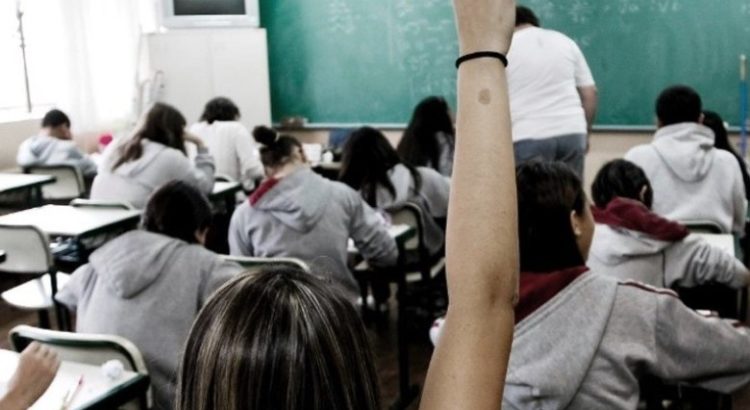
Aproximadamente el 40% de la población de Guatemala son niños y jóvenes en edad escolar, sin contar los mayores de edad, que también son estudiantes universitarios con los cuales ascenderíamos aproximadamente al 70% del total de la población. Por supuesto no todos ellos asisten a la escuela, colegio o universidad, y los que lo hacen, no están aprendiendo realmente lo que necesitan Visualicemos un salón de clases: Rápidamente pensaremos en un pizarrón, un grupo de escritorios alineados en filas orientadas hacia la pizarra, y una cátedra para el docente.

Lo que la mayoría desconoce es que este modelo de salón escolar, cuando fue creado pretendía que los alumnos tuvieran en las aulas una réplica del mundo laboral al que se afrontarían al egresar como una forma de preparación para el trabajo en las fábricas, lugar donde todos se encuentran alineados en filas con un horario establecido para el almuerzo que se anuncia con un timbre y una calificación de “100” o de “A” en señal de “producto aprobado” La diferencia: nuestros alumnos siguen con este modelo de salón de clases en LA MAYORÍA de aulas en el mundo, con una metodología de Evaluación estandarizadas que no aplican normas personalizadas adecuadas a cada uno de los estudiantes según sus aptitudes, intereses y habilidades particulares.

Seguimos preparando a nuestros alumnos para el trabajo que dejó de realizarse hace años. Pretendemos que salgan preparados y que obtengan un buen empleo cuando las instituciones y los profesores actuales no los preparan para esto, sino para lo que antes era necesario. Los colegios más caros y avanzados de Guatemala y del mundo tienen pantallas digitales, computadoras, y salones específicos para diferentes asignaturas, hemos avanzado en las herramientas que utilizamos en los salones de clase (en la minoría) pero nuestro sistema educativo a nivel mundial es completamente retrógrado.

La educación es la clave del progreso de una nación, ya que si bien solo el 40% de nuestra población hoy en día se encuentra en un aula preparándose académicamente en realidad estos niños y jóvenes representan el 100% de nuestro futuro para el cual casi ninguno está preparado. No podemos pretender que al emplear la misma metodología que hace 100, 50, 20, o incluso 10 años nuestros niños jóvenes estén preparados para afrontar la realidad de nuestro mundo en los próximos 20, 30 o 40 años. No podemos estandarizar la educación para enseñarles lo mismo a todos los estudiantes, La Educación necesita ser personalizada.

No necesitamos cambiar y adaptar únicamente nuestros salones y herramientas educativas, sino nuestra metodología de enseñanza y de evaluación para no lo que el sistema impone, sino lo que los niños y jóvenes necesitan independientemente del área en el que se desarrollen: Aprender a pensar, a cuestionar, a desarrollar, a crear. Hemos aprendido a “adaptarnos” a los cambios en el mundo y a sobrellevarlos lo mejor que podemos. Pero no nos damos cuenta que el cambio realmente lo creamos nosotros, por lo cual no deberíamos adaptarnos a éste, sino crearlo y propiciarlo en base a lo que hemos aprendido y a lo que el mundo actual demanda. Aprender a crear, en lugar de aprender a aceptar.

Es un cambio que inicia en casa pero en el cual la educación juega un papel crucial. Como en todo lo demás.

Fuente:http://www.s21.gt/2017/04/educacion-la-clave/

Comparte este contenido:
Page 4044 of 6179
1 4.042 4.043 4.044 4.045 4.046 6.179