Page 4748 of 6194
1 4.746 4.747 4.748 4.749 4.750 6.194

Venezuela contará con laboratorio para detectar transgénicos

América del Sur/Venezuela/Yvke Mundial/ Prensa VTV

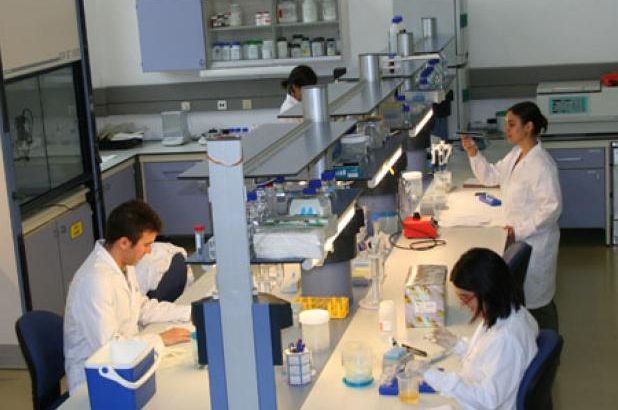
El Ministerio del Poder Popular para Ecosocialismo y Aguas (Minea) contará con un nuevo y moderno laboratorio con tecnología de punta, el cual permitirá realizar estudios precisos sobre la información genética de los Organismos Vivos Genéticamente Modificados (OVGM) o transgénicos. Así lo expresó Carliz Díaz, directora de Bioseguridad del Minea, como parte de su ponencia, la cual estuvo dentro de la Estrategia Nacional para la Conservación de la Biodiversidad y su Plan de Acción Nacional (2011-2020). La presentación la hizo en el taller consultivo para la elaboración del Tercer Informe de Aplicación del Protocolo de Cartagena sobre Seguridad de la Biotecnología, celebrado en las instalaciones del Hotel Venetur en Mérida, reseñó una nota de prensa del Minea.

Durante su intervención, destacó que el Centro de Información de Ingeniería Genética tendrá como sede la ciudad de Maracay (Aragua), y actualmente se encuentra en la fase de dotación de materiales e insumos, en alianza con el Fondo Nacional de Ciencia, Tecnología e Innovación (Fonacit), ente adscrito al Ministerio del Poder Popular para Educación Universitaria, Ciencia y Tecnología (MPPEUCT).

Esta novedosa infraestructura permitirá hacer estudios científicos para detectar el uso de los organismos modificados, que apoyará las acciones de la Estrategia Nacional para la Conservación de la Biodiversidad y su Plan de Acción Nacional, así como impulsar el trabajo de la Comisión Nacional sobre Bioseguridad en el país. Díaz añadió que los debates permitirán reforzar la postura del país como miembro de la Conferencia de las Partes, con relación a la aplicación de la tecnología del ADN, la cual apunta a que los ciudadanos tienen el derecho de conocer si están adquiriendo productos derivados de esta manipulación genética. Vía: Yvke Mundial/ Prensa VTV

Encuentra más detalles en http://altadensidad.com/?p=94041

Comparte este contenido:

En España: Los escolares de Pazos celebran la Semana da Ciencia e a Paz

Europa/España/Noviembre 2016/Noticias/http://www.farodevigo.es/

Los escolares de Pazos de Borbén disfrutarán el próximo jueves, del espectáculo «A ciencia é divertida» a cargo de Ana Romero Porto «Nita». La iniciativa comenzará a partir de las 11.00 horas en el auditorio municipal para conmemorar la Semana Internacional da Ciencia e a Paz, coincidiendo con el Día Mundial de la Ciencia, que se celebra en todo el mundo durante esa jornada. El espectáculo se desarrollará en dos sesiones, la primera de 11.00 a 12.00 horas dirigida a los alumnos de 1º de Primaria, y la segunda de 12.30 a 13.30 para los escolares de 2º de Primaria del Colegio Público Integrado «Curros Enríquez» de Pazos. En total serán 35 los niños que participarán en el acto.

Fuente :

http://www.farodevigo.es/comarcas/2016/11/06/escolares-pazos-celebran-semana-da/1564760.html


Fuente Imagen:

https://lh3.googleusercontent.com/Qu0bnfXCYfQm6bmuWZvh_zSjYHcXT-BEYONOdcZk2yfQ2EuRGQYDoM_rdGFNSDqRPvrm6A=s85

Comparte este contenido:

China private schools can’ t profit from junior education

Asia/China/atimes.com

Resumen:  China ha prohibido las escuelas privadas de ganar dinero desde el sistema de educación obligatoria de nueve años. Proveedores de escuela de primaria y secundaria en todo el país a partir de 2017 deben convertirse sin ánimo de lucro para asegurar que el estado se adhiere a su política de educación gratuita. El Comité Permanente de la Asamblea Popular Nacional aprobó la nueva ley el lunes a las instancias del Ministerio de Educación. El ministerio cree que la nueva ley es necesaria para restringir la enseñanza privada en esta área ya que el programa de educación obligatoria, que es un sistema libre en todo el país financiado por el gobierno central, debe encarnar las políticas del estado y de la equidad y bien público.

China has banned private schools from making money from the nine-year compulsory education system.

The Standing Committee of the National People’s Congress passed the new law on Monday at the behest of the Education Ministry.

The ministry believes the new law is necessary to restrict private schooling in this area since the compulsory education programme, which is a nationwide free system funded by the central government, must embody the state’s policies, and reflect fairness and public good.

However, in terms of fairness, private schools are considered as complementary to public education, especially for kids of migrant workers.

Migrant workers’ children cannot easily access public education because they are hindered by restrictive criteria, including local residency permits, to apply for public school places in major cities like Beijing and Guangzhou.

The new rule leaves room for private education providers to choose whether to register as either for-profit or non-profit high schools.

But only non-profit private primary and middle schools will be allowed from September 1, 2017, academic year.

Once registered as a non-profit private school, providers will be restricted from earning profits and money raised must go back into operating their institution.

“Generally, private schools gain a return of 25% in profit,” said Wang Tongsheng, an official from the education bureau of Lianjiang county in Fujian province in a report by the China National Radio on November 5.

When the new law takes effect next year, the loss of profit may discourage investors to start new private schools and existing institutions may face difficulties in covering operation costs.

The new law is likely to affect over 12 million students who go to private primary and middle schools, according to the data released by the education ministry in 2015.

As of 2015, there are 5,859 private primary schools and 4,876 private middle schools in Chin

Comparte este contenido:

Dakar, donde la cultura africana es la responsabilidad

Africa/Senegal/ africarivista.it

Resumen: El 31 de octubre en Dakar y Saint-Louis  finalizó los «laboratorios de pensamiento» ( «Ateliers de la pensée»), el cual reunió a veinte intelectuales africanos durante cuatro días de debate sobre el presente y futuro de África, tanto a puertas cerradas con el público Senegal. En la actividad se presentaron los aportes de autores de dos libros publicados este año, que despertaron debate en el mundo de habla francesa: Felwine Sarr y Achille Mbembe con su Afrotopia y Politiques de l’inimitie. Entre los protagonistas de la iniciativa, la gente como Célestin Monga, vicepresidente del Banco Africano de Desarrollo y autor del inconformista obras como «nihilisme et negritud ‘; Alain Mabanckou, el novelista africano en la actualidad francesa delante de la curva; Léonora Miano (ex) novia prodigio de la literatura; Nadia Yala Kisukidi, profesor universitario joven todavía de la filosofía que está teniendo éxito para penetrar en la filosofía africana en las universidades francesas. Todos estos autores son miembros de una generación que no están unidos por sus edades o posiciones ideológicas, sino por la comprensión que exponen de los problemas africanos a los cuales se enfrentan con nuevos discursos y rigor metodológicos.

Si sono conclusi il 31 ottobre a Dakar e a Saint-Louis i «Laboratori del pensiero» («Ateliers de la pensée»), che hanno riunito per quattro giorni una ventina di intellettuali africani a dibattere, sia a porte chiuse sia con il pubblico senegalese, del presente e dell’avvenire dell’Africa. Le giornate sono state ideate dagli autori di due libri usciti quest’anno, che hanno suscitato dibattito nel mondo francofono: Felwine Sarr e Achille Mbembe con i rispettivi Afrotopia e Politiques de l’inimitié. Tra i protagonisti dell’iniziativa, personalità come Célestin Monga, vicepresidente della Banca africana di sviluppo e autore di opere non conformiste come «Nihilisme et négritude»; Alain Mabanckou, il romanziere africano in lingua francese oggi sulla cresta dell’onda; Léonora Miano (ex) ragazza prodigio della letteratura; Nadia Yala Kisukidi, ancor giovane docente universitaria di filosofia che sta riuscendo a far penetrare la filosofia africana negli atenei francesi…

Ateliers de la penséeSono tutti esponenti di una generazione che non è accomunata tanto dall’età anagrafica o da una stessa cornice ideologica, quanto dalla consapevolezza che le questioni dell’Africa vanno ormai affrontate con discorsi nuovi e rigore metodologico. Di tale percorso, Mbembe – filosofo e storico camerunese che insegna all’Università «Wits» di Johannesburg – è uno degli esponenti più riconosciuti, convinto com’è che siamo solo agli inizi della «planetarizzazione della questione africana» e che ciò non fa che rinforzare la responsabilità degli africani. Anche per questo non condivide, per esempio, l’afrocentrismo, che porta i suoi adepti a fare dell’Occidente «l’oggetto oscuro del loro odio». In tal modo essi, già scriveva Mbembe in «Postcolonialismo» (Booklet, 2005), si autocondannano a essere «soggetti spossessati della loro soggettività, della loro voce e del loro desiderio».
Appuntamento agli Ateliers 2017.

Fuente: http://www.africarivista.it/dakar-se-la-cultura-africana-si-responsabilizza/109157/

Comparte este contenido:

Kenya: TSC Interdicts Seven Staff Members Over Exam Malpractices

África/Kenia/Noviembre 2016/

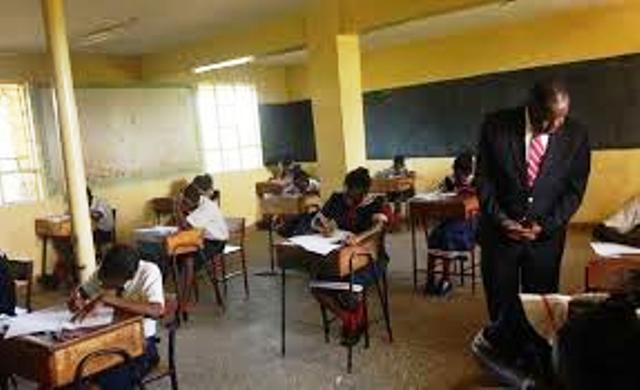
The Teachers Service Commission has interdicted seven staff members over malpractices in last week’s Standard Eight examinations.

In a move likely to send a stern warning to people bent on cheating in the Kenya Certificate of Secondary Education examinations that start tomorrow, the Nation has established that TSC Secretary Nancy Macharia ordered the interdictions as part of measures to ensure a flawless examination for the first time in decades.

Some of the teachers affected are from St Andrews Boys Kaggwa Primary School in Nyamira where a headteacher is accused of having used his personal car to transport exams to his school instead of using a bus hired for the purpose.

Later, a candidate was found with two sheets of paper scribbled with answers of the English exam.

On Friday, the teachers were among people charged with three counts of examination malpractices in a Keroka court. They appeared before Keroka Resident Magistrate Njoki Kahara.

Among them was St Andrews Boys Kaggwa Primary School headteacher, examination supervisor and invigilators.

The headteacher, supervisor and invigilators faced separate charges of aiding and abetting a candidate to copy an English language paper.

They denied the charges and were released on a bond of Sh300,000 with a similar surety each and a cash bail of Sh100,000.

The case will be mentioned on November 17, 2016 and heard on April 3, 2017.

IN RONGAI

In Nakuru, three teachers have been interdicted at Njoro Precious School in Rongai, after a deputy headteacher was found in class with an invigilator while exams were going on.

«Upon inquiry by the head- teacher, the deputy disappeared and the headteacher refused to give particulars of the deputy head,» says the Profiling Report on Teachers Involved in the Cheating of KCPE.

In a bizarre incident at Kaplenge Primary School, Moiben, in Marakwet, a supervisor has been suspended after an unknown person gained entry into the school office where the answer sweets for Kiswahili Lugha were unguarded as officials were having lunch.

«On returning, the officials noticed that the sealed envelope had been moved and the seal tampered with, albeit minimally,» the report adds.

In all, 11 centres were affected by the small hitches, which the examination authorities said must end as KCSE begins.

According to the report, many of the micro-incidents of cheating in last week’s 10 centres happened in private schools.

They included opening some exam bags a few minutes before the scheduled time.

In a school in Wajir, 11 mobile phones were found in an examination room immediately before the social studies and religious education paper.

On Saturday, Education Cabinet Secretary Fred Matiang’i said the ministry’s move to punish those who commit even the «smallest of mistakes» was a clear testimony that «we are keen to deliver a credible examination free from cheating».

‘ARE HAPPY’

«We are happy that not a single KCPE question was leaked this year contrary to what we have witnessed in the past,» Dr Matiang’i said.

Agencies of government, he said, were able to act decisively and firmly to stop attempts to give unfair advantage to some candidates.

Ahead of last week, Dr Matiang’i, TSC and Kenya National Examinations Council (Knec) bosses met and adopted a joint strategy to monitor and supervise the exams countrywide. The ministry worked closely with Interior and Coordination of National Government and Information Communications and Technology ministries.

On the first day, Tuesday, Dr Matiang’i supervised examinations in Vihiga and Kisumu counties while Mrs Macharia monitored the exercise in Uasin Gishu.

Principal Secretary Belio Kipsang supervised Kilifi while Knec chairman Prof George Magoha was in Mombasa County.

Activity at Nairobi’s Jogoo House, the Education ministry’s headquarters, was reduced to a bare minimum as all directors and their deputies were dispatched to various counties.

So successful was the strategy that anomalies were detected by the minute and relayed to the Knec Command and Control Centre that has been set up at Caledonia House.

Investigations by the Nation established that the officers who are monitoring the examinations had set up a joint WhatsApp group through which they were able to coordinate the exercise, with Dr Matiang’i issuing directives whenever urgent action was needed.

A MEETING

It is understood that Dr Matiang’i, Prof Magoha and Mrs Macharia held a meeting at Jogoo House on Friday evening and finalised a more elaborate plan to monitor the KCSE which will last nearly a month.

The officials are said to have compiled a schedule and mapping of the whole country, showing how various agencies of government will coordinate to execute the exercise.

Administration of the exams this year has taken a multisectoral approach involving the ministries of Education, Interior and Coordination of National Government and Information Communications and Technology in a bid to ensure they are not leaked.

Under the arrangement, all teachers except those involved in the administration of practical subjects and boarding facilities, have been directed to keep off schools during the examination season starting from November 1 to November 30, 2016.

The Knec has banned the use of clipboards and geometrical sets from examination rooms. Candidates will be required to carry their geometrical instruments and writing materials in a clear see-through porch/poly bag/plastic paper.

Also banned is the use of mathematical tables and calculators during examination papers for which they are not required. Use of mobile phones within the precincts of the examination centres has been banned for all those involved in the exercise.

Fuente:

http://allafrica.com/view/group/main/main/id/00047032.html

Fuente imagen:

https://lh3.googleusercontent.com/qv6_-oWmFyD-F5LrJWbY_yw5-IvDDH0TrV2v8kX1T39v0s1Nq4Sm7DBHihHxNlDXa12VA4g=s139
Comparte este contenido:

In Indian: Toddlers should go for 4-hour class with 25 classmates: Study

Asia/India/DECCAN CHRONICLE.

Resumen: Un estudio realizado por Reeba Roshan y MC Mathew, Christian Medical College, Vellore, que fue presentado en la Conferencia Nacional sobre la Profesión de desarrollo infantil en la India, actividad organizada por la Universidad Azim Premji en asociación con UNICEF y la Asociación de Educación Infantil y Desarrollo, señala que la clase ideal debe ser de 25 niños pequeños y estos deben asistir a clases durante cuatro horas para ser niños listos.

In a city like Bengaluru, class hours are fixed as per the whims and fancies of the parents and school authorities.
 A case study presented on the physical setup of the 40 anganawadi centres revealed that only 20% of these centres have classroom space for children to sit comfortably.

Bengaluru: What is the ideal strength of a kindergarten classroom and what is the best hour to make kids school ready?  In a city like Bengaluru, class hours are fixed as per the whims and fancies of the parents and school authorities. The classroom strength is decided based on demand. No scientific rule is applied while taking decisions. But here is the answer.

A study conducted by Reeba Roshan and MC Mathew, Christian Medical College, Vellore, which was presented in the two-day National Conference on Rede?ning the Early Childhood Development Profession in India, organised by the Azim Premji University in association with UNICEF and Association of Early Childhood Education and Development, ideal class strength should be 25 and toddlers should attend classes for four hours to be ‘school ready’. According to the study, which surveyed 520 children, the ideal class strength should be 25 and class hours should not exceed four hours. The study found that children who attend kindergarten classes for more than four hours a day and go to class rooms with a strength of over 25 were found not ‘school ready’.

Mahmuda Akhter, Institute of Child and Human Development (ICHD), Bangladesh, said that in her country, most Pre Primary Education (PPE) teachers have graduate level education, while some have master’s degrees. “The basic training on PPE has been incorporated in the Diploma in Education Programme (one-and-a -half year) by which all the primary teachers will receive the pedagogy of the early child hood development,” she said.

A case study presented on the physical setup of the 40 anganawadi centres revealed that only 20% of these centres have classroom space for children to sit comfortably. No toilets were found in 95% of the anganawadi centres. Only 20% of anganawadis have clean surroundings, only 28% have safe buildings and 75% have one or more hazardous conditions.

 Commitment to a new generation
Ms Uma Mahadevan, Principal Secretary, state Women and Child Department, said, “We should pay greater attention to the critical work that the early educators are doing to ensure a better future for children and acknowledge their commitment to the new generation”.

Ms Sukanya Subramanian, Education Specialist, UNICEF, presented a paper on early childhood development and sustainable development goals. “Sustainable development goals are a framework within which we work till 2030 to ensure equitable and inclusive quality education at primary level. Access to quality early childhood education is the most important investment in the domain of human development and capital formation as it creates ripple effects for the entire lifespan of the beneficiary,” she said. The first day of the conference witnessed over 250 participants. The conference will bring together policy makers, teachers, teachers’ training institutes, academics, researchers and representatives from all sectors – private, NGO and government from ECCE domain

Fuente: http://www.deccanchronicle.com/lifestyle/viral-and-trending/081116/toddlers-should-go-for-4-hour-class-with-25-classmates-study.html

Comparte este contenido:

México: PAN y PRD van por más recursos para educación, salud, CDMX…

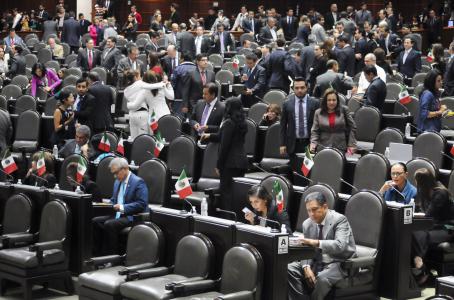
Líderes del PAN y PRD en la Cámara de Diputados velan y afilan armas, al anunciar que, en lo que será esta semana el inicio de la cuenta regresiva para la aprobación del Presupuesto de Egresos 2017, pelearán por la reasignación de mayores recursos a municipios, a salud, educación, campo, seguridad, a la CDMX, entre otras prioridades.

Declarados en “sesión permanente” desde el pasado viernes, los legisladores de la Comisión de Presupuesto deberán atender y resolver en ocho días –antes del 15 de noviembre, plazo máximo legal para aprobar el Decreto– 7 mil 366 solicitudes de recursos que recibieron, que incluyen 58 mil 348 proyectos, con un monto de 735 mil 413 millones de pesos en peticiones.

Sin embargo, el presidente de la Comisión de Presupuesto, el priista Alfredo del Mazo, les recordó que la Ley de Ingresos 2017 considera sólo 51 mil 380 millones de pesos adicionales a la propuesta del Ejecutivo federal, y que de dicho monto se canalizarán alrededor de 17 mil 500 millones de pesos a los estados, con base en las solicitudes de proyectos de inversión y las opiniones de las comisiones.

En ceros, los recursos para atender “crisis” de pensiones en universidades
Diputados piden incremento de 10 mil 300 mdp para educación en 2017
Por retiro, cada magistrado del TEPJF se irá hasta con $1.5 millones

El vicecoordinador PRD, Jesús Zambrano, anunció que peleará al menos 9 mil 500 millones para el gobierno de la Ciudad de México.
“Vamos a recuperar recursos a infraestructura y otras prioridades que permitan a la capital mantener su funcionalidad”, anticipó.

Dijo que la Comisión de Hacienda ofreció reasignar por lo menos 9 mil 500 millones de pesos y el PRD verificará que ello se cumpla.

El coordinador del PAN, Marko Cortés, adelantó que exigirán marcar prioridades y enfocarse en atender las necesidades más urgentes del país en educación, salud, seguridad, infraestructura, campo, cultura, ciencia y tecnología.

Dijo que los poco más de 51 mil millones de pesos adicionales a lo previsto en la Ley de Ingresos tienen su origen en los ajustes realizados por los partidos, como son: aumento de 19 mil barriles de petróleo diarios, alza en el tipo de cambio del dólar frente al peso de 18.20 a 18.62, así como de ajustes a los aprovechamientos y medidas de eficiencia recaudatoria.

7 Mil 366solicitudes de recursos recibieron los legisladores de la Comisión de Presupuesto, que deberán atender antes del 15 de noviembre.

Fuente:

http://www.elfinanciero.com.mx/nacional/pan-y-prd-van-por-mas-recursos-para-educacion-salud-cdmx.html

Fuente Imagen:

https://lh3.googleusercontent.com/fIr7d6ypdY3ZIY7ofLA80u_BiDoEfkwdcmhB8_kfKRSuTwffKf-vSMaTkGvWEU3o-Z6gQ2c=s85

Comparte este contenido:
Page 4748 of 6194
1 4.746 4.747 4.748 4.749 4.750 6.194