Page 4789 of 6193
1 4.787 4.788 4.789 4.790 4.791 6.193

Alemania: Social justice is becoming a bigger issue

Europa/Alemania/Octubre de 2016/Fuente: Economist

RESUMEN: La crisis de refugiados no es el único problema que podría decidir la elección del Bundestag del próximo otoño. Si los tres partidos de izquierda de Alemania obtienen su deseo, la justicia social puede llegar a ser tan polémico. Los socialdemócratas (que actualmente gobiernan como socios menores en virtud de la canciller, Angela Merkel), junto con los Verdes y La Izquierda, que desciende del partido comunista en la antigua Alemania del Este, son la esperanza de formar una coalición de izquierda en este tema para desbancar la señora Merkel en 2017. Su sueño es llegar a provocar un movimiento Bernie Sanders-como-que esta siendo Alemania, no en Estados Unidos, podría barrer al poder. Por lo que han comenzado a recitar una metáfora que suena amenazante: la «tijera» (es decir, la brecha) entre ricos y pobres se mantendrá la ampliación a menos que lleguen a gobernar el país.Sea o no la brecha entre ricos y pobres es cada vez mayor es discutible. En comparación con la década de 1990, la desigualdad de ingresos es mayor, medida por el coeficiente de Gini. Pero alcanzó su punto máximo en 2005 y desde entonces se ha mantenido prácticamente estable. Dentro de la UE, Alemania es un país mediocre en términos de desigualdad de ingresos, detrás de unos pocos países más igualitarios, como Suecia, y muy por delante de las sociedades más desiguales en Europa meridional y oriental, así como Gran Bretaña. Pero cuando se trata de la distribución de la riqueza, Alemania está cerca de la parte superior de la escala de la desigualdad, sólo por detrás de Austria en la zona euro. El 10% de los hogares alemanes poseen aproximadamente el 60% de la riqueza del país, mientras que el 20% no posee nada, o están en deuda (esto se explica en gran parte por alemanes alquilar casas de más de poseer, y confiando más en las pensiones del gobierno).

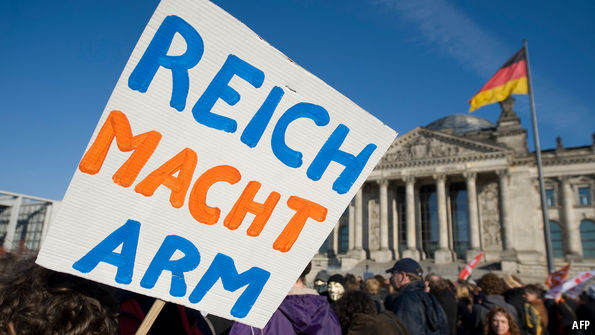
THE refugee crisis is not the only issue that could decide next autumn’s election of the Bundestag. If Germany’s three left-wing parties get their wish, social justice may become just as contentious. The Social Democrats (who currently govern as junior partners under the chancellor, Angela Merkel), along with the Greens and The Left, which descends from the communist party in the former East Germany, are hoping to form a leftist coalition on this issue to unseat Mrs Merkel in 2017. Their dream is to spark a Bernie Sanders-like movement that—this being Germany, not America—could sweep them into power. So they have begun reciting a menacing-sounding metaphor: the “scissors” (ie, the gap) between rich and poor will keep widening unless they get to run the country.

Whether or not the divide between haves and have-nots is increasing is debatable. Compared with the 1990s, income inequality is higher as measured by the Gini coefficient. But it peaked in 2005 and has since remained broadly stable. Within the EU, Germany is a middling country in terms of income inequality, behind a few more egalitarian countries, such as Sweden, and well ahead of more unequal societies in southern and eastern Europe, as well as Britain. But when it comes to the distribution of wealth, Germany is near the top of the inequality scale, behind only Austria in the euro zone. The top 10% of German households own about 60% of the country’s wealth, whereas the bottom 20% own nothing, or are in debt (this is largely explained by Germans renting homes more than owning, and by relying more on government pensions).

Whether all of this amounts to a crisis depends on one’s vantage point. The Institute of Economic and Social Research (WSI), which is affiliated to the trade unions, concludes that Germany has a big problem. The Cologne Institute for Economic Research, which has ties to employers’ organisations, argues the opposite. Nonetheless, the perception of growing inequality is widespread. And according to a study in 2013 by the Allensbach Institute, a polling outfit, 69% of Germans think that income and wealth are unfairly distributed. But they may in fact be confusing actual inequality with something else: declining social and economic mobility. The WSI has found that moving either up or down has become harder since the 1990s, and much trickier in eastern Germany. Compared with other countries, intergenerational mobility (children ending up in a different class from their parents) is low.

Much of the problem lies in the education system. In Germany success at school and university is more strongly correlated with the education of parents than elsewhere in Europe. There has traditionally been little emphasis on pre-school education, even though it has long-term benefits, especially for children from poor families. And Germany, like Austria, has an unusual school system that sends pupils, usually after the age of ten, either on an academic track or a blue-collar career path.

The Allensbach study found that what Germans mean by “social justice” is a fair chance of success and fair (but not equal) rewards for achievement. They are also concerned about young people not being overburdened by providing for the old. Brute redistribution ranked lowest as a definition of the term. As such, just promising to soak the rich—by calling for new wealth taxes, say, as the leftists are doing—misses the point. It makes more sense, for any political party, to invest in better schools and, as the centre-right parties argue, to keep the employment motor humming. That may be why, even taken together, Social Democrats, Greens and The Left would not be able to win a majority of the Bundestag if voting took place today. Like Mr Sanders, they may be doomed to succeed by raising the issue but letting somebody else, most likely Mrs Merkel, find the solution.

Fuente: http://www.economist.com/news/europe/21709356-expect-it-come-up-federal-election-next-year-social-justice-becoming-bigger-issue
Comparte este contenido:

Perú: Capacitan en formación técnica agropecuaria a docentes de región Lima

América del Sur/Perú/Octubre de 2016/Fuente: Andina del Perú

El Programa de Formación Agraria y de Apoyo al Emprendimiento Juvenil en el Perú (Formagro) desarrollará mañana el taller “El enfoque por competencias en la metodología Formagro y la calidad de la educación técnica agropecuaria” dirigido a docentes y directores de diversos institutos.

El objetivo primario de la actividad será contribuir con el fortalecimiento de capacidades del personal docente para la puesta en práctica del enfoque por competencias en las instituciones educativas de formación técnica, así como, reconocer procesos iniciales de acreditación de la calidad educativa sobre experiencias exitosas en institutos agropecuarios similares.

La capacitación será dictada a directores y docentes de los Institutos de Educación Superior Tecnológico Público (IESTP), los Centros de Educación Técnico Productivas (Cetpro) y los Centros de Alternancia ubicados en el ámbito de intervención del proyecto en la región Lima: provincias de Cañete, Yauyos, Huarochirí y Lima (Lurín y Pachacámac).

Este taller se suma al primer curso de actualización docente y a la primera pasantía realizada en marzo y mayo, respectivamente, sobre sistemas de producción agroecológica, dirigido también a maestros y maestras de centros de formación con oferta educativa en la especialidad agropecuaria.
Formagro busca promover la participación de 2,000 jóvenes en actividades productivas y empresariales vinculadas al sector agropecuario, potenciando sus capacidades a través de la ejecución de diversas estrategias de formación técnica agropecuaria, de asesoramiento para la creación y consolidación de iniciativas empresariales, como tambien realizando un seguimiento de los emprendimientos productivos y comerciales que aseguren su sostenibilidad.
El proyecto Formagro es dirigido por la organización canadiense SUCO y se ejecuta en Lima desde enero del 2016.  El proyecto se implementa en coordinación con el Ministerio de Educación y el Ministerio de Agricultura y Riego, contando con el apoyo financiero del Gobierno de Canadá.
Se contará con la participación de docentes, personal directivo y representantes del Ministerio de Educación (Mininter) y de las Direcciones Regionales de Educación de Lima.
El taller es organizado por el Instituto de Desarrollo y Medio Ambiente (IDMA) y se realizará mañana de 09: horas a 17:00 horas en Jr. Los Tacones 364 – Chaclacayo.
Fuente: http://www.andina.com.pe/agencia/noticia-capacitan-formacion-tecnica-agropecuaria-a-docentes-region-lima-637477.aspx
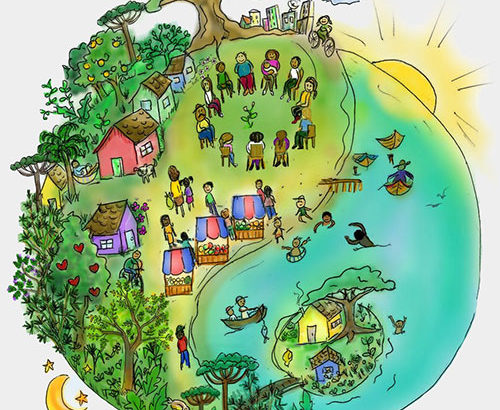
Fuente de imagen: http://manso.ec/agroecologia/
Comparte este contenido:

Brasil: Alumnos se oponen a reforma educativa

América del Sur/Brasil/Octubre de 2016/Fuente: La Estrella de Panamá

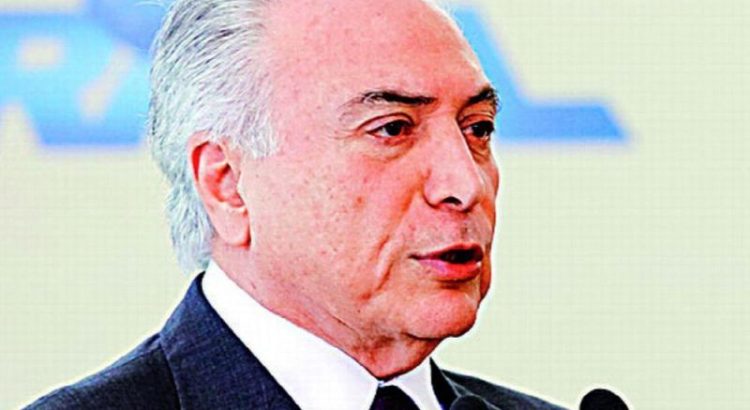
Estudiantes de todo Brasil mantienen ocupadas cerca de mil escuelas y universidades en oposición a una reforma educativa y una enmienda constitucional para limitar los gastos públicos, ambas impulsadas por el presidente Michel Temer.

Las ocupaciones comenzaron a principios de octubre en Paraná (sur), región donde el sistema educativo estaba ‘abandonado por el estado’, dijo a Efe la presidenta de la Unión Brasileña de Estudiantes de Secundaria (UBES), Camila Lanes, pero se han extendido y han paralizado las clases en un goteo por todo el país.

En todo Brasil han sido ocupadas 1,047 escuelas (845 de ellas en Paraná), 102 universidades y otros tres centros educativos, además de la Cámara Legislativa Municipal de Guarulhos (São Paulo) que lleva una semana tomada por los estudiantes, según recuentos de la UBES y la Unión Nacional de Estudiantes (UNE).

Las movilizaciones han conseguido alargarse porque los estudiantes se han organizado para dividirse tareas de cocina y limpieza y porque, para ocupar el tiempo libre, han puesto en marcha debates, talleres y otras actividades culturales y deportivas.

El último caso, ocurrido este jueves, fue la ocupación de la rectoría de la Universidad de Cascavel, en Paraná, por parte de unos 40 alumnos.

El Gobierno brasileño está presionando a los alumnos para que acaben las movilizaciones y la policía ha realizado desalojos de decenas de escuelas en los últimos días, en algunos casos sin autorización judicial, según las asociaciones estudiantiles.

En el desalojo de una escuela del municipio de Miracema (Tocantins, norte), la Policía arrestó este jueves a 26 estudiantes, entre ellos once menores de edad, que fueron esposados y llevados a comisaría, informó la UBES.

El ministro de Educación, José Mendonça Bezerra, ha dado un ultimátum hasta el lunes para que desocupen las escuelas bajo la amenaza de cancelar los exámenes que sirven para el acceso a la universidad, conocidos como ENEM, programados para inicios de noviembre.

Fuente: http://laestrella.com.pa/internacional/america/alumnos-oponen-reforma-educativa/23968075

Comparte este contenido:

Nueva Zelanda: 1300 visas issued to foreign students at ‘dodgy’ school

Oceanía/Nueva Zelanda/Octubre de 2016/Fuente: RNZ

RESUMEN:  La Academia Internacional de Nueva Zelanda (IANZ), pasaba estudiantes que deberían haber fracasado. Las cifras, publicadas por el Partido del Trabajo en virtud de la Ley de Información Oficial, muestran 857 visas de trabajo que se publicaron el año pasado a estudiantes de IANZ, y 464 de este año.  La primera denuncia contra IANZ fue en 2014, pero una investigación formal sólo se inició en abril de este año. «En ese momento, más de 1.300 visas de trabajo se conceden sobre la base de las calificaciones que  parecen bastante poco fiables en retrospectiva, sobre la base de las pruebas que se ha hecho en algunas cohortes.» RNZ informó ayer que NZQA llevó a cabo una revisión focalizada de las evaluaciones de la institución de educación superior privada este año.

A later investigation found the now-defunct school, the International Academy of New Zealand (IANZ), was passing students it should have failed.

The figures, released to the Labour Party under the Official Information Act, show 857 work visas were issued last year to IANZ’s students, and 464 this year.

Labour’s tertiary education spokesperson David Cunliffe said that was despite government agencies knowing about the rort.

The first complaint against IANZ was in 2014, but a formal investigation only began in April this year, he said.

«In that time, over 1300 work visas were granted on the basis of qualifications which look pretty dodgy in hindsight, based on testing that has been done on some cohorts.»

RNZ reported yesterday that NZQA conducted a focused review of the private tertiary institution’s assessments this year.

When NZQA looked at 77 examples of students’ work that IANZ said met those standards, it found all of them should have been failed.

Some answers were unintelligible, and some work was not up to scratch even though IANZ tutors had described it as being of high quality.

There had been similar results form other cohorts, Mr Cunliffe said.

«One … showed only 14 percent of those tested were able to pass a retest.»

The system for picking up poor quality institutions was almost entirely reliant on whistleblowers, he said.

«There’s no proactive monitoring, there’s no spot-checking.»

It was also clear the problem was getting worse.

«There are 13 live investigations into potential student visa fraud at the moment by Immigration New Zealand.

«The Tertiary Education Commission’s got 19 private tertiary institutions classified as high risk [and] the Serious Fraud Office is investigating five.»

Fuente: http://www.radionz.co.nz/news/national/316727/1300-visas-issued-to-foreign-students-at-‘dodgy’-school

Comparte este contenido:

Estados Unidos: Start saving early for your children’s education

América del Norte/Estados Unidos/Octubre de 2016/Fuente: Gulfnews

RESUMEN: Los expertos aconsejan una manera eficaz y un plan realista para ahorrar temprano para evitar gastos escolares y universitarios tomando una parte de su salario mensual.
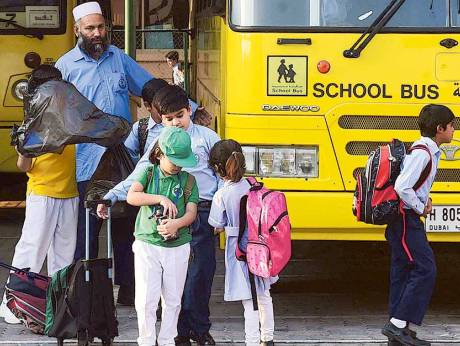
La educación de los niños es cada vez mas cara, y los gastos aumentan cuando los niños se unen a la universidad. Zurich ha vinculado recientemente el costo de educación de por vida en Dh933,945 por niño. En el Reino Unido, para la educación universitaria de un estudiante internacional, los gastos se fijaron en $ 15.500 (Dh56,885) al año sin incluir los gastos de vida. En los Estados Unidos, el precio del curso de licenciatura es de más de $ 22,000 por año, mientras que en Canadá, un curso similar cuesta alrededor de $ 11.400. Los gastos de vivienda vienen a otro $ 20.000 por año. «Sin la ayuda excepcional de planificación financiera, el ahorro para financiar el futuro de su hijo puede ir en detrimento de su propio futuro, porque otros objetivos importantes como el ahorro para el retiro pueden quedarse en el camino,» Stuart Ritchie, planificador financiero Chartered y Chartered Wealth Manager en AES Internacional dijo Gulf News.

To avoid school and college fees taking up a chunk of your monthly salary, experts advise an effective and a realistic plan to save early.

Children’s education is getting expensive, and expenses increase when these children join the university. Zurich recently pegged the lifetime education cost at Dh933,945 per child. In the United Kingdom, for an international student’s undergraduate education, the expenses were pegged at $15,500 (Dh56,885) per year excluding living expenses. In the United States, the an undergraduate course fee is more than $22,000 per year, while in Canada, a similar course costs about $11,400. Living expenses come to another $20,000 per year.

“Without exceptional financial planning assistance, saving to fund your child’s future can come at the expense of your own future, because other important goals such as saving for retirement can fall by the wayside,” Stuart Ritchie, Chartered Financial Planner & Chartered Wealth Manager at AES International told Gulf News over email.

Brendan Dolan from Old Mutual International concurred.

“Most parents want to provide the best for their children and would agree that funding their children’s education is a key financial priority and this is especially the case in the UAE where all expatriate parents need to pay for their children’s education,” Dolan, regional director, Middle East and Africa, for Old Mutual International, said.

Funding education with debt

Experts say getting into debt for finance children’s education may be bad idea even though studies suggest that 64 per cent of the parents would be willing to get into debt to support their children.

Experts say considering the large sum of money that may be required to fund the children’s education, the key is to start saving early.

“You need to spread the cost of investing to fund education over the longest term practicable, and remain disciplined and committed to the plan you create,” Ritchie said.

And these savings should not get in the way of saving for other objectives like buying a property or retirement, among others.

“When considering the best ways to save for a child’s education there are many options available. Many parents may want the security of ring-fencing these savings to ensure future educational needs are safeguarded — in such cases, a trust arrangement may be beneficial, and will ensure the child’s future is provided for in the event of something happening to one or both parents,” Dolan from Old Mutual said.

But despite this, parents tend to finance children’s education from day to day income.

Saving schemes

Ritchie from AES International advises to stay away from contractual savings schemes and plans that are heavily marketed and sold in the international financial marketplace. They are particularly prevalent in Dubai, but many are expensive and ineffective at best.

A long term passive plan may be handy in situation like these.

“In order to get the best returns on any investment you make towards your goal of funding your child’s education, there’s no need for exotic investments, just build a low-cost, flexible portfolio of passive funds, (ETFs), investing in bonds and equities. Make sure you can access your money at any time, in case of a personal emergency for example, with no penalties for doing so,” Ritchie said.

And Dolan from Old Mutual warns of risks.

“The various potential risks should also be taken into account, for example, what if one or both of the parents lose their jobs, have an accident, or dies? Or an unexpected situation may arise when there are competing priorities, such as looking after an elderly relative. Speaking with a financial adviser will help to ensure a robust financial plan is put in place.”

Fuente: http://gulfnews.com/business/sectors/markets/start-saving-early-for-your-children-s-education-1.1920486


Comparte este contenido:

Fiji: Opposition leader says Education Minister must look at basic needs

Oceanía/Fiji/Octubre de 2016/Fuente: RNZ

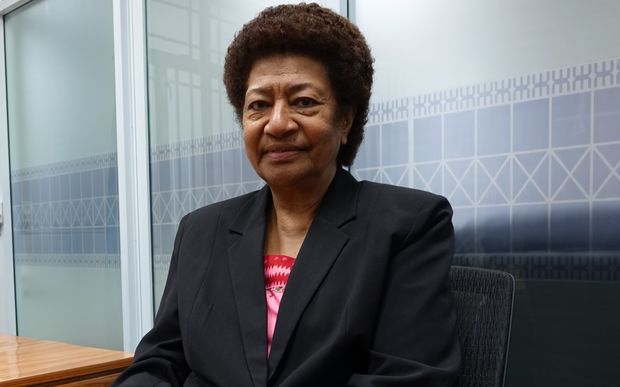
RESUMEN: El líder de la oposición en Fiji dice que el Ministerio de Educación es demasiado distraído y tiene que ayudar a los niños en zonas rojas que están aprendiendo en malas condiciones. Ro Teimumu Kepa ha regresado de una gira por Tailevu y Ra para ver los progresos realizados desde el ciclón de Febrero, Winston y dice que no ha habido mucho. Ella dijo que las tiendas de campaña proporcionadas por las ONG y los donantes internacionales habían alcanzado su vida útil, y la temporada de ciclones comienza en días. Dijo que el ministro de Educación, Mahendra Reddy, estaba haciendo declaraciones acerca de cada niño que recibe una computadora o una tableta, pero la realidad es que muchos niños no tienen fundamentos. «En realidad, no es necesario entrar en otras áreas del plan de estudios de la escuela que también es muy importante. Pero sobre todo es necesidades básicas y cuando se le pregunta en el Parlamento en cuanto a lo que está sucediendo nos sacude y piensa que es inoperante y, todo está bajo control.»

The leader of the opposition in Fiji says the education ministry is too distracted and needs to help children in red zones who are learning in poor conditions.

Ro Teimumu Kepa has returned from a tour of Tailevu and Ra to view progress since February’s Cyclone Winston and says there hasn’t been much.

She said the tents provided by NGOs and international donors had reached their life-span, and cyclone season begins in days.

She said the Education Minister, Mahendra Reddy, was making statements about every child receiving a computer or a tablet, but the reality is that many children don’t have basics.

«You don’t really need to go into other areas of the school curriculum which is also very important. But mostly it’s basic needs and when he is asked in parliament as to what is happening he brushes us off and thinks it’s of no consequence and everything is under control.»

Fuente: http://www.radionz.co.nz/international/pacific-news/316660/fiji-opposition-leader-says-education-minister-must-look-at-‘basic-needs’

Comparte este contenido:

Sudáfrica: Underfunding of universities needs presidential attention

África/Sudáfrica/Octubre de 2016/Autor: Tammy Petersen/Fuente: News 24

RESUMEN: Dos décadas de escasez crónica en el sector de la educación superior deben ser abordados de inmediato por los que están en los más altos niveles de gobierno, dijo el Consejo de la Universidad de Witwatersrand el viernes. Ha abogado por el instituyente urgente de una reunión multidisciplinaria, de deliberación para explorar las opciones de financiación sostenible para la educación superior de manera que ningún estudiante se excluya financieramente, asi como el establecimiento de plazos y etapas claro, los recursos necesarios y la capacidad de los gobiernos para asegurar que el trabajo requerido sea llevado a cabo de manera expedita. «El sector de la educación superior en África del Sur está en crisis con las protestas estudiantiles en curso que provocan la interrupción y destrucción. El enfoque de estas protestas es el elevado precio de los enseñanza superior, que está restringiendo el acceso de un número significativo de estudiantes», dijo el consejo en un comunicado .

Two decades of chronic underfunding in the higher education sector need to be addressed immediately by those at the highest levels of government, the council of the University of the Witwatersrand said on Friday.

It has called for the urgent instituting of a multi-disciplinary, deliberative gathering to explore sustainable funding options for higher education so that no student is financially excluded; the establishment of clear time frames and milestones; and the necessary resources and capacity from government to ensure that the required work is undertaken expeditiously.

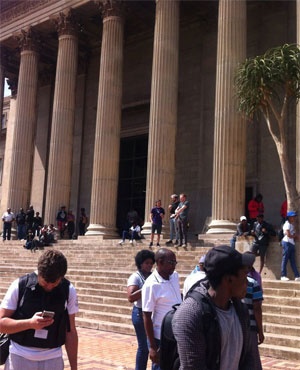
«The higher education sector in South Africa is in turmoil with ongoing student protests causing widespread disruptions and destruction. The focus of these protests is the unaffordability of higher education which is restricting access for a significant number of students,» the council said in a statement.

«Access to higher education should not be the preserve of those who can afford it. At the same time, we cannot allow deterioration in quality. It is for this reason that the council…recently joined most other constituencies at the university in openly declaring its support to work towards the goal of free, fully-funded, quality, decolonised higher education.»

The council said this aim should be «considered within the broader context of the pervasive poverty, unemployment and inequality in our country».

«If one examines this context, it is clear that universities cannot be expected to achieve the goal of free, fully-funded, quality, decolonised higher education in isolation from other stakeholders, particularly government.»

Research funding

It was «deeply distressed» by the proposed short-term funding levels, the council said.

«Our universities are a significant national priority. They are the only institutions that are capable of producing the high-level skills that are required to advance innovation, tackle the challenges of the 21st century, and safeguard South Africa’s economy and its future.

«We are particularly distressed by the proposed funding for research-intensive universities, which we believe for a university like Wits will be 4% less than inflation next year. Our country needs high levels of investment in top-end research to create new knowledge that is relevant to society and that will enable us to participate in the global knowledge economy. This is also critical to enabling our universities to promote indigenous knowledge and its inclusion in curricula.»

It said universities were at risk of losing academic talent to the private sector and other countries if they could not be paid adequately or work in an environment that is conducive to learning, teaching and research.

«The fact that numerous universities are unable to continue with the 2016 academic programme has immense consequences for the country. The unfortunate, but necessary and unavoidable presence of police and private security is a further tragedy. For these and many other reasons, it is imperative for stability to return to the sector.»

The situation is a national crisis and requires the president and his office to lead in finding resolutions, the council said.

Sustainable solutions

«The inclusion of the National Treasury in the ministerial task team is an important step in the right direction, but we believe that the president should be at the forefront of exploring options for the sustainable funding of higher education.

«We also call on all relevant stakeholders, including Parliament, the private sector, civil society and others to join our request that public universities be adequately funded. We call on genuine student leadership to come forward and demonstrate real commitment to finding sustainable solutions.»

Violent protests have been playing out at Wits, as well as at other universities across the country.

Students in September began protesting over free education after Higher Education and Training Minister Blade Nzimande announced that tertiary institutions could raise fees, but by no more than 8%.

In his medium term budget policy statement on Wednesday, Finance Minister Pravin Gordhan said an extra R17.6bn is needed over the medium term to fund South Africa’s higher education system.

Government will draw from the contingency reserve to make funds available from existing budgets.

Government to fund increase for some students

A portion of the resources to support university students will be found elsewhere from within the post-school education system.

University subsidies will grow at an annual average rate of 10.9% over the next three years, while allocations to the National Student Financial Aid Scheme (Nsfas) will be increased at 18.5% providing support to underfunded university students.

In the 2016 budget, R5.6bn was added to university subsidies to fund the shortfall caused by there not being an increase in fees for the 2016 academic year, Gordhan said.

In the same budget, Nsfas received additional funding of R10.6bn over the 2016 medium-term expenditure framework period.

Of this amount, R2.5bn was allocated in the current year for short-term debt relief for 71 753 unfunded or inadequately funded students who were at universities in the 2013, 2014 and 2015 academic years.

The remaining R8bn was for unfunded new and continuing students for the 2016 academic year and beyond.

In the 2017 medium-expenditure framework, government will fund the increase in fees at higher education institutions for the 2017 academic year, up to a maximum of 8% for students from households earning up to R600 000 per year, Gordhan said, while top-ups will also be made to Nsfas.

Fuente: http://www.news24.com/SouthAfrica/News/underfunding-of-universities-needs-presidential-attention-wits-council-2016102

Comparte este contenido:
Page 4789 of 6193
1 4.787 4.788 4.789 4.790 4.791 6.193