Page 5232 of 6194
1 5.230 5.231 5.232 5.233 5.234 6.194

México: Necesario mejorar labor técnica y pedagógica en las escuelas: Ieepo

América del Norte/México/13 Agosto 2016/Fuente: Despertar de Oaxaca

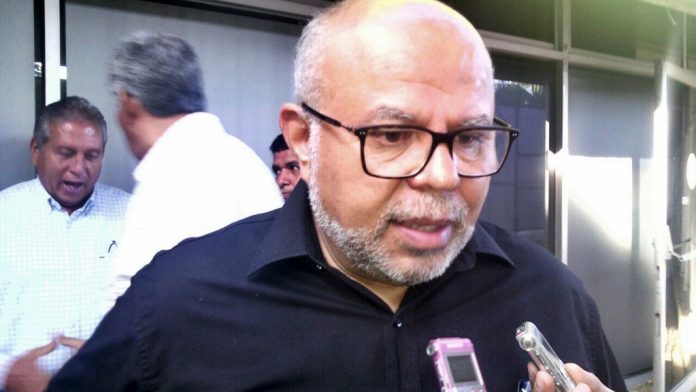
Durante el arranque de las acciones preparatorias para el ciclo escolar 2016-2017, el director general del Instituto Estatal de Educación Pública de Oaxaca (Ieepo), Germán Cervantes Ayala, destacó que la tarea de la supervisión escolar en el sistema educativo del país y en Oaxaca representa una labor vital para gestionar, evaluar y fortalecer la calidad de la enseñanza y del aprendizaje en los estudiantes oaxaqueños.

Ante la invitación realizada por la Subsecretaría de Educación Básica de la Secretaría de Educación Pública para participar con la conferencia “Supervisión y Dirección Escolar” dirigida a supervisores escolares de diversos niveles educativos del país, entre ellos Oaxaca, el titular del Ieepo señaló la importancia de la labor de estas autoridades educativas como enlaces de atención con la comunidad escolar.

Cervantes Ayala precisó que el trabajo que realizan autoridades escolares se debe fortalecer y profesionalizar en las áreas técnica y pedagógica para brindar una enseñanza de calidad a los niños y jóvenes del país, la cual se encuentra amparada en la Constitución Política de los Estados Unidos Mexicanos.

El funcionario estatal reiteró el compromiso del Ieepo para que, en estrecha coordinación con los docentes, directores y supervisores escolares, construyan el proceso educativo del siglo XXI en favor de los más de un millón de estudiantes oaxaqueños del nivel básico.

“Las autoridades del Ieepo deben trabajar de la mano con las supervisiones escolares y demás autoridades educativas de la entidad para resolver juntos las diversas problemáticas que se registran y cumplir con la tarea más importante de una sociedad, la de brindar una educación de calidad a los niños y jóvenes de la entidad”, resaltó.

Como parte de las actividades preparatorias de inicio de clases, el responsable de la política educativa en la entidad resaltó la importancia de la labor de los consejos técnicos escolares para el próximo ciclo escolar que iniciará el 22 de agosto.

Destacó que este órgano educativo debe asegurar la eficacia del servicio educativo de las escuelas, cuyo propósito es revisar permanentemente el logro del aprendizaje de los alumnos, planear y dar seguimiento y evaluar las acciones de la escuela, así como fomentar el desarrollo profesional de los mentores y directivos

Señaló que dada su importancia, los días programados para las sesiones del Consejo Técnico, no podrán ser utilizados para actividades sociales, cívicas o ajenas al mismo.

El titular del Ieepo expuso que, cinco días previos al inicio del ciclo escolar, se realizará la fase intensiva en el que el colectivo docente debe diseñar su planeación, en el que se debe realizar un diagnóstico o autoevaluación, definir los objetivos, plantear las metas, establecer los programas, acciones y compromisos, así como definir las estrategias de seguimiento y evaluación.

En la fase ordinaria, se realizan las sesiones de los Consejos Técnicos Escolares los últimos viernes de cada mes (excepto en diciembre y abril).

El colectivo docente da cuenta de los compromisos y responsabilidades de los resultados obtenidos. Los avances individuales, en lo colectivo y acuerda acciones para el siguiente mes.

Cervantes Ayala puntualizó que esta información debe ser compartida con los directores de los diversos planteles de la entidad, en donde se deben involucrar a los padres de familia.

Fuente: http://despertardeoaxaca.com/necesario-mejorar-labor-tecnica-y-pedagogica-en-las-escuelas-ieepo/
Comparte este contenido:

México: Colima será sede de Foro Internacional de Educación

América del Norte/México/12 de Agosto de 2016/Autor: Edgardo Zamora/Fuente: Colima Noticias

La Secretaría de Educación organiza un Foro Internacional para supervisores, directores y maestros, referente a un antes y un después para la educación en Colima el próximo 15 y 16 de agosto.

El titular de la dependencia, Óscar Hernández Rosas, expresó que el ciclo escolar 2016-2017 será el parteaguas en Colima para la educación porque se iniciará la implementación de la política educativa de la administración de Ignacio Peralta Sánchez.

“Un momento en que se inicia con fuerza en la Educación Básica; en este foro participarán más de ocho mil maestros que tienen el interés y la disposición por formarse”.

Además podrán conocer la opinión de expertos relacionados con el trabajo que realizan cada día en las aulas y reforzarán los modelos educativos con los que trabajan.

Al foro asistirán, la maestra María Antonia Casanova, española que hablará de la evaluación educativa; la doctora Pilar Hossnes, que es experta en gobernanza de centros educativos; Silvia Conde, experta en el manejo de violencia en los contextos escolares; Irma Fuenlabrada, para hablar sobre la enseñanza de las matemáticas, comprenderla y enseñarla y Ricardo Valdez, experto en ciencias.

Por otro lado, ya se concretó la respuesta económica de parte de las autoridades con el pago del aumento salarial que ya recibieron los docentes del sistema federalizado y que se pagará próximamente a los del sistema estatal; recursos que tienen que ver con las negociaciones entre la SEP y el SNTE.

Fuente: http://colimanoticias.com/colima-sera-sede-de-foro-internacional-de-educacion/

Comparte este contenido:

Politicizing education damaging to Ghana

Africa/Ghana/12 de Agosto de 2016/Fuente: Ghana web

RESUMEN: La politización de la estructura del sistema educativo de Ghana ha perjudicado la educación secundaria. El  Prof. Yankah sostiene la opinión de que la extensión de corta duración de la educación secundaria a cuatro años era un paso positivo, pero en última instancia, la conveniencia política vio una reversión al sistema de tres a expensas de una educación de calidad. «Creo que las estadísticas muestran. Mi análisis de las tendencias de 2006 a 2015 y ahora 2016 muestran claramente «que el sistema de cuatro años era mejor que las actuales tres años. «Es claro que los tres años no está funcionando ‘  El nuevo sistema, sin embargo duró tres años académicos cuando el Congreso Nacional Democrático (NDC) asumió el poder en 2009 y volvió al sistema de tres años del cual el profesor  Yankah considera apresurado y poco aconsejable. Se está haciendo daño a nuestros hijos, se está perjudicando a los padres, se está perjudicando la industria, y se está perjudicando al país «.

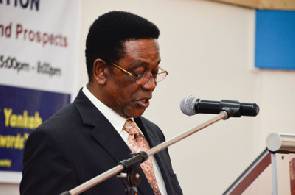
The politicization of the structure of Ghana’s educational system has handicapped secondary education, the Central University President, Professor Kwesi Yankah has lamented.

Prof. Yankah holds the view that the short-lived extension of secondary education to four years was a positive step but political expediency ultimately saw a reversion to the three system at the expense of quality education.

“I think the statistics show. My analysis of the trends from 2006 to 2015 and now 2016 clearly show” that the four-year system was better than the current three years, he asserted on the Citi Breakfast Show.

‘It is clear the three years is not working’

Former President John Kufuor’s New Patriotic Party (NPP) administration started the 4-year Senior High School programme in 2007 based on research.
The new system however lasted three academic years as the National Democratic Congress (NDC) assumed power in 2009 and reverted to the three year system which Prof. Yankah maintains was rushed and ill advised.

“In 2009, even without examining the outcomes of the four year project which had been introduce by the Kufuor regime, even without analysing it, or even without allowing it run its full course from year one, two, three, four – examining the results and determining if it was something productive or otherwise, they [the NDC government] just decided; let’s truncate it and restore the three year project.”

“So that is where the politics then comes in and now political again when it is so clear that the three years is not working. It is hurting our children, it is hurting parents, it is hurting industry, and it is hurting the country.”

NDC unwilling to admit mistake

Politics is also keeping the NDC government from admitting a mistake was made by reverting back to the three year system, according to Prof. Yankah.

“In spite of all this, nobody is stepping forward to say maybe we made a mistake, maybe we should listen to what Kufuor was saying. But if you mention Kufuor, it is politics. If you mention the policy that NPP introduced and that it was working and that what has turned out to be superior, that was political and that hurts. That is the problem with this country.”

The 2016 WASSCE

The quality of the country’s secondary education is a perennial hot topic when WASSCE results are released.

A breakdown of the 2016 WASSCE results reiterated the educational system’s struggle with Mathematics and the Sciences.

WASSCE-WAEC-May-June-2015-Results-Out-2

A total of 274,262 candidates participated in the 2016 exams and according to WAEC, a total of 125,065 students obtained A1 to C6 in English Language, which is 53.19%, 59,725 (25.40%) obtained D7-E8 whilst 46,595 (19.82%) had F9.

For Mathematics, 77,108 (32.83%) obtained A1-C6; 65,007 (27.68%) obtained D7-E8 whilst 89,477 (38.10%) had F9.

About 113,933 students obtained A1-C6 in Integrated Science which is 48.48%, 75,938 (32.32%) obtained D7-E8 whilst 42,519 (18.09%) had F9.

Fuente: http://www.ghanaweb.com/GhanaHomePage/NewsArchive/Politicizing-education-damaging-to-Ghana-Prof-Yankah-461949

Comparte este contenido:

Singapur: SAP schools shouldn’t be tweaked for sake of tokenism: Janil

Asia/Singapur/12 de Agosto de 2016/autora: Charissa Yong/Fuente: The Strait Times

RESUMEN: Escuelas del Plan de Asistencia (SAP) Especiales de Singapur, que enseñan a los estudiantes sean bilingües en Inglés y Chino, quedaron bajo el punto de mira en una conferencia sobre la diversidad. Los miembros de la audiencia habían sugerido que las escuelas ofrezcan clases de idioma malayo o tamil para que sus poblaciones estudiantiles puedan ser más racialmente diversos. La sugerencia se produjo durante una discusión sobre los estudiantes chinos en las escuelas de SAP que tienen  amigos de otras razas. Pero el ministro de Estado de Educación Janil Puthucheary no está a favor de él, diciendo: «No queremos hacer uso de la participación simbólica racial con el fin de provocar una posición cultural. «Queremos tener un resultado real», agregó. En resumen, un objetivo educativo que ofrece la mejor oportunidad de educación a todos los estudiantes. El Dr. Janil dijo que las escuelas de SAP juegan un importante papel cultural en Singapur. Que se iniciaron en el año 1979 debido a las preocupaciones sobre la lengua china y las oportunidades disponibles para la mayoría de China para proteger su patrimonio cultural.

Singapore’s Special Assistance Plan (SAP) schools, which teach students to be bilingual in English and Chinese, came under the spotlight at a conference on diversity yesterday.

Members of the audience had suggested that the schools offer Malay or Tamil language classes so that their student populations could be more racially diverse.

The suggestion came during a discussion on Chinese students in SAP schools having few or no friends of other races.

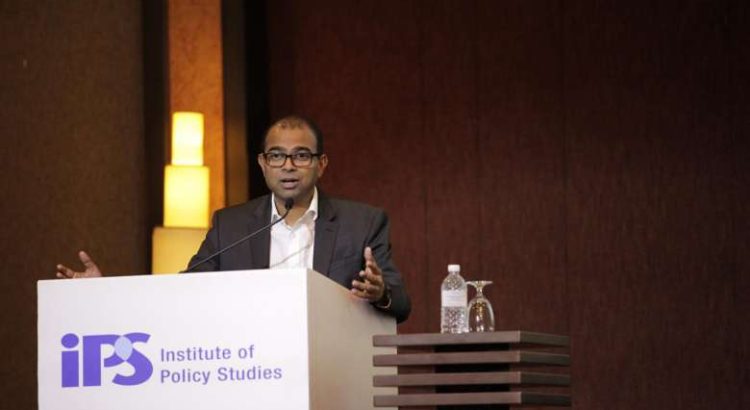
But Minister of State for Education Janil Puthucheary is not in favour of it, saying: «We do not want to make use of racial tokenism in order to provoke a cultural position.

«We want to have a real outcome,» he added. In short, an educational goal that gives the best education opportunity to every student.

Raising a hypothetical situation in which a SAP school offered Malay, he said that in such a situation, a handful of Malay students would apply to that school.

«And then what? … Do those kids get a better education because they are learning Malay in a SAP school?

«Or are we saying that this is a good thing because all the rest of the kids now have some exposure to a Malay student or more Malay students in schools?»

Dr Janil also felt a handful of Malay or Indian students in a SAP school would realistically offer little chance or time for most Chinese students to meaningfully interact with them.

«If we can make an argument that there is a clear educational benefit, a greater benefit, then I think it’s worthwhile,» he added.

Dr Janil said SAP schools play an important cultural role in Singapore. They were started in 1979 because of concerns over the Chinese language and the available opportunities for the Chinese majority to protect their cultural heritage.

He also said similar programmes exist for Malay and Tamil, but do not have comparable take-up rates.

He wondered whether the SAP school system had been singled out because of its success, adding that they make up a small proportion of the school system.

Returning to his main point, he argued that having a small group of non-Chinese students is not going to change the racial harmony dynamics. Neither would it change the intra-school mix a great deal.

The reality is that SAP schools will continue to consist mostly of ethnic Chinese students and minority students who choose to take Mandarin, he added.

Fuente: http://www.straitstimes.com/singapore/education/sap-schools-shouldnt-be-tweaked-for-sake-of-tokenism-janil

Comparte este contenido:

Estados Unidos: New York State Test Scores Inspire Conflicting Interpretatio

América del Norte/Estados Unidos/12 de Agosto de 2016/Autora: Elizabeth Harris/Fuente: The New York Times

RESUMEN: Cuando el Departamento de Educación del Estado de Nueva York anunció puntuaciones de la semana pasada de las pruebas estandarizadas de este año, se llevó con la buena noticia – casi el 38 por ciento de los estudiantes del estado eran competentes en Inglés y alrededor del 39 por ciento eran competentes en matemáticas, a partir de los resultados del año anterior. Pero también advirtió que los resultados no pudieron ser comparados con los resultados anteriores «manzanas con manzanas», debido a los cambios en la forma en que las pruebas fueron escritas. Casi inmediatamente, en lo que se ha convertido en un ritual anual, políticos, educadores y defensores de todo tipo educativo han  interpretado los resultados de manera contradictoria. En una conferencia de prensa el lunes, el alcalde Bill de Blasio, con el canciller de Educación de la ciudad de Nueva York, Carmen Fariña, sonriendo a su lado,  celebró el hecho de la tasa de competencia de la ciudad en la prueba de Inglés, dada a tercero a octavo grado es, por primera vez, en el 38 por ciento de los examinados. (Índice de competencia de la ciudad en matemáticas estuvo por detrás del estado de por cerca de tres puntos porcentuales.)

When the New York State Education Department announced scores last week from this year’s standardized tests, it led with the good news — nearly 38 percent of students statewide were proficient in English and about 39 percent were proficient in math, up from the previous year’s results. But it also warned that the scores could not be compared with previous results “apples to apples,” because of changes in the way the tests were written and given.

Almost immediately, in what has become an annual ritual, politicians, educators and advocates of every educational stripe popped up to interpret the results in myriad contradictory ways. And they did not let any asterisks get in the way.

In a news conference on Monday, Mayor Bill de Blasio, with the New York City schools chancellor, Carmen Fariña, beaming by his side, celebrated the fact that the city’s proficiency rate on the English test, given to third through eighth graders, matched the state’s for the first time, at 38 percent of test-takers. (The city’s proficiency rate in math lagged behind the state’s by about three percentage points.) Mr. de Blasio also happily noted the increase in English scores in “every single one of our 32 local districts.”

Although the tests were shorter and given without a time limit — which the state education commissioner, MaryEllen Elia, repeatedly pointed out while presenting the results — Mr. de Blasio said that the changes actually made the exams a more accurate measure of what students had learned.

“We think the previous test focused on endurance, if you will,” he said. “This test, because they changed the structure of the test, allowed a cleaner, better look at how the child is actually doing.”

Families for Excellent Schools, a charter school advocacy group that makes a habit of vigorously criticizing Mr. de Blasio, also ignored Ms. Elia’s caveat and went a step further, crediting gains at charter schools with lifting the city’s scores.

Not quite. While the city’s charter schools as a group did outperform traditional public schools, the charter school scores were not used to calculate the city’s proficiency levels; they were broken out separately.

Asked about that discrepancy, Jeremiah Kittredge, chief executive of Families for Excellent Schools, said in an email on Friday, “Any way you look at the data, charter schools outpaced district schools in nearly all categories of achievement and are leading the way in public education in this city.”

Others weighed in from different corners of the educational world. The gains were a victory for the Common Core, said High Achievement New York, a group supporting those controversial national standards.

No, they were unreliable, because the state had manipulated the underlying data to have more children pass, said some groups opposed to the tests, led by Leonie Haimson of Class Size Matters.

Emily DeSantis, a spokeswoman for the State Education Department, called Ms. Haimson’s analysis “flawed, irresponsible and misleading.”

Then there was the matter of the children who had not taken the tests at all and what the results said about the strength of the opt-out movement. In 2016, 22 percent of eligible students did not take the tests, but the state said that only 21 percent formally refused to sit for the exams. The rest did not take them for other reasons. The state had not made that distinction in previous years.

The department described the opt-out numbers as essentially flat compared with the previous year, when 20 percent of children did not sit for the exams. But opt-out activists objected.

“Half-a-percentage proficiency gain on math is popping the champagne,” said Lisa Rudley, a founding member of New York State Allies for Public Education, an opt out-group. “But two percentage points is flat!”

Fuente: http://www.nytimes.com/2016/08/06/nyregion/new-york-state-test-scores-inspire-conflicting-interpretations.html?_r=0

Fuente de la imagen: http://www.top10de.com/los-10-paises-con-mejor-educacion-en-el-mundo/

Comparte este contenido:

México: Educación municipal ya cuenta con proyectos para inicio del ciclo escolar

América del Norte/México/12 de Agosto de 2016/Fuente: Express

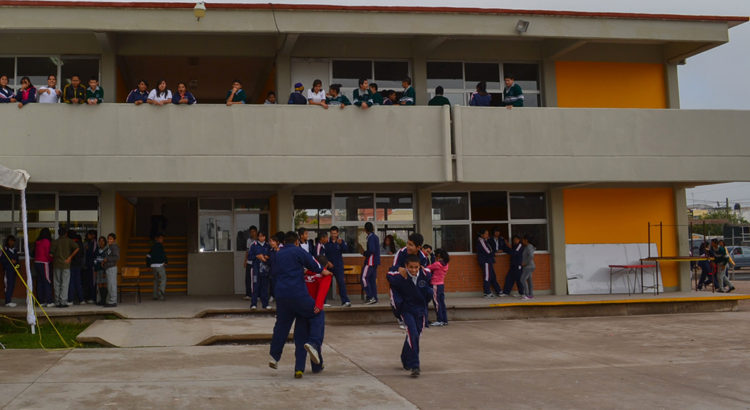
La dirección de Educación Municipal tiene lista la carpeta de proyectos y programas que implementará en los diferentes centros educativos en el ciclo escolar que está por iniciar, informó Juan Antonio Alvarado Martínez, titular del área.
Destacó que cuenta con un proyecto con el Tecnológico Regional con la finalidad de fomentar los valores entre la comunidad estudiantil.
De igual forma, se contempla la implementación de un proyecto ecológico que se pondrá en marcha como programa piloto en 100 instituciones educativas.
El funcionario destacó que también arrancará una nueva etapa del programa “Hacia una sana convivencia escolar” (HASACOES)  que tiene el objetivo de trabajar de manera preventiva en la erradicación de prácticas que impactan de forma negativa a los estudiantes como el bullying. Este programa se implementará en nivel secundaria.
Indicó que con cada una de las actividades programadas para el próximo ciclo escolar se pretende mejorar el nivel en la calidad educativa, además de involucrar a los Consejos de participación Ciudadana, padres de familia, maestros y estudiantes.
Finalmente, resaltó que es prioridad de la administración municipal encabezada por el alcalde Gilberto Hernández Villafuerte el apoyo a la educación en sus diferentes vertientes, motivo por el que a través de la dirección de Infraestructura Municipal hará entrega de aproximadamente 30 mil mochilas que contienen útiles escolares, lo que significa un importante apoyo a los padres de familia en este regreso a clases.
Fuente: http://www.elexpres.com/2015/nota.php?story_id=114234
Comparte este contenido:

Sudáfrica: Basic Education Committee Pleased With Starting of Schools in Vuwani

Africa/Sudáfrica/12 de Agosto de 2016/Fuente: All Africa

RESUMEN: El comité de la lista en la Educación Básica observa con satisfacción los informes de que la educación ha comenzado hoy en Vuwani, Limpopo. El Comité alentó a todas las partes interesadas para poner en esfuerzos para hacer que este año sea un éxito para todos los estudiantes. La Presidente del Comité, la Sra Nomalungelo Gina dijo: «Ahora es el momento de nuestros estudiantes  para utilizar todos los medios posibles y todo el tiempo necesario para ponerse al día.   Ms Gina dijo que el Comité  le preocupa que apenas ayer otra escuela fue incendiada. «Esto es inaceptable. Las escuelas están ahí para asegurarse de que nuestros estudiantes reciban una educación adecuada, que en muchos casos debido a la historia del país, muchas personas mayores no tenían.«Deja que los alumnos disfrutan de los frutos de nuestra democracia al permitir su acceso a la educación. El derecho a la educación es después de todo un derecho constitucional básico.»La escolarización en la zona se detuvo hace tres meses después de que las comunidades locales no estaban conformes con el proceso de demarcación. Se realizaron varias reuniones de alto nivel para tratar de resolver el asunto.

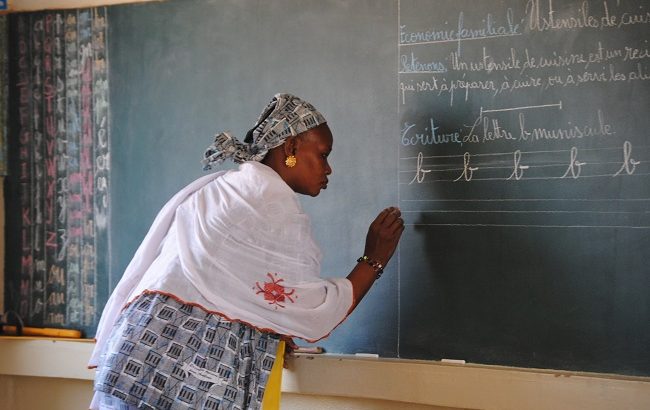
The Portfolio Committee on Basic Education is pleased to note reports that schooling has commenced today in Vuwani, Limpopo. The Committee encouraged all stakeholders to put in efforts to make this year a success for all learners.

Committee Chairperson, Ms Nomalungelo Gina said: «It is now time for our learners to use every possible method and all time needed to catch up. This is especially important for our Grade 11’s, who will find themselves in matric next year.»

Ms Gina said the Committee is however concerned that just yesterday another school was burnt down. «This is unacceptable. Schools are there to ensure that our learners get a proper education, which in many instances due to the history of the country, many older people did not have.

«Let the learners enjoy the fruits of our democracy by making it possible for them to access education. The right to education is after all a basic Constitutional right.»

Schooling in the area stopped three months ago after local communities were unhappy about the demarcation process. Several high profile meetings were held to try and resolve the matter.

Ms Gina called on parents and the larger community to take ownership of state infrastructure to ensure they are not vandalised during protests. «These infrastructure is for the benefit of the public at large. Once protests or disagreements have been resolved, the community will still need them,» she said.

The Committee is further pleased to note media reports that schooling in the camps that were set up to accommodate matriculants in Vuwani were successful. According to reports, matriculants were able to catch up on all the work that was lost. «The Committee would like to commend educators and learners for the extra effort that was put to ensure that school work was up to date and that mid-term exams were written in preparation for the 2016 National Senior Certificate examinations which will start in the middle of October,» said Ms Gina.

Fuente: http://allafrica.com/stories/201608110558.html

Fuente de la imagen: http://www.wanafrica.com/sociedad/africa-futuro-en-riesgo-por-baja-escolarizacion-de-millones-de-ninos/

Comparte este contenido:
Page 5232 of 6194
1 5.230 5.231 5.232 5.233 5.234 6.194