Page 5597 of 6179
1 5.595 5.596 5.597 5.598 5.599 6.179

Nigeria: Ajimobi Begs Stakeholders Over Errors Committed On Education Initiative

África/08 de Junio de 2016/All África

Resumen: El gobernador Abiola Ajimobi del estado de Oyo el martes se disculpó por los errores del gobierno del estado podría haber hecho en la búsqueda de su iniciativa de reforma de la educación. El gobernador licitado la disculpa en el foro de las partes interesadas del gobierno del estado convocó en Ibadan en su iniciativa de reforma de la educación, diciendo que su administración no tenía ninguna intención de vender las escuelas públicas.

Gov. Abiola Ajimobi of Oyo State on Tuesday apologised for the mistakes the state government might have made in the pursuit of its education reform initiative.

The governor tendered the apology at the stakeholders forum the state government convened in Ibadan on its education reform initiative, saying his administration had no intention of selling public schools.

Ajimobi admitted that his administration erred in requesting for a non-refundable fee of N250,000 from interested parties, placing advertorial for expression of interest without consultation and for not holding a pre-meeting session with stakeholders.

«I admit all the lapses that occurred in the presentation of the education initiative to the public. We made three mistakes which I admit.

«No man is perfect but we don’t have any intention of selling or returning schools to its former owners. I apologise to all stakeholders because the buck stops on my table.

«We appeal to all stakeholders, particularly the labour unions and Nigeria Union of Teachers (NUT) to embrace dialogue,» he said.

The governor said that the deteriorating state of education in the state much be reversed, adding that all stakeholders must support government’s initiative.

Ajimobi said that the essence of the forum was for stakeholders to brainstorm on possible ways to improve the quality of education.

The governor called on stakeholders to submit their recommendations in form of a proposal to the Ministry of Education on or before June 30.

The Alaafin of Oyo, Oba Lamidi Adeyemi, and Olubadan of Ibadanland , Oba Saliu Adetunji, in their separate remarks, commended government for the initiative, saying the standard of education must be uplifted.

Oba Samuel Adegbola, the Eleruwa of Eruwa, on his part, urged government to ensure the people were properly informed on the new initiative.

Similarly, Alhaji Kunle Sanni, the Chairman, Muslim Community of Oyo State, said that the forum ought to have been organised before the advertorial for expression of interest was placed in the newspapers.

Rev. J.A Ajetunmobi, the Bishop of Ibadan South Anglican Communion, urged government to ensure that the levy it introduced was used in developing the schools.

He also reiterated the call for the return of mission schools to the former owners.

Prof. Moji Oyebola, a Lecturer in the Faculty of Education, University of Ibadan, urged government to ensure that teachers and other workers in the state were promptly and adequately paid their salaries.

She also stressed the need for regular inspection of schools and incentives for workers to promote maximum productivity.

The News Agency of Nigeria(NAN) reports that the government presentation was done by the Head of Service, Mr Soji Eniade, and Mrs Ronke Makanjuola, the Permanent Secretary in the Ministry of Education, Science and Technology.

NAN reports that the state government had listed five models of reform, citing them as Management Services, Professional Services, Support Services, Government Purchasing Programme and Infrastructure Services.

Government had also urged all stakeholders to study the various models or evolve any new one that would help in promoting quality education in the state. (NAN)

Fuente: http://allafrica.com/stories/201606080085.html

Fuente de la Imagen: https://www.google.co.ve/search?q=Nigeria:+Ajimobi+Begs+Stakeholders+Over+Errors+Committed+On+Education+Initiative&espv=2&biw=1024&bih=628&tbm=isch&source=lnms&sa=X&ved=0ahUKEwjSypaUhpnNAhXBdSYKHZC1DTQQ_AUIBygC#tbm=isch&q=+Ajimobi+Begs+Stakeholders+Over+Errors+Committed+On+Education+Initiative&imgrc=myG2V4CXpPUIFM%3A

Comparte este contenido:

Chile: Quiroga por resultados Simce: «Los hombres muestran bastante menos motivación por la lectura»

Chile / 07 de junio de 2016 / Por: 24Horas.cl TVN / Fuente: http://www.24horas.cl

La subsecretaria de Educación se refirió a la preocupación por los resultados en el Simce de segundo medio 2015 donde los hombres de nivel socioeconómico alto arrojaron bajos índices de comprensión lectora.

La subsecretaria de Educación, Valentina Quiroga, se refirió a los resultados entregados en el Simce de segundo medio 2015 donde los hombres arrojaron bajos índices de compresión de lectura.

«Se ha venido consolidando una tendencia en el país desde el 2012 donde los resultados de compresión lectora han venido cayendo a la fecha. Esta baja está concretada en los hombres de nivel socioeconómico más elevado y en el caso de las mujeres se ha mantenido estable en el tiempo», indicó.

Respecto a las causas de esta situación, la Subsecretaria indicó que cuestionarios asociados indican que «los hombres muestran bastante menos motivación por la lectura, mientras que al 50% de las mujeres les gusta que le regalen un libro, mientras que a los hombres un 30%».

Además, aseguró que no es posible tener una respuesta clara sobre las causas distractoras como uso de la tecnología y redes sociales en los hombres de estrato socioeconómico alto. «Puede ser una hipótesis», indicó Quiroga.

La subsecretaria aclaró que este es «un tema país» donde se está intentando incorporar un Plan Lector con diversas innovaciones desde las salas de clases para potenciar la lectura, en alianza con otros ministerios y con agendas de investigación.

Fuente noticia: http://www.24horas.cl/nacional/quiroga-por-resultados-simce-los-hombres-muestran-bastante-menos-motivacion-por-la-lectura-2037746

Comparte este contenido:

IEA: Are school characteristics related to equity? The answer may depend on a country’s developmental level

Fuente IEA / 8 de junio de 2016

Trude Nilsen and Sigrid Blömeke, University of Oslo, Norway, and Kajsa Yang Hansen and Jan-Eric Gustafsson, University of Gothenburg, Sweden

This policy brief examines how school characteristics may be associated with educational equity in terms of the relationship between students’ socioeconomic status and achievement. The findings have implications for both highly-developed and developing countries interested in supporting educational equity.

http://www.iea.nl/fileadmin/user_upload/Policy_Briefs/IEA_Policy_Brief_Apr2016.pdf


Comparte este contenido:

Tanzania: Resuming Studies After Bearing Child Still ‘A Taboo’

África/ 08 de Junio de 2018/Tanzania Dauily New

Síntesis: Ha habido puntos de vista contradictorios acerca de las estudiantes que se quedan embarazadas antes de completar su educación básica. De acuerdo con la política de educación de Zanzíbar de 2006, el Formulario de Cuatro es la educación básica.

Zanzibar — There have been conflicting views about female students who become pregnant before completing their basic education. According to Zanzibar education policy of 2006, Form Four is basic education.

Cases of female students getting pregnant before completing school are reported every year. They end up being mothers after giving birth and a few who are bold enough, continue with education to higher institutions of learning.

The only penalty under the education law, was expulsion from school for such students and a jail sentence after giving birth and so was the same for the responsible boy.

However, it was difficult to find men guilty because of the lack of DNA test to prove paternity. Since the victims were females, it sparked condemnation from gender activists who successfully put pressure on the government to have the law amended and fortunately in 2005 the law was changed to allow female student to continue with education after giving birth.

Twelve years since the law was passed and implementation started a consideration of female students have continued with education after giving birth. No statistics about students who have benefited so far, but it is estimated that only below one hundred girls have completed school after pregnancy.

Despite the fact that activists are happy with the law «the spinsters and single parent children protection Act, 2005,» enables female students to complete school, some members of the society including parents remain deeply divided over the rights for female students to continue with education after pregnancy.

Some of the opposing side says female teens who become careless about themselves and decide to get pregnant should not be allowed back into school, they should be considered ‘bad children’ (except in a case of forced rape).

Another view is that they should be punished for getting involved in such acts of shame.

Underage children who get pregnant while in school, need to realise that their time for child bearing would come later as their body is not prepared yet. Mr Othman Juma is among people who support the idea of allowing pregnant female students to continue with school after giving birth. «Pregnant female students should be allowed to attend class.»

Mr Juma said that it is of the utmost importance to their future and impregnated female students should be encouraged to attend classes because if women who become mothers at a young age are isolated, they are at a higher risk of poverty. Denying any person education is immoral and illegal, but denying a pregnant or parenting student education prevents them from improving their lives and their children’s lives, from empowering themselves and their family’s future, and will likely lead to more subsequent teen pregnancies.

Other observation from people who support the say every child has a right to education without discrimination, and therefore pregnant teens should be looked that same way, they are children who make mistakes and should be able to have an educated future.

Activists in Zanzibar are happy with «the spinsters and single parent children protection Act, 2005», terming as one of the good laws, arguably, because it allows female children impregnated while in school to continue with education after giving birth. «A spinster has been defined as unmarried female person who is of the age of between eighteen and twenty one and who has not been given birth to a child.

A single parent is one who has children born out of wedlock. But the law has clauses that also allow girls with the age before 18 to complete education.

The clause states «… where a girl is found to be pregnant while still at school she may immediately be suspended from school… and may reinstated to the school in the next academic year following her delivery or ay any time deemed most appropriate by the education authority but in any case suspension shall not exceed two academic years.»

But to the disappointment of activists, and students’ the law is not well understood by a considerable number of parents who oppose it arguing that it encourages underage consensual relationship and sex.

It is unclear about the number of impregnated students who have so far benefited since the law was introduced in 2005. Both the ‘Ministry of Education and Vocational Training,’ and activists have not conducted any study, but it is estimated that only below a hundred impregnated female students returned to school and completed their basic education during its twelve years of existence.

Despite the available chance to complete school after giving birth to a baby, many underage females who get pregnant never return to school because of the various reasons,.

These include reluctance by parents to allow their daughter to continue with school, ignorance, stigma and fear of being bullied at school. Ms Tufaa Omar, 16, has been lucky to have a father who after learning that her daughter was pregnant, never sulked.

Her fellow student was beaten up and isolated by her family. «I was afraid when I was raped, and did not tell anybody until I started to notice changes on my body, I informed my mother who became upset, thinking that my father would become furious,» Ms Omar said.

She said the father supported her until she gave birth to child, and managed to apply to complete her education and completed her ‘O’ Level, «I am now waiting to join to continue with higher education.»

Ms Tufaa (not her real name) feels sorry for her colleague who was beaten by her father before the family isolated her, and she never had a chance to complete her education and forced to remain at home without any income generating activity.

Activist Ms Asha Abdi from the Tanzania Media Women Association (TAMWA) said «in our awareness programs we publicized the law, encouraging parents and students who get impregnated to complete school after giving birth.»

To her observation, the law is well known among parents particularly Women, but the problems has been myths, sigma on children who get pregnancy, and misconception among some parents that the law provides room for underage age sex instead of discouraging.

«During our awareness campaign program in villages, some parents said the former law before amendment in 2005, was better because it had a punishment for children in school who get impregnated and male teenagers, who cause the pregnancy,» said Ms Abdi.

She said that some parents argue that the law allowing students to continue with education after pregnancy and delivery, is being serenity to children, and that they deserve punishment including imprisonment.

Between late 1990s and before 2005, activists raised their voices against the education law which at that time considered to be suppressing students, particularly girls because the punishment was to expel from school.

Although some boys were arrested and charged for impregnating, most of them cheat because the required DNA machine for testing is still unavailable, and the specimen for investigations are taken to Dar es Salaam. Normally it is costly, between 200,000/- and 400,000/=, and takes too long for a specimen to be taken to Dar es Salaam.

Most of the victims and their relatives get disappointed and decide to withdraw from the case from police. Despite the challenges in implementation, «the spinsters and single parent children protection Act, 2005» has been beneficial to many underage children, the Registrar of education and coordinator of the ‘go-back-to school for the impregnated students’ programme,’ said Ms Siajabu Suleiman Pandu.

She said last year 19 cases of pregnancy in schools were reported, and 14 out of the cases, ended in getting marriage, while information on other pregnant students is unknown. «It is a fact many cases of pregnancy are unreported, once a student gets pregnancy, most decide to stay at home or get married.»

A teacher at Mwanakwerekwe Secondary School who asked her name not to be disclosed said that at least there are two cases of underage pregnancy annually in the area, and that many girls opt to go for abortion secretly, or parents force them to get married instead of competing school.

Many parents regard the underage pregnancy or pregnancy out of wedlock as a shame to the family, and «normally the young girls do not get good cooperation from family members for sometime.» The question remains, should pregnant female students be allowed to complete their school?

 Fuente: http://allafrica.com/stories/201606080193.html

Comparte este contenido:

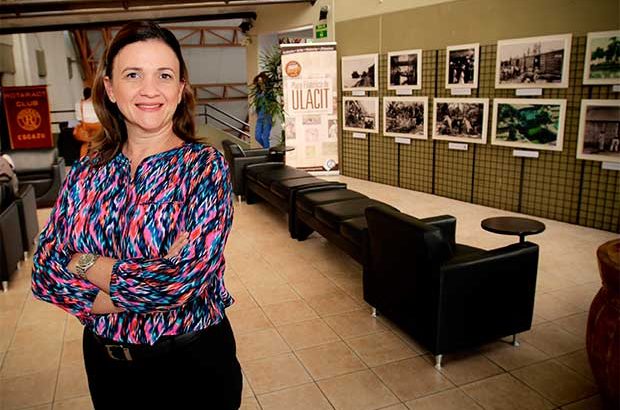
Josette Altmann, nueva Secretaria General de FLACSO

Fuente CLACSO / 8 de junio de 2016

El Consejo Latinoamericano de Ciencias Sociales (CLACSO) felicita a la Dra. Josette Altmann como nueva Secretaria General de la Facultad Latinoamericana de Ciencias Sociales (FLACSO).

Además de sus destacados y reconocidos méritos académicos, Josette es la primera mujer que dirigirá esta prestigiosa institución intergubernamental en sus casi 60 años de existencia. CLACSO saluda y reconoce este importante avance que, esperamos, pueda multiplicarse en la gestión y dirección de las principales instituciones académicas nacionales e internacionales de América Latina.

Asimismo, destacamos la excelente gestión del Dr. Adrián Bonilla a cargo de la Secretaría General, entre los años 2012 y 2016. Adrián ha sido un activo promotor de la cooperación académica latinoamericana y ha actuado de forma significativa contribuyendo al fortalecimiento de los procesos de integración regional durante la última década.

En nombre del Consejo Latinoamericano de Ciencias Sociales, agradecemos y destacamos la labor del Dr. Adrián Bonilla y deseamos mucha suerte a la Dra. Josette Altmann en la gestión que inicia.

Secretaría Ejecutiva de CLACSO

08 de Junio, 2016

Comparte este contenido:

Cómo estimular el pensamiento científico y el razonamiento en tus hijos [INFOGRAFÍA]

Fuente: aulamar  / 8 de junio de 2016

Las matemáticas y la ciencia abarcan temas relacionados con la naturaleza además del estudio de los números o la geometría. Sin embargo, el pensamiento científico va más allá y se relaciona también con la capacidad para ser autónomo o la resolución de problemas de la vida cotidiana. Una visión lógica desarrollada ayuda a los niños a encontrar relaciones entre los hechos, las ideas o las causas y los efectos. Te damos algunas claves para que estimules el pensamiento científico de tus hijos y les ayudes a relacionar lo que aprenden en el centro escolar con lo que sucede en su entorno y a comprender mejor el mundo que les rodea.

5 consejos para fomentar el pensamiento científico

Descárgate en PDF la Infografía “5 consejos para fomentar el pensamiento científico”


¿QUÉ APORTA EL PENSAMIENTO CIENTÍFICO?

El pensamiento científico no solo es positivo en el ámbito académico, sino que ofrece múltiples ventajas en la vida diaria y en la formación del niño como persona. Puede que a tu hijo le espere un futuro en el mundo de la biología, la ingeniería o la medicina, o puede que opte por estudios relacionados con las letras. Sea cual sea su elección dentro de unos años, el razonamiento y la lógica le ayudarán a reaccionar ante los problemas, adaptarse a nuevas situaciones, solucionar retos… Entre otras cosas, con el desarrollo del pensamiento científico, el niño:

  • Mejora su capacidad de razonamiento y su habilidad para pasar de nociones básicas a complejas.
  • Aprende a resolver problemas en situaciones reales.
  • Practica la construcción de su propio aprendizaje.
  • Ejercita su capacidad deductiva y aprende a crear estrategias y soluciones propias.
  • Mejora su relación con el entorno físico y su percepción de los espacios, las formas, las partes y el todo…

CINCO CONSEJOS PARA FOMENTAR EL PENSAMIENTO CIENTÍFICO

Con algunas sencillas prácticas del día a día puedes ayudar a tu hijo a desarrollar su pensamiento científico, la lógica y la deducción. Puedes poner en práctica los siguientes consejos para conseguirlo.

  1. 1. Alienta su curiosidad. Invítale a que investigue, intente comprender cómo funcionan los objetos que utiliza cada día y realice pequeñas pruebas de acierto/error. Es importante, sobre todo cuando el niño es pequeño, que le permitas manipular los materiales, los juguetes, las prendas de vestir… A través del tacto y la vista los comparará, establecerá relaciones geométricas entre forma y tamaño y asimilará sus características y funciones. Cuando crezcan, los experimentos caseros pueden ser una herramienta perfecta. Estos canales de video pueden darte ideas.
  2. 2. Si no surge naturalmente, hazle preguntas. Si no es un niño curioso, puedes despertar su interés planteándole cuestiones sobre el mundo que le rodea y animándole a que trate de encontrar una explicación para aquello que no entiende.
  3. 3. Deja que lo intente. Siempre que sus prácticas sean seguras y bajo tu supervisión, dale espacio para que trate de solucionar de manera autónoma, según su propio criterio, los problemas que le surgen respecto al manejo de un objeto o situación. Siempre tendrás tiempo de aconsejarle, pero ten paciencia y permítele que pruebe.
  4. 4. Dirige sutilmente su aprendizaje. Si ves que le cuesta resolver un problema o afrontar una situación, no le des la respuesta. Trata de que la deduzca suministrándole algunas pistas o haciéndole las preguntas correctas para que él mismo encuentre las solución.
  5. 5. Utiliza el juego y la imaginación. Proponle retos o problemas cotidianos para que intente resolverlos, ve un poco más allá y pídele que invente objetos del futuro o inicia un relato y anímale a que lo termine pensando qué podría sucederles a los protagonistas y cómo reaccionarían.

SIETE RECURSOS DIVERTIDOS PARA ESTIMULAR EL RAZONAMIENTO

Si las TIC le motivan, puedes utilizar juegos online o para móvil y tableta que fomenten el espíritu científico, la resolución de problemas y la lógica:

– Selección de aventuras gráficas online, perfectas para ejercitar la deducción.
– Unblock Me. Mueve bloques de madera para sacar el de color rojo.App disponible para iOS y Android, con versiones gratuitas y de pago.
– Crazy Machines. Ayuda al profesor más loco a crear divertidas máquinas con sus inventos y objetos cotidianos. Disponible para iOS y Android, con versión Litegratuita.
– Cut the Rope. Consigue que Nom se coma su caramelo cortando la cuerda en el momento y del modo adecuado. App para iOS y Android.
– ¿Dónde está mi agua?. Ayuda al caimán Swampy a ducharse retirando tierra y evitando obstáculos para hacerle llegar el agua y recoger sus patitos de goma por el camino. Esta app de Disney para iOS y Android tiene una versión gratis con algunos niveles y otra completa de pago. Aquí puedes probarlo online.
– Bad Piggies. Tras el popular Angry Birds, esta entrega te invita a construir máquinas y artilugios para sus enemigos, los cerditos verdes. Descargable para Android (gratuito), iOS (de pago) y ordenador (de pago).
– Acertijos. Web con enigmas, juegos y pasatiempos online para ejercitar el razonamiento, la lógica y también la memoria, el cálculo o la observación.


Enlace original: https://aulamar.wordpress.com/2015/11/11/como-estimular-el-pensamiento-cientifico-y-el-razonamiento-en-tus-hijos-infografia/

Comparte este contenido:

Colombia: Procuraduría pide a la Corte que den becas a colombianos por adopción

Colombia / 07 de junio de 2016 / Por: EDUCACIÓN / Fuente: http://www.eltiempo.com/

Según la Procuraduría, no hay distinción en ejercicio de derechos económicos, civiles y sociales.

Por considerar que hay un sesgo en la igualdad de oportunidades para los colombianos nacidos en el exterior, la Procuraduría General de la Nación le solicitó a la Corte Constitucional declarar inexequible el artículo de la Ley 1678 de 2013 que indica que solo se le puede otorgar becas a los colombianos de nacimiento.

El procurador, Alejandro Ordóñez, indicó que “la Constitución Política estableció que se es colombiano por nacimiento o por adopción, por lo que no hay diferencia entre ambos grupos en lo que se refiere al ejercicio de derechos civiles, económicos y sociales”.

Esta ley es la que garantiza la educación de posgrados al 0,1 por ciento de los mejores profesionales graduados en las instituciones de educación superior públicas y privadas del país. No obstante, el numeral 1 del artículo 4 indica que para poder acceder al beneficio de la beca, se debe ser colombiano de nacimiento.
Por su parte, el Ministerio Público también justificó la decisión debido a que la Corte Constitucional “ha reiterado en varias ocasiones que la ley colombiana indica que todas las personas son iguales ante ella y merecen el mismo trato y garantías, sin importar su sexo, raza, origen, lengua, opinión política o filosófica”.
Fuente noticia: http://www.eltiempo.com/estilo-de-vida/educacion/procuraduria-pide-a-la-corte-que-le-den-becas-a-los-colombianos-por-adopcion/16613923
Comparte este contenido:
Page 5597 of 6179
1 5.595 5.596 5.597 5.598 5.599 6.179