Page 5777 of 6178
1 5.775 5.776 5.777 5.778 5.779 6.178

España: Jorge Ruiz gana Olimpiada de Filosofía de la Universidad de Alicante

Europa/España/Mayo 2016/Fuente y Autor: Mundo Diario

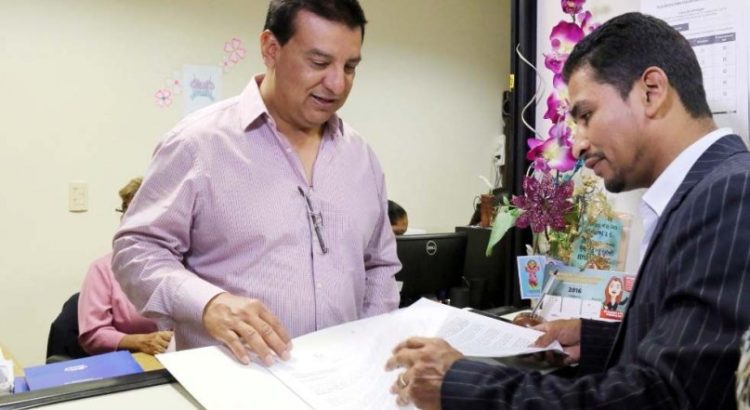
Jorge Ruiz Cases, alumno del IES Tháder, ha ganado la III Olimpiada de Filosofía de la Universidad de Alicante, cuyo tema de defensa era «La filosofía y la educación».

El alumno del IES. Tháder, Jorge Ruiz Cases, ha ganado la III Olimpiada de Filosofía de la Universidad de Alicante, cuyo tema de defensa era «La filosofía y la educación».

El alumno ha sido premiado por la calidad de una disertación que reivindica la importancia de la asignatura de Filosofía para la formación de las personas en un sistema educativo que posee un marcado carácter industrial.

Tras la ceremonia de entrega de este premio, el alumno participó en un «Café filosófico» organizado por la UA con la colaboración del Colegio de Doctores y Licenciados en Filosofía y Letras de Alicante en el que junto a los otros ganadores de la Olimpiada (2º premio, 3º y accésits) expuso su visión sobre la Filosofía y su función en la sociedad actual.

La disertación de Jorge Ruiz reflexiona sobre la necesidad de la Filosofía como un horizonte de conocimiento que nos hace libres y críticos con esos poderes fácticos que intentan imponer su doctrina pragmática para convertir al sistema educativo en una mera fábrica de autómatas.


Fuente de la noticia: http://www.mundiario.com/articulo/sociedad/alumno-ies-thader-jorge-ruiz-gana-olimpiada-filosofia-ua/20160507224907059439.html

Fuente de la imagen: http://www.mundiario.com/media/mundiario/images/2016/05/07/2016050722431423915.jpg

Comparte este contenido:

Reino Unido:Primary school tests boycott draws scattered support

Resumen: Los padres mantuvieron a los niños fuera de las escuelas primarias este martes en un «ataque» nacional como una medida para protestar por las dificultades de las pruebas. Hubo protestas dispersas a través de Inglaterra, especialmente alrededor de Newcastle, donde se originó por primera vez la idea de la protesta, y en Brighton, donde varios cientos de personas se reunieron en un parque para apoyar la acción.

Parents kept children out of primary schools on Tuesday in a national “strike” in protest at tougher tests, although the numbers involved appear to have been small.

There were scattered protests across England, especially around Newcastle, where the idea for the protest first originated, and in Brighton, where several hundred people gathered in a park to support the day of action.

A Whitehall source said the number of children involved may have been as few as 1,000, a small fraction of the more than 1 million state school pupils in years two and six, the groups scheduled to sit new tests of grammar, spelling and punctuation and maths.

Some schools reported considerable numbers of children absent, including Robert Arkenstall school, a village primary near Ely, Cambridgeshire, where organisers said around a fifth of pupils took part in the boycott.

“We had 30 children with us, but we believe another 15 to 20 children were taken off by their parents to go to museums or do other things,” said Theresa Quarmby, who has three children attending the school. “We had a fantastic time, we went to a local meadow and went pond-dipping and built forts, and had fun in general.”

Quarmby said parents with children in year six had already approached the school with concerns about the end-of-year tests when they heard about the national boycott via Facebook.

“My daughter is fairly robust but she has friends who are stressed and are crying themselves to sleep. It’s just wrong and the government isn’t listening. I can’t get my head around how they think this benefits anyone at all,” she said.

Michael Wilshaw, Ofsted’s chief inspector of schools, came out in support of the government’s position, saying: “Those who oppose this testing need to consider England’s mediocre position in international rankings.

“If by the age of seven a child has not mastered the basic skills of reading, writing and mathematics, the odds will be stacked against them for the rest of their lives. This is especially the case for poorer children.

“I understand testing can sometimes be stressful but I am also confident that most schools do everything they can to minimise the stress that children experience in preparing for and sitting these tests.”

The children’s laureate, Chris Riddell, told a group of about 500 families in Brighton that allowing children to question government policy was “an important lesson”, and he ridiculed the education secretary, Nicky Morgan’s claim that taking part in the strike would harm children’s education.

Around 20 people delivered a petition – which organisers claimed had 40,000 signatures – to the Department for Education’s head office in Westminster.

Nick Gibb, the education minister closely identified with the new tests, defended the government’s policy, saying: “There should be no pressure on six- and seven-year-olds taking these tests. These tests have no consequences for the children involved, they are about to holding the schools to account.”

Gibb himself failed to correctly answer a question on grammar from the latest key stage two test. The BBC’s Martha Kearney asked him whether the word “after” in the sentence “I went to the cinema after I’d eaten my dinner” served as a subordinating conjunction or a preposition. Gibb incorrectly identified it as a preposition.

David Cameron’s official spokeswoman weighed in over the error, saying: “It reflected the fact that what we are about is equipping future generations with a better grasp of reading, writing and maths skills.”

No 10 said tests in primary schools were “not a new concept”, and the government had made them more rigorous to reflect the higher standards being taught.

“This is about improving the curriculum, improving the education of our children in schools. It’s part and parcel of how we want to make sure that their child is getting the best education,” the prime minister’s spokeswoman said.


Fuente de la noticia: http://www.theguardian.com/education/2016/may/03/boycott-primary-school-tests-sats-scattered-support

Fuente de la imagen: https://i.guim.co.uk/img/media/c81080a49f69f77d04d71549a2235b4e7b95e2ec/0_193_3000_1800/master/3000.jpg?w=380&q=55&auto=format&usm=12&fit=max&s=c73e757f1e4d1b8aeaffad3b8f7c0ceb


Comparte este contenido:

España: ‘Aste Berdea’ apuesta desde el lunes por la educación en la sostenibilidad

Europa/España/Mayo 2016/Fuente: Diario Vasco/Autor:J.A. Migura

Habrá charlas, cursos, visitas y actividades impulsadas por el consistorio del día 11 al 15 de Mayo

Que el camino hacia la sostenibilidad pasa por cambiar hábitos, participar, informar y educar es algo asumido por las instituciones y en esta línea el consistorio elgetarra ha organizado una Semana Verde del 11 al 15 de mayo que tendrá como objetivo central facilitar a los elgetarras datos para impulsar ese cambio.

En el control de la gestión de los residuos de materia orgánica se ha detectado que hay un porcentaje de esa materia que se tira como fracción resto cuando debería tratarse como orgánico. Los datos dicen que los vecinos depositan un 22% en el contenedor gris de la fracción resto cuando, tras un análisis, se calcula que únicamente un 13% es realmente fracción resto. El objetivo marcado es seleccionar mejor para pasar de la actual tasa general de selección del 78% al 87%.

Aste Berdea arranca el miércoles, con un taller sobre compostaje en la Herri Eskola, y por la tarde desde las 17.30 horas, en el Ayuntamiento un curso de agricultura ecológica. El jueves un curso en la sociedad Intxorta con el cocinero Iker Markinez, del restaurante Kuko de Ormaiztegi, que mostrará como cocinar con menos residuos y dará recetas para aprovechar las sobras de comida. La inscripción para las dos actividades abierta en el Ayuntamiento o danonartian@elgeta.net.

 El 11 y 12 de mayo, visita a los grandes productores de residuos para mejorar su gestión, y el 15 de mayo, se repartirá compost en la Plaza, y además se mostrará de una forma visual que es los que echan los elgetarras a los recipientes de la fracción resto.

Concurso en Asentzio

Hoy, se festeja Asentzio Eguna con una misa, a las 12.00 horas, a la que seguirá la actuación de los trikitilaris de Elgeta, Ubera y Angiozar, y desde las 13.00 horas, concurso de lanzamiento de piedras planas al pozo para ver quién hace más ondas en la superficie.

Asamblea de la cooperativa

La Cooperativa Católica del Campo, celebra el 15 de mayo, a las 13.00 horas, la asamblea anual ordinaria en Ozkarbi . Abordarán las cuentas del ejercicio, y los ruegos y preguntas.

Charla con Xalbadorpe

A raíz del reciente cambio legislativo en las herencias, la asociación de jubilados y pensionistas Xalbadorpe ha organizado para el jueves, 12 de mayo, a partir de las 19.00 horas, en el salón de actos del Ayuntamiento, una charla informativa sobre estos cambios a cargo del jefe de recaudación de Hacienda de Gipuzkoa, Juan Carlos Gómez.

Fuente de la noticia: http://www.diariovasco.com/alto-deba/201605/08/aste-berdea-apuesta-desde-20160508020901-v.html

Fuente de la imagen: http://www.durangon.com/wp-content/uploads/2012/05/5940.jpg

Comparte este contenido:

Malawi: Teachers Union of Malawi doubt Mutharika’s offer – ultimatum still on

África/Malawi/Mayo 2016/Fuente:Nyasa Times /Autor: Green Muheya

Resumen: Los Unión de Maestros de Malawi (TUM) dice que la promesa verbal del presidente Peter Mutharika para resolver las quejas de los profesores no puede ser tomado en serio y mantienen su ultimátum al Ministerio de Educación, Ciencia y Tecnología (moest) hasta el 9 de mayo de el año 2016 o enfrentarse a una huelga nacional.

Teachers Union of Malawi (TUM) says the verbal pledge by President Peter Mutharika to resolve teachers’ grievances cannot be taken seriously on face value and maintained its ultimatum to Ministry of Education, Science and Technology (MoEST) to address their concerns until May 9 2016 or face a nationwide strike.

President Mutharika said he has delegated a «high powered» team to resolve the stand over.

But TUM leadership takes Mutharika’s verbal pledge with a pinch of a salt.

TUM secretary general Denis Kalekeni said if government fails to resolve the matter , » teachers in public service shall hold an industrial action in form of a sit-in from Monday 9th May 2016.»

Among the outstanding grievances, TUM cites issues of promotion and salary adjustments of teachers, failure by MoEST to pay leave grants to public secondary school teachers for the 2015/16 financial year expiring on June 30 and delayed payment of salary arrears for primary school teachers.

TUM also accuses the government of threatening to withdraw promotions of some primary school teachers who were promoted on understanding that they would take up rural school positions.

«The ministry says it wants to withdraw the promotions because they had not gone to the schools where they were posted yet the government has not given them transport. Let the government provide transport,» TUM president Chauluka Muwake said.

He also claimed some secondary school teachers have not yet received leave grants.

Fuente de la noticia: http://www.nyasatimes.com/2016/05/03/teachers-union-of-malawi-doubt-mutharikas-offer-ultimatum-still-on/

Fuente de la imagen: http://www.nyasatimes.com/wp-content/uploads/Kalekeni____2013_BNLTIMES_330_228.jpg

Comparte este contenido:

EE.UU: Georgia’s governor vetoes bill to allow concealed weapons at public colleges

América de Norte/EE.UU/Mayo 2016/Fuente: Thechronicle/Autora:Katherine Mangan

Resumen: El gobernador, un republicano que ha apoyado la ampliación del derecho a llevar armas de fuego en lugares tan sensibles como bares e iglesias, esperó hasta el último día para anunciar su decisión. Se emitió una orden ejecutiva para líderes de sistemas de la universidad pública del estado para informar acerca de las medidas de seguridad antes del 01 de agosto.

Protesters rallied against the campus-carry legislation last month in Athens, Ga., home of the U. of Georgia. Gov. Nathan Deal said the measure failed to give campuses flexibility to set their own rules.

Gov. Nathan Deal of Georgia vetoed legislation on Tuesday that would have made his state the 10th to allow licensed gun holders to carry concealed weapons in most locations on public-college campuses.

The governor, a Republican who has supported expanding the right to carry guns in places as sensitive as bars and churches, waited until the final day of a 40-day bill-signing period to announce his decision on the politically explosive issue of campus carry.

«From the early days of our nation and state, colleges have been treated as sanctuaries of learning where firearms have not been allowed,» the governor wrote. «To depart from such time-honored protections should require overwhelming justification. I do not find that such justification exists. Therefore, I veto HB 859.»

All of his options on the campus-carry bill carried risks. Sign the law and anger those in higher education who have flooded his office with emails and letters saying they would feel less safe — not more — if guns were allowed on their campuses.

Or veto it and further enrage conservatives who are still stinging about his veto of a «religious liberty» bill that critics said would discriminate against gay people.

If Governor Deal neither vetoed nor signed the legislation by Tuesday, it would have automatically become law.

That’s the approach Tennessee’s governor, Bill Haslam, took late Monday, when a bill allowing faculty and staff members — but not students — to be armed on public-college campuses became law without his signature.

Both governors had expressed misgivings about the bills introduced in their states, and wanted more flexibility for campuses to set their own rules.

The Georgia measure would have allowed anyone 21 or older with a weapons license to carry a concealed gun anywhere on a public-college campus unless the area was specifically excluded. The areas lawmakers carved out for exclusions included dormitories, sporting-event venues, and fraternity and sorority houses.

In the final days of the legislative session, Mr. Deal asked lawmakers to tweak HB 859, to give individual colleges the flexibility to ban guns from campus day-care centers, disciplinary hearings, and faculty and administrative offices. He also expressed concern about the safety of high-school students who are also enrolled in college courses.

Lawmakers refused to change the bill, saying that doing so would gut the intent of the legislation.

Fuente de la noticia: http://chronicle.com/article/Governors-Veto-Wont-End/236343
Fuente de la imagen: https://chronicle-assets.s3.amazonaws.com/5/img/photos/biz/photo_76769_landscape_850x566.jpg
Comparte este contenido:

Japanese language learning taking root in Vietnam

Asia/Japón/Mayo 2016/Autor: Editor/ Fuente: japantoday.com

Resumen: El proyecto sigue el desarrollo de un programa de idioma japonés que introdujo el gobierno vietnamita para los estudiantes de secundaria y preparatoria en 2003. En la actualidad, Inglés y francés son los únicos idiomas extranjeros que estudiantes vietnamitas pueden aprender en las escuelas primarias.

When Pham Quang Hung started studying Japanese at Foreign Trade University in Hanoi in 1994, he never imagined that Vietnamese children would one day be able to learn the language at elementary school.

Now, Hung, a first secretary for educational affairs at the Vietnamese Embassy in Tokyo, can hardly wait to see the launch in September of a pilot project to offer Japanese lessons at three elementary schools in Hanoi.

It will be the first time that Japanese language education has been offered at the publicly run primary school level in Southeast Asia, according to Japanese officials.

The project follows the development of a Japanese language program the Vietnamese government introduced for middle and high school students in 2003. At present, English and French are the only foreign languages Vietnamese students can learn at elementary schools.

“I’m so excited about the project,” Hung, 39, said in a recent interview. “I understand Vietnam’s Ministry of Education and Training will consider expanding it at the request of other students and parents.”

The ministry will run the project in partnership with the Japanese Embassy in Hanoi and the Japan Foundation, a government-backed institution dedicated to promoting international cultural exchange.

Bilateral educational exchanges will further deepen when Vietnam-Japan University, an institution backed by the government, business and academic sectors of the two countries, opens in September in Hanoi.

With an eye toward training people for the development of Vietnam and firmer relations with Japan, the organizers aim to develop the institution, which initially will operate graduate programs in English and Japanese, into a leading university in Asia.

Japan is the biggest aid donor for Vietnam and the fourth-largest trading partner after China, the United States and South Korea. About 1,400 Japanese companies were operating in Vietnam as of last year, according to Japanese government data.

The issues of educational exchanges and human resources development may be referred to when Vietnamese Prime Minister Nguyen Xuan Phuc meets Prime Minister Shinzo Abe during his visit to Japan in late May for an outreach meeting Abe will host on the sidelines of a Group of Seven summit in Mie Prefecture, central Japan.

Along with a desire to get jobs linked to Japan, admiration for Japanese people’s diligence that made the country a major industrialized nation after its defeat in World War II and respect for their mental toughness in the recovery from the 2011 earthquake, tsunami and nuclear crisis have prompted an increasing number of Vietnamese to study Japanese, according to Hung.

“The Japanese people’s diligence has become a role model for us,” he said, speaking in fluent Japanese. “And needless to say, Japanese animation and cartoons are very popular among Vietnamese schoolchildren.”

Hung brushed up his Japanese and earned a doctorate in economics during his 2003-2009 study at Kagoshima University in southwestern Japan before teaching the language and Asian economics at his alma mater until last year.

A 2014 opinion poll on Japan in Vietnam and six other Southeast Asian countries showed that 67 percent of 293 Vietnamese people interested in learning Japanese cited a desire to visit Japan as a reason for studying the language.

The poll, conducted by research company Ipsos Hong Kong at the request of the Japanese Foreign Ministry, found in multiple answers that 62 percent said they like Japanese culture, 40 percent want to understand Japanese comics, animation and dramas, and 32 percent believe the language is useful for their jobs.

Recalling the 2003 launch of the Japanese language program for Vietnamese middle and high school students, Hung said, “We started from scratch.”

The initiative, however, has developed to the scale at which as many as about 50 middle and high schools in major cities such as Hanoi, Ho Chi Minh City and Da Nang are running Japanese classes.

“Such an expansion would not have been possible without the Japanese Embassy’s help in training Vietnamese instructors of the Japanese language, as well as supply of teaching materials by the Japan Foundation,” Hung said.

The elementary school project will similarly involve Vietnamese instructors who have experience and know-how in teaching at middle and high schools, with teaching materials to be provided by the Japan Foundation.

Including middle and high school students, there were about 46,000 people learning Japanese in Vietnam as of 2013 and more than 40,000 Vietnamese students are currently studying in Japan, according to Hung.

“The combined figure is the third highest among Japanese language learners in the 10 member states of the Association of Southeast Asian Nations after Indonesia and Thailand,” he said. “And the number of Vietnamese students studying in Japan is larger than those studying in the United States and China.”

This may reflect the fact that 46 percent of a total of 304 Vietnamese respondents to the 2014 poll cited Japan as “the most reliable country” out of 11 non-ASEAN countries in Asia, Europe and the United States. The rate, logged in a single answer, compared to 8 percent for the United States and 2 percent for China.

Fuente de la noticia: http://www.japantoday.com/category/lifestyle/view/japanese-language-learning-taking-root-in-vietnam

Fuente de la imagen: https://www.google.com/search?q=vietnam+student&client=ubuntu&hs=xVH&channel=fs&source=lnms&tbm=isch&sa=X&ved=0ahUKEwiDoIO5wsnMAhVJJh4KHYFQB4cQ_AUIBygB&biw=1301&bih=673#channel=fs&tbm=isch&q=vietnam+student+in+japan&imgrc=8kPLPwbEe5NFKM%3A

Comparte este contenido:

España: Profesores aprenden cómo enseñar en el aula del siglo XXI

España/07 de Mayo de 2016/Sur.es

  • Más de 200 profesores participan en Málaga una jornada sobre la gamificación educativa organizada

  • Fundación Telefónica inicia en la capital de la Costa del Sol el ‘Tour Docentes Innovadores’ que analiza los retos de la escuela del futuro.

    «Estamos en un periodo de transición de un mundo a otro y la manera de ensañar debe cambiar. El rol del docente es otro y la manera de sacar los mejor de los alumnos también es otra». Con estas palabras inauguró este sábado el director de Innovación Educativa de Fundación Telefónica, Alejandro Díaz Garreta, la primera parada del ‘Tour Docentes Innovadores’, una experiencia en la que educadores de toda España abordarán los temas necesarios para construir la escuela del futuro: gamificación digital en la educación, inteligencias múltiples o neurodictáctica.

    Con esta finalidad, el proyecto Desafíos Educación de Fundación Telefónica consiguió reunir a más de 200 profesores de toda la provincia en el Complejo de Estudios Sociales y de Comercio de la Universidad de Málaga para participar en una jornada formativa que tuvo como principal objetivo analizar las ventajas de gamificar en el aula, o lo que es lo mismo utilizar los juegos para enseñar; dar a conocer herramientas básicas de gamificación de aplicación inmediata, distinguir los tipos de jugadores en el aula, diseñar mecánicas y dinámicas de juego, y mejorar la productividad del profesorado mediante herramientas TIC sencillas.

    Para Díaz Garreta, la gamificación es una herramienta muy potente en el mundo de transición en el que vivimos, «ya que sirve de puente entre lo conocido y un nuevo mundo digital».

     A través de esta propuesta de Fundación Telefónica, que contó con sesiones teóricas y talleres, es brinda a la comunidad educativa todas las herramientas innovadoras que existen para afrontar el reto de la escuela del futuro. «Es una nueva pedagogía de enseñanza-aprendizaje, donde a través del juego se logran magníficos resultados», dijo Carolina García, del área de Educación de la Fundación, que defendió la gamificación digital como sistema de aprendizaje basado en retos, en el que todo el mundo es jugador y todo el mundo participa.

    Así, según el director de Fundación Telefónica, Joan Cruz, a través de estos encuentros con la comunidad escolar se quiere apostar por la innovación en la educación y promover metodologías, disciplinas y modelos de aprendizaje que mejoren el proceso de enseñanza. «El proyecto parte de la apuesta por reconocer el valor de los docentes como vía para la transformación», dijo Cruz. Entre las conclusiones del ‘Tour Docentes Innovadores’ en Málaga, destaca la inclusión de las tecnologías digitales ligadas a la innovación en las aulas así como la importancia de introducir procesos educativos lúdicos para motivar a los alumnos y conseguir cambios en sus comportamientos.

    Ponentes

    El periodista y gamificólogo, Ángel González de la Fuente, quien intervino como ponente destacó entre las principales claves de la gamificación que todo es diseño de juego como concepto formativo, desde el momento en que cuando el niño empieza a jugar empieza también a aprende. También destacó que en el juego hay normas, equipos y retos constantes, y que jugar es aprender a aprender. El docente innovador Juan Fernández Galera, profesor de Primaria en Madrid, expuso un proyecto propio que traslada el mundo de los videojuegos al mundo real del aula, convirtiendo a los niños en «superhéroes» y protagonistas de su propia narrativa. El profesor señaló que los docentes necesitan imaginar nuevas formas de aprendizaje.

    El profesor bilingüe de Science y Arts de primaria en Madrid, Michael Bennett, puso el énfasis en la idoneidad de trabajar por proyectos en los centros educativos uniendo de manera transversal diversas disciplinas como el arte, la historia o la ciencia, para que lo alumnos vean coherencia en lo que están aprendiendo, mientras que el Premio Nacional de Educación 2015 y profesor de Secundaria en la Comunidad de Madrid, Javier Espinosa, aportó su punto de vista sobre la obligatoriedad de adaptar la enseñanza al perfil de los alumnos preguntando por sus intereses y aficiones, e integrar en las clases los ‘disparadores de atención’: el misterio, la sorpresa y la curiosidad.

    Después de Málaga, el ‘Tour Docentes Innovadores’, a través del cual Fundación Telefónica invita a la comunidad escolar a participar en diferentes proyectos que persiguen la formación de los docentes, recalará en Salamanca, Zaragoza y Santa Coloma de Gramenet, antes de dar el salto a Ecuador, Colombia, Uruguay y México.

    Fuente: http://www.diariosur.es/malaga-capital/201605/07/profesores-aprenden-como-ensenar-20160507211327.html

Comparte este contenido:
Page 5777 of 6178
1 5.775 5.776 5.777 5.778 5.779 6.178