Page 725 of 6179
1 723 724 725 726 727 6.179

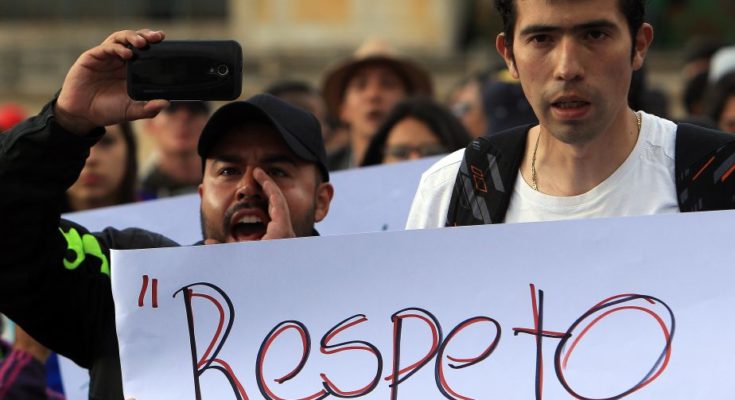
Colombia: Se registran casi tres mil denuncias de abuso policial desde que inició el paro

Se registran casi tres mil denuncias de abuso policial desde que inició el paro

ONG documenta casi 3.000 denuncias de abuso policial durante Paro en Colombia

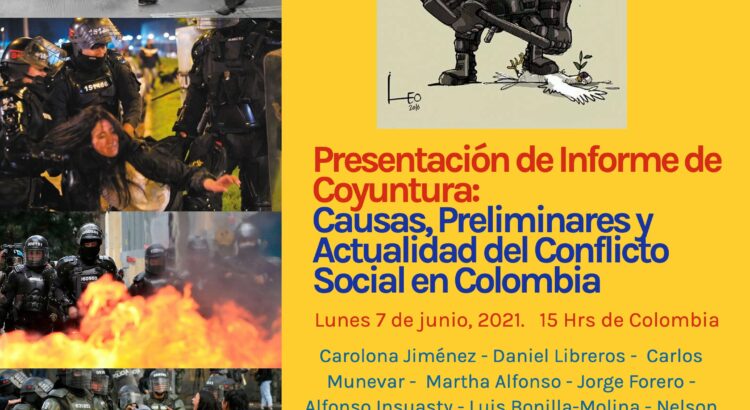
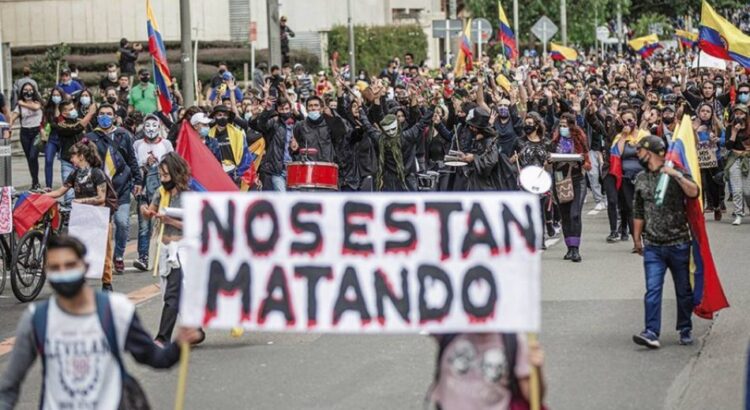
La organización no gubernamental (ONG) Temblores actualizó este viernes sus cifras de violaciones a los derechos humanos que han ocurrido durante el Paro Nacional en contra del Gobierno colombiano y dijo que son casi tres mil las denuncias de abuso policial.

La ONG reveló que 2.905 casos de violencia por parte de la Fuerza Pública (sin incluir desapariciones) se han registrado en su plataforma GRITA del 28 de abril a las 12:00 a.m. del 21 de mayo.

Dentro de estos casos se identificaron: 855 víctimas de violencia física; 43 homicidios presuntamente cometidos por miembros de la Fuerza Pública; 1.264 detenciones arbitrarias en contra de manifestantes y 575 intervenciones violentas en el marco de protestas pacíficas.

Carta abierta al presidente @IvanDuque. Estás son nuestras solicitudes. Acá nuestro comunicado de prensa actualizado con los datos de violencia por parte de la fuerza pública.

Carta abierta al presidente @IvanDuque. Estás son nuestras solicitudes. Acá nuestro comunicado de prensa actualizado con los datos de violencia por parte de la fuerza pública.

Imagen

Asimismo, 39 víctimas de agresiones oculares; 153 casos de disparos de armas de fuego; 21 víctimas de violencia sexual, y seis víctimas de violencia basada en género.

En este contexto, Temblores publicó una carta abierta dirigida al presidente colombiano Iván Duque, en la cual le planteó varios puntos, entre ellos que permita la visita de la Comisión Interamericana de Derechos Humanos.

Además, que reafirme el derecho constitucional “a la protesta social, así como el deber estatal de prevenir los usos irregulares y desproporcionados de la fuerza pública, y de investigarlos y sancionarlos con plenas garantías a la independencia judicial”.

El ESMAD además de lanzar gases a los conjuntos cerca a Portal Américas sigue disparando gases de frente, cuando eso está prohibido. ¿Quién controla su accionar desmedido? @personeriabta @LuisErnestoGL #ParoNacional21M #SOSPortalAmericas

https://twitter.com/i/status/1395970100965089280

Continúa represión del Esmad

La concejala de Bogotá por la coalición Colombia Humana, Heidy Sánchez Barreto, denunció que la noche del viernes elementos del Escuadrón Móvil Antidisturbios (Esmad) de la Policía Nacional reprimieron a manifestantes que se encontraban en las inmediaciones de Portal Américas, en la capital colombiana.

“El ESMAD además de lanzar gases a los conjuntos cerca a Portal Américas sigue disparando gases de frente, cuando eso está prohibido. ¿Quién controla su accionar desmedido?”, escribió Sánchez Barreto en su cuenta de Twitter.


En una entrevista con teleSUR, la concejala denunció el recrudecimiento de la violencia estatal, al señalar que han aumentado las denuncias de tortura, tratos crueles y desaparición forzada contra jóvenes colombianos.

Ministro de Defensa enfrentará moción de censura

El senador Iván Cepeda reveló que el lunes próximo el ministro de Defensa de Colombia, Diego Molano, enfrentará un debate de moción de censura en el Senado.


Esta comparecencia se da por “la actuación criminal de la Fuerza Pública en las manifestaciones”, dijo el legislador y defensor de los derechos humanos, entrevistado por teleSUR.

Este viernes, la concejala de Cali, Ana Erazo, afirmó en su cuenta de Twitter que “me han llegado vídeos extremadamente dolorosos sobre cuerpos hallados en ríos. Lo que temíamos empieza a suceder y me duele el alma”.

Me han llegado vídeos extremadamente dolorosos sobre cuerpos hallados en ríos. Lo que temíamos empieza a suceder y me duele el alma. Pido a @JorgeIvanOspina comisión de verificación sobre denuncias en Mulaló y posibles fosas. Esto es desgarrador @CIDH @onucolombia @ONUHumanRights

La concejala pidió Jorge Iván Ospina, alcalde de Cali, capital del departamento de Valle del Cauca, en el suroccidente del país, la creación de “una comisión de verificación sobre denuncias en Mulaló y posibles fosas. Esto es desgarrador”.

Fuente de la Información: https://www.nodal.am/2021/05/colombia-se-registran-casi-tres-mil-denuncias-de-abuso-policial-desde-que-inicio-el-paro/

Comparte este contenido:

Gaza: Consejo de Seguridad ONU pide «plena adhesión» al alto el fuego

Consejo de Seguridad ONU pide «plena adhesión» al alto el fuego

Una primera declaración unánime destacó la urgencia de que dos estados democráticos, Israel y Palestina, «convivan uno al lado del otro, en paz, con fronteras seguras y reconocidas».

El Consejo de Seguridad de la ONU pidió el sábado (22.05.2021) la «plena adhesión» al alto el fuego entre Israel y Hamás, en su primera declaración unánime desde que comenzó el conflicto el 10 de mayo, indicaron fuentes diplomáticas.

«Los miembros del Consejo de Seguridad acogieron con beneplácito el anuncio de un alto el fuego a partir del 21 de mayo y reconocieron el importante papel de Egipto y otros países de la región», agrega el documento, aprobado incluso por Estados Unidos luego de que se eliminara un párrafo sobre la condena de la violencia incluido en el texto inicial.

Washington había rechazado hasta ahora tres declaraciones, así como un proyecto de resolución francés que exigía «un cese inmediato de las hostilidades» y pedía «la entrega y distribución sin obstáculos de ayuda humanitaria en toda Gaza».

Un bloque de pisos en ruinas en la ciudad de Gaza tras un ataque aéreo israelí

En el texto, propuesto por China, Noruega y Túnez, el Consejo de Seguridad pide un respeto absoluto al alto el fuego, y señala simplemente que los países miembros «deploran las pérdidas civiles debido a la violencia».

Además de un párrafo que condenaba «todos los actos de violencia contra civiles, incluidos los actos de terrorismo, pero también los actos de provocación, incitación y destrucción», Washington logró que se retirara una referencia a la «preocupación» del Consejo de Seguridad por la violencia en Jerusalén Este, especialmente alrededor de lugares religiosos, según el texto inicial obtenido por la agencia AFP.

El Consejo destacó «la necesidad inmediata de asistencia humanitaria a la población palestina, particularmente en Gaza, y apoyó el llamado del secretario general [de la ONU, Antonio Guterres] a la comunidad internacional para (…) reconstruir» el enclave palestino.

Los enfrentamientos siguieron el viernes en varios barrios de Jerusalén Este y la Cisjordania ocupada, al margen de las manifestaciones que celebraron la «victoria» de Hamás sobre su enemigo israelí.

En tanto, miles de personas se manifestaron este sábado en Nueva York, EE.UU., y en varias ciudades de Francia, incluyendo País, para mostrar su apoyo a los palestinos afectados por los bombardeos del Ejército israelí.

Mientras, el papa Francisco apeló «a la unidad de los cristianos en el amor mutuo», algo «más urgente que nunca» en un mundo con crecientes desigualdades y retos ecológicos, según expresó en un mensaje de vídeo grabado para un evento religioso en Jerusalén entre varias confesiones cristianas .

«Si siempre ha sido necesaria la unidad de los cristianos en el amor mutuo, hoy es más urgente que nunca», dijo Francisco por la Vigilia Ecuménica de Pentecostés, en una ceremonia en la iglesia anglicana de Cristo de Jerusalén organizada a través de la Comisión para la Unidad de los Cristianos.

gs (afp, efe, ap)

Fuente de la Información: https://www.dw.com/es/consejo-de-seguridad-onu-pide-plena-adhesi%C3%B3n-al-alto-el-fuego/a-57633463


Comparte este contenido:

España: Los contratos de miles sanitarios y docentes de refuerzo por la pandemia se quedan en el aire a partir de junio

Los contratos de miles sanitarios y docentes de refuerzo por la pandemia se quedan en el aire a partir de junio

Los trabajadores afectados son profesionales primera línea que han desarrollado una labor esencial durante el último año. La sanidad y la educación pública se ha visto gravemente afectada por las consecuencias de la covid-19 y la pandemia ha demostrado que son sectores muy precarios pero fundamentales y necesarios que merecen más refuerzos.

Al menos la mitad de las comunidades reconocen que no prevén mantener todos los refuerzos que se contrataron por la pandemia aunque la decisión final no está tomada y todo dependerá de las «necesidades» que se tengan.​

Los contratos de miles de sanitarios y de profesores de refuerzo por la covid-19 están en el aire. Gracias a la situación epidemiológica relativamente buena y el avance de la vacunación se van flexibilizando las medidas y cada vez se ve más cerca la ‘nueva normalidad’. La parte negativa es que todo apunta a que también se perderán los refuerzos de los servicios públicos. Cada comunidad autónoma ha realizado sus contrataciones de forma autónoma pero en muchas de ellas se debería renovar a este personal extra en junio. Al menos en la mitad de ellas no se renovarán a todos los trabajadores.

Por un lado, están los 35.000 docentes que fueron contratados para este curso escolar. La ministra de Educación, Isabel Celaá, pidió en la reunión del pasado miércoles con las comunidades autónomas que se mantuviera este refuerzo para «asegurar la calidad de la educación» durante el próximo curso 2021-2022. «Las comunidades autónomas deben comprometerse a que, al menos, se mantengan los recursos docentes de refuerzo con los que han contado este año. Tenemos que convertir la adversidad en una oportunidad para acelerar la recuperación de un sistema educativo que se enfrentó a la pandemia tras años de recortes y debilitamiento y que debe consolidar los refuerzos con los que se ha fortalecido durante estos meses», sostuvo en rueda de prensa.

Pero la realidad es que ni siquiera todos los profesores se mantuvieron durante este curso ya que la Comunidad de Madrid prescindió hasta de 1.117 docentes el pasado mes de diciembre. Pero varias comunidades consultadas por Público son partidarias de no mantener los refuerzos, o al menos reducirlos, ya que aumentarán las ratios de las clases: hasta 25 alumnos en Primaria, 30 en Secundaria y 35 en Bachillerato. En Asturias, por ejemplo, prevén prescindir de 500 profesores. Para el resto aún es pronto para cuantificar las pérdidas aunque señalan que los refuerzos serán adaptados a las necesidades. Sindicatos como CSIF o Comisiones Obreras (CCOO) ya han pedido a distintas Consejerías de Educación que se mantengan tanto las ratios reducidas como los refuerzos para garantizar la calidad de la educación pública.

Esta misma idea se mantiene con los sanitarios contratados temporalmente por la covid-19. En este sector el número de profesionales que continúan trabajando por este motivo es más complicado de dar porque muchos son contratados solo para tres o seis meses. Sin embargo, una buena tanda de contratos de todo el país se acaba en este mes de junio.

La mayoría de contratos de refuerzo de la Comunidad de Madrid se acaban el próximo 30 de junio y, según la Consejería de Sanidad, se renovarán según las necesidades. La mayor incógnita es qué pasará con la plantilla del Hospital Isabel Zendal ya que la mayoría de profesionales que trabajan allí, e incluso los encargados de la vacunación, son sanitarios de refuerzo covid-19 que fueron derivados allí desde otros centros. Los sindicatos de la Mesa Sectorial de Sanidad de la Comunidad de Madrid ya han denunciado esta situación porque la Dirección General de Recursos Humanos dijo que se renovarían los contratos hasta el 31 de diciembre, por lo que estos trabajadores trabajarían el año completo. Sin embargo, los trabajadores aún no tienen ninguna confirmación y temen que esta promesa no se cumpla, según ha confirmado Público con varios afectados.

Otras comunidades como Castilla-La Mancha o Extremadura explican que la mayoría de contratos tienen vigencia hasta el 30 de septiembre y que entonces se renovarán también según las «necesidades», pero la previsión es que una vez pase el verano no se mantengan al menos todos los refuerzos. Mientras que el País Valencià hay vigentes hasta el 31 de mayo un total de 9.309 contratos y se prevé que se prescindan hasta de 4.000, según han denunciado los sindicatos de la región. Los otros 6.000 sanitarios tendrán otro contrato temporal hasta que termine el año.

Los trabajadores afectados son profesionales primera línea que han desarrollado una labor esencial durante el último año. La sanidad y la educación pública se ha visto gravemente afectada por las consecuencias de la covid-19 y la pandemia ha demostrado que son sectores muy precarios pero fundamentales y necesarios que merecen más refuerzos. Las distintas comunidades ahora tendrán que mostrar si quieren invertir más en estos servicios públicos o reducir sus plantillas.

Fuente de la Información: https://kaosenlared.net/los-contratos-de-miles-sanitarios-y-docentes-de-refuerzo-por-la-pandemia-se-quedan-en-el-aire-a-partir-de-junio/

Comparte este contenido:

Bhutan, the vaccination nation: a UN Resident Coordinator’s blog

Bhutan, the vaccination nation: a UN Resident Coordinator’s blog

The small mountain nation of Bhutan has so far managed to contain the COVID-19 pandemic, despite sharing a border with China and India, two countries which have been badly affected by the pandemic. Bhutan is now on the way to vaccinating more than 90 per cent of the eligible adult population. Gerald Daly, the UN Resident Coordinator there, says that volunteers, and preventative government action, have been key to the country’s success.

“Bhutan has been exemplary in the way it has responded to COVID-19. Practically the entire eligible adult population of more than 530,000 people (anyone in Bhutan with no history of allergic reaction to the COVID-19 vaccines is eligible) have received the first dose. The initial batch of AstraZeneca doses were a gift from India, and the UN assisted with advocacy and cold chain support.

One of the features of Bhutan is the fact that there are so many communities living in remote geographical areas. The government coordinated its approach and reached out to all of these remote communities often by helicopter, with vaccines, which were then often distributed on foot by health workers, sometimes walking from village to village, through ice and snow.

Volunteers are a very important element in Bhutan’s success. They support the Ministry of Health, for example, with logistical support for vaccination programmes, and they man quarantine facilities. They were also very effective in implementing the lockdown, and also helped with the distribution of food and vital supplies during that period.

Bhutan’s national volunteer scheme (De Suung, or ‘Guardians of Peace’), was already running for around four years before the pandemic. Then, with the onset of COVID-19, people realised the volunteers could support the Ministry of Health and the other ministries, and so they strengthened and beefed up the scheme. As a result, they have become one of the key success factors in Bhutan’s ability to respond so effectively to COVID.

A time of heightened quarantine

Bhutan has had some 1,300 confirmed cases, with only one death, according to figures released on 19 April. Not one health worker has been infected.

In normal times, there is a fair bit of movement across the border but the Government is currently ensuring incredibly tight borders: anybody coming into the country needs to do a quarantine of 21 days.

Within Bhutan, there is a real commitment to social distancing. PPE is provided everywhere, and gatherings are kept small. Whenever there are even small breakouts of virus, those specific areas go into lockdown.

Supporting the vunerable

While Bhutan has managed to avoid a health crisis, the economic impacts have been very tough. The country depends significantly on tourism, and we know recovery in the sector is going to be slow: unemployment has risen to 14 per cent.

In the meantime, the UN is supporting the most vulnerable and looking for ways to build self-reliance and resilience: we support the government strategy to increase home food production; we have programmes that address the challenges around gender-based violence and mental health; and we are supporting the government strategy to become financially sustainable by, for example, introducing a smarter taxation system.

Bhutan is the land of ‘Gross National Happiness’. This is a core value of this country, and the moral and practical compass that the country follows. It often means that Bhutanese look after each other, including the most vulnerable.

Constant vigilance

During the period of lockdown, we have seen this strong element of community support, as well as common sense on the part of the population: they have accepted that there are good reasons for the lockdown, and that everyone has to pull together.

Despite the success we’ve had so far in coping with the pandemic, with very low rates of transmission and high rates of vaccination everyone understands the need to stay vigilant. Bhutan has a limited number of ventilators and oxygen: the Bhutanese have seen what is going on in the rest of the world, and they don’t want to get into that type of a situation, so there is a very strong willingness by everybody here to maintain this constant vigilance against COVID complacency.»

Fuente de la Información: https://news.un.org/en/story/2021/05/1092422


Comparte este contenido:

China’s Rover Starts Roaming The Red Planet

China’s Rover Starts Roaming The Red Planet

his image taken by the navigation camera of China’s Zhurong rover shows the rover’s solar panels and antenna, after it landed on Mars on 15 May, 2021. (AFP Photo)

China’s Mars rover drove from its landing platform and began exploring the surface of the planet on Saturday, state-run Xinhua news agency said, making the country only the second nation to land and operate a rover on the Red Planet.

The launch last July of the Tianwen-1 Mars probe, which carried the Zhurong rover, marked a major milestone in China’s space programme.

Tianwen-1 touched down on a vast northern lava plain known as the Utopia Planitia a week ago and beamed back its first photos of the surface a few days later.

The Mars probe and rover are expected to spend around three months taking photos, harvesting geographical data, and collecting and analysing rock samples.

The six-wheeled, solar-powered, 240-kilogramme (530-pound) Zhurong is named after a Chinese mythical fire god.

China has now sent astronauts into space, powered probes to the Moon and landed a rover on Mars – the most prestigious of all prizes in the competition for dominion of space.

The United States (US) and Russia are the only other countries to have reached Mars, and only the former has operated a rover on the surface.

Several US, Russian and European attempts to land rovers on Mars have failed in the past, most recently in 2016 with the crash-landing of the Schiaparelli joint Russian-European spacecraft.

The latest successful arrival came in February, when US space agency NASA landed its rover Perseverance, which has since been exploring the planet.

The US rover launched a small robotic helicopter on Mars which was the first-ever powered flight on another planet.

Uncontrolled Landing

China has come a long way in its race to catch up with the US and Russia, whose astronauts and cosmonauts have decades of experience in space exploration.

It successfully launched the first module of its new space station last month with hopes of having it crewed by 2022 and eventually sending humans to the Moon.

Last week a segment of the Chinese Long March 5B rocket disintegrated over the Indian Ocean in an uncontrolled landing back to Earth.

That drew criticism from the US and other nations for a breach of etiquette governing the return of space debris to Earth, with officials saying the remnants had the potential to endanger life and property. – AFP

Fuente de la Información: https://theaseanpost.com/article/chinas-rover-starts-roaming-red-planet

Comparte este contenido:

Video shows students still get paddled in US schools

Video shows students still get paddled in US schools

The image of a teacher paddling or spanking a student at school may seem to belong in a history book – as archaic a practice as the dunce cap. However, for thousands of students across America each year, the use of corporal punishment for violating school rules is still a routine part of their education.

Surprising to many, corporal punishment in schools remains legal in 19 states nationwide. In the 2015-2016 school year, more than 92,000 public school students were paddled or spanked at the hands of school personnel, with most of these incidents concentrated in fewer than 10 states, mostly in the South.

Corporal punishment has again captured national attention following the release of a video in May 2021 of a Florida principal paddling a young girl. The video, secretly captured by the student’s mother, shows the principal striking the student with a wooden paddle in response to her damaging a computer. While a violation of district policy, the principal’s actions were deemed legal by both the local sheriff’s office and the state attorney’s office.

Many who have viewed the video have questioned how this practice remains legal and in use in the United States. As an educational researcher who studies school discipline – and as a former teacher who has seen other teachers use this practice – I have found that the answer to this question is complex.

Deference to local decision-making

In 1977, the U.S. Supreme Court ruled in Ingraham v. Wright that corporal punishment in schools is constitutional, establishing a federal standard for its continued legal use.

While corporal punishment remains legal in 19 states, there have been efforts in some of those states to ban the practice. In May of 2021, Louisiana considered such a bill.

However, these efforts have not been able to get much traction. Louisiana’s bill failed to pass in the House, with critics pointing to a preference for local school districts to make the decision. In fact, the last state ban occurred in 2011, when New Mexico outlawed the practice.

Research that I have conducted with others shows this deference to local school districts is common. In our 2018 study on corporal punishment, we found that state bans generally come after local school district bans or reductions in use.

For example, Rhode Island enacted a state ban on corporal punishment in 2002, even though the practice had not been used in the state since 1977 because of local decisions. In North Carolina, the practice has been eliminated by all districts in the state since 2019, but a subsequent bill to formalize this ban at the state level failed to advance to law.

For many local leaders and educators, the continued use of corporal punishment reflects shared community norms and a belief that the practice is beneficial to maintaining order in schools. For many state policymakers, there is a general belief that such decisions should be made at the local level. Unfortunately, research suggests that this deference to local decisions to use corporal punishment is harmful for students.

[Understand new developments in science, health and technology, each week. Subscribe to The Conversation’s science newsletter.]

The harm of corporal punishment

Though studies of the impact of corporal punishment in schools are limited, those that exist suggest the practice harms students’ academic performance and future behavior. Such negative outcomes have also been linked with corporal punishment use in the home by parents.

The burden of these negative impacts is disproportionately experienced by students of color and boys. Black students are two to three times as likely as their white peers to experience corporal punishment, and boys make up about 80% of those subjected to the practice.

Based on such evidence, many national and international organizations recommend against the use of corporal punishment in schools. Former acting Secretary of Education John B. King called explicitly for U.S. schools to cease the practice. Despite this, the U.S. has not joined the over 100 countries worldwide that ban corporal punishment in schools.

Seeking alternatives

For many educators, the appeal of corporal punishment may be its efficiency. It can be quickly administered by a teacher or principal with limited commitment of time or institutional resources. Though unproductive in the long term, it may result in compliance in the short term.

It is important, then, for discussions about bans on corporal punishment to include alternatives. In fact, not doing so may result in schools trading corporal punishment for other negative disciplinary practices like suspension.

In my own research, my colleague and I found that when school districts serving large proportions of Black or Hispanic students decrease or stop using corporal punishment, suspension rates tend to increase. In contrast, suspension rates decreased in districts with more white students.

Given the negative effects of corporal punishment and the risk that bans alone could lead to increased suspensions in schools with more minority students, how should educators and policymakers approach the issue?

There are alternative approaches to corporal punishment and suspension that offer promise for eliminating the practice of paddling students while also ensuring that students remain in school to learn. Restorative practices and positive behavior interventions are such examples. These approaches focus on addressing student trauma, building relationships and rewarding positive behavior.

For example, rather than being paddled, students who damage school property might discuss their behavior with adults and other students involved and then contribute to repairing the property.

A focus on building a strong school climate – characterized by supportive relationships between teachers and students as well as engaging instructional practice – also holds promise for improved student behavior without corporal punishment.

Ultimately, gaining local support for corporal punishment bans may be easier if schools know more effective alternatives are available.

Fuente de la Información: https://theconversation.com/video-shows-students-still-get-paddled-in-us-schools-160592

Comparte este contenido:

Russia: Parliamentarians must reject new bills threatening rights to freedom of association and expression

Parliamentarians must reject new bills threatening rights to freedom of association and expression

Three bills adopted today in the first reading by the State Duma, the lower house of the Russian Parliament, drastically restrict rights and liberties in the country by imposing new muzzles on individuals who criticize the government and barring them from participating in public life, Amnesty International said today.

The bills are intended to target Russians who have supported civil society and religious organizations that were later declared “extremist” or “terrorist” and widen the scope of the law on “undesirable” organizations.

“Vladimir Putin’s regime aims to fully purge vocal critics from the civic space. The main target of this latest, particularly brazen attack is the movement led by Aleksei Navalny. Having unjustly imprisoned its archfoe, the Kremlin is now targeting all those who had the nerve to support him,” said Natalia Zviagina, Amnesty International’s Moscow Office Director.

Vladimir Putin’s regime aims to fully purge vocal critics from the civic space. The main target of this latest, particularly brazen attack is the movement led by Aleksei Navalny

Under the first bill, the authorities aim to punish the exercise of the right to association by barring from public life those who share a critical view of the government and are working together to bring change. According to the law, those who founded, led, worked for, or otherwise participated in the activities of an organization which is later designated as “extremist” or “terrorist” and subsequently banned, will be barred from running for the country’s lower house of Parliament for a period of between three and five years after the organization’s ban comes into force. Moreover, the bill provides for its retroactive application.

Aleksei Navalny’s Anti-Corruption Foundation, which has already been declared a “foreign agent”, is now fighting against the authorities’ attempt to designate it as an “extremist organization.” According to Leonid Volkov, who led Navalny’s regional network before its dissolution in April, up to 200,000 people who contributed to its crowdfunding efforts could fall afoul of the new law. While Navalny’s allies and supporters are certainly the main target, the bill will also affect many other civic and religious groups who have been or may be targeted under Russia’s vague “counter-extremism” and “counter-terrorism” legislation.

“This is nothing but a desperate move to annihilate any shred of visible dissent. The authorities are ready to punish a significant proportion of the population for exercising their right to freedom of expression and association by further reducing their avenues to effectively participate in public life,” said Natalia Zviagina.

The authorities are ready to punish a significant proportion of the population for exercising their right to freedom of expression and association by further reducing their avenues to effectively participate in public life

The two other bills broaden the scope of the law on “undesirable” organizations by introducing a prohibition on participation in their activities abroad, assigning the status of “undesirable” to the organizations who are believed to be intermediaries in financial transactions with those already banned, and toughening criminal sanctions. They propose that criminal liability should come after only one administrative prosecution, not two as at present, and, in some cases, immediately.

“This bill seems to have been drafted to target another opposition group, Otkrytaya Rossiya (Open Russia). It is another networked structure that has managed to get on its feet in the political vacuum created by Vladimir Putin’s regime. Its activists and supporters have already paid a dear price and now the stakes will be even higher,” said Natalia Zviagina.

“We urge Russian parliamentarians not to adopt these bills. They are a grave threat to human rights and should be of the most profound concern to Russian society and the international community.”

Background

Amnesty International is a global human rights movement, independent of any government, political ideology or economic interest. Raising concerns about human rights violations against individual candidates, members or supporters of a political party or advocates of a particular political position does not imply that Amnesty International supports that party or candidate’s platform.

Fuente de la Información: https://www.amnesty.org/en/latest/news/2021/05/russia-parliamentarians-must-reject-new-bills-threatening-rights-to-freedom-of-association-and-expression/

Comparte este contenido:
Page 725 of 6179
1 723 724 725 726 727 6.179