Page 746 of 6179
1 744 745 746 747 748 6.179

Venezuela: Unagandes alerta desabastecimiento sin precedentes en Venezuela por la falta de gasoil

Unagandes alerta desabastecimiento sin precedentes en Venezuela por la falta de gasoil

* Antonio Escalona Araujo, presidente de la Unión Agrícola y Ganadera de los Andes, dijo que la falta de combustible impide a más del 90% de los productores arar el campo, e iniciar el nuevo ciclo de siembras.

10 mayo/2021

El presidente de la Unión Agrícola y Ganadera de los Andes (Unagandes), Antonio Escalona Araujo, alertó que “la escasez de diésel en el país hace presagiar un desabastecimiento de alimentos sin precedentes en Venezuela”.

El dirigente agropecuario describió que en el campo venezolano hay consternación entre los productores al ver el silencio de los tractores por la falta de gasoil.

“Con la llegada de las primeras lluvias, los agricultores comienzan a preparar y arar las tierras pero la falta de combustible impide a más del 90% de los productores iniciar las siembras”, dijo Escalona.

“El ciclo de invierno, el más importante y productivo del año en Venezuela, está a punto de perderse puesto que no disponemos del diésel para movilizar la maquinaria en las labores de labranza, siembra, fumigación, cosecha y transporte”, agregó.

Dijo que los agricultores enfrentan fuertes dificultades para la siembra del maíz en más de un 90%.

Alertó, además, la pérdida que se avecina en la producción de leche “ante la imposibilidad de conservación y traslado oportuno a las receptorías y empresas procesadoras”.

“Hoy menos del 10% de la población venezolana goza de seguridad alimentaria mientras que la mayoría de las personas presentan altos índices de desnutrición”, sostuvo el dirigente agrario.

Comentó que Venezuela es rica en energía con inmensos recursos naturales y grandes extensiones de tierra fértil pero el sector agrícola y ganadero está paralizado por falta de combustibles e insumos.

Denunció que las fincas son blancos de ataques, invasión, extorsión, abigeato, matraca, importación sin consulta ni control, falta de apoyo crediticio, insuficiencia de agroquímicos, semillas, maquinaria, repuestos y medicamentos entre otras adversidades.

Indicadores en alerta

El presidente de Unagandes refirió que los indicadores presentan señales de alerta en la disminución de algunos productos en los anaqueles de los mercados, centros de comercialización y expendios de alimentos.

“Hoy producimos sólo el 48% de la capacidad instalada de carne de pollo y la producción de huevos es de solo el 26%”, alertó Escalona.

Denunció, además, que “el sector azucarero posee el 75% de los centrales en manos del gobierno pero en su mayoría están paralizados o en su más baja capacidad funcional”.

Indicó que el 25% restante de las centrales azucareras opera bajo la administración privada pero también está en proceso de paralización por falta de gasoil “necesario para el traslado y molienda, dejando sin proceso a más del 60% de la zafra”.

Dijo que en el estado Portuguesa, los planes para cosechar más de 10 millones de toneladas de frijol chino, de alto contenido proteico, se perdieron ante la paralización de sus maquinarias por falta de gasoil.

“La pérdida de 50 toneladas de hortalizas es un hecho en el eje de los estados andinos por falta de gasoil”, afirmó el presidente de Unagandes, que agrupa a 236 productores de Táchira, Mérida, Trujillo, Maracaibo, Lara y Barinas.–

Dick Elías Torres
Periodista


Fuente de la Información: https://lahora.com/2021/05/10/unagandes-alerta-desabastecimiento-sin-precedentes-en-venezuela-por-la-falta-de-gasoil/


Comparte este contenido:

Estados Unidos: The Racial Reckoning Went Global Last Year. Here’s How Activists in 8 Countries Are Fighting for Justice

The Racial Reckoning Went Global Last Year. Here’s How Activists in 8 Countries Are Fighting for Justice

MAY 11, 2021 6:30 AM EDT

The video of Derek Chauvin’s kneeling on George Floyd’s neck traveled from a Minneapolis street to every corner of the worldBlack activists in the U.K. spoke of their visceral reactions to the footage, while Floyd’s dying words, “I can’t breathe,” brought back painful memories in France and Australia of Black and Aboriginal people killed while in police custody. The video transcended borders on social media too, sparking solidarity protests in more than 50 nations, from Germany to Thailand, Argentina to Turkey.

Despite COVID-19 restrictions in many countries, hundreds of thousands of protesters turned out in solidarity and to show that racial injustice was not just an American problem. Many voiced frustrations at specific racist and colonial legacies. Statues of slave traders and imperialists became flash points across Europe, while #PapuanLivesMatter trended, highlighting discrimination against natives of West Papua and stirring calls for independence from Indonesia.

But as suddenly as it came, the global summer of Black Lives Matter (BLM) was building over time. Grassroots activists had been pushing for change for years, building movements for racial justice that inspired not only social awakenings but also concrete legislative change, corporate involvement and, inevitably, reactionary backlash. Here, how eight movements for equity took shape over the past year and where they aim to go next.

Australia

Australia had some of the largest protests outside the U.S. after George Floyd’s murder. Tens of thousands of people took to the streets in cities across the country during June. Alongside Black Lives Matter signs, protesters carried placards with the names of some of the 476 ­Aboriginal and Torres Strait Islander people who, according to the Guardian, have died in police custody since 1991. A disproportionate number of the continent’s Indigenous people reside in its prisons: they accounted for 29% of Australia’s inmates in June 2020, despite being only 3% of the population.

The wave of demonstrations had some impact. New South Wales, the Australian state that’s home to Sydney, launched a parliamentary inquiry into how deaths in custody are investigated, and the state of South Australia made it mandatory for police to notify the state’s Aboriginal Legal Service whenever an Aboriginal person is taken into custody. In late July, the federal government also announced a target of moving 15% of Indigenous adults out of prison by 2031.

But the problem persists. At least seven Aboriginal people have died in custody since the beginning of March, prompting one Australian senator to call the situation a “national crisis.” —Amy Gunia

Demonstrators protest after João Alberto Silveira Freitas was beaten to death by security guards at a Porto Alegre supermarket, Brasilia, Nov. 26, 2020.

Brazil

News of George Floyd’s murder reached a Brazil already deep in crisis over racial justice following the 2018 election of President Jair Bolsonaro. The far-right leader has compared Black people—who make up 56% of the country’s ­population—to cattle, celebrated police brutality in mostly Black favelas and tried to strip Indigenous communities of protections. Meanwhile COVID-19’s onslaught in Brazil, one of the worst-hit countries in the world, has killed Black people and wiped out their jobs at higher rates than for white people.

Black Brazilians’ protests brought unprecedented attention from the mostly white media to systemic racism in Brazil. In late 2020, several major companies introduced Black-only hiring programs. In November’s local elections, Black candidates outnumbered white ones for the first time.

Still, despite those changes, the path forward for antiracism advocates is rocky. In April 2020, local media unearthed a video lesson published by Rio de Janeiro’s state education body that claimed it was “unacceptable” to discuss racism in Brazil, arguing that high rates of interracial relationships made the term irrelevant. The President voiced the same sentiment in November, when protests broke out over the fatal beating of João Alberto Silveira Freitas, a Black father of four, by grocery-­store security guards in the city of Porto Alegre.

In the face of public denial, Black activist networks have become more active than ever, organizing to feed families struggling during the pandemic, overhaul the education system and protect neighborhoods from police violence. —Ciara Nugent

Assa Traoré gives a press conference to commemorate the anniversary of the death of her brother, Adama Traoré, who died in police custody, Persan, France, July 18, 2020.

France

In July 2016, 24-year-old Adama Traoré was out walking, looking forward to celebrating his birthday later in the evening, when police apprehended him. Traoré, who was Malian-French, later died in police custody; his last words were reportedly “I can’t breathe,” the same as George Floyd’s final words. Protests erupted in Paris after Traoré’s death—and resurged last year when Floyd’s murder drew renewed attention to police violence around the same time that an independent autopsy commissioned by Traoré’s family ruled that Adama died of asphyxiation after being restrained.

Activists say Adama’s case is part of a long history of police brutality in France, where young Arab and Black men are 20 times as likely as white men to be stopped by law enforcement. In early June, tens of thousands of people defied coronavirus restrictions to protest in cities across France—with Adama’s sister, Assa, at the forefront of marches in Paris. As public outcry grew, France announced a ban on choke-hold arrest tactics on June 8.

Even after the protests, similar police behavior has continued; in November, a video emerged of three white police officers beating Black music producer Michel Zecler at his Paris studio. Mass protests and outrage ensued, particularly in response to proposed legislation that sought to criminalize those who distribute imagery of police officers in action.

“The Adama generation is on the street to speak out against police brutality, racial discrimination,” Assa Traoré told TIME late last year. Parliament approved an adapted version of that security bill, which extends police powers, in April, despite the outcry. —Suyin Haynes

Unilever faced backlash for its  Fair & Lovely  skin-lightening cream as more activists began speaking up against the prevalence of colorism in Indian ­culture.

India

The Black Lives Matter movement prompted a reckoning in India over colorism, discrimination against those with darker skin tones, which has deep roots in India’s caste system and colonial history. Last summer, after Priyanka Chopra joined Indian stars in voicing support for BLM, social media users pointed out she and many others had promoted whitening cosmetics. (Chopra had previously said she regrets endorsing these products early in her career.)

For years, activists had been speaking up about colorism in Indian ­culture—from Bollywood’s promotion of light-­skinned actors to the global multibillion-­dollar skin-whitening industry. In 2009, an Indian nonprofit started the “Dark Is Beautiful” campaign, endorsed by Bolly­wood actor Nandita Das, to raise awareness about color bias in schools and in the media.

The outcry of 2020 prompted some changes. The matchmaking service Shaadi.com stopped letting users sort by skin tone. But the road is long. While popular skin-lightening product Fair & Lovely changed its name to Glow & Lovely, the product’s formula remained the same. —Simmone Shah

A June 14, 2020 march against racism in Tokyo

Japan

Black Lives Matter marches held across Japan in June 2020 were both a gesture of solidarity with protesters in the U.S. and a call to confront racism at home. Much of the discussion in Japan has centered on discrimination toward biracial individuals, following multiple high-profile incidents of prejudice. In 2019, a Japanese comedy duo said tennis icon Naomi Osaka—who was born to a Haitian father and a Japanese ­mother—“needed some bleach.” And that wasn’t the first such incident: Ariana Miyamoto, whose father is African American and mother is Japanese, faced criticism after being crowned Miss Universe Japan in 2015. In a country that is largely ethnically homogenous, these incidents have prompted calls for recognizing the Japaneseness of biracial people. —Kat Moon

The New Zealand Labour Party’s female MPs on the steps of parliament on Nov. 24, 2020, in Wellington.

New Zealand

Elections in New Zealand in October 2020 brought to power one of the world’s most diverse governments. The first parliamentarians of African, Latin American and Sri Lankan heritage were voted in; almost half of the seats went to women; more than 10% of law­makers identify as LGBTQ. Prime Minister Jacinda Ardern’s Cabinet picks were no less ­diverse, including the country’s first Indigenous female Foreign Minister and first openly gay Deputy Prime Minister.

Representation for Maori people is also high. New Zealand’s original inhabitants, who make up some 17% of the population, now hold around 20% of parliament’s 120 seats and 25% of Cabinet positions. Among the new parliamentarians are two members of the Maori Party, which made a comeback after being ousted in 2017.

But despite representation at the highest levels of government, Maori people face worse outcomes than non-Maori people in many areas. The Maori unemployment rate is more than double the national rate, and they are more likely to be homeless. Their life expectancy is about seven years shorter, and they are more than twice as likely to die from assault and homicide.

Now, the Maori Party has promised to be an unapologetic voice for Indigenous New Zealanders. “You know what it feels like to have a pebble in your shoe?” the party’s co-leader Rawiri Waititi said in December, in his first speech in parliament. “That will be my job here.” —A.G.

A woman at a protest against police brutality in Lagos, Nigeria.

Nigeria

After a video emerged in October that appeared to show officers from Nigeria’s Special Anti-Robbery Squad (SARS) killing a young man, protests erupted, led by young Nigerians who were angry with their government for ignoring corruption and extrajudicial killings. (Police initially denied responsibility.) The outcry went global when the military shot peaceful #endSARS demonstrators on Oct. 20, sending shock waves through the Nigerian diaspora. BLM co-founder Opal Tometi organized an open letter demanding justice for protesters who had reminded the world that Black Lives Matter, everywhere. —S.H.

The statue of Edward Colston is thrown into the harbor of Bristol in southwest England, June 7, 2020.

United Kingdom

In June, Black Lives ­Matter protesters in the U.K. drew worldwide attention when they tore down a statue of 17th century slave trader Edward Colston and threw it into the harbor of Bristol in southwest England. But long before June, campaigners, activists and historians were interrogating the U.K.’s imperial past, and its deep implications for the present.

A widely condemned government-­commissioned report in March claimed that U.K. society was “no longer” rigged against people from ethnic minorities and “should be regarded as a model for other white-majority countries.” (U.N. experts called the report an “attempt to normalize white supremacy.”) Official studies show racial disparities across the board.

Police data suggest that Black people are nine times as likely as white people to be stopped and searched by police in England and Wales, and according to the Equality and Human Rights Commission, unemployment rates are significantly higher among ethnic minorities than white people. Campaigners have also called for an independent public inquiry into the handling of the pandemic and its disproportionate impact on Black, Asian and minority ethnic groups, who faced up to 50% higher risk of death from COVID-19 when compared with white Brits.

Anti-Asian hate and discrimination has also soared during the pandemic, with U.K. police data suggesting a threefold increase in hate crimes toward Chinese, East and Southeast Asians in the first quarter of 2020 compared with the same period in 2018 and 2019.

Activists are pushing for changes including shifting school curriculums to include the history of the British Empire, returning museum objects looted from former colonies and exploring the links between British stately homes and slavery. Despite backlash from conservative politicians and right-wing media, a re-examination of Britain’s racist past and present is finally getting under way. —S.H.

Fuente de la Información: https://time.com/6046299/fighting-injustice-world/

Comparte este contenido:

Australia: Armed with a bright green beetle, these Darwin children are weeding out a serious ecological threat

Armed with a bright green beetle, these Darwin children are weeding out a serious ecological threat

Budding young entrepreneurs Jack Barker and his sister Kelly have come up with a unique plan to tackle the spread of one of northern Australia’s most serious weeds — and make some money while doing it.

During the school holidays, the pair from Darwin’s rural area collected a bright green beetle that can be found lurking along the stems of the spinyhead sida, a weed introduced into Australia last century.

«I have always been dreaming of starting my own business,» Jack, 12 years old, said.

«I didn’t know that these bugs were worth $2 each.»

Jack and his 10 year-old sister have sold 150 beetles to neighbouring land owners who are battling to control the 1.5 metre sida plants, which grow rapidly during the Top End wet season.

The beetle is a native of north America called Calligrapha.

Experts from the CSIRO and NT government agencies discovered in the 1980s it was the weapon they needed to contain the spread of sida in the Territory.

Since 1989, the beetle has been released in hundreds of locations across the Top End under a biological control program.

The sida does not have a natural predator and it tends to quickly dominate native plants, preventing livestock, which do not eat it, from grazing on grass.

Jack Barker and beetle

Chinese prospectors who used its tough stems to make brooms are thought to have brought it to the Territory in the early 1900s.

Today, the invasive plant is common in the Darwin, Katherine, Gulf and Victoria River regions.

«Anywhere where you have cattle or horses, it’s really common,» Michelle Franklin from the NT government’s weed management branch said.

Jack said he and Kelly put their collected beetles in 50-batch containers and sold them for $100.

He said the beetles quickly got to work once they were released.

«After a few weeks, you can actually see the stick of the old sida plant,» he said.

Jack Barker and Sally Isberg

Jack Barker, pictured with his mother Sally Isberg, shows some sida that Calligrapha beetles have been eating.(ABC News: Peter Lacey

)

According to the government’s weed management branch, the beetle reduces sida density from 22 plants per square metre to six over a year in some areas.

Jack and Kelly’s mother, Sally Isberg, said she was proud her children were selling and farming beetles and improving the environment.

«We have actually noticed the beetle population completely decimated our sida weeds crop, which means we haven’t had to spray with chemicals and that’s just a fantastic solution,» she said.

Fuente de la Información: https://www.abc.net.au/news/2021-05-11/darwin-children-tackle-sida-weed-with-calligrapha-beetle/100128712


Comparte este contenido:

China’s Population Growth Slows as Fewer Couples Opt to Have Babies

China’s Population Growth Slows as Fewer Couples Opt to Have Babies

A woman plays with a child near elderly people on wheelchairs sunbathing on a compound of a commercial office building in Beijing on Monday, May 10, 2021. China’s population growth is falling closer to zero as fewer couples have children, the government announced Tuesday, May 11, 2021, adding to strains on an aging society with a shrinking workforce.
Andy Wong–AP
MAY 11, 2021 5:37 AM EDT

(BEIJING) — The number of working-age people in China fell over the past decade as its aging population barely grew, a census showed Tuesday, adding to economic challenges for Chinese leaders who have ambitious strategic goals.

The total population rose to 1.411 billion people last year, up 72 million from 2010, according to the once-a-decade census. Weak growth fell closer to zero as fewer couples had children.

That adds to challenges for Chinese leaders who want to create a prosperous society and increase their global influence by developing technology industries and self-sustaining economic growth based on consumer spending.

The ruling Communist Party has enforced birth limits since 1980 to restrain population growth but worries the workforce is shrinking. It has eased birth limits, but couples are put off by high costs, cramped housing and job discrimination against mothers.

The population of potential workers aged 15 to 59 fell to 894 million last year, the National Bureau of Statistics reported. That would be down 5% from a 2011 peak of 925 million. The percentage of children in the population edged up compared with 2010, but the group aged 60 and older grew faster.

Changes in birth limits and other policies “promoted a rebound in the birth population,” the bureau director, Ning Jizhe, said at a news conference.

However, Ning said 12 million babies were born last year, which would be down 18% from 2019’s 14.6 million.

China, along with Thailand and some other developing Asian countries that are aging fast, faces what economists call the challenge of whether it can grow rich before it grows old. Some warn China faces a “demographic time bomb.”

The potential shortage of workers needed to generate economic activity and tax revenue comes as President Xi Jinping’s government boosts spending on its military and efforts to create global competitors in electric cars and other technologies.

Reflecting the issue’s sensitivity, the statistics agency took the unusual step last month of announcing the population grew in 2020 but gave no total. That looked like an effort to calm companies and investors after The Financial Times reported the census might have found a surprise decline.

“We are more concerned about the fast decline in the proportion of the working age population compared to the total population,” said Lu Jiehua, a professor of population studies at Peking University.

The working-age population will fall from three-quarters of the total in 2011 to just above half by 2050, according to Lu.

“If the population gets too old, it will be impossible to solve the problem through immigration,” said Lu. “It needs to be dealt with at an early stage.”

Couples who want a child face daunting challenges.

Many share crowded apartments with their parents. Child care is expensive and maternity leave short. Most single mothers are excluded from medical insurance and social welfare payments.

Some women worry giving birth could hurt their careers.

“When you have a kid, you take pregnancy leave, but will you still have this position after you take the leave?” said He Yiwei, who is returning from the United States after obtaining a master’s degree. “Relative to men, when it comes to work, women have to sacrifice more.”

Japan, Germany and some other rich countries face the same challenge of supporting aging populations with fewer workers. But they can draw on investments in factories, technology and foreign assets. By contrast, China is a middle-income country with labor-intensive farming and manufacturing.

The decline in the working-age population “will place a cap on China’s potential economic growth,” said Yue Su of the Economist Intelligence Unit in a report. That is a “powerful incentive to introduce productivity-enhancing reforms.”

The International Monetary Fund is forecasting Chinese economic growth of 8.4% this year following a rebound from the coronavirus pandemic. The Communist Party wants to double output per person from 2020 levels by 2035, which would require annual growth of about 4.7%.

The numbers reported Thursday reflect a gain of 11.8 million people, or 0.8%, over the official estimate for 2019, when the government says the population edged above 1.4 billion for the first time.

The working-age population fell to 63.3% of the total from 70.1% a decade ago. The group up to age 14 expanded by 1.3 percentage points to 17.9%. Those 60 and older — a group of 264 million people who on their own would be the world’s fourth-biggest country — rose 5.4 percentage points to 18.7% of the population.

“Labor resources are still abundant,” said Ning of the statistics agency.

The party took its biggest step in 2015 when rules that limited many couples to having only one child were eased to allow two.

However, China’s birth rate, paralleling trends in South Korea, Thailand and other Asian economies, already was falling before the one-child rule. The average number of children per mother tumbled from above six in the 1960s to below three by 1980, according to the World Bank.

Demographers say official birth limits concealed what would have been a further fall in the number of children per family.

The one-child limit, enforced with threats of fines or loss of jobs, led to abuses including forced abortions. A preference for sons led parents to kill baby girls, prompting warnings millions of men might be unable to find a wife, fueling social tension.

Thursday’s data showed China has 105.7 million men and boys for every 100 women and girls, or about 33 million more males.

The ruling party says the policy averted shortages of food and water by preventing as many as 400 million potential births. But demographers say if China followed Asian trends, the number of additional babies without controls might have been as low as a few million.

After limits were eased in 2015, many couples with one child had a second but total births fell because fewer had any at all.

Some researchers say China’s population already is shrinking.

Yi Fuxian, a senior scientist in obstetrics and gynecology at the University of Wisconsin-Madison, says the population started to fall in 2018. His book “Big Country With An Empty Nest” argued against the one-child limit.

“China’s economic, social, educational, tech, defense and foreign policies are built on the foundation of wrong numbers,” said Yi.

Chinese regulators talk about raising the official retirement age of 55 to increase the pool of workers.

Female professionals welcome a chance to stay in satisfying careers. But others resent being forced to work more years. And keeping workers on the job, unable to help look after children, might discourage their daughters from having more.

The latest data put China closer to be overtaken by India as the most populous country, which is expected to happen by 2025.

India’s population last year was estimated by the U.N. Department of Economic and Social Affairs at 1.38 billion, or 1.5% behind China. The agency says India should grow by 0.9% annually through 2025.

___

Wu reported from Taipei. AP researcher Yu Bing and video producer Liu Zheng in Beijing contributed to this report.

Fuente de la Información: https://time.com/6047456/china-population-growth/


Comparte este contenido:

Russia school shooting: Children and teacher killed in Kazan

Russia school shooting: Children and teacher killed in Kazan

Seven children and two adults have been killed in a shooting at a school in the Russian city of Kazan, officials say.

Twenty-one other people, mostly children, were injured. A 19-year-old suspect was detained.

The attack happened in the capital of the republic of Tatarstan, 820km (510 miles) east of Moscow.

Russian PM Mikhail Mishustin spoke of «great sorrow» while Tatarstan’s leader Rustam Minnikhanov described the attack as a «major tragedy».

«We are deeply saddened that this has happened,» he said.

Map showing the location of the school in Kazan

How did the attack unfold?

Mr Minnikhanov confirmed the deaths of seven children – four boys and three girls – as well as a female teacher and a female school worker at School No 175. It is believed the children were eighth graders (aged around 15).

Eighteen children and three adults were being treated in hospitals for gunshot wounds, fractures and bruising, Mr Minnikhanov added.

The attack began at about 09:20 local time (06:20 GMT), a source in the emergency services told Russian news agency Tass. The first signal from a panic button at the school was sent five minutes later.

«Everyone started panicking and saying ‘shut the doors’,» a student who witnessed the attack told the Mediazona news website. «About a minute later the head teacher started yelling: ‘We’re shutting the doors!’

Tactical team responds to a deadly shooting at School Number 175 in Kazan, Tatarstan, Russia May 11, 2021 in this image obtained from social media

«We got out about 15 minutes later, not out of the windows. I wanted to do that, but the teacher closed the window immediately and said no.»

Footage shared on social media shows some children jumping from windows to escape as well as injured people being evacuated. Russian TV reported that two of the children had died after jumping from a second-floor window.

People gather at school No 175 following the attack

Heavily armed police and emergency vehicles responded to the incident.

A Kazan resident outside the school told Moscow Echo radio station that people there were hysterical. «Parents are crying, medics are giving out medicine,» she said.

What do we know about the victims?

Elvira Ignatyeva, a 25-year-old English teacher, was killed trying to shield one of the children, a police source told Tass news agency, quoting eyewitnesses.

She had pushed the child out of the way in a corridor and tried to block the gunman but was shot and mortally wounded, the source said.

On her Instagram account, Ms Ignatyeva had often posted upbeat messages over photos of herself enjoying walks and nights out.

«It’s not that hard to make your life happy,» she wrote on 1 February. You just need to stop thinking that happiness is only possible somewhere over there, in the future, and learn to enjoy every actual minute, here and now…»

What do we know about the suspect?

Reports initially said that there were two gunmen and that one of them had been killed. But officials later said there was only one suspect, named locally as Ilnaz Galyaviev.

Russian investigators say he is a Kazan resident and it is believed he once studied at the school.

A medical worker comforts relatives of students of School No 175 in Kazan, 11 May

Mr Minnikhanov said the suspect was a registered firearm owner. According to Russian MP Alexander Khinshteyn, the suspect received a firearms licence only recently. The MP said it was for a semi-automatic shotgun.

Officials did not comment on the possible motive for the attack although Mr Minnikhanov called the attacker a «terrorist».

The suspect went on social media before the attack, posting that he planned to kill a «huge number» of people before shooting himself. Screenshots of his account, now blocked, show him wearing a black mask with the word «god» written across it in red.

A video on social media captured a teenager lying on the ground apparently being detained outside the building.

https://twitter.com/i/status/1392023118080876546

What has the reaction been?

Authorities have called for all schools in Tatarstan to be inspected and have their security stepped up.

A day of mourning will be held on Wednesday to honour the victims.

Kremlin spokesman Dmitry Peskov said President Putin had ordered the chief of Russia’s National Guard to «work out as a matter of urgency new regulations on the types of weapon that can be in civilian circulation and that can be owned by the public».

The instruction was issued «given the type of firearm used by the shooter», Mr Peskov said. «The fact is that sometimes types of small arms are registered as hunting weapons, which in some countries are used as assault rifles,» he explained.

Poorly guarded schools and a gun debate

Olga Ivshina, BBC News

People in Kazan seem to be completely shocked and devastated by what has happened. It is a big city – with more than one million people – which has enjoyed peace and stability over the past decade.

Schools in Kazan – as well as in most other Russian cities – are not really guarded. Usually it is just one or two unarmed private security guards who meet people coming to the school at the gates. Often many of these so-called security officers are pensioners with no special training. But even if they had any it is hard to confront an armed person with bare hands.

It is worth mentioning that the Kazan gunman allegedly used a gun very similar to one the attacker in Crimea used in 2018. It is a relatively cheap but powerful rifle which can be bought for the equivalent of just $280 (£200). There are a lot of discussions now in Russia about whether the regulations for civilian gun ownership should be changed.

How frequent are school shootings in Russia?

Shootings at schools are relatively rare in Russia compared with other countries.

  • In November 2019 a 19-year-old student shot dead a classmate and injured three others before killing himself in the far eastern city of Blagoveshchensk. Investigators said the motive for the attack may have been a personal conflict
  • In October 2018 a teenager armed with a semi-automatic shotgun killed 20 people at a technical college in the city of Kerch in Russian-annexed Crimea. He then shot himself dead
  • In February 2013, a 15-year-old student shot dead a teacher and a police officer, injuring a second police officer, when he took hostages at a school in Moscow. Investigators said the killer appeared to have had an «emotional breakdown»
Fuente de la Información: https://www.bbc.com/news/world-europe-57069589
Comparte este contenido:

Israel, Hamas trade deadly fire as confrontation escalates

Israel, Hamas trade deadly fire as confrontation escalates

Prime Minister Benjamin Netanyahu says the Israeli military has dealt a tough blow to Gaza militants and warns that fighting with Hamas will continue for some time

GAZA CITY, Gaza Strip — A confrontation between Israel and Hamas sparked by weeks of tensions in contested Jerusalem escalated Tuesday as Israel unleashed new airstrikes on Gaza while militants barraged Israel with hundreds of rockets. The exchange killed a number of militants and civilians in Gaza and at least three people in Israel.

The barrage of rockets from the Gaza Strip and airstrikes into the territory continued almost nonstop throughout the day, in what appeared to be some of the most intense fighting between Israel and Hamas since their 2014 war. The fire was so relentless that Israel’s Iron Dome rocket-defense system seemed to be overwhelmed. Columns of smoke rose from many places in Gaza.

By late Tuesday, the violence extended to Tel Aviv, which came under fire from a barrage of rockets launched from the Gaza Strip. A 50-year-old woman was killed. The outgoing volleys set off air raid sirens across the city, and the main international airport closed temporarily.

Hamas said it launched a total of 130 rockets, its most intense strike so far, in response to Israel’s destruction of a high-rise building in Gaza earlier in the evening. The sound of the outgoing rockets could be heard in Gaza. As the rockets rose into the skies, mosques across Gaza blared with chants of “God is great,” “victory to Islam” and “resistance.”

One rocket struck a bus in the central city of Holon, just south of Tel Aviv. Medics said three people, including a 5-year-old girl, were wounded and the bus went up in flames.

Since sundown Monday, 28 Palestinians — including 10 children and a woman— were killed in Gaza, most by airstrikes, health officials there said. The Israeli military said at least 16 of the dead were militants.

Two women were killed by rockets fired from Gaza that hit their homes in the southern city of Ashkelon — the first Israeli deaths in the current violence. At least 10 other Israelis have been wounded since Monday evening.

Prime Minister Benjamin Netanyahu warned that the fighting would continue for some time. In a nationally televised speech late Tuesday, he said Hamas and Islamic Jihad “have paid, and will pay, a heavy price.”

“This campaign will take time, with determination, unity and strength,” he said.

Even before the two Israeli deaths, the Israeli military said it was sending troop reinforcements to the Gaza border, and the defense minister ordered the mobilization of 5,000 reserve soldiers.

Lt. Col. Jonathan Conricus, a military spokesman, told reporters that the objective was to send a “clear message” to Hamas.

Diplomats sought to intervene. U.N. Secretary-General Antonio Guterres demanded a halt to the “spiraling» violence, a U.N. spokesman said. U.S. Secretary of State Antony Blinken spoke to the Israeli foreign minister to condemn the Hamas attacks and “reiterate the important message of de-escalation,” the State Department said.

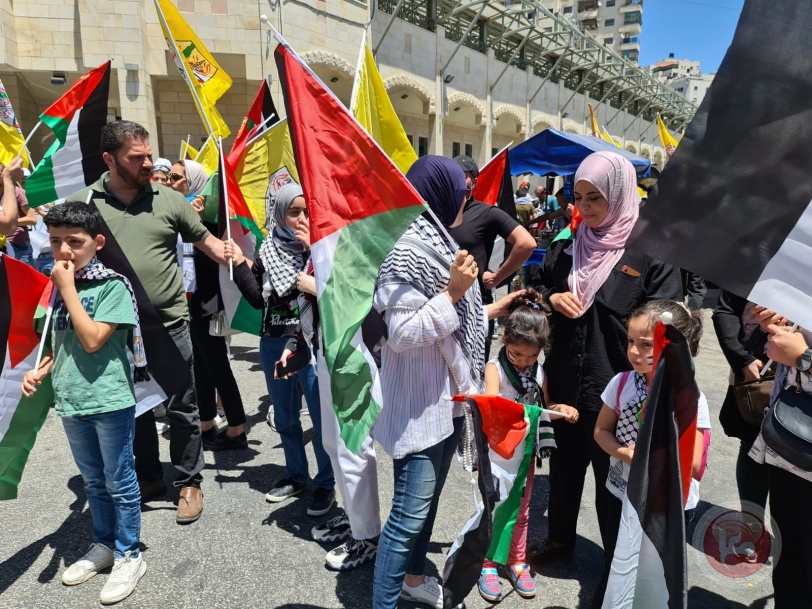
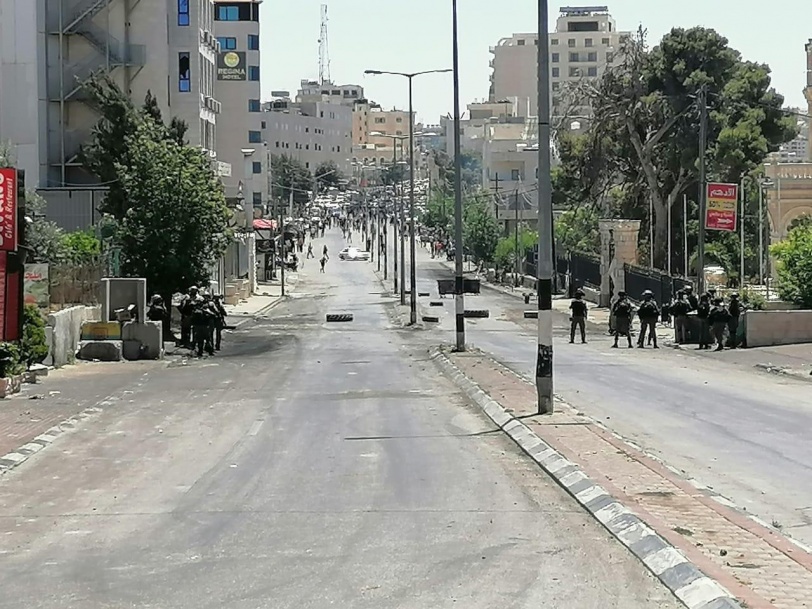
The barrage of rockets and airstrikes was preceded by hours of clashes Monday between Palestinians and Israeli security forces, including dramatic confrontations at Jerusalem’s Al-Aqsa Mosque compound, a sacred site to both Jews and Muslims. The current violence, like previous rounds, including the last intifada, or uprising, has been fueled by conflicting claims over Jerusalem, which is at the emotional core of the long conflict.

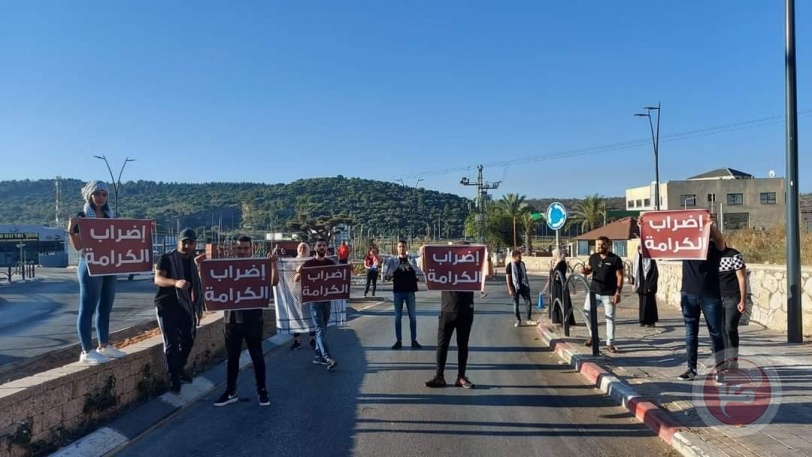
In a sign of widening unrest, hundreds of residents of Arab communities across Israel staged overnight demonstrations denouncing the recent actions of Israeli security forces against Palestinians. It was one of the largest protests by Palestinian citizens in Israel in recent years.

In the central Israeli town of Lod, police fired tear gas and stun grenades after mourners threw rocks at officers during the funeral of an Arab man allegedly shot to death by a Jewish resident the night before. Thousands took part in the funeral, and police said the crowd set fire to a patrol car, a bus and a motorcycle. Two police officers were injured.

Israel and Hamas have fought three wars and numerous skirmishes since the militant group seized control of Gaza in 2007. Recent rounds of fighting have usually ended after a few days, often helped by mediation by Qatar, Egypt and others.

Israel carried out dozens of airstrikes, including two that targeted high-rise apartment buildings where militants were believed to be hiding.

One strike demolished a 12-story building in Gaza City that housed the offices of top Hamas officials. Israeli drones fired a series of warning shots at the roof to give people time to leave the building before it was destroyed. There were no immediate reports of casualties.

At midday, an airstrike hit a building in central Gaza City, sending terrified residents running into the street, including women and barefoot children. The Islamic Jihad militant group confirmed that the strike killed three of its commanders.

Another strike hit a high-rise as people were conducting dawn prayers, killing a woman, her 19-year-old disabled son and another man, residents said. Health officials confirmed the deaths.

The Gaza Health Ministry said 28 people, including 10 children and the woman, have been killed and 152 wounded. Ashraf al-Kidra, a spokesman for the ministry, said Israel’s “relentless assault” was overwhelming the health care system, which has been struggling with a COVID-19 outbreak.

The escalation comes at a time of political limbo in Israel.

Netanyahu has been caretaker prime minister since an inconclusive parliamentary election in March. He failed to form a coalition government with his hard-line and ultra-Orthodox allies, and the task was handed to his political rivals last week.

One of those rivals is Israel’s defense minister, who is overseeing the Gaza campaign. It was not clear whether the political atmosphere was spilling over into military decision-making, though the rival camps have unanimously expressed support for striking Hamas hard.

The support of an Arab-backed party with Islamist roots is key for the anti-Netanyahu bloc. But the current tensions might deter the party’s leader, Mansour Abbas, from joining a coalition for now. The sides have three more weeks to reach a deal.

The current violence in Jerusalem coincided with the start of the Muslim fasting month of Ramadan in mid-April.

Critics say heavy-handed police measures helped stoke nightly unrest, including a decision to temporarily seal off a popular gathering spot where Palestinian residents would meet after evening prayers. Another flashpoint was the east Jerusalem neighborhood of Sheikh Jarrah, where dozens of Palestinians are under threat of eviction by Jewish settlers.

Over the weekend, confrontations erupted at the Al-Aqsa Mosque compound, which is the third holiest site of Islam and the holiest site in Judaism.

Over several days, Israel police fired tear gas, stun grenades and rubber bullets at Palestinians in the compound who hurled stones and chairs. At times, police fired stun grenades into the carpeted mosque.

On Monday evening, Hamas began firing rockets from Gaza. From there on, the escalation was rapid.

Gaza militants fired more than 500 rockets at Israel, with about one-third falling short and landing in Gaza, Conricus said.

At midday, a barrage of some 10 rockets whizzed above the southern city of Ashdod, filling the skies with streaks of white smoke.

A rocket that hit an apartment building in Ashkelon injured six people, according to Israeli paramedic service Magen David Adom. A building in Ashdod was also hit, lightly wounding four, Israeli police said.

The military hit 130 targets in Gaza, including two tunnels militants were digging under the border with Israel, Conricus said. He did not address Gaza Health Ministry reports about the dead children.

Seven of the deaths in Gaza were members of a single family, including three children, who died in an explosion in the northern Gaza town of Beit Hanoun. It was not clear if the blast was caused by an Israeli airstrike or errant rocket.

Federman reported from Jerusalem. Associated Press writers Karin Laub in the West Bank, Ilan Ben Zion in Jerusalem and Samy Magdy in Cairo contributed.

Fuente de la Información: https://abcnews.go.com/International/wireStory/israeli-airstrikes-hit-hamas-commanders-home-gaza-tunnels-77616065

Comparte este contenido:

Estados Unidos: US Professor Who Found Stereotypes Influence Use of Deadly Force Inspires Police Reforms

US Professor Who Found Stereotypes Influence Use of Deadly Force Inspires Police Reforms

WASHINGTON – Long before police brutality emerged as a dominant public issue in the United States, Cynthia Lee, a George Washington University professor and an expert on race and self-defense, devoted much of her research to deadly police shootings of unarmed Black men and women.

In a 2004 study, she concluded that stereotypes about African Americans, often working at a subconscious level, influenced a police officer’s split-second decision about whether to use deadly force, accounting for the disproportionately large number of Black victims in police shootings.

 US Police Killings by Race

In 2018, she authored a groundbreaking law journal article on reforming laws governing police use of deadly force. Most states, she learned, allowed police officers to use deadly force as long as they had a «reasonable belief» in the need for such action.

This standard, however, allowed juries to believe that an officer’s use of force was justified even if it wasn’t necessary or proportional. Lee’s solution: changing the law to make it equally important to assess whether an officer’s actions leading up to a shooting were reasonable, and requiring the use of force to be necessary, proportionate and based on an immediate need.

At the time she wrote the article, Lee thought the chances of states adopting her model were «fairly slim.» But her work began to attract attention in the wake of incidents in which police officers killed African Americans while attempting to take them into custody, including the death of George Floyd in Minneapolis nearly a year ago, which touched off international protests and a push for police reform.

In the year since Floyd’s death, one city and two states — Washington, D.C., Virginia and Connecticut — have used Lee’s model to adopt stringent use of deadly force statutes. The measures were adopted as part of comprehensive police reform legislation.

People hold up signs, including one with an image of George Floyd, outside the courthouse in Minneapolis, Minnesota, April 20, 2021, after former Minneapolis police officer Derek Chauvin was found guilty in the death of Floyd.

In Delaware, members of the Law Enforcement Accountability Task Force have also expressed interest in her model, Lee said.

While Washington, Virginia and Connecticut account for only a handful of the more than 1,000 deadly police shootings a year in the U.S., reform advocates hope that these changes will help rein in police use of excessive force.

The controversy over police use of force is front and center on Capitol Hill, where Senate Democrats and Republicans are fighting over House-passed legislation that would end qualified immunity, the legal doctrine that protects individual police officers from lawsuits for misconduct. In March, the House approved the George Floyd Justice in Policing Act that would, among other things, ban the use of chokeholds, strengthen federal civil rights laws and end qualified immunity.

Lee is hoping that her model statute finds its way into the national debate.

«It’s the kind of change we need because we need to make sure the police officers are treating people fairly and with respect and that people are not getting unnecessarily hurt or killed by the use of force,» said Democratic Virginia state Senator John Bell, an early supporter of Lee’s proposal.

Criticism of model statute 

Critics say the changes force juries to second-guess police officers’ split-second decisions on the use of deadly force, whether to fire a gun or wrestle a suspect to the ground or subdue him or her in some other life-threatening hold.

«They changed the law to say, ‘What would a civilian who looks at the use of force say about whether it was reasonable or not,'» said John Krupinsky, president of the Connecticut State Fraternal Order of Police.

Barry Friedman, a New York University law professor who has argued that a dearth of laws has left police to police themselves, praised Lee’s proposed reform.

«We need to pass statutes to tell the police specifically how it is that they should police, and her statute is an effort to do that,» he said.

While other states such as California, Colorado and Maryland, spurred by the Black Lives Matter protest movement, have enacted strict police use-of-force standards in the past couple of years, none stemmed from the work of Lee.

«Of course, you always hope that your research will have real-world impact,» Lee told VOA. «I wanted to inform discussions about policing, but I never imagined that my work would actually become law in any state, let alone two states and the District of Columbia.»

Given that juries largely remain sympathetic to police officers, Lee’s model statute is unlikely to lead to a sharp increase in convictions. Lee said it could have a deterrent effect, however, encouraging police officers to «act with more care» before using deadly force.

But changing police culture is likely to take time. The Washington statute has yet to be made permanent. The Virginia legislation went into effect March 1, while the Connecticut statute doesn’t take effect until next year.

US Police Killings by Age and Gender

Deadly force standard 

In the United States, the use of deadly force is governed both by a landmark 1989 Supreme Court decision known as Graham v. Connor and by individual state laws. The Supreme Court ruling requires that all claims of excessive force against a police officer be judged from the perspective of «an objectively reasonable officer.»

«It’s not your judgment or my judgment. It’s ‘how would a reasonably objective officer judge the situation,'» explained David Harris, a University of Pittsburgh law professor.

For decades now, the high court ruling has served as the default standard for police use of deadly force in the country, Harris said. Every police officer in America is trained on its legal significance. When an officer is sued over excessive force in a civil case, it is Graham v. Connor that applies. But when an officer involved in a deadly shooting faces criminal charges, state criminal statutes take control, according to Lee.

At the time Lee conducted research for her model statute, only nine states and the District of Columbia did not have use of deadly force statues. Most of the other states focused solely on the reasonableness of an officer’s belief in the need to use deadly force. Consequently, instead of assessing an officer’s conduct, juries probe whether an officer’s fear of the suspect is reasonable: Was the suspect holding a gun? Was he or she resisting arrest?

«I felt that the real focus should be on the actions of the officer,» Lee said, «because the officer is the one on trial.»

To ensure an officer is held accountable, Lee’s model statute requires that juries consider whether an officer acted reasonably before using deadly force. But what makes an officer’s actions reasonable? Lee offers a couple of factors for a jury to consider.

First, the model instructs the jury to consider whether the officer used any de-escalation measures, such as trying to calm the suspect or using less-lethal force.

Second, it requires that jurors consider whether the officer’s conduct increased the risk of a deadly confrontation. Importantly, the statute allows the jury to consider the officer’s actions «before the moment in time» when the officer is fearing for his life.

Borrowing from self-defense law in civilian homicide cases, Lee’s model legislation allows the jury to find an officer guilty of manslaughter if the officer’s belief in the need to use force was «honest but unreasonable» or if the officer’s belief was reasonable but actions were unreasonable.

Applying the model 

To demonstrate how her model could alter the outcome of a deadly shooting case, Lee applied it to the 2014 police killing of Tamir Rice. Rice, a 12-year-old African American boy, had been carrying a replica toy gun when a white police officer arrived on the scene and almost immediately shot the youth. Two experts hired by Cleveland prosecutors applied the Supreme Court standard and concluded that the use of force in the case was justified.

FILE - Demonstrators blocking Public Square in Cleveland during a protest over the police shooting of 12-year-old Tamir Rice, Nov. 25, 2014.

But Lee said that a jury relying on her model statue could reach a different conclusion. The jury would note that by driving too closely to Rice, the officers put themselves in a vulnerable position, increasing the risk of using deadly force to protect themselves. Had they parked their car further away from the scene, they could have talked to the boy and convinced him to drop his gun, instead of «immediately firing on him.»

Lee’s model is hardly a recipe for radical change. To critics on the left, it doesn’t go far enough. Still, it took nothing short of Floyd’s death beneath the knee of former Minneapolis police officer Derek Chauvin — and an enthusiastic outreach effort by Lee’s students — for legislators to take a close look at her model statute.

In January 2020, a former student, then working for District of Columbia Councilmember Kenyan McDuffie, shared Lee’s model statute with her boss. But it wasn’t until after Floyd’s death that Lee learned that McDuffie had incorporated her measure into a use-of-force bill. Within days, the council unanimously adopted the statute as part of emergency police and justice reform legislation.

«I was floored when I found out that D.C. had enacted police reform legislation that included my model statute,» Lee said.

But the council took her statute one step further, she said. It held that police officers may use deadly force only after «all other options have been exhausted.»

«This was a great addition to my model statute,» Lee said.

Gregg Pemberton, chairman of the D.C. Police Union, said many of the provisions in the district legislation had been enacted by the Metropolitan Police Department years ago.

«The MPD does not have issues with racial profiling or police brutality,» Pemberton said.
Less than a month after the District of Columbia adopted her model statute, an official in Connecticut Governor Ned Lamont’s office emailed Lee to inform her about proposed changes to the state’s use of deadly force statute based on her model legislation.

«I was surprised and pleased to learn that Connecticut was looking into adopting key provisions from my model statute,» Lee said.

In late July, Lamont, a Democrat, signed the bill into law, with an effective date of April 1. Shortly before the bill was to take effect, however, Lamont, under pressure from law enforcement groups, signed a bill delaying the effective date until January 1, 2022.

Around the time Connecticut lawmakers were debating changing the state’s use-of-force standards last year, Virginia Governor Ralph Northam, a Democrat, called a special session of the state general assembly to meet on August 18 to pass criminal justice and policing reform.

At that time Virginia was one of nine states that didn’t have a use-of-force statute. So Lee drafted a model statute for Virginia, including the District of Columbia requirement that an officer exhaust all other options before using deadly force. She had her research assistant send the document to about a dozen lawmakers.

In October, Northam signed into law police reform legislation sponsored by state Senator Mamie Locke. It went into effect March 1. Unlike in Washington D.C. and Connecticut, law enforcement agencies were relatively open to the proposed changes.

Dana Schrad, executive director of the Virginia Association of Chiefs of Police, said the group worked with state lawmakers «to make sure that there was a standard in there that allowed a law enforcement officer to protect his or her own life.»

Fuente de la Información: https://www.voanews.com/usa/race-america/us-professor-who-found-stereotypes-influence-use-deadly-force-inspires-police

Comparte este contenido:
Page 746 of 6179
1 744 745 746 747 748 6.179