Page 859 of 6195
1 857 858 859 860 861 6.195

Kosovo: In a Land Dominated by Ex-Rebels, Kosovo Women Find Power at the Ballot Box

In a Land Dominated by Ex-Rebels, Kosovo Women Find Power at the Ballot Box

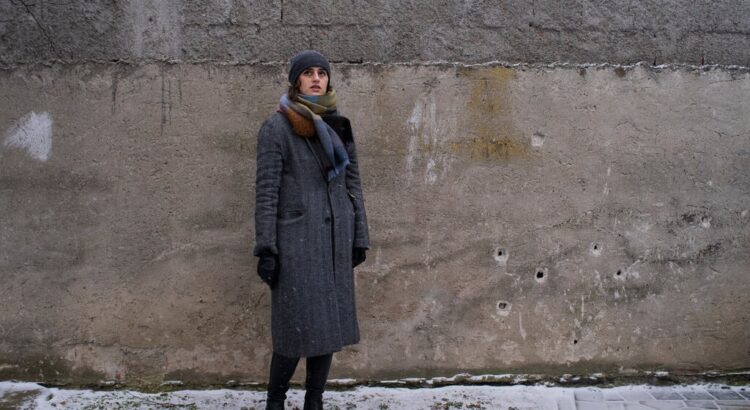
PODUJEVA, Kosovo — Saranda Bogujevci gazed without flinching at a cluster of bullet holes left in the garden wall by a massacre two decades ago that wiped out most of her family and put 16 rounds into her own body.

She said her mind had erased visual memories of the slaughter by the Scorpions, a Serb paramilitary unit. But, she said, “I can still smell the earth mixed with the smell of blood.”

Ms. Bogujevci’s against-the-odds survival — she was left for dead in a heap of bodies in her neighbor’s garden — and her subsequent determination to testify against the men who murdered her mother, grandmother, two brothers and four other relatives have made her a symbol of uncommon fortitude in Kosovo, a land still scarred by the traumas of war in the 1990s.

But Ms. Bogujevci, 35, is far more than a symbol. She is part of an unlikely wave of women being elected to Parliament in Kosovo, which declared independence in 2008, but remains one of the poorest countries in Europe. When final results of a Feb. 14 election were finally announced on Thursday in Pristina, the capital, they showed that women had won more seats in Parliament than ever before — nearly 40 percent of the total.

That surge reflects growing discontent with the endemic corruption and bullying ways of a postwar order dominated by swaggering male veterans of the Kosovo Liberation Army, the now disbanded guerrilla force that battled Serbia and paved the way for Kosovo’s declaration of independence.

These elected women have convinced voters that they can stand up to Serbia, which has refused to recognize Kosovo as an independent state, and also confront the corruption, criminality and poor governance that dashed the high hopes that attended the end of Serbian rule.

A view of Pristina, Kosovo’s capital. A majority-ethnic Albanian territory, the nation broke away from Serbia in the late 1990s.

Nazlie Bala, a women’s activist who was a K.L.A. helper during the war, said Ms. Bogujevci’s strength and resolve had made her an emblem of Kosovo’s ordeals and hopes: “She is a survivor. She is strong as stone. She is our truth.”

As Ms. Bogujevci takes her place in the new legislature, which will select Kosovo’s president, she wants to see that job, the country’s highest office, go to another woman and fellow wartime survivor, Vjosa Osmani, 38.

Ms. Osmani — who has been acting president since November, when the male incumbent was arrested on war crimes charges — is expected to be selected outright in coming days. Ms. Osmani, who ran for election on the same ticket as Ms. Bogujevci, won more votes than any other candidate — and also more votes than anyone else since Kosovo started holding elections two decades ago.

Her appeal is particularly strong among young people and women, more than 60 percent of whom, according to exit polls, voted for a slate of candidates that she led along with Albin Kurti, a longtime champion of progressive causes.

Vjosa Osmani, who has served as the country’s acting president since November, casting her vote in Pristina in last month’s general election.

When Ms. Osmani fled as a young girl with her parents from their home in northern Kosovo in 1999 to escape pogroms of ethnic Albanians, they were stopped on the road by Serbian soldiers who threatened to kill her father. She had a gun barrel thrust into her mouth when she protested.

Such traumas, she said, “touched every family in Kosovo” and help explain public anger and frustration over the country’s stumbling postwar progress.

Her performance in the election, Ms. Osmani said in an interview, shows that “Kosovo is not only ready for a female president, but voted for one,” despite entrenched misogyny and a “patriarchal mentality built up over centuries.”

Ms. Osmani was thrust into a leadership role in November when Kosovo’s president, the veteran guerrilla commander Hashim Thaci, resigned and was then detained to face war crimes charges at a tribunal in the Netherlands. She took over as acting president because of her position as speaker of Parliament.

As speaker, Ms. Osmani was regularly insulted and threatened by male rivals. When she disconnected the microphone of an unruly legislator last year, he stormed up to her, screaming curses. A video of the incident circulated online, convincing even skeptics that Ms. Osmani, an expert in international law and former professor at the University of Pittsburgh, could hold her own and bring real change.

“This made me realize that we had a chance, that she is not just bargaining for power and will stand up for herself and all of us,” said Elife Krasniqi, a Kosovar anthropologist who researches Balkan women’s movements at the University of Graz in Austria.

Supporters of a surging center-left party at a rally in Pristina. The party’s leader, Albin Kurti, has a strong record of promoting women.

A rival would-be president, Ramush Haradinaj, a wartime K.L.A. commander and former nightclub bouncer, said during the campaign that Serbia would cheer if Ms. Osmani were selected because it feared a strong male leader like himself, preferring a “weak woman.”

An ally of Mr. Haradinaj’s derided Ms. Osmani as a “fat woman.” After a public uproar, he said that he had been misunderstood and that he had meant she was “fat in the brain.”

Such appeals to macho sentiments did not help in the election: Mr. Haradinaj’s party won only 7 percent of the vote.

The challenges facing the new female lawmakers are immense. Corruption is rampant, inequality huge and development scarce. Nearly a third of the population is unemployed, with a jobless rate at over 50 percent for young people and 80 percent for women, by some counts. Ms. Bala, the activist, said that while 60 percent of university graduates each year are women, 70 percent of job offers go to men.

Many of the female candidates explicitly targeted those issues in their campaigning.

Doarsa Kica, a 30-year-old lawyer, gave up her job to run on an anticorruption platform, citing encounters in court with corrupt judges and anger at politicians “who live in million-dollar houses when they only have a $1,000 monthly salary.” Ms. Kica joined the ticket of Ms. Osmani, her former professor at Pristina University, and won a seat.

Doarsa Kica, center, a 30-year-old lawyer, quit her job to run for Parliament. She campaigned on an anticorruption platform and won a seat.

The emergence of women in Kosovo politics has been a long, painful process.

Kosovo has had one female president, but that was the result of a back-room deal engineered by the United States, which led a NATO bombing campaign that broke Serbia’s grip on the territory in 1999 and has since played a major role in its affairs.

The United Nations, which administered Kosovo for nearly a decade after the war, also imposed a quota system in 2000 that guaranteed women 30 percent of the seats in Parliament.

The emergence of women in Kosovo politics has been a long, painful process.

Kosovo has had one female president, but that was the result of a back-room deal engineered by the United States, which led a NATO bombing campaign that broke Serbia’s grip on the territory in 1999 and has since played a major role in its affairs.

The United Nations, which administered Kosovo for nearly a decade after the war, also imposed a quota system in 2000 that guaranteed women 30 percent of the seats in Parliament.

But with voters now accustomed to women in Parliament and disenchanted with many male politicians, female candidates are winning representation outright. Ms. Bogujevci, for instance, first entered Parliament in 2017 under the quota system but, after doubling her vote count on Feb. 14, won on her own.

Igballe Rogova, a women’s rights activist, said voters were now looking at female candidates “not as quota women, but as politicians who make promises and keep them and deserve votes.”

Mr. Kurti, who leads a center-left party that joined forces with Ms. Osmani, has a strong record of promoting women. Briefly prime minister last year, he put women in charge of a third of Kosovo’s ministries. Previous governments appointed just one or none.

The joint election ticket he headed with Ms. Osmani pledged that all state agencies and enterprises would be ordered to enforce hiring equality. Governments dominated by former K.L.A. commanders had for years resisted giving women who had fought in the war the status and pensions accorded to male fighters.

Ms. Bala, the activist, who carried a gun in the war, said that many women had taken part in the armed struggle against Serbian forces but were later written out of the script. “A myth was created that only men are strong and can fight,” she said.

Another fraught issue has been whether rape survivors, of which there were thousands during the war, should be recognized as war victims entitled to a monthly government stipend.

A memorial in Pristina depicting an Albanian woman using 20,000 pins, each of which represents a woman raped during the Kosovo War.

Legislation allowing rape survivors to apply for compensation was passed in 2014 after intense lobbying by Ms. Osmani. That was despite demands from some male legislators that women who had been raped in the 1990s get a medical certificate from a doctor — more than 20 years later — to prove that they were not lying.

Such demands, Ms. Osmani said, were “ridiculous and very insulting toward women.”

Ms. Bogujevci’s road to Parliament was also a long one. “I always said I would never enter politics,” she said in an interview in her family’s hometown, Podujeva.

She was flown to Britain for medical treatment soon after the fighting ended, and spent nearly 15 years building a new life in Manchester in the north of England, but started making increasingly frequent trips back to her home region.

She testified against her family’s killers before a court in Belgrade, the capital of Serbia, and exhibited an art display she had created chronicling her family’s story. She has now moved back to Kosovo, where strangers stop her on the street to voice admiration and support.

Like most Kosovo towns, Podujeva has a hulking war monument in its center featuring statues of burly men with guns. When Ms. Bogujevci visited before the election, however, she immediately became the center of attention, thronged by well-wishers.

Bokim Gashe, standing in the snow outside his wife’s tailoring business, said he would “of course” vote for her.

“She is stronger than all the men around here,” he said.

Fuente de la Información: https://www.nytimes.com/2021/03/06/world/europe/kosovo-women-parliament.html?action=click&module=Top%20Stories&pgtype=Homepage



Comparte este contenido:

Ghana: We’ll work to justify our inclusion – New ministers

We’ll work to justify our inclusion – New ministers

The newly sworn-in Ministers of State for President Nana Akufo-Addo’s second term have promised to work solely in the interest of Ghanaians to ensure massive socio-economic transformation.

They have thus asked for support from citizens to enable them to do so.

Communication and Digitalization Minister, Ursula Owusu-Ekuful who spoke on behalf of the new Ministers after their swearing-in ceremony was grateful to the President for the honour done them.

“We express our sincere appreciation to the President and thank him for the confidence reposed in us. We pledge not to let you down and live up to the oaths that we have sworn and discharge our responsibilities to the best of our ability.”

Mrs Owusu-Ekuful expressed the commitment of her colleagues to delivering on their mandate in a manner that will be beneficial to the entire nation.

“We urge all Ghanaians to continue to remember us in your prayers so that we can work together to justify our inclusion”, she added.

In all 28 out of 30 Ministers of State were sworn into office at the Jubilee House on Friday evening.

The two sectoral ministers who could not be sworn into office are the Minister-designate for Finance, Ken Ofori Atta and Minister-designate for Chieftaincy and Religious Affairs, Ebenezer Kojo Kum.

Ken Ofori-Atta is yet to go before the Appointments Committee to be vetted due to complications from COVID-19 while Ebenezer Kojo Kum was unable to attend the swearing-in ceremony due to ill-health.

Akufo-Addo’s charge

President Nana Addo Dankwa Akufo-Addo has tasked his newly-outdoored ministers to make it a priority to add value to the country’s system of governance.

He said this is the only way the renewed four-year mandate given his New Patriotic Party (NPP) administration by Ghanaians can be well expressed.

“I am assured that the various background of each one of you will bring value to the governance of our country and enable us to deliver the commitments of our manifesto- the secret compact that ties us the New Patriotic Party to the Ghanaian people”, the President said.

While touting his first-term successes in the areas of health, education, infrastructure, accountability and industrialization, President Akufo-Addo assured that his government is in the “process of putting this nation onto the path of sustainable progress and prosperity,” in the next term.

President Akufo-Addo, therefore, encouraged the appointees to ensure continuous transformational leadership aimed at improving the socio-economic life of the ordinary citizen.

“I urge you to provide leadership that will ensure that work that we do, benefits the progress of our nation and help raise the living standard of our people. That is why we are here and that is why the Ghanaian people voted for us.”

Fuente de la Información: https://www.modernghana.com/news/1066057/well-work-to-justify-our-inclusion-new-minister.html


Comparte este contenido:

Irak: Ayatollah Sistani promises Pope Francis peace and security for Iraqi Christians

Ayatollah Sistani promises Pope Francis peace and security for Iraqi Christians

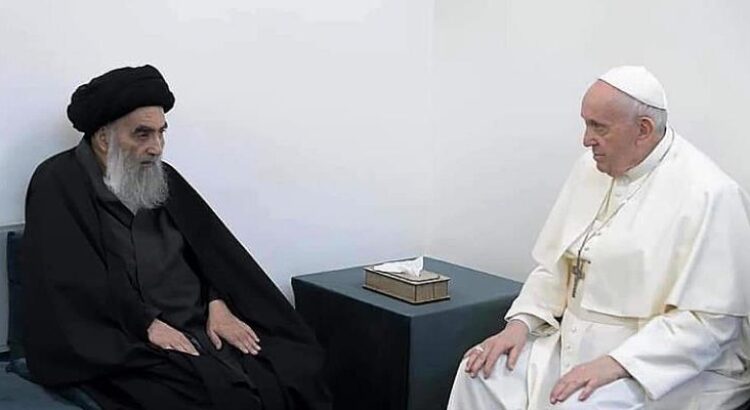
Grand Ayatollah Ali Sistani, the authority for most of the world’s 200 million Shiite Muslims, has told Roman Catholic leader Pope Francis at a meeting in the holy city of Najaf, that Iraq’s Christians should live in «peace and security».

The meeting between the two men, on the second day of the first-ever papal visit to Iraq, marked what has been described as «a landmark moment» in modern religious history.

Pope Francis is defying a second wave of coronavirus cases and renewed security fears to make a long-awaited trip to Iraq, aiming to comfort the country’s ancient Christian community and deepen his dialogue with other religions.

The meeting between the two elderly men lasted 50 minutes, with Sistani’s office putting out a statement shortly afterwards thanking Francis for visiting the holy city of Najaf.

Sistani «affirmed his concern that Christian citizens should live like all Iraqis in peace and security, and with their full constitutional rights,» it said.

His office published an image of the two, neither wearing masks: Sistani in a black turban with his wispy grey beard reaching down to his black robe and Francis all in white, looking directly at the grand ayatollah.

Rare meeting with reclusive cleric

Sistani is extremely reclusive and rarely grants meetings but made an exception to host Francis, an outspoken proponent of interreligious dialogue.

The Pope had landed earlier at Najaf airport, where posters had been set up featuring a famous saying by Ali, the fourth caliph and the Prophet Mohammed’s relative, who is buried in the holy city.

«People are of two kinds, either your brothers in faith or your equals in humanity,» read the banners.

Pope condemns violent religious extremism

Pope Francis condemned violent religious extremism on Saturday during an interfaith prayer service at the site of the ancient city of Ur, where the Prophet Abraham is thought to have been born.

«We believers cannot be silent when terrorism abuses religion,» he told the congregation, which included members of religious minorities persecuted under the Islamic State group’s three-year rule of much of northern Iraq.

The Catholic leader said he hoped the world would «journey from conflict to unity.

«Let us ask for this in praying for the whole Middle East. Here I think especially of neighbouring war-torn Syria,» he said in remarks during the service.

Fuente de la Información: https://www.modernghana.com/news/1066078/ayatollah-sistani-promises-pope-francis-peace.html

Comparte este contenido:

China: Real Access For Women To Join The Digital Economy

Real Access For Women To Join The Digital Economy

Almost a month separates the International Day of Women and Girls in Science on 11 February and the International Women’s Day on 8 March, but the two are getting increasingly related, if not in time at least in the achievements they want to mark.

The former was established in 2015 by the United Nations (UN) General Assembly to encourage more girls and women to pursue studies and careers in science and technology. The latter celebrates women’s achievements in social, cultural, economic and political fields and advance gender parity.

But these achievements will struggle to progress without higher participation of women in science, technology and innovation, especially in a highly digitalised post-pandemic world.

This is particularly important for ASEAN, one of the fastest growing digital economies in the world, whose growth has been accelerated by the COVID-19 pandemic. With a growing proportion of our daily activities moving online, equal access to digital technology and participation in online professional activities is key to an inclusive post-pandemic recovery. And equal access means same opportunities to compete, thrive and access leadership positions.

Gender Digital Inclusion

Any foreigner living and working in South East Asia can be quickly impressed and positively surprised by the numerous highly qualified women met during meetings and professional events, certainly in higher numbers than in other region around the world.

However, while at first sight, this partial and unresearched anecdotal evidence is very positive, when looking at the data, it is clear that there still a long way to go.

Recent research by the Economic Research Institute for ASEAN and East Asia (ERIA) shows that when compared to other regions in Asia, ASEAN women are doing well in terms of more basic digital access metrics (mobile phone usage, connection to the internet, etc.) and according to a 2018 McKinsey assessment, ASEAN member states scored higher than the Asia-Pacific average with respect to gender digital inclusion.

For this type of access, it is reasonable to imagine that other “divides” such as the urban-rural divide are more predominant and significant than the gender-divide (women vs men/girls vs boys).

However, when it comes to more sophisticated forms of access to scientific information and digital technologies, it becomes evident that opportunities are not the same. Participation in science, technology, engineering, and mathematics (STEM) education is good (although skewed towards medical disciplines and less towards ICT and technology fields). But high female education in technical fields does not appear to translate into equally high female representation in related professions.

Women have limited representation in advanced technology jobs that require higher skill levels and are better-paying. These skills and jobs are increasingly becoming in high demand for a transition towards a highly digitised post-pandemic world.

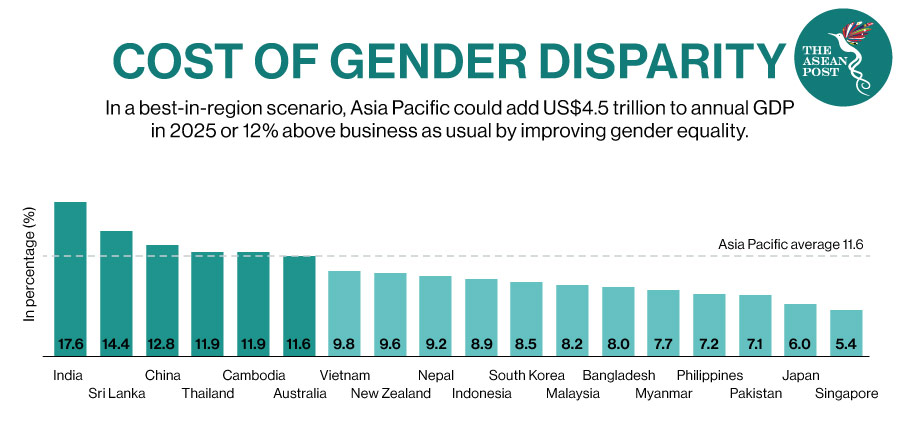
Cost of gender disparity

When looking at entrepreneurship and innovation, while many ASEAN women are entrepreneurs, it is important to remember that the majority of them own and manage micro or small enterprises, which typically make limited use of sophisticated digital tools, if any. This means that women entrepreneurs across ASEAN are at risk of lagging behind when competing in the digital market-place.

Senior management and leadership positions in the business sector is another area where there is room for improvement. Unfortunately, globally and across ASEAN in particular, there is no systematically collected data on female representation in management positions in technology-related industries. However, research in different countries and contexts points to a lack of women in top-management and executive positions.

Leadership Positions

In addition to social equality principles, there are economic benefits to including women in senior management. A recent report by the International Finance Corporation and the Economist Intelligence Unit found that companies across ASEAN with more than 30 percent female board members performed better financially than companies with fewer female board members.

An increasing body of research also shows how diversity, including gender diversity, is associated with more creativity and innovation, as different points of views are taken into account.

Participation in leadership positions in policymaking is also important because of the power of policy and regulation to shape the behaviour of institutions and societies. Diversity of representation at policymaking levels is necessary to ensure that the perspectives and realities of different populations are factored into policy initiatives.

In the digital sector, this includes national policymaking bodies responsible for information and communications technology, science and education policy, and regulation for example. It is difficult to think about how to solve problems like cyberviolence, discrimination, biases, stereotypes or fake news affecting women within and outside the digital space without adequate representations of women in decision-making rooms. And these issues are becoming increasingly urgent to reflect upon and tackle as we increase the time we spend studying, meeting and working online.

It is not enough for women and girls to have access to the digital economy: the types of access also matter. The ability of women to progress into senior and top-management and policymaking roles determines the extent to which women can have an equal voice in the development of systems and rules that affect their lives.

Women need to have access to equal opportunities offered by innovations and emerging technologies not for being in ‘survival mode’ but to be able to compete and thrive in a highly digitalised post-pandemic world.

Then we can really celebrate these two important days meant to mark women’s achievements.

Fuente de la Información: https://theaseanpost.com/article/real-access-women-join-digital-economy

Comparte este contenido:

Uganda: Women’s day will not affect UCE exams- UNEB

Women’s day will not affect UCE exams- UNEB

Kampala, Uganda | THE INDEPENDENT | The Uganda National Examinations Board-UNEB has said that the Uganda Certificate of Education-UCE examinations timetable will not be affected by Women’s day.

The Women’s day will be celebrated on Monday. However according to the UNEB timetable, there are two examinations scheduled on that day. They are Chemistry Practical (paper four), and IPS Art: Studio Technology (paper six).

Dan Odongo, the Executive Secretary UNEB notes that despite being a public holiday, the papers will go on as planned.

“…UNEB would like to inform candidates, heads of centres, scouts and invigilators, and the general public that although Monday, March 8 is a public holiday, UNEB examinations will go on as planned,” Odongo’s press statement reads in part.

He further directs heads of examination centres and other officials involved in the examination process to ensure that examinations of the day are carried out accordingly.

This is not the first time UNEB has scheduled an examination on a public holiday. In 2013, the examination body had scheduled three examinations; Chemistry, Music Aural, and Energy and Power on a public holiday- Eid-al-Aduha.

The timetable attracted public uproar with a section of sheikhs dragging UNEB to court saying the act was contrary to the Public Holidays Act. Although the court had refused to issue an interim injunction halting the scheduled papers, UNEB later on postponed the papers to a later date.

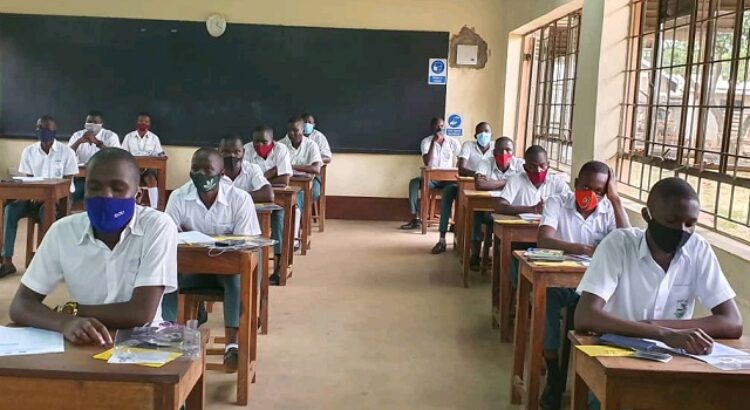
At least 333,889 candidates from 3,935 centers started their examinations on February 26, with the briefing. The first written examination was administered on Monday, March 1.

*****

Fuente de la Información: https://www.independent.co.ug/womens-day-will-not-affect-uce-exams-uneb/

Comparte este contenido:

Nuevas protestas en España por encarcelamiento de rapero

Cientos de personas marcharon el sábado en Barcelona para manifestarse en contra de las duras medidas de las autoridades tras una serie de protestas violentas por el encarcelamiento de Pablo Hasél, un artista detractor del sistema.

La marcha del sábado se llevó a cabo bajo fuerte presencia policial, serpenteando a través de varias avenidas de la capital regional catalana. Los manifestantes marcharon detrás de una pancarta que exigía la liberación de Hasél y algunos de sus seguidores.

Hasél cumple con una sentencia de nueve meses por incitar actos terroristas —ha elogiado a dos grupos armados, ahora extintos, responsables de matar a más de 900 personas en España— y por negarse a pagar una multa por insultar al rey emérito español.

Su arresto del 16 de febrero provocó protestas pacíficas y violentas que en ocasiones terminaron con el saqueo de tiendas en varias ciudades. El caso también ha avivado un debate sobre los límites de la libertad de expresión en España.

La coalición gobernante izquierdista ha prometido lanzar una reforma legal para eliminar sentencias en prisión por delitos que involucren la libertad de expresión. El socio menor de la coalición, el partido de la extrema izquierda Unidas Podemos, ha presentado una solicitud para otorgar el perdón a Hasél.

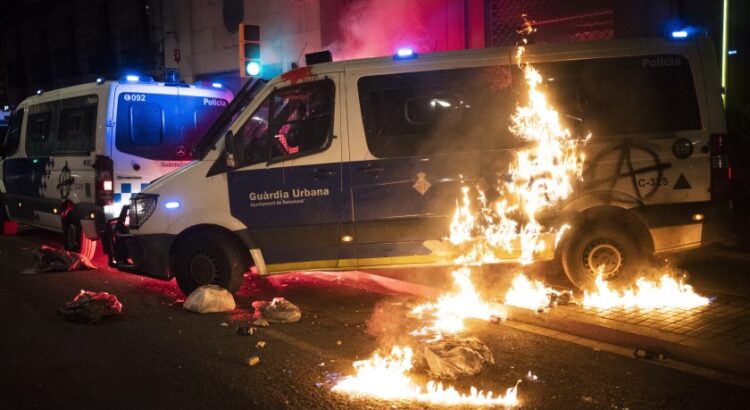
Ocho personas han sido encarceladas por formar parte de un grupo que protestó contra el encarcelamiento del rapero y prendió fuego a una camioneta policial, un incidente en que un agente apenas logró escapar de las llamas.

Enfrentan posibles cargos de intento de homicidio, agresión contra agentes del orden y formar parte de un grupo criminal.

Fuente: https://www.sandiegouniontribune.com/en-espanol/noticias/story/2021-03-06/nuevas-protestas-en-espana-por-encarcelamiento-de-rapero

Comparte este contenido:

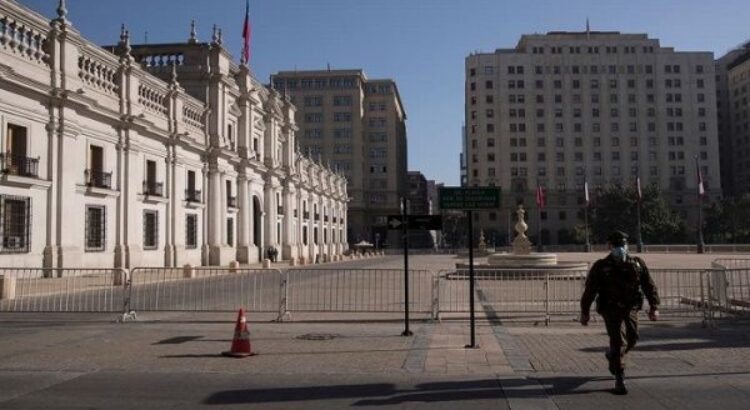
Chile reporta 5.325 nuevos contagios por Covid-19 en 24 horas

En el país suramericano el número total de fallecidos a causa del coronavirus asciende a 20.928.

El Ministerio de Salud de Chile desde su sitio oficial precisó este martes que han sido diagnosticada en el país un total de 845.450 casos de Covid-19, de ellos 5.325 corresponden a las últimas 24 horas.

Asimismo la institución sanitaria precisó que del acumulado de personas diagnosticadas con la Covid- 19, 27.317 pacientes se encuentran en etapa activa. Los casos recuperados son 796.791 personas.

“En cuanto a los decesos, de acuerdo a la información entregada por el DEIS (Departamento de Estadísticas e Información de Salud), en las últimas 24 horas se registraron 90 fallecidos por causas asociadas al Covid-19. El número total de decesos asciende a 20.928 en el país”, declaró la organización ministerial.

El ministerio de Salud de Chile precisó además que 1.755 personas se encuentran hospitalizadas en Unidades de Cuidados Intensivos (UCI), de las cuales 1.513 están con apoyo de ventilación mecánica.

La región de Los Ríos registra el índice de incidencia más alto a nivel país por 100 mil habitantes. Las regiones con mayor aumento de nuevos casos confirmados en los últimos siete días son Los Ríos, O’Higgins, Metropolitana, Los Lagos y Valparaíso, según los datos ofrecidos por la máxima institución sanitaria.

“Mientras sigue avanzando el proceso de vacunación con normalidad y de acuerdo a lo planificado, la ciudadanía no debe olvidar las medidas de autocuidado: siempre usar mascarilla, lavar manos con agua y jabón, mantener distanciamiento físico, evitar aglomeraciones, ya que son por ahora las medidas más efectivas”, acotó el ministro de Salud Enrique Paris.

Fuente: https://www.telesurtv.net/news/chile-reporta-nuevos-contagios-covid-20210305-0034.html


Comparte este contenido:
Page 859 of 6195
1 857 858 859 860 861 6.195