Caravanas en decenas de ciudades piden la destitución y juicio contra presidente brasileño Jair Bolsonaro
Sus organizadores optaron por convocar a los manifestantes en automóviles para no provocar aglomeraciones y evitar la diseminación de la covid.
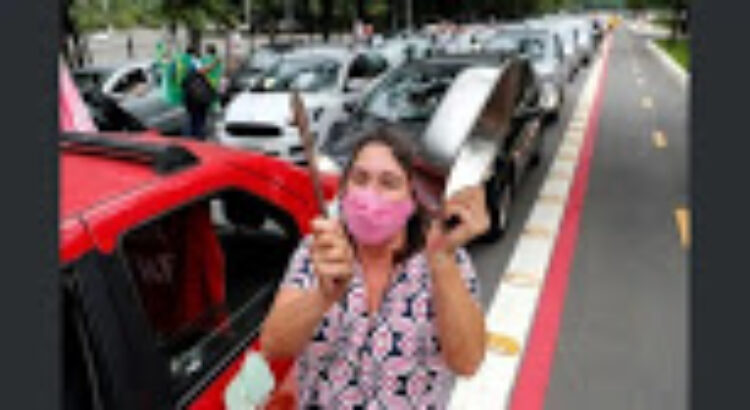
Con caravanas de vehículos y hasta de bicicletas en al menos 50 ciudades, los movimientos sociales y sindicales de Brasil exigieron este sábado que el presidente Jair Bolsonaro sea sometido a un juicio político destituyente por su cuestionada gestión frente a la pandemia del coronavirus.
Los desfiles de vehículos llamando la atención con sus bocinas y portando banderas y carteles con mensajes contra Bolsonaro y en favor de medidas eficaces contra la pandemia se multiplicaron en las capitales regionales pero también en ciudades medianas.
Los manifestantes quieren que el Congreso ponga en discusión alguna de las 57 peticiones de apertura de juicio político destituyente contra Bolsonaro que han sido presentadas a la Cámara de Diputados y que cuestionan al jefe de Estado principalmente por su negacionismo frente a la gravedad de la pandemia.
Las manifestaciones de este sábado fueron convocadas en las redes sociales por los partidos de izquierda, centrales sindicales y las poderosas coaliciones Frente Brasil Popular y Pueblo Sin Miedo, que reúnen a enormes organizaciones sociales como el Movimiento de los Sin Tierra (MST) y la Unión Nacional de los Estudiantes (UNE).
Las caravanas tuvieron la adhesión de cientos de vehículos en las mayores ciudades pero no fueron multitudinarias como otras protestas contra Bolsonaro debido a que sus organizadores optaron por convocar a los manifestantes en automóviles para no provocar aglomeraciones y evitar la diseminación de la covid.
«Con estas caravanas demostramos que es posible ir a la calle a protestar pese a la pandemia. Este Gobierno ya cometió demasiados crímenes contra la población brasileña y no podemos seguir quietos», afirmó la líder sindical Carmen Foro, secretaria general de la Central Unitaria de los Trabajadores (CUT), mayor central sindical del país.
BOLSONARO, «OBSTÁCULO» PARA SUPERAR LA PANDEMIA
Para los frentes Brasil Popular y Pueblo Sin Miedo, el líder ultraderechista se ha convertido en un obstáculo para que Brasil pueda superar la actual crisis sanitaria, así como las crisis económica y política, por lo que es necesario presionar al Congreso para que lo juzgue y discuta su posible destitución.
«Incluso con más de 215,000 muertos por covid, Bolsonaro sigue negando la gravedad de la pandemia, posicionándose contra la vacunación y reduciendo los recursos para la salud. Ante el colapso por falta de oxígeno en Manaos no hizo absolutamente nada», denunciaron los movimientos sociales.
Brasil, con 210 millones de habitantes, es uno de los epicentros globales de la pandemia; el segundo país con más muertes en el mundo por covid-19 después de Estados Unidos, con unos 215.000 fallecidos, y el tercero con más contagios, con 8,7 millones de casos.
Pese a ello, Bolsonaro se mantiene como uno de los gobernantes más negacionistas sobre la gravedad de la covid, que llegó a tildar de «gripecita»; se opone a las medidas de distanciamiento social y hasta al uso de tapabocas e insiste en que la eficacia de las vacunas no está científicamente probada y que pueden tener efectos secundarios que los laboratorios se niegan a asumir.
Los movimiento sociales también quieren que, ante la llegada de una segunda ola de la pandemia a Brasil, el Gobierno vuelva a distribuir los subsidios que distribuyó el año pasado entre 66 millones de familias de desempleados, informales y pobres para ayudarlos a paliar los efectos de la crisis sanitaria.
«Como si no bastara el nivel récord de desempleo, el presidente extinguió el auxilio de emergencia, que era la única fuente de renta para miles de trabajadores», aseguran los movimientos sociales en su convocatoria.
Para la secretaria general de la CUT, las actitudes de Bolsonaro incitando a la población a reunirse sin precauciones provocó el actual colapso sanitario en Manaos, la mayor ciudad de la Amazonía y que sufre una grave crisis por la falta de camas para los enfermos de covid, la falta de oxígeno para los que dependen de respiradores mecánicos y el récord de hospitalizaciones y entierros.
«La situación de Manaos es vergonzosa y no tenemos ninguna salida con ese presidente. Por eso la CUT se mantiene fuerte y firme en su campaña para exigir la salida de Bolsonaro. Desde el año pasado exigimos su enjuiciamiento en el Congreso. Exigimos que el Congreso coloque esa petición en votación», afirmó.
GRUPOS DE DERECHA TAMBIÉN PIDEN SU SALIDA
La insatisfacción con la gestión del jefe de Estado frente a la pandemia también se extendió a grupos de derecha que hace cinco años salieron a las calles para exigir la destitución de la entonces presidenta Dilma Rousseff y apoyaron la elección de Bolsonaro en 2018.
Se trata del Movimiento Brasil Libre (MBL) y del frente Vem para Rua (Ven a la calle), que no se sumaron a las manifestaciones de este sábado pero convocaron para el domingo sus propias caravanas igualmente para presionar la destitución del jefe de Estado.
«Bolsonaro colecciona crímenes de responsabilidad (que justifican un juicio político). Llegó la hora de mostrar nuestro rechazo al mayor fraude electoral en la historia de Brasil», afirmó el MBL en la convocatoria que publicó en sus redes sociales.
Las presiones por la salida de Bolsonaro ganaron fuerza el viernes con la divulgación de una encuesta que mostró que la evaluación negativa del mandatario subió hasta el 40 % y la evaluación positiva cayó hasta el 32 %.
Además de evidenciar la caída de la popularidad del gobernante, el mismo sondeo indicó que 42 % de los electores brasileños defiende la apertura de un juicio político contra el presidente frente a un 53 % que aún lo rechaza.
De las 62 peticiones de apertura de juicio político contra Bolsonaro recibidas hasta ahora por el Congreso, tan sólo 5 fueron rechazadas y las otras 57 están sobre la mesa del presidente de la Cámara de Diputados, que será elegido la primera semana de febrero.
El actual presidente de los Diputados, Rodrigo Maia, asegura que Bolsonaro merece ser juzgado por sus omisiones ante la pandemia pero alega que abrirle un juicio en estos momentos es contraproducente debido a que agravaría la crisis y la paralización del Gobierno ante la crisis sanitaria.
De las 62 peticiones, 22 tienen como justificación la gestión de Bolsonaro frente a la pandemia.
Fuente de la Información: https://www.laprensagrafica.com/internacional/Caravanas-en-decenas-de-ciudades-piden-la-destitucion-y-juicio-contra-presidente-brasileno-Jair-Bolsonaro-20210124-0016.html
Partidario desaparecido de la NUP encontrado muerto
Mukono, Uganda | EL INDEPENDIENTE | Rogers Ssemakula, uno de los partidarios de la Plataforma de Unidad Nacional (NUP) y residente de Kabembe en el subcondado de Kyampisi en el distrito de Mukono que desapareció la víspera de las elecciones presidenciales y parlamentarias, ha sido encontrado muerto.
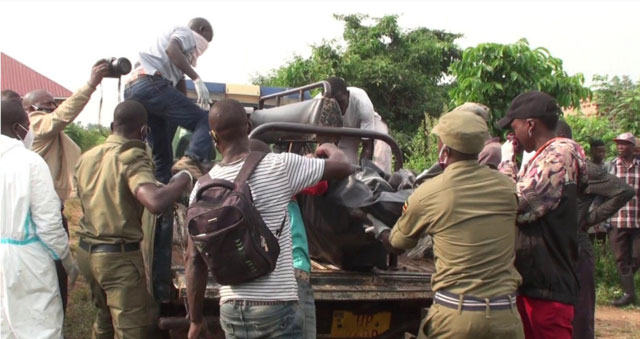
Su cuerpo fue recuperado del bosque de Kiyunga por un equipo de partidarios de la NUP después de días de búsqueda. La viuda de Ssemakula, Zarupha Nampijja, dice que su esposo no regresó a casa la víspera de las elecciones presidenciales y parlamentarias.
Según Nampijja, había advertido a los fallecidos que no se movieran de noche durante las campañas debido al secuestro desenfrenado de partidarios del NUP en la zona.
Asadu Jjemba, un residente de Kabembe, dice que el fallecido se encuentra entre varios partidarios del NUP que fueron secuestrados por personas que conducían en una innumerable camioneta blanca durante la noche del 13 de enero de 2021.
Dice que mientras el resto fueron liberados, Ssemakula seguía desaparecido.
“Cuando estuve recientemente en Kabembe, escuché a personas decir que hubo una redada en la que varias personas fueron arrestadas. Hoy nos enteramos de que una de las personas que fueron recogidas está muerta ”, dijo Jjemba.
A lo largo de las campañas parlamentarias, los candidatos y coordinadores de la NUP se quejaron repetidamente del secuestro y la brutalidad de sus partidarios. Abdullah Kiwanuka, el electo de Mukono North NUP, dice que después de no conseguir la atención de la policía, están finalizando una petición para presentar ante un tribunal superior para obligar a la policía y al gobierno a presentar a sus miembros desaparecidos, vivos o muertos.
Él dice que nueve de sus miembros, a saber, Isma Ssenkubuge, Juma Mukasa, Joseph Kyakuwa, Muhammad Kanata, Steven Ntulume, Julius Kiberu, Musa Male, Sowedi Lwanga e Isma Mwanjazi, siguen desaparecidos.
Aunque los miembros de la NUP señalan con el dedo acusador a Ronald Kibuule, el ministro de Estado del Agua y diputado actual de Mukono North por planear los secuestros y torturar a partidarios de la oposición, él ha negado con vehemencia las acusaciones.
En una entrevista telefónica el martes por la noche, Kibuule encargó a los acusados que presentaran pruebas que lo implicaran por los secuestros. Grace Nyangoma, la comandante de la división de policía de Naggalama, ha negado las acusaciones de negarse a ingresar en los casos de tortura y personas desaparecidas por parte de miembros de la oposición.
Fuente de la Información: https://www.independent.co.ug/missing-nup-supporter-found-dead/
For far too long, voices of Black women in the fight for justice have been ignored
On Martin Luther King Jr. Day, I sat with my three daughters and watched the «King in the Wilderness» documentary, a remarkable film about the final, turbulent months that preceded King’s assassination in Memphis on April 4, 1968.
«Mrs. King, are you taking part in this demonstration as an individual or as a wife?» a white reporter asks Coretta Scott King, about her participation in a rally against the Vietnam War in one scene.
Taken aback, she offers this response: «Well, I’m taking part as an individual and a wife. I’m both.»
In the future, Hollywood will commit big dollars to major productions about George Floyd’s life and the worldwide movement that followed. As I sat there with my girls, I wondered how those movies and documentaries — a key educational tool for the next generation — might portray the Black women who’ve lent their time, resources, voices and bodies in the name of social justice and the eradication of systemic racism.
Last week, I asked that question of Lena K. Gardner — a Black woman who identifies as queer and a central leader of the Black Lives Matter movement in Minneapolis.
Gardner pointed to the many layered depictions of Black men — heterosexual Black men — as forward-facing figures in the push for civil rights throughout history, a nuance unafforded to Black women who have not been allowed «their full humanity.»
She also mentioned the women missing from some of the most prominent stories from the civil rights movement because they weren’t provided the same privilege to leave their homes and jobs to participate. «I don’t think anything significant is going to change,» Gardner said about the future portrayal of Black women in the current movement for justice. «There is this whole fetishism and cult of the charismatic Black man. I don’t think that will change.»
I have been a dues-paying member of that cult. My perspective on Black history has been tainted by the sexism, misogyny and discrimination that’s sidelined Black women in mainstream conversations about history’s most important moments.
After I saw «Malcolm X,» Spike Lee’s blockbuster movie, in 1992, I bought two things: an Africa chain and Alex Haley’s autobiography written with the icon who was assassinated in 1965. Malcolm X and his contemporaries were my heroes. I did not devote as much energy to learning more about the women around them.
I thought Rosa Parks was a woman who sat in the back of a bus because she was tired. I didn’t understand her contributions as a longtime activist. I researched Huey P. Newton and the Black Panthers, but failed to realize that the women within the organization were instrumental in the group’s outreach efforts, including free breakfast and shoes programs, that strengthened its bond with the community. And I believed the March on Washington in 1963, where King unveiled his «I Have a Dream» speech, was pure, unaware that Black women had been blocked from speaking roles.
Throughout the history of the movement for equality, Black women have been presented as Best Supporting Actresses, denied the recognition they’ve deserved, because men have largely been the storytellers and power brokers behind these portrayals.
Lissa Jones, host of KMOJ’s «The Urban Agenda» and the Black Market Reads podcast, said the arrival of Vice President Kamala Harris, the first Black, Asian and female vice president in the history of the country, will create a larger demand for accountability and curiosity.
«I think it will be incumbent upon Black women to shout out our narratives,» she said. «This whole time, we’ve been doing this unrecognized.»
Over the summer, Sirius Marie, a 21-year-old activist who moved to Minnesota for a better life a month before Floyd’s death, joined friends at the 2020 March on Washington and recited her poetry in front of the statue of King. She chanted «Black Lives Matter!» through a megaphone as she marched through the streets with thousands last summer.
«I know I’m participating in history,» she said.
I asked her if the conversation was simply generational. But she said she’s witnessed the suppression of Black women’s voices among younger activists, too. I asked all three Black women what they hope to see in the movies that will be produced about the past year in Minneapolis and beyond.
Gardner said she hopes Black queer women are represented, too. Marie said she wants to see images of the women she’s witnessed with «boots on the ground.»
«We are neither Aunt Jemima, nor Jezebel, nor any of the other tropes they’ve made up,» Jones said. «We are complex and we deserve to be presented in our complexities.»
A real movie about the movement for social justice should portray Lena K. Gardner as a powerful voice, complete with the complexities she’s said Black women have been denied. It must show Lissa Jones, in her studio in Minneapolis, leading comprehensive conversations. And it also must feature a young activist like Sirius Marie, perhaps with her fist in the air at 38th and Chicago, where George Floyd was killed, an image on her Instagram feed.
If that happens, perhaps boys and girls will see more representation of Black women in books and films that address the current climate.
But I also must do my job to elevate those voices before I can expect that of anyone else, so I’d like to end with a line from Marie’s poem called «Tell Us.» It summarizes the fight Black people, especially Black women, continue to face.
Continuously you try your best to compress and yet
We rise STRONGER
Create beauty from the pain
Masterpieces from your scraps
A longtime Minnesota resident, Myron Medcalf has previously worked as a news and sports reporter for the Star Tribune, and is now a national writer for ESPN. His column will appear in print on Sundays twice a month and also online.
Fuente de la Información: https://www.startribune.com/for-far-too-long-voices-of-black-women-in-the-fight-for-justice-have-been-ignored/600014268/
«La Educación tendría que ser algo sagrado, y no instrumento de quita y pon por partidos de distintas ideologías»
El consejero andaluz de Educación y Deporte, Javier Imbroda, ha insistido en que la nueva Ley de Educación (Lomloe), la conocida como Ley Celaá, que entra en vigor este martes, está «condenada al fracaso», si bien ha confiado en que se abra un diálogo para su desarrollo reglamentario.
En una entrevista con Canal Sur Radio, recogida por Europa Press, Imbroda ha recalcado que confía en que ese diálogo que «no ha existido» en la tramitación de la nueva ley educativa «exista ahora para el desarrollo reglamentario de la misma».
Según el consejero, esta nueva norma «se ha tramitado sin diálogo, y una ley educativa que se tramita sin diálogo está condenada al fracaso».
Asimismo, ha mostrado su preocupación por que cada vez que llega un nuevo gobierno ha España se plantea el cambio de la ley educativa, no pensando en generaciones, sino en legislaturas y, a su juicio, «no hay sistema educativo que sea capaz de absorber tanto cambio de ley, con lo que volvemos locos tanto a los docentes como a los alumnos, y nunca se conseguirá un mínimo de estabilidad en sistema educativo».
Ha expuesto que el sistema educativo andaluz va a seguir teniendo todas las garantías jurídicas y el amparo legal para que los docentes hagan su trabajo en la condiciones más normales. A medida que se vaya produciendo el desarrollo reglamentario de la Lomloe, según ha apuntado, se irá adaptando a la misma la normativa autonómica de educación.
«La educación tendría que ser algo sagrado, y no instrumento de quita y pon por partidos de distintas ideologías», ha dicho.
Fuente de la Información: https://www.cordobabn.com/articulo/educacion/javier-imbroda/20210119104527073983.html
NANJING, Jan. 21 (Xinhua) — China’s first solar probe, Advanced Space-based Solar Observatory (ASO-S), is scheduled to be launched into space in the first half of 2022, marking the country’s first-ever mission to «touch» the sun.
The satellite will operate in a sun-synchronous orbit 720 km above Earth to keep a close tab on the sun 24 hours a day. Measuring about 1,000 kg in total mass, the satellite is expected to orbit the sun for at least four years, according to the Purple Mountain Observatory of the Chinese Academy of Sciences, a research institute based in Nanjing, east China’s Jiangsu Province.
The main scientific objectives of the probe include observing the sun’s magnetic field and two major eruptive phenomena, or bursts on the star, that are solar flares and coronal mass ejections (CMEs). It will deploy three payloads, including Full disk Vector MagnetoGraph, Hard X-ray Imager, and Lyman-alpha Solar Telescope.
Hitherto the sun is the only fixed star that can be studied in detail by humans. The vast majority of its radiation is blocked by Earth’s atmosphere. Only by sending probes into space can a complete picture of the sun be presented for further studies.
As the sun’s temper varies on an 11-year cycle and the star enters Solar Cycle 25, it is estimated to reach its peak radiation around 2025. The solar probe can help obtain detailed records of solar activity during its rise to the peak years, said Gan Weiqun, a researcher with the institute.
The satellite will also realize its potential in space weather forecasting. The CMEs can be detected at least 40 hours ahead of their arrival by the observatory, which is expected to further facilitate early warnings of damage to Earth’s electromagnetic environment.
Since the 1960s, more than 70 satellites related to solar observation have been launched globally. The ASO-S is expected to plug China’s gap in the field, according to Gan.
Fuente de la Información: http://www.xinhuanet.com/english/2021-01/21/c_139686590.htm
Work as we know it will never be the same – but are we prepared for a drastic transformation of where and when we do our jobs?
As most knowledge workers have toiled away remotely for nearly a year, some are eager to get back to the office, while others have high hopes of being able to stay at home. Regardless of the camp you fall into, there’s one question that’s hanging over everyone: what will work actually look like on the other side of the pandemic? Will our structure revert to pre-pandemic days: 9 to 5, five days a week?
Maybe, but maybe not. Some companies are anxious to get workers back to their desks, but at the same time, employee desire is ramping for a new type of ‘hybrid’ work future – a mix of both office presence as well as some time remote.
While some of these proposals to shake up the structure of work simply focus on giving employees a little more flexibility, a few are more dramatic. Some work and productivity experts are proposing that we blow up the notion of working five days or setting standard hours and workplaces altogether. If companies and workers rally around these big ideas, they’ll create a world of work that looks very different than it did a year ago.
Working ‘3-2-2’
Three days in the office, two days remote and two days off. That’s the premise behind ‘3-2-2’, a new work-structure proposal from academics Lauren C Howe, Ashley Whillans and Jochen I Menges. The emphasis on flexibility is key here, as workers choose the set-up that works best for them and mould their days around their personal schedules. (It’s a striking contrast to China’s similarly named 9-9-6, in which employees work 9 a.m. to 9 p.m., six days a week, in a rigid structure.)
“Employees have appreciated the flexibility experienced during the pandemic, and desire more of it in the future,” says Whillans, an assistant professor in negotiations, organisations and markets at Harvard Business School. Although she expects employers to still require five days of work, generally on a Monday-through-Friday schedule, the key to the 3-2-2 model is enabling employees to pick where they work. “The exact enactment of flexibility will involve companies considering factors like Covid safety risks, employee preferences and a discussion of what kinds of activities would benefit from some in-person interaction,” she says.
Whillans adds that the 3-2-2 model would look different across different organisations – especially within larger companies in which coordinating multiple workers in person at the same time could be more complicated. But the point remains the same: honour workers’ preferences while keeping collaboration and productivity at peak.
“Every office has a different consideration set, but the general idea is to think about when to encourage employees to come to the office versus stay at home to facilitate work-life balance and increase creative and informal social interactions among employees,” she says.
Four-day workweek
The concept of a four-day workweek isn’t new – some companies have been toying with the idea, or even experimenting with it, in workplaces across the globe for a few years. The proposal has been around since the 1970s, and implemented sporadically over past few decades with mixed success. But workers are renewing the call amid the pandemic, hoping it’s a more realistic solution than ever before.
One reason is that our relationship with productivity has evolved in an unexpected way that perhaps only the pandemic could have catalysed: many are finding that while working remotely they’ve been more efficient, not needing five full days to get their work done. A survey from US jobs site FlexJobs showed that 51% of respondents reported being more productive at home – even working parents.
Part of this increased output may be the result of better focus without the buzz and clamour of colleagues. But the other element may be that there simply isn’t enough work to fill five days, and workers find ways to occupy the time just to hit their desk-hours quota (think of all the time you spend checking social media or shopping, only to quickly toggle your browser tab when your boss walks by). This isn’t a new assertion: London School of Economics anthropology professor David Graeber raised the point back in 2018 by in his book Bullshit Jobs. Plus, working more hours than necessary may also have detrimental effects, such as decreased productivity and mental-health consequences.
Advancement of the four-day workweek isn’t just a pandemic-induced dream: Covid-19 has influenced companies to take up the strategy
Advancement of the four-day workweek isn’t just a pandemic-induced dream: Covid-19 has influenced a few companies to take up the strategy.
In December, Unilever New Zealand implemented a four-day workweek trial. “Our employees will work 80% of the time, while retaining 100% of their salaries and deliver 100% of their KPIs/output,” says Nick Bangs, general manager of Unilever New Zealand. There’s no “overarching template”, he adds, so workers choose their day off. The purpose, he says, is creating a “new productivity mindset”, and encourage more flexibility and better health.
A new reality?
These two approaches represent very different re-thinks of how we work: 3-2-2 emphasises flexibility across a 40-hour week; four-day workweek maintains structure, though with less time to be on. Is one more likely to happen than another?
Of course, it’s tough to say; ongoing impacts of the pandemic will continue to shift not only our thinking and values, but also our expectations of employers. In some ways, 3-2-2 may seem more ‘realistic’ as workers demand more flexibility, which 3-2-2 offers in spades. But we haven’t quite seen the proposal in action at scale – whereas the four-day workweek is already in motion for some companies, with others considering taking up the approach.
But there are also people who hate the idea of dismantling the typical workday structure all together, saying changes may let competition get ahead, leave clients waiting for responses, damage workers’ health and even sink the corporate world as we know it.
In the past, some firms that have embraced flexible, remote working have found the move disastrous for their output and bottom lines; in 2013, Yahoo CEO Marissa Mayer actually rolled back telecommuting initiatives, and forced employees back into traditional structures.
Similarly, the four-day workweek has virulent critics. Speaking on BBC’s Business Daily in December, Marc Effron, president of global HR company The Talent Strategy Group, said, “It feels like we’re somehow rewarding people for being inefficient by saying, ‘Well, because you were wasting so much time before, now that you’ve found some of that time by squeezing it into a four-day workweek, we’ll allow you just to work those four days’.” Simply, he posits that if workers can do five days of work in four, they’re not putting in 100% effort to begin with.
And even advocates for both 3-2-2 and the four-day workweek concede the plans aren’t without their wrinkles and caveats.
Whillans says that some companies will face challenges others won’t. “Organisations will have to think carefully about how to structure the in-office time so that the right people from the right teams are coming to work at the same time… Additionally, it will be up to leaders and organisations to coordinate schedules so no one is being left out.”
And Unilever’s Bangs says that in order to stick with their new four-day approach, there needs to be a visible upside, otherwise they’ll end the experiment, currently set to finish in December 2021. “This trial is not about compromising business growth for the benefit of wellbeing, or vice versa. For this to be deemed successful, we need great business results, our people telling us they have the mental and physical energy to bring the best version of themselves to work and our customers continuing to receive the same level of excellent service we pride ourselves on.” Regardless of what happens in New Zealand, however, Unilever CEO Alan Jope says that the company will never go back to the five-day in-office structure they had pre-pandemic, which he added in a Reuters news conference «seems very old-fashioned now».
Like many elements of our daily lives, the answer is still up in the air. But among the questions, one thing seems all but certain: the way we work will never be quite the same.
Additional sourcing and reporting by Bryan Lufkin.
Fuente de la Información: https://www.bbc.com/worklife/article/20210113-whats-the-best-plan-for-a-radical-new-workday
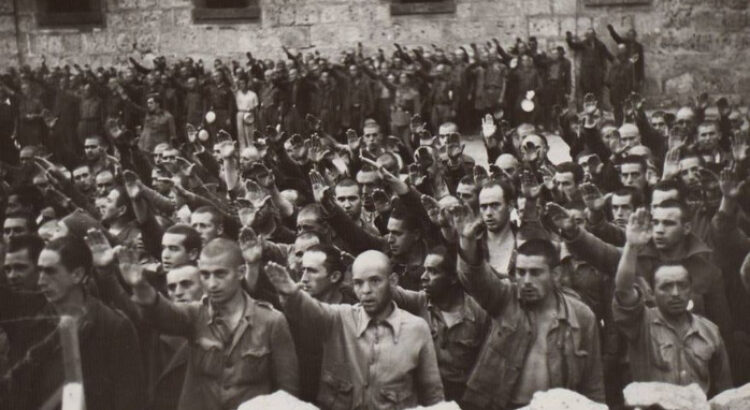
El profesor en la facultad de Educación de la Universidad de León revela que casi la mitad de los libros de texto en España no reflejan la represión franquista y señala tergiversación y equidistancia en varios manuales. También desvela la ausencia de referencias a las mujeres republicanas y a la persecución que sufrieron.
Generaciones enteras en España siguen sin conocer bien en qué consistió la represión franquista y cómo fue la lucha contra la dictadura tras la Guerra Civil. ¿Por qué? Esa es la pregunta que se hizo el profesor de la Facultad de Educación de la Universidad de León Enrique Javier Díez y, para hallar respuestas, decidió impulsar con otros profesores universitarios un estudio pormenorizado sobre los libros de texto de secundaria y bachillerato que abordan esa época histórica. Además, él y sus colegas elaboraron una encuesta, entrevistando a 610 profesores y profesoras de Historia de institutos de todo el país sobre su percepción de los contenidos en los manuales.
La conclusión fue clara: «El sistema educativo sigue blanqueando el franquismo demasiado a menudo», señala Díez, autor del libro La asignatura pendiente, en el que recopila los hallazgos del estudio, contando los fallos y carencias de muchos libros de texto a la hora de abordar el franquismo. El profesor considera que no basta con analizar, así que elaboró con sus compañeros una propuesta: una serie de unidades didácticas con un enfoque en derechos humanos para ponerlas al servicio de todos los docentes interesados en ofrecer una visión más ajustada y detallada de aquella época.
«Se agotaron las publicadas en papel, nos las han pedido de todas partes, muchas personas dedicadas a la enseñanza las están usando», relata en conversación con elDiario.es.
Foto: El ensayista y profesor universitario Enrique Javier Díez Gutiérrez, autor de La asignatura pendiente
Recientemente Díez y la editorial con la que publica, Plaza y Valdés, han mantenido contacto con la Secretaría de Estado de Memoria, a la que han hecho llegar estas unidades –disponibles en Internet–, proponiendo que sean usadas como herramienta educativa en todo el país, ya que desde el Gobierno se había manifestado interés por transmitir el aprendizaje de la memoria democrática en las escuelas.
«No puede tratarse de algo que dependa de la voluntad del profesorado de turno, como ocurre ahora. Debería estar integrado en el currículum, y eso es lo que se ha propuesto a la Secretaría de Estado, que lo tengan todos los departamentos de Historia de todos los institutos de este país. No hemos obtenido respuesta aún. Estamos a la espera», explica el autor de La asignatura pendiente.
El origen del proyecto
Hace unos años Díez y otros profesores universitarios que colaboraban en la realización del documental Los campos del silencio, de Eloína Terrón, acudieron al pueblo berciano de Fabero (León) para preguntar a los chicos y chicas del instituto qué sabían del pasado de sus propias familias.
«Fabero fue un pueblo con esclavos del franquismo, represaliados a los que pusieron a trabajar en un campo de concentración en la mina. Nos llamó la atención que, cuando preguntamos, de los 21 estudiantes que había en la clase solo una sabía algo de aquello, y no porque se lo hubieran contado en la escuela o instituto. Lo llamativo es que casi todos habían tenido abuelos o bisabuelos represaliados, era la historia de su propia familia lo que desconocían», cuenta.
Los profesores organizaron entonces una visita al lugar donde familiares de esos alumnos habían sido forzados a trabajar como esclavos. «Fue una experiencia única, un aprendizaje no solo intelectual, sino también emocional. Lo emocional es fundamental para ponerse en la piel del otro y empatizar. Por eso países como Alemania o Argentina organizan habitualmente visitas a lugares de memoria: son experiencias a través de las cuales se puede comprender mucho mejor lo que supuso la represión de las dictaduras», explica.
Poco tiempo después de aquello Enrique Javier Díaz proyectó en una de sus clases el documental El silencio de otros, en el que se aborda la represión franquista y la búsqueda de personas desaparecidas. «Resultó una especie de epifanía para ellos, muchos reaccionaron diciendo: ‘Nos han robado parte de nuestra historia’, porque hasta ese momento desconocían este pasado que explica tanto nuestro presente», señala.
Fue entonces cuando la idea de escribir las unidades didácticas y el libro La asignatura pendiente tomó forma. «La falta de conocimiento provoca generaciones de desmemoriados, que desconocen no solo la represión franquista, sino la lucha por la democracia o la presencia de los maquis. La mayoría de la población solo tiene contacto con la historia académica en la escuela. Si esto no se aborda en los colegios e institutos, se perpetúa la ignorancia. Los estudiantes saben mucho más del nazismo que del franquismo», reflexiona.
La represión contra las mujeres, ausente
Foto: mujeres rapadas y humilladas por la represión franquista en Oropesa, Toledo. Fondos de la Biblioteca Nacional Española.
Uno de los fallos que ha detectado el estudio detallado en La asignatura pendiente es que «la represión franquista contra las mujeres está completamente ausente de los libros de texto», explica durante la entrevista con elDiario.es:
¿En qué consistió esa represión contra las mujeres?
Se les rapaba el pelo: para el franquismo el pelo largo era el símbolo de la cultura de la feminidad, quitárselo equivalía a robarles la identidad, la feminidad. Eran obligadas a ingerir aceite de ricino, que provocaba diarreas constantes, y las paseaban por las calles en esa situación. Se les aplicaba violencia sexual, se las violaba. Eran castigos destinados específicamente a ellas. Pretendían volverlas a poner en lo que consideraban que era su lugar. Ellas habían logrado derechos, reivindicado libertades, y querían ponerlas «en su sitio», atarlas a la pata de la cama. Muchas, además, recibieron castigos por ser esposas, hermanas, familia o amigas de los republicanos.
Se usaban además otros castigos específicos que trataban de atentar contra su rol reproductivo, castigos vinculados a la maternidad. Separaban a las madres de sus hijos en las cárceles y se inició el robo de bebés para darlos en adopción a familias cercanas al régimen, para que fueran educados con familias de bien, porque sino, serían infectados con el ‘gen rojo’.
En definitiva, se las castigaba por ser rojas, por ser mujeres y por haber roto moldes y estereotipos. El objetivo era volverlas a colocar en un papel subordinado. El cuerpo de las mujeres fue usado como campo de batalla, para la humillación constante, muchas veces con el objetivo de vencer a los parientes masculinos ausentes. Y todo eso no aparece en ningún libro de texto, está absolutamente invisibilizado.
Además de la represión franquista contra las mujeres, han identificado ustedes otros temas tabú que no suelen ser abordados en los libros de texto.
Eso es permanente. Por ejemplo, el papel de la Iglesia católica. El texto de la editorial Vicens Vives de cuarto de la ESO, que quizá es el que más se implica y detalla, dice literalmente que «esa represión fue llevada a cabo con el consentimiento de los grupos sociales que respaldaban el alzamiento y en ocasiones con el apoyo de la propia Iglesia». ¿Cómo que «en ocasiones»? Todos los obispos, excepto el de Pamplona, firmaron una carta en la que respaldaban el franquismo y además iban denunciando a la gente, eran ellos los que recibían la denuncia para que luego se aplicara castigo y se torturara a los señalados.
El papel legitimador de la Iglesia en el proceso de represión sistemática fue bendecido por la jerarquía católica. Sin embargo, esto solo se menciona en la mitad de los libros de 4º de la ESO y de 2º de Bachillerato. Anaya, por ejemplo, señala en su libro de 2º de Bachillerato: «La jerarquía eclesiástica estuvo al tanto de la represión oficiada por los ganadores, eligió muchas veces el silencio o la justificación de los excesos pretextando un bien mayor». Es como una especie de blanqueamiento. Sin embargo, no es que estuviera al tanto, es que fue una de las de las protagonistas fundamentales de la represión.
La editorial Laberinto va más allá y dice que la Iglesia «apenas tuvo otra opción». ¿Cómo que «apenas tuvo otra opción»?. Lo justifica diciendo que «en la zona republicana se desencadenó una persecución indiscriminada e incontrolada contra el clero católico». Es como volver a retomar toda la historiografía del fascismo y plasmarla en los libros de texto. Ha habido una Transición y cuarenta años de democracia, no se puede seguir manteniendo la ideología franquista en los libros de texto que están estudiando chicos y chicas del siglo XXI.
En el libro también menciona otros asuntos que no aparecen en los manuales.
La lucha antifranquista es otro tabú. O el enriquecimiento de familias franquistas a costa de las republicanas expoliadas, o la implicación activa de una parte de la sociedad civil que se sentía vencedora, o la triple represión dirigida contra las mujeres, una represión que estuvo organizada de forma sistemática.
En La asignatura pendiente expone equidistancias presentes en muchos libros de texto aún. En algunos hay incluso falsedades…
Sí. Hay muchos libros que buscan equiparar, hacer un paralelismo entre golpistas y defensores de la democracia, y para ello hablan de los «desmanes de ambos bandos». Algunos afirman que «uno y otro lado provocaron las mismas víctimas», mintiendo, porque para empezar los golpistas ejercieron durante cuarenta años una represión sistemática, legal y además con carácter retroactivo.
Hay un libro, de la editorial Bruño, que señala que «en el territorio republicano se desarrolló el terror rojo, muy turbulento contra la Iglesia y contra los partidarios de los sublevados, y en la zona nacional se impuso más sistematizado el terror blanco, que represalió y fusiló a numerosas personas fieles a la República». Es decir, presenta el modelo de los dos terrores. Esto es el relato del franquismo trasladado a libros de texto. Se sigue blanqueando de alguna forma la dictadura. Otro de los aspectos preocupantes es la invisibilidad y la minimización que se hace de la represión franquista. Solo la mitad de los manuales hacen referencia a la represión franquista a pesar de que duró cuarenta años.
Algunos textos hacen referencia a los paseos, pero si preguntas a los alumnos muchos no saben de las cunetas, ni de las fosas, ni de la represión sistemática. Tampoco se habla de la persecución que se ejerció contra familiares o amigos de republicanos. Varios libros de texto que sí mencionan la represión lo hacen definiéndola como una persecución política o una limitación de libertades y, por tanto, minimizándola. Bruño, la más escandalosa, se limita a decir que «las autoridades regularon la vida pública y privada». ¿Esa fue toda la represión?
Algunas editoriales, como Vicens Vives, han empezado a incorporar más referencias, afortunadamente. Pero en muchos casos siguen siendo aún pequeños apuntes, no abundan en ello. Dicen que la represión se institucionalizó y que fue sistemática, pero no la describen, lo dejan ahí, es insuficiente, se limitan a términos muy abstractos.
¿Qué han encontrado en las encuestas realizadas al profesorado?
Que los obstáculos son numerosos. Cuento una anécdota muy gráfica. Un profesor de Filosofía comparó en una clase de segundo de Bachillerato la Biblia con un libro de Harry Potter, con la voluntad de indicar que no era científico, sino una creación literaria. Pues bien, dos alumnos le denunciaron a la dirección. La dirección exigió al profesor que pidiera perdón. Lo interesante es el argumento que ofreció la jefa de estudios, que era profesora de Historia, y quien dijo: «Esto es como cuando yo llego a la época de la Guerra Civil, paso de puntillas por el tema y no entro mucho porque hay alumnos de los dos bandos, hay que ser equilibrado en la docencia».
Ese argumento de esa profesora es como comparar a las víctimas con el victimario, al violador con la violada, es una equidistancia que está muy presente en muchos libros de texto. Hay muchos profesores que no llegan a explicar la época del franquismo porque el temario comienza por la Prehistoria. Otros llegan pero optan por pasar de puntillas, excepto los más comprometidos. Hay muchos que aún conciben que sigue habiendo una guerra fratricida, que hay que mirar hacia delante sin abordar el asunto porque culpan por igual a los golpistas y a los defensores de la democracia. Es una cultura educativa preocupante.
¿Qué consecuencias tiene esta falta de conocimiento en materia de memoria histórica en nuestra sociedad?
Muchas. Empezamos a analizar los libros porque los textos escolares siguen dominando el currículum, los libros ayudan a construir el imaginario colectivo de las futuras generaciones, la percepción del pasado, presente y futuro. Hemos visto que esto ha generado una desmemoria brutal. Esto me choca, porque en países como Reino Unido, Alemania, Francia, Italia, Argentina o la propia Polonia se abordan estos temas, se visitan lugares de memoria.
Las dictaduras siempre usan el olvido para imponer su visión de la historia y por eso la democracia es la garante y la responsable del recuerdo y la memoria que se lega a las futuras generaciones. Si un solo alumno o alumna acaba sus estudios obligatorios sin conocer lo que fue la represión franquista para varias generaciones, entre las que estuvieron en muchos casos sus propias familias, estamos ante una tragedia en pleno siglo XXI.
Y si además han cursado Bachillerato y no saben que actualmente hay una generación de nietos y de nietas que luchan para recuperar la memoria y la dignidad de estas generaciones de represaliados y que reclaman verdad, justicia, reparación, es que algo estamos haciendo muy mal en el sistema educativo. Porque el derecho a saber creo que es algo que debe ser desarrollado por todos los centros educativos y en todos los libros de texto escolares, al margen de la editorial que sea, al margen de que sea un centro educativo público, privado o concertado. Es un deber, el deber de la verdad.
¿Qué aprendizaje se puede extraer de todo esto?
Hay quienes dicen que no hay que remover el pasado ni reabrir heridas. Están equivocados: el deber de memoria está plasmado en el derecho internacional y en los derechos humanos. Reyes Mate, a quien entrevistamos mucho para nuestros documentales, lo dice muy bien: las heridas no están cerradas y su único tratamiento es la verdad, la justicia y la reparación. Juan Gelman, el poeta argentino, decía que no pocos de quienes preconizan el olvido del pasado en realidad persiguen el olvido de su pasado particular. Herederos del franquismo, cuando dicen eso, en el fondo lo que quieren es que se olvide su pasado particular.
¿Qué reflexión final hace sobre esta equidistancia y esta falta de conocimiento que hay aún sobre la II República, el golpe de Estado del 36, la guerra y la dictadura?
Los historiadores advierten de que la incomprensión nace fatalmente de la ignorancia del pasado. No se puede construir un futuro con un pasado basado en la impunidad. Por eso para ser demócrata hay que ser antifascista. No se puede seguir blanqueando el fascismo, como se hace demasiado a menudo en el sistema educativo. No hay neutralidad ni equidistancia posible entre el fascismo y la democracia.
OtrasVocesenEducacion.org existe gracias al esfuerzo voluntario e independiente de un pequeño grupo de docentes que decidimos soñar con un espacio abierto de intercambio y debate.
¡Ayúdanos a mantener abiertas las puertas de esta aula!




 Users Today : 128
 Total Users : 35506875
 Views Today : 167
 Total views : 3633832