Page 354 of 622
1 352 353 354 355 356 622

Teachers Tell Of Death Threats, Sexual Pestering at Kenyan School

Kenyan/March 28, 2017//Source: All Africa

«It’s no longer about my job, it’s about my life. That is all I have to fight for,» 28-year-old teacher Ancellah Cherotich Kessio told this Capital FM reporter when they met for the first time about three weeks ago.

As she recalled the incident, she explained that she found it prudent to give her employer time to handle the matter since she had reported it to the Teachers Service Commission (TSC).

Kessio joined Uhuru Secondary School, Nairobi as a History and CRE teacher in 2015.

But little did she know that she had landed herself into a worrying step in her teaching career as a member of the Teachers Service Commission (TSC).

After the initial encounter, Kessio came back to us because her life was in her words, «in danger.»

She was in tears and she had a headache.

Before the interview we had to give her painkillers and allow her time to calm down.

She gave us a note that was delivered to her by the school messenger last Tuesday.

«DEAR ANCELLAH CHEROTICH KESSIO. ATTENTION: DROP ALL CASES WITHIN ONE WEEK OR ELSE ……………. (). Yours faithfully 0000000,» the short note reads.

Tuesday’s incident was continuation of escalating intimidation that began in 2015.

It all began when the then Deputy Principal Juma Duncan asked her for a coffee date, an offer she kindly turned down on countless occasions.

In August 2015 she warned him that if he continued, she would let his wife know.

But the response she got left her terrified.

Capital FM News saw a text message sent from Juma to Kessio on August 22, 2015.

«I SWEAR IN THE MIGHTY NAME OF GOD I WILL KILL YOU. YOU CNT ESCAPE, TRUST YOU ME.»

The Principal later called explaining that he could not remember and did not understand how the message left his phone to her phone.

Since it was during the holidays, she kept cool and hoped the threats would subside by the time schools re-opened.

In September 2015, Juma became the Principal.

«He didn’t stop calling me to his office.»

He even promised to promote her to head the Humanities Department if she accepted to become his girlfriend.

But she refused.

Kessio also refused to take Sh2,000 he offered and requested her to accompany him to Mombasa.

The Principal, Kessio recalled kept on telling her; «you look tempting, you look sexy» on the many occasions he ran into her within the school compound.

After he realised Kessio would not give in, he resorted to using students in her class to malign and disparage her.

«He told them that the notes I used to teach them were college notes and they were not authentic and that he had slapped me with them. How I got to know – some of the students came to me and asked me; ‘Mwalimu, how can you be slapped in this compound and we don’t know, how can you condone to be beaten up’,» she recalled as she fought back her tears.

She confronted him during a meeting attended by the Dean of Studies after Juma alleged that she had not taught well.
«I finally got the opportunity to ask him, ‘what is it do you want from me?»

But that did not stop the intimidation.

On September 19, 2016 she wrote to TSC requesting for a transfer but for fear that the principal would revenge, she stated that her reason for the transfer was over distance to the school.

«The transfer did not go through. I was told I am under the five-year rule. The principal brought the letter to me and sarcastically told me ‘you are not going anywhere’.»

«Imagining more years with him, I didn’t think I would survive, I started looking for other avenues like going for study leave,» she recalled she couldn’t qualify again because of the five-year rule.

«My life at Uhuru has been so difficult such that if you are not threatened you are intimidated, if you are not intimidated, children are laughing at you because the principal has this habit of discussing teachers with students.»

On scrutinising the Kenya Certificate of Secondary Education (KCSE) examination results 2016, we realised performance of students in the subjects she teaches, History was third and CRE was fourth in the school rank.

After all the drama, she hoped 2017 would be a better year.

But it was until he ran into her at the assembly ground that Kessio knew the war was far from over.

He told her she looked sexy and asked; «Have you ever tasted a Luo?»

Capital FM News is in possession of a letter sent by Kessio to TSC dated March 1, 2017.

Referenced as, ‘Sexual harassment, threats and a difficult working environment’ Kessio wrote «I wish to lodge a complaint of sexual harassment by the Principal, Uhuru Secondary School, Mr Juma Duncan. I have been intimidated and harassed and I no longer have an ounce of energy to fight back.»

Throughout the letter, she narrated a trail of incidents in which Juma made sexual advances and upon refusal he resorted to intimidation, death threats and embarrassment.

Capital FM News is in possession of minutes of several meetings held at the school – some to discuss issues raised with the Education County Office and TSC over the sexual harassment complaints and others to accuse Kessio of sullying the name of the school.

«I know what will happen if I move out of here. If my life is to end but I will want to say something, if saying no to someone, keeping your dignity as a woman is wrong, then I am ready for that death, at least go down that I protected my dignity,» she said as she broke down into tears.

«I cannot even speak about my fear, I even fear my own shadow, I walk looking back if someone is following me, I have nightmares, I have one that is recurring that someone is trying to suffocate me. I have been going to sessions of therapy.»

Kessio, a mother of one has been a frequent hospital client.

Her weight dropped from 50 kilos to 40 kilos.

Capital FM News has a medical report from a doctor recommending counselling sessions.

Provisional diagnosis showed that she has ‘clinical depression’.

According to records from a counselling centre in Nairobi, she has so far attended four sessions.

Kessio’s sexual harassment case at Uhuru Secondary School is not the only one filed at the TSC.

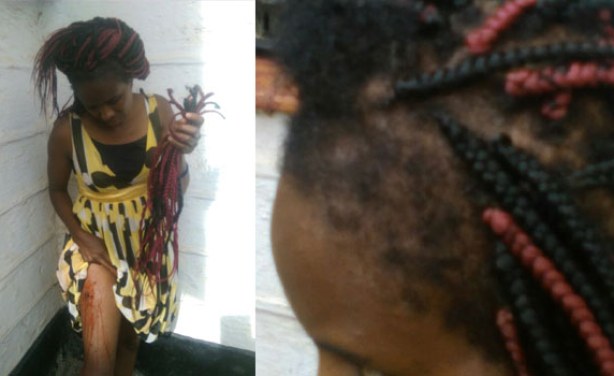
The second case concerns Biology and Agriculture teacher Mary Karimi Muhia who still has marks of assault on her thigh and head.

According to a P3 form filed at Buruburu Police station, it was recorded that Karimi was assaulted by the three teachers after she was summoned by the Deputy Principal to his office on February 23, 2017.

The Investigating Officer at Buruburu Police station confirmed the case was under probe; «we are investigating we cannot comment further.»

The moment she entered the office, three teachers attacked her trying to snatch a phone in which she had recorded students confessing that the school Principal had coerced them to lie that she had given them an examination leakage.

It was the phone they also thought she had recorded evidence of sexual harassment by the principal.

«Madam (name withheld) who was standing grabbed my hair plucking my braids which were only two days old. She shouted saying, Karimi, today people will collect you at the morgue, release your phone or else I kill you, I must get all the recordings, video, tapes and photos that you have been taking.»

This happened as a third teacher held her to allow the first madam to injure her.

And as the beating continued, there was suddenly an excruciating pain on her thigh.

The teacher after plucking off her hair pierced her thigh with a sharp object.

«I saw death with my own eyes. I screamed louder calling their names, asking – why are you killing me.»

During that commotion the Principal entered the office and joined the gang that was roughing her up.

«Mr Juma hit me against the office table hurting my ribs. He then stepped backward and closed the door,» she recalled even the insults that accompanied her during the gruelling attack.

The hair that was plucked off was picked up and thrown at her telling her; «you stupid fool, today is your end.»

At that moment she was again hit with a paper punch and a stapler and she was again asked to surrender all the evidence she had against Juma.

They were still searching for her phone which she had hidden in her bra then in her inner wear.

She got help after a different teacher went to the ‘slaughter house’ to respond to the distress call that she begged him to call a female colleague.

«I wanted her to at least come and dress me. I was dirty and bleeding and my panty was down. As I moved out in the presence of students who were taking lunch and workers all over to see what was happening. Many thought I had been raped. There was blood coming from my thigh entering my shoe, I was limping,» she narrated.

Karimi’s attack this year was triggered by an incident that happened two years after she joined the school in 2012.

«Juma started his sex advances in 2014. He used to tell me you are the prettiest woman that I have ever seen. At first I told him thank you.»

«I realised when we are passing on corridors Mr Juma wanted we meet head on collision, I used to run away from him. The sexual advances were several. He would tell me ‘you look yummy’, in 2014, 2015 he didn’t stop telling me ‘you are sexy’.»

On September 20, 2014, Juma threw a science party meant to celebrate her birthday. But she didn’t show up.

«The following Monday he called me to his office and asked me, ‘Karimi, I want you to explain me why you let me down’,» she said she had a family birthday party.

«And so he asked me,» ‘Have you ever tasted a Luo?’

«And I told him, Sir, is a Luo a meal in any of the hotels?»

«Then I told him, even if God eroded the earth, you and me were left, nothing can happen. And from that particular day, he now declared war on me,» she explained as she broke down into tears.

Whenever there were office meetings, he resorted to embarrassing and threatening her.

At some point, the Principal had conspired with the Guidance and Counselling teacher to slap her so that she could fight back.

But because she knew of the witch-hunt she did not fight back.

The threats went as far as hiding her Kenya Revenue Authority forms and her pay slips.

Students in her class, one day told her that Juma had told them to lie that she had given them an exam leakage, a confession she recorded and handed over to TSC.

Students also wrote a letter in Caps protesting Juma’s consistent persuasion that they lie to fix their class teacher.

«BUT THERE IS SOMETHING THAT WE FEEL IT IS NOT RIGHT THE WAY THE PRINCIPAL THREATS YOU TEACHERS AND US. TOO WE ARE AFRAID TO TELL HIM BECAUSE HE WILL VICTIMISE US,» the letter read.

Capital FM News has a letter she wrote to TSC reporting sexual harassment by the Principal and asking for a transfer.

Last Tuesday she received a letter like the one sent to Kessio telling her to drop her classes or else…
«Today I have come here to let the world know that it could be the end of me. If I leave this door and I am killed it is Duncan Juma.»

At that point she broke down and we had to give her time to recover.

«It has affected my family. I feel weak, I feel pain all over, I have acidity that I never had. I feel I am just a shell of my old self. If I am killed, may justice prevail and my younger sisters who will come to that school they will be salvaged,» she cried.

All the two teachers want now is justice because the headmaster has threatened to make their lives hell for embarrassing him with the allegations they make.

They are appealing to TSC to transfer them and also investigate the Principal.

Capital FM News spoke to Juma on Thursday.

«Those things are under investigations by TSC I think TSC has done their part, I don’t want to comment.»

But about five minutes later he called back saying he was innocent. Capital FM News also asked him why he didn’t report the physical attack meted on Karimi at the Deputy Principal’s office.

TSC Principal Administrative Officer – Child Protection, Gender and Disability Zipporah Musengi told Capital FM News; «We have the cases and we are doing the appropriate investigations.»

The Nairobi County Education Office also confirmed it had received the complaints from Kessio and Karimi and that investigations were ongoing.

But as the processes take longer, the two women are scared for their lives as they pay several visits to doctors and counsellors.

Karimi is currently on sick leave.

 Source of the news:

http://allafrica.com/stories/201703240345.html
Comparte este contenido:

La mitad de las mujeres de África Subsahariana no accede a servicios de salud

África Subsahariana/27 marzo 2017/Fuente: ecodiario

La mitad de las mujeres del África subsahariana no tiene acceso a servicios básicos de salud materna y reproductiva, según un informe del Instituto de Salud Global de Barcelona.

El estudio «Desigualdades en las oportunidades y los resultados de salud de mujeres y niños: un informe de África Subsahariana», que hoy se presenta en el Congreso, analiza los datos más actuales disponibles de veintinueve países.

La investigación pone de manifiesto las desigualdades dentro los países y a nivel regional respecto al acceso a quince oportunidades de salud analizadas en mujeres en edad reproductiva, de 15 a 49 años.

En sus conclusiones, destaca que los niveles de cobertura bajos y poco equitativos generan una situación de exclusión para millones de mujeres que actualmente no acceden a los servicios esenciales de salud materna y reproductiva.

La desigualdad se concentra entre las mujeres más pobres, las que tienen un nivel educativo más bajo y las que viven en zonas rurales, de acuerdo con el análisis.

El empleo de nuevos sistemas de medida como el Índice de Oportunidad Humana (IOH, o Human Opportunity Index, HOI, en inglés) permite determinar los principales factores que contribuyen a las desigualdades, indica la autora principal del informe, Clara Pons.

Las oportunidades que atañen a la salud materna -especialmente el parto asistido por un profesional- y reproductiva -la contracepción- son las que se distribuyen de manera más desigual entre las mujeres en edad fértil.

La situación económica y las circunstancias asociadas, como el nivel educativo o el lugar de residencia, son las principales causas de desigualdad.

El informe ahonda en el grupo de adolescentes, de 15 a 19 años, «un colectivo altamente vulnerable con los peores resultados en cuanto al acceso a servicios de salud reproductiva y logros académicos».

En este caso, los factores que contribuyen a una mayor desigualdad son el estado civil (estar casada), el nivel económico y la situación laboral (estar trabajando).

Ante la exclusión de amplios grupos de mujeres y niñas de las intervenciones esenciales en materia de salud en el África subsahariana, el estudio considera prioritario universalizar los servicios básicos en salud materna y reproductiva centrándose en los grupos más pobres de mujeres para alcanzar los Objetivos de Desarrollo Sostenible.

También destaca la necesidad de un enfoque multisectorial, puesto que los factores que más contribuyen a las desigualdades en salud materna y reproductiva suelen ser factores externos a los sistemas de salud, como la pobreza, la educación o el matrimonio infantil.

El informe hace hincapié en la necesidad de situar la equidad en el centro de todas las estrategias, lo que requiere movilización política, financiación sostenida para fortalecer los sistemas de salud, así como nuevas herramientas y conocimiento sobre salud materna, infantil y adolescente en los países del África subsahariana.

Fuente:http://ecodiario.eleconomista.es/salud/noticias/8240452/03/17/La-mitad-de-las-mujeres-de-Africa-subsahariana-no-accede-a-servicios-de-salud.html

Comparte este contenido:

Aseguran que detrás de las mutilaciones a albinos en África «hay gente muy poderosa»

África/27 marzo 2017/Fuente: Los Andes

Dicen que los atacan para adquirir sus miembros mutilados, a los que se atribuyen poderes mágicos.

Detrás de la escalada de ataques contra los albinos registrada en países africanos durante las dos últimas décadas hay «gente poderosa y con dinero», como políticos o empresarios, ha asegurado la Experta Independiente de la ONU para los derechos de las personas con albinismo, Ikponwosa Ero.

Solo dirigentes que aspiran a ganar elecciones o magnates que buscan aumentar su fortuna personal tienen recursos suficientes para pagar los «miles de dólares» que cuesta adquirir miembros mutilados de albinos, a los que se atribuyen poderes mágicos, argumenta Ero en una entrevista con Efe.

La primera representante en la historia de la ONU para esta causa, una nigeriana víctima de la discriminación hacia los albinos en esta parte del mundo, se ha propuesto convertir en objetivo mundial la protección de esta comunidad, «que se ha quedado por detrás de los últimos en la agenda de desarrollo».

La vocación le vino dada por esta condición genética, que es más común en África Subsahariana que en cualquier otra región del mundo y hace que la piel, ojos y pelo produzcan menos melanina de lo normal, rasgos que en el seno de su familia nunca le hicieron sentirse diferente.

Se han registrado al menos 505 ataques de distinta naturaleza en los que han muerto 187 personas

«Crecí con mi familia y no tenía ni idea -de que era albina-. Me querían y castigaban como a mis hermanos, así que pensaba que era como todo el mundo. Fue cuando salí ahí fuera cuando la sociedad me enseñó que tenía albinismo, y no de la forma más amable», confiesa.

Un día, la aplicada IK, como llaman a Ero en su casa, ya no quería ir al colegio: «Volvía a casa llorando, me insultaban y todo el mundo bailaba a mi alrededor cantando ‘albino, albino'».

Su carrera educativa, no obstante, se enderezó pronto, pero que hasta el 45 % de los niños con albinismo se ven obligados a dejar la escuela por las continuas vejaciones en algunos países africanos.

Más inquietante resulta que la esperanza de vida de estas personas no supere los 40 años en la región, y que exista la creencia popular de que no mueren porque, simplemente, suelen desaparecer.

IK es consciente de que ha sido una «privilegiada» ajena a la aterradora realidad de la mayoría de albinos africanos: «Muchos son abandonados por sus padres o criados por mujeres solteras».

Cuando a los 15 años se mudó con su familia a Canadá, donde después se convertiría en abogada, comenzó a pensar en que debía ayudar a gente como ella, aunque el empujón definitivo fue la cascada de noticias sobre ataques contra albinos que empezaron a conocerse en torno al año 2000.

Desde entonces, se han registrado al menos 505 ataques de distinta naturaleza en los que han muerto 187 personas, sobre todo en Tanzania (76 asesinatos), Burundi (21) y la República Democrática del Congo (14), según datos de la ONG Under the Same Sun.

Estos asaltos (mutilaciones, violaciones, secuestros o profanación de sus tumbas) se basan en un sistema de creencias tradicionales que rara vez se cuestiona: se les considera fantasmas e incluso malditos o, por contra, bendecidos con poderes mágicos.

Fuente: http://www.losandes.com.ar/article/aseguran-que-detras-de-las-mutilaciones-a-albinos-en-africa-hay-gente-muy-poderosa


Comparte este contenido:

País africano aplica en barrios el Sistema de Orquestas Juvenil venezolano

Angola/27 de Marzo de 2017/Globovisón

El país surafricano, Angola, ha adaptado el modelo venezolano del Sistema Nacional de Orquestas Infantiles y Juveniles para crear una red de escuelas donde se forman los miembros de la agrupación sinfónica «Kaposoka».

Esta iniciativa, fundada en 2008 por el cura, militar en la reserva y profesor universitario de Derecho de Familia Pedro Fançony, ofrece a niños angoleños de entre 6 y 14 años aprender solfeo.

Esta acción tiene como finalidad formar en valores como la «disciplina, la humildad, la persistencia, la excelencia, la eficiencia, la honestidad y la gratitud» durante las horas en las que los alumnos no acuden a clase.

Además de aprender a tocar un instrumento e interpretar música clásica, piezas del repertorio tradicional de Angola o bandas sonoras de películas como «Piratas del Caribe», las cuatro escuelas que operan en el país pretenden contribuir a alejar a los chicos de los peligros o distracciones a los que podrían estar expuestos si pasaran sus horas extraescolares en la calle.

Así lo cuenta el propio Pedro Fançony en la sede del distrito de Samba, en Luanda, con motivo del octavo encuentro musical «Vis a vis» que organiza Casa África de España y el Ministerio de Cultura del Gobierno angoleño.

Fuente: http://globovision.com/article/pais-africano-aplica-en-barrios-el-sistema-de-orquestas-juvenil-venezolano


Comparte este contenido:

African Climate Technology Center (ACTC) Selects Nine Institutions to Develop Climate Mitigation and Adaptation Research Projects Across the Continent

África/27 de Marzo de 2017/Allafrica

Resumen: El Centro Africano de Tecnología Climática (ACTC) tiene la misión de apoyar a los países subsaharianos en la ampliación de la adopción de tecnologías limpias para la adaptación y mitigación a través de actividades que incluyen la creación y difusión del conocimiento, . El ACTC es financiado por el Fondo para el Medio Ambiente Mundial (FMAM) y el Banco Africano de Desarrollo como órgano de ejecución.

The African Climate Technology Center (ACTC) has the mission of supporting Sub-Saharan countries in scaling-up the adoption of clean technologies for adaptation and mitigation, through activities that include knowledge creation and dissemination, support to policies and enabling environment and support to projects. The ACTC is financed by the Global Environment Facility (GEF), with the African Development Bank as the implementing organ.

At the end of 2016, the ACTC launched a competitive process to support research on the modalities to increase the diffusion of climate friendly technologies in three areas: 1) Integration of Intermittent Renewable Energy Technologies in on-grid and off-grid markets; 2) Market based approaches on the diffusion of Clean Cooking Solutions; 3) Efficient use of climate change adaptation technologies in water usage (e.g. irrigation, supply) (or) storm water/flood management in SSA cities.

The call for proposal raised much interest and seventy-five institutions or consortia submitted their research proposals. Following the review process, nine institutions have been selected (outlined below) and will start their activities in March 2017 for a period of one year. These project will contribute to the objective of creating and sharing knowledge and will strengthen the capacity of African research institutions in these areas.

Integration of intermittent renewable energy solutions

The Sustainability Institute (SI) (South Africa) in collaboration with Shack Dwellers International (SDI) will use transdisciplinary research methodologies to enhance knowledge of the conditions that facilitate the adoption of affordable solar PV electricity by the urban poor. The research will be based on the experiences of the iShack project, which has provided over 1,000 small solar PV panels to residents of an informal settlement in South Africa, and will work on replicating the approach in an informal settlement in Accra, Ghana, with whom SDI is rolling out a solar pilot project.

The Kumasi Institute of Technology, Energy and Environment (KITE) (Ghana) will work on assessing the role of renewable energy-based off-grid mini-grid systems and service delivery schemes in isolated communities in Ghana. The project is expected to gather evidence and provide insights on the extent to which the systems have addressed the energy access challenge, their reliability, cost effectiveness, and the possibility of up-scaling.

The International Food Policy Research Institute (IFPRI) (US) will explore alternative pathways to improve electricity access in Ethiopia. The project, in collaboration with the Ministry of Water, Irrigation & Electricity and the Ministry of Mines, Petroleum and Natural Gas of Ethiopia, develops evidence based policy recommendations for optimal use of indigenous energy resources to improve electricity access, promote energy security and mitigate GHG emissions in the country.

Clean Cooking Solutions

  The Berkeley Air Monitoring Group (US), in partnership with International Centre for Energy, Environment and Development / University of Nigeria, Nsukka; Project Gaia Prospects Ltd. and Winrock International will conduct a pilot evaluation of diffusion and usage of ethanol cooking technology in urban neighborhoods of Lagos. The pilot evaluation will seek to a) identify consumer triggers and motivations for the uptake and use of ethanol cooking technologies and address barriers to adoption pathway and b) measure the emissions performance of the ethanol cooking system and model its potential impact on climate outcomes.

The University of Liverpool (UK), in collaboration with the Global LPG Partnership (GLPGP) and the Centre for International Climate and Environmental Research (Oslo) will work on modelling the health and climate co-benefits of scaled-up Liquid Petroleum Gas (LPG) adoption in Cameroon. The Country has an established LPG market (around 12% of the population in 2014) and its government recently initiated plans to expand adoption of LPG. The research will describe the impacts of the planned expansion of LPG use for cooking in Cameroon on both population health and climate change mitigation through modelling transitional changes in fuel use patterns.

The Jaramogi Oginga Odinga University for Science and Technology (JOOUST) (Kenya) in partnership with African Technology Policy Studies Network (ATPS), Clean Cookstoves Association of Kenya, University of Dar es salaam, Tanzania and Pennsylvania State University, USA will research on market approaches for the diffusion of clean cooking solutions in Kenya and Tanzania. The project aims to evaluate and develop strategies for catalyzing the diffusion and adoption of clean cooking solutions in East Africa and will will collect both quantitative and qualitative data using mixed methodologies such as desk review, household surveys using questionnaires, key informant interviews and focus group discussions.

Adaptation technologies in water usages

The Council of Scientific and Industrial Research (CSIR) (South Africa), together with the University of Malawi and the University of Botswana, will work on a algae-based tertiary treatment that utilizes a specific consortium of algal species to reduce nutrients and create conditions suitable for effective solar disinfection of pathogens and bacteria in Rural Wastewater Treatment plants in the Southern African Development Community countries. The intention is to implement a self-sustaining system that is independent of electricity or expensive chemicals that can be effectively operated within the current financial and capacity constraints of developing SADC countries using existing infrastructure to reduce health risk and improve reclamation of water in water scarce countries.

The ECOWAS Centre for Renewable Energy and Energy Efficiency (ECREEE), in collaboration with the Solar Energy Institute of the Universidad Politécnica de Madrid (IES-UPM), will work on the dissemination of technical and economical feasible solutions for PV pumping irrigation in the ECOWAS region. The research will focus on the quality of the service of PV irrigation systems, paying attention, first, to the required technical specification which this technology has to meet in the field of agricultural irrigation; second, to the solutions for the intermittent character of solar energy; and third, to the adaptation of PV production to the irrigation needs.

ICLEI – Local Governments for Sustainability – Africa Secretariat (ICLEI Africa), together with the Climate Systems Analysis Group of the University of Cape Town (UCT) will work on the African Water Adaptation through Knowledge Empowerment (AWAKE) project with stakeholders in Windhoek (Namibia), Lusaka (Zambia) and Maputo (Mozambique). In relation to these cities, the project will explore, identify and assess the social and resource barriers and enablers of the development and uptake of locally applicable climate change adaptation technologies that enhance water supply and management.

Fuente: http://allafrica.com/stories/201703220873.html


Comparte este contenido:

Sudáfrica: Ramaphosa condemns higher education convention violence

Sudáfrica/Marzo de 2017/Fuente: ENCA

RESUMEN: La violencia y la interrupción de la Convención Nacional de Educación Superior convocada por el juez general Dikgang Moseneke fue «totalmente inaceptable» y una oportunidad perdida para que los estudiantes expresen sus puntos de vista sobre la espinosa cuestión de los honorarios, dijo el viernes el vicepresidente de Sudáfrica, Cyril Ramaphosa. «Lo que toda la nación vio fue una escena muy fea en una convención que se había llamado a encontrar soluciones con todos los actores, en particular los propios estudiantes. Esta fue una gran plataforma, una gran oportunidad para consolidar sus puntos de vista y presentarlos de una manera muy organizada «, dijo Ramaphosa a periodistas en la Conferencia Nacional de Habilidades en Pretoria el viernes.

The violence and disruption of the Higher Education National Convention called by retired deputy chief justice Dikgang Moseneke was “totally unacceptable” and a lost opportunity for students to express their views on the thorny issue of fees, South Africa Deputy President Cyril Ramaphosa said on Friday.

“What the whole nation saw was a very ugly scene at a convention that had been called to find solutions with all role players, particularly the students themselves. This was a great platform, a great opportunity for them to consolidate their views and put them across in a very organised way,” Ramaphosa told journalists at the National Skills Conference in Pretoria on Friday.

“That is a forum led by an eminent person in our country, a former deputy chief justice. That convention could not go ahead … that is totally unacceptable. It is unacceptable, the type of unruly behaviour when we are trying to find solutions and to craft ways of charting a way forward for the future of our students.”

Ramaphosa emphasised that the unruly behaviour witnessed at the convention had no place in a civilised South Africa, and could not be tolerated.

“With chairs flying around, people being assaulted and water bottles all over … we cannot have a South Africa of unruly people. We are supposed to be a South Africa of people who are disciplined, people who are able to tolerate one another, and to tolerate divergent and different views. More importantly, we should be a South Africa of people who always, in adverse conditions, find solutions,” said Ramaphosa.

“Even the most intractable problems should find a way of being solved. That is how we got where we are as a nation. This is what defines us. That is how I became so unhappy with what I saw on television depicting a very ugly side of South Africa. This is not us. That is not how we are and that is not how we have evolved to be as a nation.”

The deputy president said the numerous problems bedevilling the higher education sector in South Africa would not be solved “by breaking chairs and throwing bottles around”.

“You resolve problems by sitting down and talking them through. That is how we resolve problems and that is how we should resolve this one,” said Ramaphosa.

Moseneke had to call off the two-day national convention after repeated incidents of violent disruptions. The convention, which was held at the Eskom Learning Academy, was meant to zoom into various issues affecting the embattled higher education sector.

Other student formations refused to let AfriForum address the gathering.

Fuente: https://www.enca.com/south-africa/ramaphosa-condemns-convention-violence

Comparte este contenido:

Antoinette Kankindi, Premio Harambee 2017 por la Promoción e Igualdad de la Mujer Africana

África/26 Marzo 2017/Fuente y Autor: informaria

La profesora de Ética y Filosofía Política de la Universidad de Strathmore (Kenya), Antoinette Kankindi, ha recibido el Premio Harambee 2017 a la Promoción e Igualdad de la Mujer Africana por su proyecto African Women Leadership, una iniciativa con la que pretende “desvelar el liderazgo” de las mujeres de su propio continente “sin dejar a nadie atrás”.

Dirigido desde África a las mujeres de África, la esencia de este programa es “reducir la desigualdad,
fomentando la igualdad de oportunidades, y consiguiendo más autonomía económica para que las jóvenes de Kenya no sigan saliendo de su país y llenando las filas de Inmigración de otros países occidentales”.

Con formación teórica y práctica, Kankindi prepara a mujeres africanas de entre 24 y 35 años para que sean capaces de liderar su familia, sus empresas y la sociedad “aunando sus valores tradicionales con los desafíos del siglo XXI”. El programa de capacitación que desarrolla se orienta a la preparación íntegra de sus alumnas y su cualificación para ejercer con más peso su responsabilidad pública.
Además, el African Women Leadership pretende unir las sociedades rurales y urbanas a través de la consolidación del empleo digno para las jóvenes de Kenya, animando el emprendimiento y reforzando con su formación su liderazgo familiar y social.

En concreto, el proyecto ofrece recursos para que las jóvenes participantes puedan diseñar pequeñas y medianas empresas que mejoren los medios de vida sostenibles para otras mujeres. Esta manera de luchar contra la pobreza y la marginalidad de las africanas desde África es la esencia del proyecto reconocida por Harambee, una ONG que pretende impulsar desde el propio continente iniciativas que colaboren a dignificar la calidad de vida de las sociedades africanas, empezando por la de sus mujeres, “auténtico motor de África”.

Kankindi ha agradecido la solidaridad del mundo con el continente negro, pero como líder intelectual de una revolución social autóctona, ha señalado que “lo que verdaderamente nos ayuda es el acceso de la mujer a la educación” y el desarrollo de iniciativas que confirmen, por la vía práctica, el potencial del liderazgo femenino para el futuro de sus habitantes.

La filósofa congoleña ha destacado que “la mujer es la guardiana de los valores sociales africanos, que se traspasan de generación en generación, y también es la responsable de que esos valores los respeten y los vivan adecuadamente los hombres”. Kankindi ha subrayado que el avance del papel de la mujer en las sociedades africanas es compatible con mantener sus principios de convivencia. En este sentido, ha señalado que su prioridad con el desarrollo de este proyecto es “impedir que las mujeres a las que formamos para su bien y el bien de nuestra sociedad no se encierren en el individualismo liberal, que es una novedad en los países africanos que se extiende con mucha rapidez”.

El Premio Harambee 2017 está patrocinado por los laboratorios René Furterer, una firma farmacéutica “con vocación solidaria” que busca el talento de la tradición africana más auténtica y fomenta acuerdos de colaboración que favorecen un trabajo más digno, especialmente de la mujer, ofreciendo recursos y negocio para el desarrollo autóctono de las sociedades africanas.

Fuente de la noticia: http://www.informaria.com/antoinette-kankindi-premio-harambee-2017-por-la-promocion-e-igualdad-de-la-mujer-africana/

Fuente de la imagen: http://mujeremprendedora.net/wp-content/uploads/Rueda-de-prensa_1.jpg

Comparte este contenido:
Page 354 of 622
1 352 353 354 355 356 622