Page 164 of 400
1 162 163 164 165 166 400

United States: DeVos’s ineptitude demonstrates how little America cares for its public schools

United States / March 24, 2018/Dailycampus

Resumen: Una reciente entrevista de 60 minutos con la Secretaria de Educación, Betsy DeVos, reveló cuán inadecuado es el Secretario para el puesto. DeVos, entrevistado por Lesley Stahl, no respondió varias preguntas, incluso sobre escuelas en su estado natal de Michigan. Por ejemplo, cuando se le preguntó si las escuelas de Michigan habían mejorado debido a las escuelas charter, DeVos no pudo responder. Ella también admitió que no ha visitado escuelas de bajo rendimiento. La ignorancia y la completa falta de preparación mostrada por DeVos durante su entrevista son simplemente inaceptables para un Secretario de Educación.

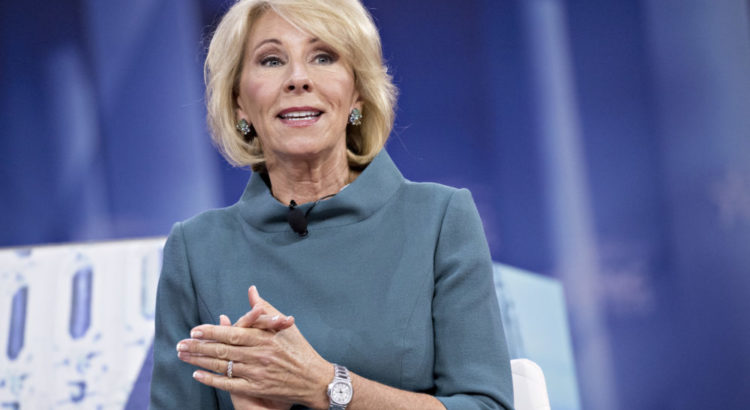
A recent 60 Minutes interview featuring Education Secretary Betsy DeVos revealed just how unfit the Secretary is for the position. DeVos, interviewed by Lesley Stahl, failed to answer several questions, including ones regarding schools within her home state of Michigan. For instance, when asked whether Michigan’s schools have improved due to charter schools, DeVos was unable to answer. She also admitted that she has not visited underperforming schools. The ignorance and complete lack of preparation displayed by DeVos during her interview is simply unacceptable for an Education Secretary.

Numerous scholars have also expressed disappointment with DeVos; Claire Smrekar, a professor of public policy and education at Vanderbilt University, told The Atlantic that DeVos’s interview “demonstrates…an appalling lack of understanding of some public fundamental principles and practices related to public education. America’s students deserve much better than this. Public education is one of the most important issues that we face today, and proper leadership is required to navigate America through the difficult problem of improving schools. The fact that the Trump administration nominated someone so unqualified for this job indicates that they do not care about improving public education; they only care about undermining public schools in favor of charter/private schools.

Secretary DeVos’s main idea for improving education in the United States is to use public funds on charter and private schools instead of using funds to improve public education. A Washington Post article from early Thursday morning reveals that DeVos wanted to cut funding for programs that help kids in need and programs that help low income students reach college in order to procure $1 billion to fund charter, magnet and private schools. This is misguided because public schools are the cornerstone of American education; everyone has access to them, and purposefully keeping funds from them in order to favor institutions which only wealthier students are able to attend means that students from low income families are especially harmed. Thankfully, Congress rejected DeVos’s budget plan and instead chose to support increasing funding to her department by $3.9 billion.

Senator Patty Murray commented on DeVos’s ideas, saying “After more than a year on the job, I would have hoped Secretary DeVos would have learned by now that her extreme ideas to privatize our nation’s public schools and dismantle the Department of Education do not have support among parents or in Congress”; it is hopeful that Congress came together to reject DeVos’s radical ideas on education and that they still have faith in America’s public school system. Privatizing schools in America is not the solution to providing quality education to everyone; education should remain public and free for all students. Education is a right, not a privilege, and low income students should not be at a disadvantage. The fact that DeVos wanted to end programs that help low income students achieve their college goals in favor of using public funds for charter/private schools that are for wealthier students is inexcusable, and against the American Dream. All students in America should have an equal opportunity to achieve success, and education is crucial to that.

Charter schools are not even necessarily better than their public counterparts. In DeVos’s home state of Michigan, for example (which has more charter schools than any other state), charter schools underperform,with English scores from students between third and eighth grades dropping. If the state with the highest number of charter schools has schools that underperform, then perhaps they are not all that different from public schools after all. If this is the case, ripping funding away from public schools is not justified. Thus, keeping education a public institution is necessary. If Betsy DeVos really wants to help American students, she must realize this.

Fuente: http://dailycampus.com/stories/2018/3/23/devoss-ineptitude-demonstrates-how-little-america-cares-for-its-public-schools
Comparte este contenido:

France: La Minute Éco : mobilité, éducation, qualité de l’air… 20 jeunes créatifs imaginent le futur à Aix

France / 24 mars 2018/La Prvence

Resumen: Nombre del programa: «Colmena». Misión: explorar y hackear el mundo del mañana mediante el desarrollo de soluciones concretas. Ambición: contribuir a la creación de un futuro más humano y sostenible. El 27 de septiembre, «The Hive», un programa internacional lanzado por The Camp, organizó su primer Young Creative Award para una expedición de colaboración de seis meses.

Un programme international lancé par The Camp a permis à 20 jeunes de développer des projets innovants et futuristes.

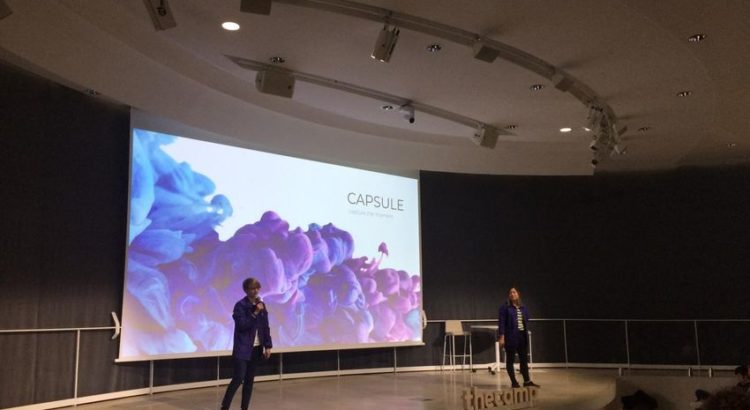
Nom du programme : «Hive». Mission : explorer et hacker le monde de demain en développant des solutions concrètes. Ambition : contribuer à la création d’un futur plus humain et durable. Le 27 septembre dernier, «The Hive», programme international lancé du côté de The Camp, accueillait sa première promotion de jeunes créatifs pour une expédition collaborative de six mois. Âgés de 16 à 30 ans, ces «Hivers» étaient designers, ingénieurs, codeurs, hackers, artistes 3D et venaient du monde entier : Sénégal, Brésil, Taiwan, Pays-Bas, Colombie, Etats-Unis. Le défi lancé par The Camp : qu’ils expérimentent de nouvelles méthodes de travail et que, de leur rencontre, naissent des projets répondant à des challenges d’intérêt général.

Une résidence dédiée à la création collaborative

«Nous voulions, à The Camp, créer un cœur créatif battant en permanence», indique Sylvia Andriantsimahavandy, co-directeur de la Hive. «Ce qui fait de nous une résidence du futur, c’est le fait d’être dédié à la création collaborative. Les jeunes talents sélectionnés ne sont pas venus pour développer leur propre concept. Ensemble, ils ont choisi des projets sur lesquels ils ont travaillé. Ils ont ainsi constitué leurs équipes au sein du groupe et nous les avons aidés à prototyper leurs idées. La seule règle du jeu imposée était de développer des projets ayant un impact pour notre société, car c’est l’un des enjeux de The Camp», ajoute-t-elle.

Des projets développés dans des secteurs variés

Près de six mois plus tard, ce jeudi 22 mars, les sept premiers projets Hive, développés autour de la mobilité, de l’éducation, de l’énergie ou l’environnement, ont été officiellement présentés. Parmi les plus concrets, il est possible de citer le projet «Beeyond : Bees For Good», qui prend la forme d’un drone autonome mesurant la qualité de l’air. Équipée de capteurs miniatures, cette technologie collecte et analyse les données de son environnement avec un objectif à terme : cibler les zones industrielles. Il est également possible de mentionner le projet «Mergy», un système qui récupère l’énergie et les données des mouvements de foule lors de grands événements. L’énergie produite se réinjecte par la suite dans le réseau électrique du lieu et les données collectées s’expriment à travers diverses expériences utilisateur.

Si tous les projets présentés ont reçu un accueil très favorable du public lors de leur présentation, seulement quelques-uns vont désormais être développés et pourraient très prochainement passer en phase d’industrialisation.

Fuente: https://www.laprovence.com/article/economie/4891128/minute-de-leco-les-hivers-inventent-le-futur-a-aix-en-provence.html

Comparte este contenido:

United States: Study findings aim to improve teacher preparedness strategies

United States / March 24, 2018/By: Miranda García/Dailycampus

Resumen: Los hallazgos de un estudio de los Institutos Americanos de Investigación están orientados a mejorar las estrategias de preparación de los docentes y podrían aplicarse a programas de preenseñanza de pregrado y posgrado en todo el país para preparar mejor a las personas que desean convertirse en docentes, Jenny DeMonte y Jane Coggshall de AIR dijo.

 The findings of an American Institutes for Research (AIR) study are geared toward improving strategies for teacher preparedness and could be applied to undergraduate and graduate pre-teaching programs across the country to better prepare people who want to become teachers, Jenny DeMonte and Jane Coggshall of AIR said.

DeMonte and Coggshall said these findings include a push for specific and practice-driven research, which involves targeting a particular issue regarding teacher preparedness and then testing out new strategies in a real classroom. The study also calls for the use of observational feedback from students and researchers in classrooms and a strong emphasis on measurement and data collection to allow for repetition of successful practices.

“The report validates what the Neag faculty already have been doing.

— Dr. Suzanne Wilson

The findings of this large-scale study are consistent with other teacher preparedness studies across the country, Dr. Suzanne Wilson, Neag Endowed Professor of Teacher Education at the University of Connecticut and Chair of Curriculum and Instruction in the Neag School, said in an email.

“Teacher preparedness has been the focus of a great deal of (at times) impassioned debate in the last thirty years,” Wilson said. “The teacher workforce is the largest profession in the U.S.; preparing close to four million teachers to be high quality is challenging.”

The study involved participants from schools across the country, including Northern Arizona University, Indiana University and Drexel University, to bring together strategies on the usually divided topic of teacher preparedness approaches, DeMonte and Coggshall said.

“As one of our country’s most important social institutions, schools – and teachers – are a site for debate about U.S. values and priorities, and as a divided public, it is not surprising that we would be divided on the question of how teachers are prepared,” Wilson said. “The conference on which the report is based made a conscientious effort to collect both practitioners and researchers who have interests in teacher education in one place, and to provide structures to support collective work toward common ends, rather than debate.”

The study began in April 2017 when a panel of more than three dozen teacher-educators, school district leaders and researchers came together to plan an investigation into how to better prepare teachers, DeMonte and Coggshall said.

A new research design was utilized in the study in which the participants convened first to plan their investigation, tested their new strategies out in the classroom and then reconvened to discuss their findings, DeMonte and Coggshall said.

Wilson said Neag has already used some of these findings, from studies similar to this one in the past.

“The Neag teacher preparation program has embraced several of the cornerstones of these reforms, including strong partnerships with local schools in which prospective teachers have extensive clinical practice, a focus on high leverage practices and using data in ways that enable nimble and rapid changes when programmatic weaknesses are identified,” Wilson said. “So the report validates what the Neag faculty already have been doing.”

 Fuente: http://dailycampus.com/stories/2018/3/21/study-findings-aim-to-improve-teacher-preparedness-strategies
Comparte este contenido:

EEUU: Informe de la Red para la Educación Pública señala que el motivo de lucro impregna las Escuelas Charters en línea y los programas blearning

América del Norte/EEUU/thejournal.com

Un nuevo informe de la Red para la Educación Pública ofreció pocas buenas noticias sobre la educación virtual y mixta en K-12. » Aprendizaje en línea: lo que todo padre debe saber » es una guía menos para los padres que una acusación del beneficio económico detrás del aprendizaje en línea. La organización sin fines de lucro defiende las escuelas públicas tradicionales con clases de menor tamaño y otras políticas educativas que «se ha demostrado que funcionan».

Según el informe, muchas escuelas en línea y semipresenciales funcionan como charters administrados por compañías con fines de lucro, como K12 Inc.Connections Academy , propiedad de Pearson. Combinadas, las dos compañías entregaron educación al 52 por ciento de todos los estudiantes de escuelas virtuales a tiempo completo en el año escolar 2015-2016. Donde los estados manejan sus propias escuelas en línea, estas a menudo están en asociación con proveedores de cursos y currículos con o sin fines de lucro. La escuela en línea más grande y antigua, Florida Virtual , tiene un contrato con Connections Academy para el uso de sus cursos en línea.

Como señaló la NPE, estas formas de instrucción son «potencialmente rentables» porque las escuelas reciben el mismo financiamiento por alumno que una escuela estándar pública o autónoma del distrito, «mientras que tienen muchos menos costos para maestros, servicios, transporte o instalaciones».

Una manera en que las escuelas reducen los gastos es repensando la cantidad de maestros que se necesitan, aseguró NPE. Citando un memorando 2010 «confidencial» de K12 , el informe indicaba que la proporción de estudiantes por maestro en la escuela secundaria era de 225 a 1 a 275 a 1; el memo citó una relación de 60 a 1 a 72 a 1 para K-8. El análisis de Mathematica reveló que las escuelas en línea «en promedio proporcionaban a los estudiantes con menos tiempo de contacto con los profesores en vivo por semana que los estudiantes de las escuelas convencionales en un día». Para compensar la diferencia, la educación y la supervisión están siendo provistas por los padres.

Pero el dinero no compra la finalización. El informe cita el Centro Nacional de Política Educativa (NEPC , por sus siglas en inglés) , que encontró que las tasas de graduación para 2015 en las escuelas virtuales son solo la mitad del tamaño del promedio nacional: 43 por ciento contra 82 por ciento.

Mientras que las cartas virtuales a menudo argumentan que están inscribiendo a niños en mayor riesgo de abandonar o que ya están retrasados, lo que sería un poco mal para el rendimiento, los autores del informe dijeron que los datos demográficos de esas escuelas cuentan «una historia diferente». Los informes anuales del NEPC revelan que los estudiantes de las escuelas virtuales «tienen más probabilidades de ser blancos y menos propensos a ser pobres, tener discapacidades y / o ser aprendices del idioma inglés que los estudiantes que asisten a escuelas de ladrillo y mortero».

El informe pintó escuelas que mezclan instrucción en línea y en persona con el mismo estilo que las escuelas virtuales, descubriendo que muchos de los estudios de investigación sobre el impacto del aprendizaje combinado o el aprendizaje en línea a tiempo parcial «han sido producidos por organizaciones que promueven esta estrategia, «y arrojar resultados decepcionantes con el tiempo.

¿Por qué los distritos y estados continúan recogiendo y promoviendo los programas? NPE apuntó a la influencia financiera de las compañías de chárter virtuales con fines de lucro, que dependen de una combinación de cabildeo, contribuciones de campaña, grupos de apoyo y publicidad, incluidos los propios estudiantes.

No hay palabras minuciosas. «Con base en la preponderancia de la evidencia, así como también en el fraude y la mala administración asociados con las escuelas ciberneticas, recomendamos encarecidamente que los padres no matriculen a sus hijos en las escuelas virtuales», indica el informe. Si las familias tienden a considerar la educación en línea, NPE aconsejó que los padres tengan que obtener información sobre el tamaño de la clase y la proporción docente / alumno, cuánto tiempo dedican a la interacción real entre docente y alumno, cuáles son las tasas de retención y aprobación de la escuela y qué tipo de compromiso que los padres deben tomar para garantizar el éxito. Y ese es solo el comienzo de las preguntas para hacer.

El informe está disponible en forma abierta en el sitio web de la NPE .

Fuente: https://thejournal.com/articles/2018/03/20/report-profit-motive-pervades-online-charter-schools-and-blended-programs.aspx

Comparte este contenido:

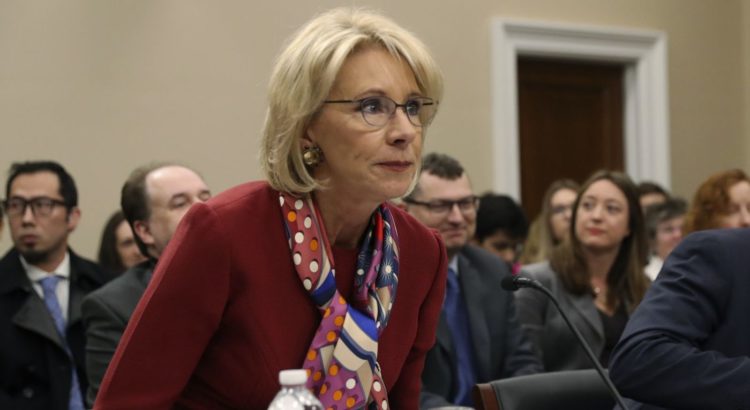
Education chief Betsy DeVos faces withering criticism in House hearing

Por: latimes.com/ 21-03-2018

Education Secretary Betsy DeVos faced blistering questioning from House Democrats on Tuesday as they confronted her on gun control, racism and LGBTQ rights.

DeVos’ testimony before the House Appropriations subcommittee got so tense that the chairman made a point of thanking DeVos for her poise when he concluded the meeting.

DeVos, already reeling after a series of rocky, high-profile interviews, unveiled some details of a federal commission on school safety that she will be chairing. The commission, formed after the Florida high school shooting in which 17 people were killed, will be composed of herself and the heads of the Homeland Security, Health and Human Services and Justice departments.

DeVos said the commission will begin work within the next few weeks. A spokeswoman for DeVos later added that the panel also will involve students, teachers, law enforcement and mental health professionals as experts.

DeVos said the commission will, among other things, consider whether to ban gun sales to people younger than 21. Trump initially spoke in favor of such a proposal but backtracked after meeting with representatives of the National Rifle Assn. DeVos would not tell the subcommittee whether she personally supports the idea or not.

DeVos also defended states’ and communities’ rights to decide whether to arm teachers.

«The question of school personnel being armed is very much one for local communities and states to grapple with,» she said.

DeVos added, «If there are going to be guns in schools, they need to be in the hands of the right people, those who are going to protect students and ensure their safety.»

Patty Murray of Washington state, the top Democrat on the Senate committee overseeing education, was upset that DeVos did not include any Democrats or any experts in the subject matter on the school safety commission.

«I am not very optimistic that that will accomplish anything,» Murray told the Associated Press. «Real experience is absolutely critical to get anything done.»

DeVos also faced scathing criticism from Rep. Barbara Lee, D-Calif., who said minority students were being disciplined much more frequently than their white peers for similar infractions. The Obama administration issued guidance in 2014 that instructed schools to pay attention to the problem. DeVos is now reviewing that guidance, and civil rights groups fear she intends to rescind it. She would not talk about her plans at the hearing.

«Your head is in the sand about racial bias and racial discrimination,» Lee said. «Madame Secretary, you just don’t care much about the rights of black and brown children. This is horrible.»

Rep. Katherine Clark, D-Mass., launched into a tense back-and-forth with DeVos on whether she would require private schools that receive federal funding to follow federal civil rights laws that prohibit sexual, racial and religious discrimination.

DeVos has been pushing to increase public funding of alternatives to traditional neighborhood schools — such as charter school or private school programs. Critics say private schools get to choose which students to admit and may discriminate against minorities.

«Will you guarantee as secretary of Education that that money is included with non-discrimination policies for those private schools?» Clark asked.

«Federal law must be followed when federal money is involved,» DeVos said.

«Is that a yes or a no?»

DeVos kept repeating her answer.

«Is there some problem? Yes or no?»

«Yes,» DeVos finally said.

*Fuente: http://www.latimes.com/politics/la-na-pol-betsy-devos-gun-control-20180320-story.html

Comparte este contenido:

EEUU: How #MeToo can guide sex education in schools

 Por: theconversation.com/Melissa Kang/21-03-2018

 Six months after the explosive allegations of sexual harassment against Hollywood producer Harvey Weinstein came to light, giving impetus to the #MeToo movement, this series looks at the aftermath of the movement, and if it has brought about lasting change to sexual harassment and gender equality.

The #MeToo movement has generated much needed discussion about inappropriate sexual behaviour and what constitutes consent to any sexual encounter. Despite some backlash, there is a sense women have reached a new level of agitation that won’t settle. The groundswell of anger might be sufficient to sustain a deep dismantling of systems of sexual discrimination against women.

But such cultural revolutions require change at many levels, from the interpersonal to the institutional. Young people are important in this revolution – many are leaders of the movement. Others need the knowledge and skills to recognise and interpret signals, and assert their own positions within the complex, often confusing situations that require sexual negotiation and consent.

These are learned informally from parents, carers, peers and the media. Formal school education is widely accepted as one of the appropriate institutions for teaching children and adolescents about relationships, sexual and reproductive health, and personal responsibility.

Post-#MeToo, teachers who are already engaged in skills-building in the area of consent might explore its nuances. They might delve deeper into sexual harassment and what it looks and feels like. And help shift young people’s understanding that consent is not just about (mainly) girls saying “no”, but also (mainly) boys understanding “yes”.

The importance of sexuality education

This year, the United Nations Educational, Scientific and Cultural Organisation (UNESCO) published a revised version of their 2009 International Technical Guidance on Sexuality Education.

This report summarises decades of evidence of the positive impact comprehensive sexuality education has on measurable aspects of sexual behaviour. These include delaying commencement of sexual intercourse, reducing the number of partners and increasing use of contraception and condom use.

Other desirable outcomes, such as less gender discrimination and gender-based violence, and healthy relationships, have been less rigorously studied. But these are also likely to be positively impacted by comprehensive sexuality education.

Teaching consent

In Australia, the principles of sexuality education are covered by the national Health and Physical Education curriculum. This includes a range of topics broadly classified as aspects of consent.

As early as kindergarten, the curriculum areas include:

  • Understanding in what situations parts of the body should be kept private
  • recognising one’s own emotions and learning how to express them, and
  • being able to name people you trust and places you feel safe.

As the curriculum progresses through primary and secondary school, these themes continue. Attention is paid to understanding the body as it develops, recognising emotion, exploring empathy and respectful relationships, particularly between peers.

During the mid-adolescent years, risk-taking behaviours and peer influences are a natural feature of development. At this point, the curriculum articulates the need for students to learn “practising skills to deal with challenging or unsafe situations” and “asserting their stance on a situation, dilemma or decision …”

Young people are playing an important role in dismantling of systems of sexual discrimination against women. Photo by Nicole Adams on Unsplash

All states and territories will adopt or use the national curriculum as a basis to develop their own health and physical education syllabuses, where additional detail can be found. For example, in New South Wales, the current syllabus for years seven to ten (circa 2003) explicitly discusses teaching the role gender can play in a range of attitudes, behaviours and health outcomes.

Power in relationships is also specifically mentioned. So too is a detailed list of learning outcomes about communication, assertiveness and negotiation.

The new draft NSW syllabus mentions the word consent in three places in years seven and eight, and years nine and ten. But this is done in the broad context of ethical relationships, not specifically sexual.

The Victorian curriculum (circa 2016) also articulates principles of respect and ethics in relationships and discusses power and gender. A search through the health curricula of other states and territories finds similar themes.

The average age of first intercourse among Australian secondary students is 16 years. But by this time, the majority have experienced some form of (non-penetrative) sexual activity. It’s reassuring that notions of consent appear in the early secondary years alongside learning about personal boundaries, recognising one’s own emotions, and communication skills.

Despite most sexually active secondary students reporting that they have had pleasurable sexual experiences (an important indicator of sexual health), a high proportion consistently report having had unwanted intercourse, with significant gender differences. In 2013, our five-yearly national survey found 28% of female students had had unwanted sex compared to 19% of males.

Intoxication was a common reason (around 50%) for all students, but for females, pressure from a partner was the most common, at 61%. Being frightened was cited by 34%.

About 300 health and physical education teachers in public, independent and Catholic schools across Australia were surveyed in 2011. A whopping 89.6% indicated they had taught communication and negotiation skills with a partner. The evidence looks promising – although “consent” is not specifically named, it is implied.

Will #MeToo help?

Our national curriculum and state syllabuses refer specifically to gender-based and sexual violence and abuse. It is not surprising, however, that despite best intentions, school curricula and quality classroom teaching alone are not sufficient to prevent them.

Perhaps #MeToo will be a signpost, a guide to future classroom discussions. It’s noteworthy that the NSW Minister for Education, Rob Stokes, and Premier Gladys Berejiklian made statements that the #MeToo movement provided new opportunities for teachers to have “open and frank” conversations with students.

This will involve conversations about the building blocks of respect. Teachers and students need to examine why women and their bodies are still objectified despite four waves of feminism. They might also explore the unconscious ways sexism writes the sexual scripts that children and adolescents learn.

This is rich material for many subject curricula, and our teachers have the skills to do this well. It’s only one component of the revolution, but playing an active part is surely what lies at the heart of the #MeToo movement.

*Fuente: https://theconversation.com/how-metoo-can-guide-sex-education-in-schools-93268

Comparte este contenido:

EEUU: Martin addresses special education advocates

EEUU/March 21, 2018/Source: http://bristolobserver.com

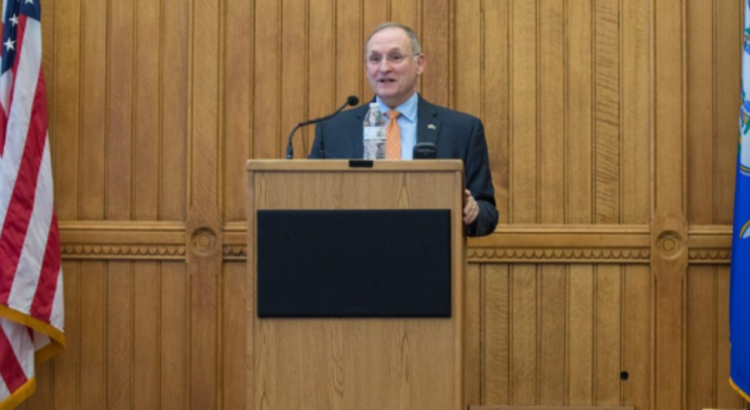
State Senator Henri Martin (R-31) March 14 addressed special education teachers, administrators, students, and supporters at the state capitol.

“I am happy to say that society has recognized the value of education for those with intellectual and developmental disabilities. We now know that the right education can help these students live productive, fulfilling lives. We recognize the tremendously positive impact that people with intellectual and developmental disabilities have on society and in our own lives,” Martin said according to a press release from Senate Republicans.

“Every person in this room has value,” he continued, according to the press release. “Intellectually and developmentally disabled children, like all children, have a right to an education that will help them live as productive and independent a life as possible.”

Sen. Martin represents the communities of Bristol, Harwinton, Plainville, Plymouth, and Thomaston.

Martin is also running for reelection.

Source:

http://bristolobserver.com/2018/03/15/martin-addresses-special-education-advocates/


Comparte este contenido:
Page 164 of 400
1 162 163 164 165 166 400