Page 297 of 400
1 295 296 297 298 299 400

Estados Unidos: Start saving early for your children’s education

América del Norte/Estados Unidos/Octubre de 2016/Fuente: Gulfnews

RESUMEN: Los expertos aconsejan una manera eficaz y un plan realista para ahorrar temprano para evitar gastos escolares y universitarios tomando una parte de su salario mensual.
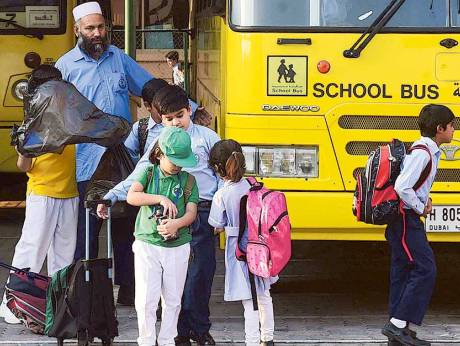
La educación de los niños es cada vez mas cara, y los gastos aumentan cuando los niños se unen a la universidad. Zurich ha vinculado recientemente el costo de educación de por vida en Dh933,945 por niño. En el Reino Unido, para la educación universitaria de un estudiante internacional, los gastos se fijaron en $ 15.500 (Dh56,885) al año sin incluir los gastos de vida. En los Estados Unidos, el precio del curso de licenciatura es de más de $ 22,000 por año, mientras que en Canadá, un curso similar cuesta alrededor de $ 11.400. Los gastos de vivienda vienen a otro $ 20.000 por año. «Sin la ayuda excepcional de planificación financiera, el ahorro para financiar el futuro de su hijo puede ir en detrimento de su propio futuro, porque otros objetivos importantes como el ahorro para el retiro pueden quedarse en el camino,» Stuart Ritchie, planificador financiero Chartered y Chartered Wealth Manager en AES Internacional dijo Gulf News.

To avoid school and college fees taking up a chunk of your monthly salary, experts advise an effective and a realistic plan to save early.

Children’s education is getting expensive, and expenses increase when these children join the university. Zurich recently pegged the lifetime education cost at Dh933,945 per child. In the United Kingdom, for an international student’s undergraduate education, the expenses were pegged at $15,500 (Dh56,885) per year excluding living expenses. In the United States, the an undergraduate course fee is more than $22,000 per year, while in Canada, a similar course costs about $11,400. Living expenses come to another $20,000 per year.

“Without exceptional financial planning assistance, saving to fund your child’s future can come at the expense of your own future, because other important goals such as saving for retirement can fall by the wayside,” Stuart Ritchie, Chartered Financial Planner & Chartered Wealth Manager at AES International told Gulf News over email.

Brendan Dolan from Old Mutual International concurred.

“Most parents want to provide the best for their children and would agree that funding their children’s education is a key financial priority and this is especially the case in the UAE where all expatriate parents need to pay for their children’s education,” Dolan, regional director, Middle East and Africa, for Old Mutual International, said.

Funding education with debt

Experts say getting into debt for finance children’s education may be bad idea even though studies suggest that 64 per cent of the parents would be willing to get into debt to support their children.

Experts say considering the large sum of money that may be required to fund the children’s education, the key is to start saving early.

“You need to spread the cost of investing to fund education over the longest term practicable, and remain disciplined and committed to the plan you create,” Ritchie said.

And these savings should not get in the way of saving for other objectives like buying a property or retirement, among others.

“When considering the best ways to save for a child’s education there are many options available. Many parents may want the security of ring-fencing these savings to ensure future educational needs are safeguarded — in such cases, a trust arrangement may be beneficial, and will ensure the child’s future is provided for in the event of something happening to one or both parents,” Dolan from Old Mutual said.

But despite this, parents tend to finance children’s education from day to day income.

Saving schemes

Ritchie from AES International advises to stay away from contractual savings schemes and plans that are heavily marketed and sold in the international financial marketplace. They are particularly prevalent in Dubai, but many are expensive and ineffective at best.

A long term passive plan may be handy in situation like these.

“In order to get the best returns on any investment you make towards your goal of funding your child’s education, there’s no need for exotic investments, just build a low-cost, flexible portfolio of passive funds, (ETFs), investing in bonds and equities. Make sure you can access your money at any time, in case of a personal emergency for example, with no penalties for doing so,” Ritchie said.

And Dolan from Old Mutual warns of risks.

“The various potential risks should also be taken into account, for example, what if one or both of the parents lose their jobs, have an accident, or dies? Or an unexpected situation may arise when there are competing priorities, such as looking after an elderly relative. Speaking with a financial adviser will help to ensure a robust financial plan is put in place.”

Fuente: http://gulfnews.com/business/sectors/markets/start-saving-early-for-your-children-s-education-1.1920486
 

Comparte este contenido:

Estados Unidos: More than one in four teachers are chronically absent from school

América del Norte/Estados Unidos/Octubre de 2016/Fuente: Mail on Line

RESUMEN: Distritos escolares públicos en los Estados Unidos están luchando para hacer frente a lo que el gobierno federal dice que es un problema crónico de ausencias de los maestros. La Oficina del Departamento de Educación para los Derechos Civiles ha acumulado datos que se dice indica que más de uno de cada cuatro profesores pierde más de 18 días de clases regulares. La información, que se aplica a 2014 ya que fue la última que  proporcionaron las cifras, fue obtenida a partir de datos que fue reportado por los distritos escolares propios, de acuerdo con The Washington Post. Esto representa un fuerte aumento a partir del año académico anterior. De acuerdo con el Consejo Nacional para la Calidad de los Maestros, el 16 por ciento de los profesores fueron clasificados como «crónicamente ausentes ‘- aquellos que se perdieron 18 días o más – en el año escolar 2012-2013. El gobierno se enteró de que el problema era más grave en las zonas rurales más pobres del país, así como en una serie de grandes ciudades, donde hasta el 75 por ciento de los maestros estaba ‘crónicamente ausentes’.

Public school districts in the United States are struggling to cope with what the federal government says is a chronic problem of teacher absences.

The Education Department’s Office for Civil Rights has accumulated data that it says indicates that more than one in four teachers miss over 18 days of regular classes.

The information, which applies to 2014 since it was the latest that the figures were provided, was gleaned from data that was reported by the school districts themselves, according to The Washington Post.

That represents a steep increase from the previous academic year.

According to the National Council on Teacher Quality, 16 per cent of teachers were classified as ‘chronically absent’ – those who missed 18 days or more – in the 2012-2013 school year.

The government learned that the problem was more acute in poorer, rural areas of the country as well as in a number of major cities, where as many as 75 per cent of teachers were ‘chronically absent’.

One rural area that was hard hit by teachers missing work days was North Carolina’s Alamance-Burlington School District.

In the 2013-2014 school year, this district, which is located between Greensboro and Chapel Hill, saw an astounding 80 per cent of its 1,500 teachers miss more than 10 days.

In Cleveland, Ohio, 84 per cent of the teachers there were chronically absent.

Clark County School District in Nevada reported that over half of its 17,000 teachers missed over 10 days.

Education experts and observers say that just as student absences adversely impact academic performance and graduation rates, teacher absences have the same effect.

Analysts say that apart from personal absences such as sick days and maternity leave, teachers are feeling less motivated to come to work due to the climate and work environment that they encounter at the schools.

One former teacher at a Washington, D.C., area middle school told the Post that he was mostly healthy on the days that he did not report to work.

‘I would wake up in a panic and feeling like there was a pit in my stomach,’ Sean McGrath, a former social studies teacher at the Stuart Hobson Middle School, said.

‘It was a feeling of dread and despair.’

McGrath said that the feeling was mostly fueled by a combination of the rampant misbehavior by the students as well as what he and other teachers perceived as a lack of support from the principal and administrators.

Nonetheless, teacher representatives say the data paints a misleading picture.

Randi Weingarten, the head of the American Federation of Teachers, a nationwide union representing teachers, said that the root cause of the problem is the work conditions with which teachers have to cope.

She also says that because most teachers are women, they are forced to be at home since they are the primary caregivers in their families.

‘The data also doesn’t address some other basic conditions faced by teachers — the stress, the need to work beyond the school day and the juggling of work and home that interferes more with their family life than most professions,’ Weingarten said. ‘To better address absenteeism, we need to understand root causes.’

The figures were compiled for the 2013-2014 Civil Rights Data Collection, a survey of public schools and school districts in the US.

The study seeks to highlight issues impacting the quality of education provided in public schools as well as factors that contribute to it.

The survey also found that black preschool children were 3.6 times more likely to be suspended at least once than their white counterparts.

Among pupils enrolled in public kindergarten through 12th grade, black children were disproportionately more likely to be suspended than white pupils.

Of the 2.8 million K-12 students who were given out-of-school suspensions for disciplinary problems, 1.1 million were black; 600,000 were Latino; 660,000 were those classified as having disabilities; and 210,000 were foreigners.

Fuente: http://www.dailymail.co.uk/news/article-3876696/Over-1-4-teachers-chronically-absent-school-government-study-finds-poor-work-conditions-rowdy-student-behavior-sapping-teacher-motivation.html

Comparte este contenido:

Estados Unidos: Childhood poverty has lifelong ramifications

América del Norte/Estados Unidos/Octubre de 2016/Autor: Leslie Boid/Fuente: Mountainx

RESUMEN: La pobreza infantil no es simplemente de los pequeños que son incapaces de tener la última moda o gadget; la pobreza es el trauma que induce, Mims dice, y que afecta a más de uno de cada cuatro niños en Carolina del Norte. En algunos condados, más de uno de cada tres niños vive en la pobreza.En la búsqueda de soluciones, Pisgah Legal Services patrocinó su sexto foro anual de la pobreza, el 5 de octubre, con un discurso de apertura por el reconocido defensor de los niños Marian Wright Edelman, fundadora y presidente del Fondo para la Defensa de los Niños. Estados Unidos ocupa el puesto 34 de 35 países industrializados cuando se trata de la pobreza infantil, Edelman dice, con más de uno de cada cinco niños que viven por debajo del nivel federal de pobreza. Sólo Rumania ocupa el menor. En Carolina del Norte, un nuevo informe del Centro de Presupuesto y de Impuestos del Centro de Justicia de Carolina del Norte muestra que la pobreza está en un nivel superior – más del 16 por ciento en general – de lo que era antes de la recesión de 2008. Según reporte de Cuenta de Niños de la Fundación Annie E. Casey, publicado anualmente, en todo el estado de pobreza infantil era de 25,1 por ciento en 2013, el último año del que se dispone de datos.

The little girl needed extensive dental work, says Susan Mims, director of Mission Children’s Hospital. The girl had squirmed in the chair when told she needed to brush her teeth every day and then said she couldn’t.

“We asked her, ‘Why not? What are your barriers?’ and [the girl] told us she had nowhere to spit because she lived in a car,” says Mims.

Child poverty is not simply about little ones being unable to have the latest fashion or gadget; poverty is trauma-inducing, Mims says, and it affects more than one in four children in North Carolina. In some counties, more than one in three children live in poverty.

In the search for solutions, Pisgah Legal Services sponsored its sixth annual poverty forum on Oct. 5, with a keynote address by renowned child advocate Marian Wright Edelman, founder and president of the Children’s Defense Fund.

The United States ranks 34th of 35 industrialized countries when it comes to child poverty, Edelman says, with more than one in five children living below the federal poverty level. Only Romania ranks lower.

In North Carolina, a new report from the N.C. Justice Center’s Budget and Tax Center shows that poverty is at a higher level — more than 16 percent overall — than it was before the 2008 recession. According to the Annie E. Casey Foundation’s Kids Count report, issued annually, child poverty statewide was 25.1 percent in 2013, the last year for which data are available.

According to Kids Count data, Buncombe County’s rate was 22 percent in 2013. Among Western North Carolina counties, Graham County had the highest child poverty rate at 35.9 percent, but Avery, Cherokee, Clay, Haywood, Jackson, Macon, Madison, McDowell, Rutherford, Swain and Yancey counties all had rates above 30 percent.

Nationally, Edelman says, the numbers are 14.5 million children in poverty and 6.5 million living at half the poverty level or below.

The National Center for Children in Poverty places the national number at 15 million, or 21 percent of all children.

The cost of addressing child poverty in the United States — crime, imprisonment, lost work opportunities, illness, etc. — is about $500 billion annually, Edelman says, while the cost of lifting children out of poverty would be about $77 billion.

“If society cares about children, it should spend money on them,” Edelman said during her speech. “We need to create a new Dow Jones … with its stock in children’s lives.”

As researchers have begun to study the results of poverty and its effect on the developing brain, they have found changes in the structure of the brain brought about by the stresses, Mims says, and those stresses have lifelong implications.

People who were raised in poverty have four times the risk of depression and 12 times the risk of suicide, Mims says. They are 2.5 times more likely to develop chronic obstructive pulmonary disease, hepatitis, lung cancer and heart disease.

“We don’t know the exact mechanisms of why this happens, but we know it does,” she says. “We tend to think of trauma as an accident of being beaten up, but this long-term, low-level stress acts the same way [on the brain and body] as trauma.”

The good news, say Mims and Edelman, is that this damage can be mitigated by helping children change their response to stressors. Some schools are replacing detention with meditation, punishment with positive strategies, and that is helping.

More local governments are reacting in creative ways to address the health effects of poverty on children, says Pisgah Legal Services attorney Jackie Kiser, who serves on the advisory board for the Community Health Improvement Process. The group puts together a Community Health Assessment every three years with a list of priorities to be addressed.

The most recent assessment calls for people of all ages to have the opportunity to eat healthy foods, be active and better manage chronic illnesses. It also advocates for children to have safe, stable and nurturing relationships and environments to ensure they reach their full potential.

One barrier to the eradication of child poverty is that American society tends to blame people for their poverty, Edelman says, while refusing to raise the minimum wage to a living wage, failing to fund child care and underfunding education, nutrition programs, housing assistance and other assistance for people in poverty.

“American children in poverty didn’t ask to be born,” she said. “They didn’t choose their parents or their neighborhoods.”

And because of where they live, they attend poorer schools, have fewer safe places to play and are less likely to have a nurturing relationship with a caregiver after school. They get less exercise and have less access to nutritious food because their neighborhoods likely don’t have grocery stores or restaurants that serve healthy food. In addition, their homes are more likely to have mold, lead and other contaminants that make them sick or sicker, says Edelman.

Children in poverty are more likely to attend schools with so-called zero-tolerance policies that criminalize behaviors once handled by school personnel, she continues, so children in poverty are more likely to enter the justice system than those from homes with sufficient incomes.

Libby Kiles, a teacher at Isaac Dickson Elementary School in Asheville, sees the effects of poverty on children every day. “It’s like dealing with PTSD,” she said during a panel discussion after Edelman’s speech. “They’re not in safe places, they witness violence, they don’t get good nutrition, and they don’t get enough sleep.”

And although Asheville and Buncombe County schools are working to address the physical and emotional ramifications of poverty and other traumas, we need to address the problems as a nation, not at school district, city, county or even state levels, said Edelman.

“Children in Massachusetts aren’t more deserving than children in Mississippi,” she said. “I will never understand why any state would refuse Medicaid expansion.”

The best, most practical solution to poverty in America lies with the voters, Edelman said after the program.

“Get to the voting booth,” she said. “Your vote connects right to children. So much is riding on this.”

Fuente: https://mountainx.com/living/childhood-poverty-has-lifelong-ramifications/

Imagen de archivo

Comparte este contenido:

Is Peppa Pig causing Autism and making kids lose their sense of empathy?

Por: Eunice Alcalá

Each Peppa Pig episode leaves kids laughing, but the charming pig is again under fire for being linked to autism and other long-term developmental issues. A new round of rumors have emerged that the well-loved show poses dangers to its young viewers.

The reports are based on a so-called 2012 research by epidemiologist Marc Wildemberg from Harvard University. Wildemberg claims that children who watch Peppa Pig for at least half an hour have 56 percent increased chances of having autism. While the alleged study already made headlines years ago, several media outlets have brought back the story.

 Stories linking the British cartoon to developmental problems appear to be unfounded because according to some experts, searching for the epidemiologist on Google doesn’t yield any credible information. It is possible that the reports were only fabricated in an attempt to discredit Peppa Pig.

It isn’t the first time that Peppa Pig faced criticisms. In a previous interview with Courier Mail via Daily Mail, Dr. Karen Philip used Peppa Pig as an example of a cartoon that prevents kids from “developing skills in empathy and reading other people’s body language.”

She claims that children aged 4 to 5 get so used to watching the television that they fail to develop complete brain functions. Despite this, she reminds parents that the potentially harmful effects of television may be reversed if parents will allow their children to watch educational programs instead. Philip adds that something good can still come out from watching Peppa Pig.

“If parents interact with them during a show or if they want to watch, say Peppa Pig, and they’re doing the singing and dancing and interacting, that’s completely different.”

Parents have varying opinions when it comes to Peppa Pig. In an article published by Netmums, several parents have been interviewed on why they dislike Peppa.

“Parents complain that their children copy Peppa’s annoying behavior – behaving like a brat, burping and blowing raspberries all the time, and saying ‘I don’t want to play with you anymore’ to their friends (just like Peppa does). That and they start jumping in muddy puddles all the time!”

Some believe that Peppa Pig contains sinister messages and portrays stereotypes. One example that parents cite is that Daddy Pig is the one who has an “important job” while Mommy Pig is the one who often goes around making tea. There are children who allegedly copy George’s responses to food. When asked what they would love to have for breakfast, some kids would answer “chocolate cake.” They would also say “yuck” when parents try to feed them vegetables.

image: http://cdn.inquisitr.com/wp-content/uploads/2016/10/Peppa-Pig-family-670×375.png

Peppa Pig's family

[Image by Nick Jr.]

On the other hand, Lifestyle One reports that many consider Peppa Pig to be educational. One mother, whose son has developmental delays, lauds the show.

“He now knows some things that we have never even mentioned to him, such as actions for Twinkle Twinkle Little Star… We have seen a massive improvement since he has been paying attention to the [show].”

Peppa Pig is deemed as one of the highest-rating television shows for children. The first Peppa Pig episode aired in May 2004 but the show went on hiatus. The new episodes started airing in February 2015 and are now shown in 180 territories. The series, which has been translated into 20 languages, won the Best Pre-School Animation award in 2005, 2011, and 2012.

Many insist that at the end of the day, it is the job of parents to limit their children’s access to technology. There is no evidence yet that watching television indeed leads to autism, but studies advise that a child diagnosed as autistic must have limited access to the screen in order for him or her to have more meaningful pursuits. Cartoons, when carefully selected, can help children connect better with their peers.

Taken from: http://www.inquisitr.com/3626660/is-peppa-pig-causing-autism-and-making-kids-lose-their-sense-of-empathy/

Comparte este contenido:

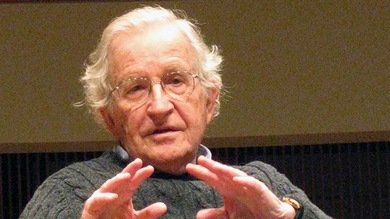
Conference: Reexamining History with Noam Chomsky: New World Order & the Grand Area

América del Norte/EE.UU./28 de octubre de 2016/www.actvism.org

This is the second part of our series called “Reexamining History” in which we explore history and surface facts that are usually suppresse or ignored in mainstream historical literature.

In this installment we talk to Prof. Chomsky about the global plans that the United States drew before the end of the World War II and how it proceeded to implement them.

The following questions will be addressed in this video:

  • What geopolitical plans did the United States draw for the globe before World War II?
  • What is the “Grand Area” and how did it effect the security and economy of the globe?
  • How did countries such as Italy, Germany and Greece fit into this scheme and why did the US crush anti-fascist movements across Europe?

Taken from: http://www.actvism.org/en/politics/chomsky-new-world-order-grand-area/

Comparte este contenido:

La Pedagogía Crítica de Henry A. Giroux

Por: Luis González Martínez

Henry A. Giroux nació en Providence Rode Island el 18 de septiembre de 1943 y es hijo de Armand y Alice Giroux emigrantes canadienses en Estados Unidos. Su licenciatura la realizó en la Universidad de Maine, recibió el grado de maestría en la Universidad Estatal Appalachian y obtuvo el doctorado en la Universidad Carnegie Mellon el año de 1977. De los años 1968 a 1975 trabajó como maestro de historia en una secundaria en Barrington, Rode Island. Se inició como docente en el área de educación en la Universidad de Boston en los años de 1977 a 1983, año en que se trasladó a la Universidad de Miami en Oxford, Ohio donde adquirió renombre como académico y fue director del Centro para la Educación y los Estudios Culturales hasta el año de 1992 cuando inició una nueva etapa en su vida académica en la Universidad del estado de Pennsylvania como catedrático y director del Foro Waterbury en Educación y Estudios Culturales. En 2004 se integró al plantel de la Universidad Mc Master donde actualmente imparte la cátedra de Cadenas globales de televisión en la carrera de comunicación. En mayo del año 2005 la Universidad Memorial de Canadá le concedió un doctorado honoris causa en letras. Actualmente vive en Hamilton, Ontario, en Canadá con su esposa la Doctora Susan Searls Giroux, Henry A. Giroux, al igual que Peter McLaren y Michael Apple, es uno de los principales exponentes en Estados Unidos de la pedagogía crítica y concretamente de lo que él denomina como la pedagogía fronteriza, que se nutre, básicamente, de dos fuentes teóricas: el postmodernismo crítico y la pedagogía crítica (Giroux, 1998).

El primero plantea la necesidad de desterritorializar el plano de la comprensión cultural dominante y, en consecuencia, el rechazo de la idea de un sujeto unificado y racional; para ello se propone como estrategia central la crítica de todas las formas de representaciones y significados que reclaman un estatus trascendental y transhistórico.

La pedagogía crítica ve la educación como una práctica política social y cultural, a la vez que se plantea como objetivos centrales el cuestionamiento de las formas de subordinación que crean inequidades, el rechazo a las relaciones de salón de clases que descartan la diferencia y el rechazo a la subordinación del propósito de la escolarización a consideraciones económicas. La conjunción de estas dos fuentes teóricas permitió a Henry Giroux formular su planteamiento de la Pedagogía Fronteriza (pf) o Pedagogía de los Límites. Los fines educativos en la Pedagogía Fronteriza Toda teoría educativa surge con el objetivo de satisfacer ciertas necesidades en esa área y para tal propósito se plantea una serie de fines educativos que delimitan su ámbito de intervención. La pf establece como fines educativos centrales: desarrollar formas de transgresión a partir de las cuales sea posible desafiar y redefinir los límites existentes. Desarrollar condiciones en las que los estudiantes puedan leer y escribir dentro y en contra de los códigos culturales existentes. Crear espacios para producir nuevas formas de conocimiento, subjetividad e identidad. Para lograr sus objetivos acentúa el lenguaje de lo político al examinar cómo las instituciones, el conocimiento y las relaciones sociales se inscriben en el poder de manera distinta, pero también examina el lenguaje de lo ético para comprender cómo las relaciones sociales y los espacios desarrollan juicios que exigen y conforman diferentes modos de respuesta al otro.

El contenido educativo en la Pedagogía Fronteriza La pf reconoce el conocimiento y las capacidades como sus principales contenidos educativos siempre y cuando permitan o generen “las oportunidades de armar ruido, de ser irreverentes y vibrantes” (Giroux, 2000, p. 8). En ese sentido, el conocimiento, las destrezas y los valores se convierten en contenidos educativos necesarios para que el alumno pueda negociar de manera crítica los límites culturales que le ofrece la sociedad y, en consecuencia, para proceder a transformar el mundo en que vive. La propuesta educativa de Giroux encuentra en los textos su principal insumo para el trabajo con los contenidos educativos ya expuestos, pero “los textos deben ser descentralizados y entendidos como construcciones históricas y sociales determinadas por el peso de lecturas heredadas y especificadas” (Giroux, 2000, p. 11). Los textos se pueden leer enfocándose en la manera en que diferentes públicos pudieron responder a ellos, destacando así las posibilidades de leer contra, dentro y fuera de los límites establecidos

Los docentes en la Pedagogía Fronteriza.

Para Giroux (2000) los docentes deben tener un control teórico de las formas en que se construye la diferencia, ya que ésta puede adoptar diversas representaciones y prácticas que nombran, legitiman, marginan y excluyen las voces de los grupos subordinados.

Este control teórico permitirá al docente trabajar los contenidos educativos de manera pertinente para el logro de los fines educativos ya esbozados, pero el logro efectivo de tales fines exige que el docente se constituya en aquel que cruza fronteras para legitimar la diferencia como una condición básica para entender los límites del propio conocimiento.

El concepto de la Pedagogía Fronteriza sugiere que los maestros existen dentro de los límites sociales, políticos y culturales, que son tanto múltiples como históricos en esencia y que ubican demandas particulares sobre el reconocimiento y la aprobación pedagógica de las diferencias. Como parte del proceso del desarrollo de la pedagogía de la diferencia, los maestros necesitan tratar con una plétora de voces así como la especificidad y la organización de diferencias que constituyen cualquier curso, clase o currículum, de tal forma que problematicen no sólo las narraciones que dan significado a las vidas de los estudiantes sino también a los lineamientos éticos y políticos que les trasmiten sus subjetividades e identidades (Giroux, 1998, pp. 92-93).

Los alumnos en la Pedagogía Fronteriza Conforme la perspectiva de la pf el alumno se debe concebir como el que cruza fronteras, como gente que entra y sale de los límites construidos en torno a coordenadas de diferencia y poder. Para tal fin debe ser capaz de escribir, hablar y escuchar en un lenguaje en el que el significado se haga de múltiples acentos, sea disperso y se resista a cierres permanentes. Las diferentes narraciones que los estudiantes de todos los grupos traen consigo a clases necesitan ser cuestionadas por sus ausencias lo mismo que por sus contradicciones, pero también entendidas como algo más que una simple mirada de historias diferentes.

Tienen que ser reconocidas como forjadas en relaciones de oposición a las estructuras dominantes de poder (Giroux, 1998, pp. 94-95). A manera de cierre La validez de una teoría prescriptiva de carácter educativo, sea pedagógica o didáctica, se realiza al contrastarla con la realidad que se deriva de su aplicación en contextos específicos. La aplicabilidad de una teoría, reflejada en sus múltiples experiencias, da la posibilidad de reconocer su potencialidad para la transformación de la práctica educativa. Estas experiencias permiten, por una parte, afirmar las posibilidades reales de una pf en el campo educativo, pero por otra, proporcionan una muestra de los retos que implicaría para un pedagogo crítico la aplicación de los postulados de una pf y que Guevara (2002) brillantemente sintetiza en las siguientes frases: “Quizás es un buen momento para que empecemos a pensar juntos sobre la Diversidad y las Discriminaciones que conlleva… Creo que hay que definir si uno está a favor de la diversidad o si lo que se pretende es homogeneizar para que desaparezca” (p. 3).

Tomado de: http://www.redalyc.org/articulo.oa?id=99815739014

Comparte este contenido:

EE.UU: Stephen Hawking says most of our history is «the history of stupidity»

América del Norte/EE.UU./28 de octubre de 2016/Por: Fiona MacDonald

Resumen: En una conferencia en la Universidad de Cambridge esta semana, Stephen Hawking realizo una afirmación sobre la creación de la inteligencia artificial será «sea el mejor, o lo peor, nunca le pase a la humanidad». Dijo que a pesar de todo el tiempo que pasamos mirando hacia atrás en los errores del pasado, parece que cometer los mismos errores una y otra vez. «Por lo que es un cambio positivo que las personas están estudiando en cambio el futuro de la inteligencia», explicó. Cabe destacar, que no es la primera vez que Hawking se ha preocupado por la inteligencia artificial,incluso ha afirmado en otros espacios que la inteligencia artíficial pudiera representar el fin de la raza humana, por ello, insiste en que se debe utilizar el desarrollo de la revolución telcnológica para fines para benévolos. 

And we’re about to make another big mistake.

In a lecture at the University of Cambridge this week, Stephen Hawking made the cold claim that the creation of artificial intelligence will be «either the best, or the worst thing, ever to happen to humanity».

The talk was celebrating the opening of the new Leverhulme Centre of the Future of Intelligence, where some of the best minds in science will try to answer questions about the future of robots and artificial intelligence – something Hawking says we need to do a lot more of.

“We spend a great deal of time studying history,» Hawking told the lecture, «which, let’s face it, is mostly the history of stupidity.»

But despite all our time spent looking back at past errors, we seem to make the same mistakes over and over again.

«So it’s a welcome change that people are studying instead the future of intelligence,» he explained.

It’s not the first time Hawking has been worried about artificial intelligence.

Last year, he joined Elon Musk and hundreds of other experts in writing an open letter asking the governments to ban autonomous weapons that might one day be able to turn against humans.

He’s also previously sais that «the development of full artificial intelligence could spell the end of the human race».

In Wednesday’s lecture, he admitted he was still worried about «powerful autonomous weapons» and «new ways for the few to oppress the many», which come with artificial intelligence.

But he said if we can think about and address these issues now, the technology also has the potential to do good.

«We cannot predict what we might achieve when our own minds are amplified by AI,» he said.

«Perhaps with the tools of this new technological revolution, we will be able to undo some of the damage done to the natural world by the last one – industrialisation. And surely we will aim to finally eradicate disease and poverty.»

The Leverhulme Centre of the Future of Intelligence at the University of Cambridge, where Hawking is also a professor, has received more than USS $12 million (£10 million) in grants to run research projects that will enhance the future potential of artificial intelligence, while carefully addressing the risks.

The centre was inspired partly by the university’s Centre for Existential Risk, which already offers courses in subjects such as «Terminator Studies», in order to examine future potential problems for humanity.

While that centre focusses on a range of threats – such as climate change and war – the new Leverhulme Centre will look specifically at the issues that could arise from machines that think and learn like humans.

«Machine intelligence will be one of the defining themes of our century, and the challenges of ensuring that we make good use of its opportunities are ones we all face together,»said director of the Leverhulme Centre, Huw Price.

«At present, however, we have barely begun to consider its ramifications, good or bad.»

With Google already developing artificial intelligence that can learn from its own memory; Elon Musk worrying about humans become the dumb «house pets» of AI in the future; and computer systems already rivalling four-year-olds in IQ test, it’s definitely something worth thinking about sooner rather than later.

As Hawking says, it might end up being «crucial to the future of our civilisation and our species».

Tomado de: http://www.sciencealert.com/stephen-hawking-says-most-of-our-history-is-the-history-of-stupidity

Comparte este contenido:
Page 297 of 400
1 295 296 297 298 299 400