Aurelio Nuño Mayer, secretario de Educación Pública, destacó que las evaluaciones magisteriales avanzan ya en todo el país -incluidos Oaxaca, Chiapas y Michoacán-, y señaló que es falso que docentes que las presenten tengan riesgo de perder su empleo, porque el proceso no es en su contra.
Reconoció la participación de unos 3 mil profesores en las evaluaciones en esos tres estados, en orden y sin problemas, que por diversas situaciones no se habían evaluado, y que son parte de 8 mil 500 maestros.
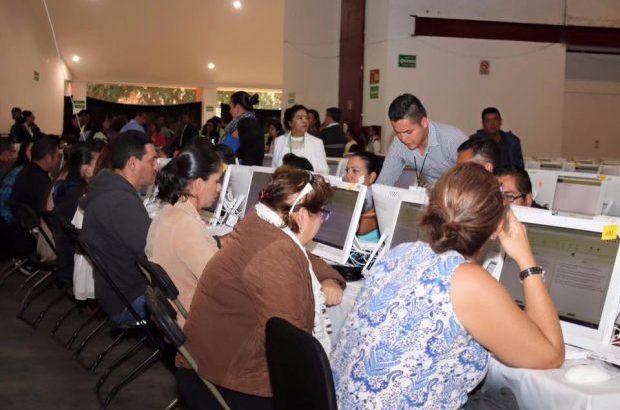
En la escuela primaria República de Costa Rica, donde anunció que este plantel será de tiempo completo con ingesta de alimento, con una inversión de 2 millones de pesos, dijo que la Reforma y el Modelo Educativo avanzan.
Nuño Mayer comentó que los maestros que tengan buenos resultados en las evaluaciones tendrán un incremento al salario base de 35 por ciento, y los que obtengan resultado no satisfactorio serán capacitados, para que hagan su carrera a partir del mérito.
En este sentido, el secretario de Educación Pública informó que próximamente se presentará la estrategia de formación profesional de los maestros.
Luego de encabezar la ceremonia cívica en ese plantel, dijo también que se avanza en las escuelas de tiempo completo, de las cuales ya hay 25 mil, así como en el mejoramiento de la infraestructura de 33 mil planteles en todo el país, en lo que se invierten 50 mil millones de pesos.
Nuño Mayer anunció que a través del programa Escuelas al CIEN, en la primaria hoy visitada se rehabilitarán baños y bebederos, y se instalarán un comedor y techumbre en el patio.
En este inmueble inaugurado por Jaime Torres Bodet, el secretario de Educación Pública explicó que la transformación educativa es como la que en su momento impulso quien fuera en dos ocasiones titular de la SEP, para cambiar planes de estudio; crear un centro de profesionalización del magisterio; mejorar la infraestructura de las escuelas, y abatir el analfabetismo.
Nuño Mayer comentó que en pleno Siglo XXI se generan conocimientos como nunca, y la tecnología crece a una velocidad que no se tenía, por lo que es necesario el Modelo Educativo para que los niños se preparen para competir donde sea y con quien sea.
Señaló que se reorganizan las escuelas para que cuenten con plantilla completa, con director, subdirector, maestros de grupo y de las diversas disciplinas, además de que se apoya la profesionalización de los docentes.
Aurelio Nuño Mayer informó que mañana presentará un informe ante el presidente de la Republica, sobre el avance de la Reforma Educativa, como la rehabilitación de planteles a través del programaEscuelas al CIEN; el programa de Escuelas de Tiempo Completo; la reorganización de los planteles; y la realización de la auditoria a la nómina magisterial.
Por otro lado, señaló la importancia de la cooperación con las entidades federativas, en el marco de las reuniones regionales, y apuntó la posibilidad de que quienes regresan de Estados Unidos sean considerados para integrarse como maestros de inglés, aunque precisó que esto sería a través de una ruta, porque no es lo mismo hablar ese idioma que enseñarlo.
EEUU/30 may 2017/By Jacqueline Thomsen/Source: http://thehill.com
The Trump administration is considering shifting oversight for more than $1 trillion in student debt to the Treasury Department from the Education Department, according to a new report.
The New York Times reported Thursday that the possible change was revealed in a memo sent by the former head of the Education Department’s federal student aid program.
James Runcie abruptly resigned Tuesday night after Education Secretary Betsy DeVos asked him to testify in front of the House Oversight Committee about improper payment rates for federal student aid programs, saying he was the wrong person to speak on the matter.
“This is just another example of a project that may provide some value but will certainly divert critical resources and increase operational risk in an increasingly challenging environment,” Runcie wrote about moving the aid program.
Shrinking the size of the Education Department has been a priority for Republicans in the past — Rep. Thomas Massie (R-Ky.) proposed a bill that would eliminate the entire department in February. Seven other Republican lawmakers signed on to the legislation.
President Trump’s proposed budget, unveiled this month, also recommends cutting nearly $5 billion in funding from the Education Department, or nearly 50 percent of the department’s budget.
EEUU/ 30 May 2017/By Jeff Bryant, Campaign for America’s Future/Source: http://www.truth-out.org
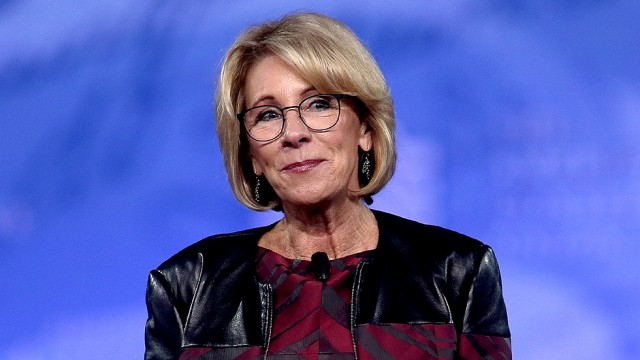
Betsy DeVos wants to give your tax dollars to private schools and businesses and tell you it’s an education «transformation.»
That’s the main theme of an address she gave this week to a conference held by the organization she helped found and lead, the American Federation for Children.
Declaring «the time has expired for ‘reform,'» she called instead for a «transformation… that will open up America’s closed and antiquated education system.» Her plan also opens your wallet to new moochers of taxpayer dollars.
By the way, AFC, according to SourceWatch, is a «conservative 501(c)(4) dark money group that promotes the school privatization agenda via the American Legislative Exchange Council (ALEC) and other avenues.» It also grew out of a defunct PAC connected to DeVos called «All Children Matter» that ran afoul legally in Ohio and Wisconsin and still owes Ohio $5.3 million for breaking election laws.
So DeVos had a supportive crowd for her speech, but what should the rest of us think of it?
The transformation she calls for seems to rest on the premise that, «It shouldn’t matter where a student learns so long as they are actually learning.» But what does she mean by «learning»? And what should the public expect about how its funds are being spent?
In kicking off her address (transcript here), DeVos thanked Denisha Merriweather for introducing her. Merriweather, as I’ve previously reported, often appears with DeVos at events extolling school vouchers that allow parents to send their children to private schools at taxpayer expense.
In Merriweather’s case, exercising school choice meant using Florida’s education tax credit program’s education tax credit program to attend a fundamentalist Christian academy that presents the Bible as literal history and science, teaches young earth creationism, and demeans other religions.
DeVos then quickly moved to the story of a recent graduate of a Catholic private school, Bishop Luers High School in Fort Wayne, Indiana, who used that state’s voucher program to transfer from a public school to a private religious school at taxpayer expense.
Based on that student’s life story, DeVos declared, «Here in Indiana, we’ve seen some of the best pro-parent and pro-student legislation enacted in the country.»
Reporters at NPR recently looked at what «pro-parent and pro-student» policies have accomplished in Indiana and found the state’s voucher program, which DeVos is no doubt extolling, is essentially a coupon program for parents who already send their kids to private schools.
«More than half of all voucher students in the state have no record of attending a public school,» NPR reports. «Recipients are also increasingly suburban and middle class. A third of students do not qualify for free or reduced-price meals,» a proxy for poverty widely used in education.
Clearly taxpayers should be concerned about picking up the tab for an expense that many families seem to be able to afford in the first place. In fact, that’s a point conservatives frequently level in their claims of widespread welfare fraud.
But so long as students are learning, DeVos contends, what’s the beef? Well, evidence of these students actually learning by exercising their «school choice» is scant.
A recent op-ed in the New York Times cites a study which found Indiana students using the state’s voucher program to transfer from public schools to private schools voucher students «experienced significant losses in achievement» in mathematics and «saw no improvement in reading.»
But one thing Indiana’s voucher program certainly accomplished is to provide a huge cash infusion to religious schools. As Mother Jones recently reported, of the more than 300 schools receiving voucher money in the Hoosier state, only four aren’t «overtly religious.» The remaining four are for special needs students.
Another premise DeVos argues is, «Education should reward outcomes, not inputs.» But outcomes at what cost?
That’s a question many who disagree with DeVos’s preference for «high performing» charter schools have about her praise for school choice.
In her reporting on a supposedly high performing charter chain in Arizona, Carol Burris, an award-winning educator and leader of the Network for Public education, looked at the school’s supposed great outcomes and found a troubling backstory.
The BASIS Arizona charter chain, she found, «provides insight into how charter schools can cherry-pick students, despite open enrollment laws. It also shows how through the use of management companies profits can be made — all hidden from public view.»
DeVos counters any objections to her preference for school choice with the argument, «All parents instinctively know that their child should not follow the money — the money should follow their child,» which is a favorite phrase of the school choice crowd.
Here’s something else parents know: Kids don’t come with price tags. And educating the nation’s future workers, leaders, citizens, and artists has always been, and must continue to be, a communal enterprise shared by parents and non-parents alike.
In her efforts to create the education transformation she calls for, DeVos is supremely eager to «get Washington and the federal bureaucracy out of the way,» but still wants you to pay the cost of privatizing our schools. That’s not an agenda for better schools. It’s about stealing public money.
Sandra Lowe reminisced about the good old days as she addressed a roomful of Democratic activists at the California party’s annual convention last week in Sacramento. It used to be, the teachers union leader told the crowd, that it didn’t take much to win a school board race: a short statement in the election handbook, a little money for some mail and the shoe-leather to knock on doors and talk to voters.
Now, Lowe said, things are different. Wealthy donors have put big money into shaking up public education by backing candidates willing to challenge union orthodoxy. And the impact they had this month on the school board race in Los Angeles — ousting a union-backed incumbent and electing a new majority that favors charter schools — is likely to reverberate across California.
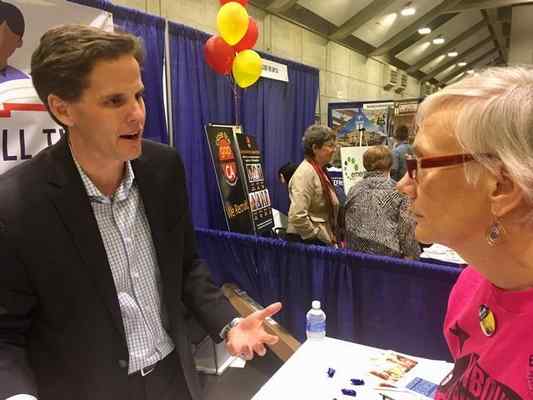
California Assemblyman and schools superintendent candidate Tony Thurmond (D-Richmond) typically votes with the education establishment. Photo: By Laurel Rosenhall for CALmatters
“It’s not just an L.A. situation,” said Lowe, a California Teachers Association consultant. “This is going to happen everywhere.”
The future of public education in California has become a tug-of-war between different camps within the Democratic Party. Democrats aligned with organized labor – who dominated local and legislative races for many years — are now facing formidable challenges from Democrats who see overhauling some union rules as a key to improving education.
The Democrat vs. Democrat split that played out in the Los Angeles school board election also emerged in several legislative races last year. Now, as California looks toward the election of a new governor and a new school superintendent next year, the fight over public education is bound to get hotter.
California made major changes in the schools during Jerry Brown’s last two terms as governor — putting a new Common Core curriculum in place and revamping the funding formula to send more money to schools serving needy children. Yet academic achievement remains dismal. Slightly more than half the state’s students cannot read and write at their grade level, results from last year’s testing shows, and 63 percent aren’t meeting standards in math.
Each camp has its own view of the solution. Teachers unions generally argue that society should address socioeconomic problems that can make learning difficult. Groups that want to change the system say families should have more choice about which schools their kids attend. How schools hire and fire teachers is another flashpoint, with unions favoring rules that benefit senior teachers and their adversaries saying teacher assignments should be based on students’ needs.
It’s easy to boil the argument down to a conflict between traditional schools (which employ union teachers) and charters (which are publicly funded but governed independently and often employ non-union teachers). In reality, though, it is a larger, more nuanced battle over how to mold a system that educates more than 6 million children, most of whom live in poverty.
Advocates for change include Netflix founder Reed Hastings and developer Eli Broad, who have poured millions of dollars into pro-charter groups that fund political campaigns. Their recent win in Los Angeles “portends a massive investment in the superintendent’s race and the governor’s race,” said Mike Trujillo, a Democratic political consultant who worked on campaigns for Kelly Gonez and Nick Melvoin, the newly elected Los Angeles school board members.
“There is not a better motivator than the nectar of victory to push along the issue that you care about, and that’s improving public education and ensuring that every child in every school has a high-quality teacher,” Trujillo said.
Trujillo worked closely with Antonio Villaraigosa when, as mayor of Los Angeles, he bucked the teachers union and took control of several low-performing schools. Now running for governor, Villaraigosa has signaled that education will be a focus of his campaign. In his speech at the Democratic convention, Villaraigosa called the education split “the most important civil rights battle of our generation.”
Another Democrat running for governor, former state schools superintendent Delaine Eastin, is also making education a cornerstone of her campaign. She used her convention speech to argue that the state needs to spend more on schools, saying “educating the next generation is our most sacred mission.”
Lt. Gov. Gavin Newsom, the front-runner in the race, highlighted his work as San Francisco mayor to expand preschool access and contrasted his approach with that of the Trump Administration.“Unlike Betsy DeVos,” he said, “we will attract teachers, not attack teachers.”
The teachers union has not yet endorsed anyone in the governor contest or in the race to succeed Tom Torlakson as state schools superintendent, and both races may still attract more candidates. So far, the superintendent lineup is a Democrat vs. Democrat competition between former charter school administrator Marshall Tuck and Assemblyman Tony Thurmond of Richmond.
Thurmond is a former school board member who is carrying a bill to tax companies that contract with prisons to pay for expanded preschool. He typically votes with the education establishment — teachers and school boards — and recently helped kill a bill that would have made it easier for parents to send their children to a school in a neighboring district rather than their own.
Campaigning at a booth at last week’s convention, Thurmond said that addressing socioeconomic disparities is key to improving schools:
“How do kids learn when they’ve been impacted by trauma or they’re homeless or they’re hungry or they have a dental issue? We’ve got to remove the barriers that get in the way of our kids.”
Tuck is running for a second time after mounting a surprisingly close challenge to Torlakson in 2014, helped by roughly $12 million from charter school groups. He said Californians have become numb to the large number of children who are not getting a good education.
He said California Democrats have tackled some huge issues, such as climate change and health care, but have not done enough to make sure kids in public schools are learning.
“We’ve learned to live with failing schools,” Tuck said. “Our party has not prioritized education the way we need to.”
CALmatters is a nonprofit journalism venture dedicated to exploring state policies and politics. For more stories by Laurel Rosenhall, go to calmatters.org/newsanalysis.
EEUU/30 May 2017/Source: http://www.hoodrivernews.com
Hood River Valley High School seniors went home on Thursday night with over $69,000 in Hood River County Education Foundation (HRCEF) funds for their post-secondary educations. In addition, the Education Foundation announced 12 recipients of HRCEF Continuing College scholarships totaling over $23,000, for a total donation of over $92,000 in HRCEF Scholarships this year.
The Education Foundation manages 28 freshman scholarship funds and four continuing college scholarships, donated by Hood River residents and their friends and families. In addition, two freshman scholarships may be renewed for additional years.
#Seventy-one different scholarships were awarded to 51 HRV students in the class of 2017, with some students receiving up to three scholarships. Twelve continuing college scholarships were awarded to HRVHS graduates for their 2017-18 sophomore, junior or senior years in college.
#“The scholarships represent Hood River County so well. Scholarship donations come from many different families and civic groups, from the Cascade Locks Alumni Association to the Parkdale PTO,” said Pat Evenson-Brady, HRCEF Scholarship chair. “Twenty of our scholarships are memorials, and several are from local businesses. Our only regret is that we receive applications from so many deserving students and we don’t have scholarships for all of them.”
#The Cascade Locks Alumni Association awarded five freshman scholarships and one continuing college scholarship this year, continuing a long tradition of support for post-secondary education to Cascade Locks students from their own community. New scholarships this year included the eight HRVHS AVID scholarships to support students who have been historically under-represented in college education. Funds for the AVID scholarships were raised primarily by HRVHS staff.
#A unique HRCEF scholarships is the Nathan Hazlett Memorial Scholarship, which provides funding for flight training for a student wanting to be a professional pilot. The scholarship was not awarded in 2017.
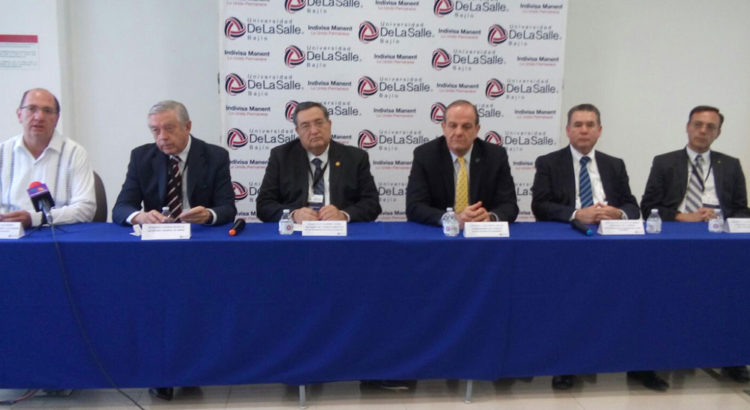
Las universidades particulares en México pagan más impuestos que las empresas, señaló el Comité Directivo de la Federación de Instituciones Mexicanas Particulares de Educación Superior (Fimpes).
La carga impositiva que pagan puede llegar hasta 35% más que las empresas, aseguró Rodrigo Guerra Botello, secretario general de Fimpes, dijo en la LXXI Asamblea General Ordinaria realizada en el Parque de Innovación De La Salle.
“Eso no es congruente con el Plan Nacional de Desarrollo, ni con el Plan Sectorial de Educación. La Ley de Educación Superior tiene 40 años y no ha sido actualizada; la dinámica que manejan los rectores no es la adecuada”, añadió el Secretario.
Dichas universidades pagan impuestos sobre nómina, IVA que no recuperan, dan 5% de becas que les impone la Ley… realidad que no pasa en algún otro país.
“Todo esto vino a agravarse con la Reforma Fiscal del 2014 que evidentemente es recaudatoria y no considera la importancia de la educación. No pueden tratar como empresa a una institución educativa”, determinó.
Fimpes cree que el país debe tomar en cuenta los ahorros que significan. Por ejemplo, en México hay alrededor de un millón 100 mil estudiantes en universidades privadas. Si el gobierno cubriera eso, le costaría más de 80 millones de pesos al año; es decir, que las universidades privadas le ahorran al presupuesto federal y estatal… sin hablar de la Educación Básica y Media Superior.
“Necesitaremos espacios para hacer crecer la cobertura. Si nos comparamos con Corea, Chile, Indonesia, Estados Unidos que tienen cobertura de Educación Superior del 60-70-80%; es decir, si agarramos las 10 economías más competitivas del mundo promedian una cobertura del 70% en educación superior.
“México, depende como la quieran presentar, puede andar en 30%… esos 40 puntos menos hacen gran diferencia porque los países con mejor educación tienen una productividad de sus fuerzas laborales dos veces y media mejor que la de México. La importancia de Educación Superior de calidad está demostrada”, aseveró.
Destacó que las autoridades mexicanas correctamente se han dedicado a promover la Educación Básica a través de una reforma. “Está bien, pero los resultados de esta reforma va a ser entre 15 a 20 años, mientras que la educación superior bien enfocada y motivada -pública y privada- podría cambiar la sociedad mexicana en cinco ó 10 años”.
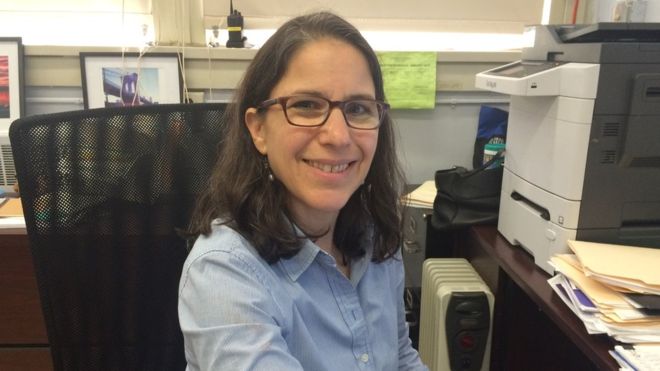
Cuando entras a la escuela Park Slope Collegiate en Brooklyn, Nueva York, te encuentras de pronto con los detectores de metales: hay que pasar obligatoriamente por ellos, con policías vigilando, como si fueras a abordar un avión.
Ese tipo de máquinas está en decenas de colegios de la ciudad, para evitar el ingreso de armas, pero motivaron una de las primeras batallas que Jill Bloomberg, la directora de esa escuela pública secundaria con una mayoría de alumnos latinos y negros, libró con el departamento de educación de Nueva York.
«No creo que nuestros estudiantes precisen pasar por detectores de metales cada vez que vienen a la escuela», dice Bloomberg, afirmando que el control se aplica desproporcionadamente en centros donde asisten más jóvenes de color.
«Criminalizan a nuestros estudiantes», agrega esta exprofesora de historia de 53 años en una entrevista con BBC Mundo. «Cuando entras a otras escuelas, confían en los chicos».
Sus críticas fueron compartidas por alumnos y docentes de Park Slope Collegiate.
En los corredores de la escuela pintaron murales coloridos que retratan a jóvenes ante los detectores, con carteles que dicen cosas como «no más escáners» o «estudiantes no sospechosos».
Pero ese no ha sido el único cuestionamiento de Bloomberg a sus jefes.
También preguntó por qué había dinero para instalar cámaras de seguridad en la escuela, pero faltaba para poner enchufes en las aulas o cisternas en los baños.
Denunció lo que ella considera el «racismo» de un sistema educativo que perjudica a los jóvenes latinos y negros, apoyó protestas de docentes, estudiantes y padres, y reclamó mayor equidad en la asignación de recursos a diferentes escuelas.
Derechos de autor de la imagenBBC MundoImage caption En los corredores de la escuela pintaron murales coloridos que retratan a jóvenes ante los detectores, con carteles que dicen cosas como «estudiantes no sospechosos».
Y en marzo Bloomberg descubrió que el departamento de educación había le abierto una investigación.
¿El motivo?
Una denuncia indicando que promovía el comunismo en su escuela.
«Estaba obligado»
Bloomberg fue específicamente acusada por un querellante confidencial de ser miembro del Partido Laboral Progresista, autodefinido como comunista, y de reclutar estudiantes para esa organización.
Nick Paolucci, un portavoz del departamento jurídico de la ciudad de Nueva York, le dijo a BBC Mundo que el departamento de educación «estaba obligado a abrir (la investigación) después que se le presentaran acusaciones de mala praxis».
«Las recientes preocupaciones de Bloomberg no tenían nada que ver con la investigación», asegura Paolucci a BBC Mundo.
Pero Bloomberg cree lo contrario y rechaza tajantemente las acusaciones en su contra.
«Esto es ridículo», sostiene. «Primero que nada, es completamente falso y es un intento de hacer que todos piensen: ‘Mira, si hacen lo que hicieron en Park Slope Collegiate, vamos a venir por ti'».
«Hay mucha historia en Estados Unidos de intentar socavar las luchas antirracistas etiquetándolas de comunistas», dice Bloomberg.
Incluso el propio Partido Laboral Progresista publicó una nota en su página web negando que Jill Bloomberg sea militante suya.
El mes pasado presentó una demanda ante la justicia para suspender la investigación administrativa, argumentando que violaba sus derechos civiles y de libre expresión.
Derechos de autor de la imagenBBC MundoImage caption En el mismo edificio donde funciona Park Slope funcionan otros tres colegios públicos.
Pero la ciudad de Nueva York replicó que busca establecer si ella utilizó su cargo para promover las creencias de un partido político, involucrarse en actividades políticas «inadmisibles» y entrar en conflicto de interés, violando así reglamentos internos.
Y un juez rechazó la demanda de Bloomberg, descartando que hubiera evidencia de que sus derechos hayan sido violados.«
«Inclinado hacia los ricos»
La discriminación en la enseñanza es un viejo problema de esta gran metrópoli, que preocupa a muchos.
«Pese a su diversidad policromática, la cuidad de Nueva York tiene uno de los sistemas escolares más profundamente segregados de la nación», afirmó un editorial del diario The New York Times este mes.
Y advirtió que el mecanismo de elección escolar en la ciudad «está inclinado hacia los ricos y no ofrece una opción real a los pobres».
Parte de la crítica apunta a los exámenes que toman varias de las mejores escuelas de secundaria para admitir a sus nuevos alumnos, que en la práctica actúan como un filtro que deja afuera a jóvenes latinos y negros con una peor educación previa.
El alcalde de la ciudad, el demócrata Bill de Blasio, indicó recientemente que el problema de segregación escolar está vinculado al tema de la vivienda en Nueva York, cuya realidad a su juicio es incambiable.
Derechos de autor de la imagenBBC MundoImage caption Los carteles dicen cosas como «escáneres no son lo mismo que seguridad», «apenas entramos, es como si no confiaran en nosotros», «somos estudiantes, no criminales» y «no más escáneres».
Pero Bloomberg, que antes de venir a esta ciudad fue docente en Chicago y habla fluidamente español tras haber vivido un año en Perú en la década del ’80, cree que el problema de fondo es el racismo.
«Van a tener que arrastrarme»
Bloomberg recuerda su sorpresa cuando en 2010 el departamento de educación le informó que, en el mismo edificio donde funcionan su escuela y otras dos, abriría un cuarto colegio público denominado Millennium Brooklyn, que atraería a estudiantes blancos de clase media y alta.
Además le anunciaron que harían obras para mejorar la vieja construcción de 1902 que alberga esas escuelas.
«Nunca había pensado en la idea de que podían tener dinero, pero no lo gastarían en nuestros estudiantes», dice Bloomberg. «Y eso me abrió los ojos».
Cuando Millennium abrió finalmente sus puertas, en vez de integrar el programa deportivo del campus donde funcionaba se unió al de su escuela homónima en Manhattan, que tiene una mayoría de estudiantes blancos.
Bloomberg relata que luego descubrió que la nueva escuela tenía 17 equipos deportivos, mientras ellos sólo tenían cinco al comienzo de este año y ahora cuentan con nueve, después de quejarse ante las autoridades en enero.
Derechos de autor de la imagenBBC MundoImage caption Este cartel dice «Construyendo unidad a través de la diversidad», mensaje que se opone al supuesto racismo que denuncia Bloomberg.
Ella está convencida de que esa queja que envió por correo electrónico provocó que pasaran a investigarla como represalia, pero la ciudad ha rechazado esa idea.
La investigación ha recibido críticas y apoyos.
El diario New York Daily News afirmó en un editorial que la ciudad hacía bien en indagar las denuncias contra Bloomberg: «Aunque los educadores son más que libres para expresar sus opiniones en la escuela, no pueden convertir las escuelas públicas en tiendas de organización política de facto».
Bloomberg señala que ha recibido muestras de apoyo desde diversas partes de EE.UU., pero señala que la investigación generó «una sensación de desconfianza» dentro de su escuela.
Dice que los investigadores del departamento de educación han llegado a interrogar a estudiantes en el colegio, incluso sin pedir el consentimiento de sus padres, y sostiene que está resuelta a seguir en su cargo.
«Van a tener que arrastrarme si quieren que me vaya», afirma. «No sé qué va a pasar, es difícil de predecir».
OtrasVocesenEducacion.org existe gracias al esfuerzo voluntario e independiente de un pequeño grupo de docentes que decidimos soñar con un espacio abierto de intercambio y debate.
¡Ayúdanos a mantener abiertas las puertas de esta aula!
 California Assemblyman and schools superintendent candidate Tony Thurmond (D-Richmond) typically votes with the education establishment.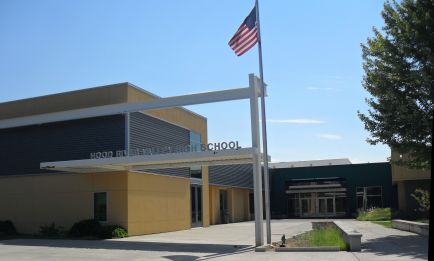


 Users Today : 13
 Total Users : 35462260
 Views Today : 16
 Total views : 3423274