Page 1508 of 1684
1 1.506 1.507 1.508 1.509 1.510 1.684

End child labour in supply chains – It’s everyone’s business!

Fuente:  OIT / 8 de junio de 2016

This year, the focus for World Day Against Child Labour – marked on 12 June – is on child labour and supply chains. With 168 million children still in child labour, all supply chains, from agriculture to manufacturing, services to construction, run the risk that child labour may be present.

Child labour has no place in well-functioning and well regulated markets, or in any supply chain. The message that we must act now to stop child labour once and for all has been affirmed by the Sustainable Development Goals. Acting together, it is within our means to make the future of work a future without child labour.»

Guy Ryder, ILO Director-General

This year, the focus for World Day Against Child Labour  – marked on 12 June – is on child labour and supply chains. With 168 million children still in child labour, all supply chains, from agriculture to manufacturing, services to construction, run the risk that child labour may be present.

“Child labour has no place in well-functioning and well regulated markets, or in any supply chain. The message that we must act now to stop child labour once and for all has been affirmed by the Sustainable Development Goals. Acting together, it is within our means to make the future of work a future without child labour,” said ILO Director-General Guy Ryder.

To support businesses in their actions to remove child labour from their supply chains, the ILO and the International Organisation of Employers (IOE) have jointly created the Child Labour Guidance Tool , a resource for companies to increase their knowledge and ability to conduct business in line with international labour standards on child labour.

The tool draws on the long experience of the ILO’s International Programme on the Elimination of Child Labour (ILO-IPEC) in collaborating with employers to combat child labour in supply chains and incorporates contributions from the a wide variety of companies including Coca-Cola Company, AngloGold Ashanti, Vale, Japan Tobacco and Sterling Manufacturing.

In addition, the ILO provides peer-to-peer best practice and knowledge sharing through the Child Labour Platform , which aims to identify the obstacles to the implementation of the ILO Conventions on child labour in supply chains, develop practical ways of overcoming these obstacles, and catalyse collective action.

Examples of good practise case studies of addressing child labour in supply chains are available here .

“With globalization, supply chains have become increasingly complex, involving workers, small producers, and enterprises around the world. Ending child labour in this context is everyone’s.business,” said Beate Andrees, Chief of the ILO’s Fundamental Principles and Rights at Work Branch.

World Day Events

The ILO is organizing a series of events on the occasion both in Geneva and throughout the world.

Geneva

A high-level event to mark the World Day will be held on 8 June 2016 in the Human Rights Council room of the Palais des Nations from 13:30 to 15:00. This event will take place during the 105th Session of the International Labour Conference .

The panel discussion will start at 2:00 p.m. and the panellists include:

  • Guy Ryder: Director-General, International Labour Organization
  • MaryAnn Mihychuk: Minister of Employment, Workforce Development and Labour, Canada
  • Jacqueline Mugo: Executive Director, Federation of Kenya Employers and Secretary General of Business Africa
  • Philip J. Jennings: General-Secretary, UNI Global Union.
  • Katharine Stewart: Director, Ethical Trade and Sustainability Division, Primark
  • Andrews Tagoe: Head of Program, Rural Workers, General Agricultural Workers Union of Ghana and Anglophone African Coordinator for the Global March Against Child Labour,
  • Vicky Bowman: Director, Myanmar Centre for Responsible Business

The panel discussion will be moderated by Nomia Iqbal from the BBC.

The Minister of Labour, Employment and Social Security of Argentina, Jorge Triaca, will make an announcement about the next Global Conference on Child Labour.

The panel discussion will be preceded by a musical performance by the “Choeur pour l’abolition du travail des enfants”, a group of artists and media professionals that joined together in 2013 to sensitize the public on the worst forms of child labour. The Group led by:

Guy Valery Constant NEZA, includes: Akissi Delphine LOUKOU (aka Akissi Delta), Ami Sarah BAMBA, Valley Ahou Manuella ETTE (aka Nuella), Odia Sidimé, Général Sead, Alain Amani GOLY (aka. Spyrow), Diarra Adama Dujiminika Koné (aka Jimmy James), Arthur Oswald Koya (aka Thura), Prisca Melaine Koffi (aka Prisk), and Dali Eva Christelle Kouko.

Their song “Mon enfant” is available on YouTube .

UN Geneva correspondents as well as ILC-accredited journalists are welcome to attend the event.

Globally

Over 30 events will be taking place around the world in support of the 2016 World Day Against Child Labour, including In New York hosted by UNICEF and in Rome hosted by FAO.

Musical concerts will also be performed around the world as part of the Music Against Child Labour Initiative  (MACLI).

Media

Interviews by print, web or broadcast media can be scheduled in advance via the ILO Department of Communication: newsroom@ilo.org , +4122/799-7912.

Social media

Please support an end to child labour with the hashtag #childlabour

ILO’s Facebook: https://www.facebook.com/ILO.ORG/  
ILO’s Twitter: https://twitter.com/ilo  

Comparte este contenido:

EEUU: Federal Data Show Unequal Access to Challenging Math and Science Courses

Fuente: edweek / 8 de junio de 2016

New federal civil rights data released Tuesday show that black and Latino high school students are being shortchanged in their access to high-level math and science courses that could prepare them for college.

An early preview of the latest U.S. Department of Education’s Civil Rights Data Collection, based on the 2013-14 school year, lays out sharp racial and ethnic disparities in access to challenging high school courses:

Calculus offered in:

  • 33 percent of high schools with high black and Latino enrollment
  • 56 percent of high schools with low black and Latino enrollment

Physics offered in:

  • 48 percent of high schools with high black and Latino enrollment
  • 67 percent of high schools with low black and Latino enrollment

Chemistry offered in:

  • 65 percent of high schools with high black and Latino enrollment
  • 78 percent of high schools with low black and Latino enrollment.

Algebra 2 offered in:

  • 71 percent of high schools with high black and Latino enrollment
  • 84 percent of high schools with low black and Latino enrollment.

Particular inequities emerge when looking at course access by race and ethnicity. But there are many neighborhoods where those courses aren’t available to anyone, the civil rights data show.Only 48 percent of the country’s high schools offer calculus, 60 percent offer physics, 72 offer chemistry, and 78 percent offer Algebra 2.

The numbers are among the first batch to emerge from the Civil Rights Data Collection, which is conducted every two years. The federal education department’s Office for Civil Rights released a 13-page preview of a small slice of the information it uncovers in mandatory surveys of a huge swath of the U.S. K-12 system: 99 percent of schools and districts, representing 50 million students.

For more from EdWeek on what this early batch of data found, see this story by Evie Blad and this post by Sarah Sparks. In addition to the findings on college readiness, today’s data covers school discipline, the use of restraint and seclusion, early learning, chronic absenteeism, teachers and staffing, and education in justice facilities.

Many more results of the survey, which is intended to gauge how well schools and districts are providing equal opportunity to education as required by federal law, will be released this summer. Much of it will update previous releases, such as the ones we brought you in 2014 (which included the question of access to high-level courses). But there will be new elements covered this time, too, such as student access to distance education, credit-recovery and dual enrollment programs.

Today’s data also shows patterns in Advanced Placement enrollment by race, ethnicity, disability, and native language. For instance: English-learners represent 5 percent of the students in schools that offer AP courses, but only 2 percent of those actually enrolled in one or more of AP courses, the federal data show.

Black and Latino students are 38 percent of the students in schools offering AP, but only 29 percent of those enrolled. Students with disabilities under the Individuals with Disabilities Education Act represent 11 percent of the students in schools offering AP, but less than 2 percent of those taking such a class.

The federal data also showed that students who are multiracial, black, Latino, Native American, Native Alaskan, or Native Hawaiian, are more likely than students of other racial or ethnic descent to be held back a grade in high school. Students with disabilities and English-learners are also held back disproportionately.

Get High School & Beyond posts delivered to your inbox as soon as they’re published. Sign up here. Also, for news and analysis of issues that shape adolescents’ preparation for work and higher education.

Comparte este contenido:

Día Mundial de los Océanos | ONG pide no tirar plásticos al mar ni comprar artículos de su fauna

Fuente: SinEmbargomx / 8 de junio de 2016

La contaminación, sobrepesca, desarrollos turísticos, acuacultura, fertilizantes sintéticos y plaguicidas usados en la agricultura industrial, la acidificación y el calentamiento global son algunas de las amenazas que enfrentan prácticamente todos los mares del mundo.

Los océanos desempeñan un papel de suma importancia en la regulación del clima, el ciclo del agua, la absorción de dióxido de carbono (CO2) de la atmósfera y son fuente de recursos alimentarios para casi la mitad de la población mundial, informó Greenpeace México a SinEmbargo.

Por si fuera poco, estos ecosistemas producen el 50 por ciento del oxígeno total que se respira, ocupan el 71 por ciento de la superficie terrestre y son hábitat de 256 mil especies marinas conocidas, continuó la ONG con presencia internacional y agregó en el marco del Día Mundial de los Océanos, que gran parte de ellos continúan inexplorados.

El tema de este año es “Océanos sanos, planeta sano”, de acuerdo con la Organización de las Naciones Unidas (ONU), misma que subrayó a través de su página web, la importancia de conmemorar la fecha para recordar el gran papel que dichos ecosistemas juegan en la vida. “Son los pulmones de nuestro planeta, que generan la mayoría del oxígeno que respiramos”, escribió.

ECOSISTEMAS AMENAZADOS

Greenpeace señaló que los océanos se encuentran amenazados por los impactos que generan las actividades humanas, consecuencia del desarrollo desmedido a costa de los recursos naturales.

“Es momento de que la sociedad y los gobiernos atiendan las problemáticas para garantizar océanos sanos y mantener los beneficios que nos ofrecen”, señalaron los activistas.

De acuerdo con Greenpeace, prácticamente todos los mares son víctimas de las formas de desarrollo que se han desempeñado en el planeta. “Las actividades humanas tienen un impacto en todos los ecosistemas del mundo y los océanos no son la excepción”, acusaron.

La contaminación, sobrepesca, desarrollos turísticos, acuacultura, fertilizantes sintéticos y plaguicidas usados en la agricultura industrial, la acidificación y el calentamiento global son algunas de las amenazas que enfrentan prácticamente todos los mares del mundo, informaron.

Prácticamente todos los mares son víctimas de las formas de desarrollo que se han desempeñado en el planeta. Foto: Cuartoscuro.

Prácticamente todos los mares son víctimas de las formas de desarrollo que se han desempeñado en el planeta. Foto: Cuartoscuro.

ACTUAR POR LA CONSERVACIÓN DE LOS OCÉANOS

Para conservar los océanos, la ONG exhortó a la población a reducir las emisiones de CO2 y el consumo de energía. “La gran aportación de gases invernaderos aumenta el cambio climático que derrite el hielo de los polos. Con ello se cambian las corrientes marinas afectando a todo el planeta”, señalaron.

Otra de las recomendaciones es optar por productos del mar obtenidos de forma sostenible, que no utilicen artes de pesca dañina ni contaminante, ya que la sobrepesca perjudica gravemente los equilibrios marinos y con ello la vida acuática de los océanos del planeta.

No comprar productos que exploten la vida marina porque algunos productos contribuyen al daño que sufren los arrecifes de coral y las poblaciones marinas. “No compres joyería de corales o artículos proveniente de las tortugas o tiburón”, pidieron.

Respetar las playas, no dejar basura tirada y evitar deportes náuticos donde se requieran medios de transporte con motor que contamina el agua.

En caso de viajar por el mar, solicitó elegir la alternativa más sustentable, aquella que se encargue del trato de las aguas de barcos y cruceros para no arrojar los desechos directamente al mar.

Recordó, además, que todos los ríos desembocan y alimentan los océanos que contribuyen al ciclo natural del agua. “Prefiere productos de industrias que no contaminen los ríos”, urgió.

Usar menos plástico ayuda también a proteger las aguas, ya que gran parte de estos son desechados en los océanos, lo cual contamina la vida marina y afecta gravemente los ecosistemas.

“Esta es una amenaza grave porque el plástico se degrada muy lentamente y contamina las vías fluviales durante mucho tiempo. Además, la polución de los plásticos perjudica a la salud de los animales marinos, incluido el zooplancton, pues confunden las micro partículas con alimento, Los científicos temen incluso que tenga efectos dañinos en la salud humana”, destacó la ONU.

En caso de que las personas fumen, Greenpeace invita a no tirar las colillas de cigarro al inodoro, pues  solo una es capaz de contaminar hasta 50 litros de agua con químicos que las plantas de tratamiento no pueden tratar.

“Cuida los manglares y humedales que son fuentes de purificación del agua; evita su tala, quema o contaminación”, concluyó.

Enlace original: http://www.sinembargo.mx/08-06-2016/3051492


Comparte este contenido:

Universities should ask whether their academics work too much

Fuente: Times Higher Education / 8 de junio de 2016

Scholars say they feel overwhelmed by demands, but there is scandalously little evidence on whether long hours make any sense for knowledge workers, finds David Matthews

Since I started reporting on research last summer, I’ve been surprised by how evidence-lite major bits of science policy seem to be.

For example, last November, I analysed the new Francis Crick Institute in London, a £700 million biomedical “superlab”. Its radically flat organisational structure and high levels of scientific freedom are based not on reams of experimental data on researcher productivity, but (at least in part) on the personal experiences of the chief executive, Sir Paul Nurse, in leading other institutions.

Read more: The Francis Crick Institute: science and serendipity 

Of course this isn’t to say the Crick won’t be a huge success, or that Sir Paul’s experiences aren’t useful guides. But, as I was told by Julia Lane, a professor of practice at New York University’s Center for Urban Science and Progress, “one of the things that gives one pause is that scientists don’t apply the scientific method to their own activities”.

This quote came to mind as I was writing an analysis that asks: how many hours a week should an academic work? It’s clear that faculty, particularly in the US, are putting in hours well above average (one recent study suggested 61 a week, including 10 on the weekend). Some are working even longer, as suggested by a recent blog that argued “you do not need to work 80 hours a week to succeed in academia”.

The research on optimum working hours is pretty patchy, particularly for knowledge workers (and if readers know of any relevant papers, please let me know). But there was nothing I could find that suggests someone toiling 80 hours a week can be as productive as a colleague doing half that, and plenty of research showing long hours leads to accidents and illness (see the conclusion of this paper).

Most gobsmacking of all was an ethnographic study of 100-hour-a-week Wall Street bankers by Alexandra Michel, a former Goldman Sachs employee herself, and now a professor at theUniversity of Pennsylvania.

Some of the quotes from bankers struggling to overcome the physical limits of their bodies in a never-ending work culture could have come straight from Patrick Bateman. Others are much more tragic.

‘‘I totally believe in mind over matter. There are no such things as physical needs. Tell me one physical need and I can tell you a culture in which they have controlled it,” one banker told Michel.

‘‘I fell on my way to a meeting. The leg changed color and I had pain but I chose not to think about it until after the meeting,” explained another. Her leg was broken in two places.

By year six, the latter banker had developed multiple new allergies, suffered from joint and back pain, heart problems and ovarian cancer, and had numerous unshakable colds and flu. Work forced her to miss the funeral of a beloved grandfather. ‘‘I feel like the creative juices are just gone,” she said. But she was still socialised by the bank’s culture: ‘‘I work hard because this work is who I am.’’

Academics can’t be blamed for overwork any more than can these bankers. Many surely feel trapped in a culture that lionises hyper-long hours, with anything else seen as a lack of commitment (Michel told me working at the weekend is seen as a “badge of honour” for faculty.)

Instead, it should be up to universities as employers to measure how long their faculty are working, and test whether there is any basis for them to work 50, let alone 80, hours a week.

You wouldn’t expect a Wall Street bank to do this. But the academy is supposed to adhere to higher standards of evidence. Understanding whether the nine-to-five (which is, after all, a hangover from the Fordist era of manufacturing) makes any economic or social sense in a knowledge economy strikes me as one of the most pressing research questions of our time.

Comparte este contenido:

México: Envían a dos estudiantes mexicanos a programa de la NASA

Ciudad de México / 07 de junio de 2016 / Por: La Redacción / Fuente: http://www.proceso.com.mx/

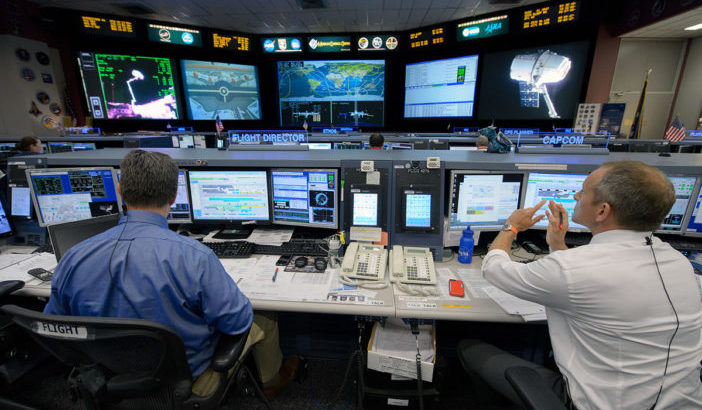
Dos estudiantes mexicanos se integrarán a programa de investigación en el Ames Research Center de la NASA en San José, California, informó la Agencia Espacial Mexicana (AEM) organismo descentralizado de la Secretaría de Comunicaciones y Transportes (SCT).

Se trata del tamaulipeco Edgar González Zaleta, la carrera de Ingeniería Mecatrónica de la Universidad Tecnológica de Altamira y Guillermo Del Castillo Hoffman, de la Licenciatura en Ingeniería en Computación de la Universidad Autónoma Metropolitana (UAM).

El primero se integrará a al programa “Soporte Avanzado de Vida”, enfocado a reciclaje de agua en el espacio, con potenciales aplicaciones en tierra.

Por su parte, Del Castillo Hoffman participará en el programa “Web World Wind”, una plataforma de información geoespacial.

Ambos estudiantes se suman a la lista que la AEM comenzó a enviar a partir de agosto de 2015 para formarse a la NASA en el marco de un convenio educativo celebrado con la agencia estadounidense.

“Hemos dado los primeros pasos para tener jóvenes que viajaron a formarse con apoyo de becas mayormente públicas, que volvieron al país, y que además continuarán en redes de trabajo con equipos multinacionales”, comentó Javier Mendieta Jiménez, director general de AEM.

El científico destacó que los mexicanos harán investigación y trabajo de ciencia en línea, “desvaneciendo las fronteras de los países a través de Internet y la infraestructura en telecomunicaciones”.

Y confió en que la formación de nuevas generaciones de capital humano, permitirá a México consolidarse como potencia aeroespacial en América Latina.

“Gracias a la gran visión y apoyo de la SCT, la AEM ha podido sumarse al exhorto del señor presidente (Enrique) Peña Nieto para formar jóvenes talentos en el sector aeroespacial, pues serán ellos, como quienes ahora van a NASA, quienes podrán consolidar el liderazgo de México a mediano y largo plazo”, subrayó.

Estudiantes que precedieron a González Zaleta y Del Castillo Hoffman, han regresado a México para concluir sus estudios y compartir la experiencia en sus universidades.

Fuente noticia: http://www.proceso.com.mx/443244/envian-a-dos-estudiantes-mexicanos-a-programa-la-nasa

Foto: Nasa

Comparte este contenido:

El ‘doctor Frankenstein’ anucia dónde se realizará el primer trasplante de cabeza humana

Fuente: RT / 8 de junio de 2016

El cirujano italiano Sergio Canavero, que se prepara para realizar el primer trasplante de cabeza de un ser humano en la historia, ha anunciado que llevará a cabo la operación en Alemania, escenario también de la creación de Frankenstein de la novelista Mary Shelley.

«La estructura mecánica que conectará la médula espinal se produce en Alemania. ¿Por qué no dar este salto en la historia médica allí?», dijo el neurocirujano citado por el portal británico Daily Star.

Aunque inicialmente el primer paciente en experimentar un trasplante de cabeza iba a ser Valeri Spiridónov, un ruso de 30 años que sufre de atrofia muscular espinal, Canavero anunció que será un paciente chino quien reciba el primer trasplante de este tipo en una operación que tendrá lugar en diciembre de 2017.

Enlace original: https://actualidad.rt.com/ultima_hora/209670-frankenstein-desvela-pais-trasplante-cabeza


Comparte este contenido:

FMI El Gran Apretón: la presión demográfica mundial

Fuente: Fondo Monetario Internacional / 8 de Junio de 2016

El presente número de F&D se centra en la interacción de dinámicas que determinan los cambios demográficos de hoy en día. Los autores examinan las múltiples fuerzas —envejecimiento, migración, urbanización y longevidad— que inciden en el cambiante panorama demográfico mundial.

  • El profesor de Harvard David E. Bloom estudia las fuerzas determinantes del crecimiento demográfico actual y propone diversas opciones para gestionar lo que él denomina “la más significativa transformación demográfica en la historia de la humanidad”.
  • Benedict Clements, Kamil Dybczak y Mauricio Soto examinan las consecuencias fiscales de la contracción y el envejecimiento de la población en las economías avanzadas y de mercados emergentes.
  • Yuko Kinoshita y Kalpana Kochhar plantean que la mujer puede ayudar a contrarrestar los problemas del envejecimiento poblacional y una fuerza laboral en disminución.
  • Vimal Thakoor y John Wakeman-Linn muestran que África subsahariana puede aprovechar las ventajas que ofrece su crecimiento poblacional, si la transición demográfica se gestiona adecuadamente.

Además, el Primer Subdirector Gerente del FMI, David Lipton, escribe sobre la necesidad de reformas fiscales audaces en China; Masood Ahmed analiza el derrumbe de los precios del petróleo; y Paul Cashin, Kamiar Mohaddes y Mehdi Raissi examinan el impacto económico del fenómeno de El Niño. Rabah Arezki, Frederick van der Ploeg y Frederik Toscani marcan un nuevo rumbo con un artículo sobre la última tendencia en hallazgos de recursos naturales. Peter Walker ofrece una semblanza de David Card, cuyas investigaciones sobre salarios mínimos, inmigración y educación desafían los postulados convencionales.

Y para cerrar, Marina Primorac, Jefa de Redacción de F&D, rinde tributo al ídolo pop David Bowie y nos cuenta cómo el rostro del músico llegó a adornar “la libra de Brixton”, una moneda local que circula en el barrio del sur de Londres donde nació Bowie.

FMI: El gran apretòn

Comparte este contenido:
Page 1508 of 1684
1 1.506 1.507 1.508 1.509 1.510 1.684