Page 1654 of 1669
1 1.652 1.653 1.654 1.655 1.656 1.669

Movimiento Magisterial Jalisciense, Plantea Ruta de Resistencia Contra la Reforma Educativa

México/21 marzo 2016/Autor: Oswualdo Antonio González/ Fuente: http://insurgenciamagisterial.com/

Compartimos el comunicado de los compañeros del Movimiento Magisterial Jalisciense, derivado de su reunión extraordinaria celebrada el 19 de marzo del presente año. La estrategia que plantean los compañeros maestros de Jalisco, puede servir como ejemplo de ruta para otros contingentes movilizados en el país.

ACUERDOS

1.- Se nos informa por parte del abogado, que llegaron a su oficina las notificaciones de cese contra 45 compañeros y compañeras que habían sido notificados del inicio del proceso administrativo en su contra. Señala que este es otro acto ilegal y violatorio de los derechos laborales y humanos de quienes fueron cesad@s, pues la resolución es un formato elaborado por la SEP con la misma respuesta para tod@s, en donde no se tomaron en cuenta los argumentos jurídicos que presentamos contra las notificaciones, quedando claro que esta es una decisión tomada por consigna de manera arbitraria, caprichosa y autoritaria por el gobierno.

2.- Se reitera que todo el procedimiento, desde la notificación para la evaluación, el inicio del proceso administrativo, como esta resolución, están montados sobre un cúmulo de irregularidades, violaciones a la Constitución, a diferentes normas y leyes, por lo que se cuenta con los elementos suficientes para revertirlos mediante las demandas y juicios que se interpondrán.

3.- En estos momentos el abogado se encuentra afinando la defensa jurídica que se utilizará para combatir esta resolución, la cual se nos informará en lo inmediato, así como los documentos y datos que se necesitarán para llevarla adelante.

4.- El mecanismo para la información, la recepción de los documentos y la retroalimentación de este proceso jurídico que iniciaremos para la defensa de nuestr@s compañer@ cesad@s, será el mismo que se utilizó para la respuesta al proceso administrativo, es decir, mediante los compañeros y compañeras responsables de cada municipio, se recibirán los documentos, los cuales harán llegar al correo del MMJ, para que el abogado tenga acceso a ellos.

5.- Se establece un FONDO ESTATAL DE RESISTENCIA, que será exclusivamente para el apoyo de los 45 cesad@s. Será un fondo único, por lo que se solicita a los municipios no abrir cuentas o fondos municipales. Funcionará de la siguiente manera:

A).- Es obligación de tod@s l@s integrantes del MMJ apoyar y participar en la constitución y sostenimiento de este fondo.
B).- El fondo iniciará con una aportación mínima obligatoria de 100 pesos quincenales por todos quienes integran el MMJ. Se entiende que esta aportación es la mínima, pero quienes puedan aportar una cantidad mayor deberán de hacerlo.
C).- Se invitará, en una acción solidaria, de apoyo y reconocimiento a los compañer@s cesad@s, a todo el magisterio del Estado a aporta a este FONDO ESTATAL DE RESISTENCIA, de manera voluntaria lo que puedan aportar, pues esta lucha es de todo el magisterio.
D).- Los compañeros y compañeras de La Asociación de Personal de Confianza del Ayuntamiento de Guadalajara, AC, en una muestra de esta solidaridad, aportará 10 mil pesos, para contribuir al inicio de este FONDO DE RESISTENCIA.
E).- Se nombra una comisión de 4 compañeros y compañeras de los 45 cesad@s, quienes serán los responsables de organizar y administrar este FONDO DE RESISTENCIA.
F).- Se creará un grupo de whatsap exclusivamente de cesad@s, a través del cual se mantendrá la coordinación, información y retroalimentación entre el grupo.
G).- El martes 22 de Marzo, por la mañana se abrirá una cuenta en Bancomer, la cual se les hará llegar inmediatamente para que inicien las aportaciones. Es necesario que para el viernes 25 de Marzo, los compañeros y compañeras, ya cuente con el primer apoyo, por lo que se urge a que durante el miércoles 23 y jueves 24 se realicen los depósitos para poder cumplir con este acuerdo.
H).- Cada compañero y compañera que aporte, conservará su ficha de depósito como comprobante, además, enviará una copia de la misma al grupo de whatsap, para que la comisión pueda llevar el registro, así como otra copia al correo del MMJ, (movimientomagisterialjaliscien@gmail.com), para organizar un archivo con todas las aportaciones.
I).- Cada compañero y compañera cesad@, obtendrá una tarjeta del Oxxo, y le enviará el número de tarjeta a la comisión mediante el whatsap, para que le depositen a esa tarjeta su apoyo.
J).- La comisión elaborará un informe mensual del FONDO ESTATAL DE RESISTENCIA que se hará del conocimiento del MMJ, para que haya transparencia en el manejo de dicho fondo, y además, para saber cómo vamos con el apoyo y la solidaridad, para si es necesario, tomar medidas para mejorar. Este informe se incluirá en el archivo que se organice del FONDO.
K).- Esta aportación mínima será inicial, si vemos que los recursos son pocos e insuficientes, buscaremos la posibilidad de incrementar las aportaciones y obtener formas alternativas de incrementar los recursos.
L).- Cuando los compañeros y compañeras cesad@s sean reinstalados en sus puestos nuevamente y reciban el pago de salarios y prestaciones retenidos durante el tiempo del juicio, regresarán el dinero que hayan recibido durante ese tiempo, con el cual se creará un fondo que se utilizará para apoyar de manera inmediata a quienes puedan encontrarse en la misma situación.
6.- Se acuerda que las principales acciones a realizar durante esta semanas siguientes, serán los denominados “Encuentros con el Pueblo”, que consistirá en realizar plantones informativos en plazas públicas, con sonido, volantes y mantas, para informar a la sociedad en su conjunto del despido de docentes, las causas, la lucha del MMJ y la voluntad de lucha y resistencia del magisterio, así como sumarlos a la lucha magisterial y popular. En la próxima reunión se determinará en donde dónde iniciarán estos Encuentros con el Pueblo. Estas acciones deberán de realizarse también en todos los municipios. Esta labor deberá de realizarse de manera más intensiva también con los padres de familia al regreso de las vacaciones.
7.- Se acuerda convocar a una rueda de prensa el próximo martes 22 de Marzo a las 10:00 am, en El Hotel Francés. Se informará de los ceses, de que esto demuestra la actitud represiva, violenta y vengativa de la SEP contra el magisterio que lucha, pues no ha podido derrotarnos y ponemos cada vez más contra las cuerdas su reforma. Así mismo, de lo que estamos realizando para resistir y la voluntad de mantener la lucha hasta derogar la reforma.
8.- Se acuerda que la próxima reunión sea el próximo lunes 28, a las 10:00 am, en el local del Sindicato del Siapa, de 12 de Octubre 670, entre Motolinía y fray Antonio de Segovia.

NO ES TIEMPO DE DETENERNOS NI VOLVER ATRÁS, SINO DE SEGUIR CAMINANDO Y CONSTRUYENDO. NO PARAREMOS DE ANDAR, HASTA QUE LA DIGNIDAD SE HAGA COSTUMBRE.

ATENTAMENTE
MOVIMIENTO MAGISTERIAL JALISCIENSE.

Fuente de la Noticia e Imagen:

Movimiento Magisterial Jalisciense, plantea ruta de resistencia contra la Reforma.

Comparte este contenido:

Maestros de Puebla, Despedidos por No Aplicar ENLACE, Ganan Juicio.

México – Tehuacán/ 21 marzo 2016/Autora: Elizabeth Rodríguez Lezama. La Jornada de Oriente/ Fuente: http://insurgenciamagisterial.com/

Los siete docentes que hace tres años fueron despedidos, por negarse a aplicar la prueba ENLACE a sus alumnos, ganaron la demanda laboral que interpusieron para exigir la reinstalación en sus cargos, adelantó Ramiro Arciga Martínez, quien es uno de los afectados.

Se mostró satisfecho por el resolutivo del Tribunal de Arbitraje, el cual indica que los profesores despedidos deben ser reinstalados y recibir el pago de salarios que no se les entregó desde el momento de su despido.

La exigencia de esos directores, fue que se les reinstale en el mismo cargo y en la misma escuela en la que se encontraban al momento de su despido, de modo que Ramiro Arciga podría regresar a dirigir la primaria de San José Las Minas, perteneciente al municipio de Santiago Miahuatlán.

No fueron pocas las carencias que han pasado esos profesores, llevan tres años sin percibir salario, los mismos que tienen de lucha, lo cual implica cubrir recursos económicos de traslado, alimentación y hospedaje para poder acudir puntualmente a cada una de las diligencias en las que se les requiere.

La mayoría son jefes de familia, con hijos estudiando, lo cual implica responder a varios compromisos monetarios, los cuales enfrentan con grandes dificultades por no tener un trabajo fijo.

Son dijo, el ejemplo de que cuando se tiene razón y la verdad de su parte las luchas se llevan a buen término.

Referentes de la noticia:

Fuente: http://www.lajornadadeoriente.com.mx/2016/03/21/docentes-despedidos-no-presentar-la-prueba-enlace-ganaron-juicio-deben-reinstalados/

Fotografía: revistamanera

Fuente de la Noticia:

Maestros de Puebla, despedidos por no aplicar ENLACE, ganan juicio.

Comparte este contenido:

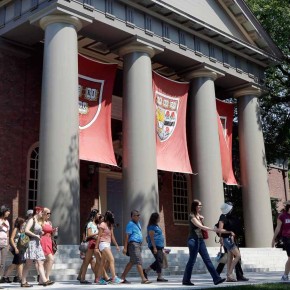
Yale Is Depriving Graduate Students of Their Rights

Yale está privando a estudiantes graduados de sus derechos

The Nation. Instigating Progress Daily/03-18-2016/Por Michelle Chen

Resumen: La universidad neoliberal pone énfasis en el poder corporativo en
lugar de la libre investigación, es por ello, que los miembros de la
Organización de empleados y estudiantes entregaron una petición a las
autoridades de la Universidad de Yale durante una protesta llevada a cabo
en el campus de New Haven, Connectitcut, para exigir la elección sindical,
con la que aspiran gozar de los beneficios: guarderías asequibles (las
guarderías presentes en el campus cobran honorarios que ascienden a dos
tercios del salario de un investigador graduado), tratamiento de igualdad
de género y diversidad racial en la contratación; la compensación salarial
equitativa, la financiación de becas para la investigación, garantía en los
pagos de salarios y mejores servicios de salud mental, desestabilización de
la fuerza laboral docente, compensación equitativa y financiación de becas,
servicios de salud mental. Beneficios que han venido siendo boicoteados por
las grandes corporaciones que manejan la Universidad, las cuales han
orientado a la educación superior hacia la reproducción de la fuerza
corporativa en vez de una verdadera investigación libre, amenazando a los
programas de postgrado por un lado con la mercantilización de la educación
superior y, por otro, las justas reivindicaciones de los empleados.


Yale’s epic labor battle between graduate student employees and the
administration has cycled through a generation of graduating classes and
many doctoral candidacies, and graduate student organizers have finally
officially named their union Local 33. A jubilant chartering convention last
week in New Haven certified that an overwhelming majority of the proposed
unit have signed cards signifying support for unionization. The move puts
an official seal (blessed by a number of state officials and the union
leadership) on the more than 1,000 signatures the group gathered for a
petition demanding a fair union election last year.

Graduate Employees and Students Organization (GESO)
chair Aaron Greenberg said that the formal naming of Local 33 shows it is ready to unionize with or without
an official nod from the administration, and hope to spur the debate
forward by taking the initiative, symbolic though it may be:

“We are not going to wait for Yale to give us an election to act like and
be the union that we are,” he tells *The Nation*. “And I think a lot of the
issues that we are fighting about, whether it’s access to childcare,
adequate mental healthcare, race and gender equity, security of pay. These
are issues that are not going to wait for us to have a union. These are
really pressing for our members. And we’re ready to fight on them.”

The chartering of the local doesn’t
seem to have changed the administration’s position. However, a spokesperson
for Yale says via email that it would respect the traditional secret ballot
process, overseen by the National Labor Relations Board, and “officially
branding GESO as Local 33 is not perceived at Yale as anything new or
different, and it has no effect on the status of graduate students.”

As a legal matter, GESO’s institutional power and legal status remains
tenuous without any official recognition of the union from the university.
Under the precedent of “Brown II,” the NLRB has suppressed graduate labor organizing with a blanket denial of
collective bargaining rights at private higher education institutions. The
2004 ruling thus left union recognition at the employer’s discretion,
handing the mega-corporations that run Yale and other campuses wide
latitude to ignore the growing clamor for union representation among
graduate assistants and researchers.

But soon Yale (where the author was once an undergraduate) may have no
choice but to come to the bargaining table with Local 33, because, as were
ported last year, the graduate worker unions at Columbia University and the New School
have taken their demand for a union to the NLRB in Washington to secure their union rights and overturn
Brown. They’re backed by many labor unions and other graduate workers
—including those at public universities, where unionization is governed under separate
state labor laws, and the new UAW graduate workers union
at New York University.


Over the past decade, one could say the NLRB stranglehold has worked
exactly as the victors intended: On the neoliberal campus, working
conditions have grown more precarious, and higher education in general has oriented toward the reproduction of corporate power rather than genuine free inquiry. Educational borrowing has soared,
with typical 2014 debt loads for graduate-level students ballooning
to about $57,600, the bulk of it from graduate programs. As for paying off
that debt through an academic career, decent-paying, tenure-track positions
are perilously scarce, while the destabilization of the workforce shunts
former teaching assistants into an expanding underclass of underpaid
adjuncts. All these stressors are compounded by competitive and alienating campus
climates that often offer inadequate mental health and social supports.

University administrators argue that collective bargaining,
and the adversarial labor-management relationship, would undermine
conventional scholarly pedagogical relationships. Yale (though GESO is not
participating directly in the NLRB case) similarly contends that
graduates don’t need a union, since they are already compensated generously
and can address labor-related issues through administrative channels.

Graduate student labor advocates, however, say this romanticized logic
ignores real power relationships in the graduate workforce. In its recent
reply brief , the Columbia Graduate Workers union argues, “the supporters of Brown represent
the viewpoint of executives and administrators who…have seized upon
imagined threats to academic freedom and to mentoring relationships to deny
bargaining rights to their employees.” Meanwhile, the growing tendency for
under-resourced departments to exploit graduates, coupled with
inadequate labor protections, in turn constrain and distort their
relationship to the surrounding academic community. After all, it’s difficult to immerse
yourself in the inspired practice of intellectual apprenticeship when
working a night-shift restaurant job, teaching undergraduate courses on an
erratic schedule, and researching your thesis, while living off food stamps under
a life time of debt. Yale’s GESO has presented a multipronged agenda
focused on both academic and labor
issues. While demanding more equitable compensation and secure fellowship funding,
graduates have also criticized gaps in mental health services, which they
say are fraught with “long wait times and inadequate options for treatment”
for the estimated half of graduate students who seek help. They’re also
calling for affordable childcare, noting that “current on-campus daycares
charge fees that amount to two-thirds of a graduate researcher’s pay.” GESO
is also campaigning around issues of gender and racial diversity in hiring.

A quarter-century after Yale graduate students
kick-started the incipient labor group, TA Solidarity, campus organizing has blossomed in many forms across
campuses nationwide, including unionization drives for non-tenure-track
faculty (who currently make up the majority of the academic workforce) at public and
private institutions, from large state schools to underfunded historically
black colleges. Undergraduates are rallying with the Fight for 15 for
campus workers, both students and locals. And with national campaigns like the SEIU-backed
Faculty Forward, an emergent coalition of faculty, students and staff are
sparking critical conversations on how academic labor fits in the “new
economy,” and how to resist the corporatization of higher education, in theory—by protecting their
right to free inquiry—and in practice—by ensuring their rights at work are
respected.

So the graduate workers now going before the NLRB are inking one footnote
in a new chapter of educational activism—not just disrupting the ivory
tower, but reclaiming their campus.

Fuente de la noticia e imagen:
www.thenation.com/article/yale-is-depriving-graduate-students-of-their-rights/


Comparte este contenido:

Competent teachers in SDG context: Critical reflection and systemic support

Marzo 21 de 2016/ OVE Noticias/ El Sr.  Jinhee Kim del Korean Educational Development Institute intervino en el 8vo Foro Internacional de Diálogo de Políticas Docentes para hablar sobre las competencias de los docentes en el contexto de la meta 4 de los Objetivos de Desarrollo Sustentable 2030: reflexión crítica acordados por las Naciones Unidas en septiembre de 2015.  En el portal OVE continuamos publicando los esquemas de las intervenciones de los panelistas en tan destacada cita que recién acaba de concluir en México.  Pueden acceder a lo expuesto por el Sr. Kim ingresando al siguiente link:

Competencias de los maestros en el contextos de lo ODS 2030: reflexión crítica


Comparte este contenido:

Sylvia Schmelkes; Desempeño docente, El estado de la cuestión

En el marco del 8vo Foro Internacional de Dialogo de Políticas Docentes la Dra. Silvia Schmelkes directora del Instituto Nacional de Evaluación Educativa (INEE) de México expuso la experiencia mexicana en el monitoreo de la calidad educativa.

Dada la importancia del debate realizado por el International task force on teachers en el marco del seguimiento de la Meta 4 de los Objetivos de Desarrollo Sustentable aprobados en Naciones Unidas en septiembre del 2015, hemos decidido en otrasvoceseneducacion.org publicar las distintas exposiciones que alli se realizaron.  En esta oprtunidad publicamos la intervención de la Dra. Schmelkes.


Desempeño docente El Estado de la cuestión


Desempeño Docente: El Estado de la cuestión

Comparte este contenido:

Universities Are Becoming Billion-Dollar Hedge Funds With Schools Attached

Las universidades se están convirtiendo en mil millones de dólares los
fondos de cobertura escuelas adscritas

TheNation/03-08-2016/Por: Astra Taylor

Resumen: A propósito de la disminución del apoyo estatal a la educación superior,
las Universidades públicas y no públicas de los EE.UU., vienen invirtiendo
en fondos de cobertura, que le permite a los miembros de la junta hacer
negocios con la universidad. Mientras la matrícula de las universidades
aumenta, la deuda de éstos con las universidades asciende también
vertiginosamente, lo cual obliga a disminuir el grado de la universidad. El
estado de la educación superior es un ejemplo de la austeridad en los
Estados Unidos, que beneficia a los banqueros con el fundamentalismo en el
libre mercado. Este mecanismo de enriquecimiento bajo los fondos de
cobertura, se esconde en la excusa que proporcionan una “cobertura” para
proteger las carteras de los inversores en tiempos difíciles, pero en
realidad, son vehículos libres de supervisión e impuestos, lo que significa
que no están regulados, se enfrentan a requisitos mínimos de divulgación y
pueden participar en todo tipo de apuestas arriesgadas y manipulaciones del
mercado. No hace mucho tiempo, las universidades eran administradores
cuidadosos de ingresos por donaciones y evitar así este tipo de
situaciones. A principio de los 70, universidades como Harvard y Yale,
idearon políticas de inversión éticas para las dotaciones que consideraban
como impacto social. Sin embargo, en los 90 las cosas empezaron a cambiar,
pues, las escuelas públicas y privadas se convirtieron en jugadores de alto
riesgo superando la recaudación de fondos como el principal motor de
crecimiento de la dotación. Con ello el tema devino en cascada al observa
que instituciones educativas públicas exentas de impuestos hacen negocios
con empresas para esquivar impuestos en paraísos fiscales. Las que más se
benefician son las escuelas de élite quienes atraen a mayores donantes y
ganan mayores rendimientos de las inversiones, polarizando aún más el
sistema educativo. En la noticia, Taylor, destaca el informe titulado
«logros educativos y la crisis financiera,» de Joshua Humphreys, presidente
y miembro principal Croatan Instituto, quien apunta a una consecuencia aún
más inquietante de las prácticas de inversión de riesgo. Al adoptar
tácticas especulativas comerciales, fondos de cobertura y de capital
privado, «dotaciones jugaron un papel en magnificar ciertos riesgos
sistémicos en los mercados de capitales». En otras palabras, la dotación no
eran simples víctimas inocentes de la crisis financiera de 2008, pero en
realidad ayudaron a activarlo.


Have you heard the latest wisecrack about Harvard? People are calling it a
hedge fund with a university attached. They have a point—Harvard stands at
the troubling intersection between higher education and high finance, with
over 15 percent of its massive $38 billion endowment invested in hedge
funds. That intersection is getting crowded. Yale’s comparatively modest
$26 billion endowment, for example, made hedge fund managers $480 million
in 2014, while only $170 million was spent on things like tuition
assistance and fellowships for students. “I was going to donate money to
Yale. But maybe it makes more sense to mail a check directly to the hedge
fund of my choice,” Malcolm Gladwell tweeted last summer, causing a
commotion that landed him on NPR

What has gotten less attention is how it’s not just universities with
eating clubs and legacies that are getting into the game. Many
«public» universities are also doing so, in part because state support for education has been
cut, but also to compete with richer schools by rapidly increasing their
more limited wealth. Though the exact figure is hard to determine, experts
I consulted estimate that over $100 billion of educational endowment money
nationwide is invested in hedge funds, costing them approximately $2.5
billion in fees in 2015 alone. The problems with hedge funds managing
college endowments are manifold, going well beyond the exorbitant—some
would say extortionate—fees they charge for their services.

Consider the problem of conflict of interest on endowment boards of both
public and private colleges. One 2011 survey showed that 56 percent of
endowments allowed board members to do business with the university. In
2013, Dartmouth came under fire when it was revealed that some
trustees—including Stephen F. Mandel Jr., who was both chairman of the
board of trustees and head of the hedge fund Lone Pine Capital—also managed
investments for the school. The trustees were blasted, in a widely cited
open letter, for recycling a portion of their “sky high fees” back to the
university as “donations” for which they were often rewarded by having a
building named in their honor.

Marcie Smith, executive director of the Responsible Endowment Coalition,
calls this a “rage-inducing picture.” “Universities raking in a record $40
billion in 2015, Wall Street stacked boards of directors approving
self-dealing investments, all while tuition continues to rise, student debt
continues to mount, and value of a college degree declines,” she says. “The
state of higher education is yet another example of austerity in America,
and signals the dangerous creep of a free-market fundamentalism that thinks
all institutions in society exist to enrich the bankers.”

Combine all of the above with the recent stories about hedge fund managers
being exploitative sociopaths—the kind willing to inflate the price of
lifesaving medicine or force elementary schools in Puerto Rico to close to
make a buck—and one wonders why public institutions are doing business with
them at all. Given the history of successful college divestment movements,
one can easily imagine a provocative next step: campaigns that aim to force
universities to stop doing business with hedge funds altogether. While they
declined to give specifics since they are still in the planning phases,
organizers I spoke to said just such a movement is brewing.

All told, hedge funds have over $3 trillion worth of assets under
management globally. In theory, they exist to provide a “hedge” to protect
investor portfolios in tough times. Hedging, seen in this light, is simply
one investment strategy among many. In practice, however, hedge funds are
alternative investment vehicles that tend to be housed offshore to avoid
oversight and taxes, which means they are largely unregulated, face minimal
disclosure requirements, and can engage in all sorts of risky bets and
market manipulations.

Not long ago, universities were, in the words of one report, “careful
stewards of endowment income” and avoided such shenanigans. In the early ’70s,
Harvard and Yale spearheaded committees on investor responsibility and
devised ethical investment policies for endowments that considered things
like social impact. In the ’90s, things began to change. Many schools,
private and public, have become high-risk gamblers, with finance overtaking
fundraising as the main engine of endowment growth. A more aggressive
approach to investing paid off—until the economy melted down and caused
some endowments to lose up to 30 percent of their value.

But experts and activists have other concerns. Some commentators, for
example, are troubled by public tax-exempt educational institutions doing
business with companies notorious for dodging taxes in offshore havens.
More generally, tax exemption is a giant government subsidy that
disproportionately benefits elite schools (the ones that attract the
biggest donations and earn the largest investment returns), thus further
polarizing an educational system already separated into haves and have-nots.

And it gets worse. In a report called “Educational Endowments and the
Financial Crisis,” Joshua Humphreys, president and senior fellow at Croatan
Institute, points to an even more disturbing consequence of risky
investment practices. By embracing speculative trading tactics, exotic
derivatives, hedge funds, and private equity, “endowments played a role in
magnifying certain systemic risks in the capital markets,” Humphreys
writes. What’s more, their initial success encouraged other institutional
investors (think pension funds, sovereign wealth funds, and foundations) to
follow in their footsteps, amplifying the system’s overall volatility and
instability. In other words, endowments were not just innocent victims of
the 2008 financial crisis, but actually helped enable it.

“Hedge funds, as they were initially conceived, have a potential role to
play in a long-term endowment seeking to ‘hedge’ certain risks,” Humphreys
told me, making clear he’s hesitant to write them off entirely. “But their
arbitrarily high fee structures, the excessive compensation of their
managers, and their deliberate evasion of taxes and transparency make hedge
funds easy targets for stakeholders rightly concerned about the simmering
crisis of higher education today.”

Last summer, Garrett Shishido Strain, a 27-year-old graduate student in
public policy at the University of Washington, filed a public records
request to learn exactly how much of the university’s $3.1 billion
endowment is invested in hedge funds. After some months, officials finally
claimed the information was “exempt from public inspection” on the grounds
that “such information, if revealed, would reasonably be expected to result
in loss to the University of Washington consolidated endowment fund or to
result in private loss to the providers of this information.” When reached
for comment, Ann Sarna in the school’s Treasury Office claimed to have no
knowledge of Strain’s request. First she said the information is available
to the public on the university’s website—it is not—and then she said she
could not provide a figure. “We don’t track hedge funds as a separate
investment strategy,” she wrote in an email.

Strain is disappointed with the administration’s stonewalling, but not
surprised. A report by Preqin, an organization that provides research to
investors, states that the school’s investment in hedge funds is around
$500 million. Given that hedge funds operate on what’s called the “2 and
20” model, which means they charge a baseline of 2 percent of assets under
management while taking 20 percent of any profits, the school could be
spending well over $10 million a year on hedge fund fees alone. Meanwhile,
administrators only recently acquiesced to the demands of student,
custodial, and food service workers who have been rallying under the banner
“raise wages, not tuition,” finally agreeing to pay Seattle’s celebrated
$15 minimum wage—but not until 2017.

Strain, however, doesn’t just find it objectionable that money managers are
so lavishly compensated while staff are underpaid and students overcharged.
He also objects to the fact that by funneling money to hedge funds, public
universities are, incongruously, supporting the antisocial policies hedge
fund managers are notorious for rallying behind: rolling back corporate
regulation, slashing the minimum wage, eliminating pensions, privatizing
public schools, trammeling unions, cutting taxes for the wealthy, and
forcing broke nations further into insolvency (through “vulture” funds that
specialize in distressed sovereign debt).


This is true for the University of Washington specifically. Public records
show that it does business with various hedge funds—including the
aforementioned Lone Pine Capital—associated with the Managed Funds
Association, “the voice of the global alternative investment industry.” Or,
to be more blunt, the industry’s lobbying arm.

And what does the voice of industry call for? According topublic filings,
the Managed Funds Association has crusaded against various policies
designed to curb inequality. For example, in 2014 it fought the Inclusive
Prosperity Act, which aimed “to impose a tax on certain trading
transactions to…stop shrinking the middle class.” The act would have levied
a small tax on financial transactions, including stock trades, and funded
things like low-income housing assistance, public transit, and—here’s the
kicker—student debt relief.

The time has come for students to connect the dots between ballooning
student debt, the poor treatment of campus workers, and the obscene wealth
of hedge fund oligarchs. Once they do, they can fight back by following in
the footsteps of recent mobilizations against the financial sector. In
2013, a group called Kick Wall Street Off Campus forced Minnesota’s
Macalester College to move some, though not all, of its money out of Wells
Fargo to protest the bank’s role in community foreclosures. In June of last
year, Santa Cruz County pulled together to get its money out of five giant banks—including Citicorp, JPMorgan Chase, and Barclays—that pleaded guilty last spring to felony charges that they
rigged the world’s foreign-currency market. Similar campaigns could easily
be waged against university endowment partnerships with hedge funds.

Of course, kicking hedge funds off campus won’t solve the college crisis or
instantly reform the financial sector. Nevertheless, targeting hedge funds
remains a promising tactic for uniting students and workers against hedge
funds’ efforts to increase inequality, and using our tuition dollars and
public subsidies to do so. This tactic would be especially effective at
public institutions, where divestment campaigns should be coupled with
calls for increased state funding for higher education and better pay for
low-wage workers.

“It’s easy to feel powerless, but hedge funds need university endowments,
just like they also need public pensions. If that money was taken away, it
would really affect them,” Strain says, and he’s right. Campus divestment
movements have a proven track record, going back to campaigns against
apartheid in the 1980s. Over the last few years, climate activists have
pressured school trustees to divert trillions of dollars from fossil fuels,
and last year Columbia became the first university to divest from private
prisons. Hedge funds deserve to be next on the chopping block.

Fuente de la noticia:
www.thenation.com/article/universities-are-becoming-billion-dollar-hedge-funds-with-schools-attached/


 

Comparte este contenido:

The OECD Teacher Knowledge Survey: Implications for Teachers and Teacher Education

Continuando con el Ciclo de Presentaciones realizadas por altos funcionarios en el marco del 8vo Foro Internacional de Dialogo de Políticas Docentes, en esta oportunidad publicamos el texto de la disertación realizada por la Sra. Sonia Guerriero de la OECD sobre un estudio en progreso respecto al impacto de la motivación docente en el desempeño de la profesión y sus implicaciones en la formación de docentes

La Encuesta de Conocimiento de la OCDE Maestro: Implicaciones para los profesores y la formación del profesorado


Comparte este contenido:
Page 1654 of 1669
1 1.652 1.653 1.654 1.655 1.656 1.669