Page 799 of 1671
1 797 798 799 800 801 1.671

Canada: What to teach your preschooler about internet safety

América del Norte/Canada/Diciembre del 2017/https://theconversation.com

Fifteen years ago, parents and caregivers did not have to worry about teaching pre-school aged children about internet safety. A new reportprepared for the Children’s Commissioner of England suggests this time has passed.

Children now live in a digital age, which means internet access is a daily part of life for many young children around the world.
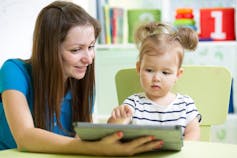
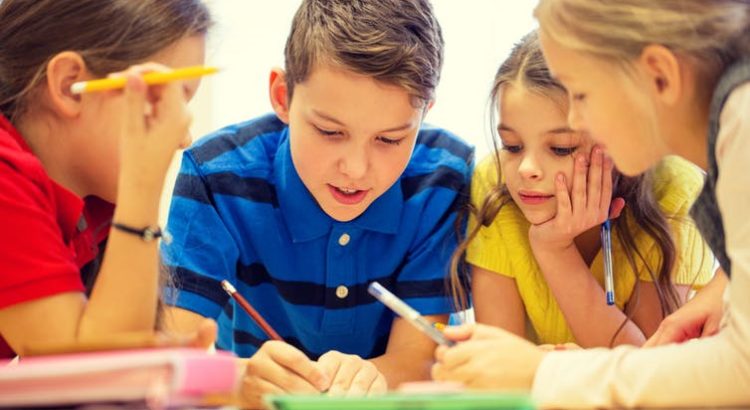
It’s easier for very young kids to go online now, because touchscreen technology requires less fine motor skills. Shutterstock

Touchscreen technologies have changed how accessible the internet is for very young children, particularly between the ages of four and five. It’s now quicker and easier to connect to the internet using these technologies, as they don’t require the same level of fine motor and literacy skills used to navigate a mouse and keyboard.

More recently, the Internet of Things has become widespread. The Internet of Things uses small chips embedded in everyday items, including children’s toys, to communicate information to the net. Children’s dolls, teddy bears and figurines can record their play and upload this information as data to the web. This can occur without children’s consent because they wouldn’t be aware they’re generating data.


Read more: Six things every consumer should know about the ‘Internet of Things’


The three main risks

Internet safety addresses three main risks faced by children online. These are contact, conduct and content risks:

  • contact risks involve children talking to unknown people on the internet. Contact risks also include the harvesting of children’s data, such as recording their activity on an online game
  • conduct risks are about behaving respectfully online and learning to manage digital footprints
  • content risks are concerned with the type of material children view and consume when accessing the internet.

For pre-school aged children, content risks include accidentally viewing inappropriate content such as pornography. Content also considers the quality of material made available to children. How people are represented in society is mirrored back to children through the media they consume. Quality content for young children has been a concern of the Australian Council on Children and the Media for many years.


Read more: The way your children watch YouTube is not that surprising – but it is a concern. Here are some tips


Contact risks are most likely to occur for pre-school aged children in the form of pop-ups. Children of this age can also be active in virtual worlds, such as Pocoyo World or Club Penguin, where they can engage with other members. Children may not always know the members they are playing with in these worlds.

Conduct involves learning how to be respectful online. Parents can model good conduct behaviours to their children by always asking permission to take photos before posting to social media.

Children as young as four are now online

Internet safety in early childhood is a new area of research because, until now, children as young as four weren’t able to easily access the internet.

A recent study conducted with 70 four-year old children examined what children understand about the internet and being safe online. In this study, only 40% of children were able to describe the internet. This was despite all of the children having access to internet at home, predominately through touchscreen technologies.

Children’s understandings of the internet were associated with their experiences going online and using technologies with their families. They defined the internet as being “in the iPad” or something they used “in the lounge room” to “play games”.

Children were also aware the internet “was used by Mummy for her work” or “by my big sister for her emails”. Some 73% of the children said they would tell someone their address on the internet. And 70% said they would also tell someone how old they were. A further 89% of children indicated they would click on a pop-up even if they did not know what the pop-up was about.


Parenting young children for internet safety

Because children face content, contact and conduct risks online, they require a basic understanding of the internet. The most important thing parents can teach their children about internet safety is that “the internet” means a network of technologies that can “talk” to each other.

This is like teaching children to be sun smart. First, we explain the sun can harm our skin. Next we teach children to wear a hat, a long-sleeved shirt and sunscreen to protect themselves.

For internet safety, we should first explain the internet uses many technologies that share information created and collected by lots of people. Then we can teach our children how to protect themselves online. Some things to teach your child are:

  • seek adult help when you encounter a pop-up
  • only use adult approved sources for content
  • don’t share personal information online
  • try to be near an adult when using a device
  • only click on apps and tabs a parent or caregiver has set up for you.

The internet forms a large part of daily life for many young children. From watching their favourite YouTube clips, to playing games, to talking with a long-distance relative over video-conferencing, being online is not much different to a young child than being offline. Being safe in both spaces is possible with adult support.

Fuente:https://theconversation.com/what-to-teach-your-preschooler-about-internet-safety-87618

Fuente imagen:
Comparte este contenido:

Canada: Record numbers of children are now homeschooled, but who’s keeping an eye on the parents?

Américadel Norte/Canada/ Diciembre del 2017/https://theconversation.com


Nearly 30,000 children in the UK were educated at home in the 2016 to 2017 academic year. This is an almost 100% increase from 2011 – when just over 15,000 pupils were classified as home taught.

I have four school age children. Tomorrow I could, without any forewarning and without notifying my local authority, withdraw them from school and educate them myself at home. My wife and my children would probably kill me. But, from a legal perspective, I would be acting within my rights.

This is because the UK has one of the lowest thresholds for the regulation and monitoring of home educators in Europe – anyone can choose to home educate and there is no requirement to inform local authorities. And local authorities are neither required to monitor who is home educating or how they are doing it.

In part, this is a consequence of ambiguous legislation such as the 1996 Education Act. This tasks parents with ensuring their children receive an education “suitable” to their age, ability and aptitude. It does not however, require school attendance.

The need for regulation

The Badman Review in 2009 and more recently Ofsted both identified “risks” associated with home education. The Badman review was instigated following the tragic death by starvation of a seven-year-old girl in Birmingham. Her mother claimed she was home educating and consequently was able to deny social workers access to her home.

Ofsted’s more recent interest in home education followed investigations into allegations that some schools in Birmingham were being hijacked by radical Muslim fundamentalists whose aim was to teach a narrow Islamocentric curriculum. This led to fears that some children were being taken out of mainstream education and instead sent to small unofficial schools that had been set up by “Islamic hardliners”.

Not all just fun and games. Shutterstock

Micheal Wilshaw, the then chief inspector of schools, wrote to the secretary of state for education describing his extreme concern for the safeguarding of Muslim home educated children.

Both Ofsted and the Badman Review recommended introducing a national register, greater monitoring regimes and more clearly defined roles for local authorities. But so far, none of their recommendations have been implemented.

The right kind of education

My previous research with Gypsy families also revealed concerns about some types of families being identified as problematic “home educators”, who are “putting their children at risk”. Many Gypsy families have traditionally chosen to home educate, and following the Badman Review, these families came under scrutiny, with suspicions they were “using” home education to avoid prosecution when their children did not attend school.

Similar negative responses to home schooling are often seen with poor families who choose to home educate – with claims they are putting their children at risk of neglect and abuse. These findings echo the sentiments and suggestions that many Muslim families use home education as a “cover” to radicalise their children into non British values.

But quite often while Muslims, Gypsies and poor families are identified as potential sources of “risk” in terms of home education, other families such as those from middle class backgrounds seem to be portrayed in a more positive light.

Many home-schooled children are often taught in local groups. Shutterstock

Newspapers are often full of “lifestyle” stories exploring the different choices made by middle class home educators. Typically these families are portrayed as sacrificing the material luxuries of their daily lives in favour of extended child-centric travelogues.

More recently, there was also sympathetic accounts of home education for children with special educational needs. Let down by failing, underfunded state schools parents were said to have been forced to make the difficult decision to home educate.

Parental choice

Our more recent research found that while there are many different types of home educators, a large majority of parents came to the decision to home school for similar reasons. Many ethnic minority families, including all the Muslim and Gypsy families we interviewed, described racism and bullying in schools as a significant factor in their decision. Families from lower socioeconomic backgrounds also described how letdown they felt by local schools.

In this way, we found that many home educators are simply parents who have actively made choices to help meet the needs of their children. But despite this, not all families who home educate are viewed positively. In this way, stereotypes of home educators distort both negative and positive accounts – home educators often seen as problematic not based on what they do, but rather on who they are.

This is where a national register of home educated children and the monitoring of their well-being would be a step in the right direction. This would not impose on parental choice, it would simply help to monitor what, can at times be, something of a grey area within the UK education system.

Ultimately, what all this shows is that for many families there is a real need for home education, because of problems with schooling, bullying or racism. And in this way, home education is not always a lifestyle choice. But even when it is, this decision should still be respected, because as our research shows, choosing home education is a difficult and challenging decision – but one that is often made with the best interests of the children in mind.

Fuente:https://theconversation.com/record-numbers-of-children-are-now-homeschooled-but-whos-keeping-an-eye-on-the-parents-88449

Fuente Imagen:https://lh3.googleusercontent.com/QtvQ7TFNeV_LIfWQNduiYkb6MZrplYp278NwrMvlehtmczTejrCtA2K8SANYJnhJ5Rfp=s85


Comparte este contenido:

EEUU: Harvard students and DOJ will find answers elusive in quest to learn about admissions decisions

América del Norte/EEUU/Diciembre 2017/https://theconversation.com

After weeks of negotiation, Harvard University recently agreed to provide the Department of Justice access to its admissions files. The department is reopening a complaint by 63 Asian-American groups that Harvard discriminates against Asian-American applicants. The complaint was previously dismissed under the Obama administration. Many worrythat government lawyers plan to use the case to argue that all race-conscious admissions – including affirmative action – are a violation of the Civil Rights Act.

Separately, Harvard undergraduates have recently begun to take advantage of their right to view their own admissions files, often only to become frustrated in their efforts to pinpoint exactly why they got admitted.

The inquiries of the Department of Justice and the curious Harvard students have something in common: Both are unlikely to turn up any evidence of why some applicants make the cut and others don’t. That’s because both inquiries rest on the faulty assumption that admissions decisions are driven by an objective, measurable process that will yield the same results over and over again. As a Harvard professor who has studied and written a book about college admissions and their impact on students, I can tell you that’s just not how it works. I am not speaking officially for Harvard and I am not involved in undergraduate admissions.

Elite private universities have made clear time and again that their admissions decisions are made through a holistic decision-making process that involves a series of discussions among the admissions team. This means, for example, Harvard rejects 1 in 4 students with perfect SAT scores. The University of Pennsylvania and Duke University reject three out of five high school valedictorians. Despite universities like Harvard, Princeton, Yale, and Stanford having closely aligned admissions criteriaand similar rates of admission, just because an applicant gets into one school does not mean the applicant will get into another. That’s why it makes headlines when a student is reported to have gained admission to all the Ivies. This is a rare, unexpected event.

What a holistic approach entails

So, how do universities make admissions decisions? William Fitzsimmons, dean of admissions at Harvard, writes of an “expansive view of excellence.” This includes “extracurricular distinction and personal qualities” in addition to test scores and grades. Evaluating applications is a long process. At Harvard, it involves at least two readers of each file. It also involves discussions among a subcommittee of at least four individuals that last up to an hour. The process is similar for other selective colleges. Admissions officers at the same university often differ about which students to admit. The process is more art than science.

Holistic evaluation allows admissions officers to take into account opportunities, hardships and other experiences that may have affected an applicant’s grades and SAT scores. They may also consider how those things affected their participation in activities outside of school. Nevertheless, the outcomes of admission to the most elite colleges are unequal. In fact, while 37 percent of young adults in the United States are black or Latino, just 19 percent of students at the top 100 colleges in the country are.

In addition, while only one-third of American adults have a bachelor’s degree, a review of Ivy League universities’ published data reveals that about 85 percent of students have a parent with a bachelor’s degree. So, even if holistic evaluation does a better job than looking at test scores and grades alone, the process still concludes by systematically undervaluing working class, poor, black and Latino young men and women. That is, if we assume that talent and “personal qualities” are equally distributed in our society, this disproportion should tell us something is amiss.

In addition to the holistic evaluation process, admissions teams need to consider the needs of specific groups on campus. These needs vary from campus to campus and from year to year. Coaches can recruit top athletes for positions on their teams played by graduating seniors, and those recruits enter the fast lane to admission. And, just as the baseball coach can recruit a shortstop, the orchestra director may request a top bassoon player to fill a missing part in the orchestra. Since needs of campus organizations and teams vary from year to year, you can’t glean much from admission files in isolation like the DOJ and curious students hope to do.

Merit is overrated

Are there any discernible patterns between who gets in and students who were seriously considered but rejected? Probably not. Harvard President Drew Faust has said that Harvard could fill its incoming class twice with high school valedictorians.

In fact, we should discard the notion that admissions is a meritocratic process that selects the “best” 18-year-olds who apply to a selective university. When we let go of our meritocracy ideals, we see more clearly that so many talented, accomplished young people who will be outstanding leaders in the future will not make it to the likes of Harvard, Stanford and Yale. There simply are not enough places for all of them at those universities. Further, many more disadvantaged young people have never had the opportunity to cultivate talents because their parents did not have the resources to pay for private music lessons or a pitching coach. In fact, the gap between what wealthy and poor parents spend on extracurricular activities has dramatically increased in recent years. So looking for explanations for why you did get in, or whether some groups are favored over others, misses the broader picture of the lack of clarity on what gets anyone into elite colleges. It also ignores the unequal opportunities young Americans have in the process.

One way forward for college admissions, which I have suggested as a thought experiment in my book, “The Diversity Bargain,” is to take all qualified students for a selective college and enter them into an admissions lottery. The lottery could have weights for desired characteristics the college deems important, such as social class, geographic diversity, race and intended major. This method would make clear the arbitrariness in the admissions process. It would also help students admitted — and those not admitted – understand that admission — and rejection — should not hold the strong social meaning in American society that it does today. In “The Diversity Bargain,” I show the downsides of maintaining students’ beliefs that college admissions is a meritocracy. Most students expressed strong faith in a process that ultimately underselects black, Latino and working class applicants, among others. They will take these understandings with them as they ascend to positions of power and make hiring decisions, design tax policies and shape media discourses.

Until the Department of Justice and admitted students understand the arbitrary nature of how admissions decisions at elite colleges are made, they will be perplexed by the complex art that is elite college admissions.

Fuente: https://theconversation.com/harvard-students-and-doj-will-find-answers-elusive-in-quest-to-learn-about-admissions-decisions-87985

Fuente imagen : https://lh3.googleusercontent.com/GzeaBDJYXiZk6_iTjvIUXi0t1GW8wE-RMRdOBan4cBENNGJuEFqSQnJIx_4IMuI9Pjr8r1A=s128

Comparte este contenido:

#WhosAccountable (Quién rinde cuentas): una nueva campaña que insta a los jóvenes a defender la educación de calidad

PrensaIE

El nuevo Informe juvenil sobre la rendición de cuentas demuestra el poder que tienen los jóvenes para hacer que los gobiernos rindan cuentas por una educación equitativa y de calidad.

La versión juvenil del Informe de Seguimiento de la Educación en el Mundo (GEM, por sus siglas en inglés) 2017/8 de la UNESCO sobre rendición de cuentas ha sido publicada hoy viernes 8 de diciembre. Contiene un llamamiento a la acción en forma de campaña mundial, bajo el hashtag #WhosAccountable, con el fin de respaldar el cumplimiento del derecho a la educación antes del Día de los Derechos Humanos, que se celebrará el 10 de diciembre.

La campaña, que ha recibido el apoyo de más de 15 socios educativos nacionales e internacionales, insta a los jóvenes a que se unan, ejerzan su voz colectiva y exijan a los gobiernos que garanticen que el derecho a la educación sea cumplido. La plataforma tiene por objeto consolidar una red de defensores de la juventud informados que permanezcan activos en espacios educativos locales, nacionales e internacionales.

El 12 de diciembre a las 4 p.m. GMT se llevó a cabo un lanzamiento digital que reunirá a la Dra. Koumbou Boly Barry, Relatora Especial de la ONU sobre el Derecho a la Educación, a la Consejera Juvenil del Informe GEM, Salam Al-Nukta de Siria, así como a destacados embajadores y activistas juveniles. Todos ellos compartirán sus experiencias de primera mano en la realización de campañas sobre el derecho a la educación.

Puede encontrar la versión juvenil del informe en la página web del Informe GEM.

Fuente:  https://www.ei-ie.org/spa/detail/15598/whosaccountable-qui%C3%A9n-rinde-cuentas-una-nueva-campa%C3%B1a-que-insta-a-los-j%C3%B3venes-a-defender-la-educaci%C3%B3n-de-calidad

Comparte este contenido:

EEUU: Grandes cambios en los requisitos para convertirse en un maestro de educación especial en California

América del Norte/EEUU/edsource.org

La Comisión de Credenciales de Maestros de California está haciendo grandes cambios en la forma en que los maestros de educación especial serán capacitados, agregando cursos básicos y una evaluación ya obligatoria para los maestros de aula en general.

Los comisionados ven la revisión de los requisitos de preparación como críticos para mejorar la educación de los aproximadamente 740,000 estudiantes con discapacidades del estado y predicen que los cambios podrían ser transformadores: se identificará y se servirá a más estudiantes con discapacidades antes, se les enseñará más eficazmente y se integrarán más a menudo en aulas que sirven a todos los estudiantes.

Aunque cuatro años, varios informes e iteraciones en proceso, la decisión más reciente de la comisión se produjo un día después de que el estado publicara datos que mostraran que los estudiantes con discapacidades tuvieron peores resultados que otros grupos de estudiantes en California en indicadores múltiples de logros. Dos tercios de los 228 distritos que recibirán asistencia de las oficinas de educación del condado fueron designados debido al bajo rendimiento de los estudiantes que reciben servicios de educación especial.

«Nuestros niños en educación especial lo están haciendo muy mal. El sistema de entrenamiento y credencialización se ha roto durante años «, dijo Linda Darling-Hammond, presidenta de la comisión de enseñanza y organizadora de una tarea estatal de educación especial que recomendaba ideas clave que la comisión está implementando.

El cambio más significativo requerirá que todos los aspirantes a maestros de educación especial y educación general inicialmente tomen cursos fundamentales sobre técnicas y habilidades de instrucción, que incluyen el manejo del aula y la planificación de las lecciones. Luego se separarían para especializarse en un área académica o, para maestros de educación especial, experiencia en discapacidades. El objetivo sería preparar a todos los maestros para todos los estudiantes con antecedentes diversos, incluidos los estudiantes de inglés y los estudiantes con discapacidades.

Los cursos comunes, más otros requisitos, calificaría a los maestros de educación especial para enseñar en un aula de educación general, algo que no han sido certificados para hacer durante 20 años. Podrán coenseñar como iguales o formar parte de un equipo que se concentrará en los estudiantes con discapacidades y proporcionar una intervención temprana a los alumnos con dificultades de aprendizaje que no estén codificadas como discapacidad.

En 1996, respondiendo a la escasez de maestros de educación especial, California creó un atajo para obtener una credencial de educación especial sin requerir instrucción en educación general y requisitos para la enseñanza de los estudiantes, dijo Darling-Hammond. Los maestros de educación especial ya no podían enseñar a los estudiantes que no habían sido identificados que tenían un aprendizaje u otra discapacidad.

Aunque la ley federal requiere que los estudiantes con discapacidades tengan la oportunidad de ser educados con compañeros sin discapacidades, en la mayor medida posible, el sistema de credenciales de California retrasa el movimiento hacia la integración de estudiantes de educación especial. En cambio, muchos fueron enseñados en clases de educación especial autónoma, a menudo en detrimento de los estudiantes de educación especial, dicen Darling-Hammond y otros. California está ahora en el nivel inferior de los estados en la cantidad de tiempo que los estudiantes con discapacidades aprenden con otros estudiantes, dijo Kristin Wright, directora de división de educación especial del Departamento de Educación de California.

«Los modelos que apoyamos, y la investigación y la evidencia muestran que tener más acceso a las clases de educación general se correlaciona con un mejor rendimiento», dijo.

Formación adicional para candidatos a educación general, también

La decisión de la semana pasada es paralela a una acción que la comisión tomó en 2016 para preparar mejor a los maestros de educación general para enseñar a los estudiantes con discapacidades. Revisó las Expectativas de rendimiento delmaestro , un documento que establece los principios de la enseñanza eficaz que las escuelas de educación están utilizando para modificar sus planes de estudio de preparación del maestro. Este es el primer año que los candidatos a docentes toman cursos afectados por las nuevas expectativas. El documento de 36 páginas se refiere en todo momento a la necesidad de acomodar a los estudiantes con discapacidades para involucrar a los estudiantes, organizar materias y diseñar experiencias de aprendizaje .

El enfoque de mainstreaming no debería ser «basura y esperanza»: ubicar a los estudiantes en aulas de educación general y «esperar lo mejor», dijo Donald Cardinal, decano de la Facultad de Estudios Educativos de la Universidad Chapman y director del Centro de Habilidad y Discapacidad en el Condado de Orange. «Tenemos dos décadas de literatura sobre cómo hacer la inclusión», dijo al elogiar la propuesta de la comisión como «brillante».

Patricia Pernin, una administradora que supervisa a los maestros internos en el Distrito Unificado de Los Ángeles, que tiene 80,000 estudiantes de educación especial, elogió la meta de crear «una cultura colaborativa» entre los maestros con diferentes especialidades comenzando con sus programas de credencialización.

Autumn Sannwald, una estudiante de enlace para la comisión que está buscando una credencial de educación especial para discapacidades leves y moderadas, dijo que solo está tomando un curso en común con los candidatos para credenciales de educación general. «Es importante estar en clases con compañeros de educación general; los estudiantes de educación general se benefician también «, dijo.

Los respaldos no fueron unánimes, sin embargo. Sally Spencer, profesora asistente en el Departamento de Educación Especial de CSU Northridge, temía que la capacitación de los maestros de educación especial se atenuara con el nuevo sistema.

«Enseñar a estudiantes con discapacidades de aprendizaje es difícil; necesitan intervenciones especiales enfocadas, con práctica, para que las intervenciones se mantengan con el tiempo «, dijo. «Los maestros me dicen que los mantiene despiertos por la noche porque no pueden abrirse paso. Las necesidades de estos niños no deberían empeñarse en los maestros de educación general «con grandes clases», dijo.

La comisión no propone cambios para los programas de certificación para trabajar con niños ciegos y sordos, niños en edad preescolar y niños con impedimentos físicos severos.La gran mayoría de las credenciales de educación especial, a las cuales se aplicarán los nuevos requisitos, son para discapacidades leves a moderadas y discapacidades de moderadas a severas. Los maestros en esas dos especialidades actualmente pueden trabajar con estudiantes en todos los grados a partir de jardín de infantes. Una cuestión que aún debe resolverse es si diferenciar las credenciales por rango de grados – K-8 y la escuela secundaria – bajo el nuevo sistema.

Pernin advirtió a la comisión que sea «realista» en la creación de nuevos requisitos de grado, señalando que podrían sumarse a la escasez ya severa de maestros de educación especial.

La comisión aprobó, en concepto, cambios adicionales para los candidatos que buscan una credencial de educación especial. Se les requeriría que:

  • Aprobar los Exámenes de Materia de California para Maestros, conocido como CSET, el examen de conocimiento de contenido académico que los maestros de educación general toman para una credencial de materias múltiples para K-8 o para una credencial de materia única, generalmente para la escuela secundaria.
  • Enseñar a los estudiantes, actualmente no se requiere en muchos programas de educación especial.
  • Aprobar la evaluación de desempeño del maestro, una evaluación del conocimiento, las habilidades y la capacidad de un maestro para instruir adecuadamente a todos los estudiantes de K-12 en los estándares de contenido académico, no requerido ahora para obtener una credencial de educación especial. La evaluación requiere que un candidato diseñe y realice una lección y evaluación en el aula, observada y calificada por expertos.

El personal de la Comisión debe desarrollar las pautas de los comisionados. La comisión aún tiene que tomar decisiones importantes, posiblemente en su reunión de febrero, que incluyen: ¿Cuántos cursos básicos tomarán en común todos los candidatos a docentes? ¿La evaluación del desempeño se adaptará a las credenciales de educación especial?

Darling-Hammond dijo que los nuevos requisitos probablemente extenderán los nueve meses mínimos requeridos para obtener una credencial de enseñanza, aunque es demasiado pronto para decir cuánto. Los oradores en la reunión expresaron su preocupación de que alargar el proceso podría desalentar a los candidatos de entrar a la educación especial.

Pero Kristin Stout, coordinadora del programa de educación especial en la Universidad Estatal de Long Beach, dijo que aunque el programa de credenciales dobles de su escuela que lleva a credenciales de educación general y especial requiere más créditos de cursos, hay una lista de espera para la admisión. Darling-Hammond dijo que la política del estado, que combina grados de licenciatura en educación y una credencial de enseñanza en cuatro años, también crea nuevas oportunidades para ampliar el grupo de maestros de educación especial.

Los defensores de los nuevos requisitos esperan que una base más sólida en la enseñanza y su aceptación de los maestros de educación especial como iguales con los maestros de educación general reduzcan la alta tasa de rotación, lo que está agravando la escasez de maestros de educación especial calificados. El año pasado, la comisión emitió la misma cantidad de credenciales de emergencia y nuevas credenciales para maestros de educación especial totalmente calificados.

«A medida que los maestros de educación especial se sienten más apoyados, y los maestros creen que sus contrapartes son capaces, entonces usted tiene asociaciones y no silos», dijo Wright. Los maestros de educación especial tienen más probabilidades de quedarse más tiempo «si sienten que ya no están solos».

Fuente: https://edsource.org/2017/big-changes-in-requirements-to-become-a-special-education-teacher-in-california/591554

Comparte este contenido:

Canada: El Ministerio de Educación finalmente establece un grupo de trabajo sobre educación obligatoria contra el genocidio

América del Norte/Canada/thesuburban.com/

En un momento de creciente radicalización y de menos respeto por las minorías, es más importante que nunca enseñar a nuestros jóvenes los peligros del prejuicio. Heidi Berger decidió hacer algo al respecto e inició la Fundación para la Educación Obligatoria del Genocidio. El problema y su iniciativa son tan importantes, especialmente en Quebec, donde la historia es solo una materia electiva en sec.v, que The Suburban decidió dedicar una cobertura completa a sus actividades. Personalmente, tuve el privilegio de participar en el trabajo de la Fundación para llegar a los funcionarios públicos en su nombre, participar en diálogos interconfesionales con Heidi en sinagogas y mezquitas y animar a la comunidad en general en eventos especiales.

No hay mejor manera de enseñarles a los jóvenes la responsabilidad de la decencia y la tolerancia que concienciarles sobre las consecuencias de la ignorancia y el odio. Como lo ha dicho Irwin Cotler con tanta frecuencia, «El Holocausto comenzó con palabras no con balas». Heidi basa sus presentaciones y programas en el trabajo de su difunta madre Ann Kazimierski, una maestra, educadora del Holocausto y autora de «Witness to Horror».

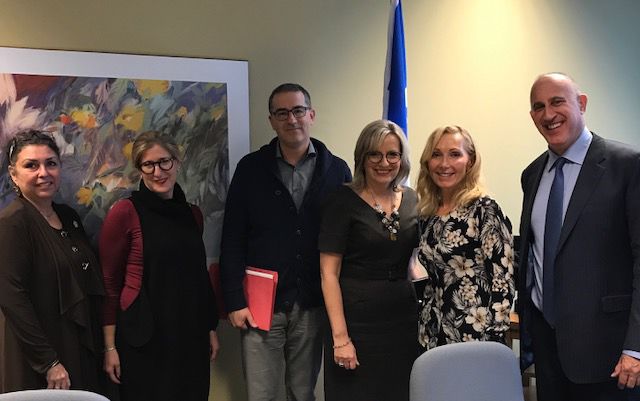
Por lo tanto, es muy gratificante informar que después de años de esfuerzos incansables, se produjo un gran avance con el gobierno de Quebec durante el mes pasado. En noviembre, Heidi y algunos de sus colegas, entre ellos Lucy Shapiro, Michael Flinker y Marcy Bruck, se reunieron con la viceministra adjunta de educación primaria y secundaria, Anne-Marie Lepage. También estuvieron presentes los burócratas departamentales, incluido el director de educación intercultural, Georges Lemieux.

La reunión fue un éxito rotundo. El ministerio ofreció asociarse con la Fundación para formar un comité de trabajo pedagógico para crear una colección de recursos y un manual para la formación docente. Tener al gobierno trabajando en esto hace que sea más probable que los maestros lo enseñen. Este fue un paso vital en la misión de la Fundación para la educación obligatoria sobre el genocidio. La Sra. Lepage estaba de acuerdo con los argumentos sobre la urgencia de que este tema se enseñara eficazmente como un medio para prevenir la radicalización y una mayor intolerancia en nuestra sociedad.

Varias semanas después de ese encuentro, la primera reunión del Comité sobre la Enseñanza del Genocidio se celebró en las oficinas del Ministerio de Educación en Montreal el 30 de noviembre. Fue presidido por Georges Lemieux y el comité incluye a miembros de la Fundación para la Educación contra el Genocidio, educadores del Holocausto del Museo del Holocausto de Montreal, académicos de las universidades de Quebec y maestros capacitados de las escuelas secundarias de toda la provincia.

El Comité organizó dos grupos de trabajo. Un grupo comenzará el trabajo crucial de identificar los mejores recursos disponibles sobre la historia del genocidio y los enfoques de enseñanza, para que puedan combinarse en una guía accesible. El otro grupo trabajará en el desarrollo y la programación de talleres para la formación de docentes. La próxima reunión tendrá lugar a principios del año nuevo con el objetivo de compilar la guía en junio de 2018. Después de tanto esfuerzo, el objetivo de la educación obligatoria sobre el genocidio puede convertirse pronto en realidad.

Fuente: http://www.thesuburban.com/news/city_news/education-ministry-finally-establishes-working-group-on-compulsory-genocide-education/article_8b0241f8-5565-5e38-bd24-60de95c5a04d.html

Comparte este contenido:

Implementan más seguridad en las escuelas de Estados Unidos

Estados Unidos/14 diciembre 2017/Fuente: El Nuevo Día

Tras la matanza en el plantel Sandy Hook, hace cinco años, muchas cosas cambiaron.

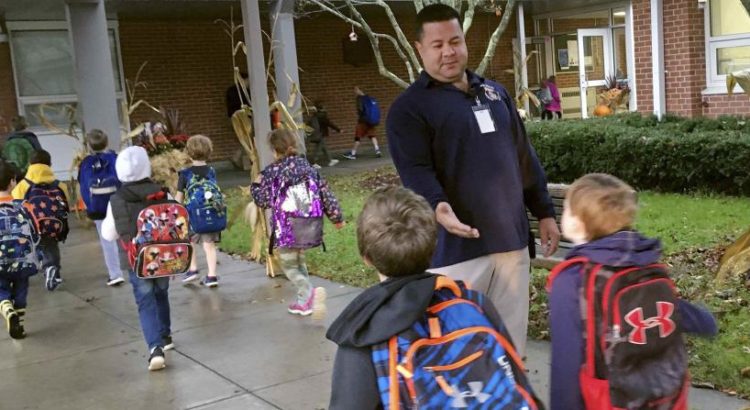
El escenario no podría ser más diferente, pero David Wannagot dice que aplica algunas de las habilidades que aprendió durante 30 años como policía en su nuevo puesto como elemento de seguridad a la entrada de una escuela en Connecticut.

Mientras salud a los niños que bajan del autobús en la Escuela Primaria West en una mañana reciente, Wannagot escanea sus rostros, leyendo cualquier indicio de cualquiera que parezca molesto para llevarlo directamente con el vicedirector. Y desde su estación en la entrada ve a todos los visitantes que piden entrar al colegio.

Haríamos cualquier cosa que podamos para proteger a un maestro o a un niño”, comenta el ex detective de Norwalk.

Tras la matanza en la Escuela Primaria Sandy Hook hace cinco años, los distritos aumentaron la seguridad, en especial en las escuelas primarias, las cuales tradicionalmente no tienen a un policía asignado como muchas escuelas secundarias o de bachiller. Muchas han contratado a oficiales retirados, bomberos y otros adultos responsables, un método que es menos costoso y potencialmente menos intruso que asignar a un policía en activo, pero que también ha generado dudas en cuanto a la consistencia de capacitación y estándares.

A nivel nacional hay un conjunto de leyes estatales que establecen los requerimientos que deben cumplir los agentes de seguridad en las escuelas, y muchos lo dejan por completo a las juntas escolares. Algunos estados, Connecticut entre ellos, han sopesado leyes para imponer estándares al personal de seguridad que no sean policías.

Incluso antes del tiroteo del 14 de diciembre de 2013, policías que alguna vez estuvieron casi exclusivamente en escuelas secundarias antes de volverse comunes en los bachilleratos, las escuelas ya estaban aumentando la seguridad en las primarias, de acuerdo con Ronald Stephens, director del Centro Nacional de Seguridad Escolar.

Comparte este contenido:
Page 799 of 1671
1 797 798 799 800 801 1.671