Page 957 of 1672
1 955 956 957 958 959 1.672

Canada: What happens when a B.C. community loses its only school?

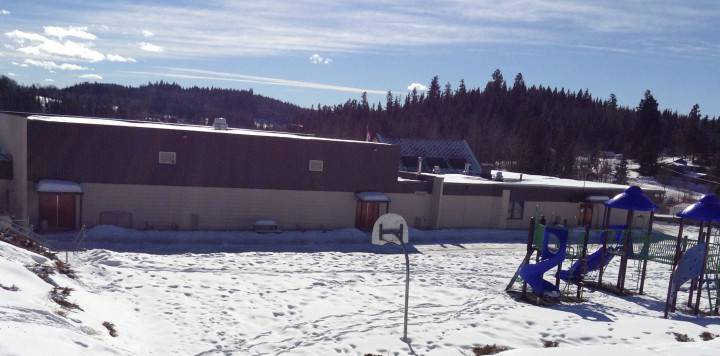
Bridge Lake is one of several small towns that dot Highway 24—better known as “Fishing Highway” for its many lakes and angling opportunities—in British Columbia’s southern Cariboo.

América del Norte/Canada/

Resumen:  Los cierres de escuelas son una realidad en la Columbia Británica Canada. En total, 241 escuelas públicas han cerrado desde 2002. Los cierres más destacados suelen estar en ciudades más grandes, en parte debido a la proximidad de los medios y en parte debido al gran número de personas involucradas. Cuando una escuela se cierra en Richmond o Victoria, van a Prince George o Osoyoos , lo que causa menos inconvenientes para todos los involucrados. Pero cuando una escuela se cierra en una comunidad donde es la única opción de educación pública disponible, los efectos negativos son considerablemente más altos. «Es una asfixia lenta», dice Murray Helmer, presidente de la Asociación de Maestros Cariboo-Chilcotin. Veintisiete comunidades en la Columbia Británica han tenido su única escuela cerrada desde 2002, y cinco más se unirán a ellos este año, incluyendo Bridge Lake, Yahk, Field, Woss Lake y Oyster River.

There have never been many people in Bridge Lake, or Lone Butte or Little Fort for that matter, but the mix of ranching and agriculture, tourism and forestry, young families and retirees has been relatively stable for decades.

“At the time, the school had always been an extremely vibrant part of the community for almost 100 years,” she says.

“It comes together every year to raise tens of thousands for extracurricular activities, the PAC is active, there’s always functions being planned and activities hosted for the entire community.”

But enrolment at Bridge Lake had rapidly declined from 43 students in 2009/2010 to just eight students this year. In January, the Cariboo-Chilcotin school district (SD27) announced they faced a $600,000 deficit, and that K to 7 school was on the chopping block.

In April, after three months of impassioned debate, trustees made their decision: Bridge Lake Elementary would shut down.

“School closure is one of the hardest and most difficult decisions for any board to face,” says Tanya Guenther, SD27 Board Chair.

“As trustees we are elected to support education, make it thrive, and a decision to close can often appear on the surface as a direct opposite of this.”

Volonte and others in Bridge Lake allege that the SD27 intentionally suppressed enrolment at the school by encouraging or forcing families in the region to take their students to Horse Lake Elementary in Lone Butte, which has seen enrolment rise in recent years.

“It’s a unique situation. If a rural school closes because there’s no kids in the community, then that’s life. But that’s not what happened here. It was not a consultation process,” says Volonte.

It’s a charge Guenther denies.

“[We] did refute the allegations that the board intentionally suppressed enrolment. Unfortunately, the community took that as the number one issue, and it really divided the focus,” she argues.

“School closure is always a very emotional decision for anyone affected. The staff, the parents, all community members.”

Now, every child in Bridge Lake will have to travel the 40 kilometres to Lone Butte to receive a public education.

“It will cause our children to have extremely long bus rides. Up to 2.5 hours a day, 50 hours a month,” says Volonte.

“The reason people choose to live in rural areas is to give our children freedom in the wilderness, to grow up in a small community that supports and respects them.”

But it’s not just the children who will suffer. Bridge Lake isn’t just an elementary school. It is the community hub, the gathering space for local organizations, the home of the public library. It’s the recreation centre, the after school centre, the home to the region’s Meals On Wheels program.

Why Bridge Lake is closing is an important question, but one Volonte and Guenther will never agree on.

The more critical question?

What happens next.

“Slow suffocation”

School closures are a fact of life in British Columbia.

All told, 241 public schools have shut down since 2002. Another 16 are slated to close in June. More are already being considered for the 2016/2017 school year.

The most high-profile closures are usually in bigger cities—partly because of media proximity, and partly because of the sheer number of people involved.

When a school closes in Richmond or Victoria, or Prince George or Osoyoos, it causes inconvenience for everyone involved.

But when a school closes in a community where it is the only public education option available, the stakes are considerably higher.

“It’s a slow suffocation,” says Murray Helmer, President of the Cariboo-Chilcotin Teachers’ Association.

“Your support system is your community rather than the city life. It’s a different feel up here. As soon as you lose the school, you lose that tie to those neighbours and your communities. If you have to rely on something an hour away every day, it’s not a community anymore.”

Twenty-seventy communities in British Columbia have had their only school shut down since 2002, and five more will join them this year, including Bridge Lake, Yahk, Field, Woss Lake and Oyster River.

INTERACTIVE MAP: Every community in B.C. that has seen its only school close since 2002

In some cases, the decision to close these schools is straightforward. Some parts of B.C., built up because of a mine or sawmill or cannery, simply fade away, the closure of a school a postscript rather than a exclamation point to a town’s epitaph.

The provincial government provides at least $162,400 to any small community school with at least nine students.

“We recognize that rural communities face unique challenges – that is why our funding model includes financial increases to specifically address rural challenges like smaller enrolments, location, community size, remoteness and a harsher climate,” said the Ministry of Education.

But any lower than nine students and the grant is reduced by $85,000. The Ministry of Education also then has the authority to unilaterally close the school – making it academic for most school boards.

“Schools aren’t closing because of a lack of funding. Schools are closing because of a lack of students,” says the Ministry.

“It’s important school districts invest in vital programs and supports instead of empty classrooms.”

However, there are other schools that still have enough students to fill a class, but are caught in the crossfire of districts trying to balance their budgets and have more buildings that are fully used.

“It’s very difficult to maintain our schools at the needs of each location with the dollars that we’re provided,” said Lenora Trenaman, Board Chairfor the Kootenay Lake school district (SD8).

“We’ve got aging infrastructure, declining enrolment, and we’ve got a geographically disperse district, so all of that equates to do what are we going to do in order to keep operational needs in the classrooms.”

Trenaman’s School District has already agreed to close Yahk Elementary school, which had only three students this year. But they’re also reviewing the future of five other schools, including Jewett and Winlaw Elementary, after next school year.

Winlaw has 85 students and the town has over 400 people. However, it’s also 20 minutes from WE Graham Elementary in Slocan, and SD8 is considering the merits of one fuller school for the region over two half-empty ones – both of which are in buildings that will need maintenance upgrades sooner rather than later.

“For the district to apply for capital dollars, we have to submit a strategic plan,” says Trenaman, who says the provincial government is pressuring them to have most facilities at 85 per cent capacity.

“To do nothing, in the ministry’s eyes, we anticipate, is not going to be convincing to it to obtain the capital we want to obtain.”

Not surprisingly, the local community has been outraged by the possibility, with “Save Winlaw School” dotted along the highway.

“Most of the people in the [Winlaw area] are historically seniors, but they’re slowly moving out of the valley towards the major centres in the area like Nelson and Castlegar. The people that are buying the properties are young families with children. It’s a major concern as to where their school is located.”

Trenaman, who herself lives in the rural community of Crawford Bay, is sensitive to the concerns of Winlaw, and stresses no decisions have been made yet.

“There’s no doubt that rural B.C. is the backbone of [the province],” she said.

“The economic stability for the rural areas is often connected to the school community. It’s very difficult for young families to remain or become citizens of a particular community if they can’t find public education within a viable location for their kids.”

But she also knows the agonizing calculus she must deal with as a school board trustee.

“It’s just a really difficult thing for this district, and across the province. There just aren’t enough capital dollars being provided to us to maintain all of the demands for our buildings.”

GRAPH: There are 10 schools in B.C. where they are the only public education in town and enrollment is 15 students or less

“There’s just not enough people anymore”

When outgoing BCTF President talks about communities losing their only school, he speaks from experience. After he got his bachelor’s degree in Nova Scotia, he applied for teaching jobs all over British Columbia – and he landed in Topley, where he’s had a home ever since.

“I didn’t know much about the town at the time, but since I grew up in a big city, I always wanted to go to a smaller rural area and see what it would be like,” he said.

Topley Elementary, located between Houston and Burns Lake, had 112 students when Iker began teaching there. By the time he became a full-time BCTF executive, enrollment was in the dozens, and was there were 28 students when it closed in 2010.

“I know the community and teachers there, they tried to present a variety of different ideas of how to keep the school open…but once the school district made the decision to close it, it seemed to be there was nothing that could change their mind. They were doing it to save money, but they were only going to save $125,000 or so,” he says.

Iker has noticed the change in Topley since the school left.

“The school had a playground, and that was always a place where kids could go play. When people were travelling and needed a break, they would see the highway. But they dismantled the playground because of insurance reasons,” he laments.
“There’s not a lot of movement. There is no school, there is no playground. We used to have a baseball team in Topley, and used the school field…but there’s just not enough people around anymore.”

The same fate befell Quatsino on the western edge of Vancouver Island, says the person who taught the final five students of Quatsino Elementary in 2008.

“Young families left. It’s been very hard to draw young families back into the community. Adults get grumpy,” says Heather Johnson.

“There are some young families, but they home school. The school was the only public building in the community. It’s still used, but it was children that really brought the community together.”

Johnson is now the principal for Sea View Elementary, 40 kilometres south of Quatsino. There are 35 students there this year, enough to keep the school stable for now. But she worries that as districts consolidate, and one or two-classroom schools disappear, so too will a unique style of learning.

“I think the teacher becomes more invested in the education knowing she will have them for possibly all of their elementary education. It does take time to get to know the children and how they learn and what their interests are, and to establish that relationship with families. There are benefits,” she says.

“What is the cost of not making education accessible to rural children? Some people will say there’s always distance education, but that does not replace the relationship between a student and a teacher on site. I know the economy of scale isn’t there, but I think our rural areas do a lot of supporting of the rest of the province, and we need to acknowledge the wealth that comes from our communities.”

The Dunster Fine Arts School successfully converted to a community-run educational facility after it was closed by the local school district in 2010.

The Dunster Fine Arts School successfully converted to a community-run educational facility after it was closed by the local school district in 2010.

Courtesy the Rocky Mountain Goat

The story isn’t universally grim for communities that have lost their school.

When Malakwa Elementary was shut down in 2013, the regional district helped the community purchase the building. An independent school, Malakwa Learning Academy, is now one of many groups using it.

The same scene played out in farming community of Dunster when they lost their school in 2010, despite enrollment of close to 30 students remaining steady over the previous decade. But people in town, 30 kilometres east of McBride, created a society and purchased the building from the school district, and this April, they paid off their mortgage.

Today the Dunster Fine Arts School is a centre for everyone in town, young and old, to gather in a variety of learning settings.

“It’s still a school in the true sense of the word. It’s not controlled by government and bureaucracy. It is a community school,” said Dunster Fine Arts School Society board member Pete Amyoony to the Rocky Mountain Goat.

“It’s something for the community to use for years to come, rather than have it boarded up or derelict or bulldozed.”

If there’s a community with families, easy transportation to bigger towns, and a local economy that isn’t dependent on one business, the loss of the school doesn’t have to be a death knell.

It’s why Volonte is staying put, determined that her family will be a part of Bridge Lake’s future.

“We’ll be fine, we’re a very strong community, we have a lot of intelligent people, and they love kids and want to provide a good education…It’s a huge loss to our community, but we’ll make it through,” she says.

“By the time my daughter gets to being 5, I’m sure there will be a great private school here.”

Fuente: http://globalnews.ca/news/2735992/what-happens-when-a-b-c-community-loses-its-only-school/

Comparte este contenido:

EEUU: As Schools Tackle Poverty, Attendance Goes Up, But Academic Gains Are Tepid

América del Norte/EEUU/edweek.org

Resumen: la noticia hace referencia a los esfuerzos de la Ciudad de Nueva York para convertir a decenas de escuelas de bajo rendimiento en modelos educativos exitosos, inyectándoles una gama de servicios de salud, y de apoyo social y emocional para estudiantes y las familias de los  estudiantes. Casi tres años después del inicio del programa, los resultados de la escuela PS 123, con sus 530 estudiantes, ofrecen una pequeña ventana a lo que la iniciativa más grande de la ciudad está viendo: un aumento en la asistencia estudiantil y la participación de la familia en las actividades escolares, una caída en el ausentismo crónico, Progreso.  «Eso no es una gran cosa para nadie, pero, en realidad, eso es enorme cuando se trabaja con la demografía con la que trabajamos», dijo Hernández.

P.S. 123, a K-8 school in Harlem, had been a chaotic place when Melitina Hernandez arrived as principal in 2013. Students would often run out of class to get attention. Staff members sometimes dodged confrontational parents. The school had old computers and tattered textbooks.

So Hernandez and her staff set out to make big changes with a $4 million grant from the state. They started with upgrading technology and other classroom amenities. They also turned their attention to the needs of the school’s large population of homeless children. Then their efforts kicked into higher gear in 2014 when P.S. 123 became part of New York City’s broad efforts to turn around dozens of low-performing schools by injecting them with a range of health, social-emotional, and academic support services for students and their families.

Nearly three years later, the results at P.S. 123, with its 530 students, offer a small window into what the city’s larger initiative is seeing: an increase in student attendance and family participation in school activities, a drop in chronic absenteeism, but uneven academic progress. Just 17 percent of P.S. 123’s students in grades 3-8 were proficient on the state’s English Language Arts exam in 2016, but in 2015, it had been even lower at 7 percent.

«That’s not a big thing to anyone else, but, in actuality, that’s huge when you work with the demographics that we work with,» Hernandez said.

Flooding impoverished schools with a range of services and resources is not new, and there’s still lively debate in education circles about whether it’s something schools should take on.

Commonly referred to as «community schools» or «whole-child» initiatives, the approach has been used in districts from Tacoma, Wash., to Cincinnati for several years, but the movement has picked up steam more recently amid a backlash against single-measure, test-based accountability and as an alternative to closing long-struggling schools. It’s gotten robust support from the nation’s teachers’ unions. And some states are looking to incorporate the features of community schools in their plans required by the new federal education law, the Every Student Succeeds Act.

Students at P.S. 188 help clean up their classroom before the last day of the official semester in New York City public schools. The school provides an on-site nurse practitioner, mental health counseling, and other services meant to make it a hub of the community.

Students at P.S. 188 help clean up their classroom before the last day of the official semester in New York City public schools. The school provides an on-site nurse practitioner, mental health counseling, and other services meant to make it a hub of the community.
—Mark Abramson for Education Week.

Pennsylvania, for example, intends to allow districts to use a community schools approach to tackle the problem of chronic absenteeism, to increase the roles that parents play in schools, to address students’ social and emotional needs, and to provide more after-school opportunities, said Pedro Rivera, the state’s education secretary.

«We know that in today’s society, our children … regardless of class, come to our institutions with various needs,» Rivera said. «When properly implemented and supported, community schools will again allow schools to be the nucleus or the hub of their communities.»

Whether community schools initiatives will continue to gather momentum is unclear. President Donald Trump’s proposed federal budget threatens to slash several funding streams that districts, communities, and nonprofit partners use to fund community schools and whole-child initiatives. And the research on whether a community schools strategy is an effective way to increase student achievement paints a complicated, sometimes contradictory, picture.

Benefits for Attendance

An independent study released earlier this year on the Communities in Schools program, one of the country’s largest whole-child initiatives that focuses on dropout prevention, found that while on-time graduation rates rose and the numbers of dropouts decreased in schools with the program, comparison schools also saw their graduation rates go up.

Attendance was higher in elementary schools in the program than in a comparison group of schools, according to the study by MDRC which looked at select schools in Texas and North Carolina.

Test scores improved at both Communities in Schools sites and the comparison schools at the elementary and high school levels. But at the middle school level, state test scores did not improve at those sites, although they did at the comparison schools.

But Linda Darling-Hammond, a longtime education scholar and president of the left-leaning Learning Policy Institute, said there is evidence that the strategy can be used to improve schools. What matters, more often than not, is the implementation, she said.

Schools that use the approach successfully, Darling-Hammond said, know the specific needs of their community and tailor services to meet those and forge strong relationships with families and communities.

In a recent report by the National Education Policy Center and the Learning Policy Institute, researchers analyzed more than 125 studies and research reviews on community schools, and found test score gains showed up in years three, four, and five. In the shorter term, researchers saw improvement in students’ health, attentiveness, and behavior, Darling-Hammond said.

«Whenever you do major structural reforms, if you are successful, the first thing that will respond is attendance,» she said. «And then you will see increases in kids … coming to school, staying in school, graduating, which actually has a much bigger effect on their later life outcomes than test scores.»

Though addressing the needs that poor students face outside of school is important, improving the quality of instruction is the most essential part of making schools better, said Paul Reville, who runs the Education Redesign Lab at the Harvard Graduate School of Education.

«I’d hate to see [community schools] undermined by having unrealistic expectations of it being a short-term silver bullet to bringing about success in these schools,» Reville said. «It’s one piece of a comprehensive strategy for turning around chronically underperforming schools.»

Massive Effort Aimed at Struggling Schools

In New York City, schools like P.S. 123 are in a special category of community schools—a multi-million dollar initiative called «renewal schools» aimed at staving off a state takeover or shutdown of campuses that had lagged academically for years.

Buoyed by some of the results in the wider community schools’ program, Mayor Bill de Blasio announced in May that he will expand the number of participating schools in the fall to 215 , increasing the scale of the program to one previously unseen in the country. The schools will serve about 100,000 students, far bigger than most school districts in the United States. But critics say de Blasio’s embrace of the community schools approach is troubling, since the academic improvements have been modest at best.

Students at P.S. 188 in New York socialize on the playground during the last week of school.
—Mark Abramson for Education Week.

English/language arts and math proficiency rates rose by 5.7 percent and 1.8 percent, respectively, from the 2014-15 school year to the 2015-16 school year, according to city data. Graduation rates for students in community schools averaged a 4.7 percent increase year over year. Chronic absenteeism declined by 3.5 percent in community schools, compared to a little over 1 percent citywide.

«We are targeting really high-need schools that are in neighborhoods with entrenched poverty, so the numbers are not where we want them to be. But we have been pleased with the growth early on,» said Chris Caruso, the executive director of New York City’s community schools program. «A lot of this is about changing culture.»

New York City Chancellor Carmen Fariña stressed that community schools are one of many strategies the district is using to improve schools, and that they offer parents, students, and teachers key advantages. GED and English-as-a-second-language classes for adults help parents participate in their children’s education. The schools provide mental health counselors and other staff from community-based organizations, which frees up teachers and principals to focus on instruction, she said.

A major benefit, Fariña said, are the experiences community schools bring to low-income children that are typical in middle- and upper-income communities. Playing chess, raising chickens, and learning to code, to name a few.

«You don’t ever give up on any community and any child, and this is what we are doing,» she said. «You have to serve the whole child, we are talking about social, emotional, academic learning–what we call the three pillars of education.»

Still, in the city’s renewal schools—where the challenges are even greater and the resources have been more robust—results so far from the community schools initiative show modest, but promising signs. In renewal high schools, the graduation rate jumped on average nearly five points in 2016, to 59 percent. But, that still lagged the city average of 73 percent.

Graduation rates at renewal high schools did not increase more than at comparable high schools, and test scores did not show statistically significant gains compared to select non-renewal schools that did not get extra city resources, according to Aaron Pallas, a professor at Teachers College, Columbia University, who recently analyzed city education data.

But city education officials have called Pallas’s analysis «flawed,» arguing, in part, that renewal schools were chosen based on strict selection criteria that did not match the criteria used in his analysis.

One pro-charter group that has been highly critical of de Blasio’s education agenda—Families for Excellent Schools—thinks a smarter approach would be to shut down the renewal schools and give students the option to attend high-performing schools, including charters.

Others argue that until the city does something dramatic to break up schools with high concentrations of poverty, there won’t be any major academic breakthroughs.

Zeroing In on Chronically Absent Students

While the city’s community schools use a wide variety of strategies to address each school’s and neighborhood’s needs, they all rely on an on-site director as a key ally to principals and the main connection to outside partners. At P.S. 123, Hernandez points to two people who are essential to her school’s program: Jeanine Lascelles, the community school director, and Raymond Blanchard, the mental health clinician.

Lascelles oversees a team of 10, including six «success mentors,» who work directly with 112 students who were chronically absent. The mentors are frontline advocates for homeless students, who may need extra tutoring, an extension to finish an assignment, or more basic supports. The mentors conduct daily check-ins to ensure that students show up to class and make home visits to families. They also meet weekly with the liaison at the shelter in the neighborhood. And when students improve, mentors notify parents through «celebration calls,» Lascelles said.

Their efforts are paying off. About 85 percent of the students who were part of that targeted effort improved attendance over the past year, Lascelles said.

Blanchard, along with other staff members, provide counseling to students and their families, and training for teachers to better recognize signs that misbehaving students need counseling services. They are also trained on de-escalation techniques and other ways to support students, including knowing when a child may just need to take a walk or require additional counseling.

«The learning is 100 percent important, but it’s hard for the students to learn if they are coming in worrying about where they are going to sleep, what they are going to eat, different things like that,» Blanchard said. «It’s providing them support on that emotional level so that they can come in express themselves, let that information out, and then be able to go into the classroom and continue with their day, to continue with learning.»

Fuente: http://www.edweek.org/ew/articles/2017/06/07/when-a-community-loses-its-schools.html

Comparte este contenido:

Estados Unidos: la demanda con la que 18 estados quieren evitar que miles de universitarios paguen millones de dólares al gobierno

Estados Unidos/Julio de 2017/Fuente: BBC

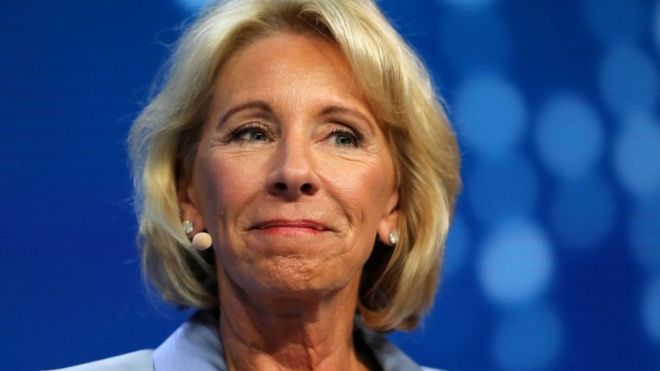
Dieciocho estados demandaron a Betsy DeVos, secretaria de educación de Estados Unidos, quien frenó una medida que buscaba eliminar la deuda de estudiantes que habían recibido préstamos del gobierno para pagar sus estudios, pero que resultaron estafados por las universidades privadas a las que asistían.

La norma, que había sido diseñada durante el gobierno de Barack Obama, debía entrar en vigencia el pasado 1 de julio.

Sin embargo, en junio la secretaria DeVos, del Partido Republicano, suspendió la medida con el argumento de que debía ser revisada, pues acelerar la cancelación de la deuda significaría un gran gasto para los contribuyentes.

DeVos justificó la suspensión por una demanda que está en curso en California, donde una asociación de universidades privadas busca bloquear la cancelación de la deuda.

Los fiscales autores de la demanda contra DeVos, todos de estados gobernados por los demócratas, sostienen que esa revisión es un «mero pretexto» para derogar las reglas y reemplazarlas por otras que «eliminarán o diluirán los derechos y protecciones de los estudiantes».

  • ¿Está pasando de moda la educación privada en EE.UU.?
 Las críticas contra Betsy DeVos
  • * «Una de las peores nominadas en ser jamás consideradas para el puesto», dijo el senador demócrata Chuck Schumer.
  • * Nunca ha asistido, trabajado ni enseñado en una institución de educación pública.
  • * Senadores demócratas cuestionaron los millones de dólares que recaudó para aumentar las escuelas administradas por compañías privadas en Michigan.
Getty

El porqué de la demanda

La demanda, que fue presentada este jueves en una corte en Washington DC, sostiene que DeVos y el Departamento de Educación violaron la ley federal por haber anunciado la suspensión de la norma con poco aviso al público y sin haber dado la oportunidad de hacer comentarios.

Del otro lado, Liz Hill, secretaria de prensa del Departamento de Educación, declaró: «Con esta demanda impulsada por motivos ideológicos, los abogados pretenden regular primero y hacer las preguntas legales después».

Hill añadió que estas normas fueron adoptadas en medio de un «proceso altamente politizado».

Las medidas que DeVos suspendió fueron creadas a finales de 2016, luego de que varias universidades privadas colapsaran en medios de investigaciones por prácticas engañosas, pues les prometían a los estudiantes que iban a conseguir empleo luego de graduarse, y por eso les aumentaban el valor de la matrícula.

En el caso de Corinthian College, uno de los más sonados, se aceptaron más de 15.000 solicitudes de cancelación de la deuda, por un valor de 247 millones de dólares.

  • «El gabinete más rico de la historia»: los multimillonarios que Donald Trump quiere en su gobierno

Los estados que firmaron la demanda son Massachusetts, California, Connecticut, Delaware, Hawái, Illinois, Iowa, Maryland, Minnesota, Nuevo México, Nueva York, Carolina del Norte, Oregón, Pensilvania, Rhode Island, Vermont, Virginia, Washington y el Distrito de Columbia.

La industria de los préstamos a estudiantes que alcanza un monto de US$1,billones, fue uno de los temas álgidos durante la campaña presidencial de 2016.

Los demócratas buscaban mantener las reformas de Obama, mientras que los republicanos, entre ellos el ahora presidente Donald Trump, dijeron que el gobierno debía salirse del negocio de prestarles dinero a los estudiantes.

Fuente: http://www.bbc.com/mundo/noticias-internacional-40540192

Comparte este contenido:

México: Soluciones a educación de niños mayas

México/Julio de 2017/Autora: Joana Maldonado/Fuente: La Jornada Maya

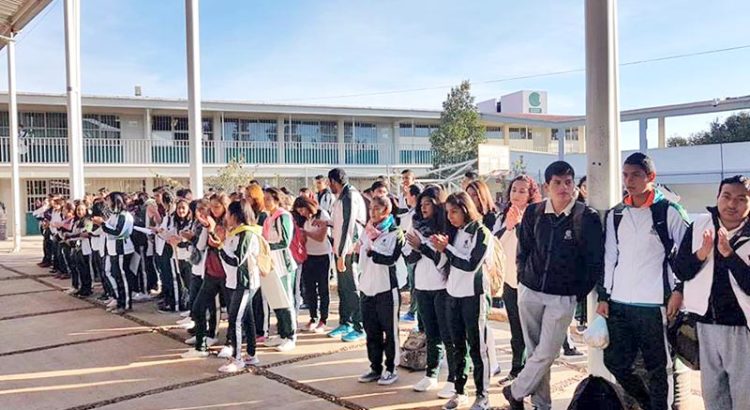
El Sindicato Nacional de Trabajadores de la Educación (SNTE), anunció el primer Parlamento Estatal del Magisterio Indígena para hablantes de la lengua materna que se realizará en Quintana Roo, entidad que atiende a más de mil 200 estudiantes de educación inicial, preescolar y primaria en cinco de los 11 municipios del estado. Ésta fue promovida por el Comité Ejecutivo Nacional del SNTE en coordinación con la dirigencia seccional.

El secretario general de la sección 25 del SNTE, Fermín Pérez Hernández, anunció que dicha iniciativa se alista para septiembre u octubre, la cual tendrá como objetivo reunir a maestras y maestros que atienden la educación indígena para establecer acuerdos y conclusiones sobre las necesidades pedagógicas y laborales que presenta el nivel.

Recientemente, dijo, miembros del Colegiado Nacional de Educación Indígena, Julio López Martínez y Karenina Velez Arellano, arribaron al estado para definir los primeros acuerdos para desarrollar dicho Parlamento para hablantes de la lengua maya en tres niveles educativos: inicial, preescolar y primaria.

Explicó que algunos de los temas que serán abordados, son el de estrategias didácticas; la guía para docentes de educación indígena elaborada por el SNTE, en coordinación con la Organización de las Naciones Unidas para la Educación, la Ciencia y la Cultura (Unesco); los consejos de participación social; el Sistema Nacional de Profesionalización (Sinadep), y educación indígena y comunicación, que son parte de la agenda del Colegiado Nacional de Educación Indígena.

El dirigente magisterial, apuntó que este Parlamento tiene como antecedente dos congresos a nivel nacional en el que han participado representantes de los más de 60 mil maestras y maestros del país que imparten este nivel educativo.

Fuente: https://www.lajornadamaya.mx/2017-07-12/Soluciones-a-educacion-de-ninos-mayas–en-Q–Roo


Comparte este contenido:

México: Sección 58 del SNTE sí busca la titularidad del CCT del Cobaez, reitera líder gremial

México/Julio de 2017/Fuente: La Jornada Zacatecas

De origen no hemos querido ensuciar más el conflicto: Oscar Castruita Hernández

La propuesta es que “revisemos el Contrato Colectivo porque hay prestaciones que están por fuera de la ley”

Aunque hay el interés de la sección 58 del Sindicato Nacional de Trabajadores de la Educación (SNTE) en la titularidad del Contrato Colectivo de Trabajo del Colegio de Bachilleres del Estado de Zacatecas (Cobaez), en este momento sólo hay el interés de defender los derechos de los agremiados y proponer solución a la crisis financiera, afirmó el secretario general, Oscar Castruita Hernández.

“El interés es defender los derechos de nuestros agremiados. De origen no hemos querido ensuciar más el conflicto, hemos estado al margen de las circunstancias de negociación y eso ha permitido que el proceso avance”, indicó.

Expuso que la situación en que se encuentra ese subsistema de educación media superior es muy difícil y se debe a los malos manejos que ha habido en varias administraciones tanto en la dirección general como en el Sindicato Único de Personal Docente y Administrativo (Supdacobaez), “porque son cómplices de los malos manejos de los recursos financieros y humanos”.

Precisó que la sección 58 del SNTE busca recuperar la titularidad del Contrato Colectivo de ese subsistema “a mediano plazo”, pero no es por iniciativa de ese sindicato, sino de los propios trabajadores que son agremiados.

Castruita Hernández comentó entonces que las reuniones y acuerdos que ha tenido con la Secretaría de Educación de Zacatecas (Seduzac), referente al Cobaez, solamente corresponden a un trabajo institucional de ambas partes para atender diversos problemas.

En el contexto de crisis financiera en que se encuentra el subsistema, informó que el SNTE también pretende aportar soluciones para que no se agrave la situación, ya que en este momento la deuda es muy alta.

Respecto a las peticiones del Supdacobaez en su emplazamiento a huelga, como la destitución del director Rafael Sánchez Andrade, no resuelve el problema de fondo, además de que “es muy perverso que siendo cómplice de la toma de decisiones del líder de ese sindicato, ahora sea este quien solicite su destitución”.

Mientras tanto, dijo que la sección 58 del SNTE solamente se mantiene a la expectativa, confiando en la postura que ha emitido el Gobierno del Estado en el sentido de que el Cobaez se mantendrá vigente y se consolidará.

Por último, Castruita Hernández expuso que, en efecto, ha habido cambios recientes en el pago de las prestaciones, y aunque ello ha afectado a los trabajadores, su propuesta es que “revisemos el Contrato Colectivo porque hay prestaciones que están por fuera de la ley”.

Fuente: http://ljz.mx/2017/07/13/seccion-58-del-snte-si-busca-la-titularidad-del-cct-del-cobaez-reitera-lider-gremial/

Comparte este contenido:

EU sigue escéptico ante cambio climático, ahora recortará presupuesto a medio ambiente

Estados Unidos/Julio de 2017/Fuente: Vanguardia

Los republicanos de la Cámara de Representantes de Estados Unidos quieren incluir un recorte de 528 millones de dólares en el presupuesto para 2018 de la Agencia de Protección Medioambiental (EPA), la rama del gobierno encargada de asuntos de medioambiente y salud.

La propuesta presupuestaria se hizo pública el martes por la noche, aunque numerosas organizaciones defensoras del medio ambiente alzaron la voz por los recortes.

Ese recorte de 528 millones de dólares a la EPA significa mayor contaminación que hace que la gente se enferme», consideró en un comunicado el grupo Chispa, una organización ecologista que pertenece a la Liga de Votantes de Conservación (LCV, por su sigla en inglés).

Los 528 millones de dólares suponen un recorte del 6.5 por ciento con respecto al presupuesto actual de la Agencia de Protección Medioambiental y es menor al tijeretazo del 31 por ciento que propuso en mayo el presidente Donald Trump y que reduciría en 2 mil 600 millones de dólares los fondos de la agencia.

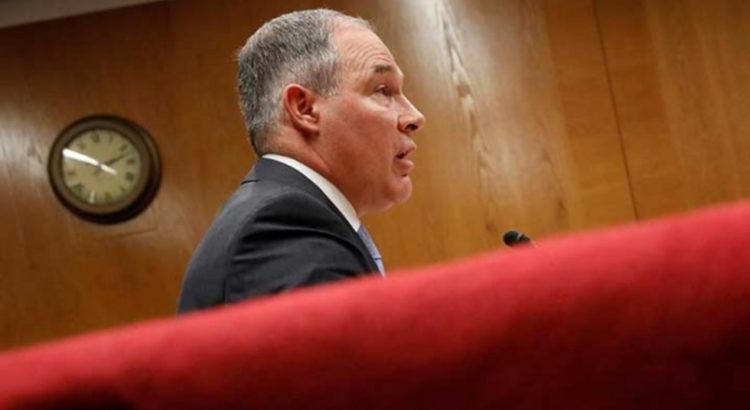
En concordancia con sus promesas durante la campaña electoral, Trump nombró a Scott Pruitt, un escéptico del cambio climático, como jefe de la EPA, encargada de estudiar el cambio climático.

Firmó, además, en marzo una orden ejecutiva para revisar y reescribir las directrices del Plan de Energía Limpia de su antecesor, Barack Obama, y lanzado en 2015 con la meta de que EU redujera para 2030 en un 32 por ciento las emisiones de carbono de las centrales eléctricas con respecto a los niveles de 2005.

Las organizaciones ecologistas, como Chispa, están preocupadas por las medidas de Trump contra la protección medioambiental y consideran que la minoría hispana es uno de los colectivos que podría verse más perjudicado, puesto que los latinos suelen vivir en zonas más contaminadas y sufren asma en mayores proporciones.

Fuente: http://www.vanguardia.com.mx/articulo/eu-esceptico-ante-cambio-climatico-recortara-presupuesto-medio-ambiente-1

Comparte este contenido:

Lo esencial no puede ser invisible a los ojos : pobreza e infancia en América Latina

13 julio 2017/Fuente: Clacso

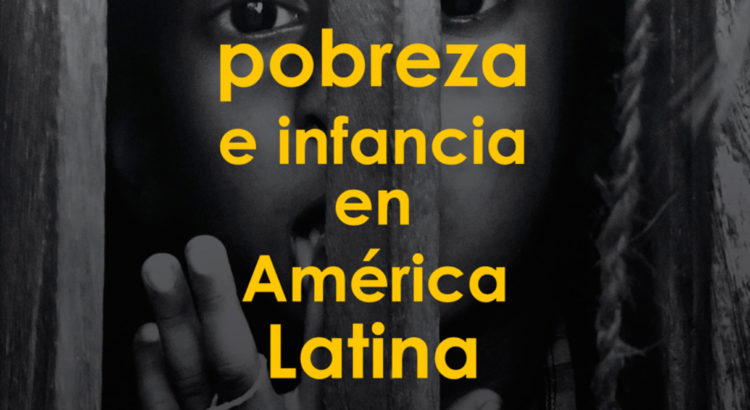
El propósito central de este libro es hacer énfasis en que el debate sobre la pobreza en América Latina, en particular en la niñez y adolescencia, debe ser parte de las discusiones que se están dando a nivel global con respecto a la justicia, la libertad, la ciudadanía, la identidad, la participación, y la paz. Asimismo, busca dar impulso a los esfuerzos en nuestra región por generar un pensamiento propio, que se fundamente en la capacidad de resistencia y de generación de alternativas de la población sin que se limite a las visiones y prácticas tradicionales de fomentar e implementar políticas sociales.

Para leer, descargue aqui: http://biblioteca.clacso.edu.ar/Mexico/flacso-mx/20170526032608/pdf_1290.pdf

Fuente: http://biblioteca.clacso.edu.ar/colecciones/saladelectura/index.php?novedad=si&c=mx-029&d=12818

Comparte este contenido:
Page 957 of 1672
1 955 956 957 958 959 1.672