Page 109 of 773
1 107 108 109 110 111 773

India: Mixed reactions to new education policy

Asia/ India/ 04.08.2020/ Source: www.aa.com.tr.

Politicians and academics are divided in India about a new National Education Policy [NEP] 2020 that was approved last week and replaces a 34-year-old National Policy on Education (NPE).

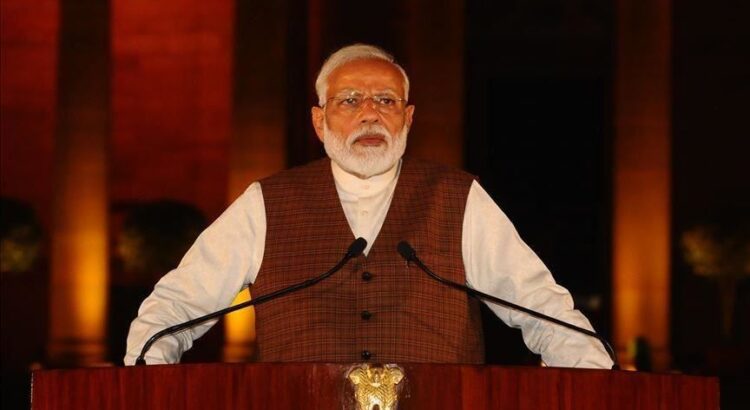
Prime Minister Narendra Modi’s Cabinet approved the policy Wednesday “making way for large scale, transformational reforms in both school and higher education sectors”.

The policy mentions teaching up to at least grade 5 in the mother tongue or regional language and a focus on “curriculum to integrate Indian culture and ethos at all levels.”

However, there are mixed reactions regarding the new policy.

“On the whole, my sense about the policy is actually it contains many sensible suggestions. The apprehensions like BJP is bringing this policy and it could be saffronisation of education … fortunately this policy is not all about that. I think it is a step forward because many sensible things are there. At the same time I remain deeply skeptical about its implementation by this regime,” Yogendra Yadav, a former academic and national president of political organization Swaraj India told Anadolu Agency, referring to earlier fears that the ruling Bharatiya Janata Party may bring some right-wing Hindu policies to education.

Professor Najma Akhtar, Vice Chancellor of New Delhi based Jamia Millia Islamia, termed the policy “ground-breaking.”

“The higher education in India will now be holistic and multidisciplinary with a shared focus on science, arts and humanities,” she said.

But Pankaj Kumar Garg, a teacher at a college affiliated with New Delhi University and also convenor of Indian National Teachers Congress, said there are many problems in the policy.

“They are encouraging foreign universities to come to India. You need to improve the ranking of local universities. By allowing foreign universities to operate in India on their own norms is permitted in FDIs [foreign direct investment] in education sector,” he said. “Use of technology in New Education Policy would deprive marginalized and economically poor sections from education as they don’t have proper resources required for online education.”

“The policy has advocated major reforms in education, but as always, the devil lies in the details, and we will see how to get the NEP 2020 translated to action on the ground, true to the spirit of the reforms envisaged to empower the students in the country, to discover and fully develop their unique potentials,” Rupamanjari Ghosh, Vice-Chancellor of Shiv Nadar University in Uttar Pradesh was quoted by local news agency Press Trust of India.

Indian ethos

According to the policy document, the NEP “envisions an education system rooted in Indian ethos that contributes directly to transforming India, that is Bharat, sustainably into an equitable and vibrant knowledge society.”

“The Policy envisages that the curriculum and pedagogy of our institutions must develop among the students a deep sense of respect towards the Fundamental Duties and Constitutional values, bonding with one’s country, and a conscious awareness of one’s roles and responsibilities in a changing world,” it said.

Many organizations affiliated with the Rashtriya Swayamsevak Sangh (RSS)- powerful Hindu far-right group and ideological inspiration for the ruling Bharatiya Janata Party (BJP), have welcomed the NEP saying their suggestions were included, including remaining in India’s Ministry of Human Resource Development.

Two such outfits are Bharatiya Shikshan Mandal (BSM) and Shiksha Sanskriti Utthan Nyas.

“Almost all the things which were suggested by Bharatiya Shikshan Mandal have found place in NEP. We have been demanding renaming the HRD [Human Resource Development] ministry to education ministry and cultural ministry. They have changed the name to the education ministry,” Shankaranand BR who is All India Joint Organising Secretary, BSM told Anadolu Agency. “The NEP – 2020 would prove itself an instrumental in making Bharat Aatmnirbhar. The political independence we got on 15th August 1947 but the academic independence we got on 29th July 2020”.

He said the inclusion of «Bharatiya knowledge system, thrust for language and culture, will imbibe the values of life, constitutional values and life skills in new generation.»

“We welcome the policy. There is an integrated approach in the policy and It has talked about the development of students from all sections of the society. It has stressed on local culture, local skills, and traditional arts. Local, state and national has been combined. It has been inculcated in this. The biggest demand of ours was to change the name of the ministry, which has been done. There is also focus about promotion of Indian languages,” Atul Kothari, national secretary of the Shiksha Sanskriti Utthan Nyas told Anadolu Agency

India’s Samajwadi Party (SP) claimed the objective of the new policy was to “implement the RSS agenda.”

«The objective of the new education policy announced by the centre is to implement the agenda of the RSS. According to this agenda, the curriculum will now be presented in a special colour to mould the new generations,” SP President Akhilesh Yadav said in a statement, according to the Press Trust of India.

Indian politician and Communist Party of India-Marxist leader Sitaram Yechury said, “Bypassing Parliament, ignoring opinion of state governments and rubbishing opinions of all stakeholders, Modi government is unilaterally destroying our education system,” he said.

‘Shining example’

Modi said the framing of NEP 2020 will be remembered as a shining example of participative governance.

“I thank all those who have worked hard in the formulation of the NEP 2020. May education brighten our nation and lead it to prosperity,” he tweeted.

“Respecting the spirit ‘Ek Bharat Shreshtha Bharat’, the NEP 2020 includes systems to promote Indian languages, including Sanskrit. Many foreign languages will also be offered at the secondary level. Indian Sign Language (ISL) will be standardised across the country.”

Source of the notice: https://www.aa.com.tr/en/education/india-mixed-reactions-to-new-education-policy/1930132
Comparte este contenido:

Corea: The children of Korean War prisoners who never came home

The children of Korean War prisoners who never came home

When the Korean War ended in 1953, about 50,000 South Korean prisoners of war were kept in the North. Many were forced into labouring jobs against their will. Some were killed. Now their children are fighting for recognition, writes BBC Korea’s Subin Kim.

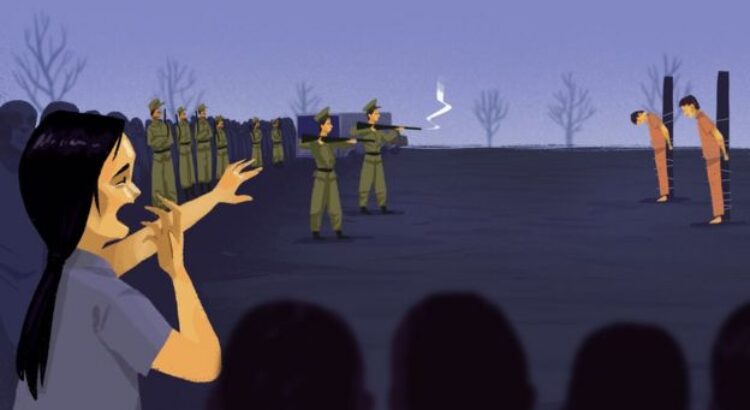
No matter how hard she tries, Lee cannot recall what happened after three shots were fired by the executioners who killed her father and brother. It was three decades ago, when Lee was in her thirties.

She does remember what happened just before. Security officers had dragged her to a stadium in a remote village in North Korea called Aoji. She was forced to sit under a wooden bridge, waiting for something – she knew not what – to happen.

A crowd swelled and a truck pulled up, and two people were escorted off the truck. It was her father and brother.

«They tied them to stakes, calling them traitors of the nation, spies and reactionaries,» Lee told the BBC in an interview recently. That’s the moment her memory falters. «I think I was screaming,» she said. «My jaw was dislocated. A neighbour took me home to fix my jaw.»

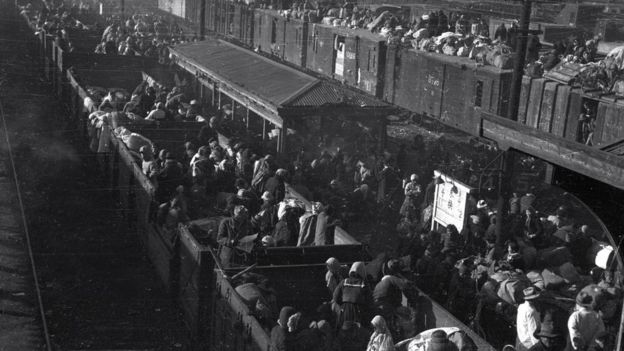
Korean refugees are aboard a train at a station in South Korea"s southeastern city of Daegu amid the Korean War, on 29 December 1950

The forgotten prisoners

Lee’s father was one of about 50,000 former prisoners of war who were kept in the North at the end of the Korean war. The former prisoners were regrouped against their will into North Korean army units, and forced to work on reconstruction projects or in mining for the rest of their lives.

When the armistice was signed, on 27 July 1953, the South Korean soldiers had assumed there would soon be a prisoner exchange and they would be sent home. But a month before the armistice, South Korean President Syngman Rhee unilaterally freed more than 25,000 North Korean prisoners, in order to sabotage the ceasefire. He wanted UN forces to help him reunite the country under South Korea. Many believe the move made the repatriation of South Korean prisoners more difficult.

The North only sent back a small fraction of the prisoners it had taken.

Soon South Korea largely forgot the men. In years since, three South Korean presidents have met North Korean leaders, but the prisoners of war were never on the agenda.

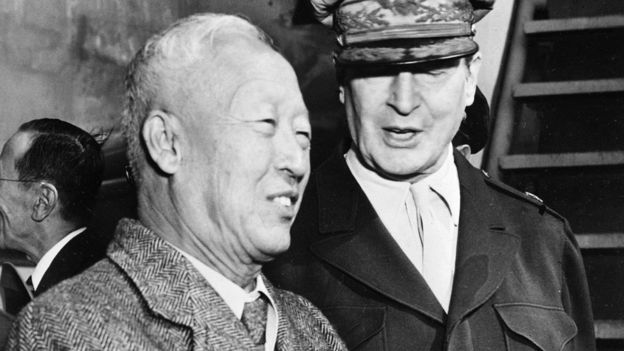
South Korean President Syngman Rhee

In the North, the Lee family were viewed as bad stock. Lee’s father was born in the South and had fought alongside United Nations forces in the Korean War, against the North – a black mark against him. The family’s low social status relegated them to backbreaking jobs and dim prospects. Both Lee’s father and brother worked at coal mines, where fatal accidents were a regular occurrence.

Lee’s father harboured a dream of going home one day, when the country was reunited again. After work, he would tell his children stories of his youth. At times, he would prod his children to escape to the South. «There will be a medal for me, and you will be treated as children of a hero,» he would say.

But Lee’s brother, while drinking with friends one day, let slip the things their father would say. One of the friends reported it to the authorities. In a matter of months, Lee’s father and brother were dead.

In 2004, Lee managed to defect to South Korea. It was then that she realised her father’s error – his country did not see him as a hero. Little had been done to help the old prisoners of war get home.

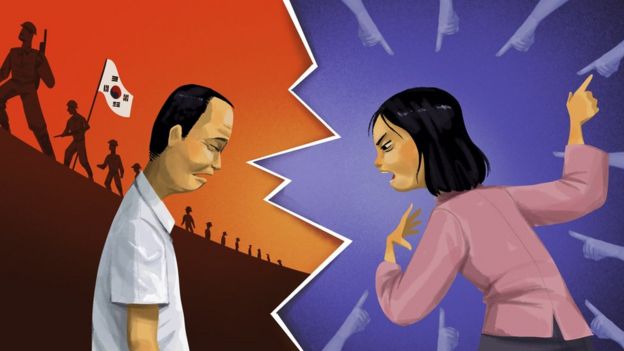
Choi scolded her father after being rejected to study at a university

The soldiers kept back in North Korea suffered. They were viewed as enemies of the state, men who had fought in the «puppet army», and assigned to the lowest rank of North Korean social caste of «songbun».

Such status was hereditary, so their children were not allowed to receive higher education or the freedom to choose their occupation.

Choi was a star student, but her dream of going to a university was impossible because of her father’s status. She once yelled at her father, «You reactionary scum! Why don’t you go back to your country?»

Her father didn’t yell back, but said to her dejectedly that their country was too weak to repatriate them. Eight years ago, Choi abandoned her family and fled to the South.

«My father wanted to come here,» she said. «I wanted to come to the place the person I loved the most in my whole life wanted to come but never could. That’s why I abandoned my son, my daughter and my husband.»

Choi’s father is now dead. And in South Korea, on paper, she has no father, because official documents say he died in action during the war.

The soldiers kept back in North Korea suffered. They were viewed as enemies of the state, men who had fought in the «puppet army», and assigned to the lowest rank of North Korean social caste of «songbun».

Such status was hereditary, so their children were not allowed to receive higher education or the freedom to choose their occupation.

Choi was a star student, but her dream of going to a university was impossible because of her father’s status. She once yelled at her father, «You reactionary scum! Why don’t you go back to your country?»

Her father didn’t yell back, but said to her dejectedly that their country was too weak to repatriate them. Eight years ago, Choi abandoned her family and fled to the South.

«My father wanted to come here,» she said. «I wanted to come to the place the person I loved the most in my whole life wanted to come but never could. That’s why I abandoned my son, my daughter and my husband.»

Choi’s father is now dead. And in South Korea, on paper, she has no father, because official documents say he died in action during the war.

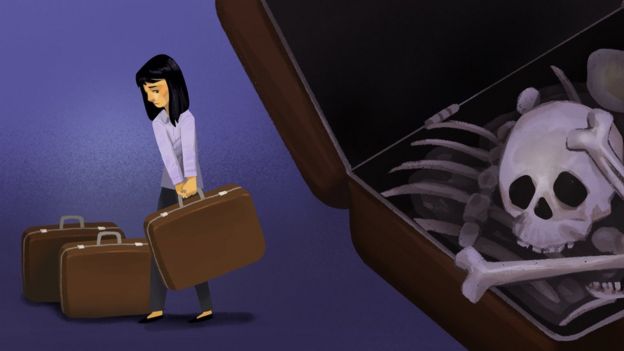
Son retrieved her father's remains from North Korea

Bringing my father’s bones home

Son Myeong-hwa still clearly remembers her father’s last words on his deathbed nearly 40 years ago. «If you get to go to the South, you’ve got to carry my bones with you and bury me where I was born.»

Son’s father was a South Korean soldier who was from Gimhae, some 18km (11 miles) away from Busan. In the North he was forced to work in coal mines and a logging factory for decades and only allowed to go home 10 days before he died of cancer.

He told Son: «It is so bitter to die here without ever seeing my parents again. Wouldn’t it be good to be buried there?»

Son defected in 2005. But it took her eight years to get her father’s remains out of North Korea. She asked her siblings to dig up her father’s remains and bring them to a broker in China. Three suitcases were needed. Two of Son’s friends came along, but it was Son who carried her father’s skull.

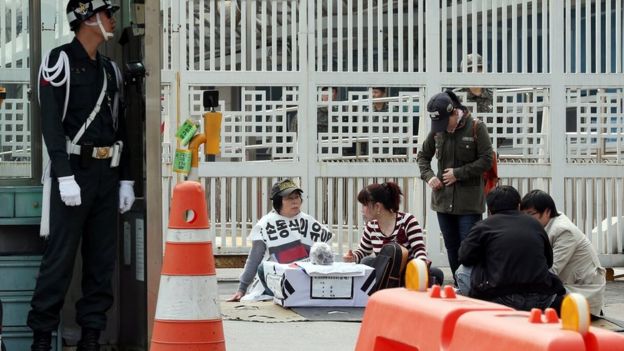
Son Myeong-hwa protested for more than a year to fight for the recogition of her father's status as an unrepatriated soldier

Son protested for more than a year for the recognition of her father’s status as an unrepatriated soldier, and eventually she was able to bury his remains at the national cemetery in 2015.

«I thought that I finally fulfilled my duty as a daughter,» she said. «But it breaks my heart when I think of him having had his last breath there.»

Son discovered later that the family paid a terrible price for the burial. Her siblings in the North were sent to political prisons.

Son now heads the Korean War POW Family Association, a group that fights for better treatment of roughly 110 families of South Korean soldiers who never came home.

Through a DNA test, Son was able to prove that she was her father’s daughter – which was essential for her to file for his unpaid wages from South Korea. Even if they manage to escape to the South, the children of prisoners of war are not officially recognised, and many of the unrepatriated prisoners were considered dead, or discharged during the war, or simply missing.

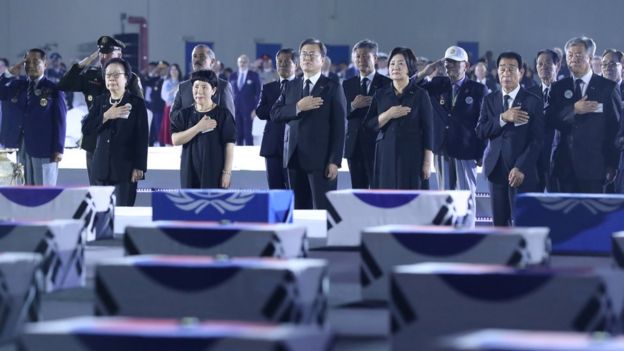
South Korean President Moon Jae-in salutes to caskets containing remains of South Korean soldiers killed during the Korean War during a ceremony commemorating the 70th anniversary of the Korean War at Seoul Air Base in Seongnam, South Korea, June 25, 2020

Only a handful of prisoners of war who managed to escape to the South ever received unpaid wages, and those who died in captivity in the North were not eligible for any compensation.

In January, Son and her lawyers filed a constitutional court case, arguing that the families of the prisoners who died in the North had been treated unfairly and that the government had done nothing to repatriate the prisoners, making it responsible for the prisoners who never came back.

«We were so sad to be born the children of the prisoners, and it was even more painful to be ignored even after coming to South Korea,» Son said.

«If we can’t recover our fathers’ honour, the horrendous lives of the prisoners of the war and their children will be all forgotten.»

Some names were changed to protect contributors’ safety. Illustrations by Davies Surya.

Fuente de la Información: https://www.bbc.com/news/world-asia-53511646

Comparte este contenido:

China tendrá más de 3 millones de estudiantes de maestría en campus en 2020

Asia/China/02-08-2020/Autor(a) y Fuente: spanish.xinhuanet.com

En el transcurso de este año China llegará a tener más de 3 millones de estudiantes cursando maestrías, un masivo aumento con respecto a los 629 del año 1949.

China ha establecido un sistema de asignaturas con 111 disciplinas de primera clase y 47 categorías de grado profesional, con lo que básicamente ha cubierto todos los campos del desarrollo económico y social del país.

En 1990, solo el 19,6 por ciento de los profesores de tiempo completo en las universidades y colegios de China tenía una maestría, mientras que para 2020 el número ha alcanzado al 64,1 por ciento.

Además, el sistema de formación clasificada para estudiantes de posgrado que buscan títulos académicos y profesionales ha mejorado rápidamente, y el número de jóvenes matriculados en maestrías ha aumentado de menos de 590.000 en 2012 a más de 1,1 millones en 2020.

Hasta 2019, un total de 52 países y regiones habían firmado acuerdos con China para el reconocimiento mutuo de títulos académicos.

Fuente: http://spanish.xinhuanet.com/2020-07/28/c_139246315.htm

Comparte este contenido:

Investigadores de Francia y Japón transforman el oro en vidrio transparente y fibra flexible

Investigadores franceses y japoneses han conseguido el sueño de los alquimistas: transformar el oro en cristal flexible, con aplicaciones para detectar contaminantes.

Los alquimistas estuvieron durante siglos tratando de convertir el plomo en oro.

Aunque que esta búsqueda resultó infructuosa, investigadores franceses y japoneses han conseguido ahora algo no menos significativo: transformar el oro en vidrio transparente y fibra flexible.

De hecho, la mezcla de una solución de precursores de oro con moléculas de azufre hizo posible, dependiendo de las condiciones de síntesis, formar un material amorfo que tenga las características del vidrio o fibras similares a las presentes en textiles.

Estos materiales, llamados polímeros de coordinación (supramoléculas) de tiolatos de oro, exhiben fuertes enlaces químicos entre el oro y el azufre y forman cadenas unidimensionales.

Además, estos materiales vidriosos y fibrosos, basados ​​en oro, emiten una luz roja intensa cuando se exponen a la radiación ultravioleta.

Por lo tanto, la formación de vidrios transparentes y textiles emisivos hace que estos compuestos sean atractivos para aplicaciones en la visualización o detección de trazas de contaminantes o medicinas dispersas en los ríos por formación in situ de nanopartículas de oro.

Referencias

Transparent and luminescent glasses of gold thiolate coordination polymers. S. Vaidya et al. Chem. Sci.202011, 6815. https://doi.org/10.1039/D0SC02258F.

Fuente: https://tendencias21.levante-emv.com/transforman-el-oro-en-vidrio-transparente-y-fibra-flexible.html

Comparte este contenido:

La guerra en Afganistán deja más de 100.000 afganos desplazados en los primeros siete meses de 2020

Más de 100.000 afganos han tenido que abandonar sus hogares y convertirse en desplazados dentro de su país como consecuencia de la guerra en el país centroasiático en los primeros siete meses de 2020, según la Oficina de Coordinación de Asuntos Humanitarios de Naciones Unidas (UNOCHA).

Cerca de 10.000 personas se han desplazado de sus localidades por los intensos combates de la semana pasada entre los milicianos talibán y las fuerzas gubernamentales en las provincias del noreste del país. Otras 600 personas han dejado sus hogares en el sur por los mismos motivos.

A pesar del acuerdo de paz firmado por los talibán con Estados Unidos en Doha el 29 de febrero, la violencia se mantiene en niveles altos en el país centroasiático. Los milicianos han decidido mantener su campaña de ataques contra las fuerzas gubernamentales afganas a pesar de que el proceso de diálogo entre afganos está a punto de comenzar.

El martes, el presidente de Afganistán, Ashraf Ghani, denunció que más de 10.000 soldados afganos han muerto o han resultado heridos desde que los talibán firmaron el acuerdo de paz con Estados Unidos en la capital de Qatar. Naciones Unidas ha documentado más de 1.200 muertes de civiles durante el primer semestre de 2020.

En este contexto, los talibán han anunciado un alto el fuego de tres días de duración con motivo de la fiesta del Eid al Adha (la celebración del sacrificio), que comenzará este viernes. El Ejecutivo de Kabul ha anunciado cumplirá el cese de hostilidades.

Fuente: https://www.notimerica.com/politica/noticia-afganistan-guerra-afganistan-deja-mas-100000-afganos-desplazados-primeros-siete-meses-2020-20200730093648.html

Comparte este contenido:

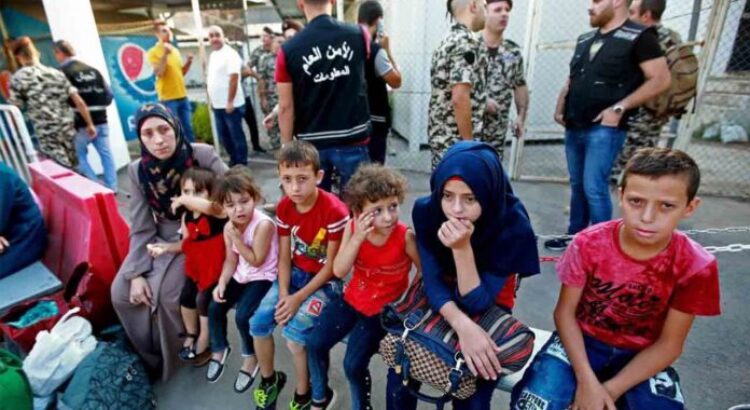
Cómo una generación de niños sirios en el Líbano fueron despojados de su Educación

El racismo, la xenofobia y la corrupción convirtieron a cientos de miles de niños sirios en «una generación perdida».

l Día Mundial de los Refugiados de este año se celebró en medio de un aumento en los movimientos antirracistas en todo el mundo.

Pero, la respuesta humanitaria a la crisis de los refugiados todavía está muy influenciada por la geopolítica, el racismo y la xenofobia, que fueron explotados por muchos políticos en el Líbano para obtener sus ganancias económicas.

Nueve años después del comienzo de la crisis de refugiados sirios, con cientos

de millones gastados en educación pública en el Líbano por donantes, los resultados son decepcionantes por decir lo menos.

¿CUÁL FUE EL IMPACTO DE LOS ACUERDOS ENTRE DONANTES INTERNACIONALES Y POLÍTICOS LIBANESES SOBRE LOS POSIBLES RESULTADOS DE LA ESCOLARIZACIÓN DE LOS NIÑOS SIRIOS EN EL LÍBANO?

Por desgracia, los niños refugiados sirios fueron víctimas de este acuerdo informal que comprometió sus oportunidades de escolarización.

El periodista libanés Riad Kobeissi realizó una investigación sobre el plan de respuesta educativa dirigido por el Ministerio de Educación y Educación Superior de Líbano (MEHE), que se emitió el 28 de mayo de 2020.

Kobeissi alegó que el ministerio malversó fondos de donantes destinados a la educación de niños refugiados sirios.

Durante su investigación, Riad Kobeissi se centró en el número de estudiantes sirios matriculados en escuelas públicas libanesas que MEHE ha inflado en un intento de obtener más fondos de los donantes. Sin embargo, las tasas de inscripción presentan solo una pieza del rompecabezas.

Si examinamos otros indicadores de la Unidad de Gestión del Programa (PMU), encontramos que el 40% de los niños en edad escolar no tienen educación, mientras que el 1% de los matriculados están en el grado 9, y menos del 4% llegan a la etapa secundaria.

El acuerdo entre los donantes y los políticos libaneses se resume mejor por el ex ministro de Educación, Elias Abu Saab, quien se dirigió al ex primer ministro británico, David Cameron, en su visita a Beirut, declarando: “Una de cada 50 personas que vinieron a Europa era miembro de ISIS «.

LOS PAÍSES RICOS DEL NORTE GLOBAL TIENEN UNA POLÍTICA CLARA, MOTIVADA POR EL RACISMO Y LA XENOFOBIA, DE PAGAR A LOS PAÍSES PARA MANTENER A LOS REFUGIADOS ALEJADOS DE SUS FRONTERAS.

Esta compensación fue bien entendida por los políticos libaneses que ahora podrían exigir cualquier precio para seguir «acogiendo a los refugiados», incluso si esto fue a expensas del derecho a una educación de calidad para muchos niños sirios.

En una entrevista realizada con un funcionario de una agencia de la ONU que pidió permanecer en el anonimato, señaló que un funcionario de la Unión Europea, durante el pico de la crisis de refugiados en 2015, le dijo que la Unión Europea está dispuesta a cubrir los costes del Programa de educación infantil sirio en el Líbano a cualquier coste, siempre y cuando permanezcan allí.

LAS DONACIONES

Si bien la decisión de los donantes de invertir en el sector público puede generar resultados y desarrollo más sostenibles, esto ha sido a expensas de la educación de los niños sirios.

Que la educación llegase a todos los niños fue el primer plan de 3 años desarrollado por agencias de la ONU y el Ministerio de Educación.

Fue financiado por donantes como el Banco Mundial, el DFID, la UE y otras embajadas, lo que sin duda es un paso necesario en la dirección correcta.

El ministerio limitó el acceso a la educación formal a las escuelas públicas, incluso cuando solo podía absorber a la mitad de los niños sirios en edad escolar.

Según el plan RACE I, el ministerio necesita duplicar su capacidad para poder inscribir a la mitad de los estudiantes, lo cual es bastante ambicioso considerando las debilidades que ha sufrido la educación pública libanesa durante décadas.

Para absorber a este gran número de estudiantes, el ministerio lanzó turnos por la tarde en muchas escuelas públicas y cobró a los donantes 600 dólares por estudiante, mientras que el costo de inscribir a los estudiantes sirios por la mañana aumentó de 150 a 300 dólares.

Sin embargo, los padres sirios estaban menos interesados. para inscribir a sus hijos en el segundo turno, que consideraron de menor calidad en comparación con el turno de la mañana, algo que está respaldado por las estadísticas de PMU.

LA EXPLOTACIÓN DE LOS LIBANESES DE LA CRISIS SIRIA

Hasta la fecha, la hegemonía del ministerio, que fue apoyada y financiada por los donantes, dejó al 40% de los niños sirios fuera de la escuela debido a la falta de escuelas, aulas superpobladas y costes de transporte.

Todas estas razones revelan que la participación de escuelas privadas podría haber aumentado la capacidad de las escuelas en el Líbano para inscribir a más niños sirios.

El racismo, la xenofobia y la corrupción, ya sea en el Norte Global o entre algunos políticos libaneses que explotaron la crisis siria para obtener ganancias financieras o ganar favores con su base electoral local, convirtieron a cientos de miles de niños sirios en «una generación perdida».

Una reforma educativa inclusiva y estructural podría haber arrojado mejores resultados para los refugiados y los nacionales.

La magnitud de la crisis siria requiere la colaboración de todas las partes, públicas, privadas, ONGs y la comunidad de donantes.

Fuente: https://timis.es/como-una-generacion-de-ninos-sirios-en-el-libano-fueron-despojados-de-su-educacion/

Comparte este contenido:

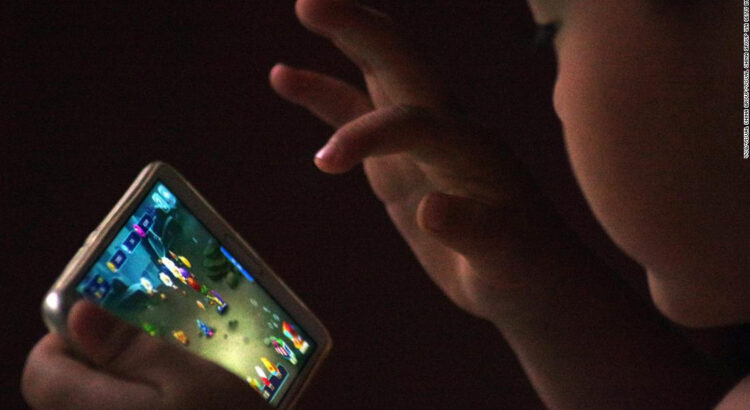
Niños fueron encerrados en China por hasta 10 días en un campo de adicción a internet

Un grupo de hombres que manejaba un autoproclamado centro de tratamiento para adicciones a internet en el sureste de China fue condenado a prisión, luego de que sus miembros fueran declarados culpables de encerrar a niños en aislamiento solitario por hasta 10 días.

La instalación es uno de los cientos de centros de desintoxicación estilo campo de entrenamiento que se han abierto en China a lo largo de los últimos diez años, en medio de crecientes preocupaciones sobre la cantidad de tiempo que los jóvenes pasan en internet.

A pesar de la censura generalizada y el estricto control gubernamental, China tiene una de las bases de usuarios de internet más grandes del mundo: con más de 850 millones de personas que tienen acceso a la web, incluyendo aproximadamente 200 millones de usuarios entre los 15 y 35 años.

Los campamentos de tratamiento tuvieron un auge de popularidad en los años siguientes a la decisión de China en 2008 de reconocer oficialmente la adicción a internet como un trastorno mental. Sin embargo, una serie de reportes de prensa negativos y acusaciones de grave abuso físico ha generado preocupaciones cada vez mayores durante los últimos años.

En 2014, una niña de 19 años murió en la ciudad de Zhengzhou, provincia de Henan, luego de que supuestamente fue golpeada por instructores en un centro de desintoxicación de internet, según informes de medios estatales chinos. Otros reportes han afirmado que los campamentos han utilizado tratamientos similares a las terapias electroconvulsivas.

Este martes, documentos judiciales muestran que cuatro hombres ––de apellidos Wu, Ren, Zhang y Qu–– fueron declarados culpables de detención ilegal, luego de confinar a 12 jóvenes bajo un régimen de aislamiento solitario por hasta 10 días en la Academia Yuzhang en la provincia de Jiangxi. Once de las víctimas tenían menos de 18 años en ese momento.

El centro había aparecido en los titulares de prensa en 2017, después de que el gobierno local anunció que investigaría las denuncias de castigos corporales estrictos que se habrían utilizado contra los estudiantes en un intento de “cultivar el carácter moral de los adolescentes”, según reportes en los medios estatales.

De acuerdo el tabloide estatal Global Times, los exalumnos acusaron al personal de la Academia Yuzhang de poner a nuevos estudiantes en “pequeñas habitaciones negras” con nada más que una manta y una olla para ir al baño.

“Me vigilaban todo el tiempo”, relató un exalumno, de apellido Xuan, al Global Times en 2017.

El gobierno chino ha tomado una serie de medidas en los últimos años para combatir la adicción a internet. En noviembre, Beijing anunció un toque de queda para las personas menores de 18 años, con el objetivo de evitar que jugaran en línea hasta altas horas de la noche. Entre semana, pueden jugar hasta 90 minutos y hasta tres horas los fines de semana.

Los menores en China tienen prohibido jugar videojuegos en línea entre las 10 p.m. y las 8 a.m.

En mayo de 2019, el gobierno chino introdujo un sistema antiadicción para los niños al agregar un “modo juvenil” en 18 sitios populares de vídeo, lo que restringió los tiempos de uso y el contenido de los usuarios.

Fuente: https://cnnespanol.cnn.com/2020/07/08/ninos-fueron-encerrados-en-china-por-hasta-10-dias-en-un-campo-de-adiccion-a-internet/

Comparte este contenido:
Page 109 of 773
1 107 108 109 110 111 773