Page 252 of 773
1 250 251 252 253 254 773

Embracing tech in early childhood education

Asia/Vietnam/25.09.18/Source: vietnamnews.vn.

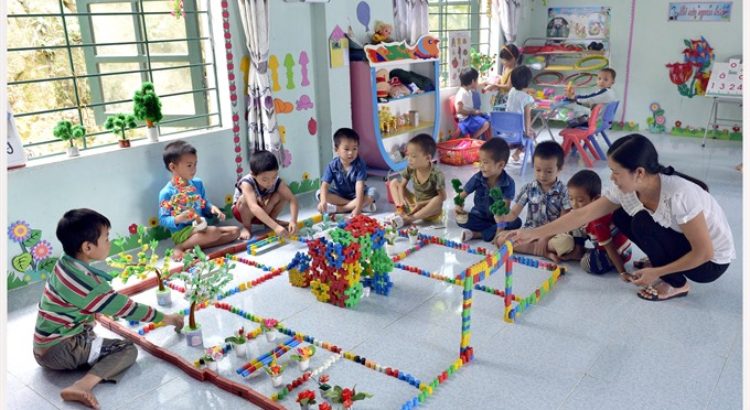
Learning is fun: Kids at the Lùng Vai Kindergarten in northern mountainous Lào Cai Province during playtime. Experts advocate initiatives to draw resources from both the public and private sectors to promote equity in education and ensure access to learning opportunities for all children, regardless of their age, gender, residence, ethnicity, social status. VNA/VNS Photo Thanh Hà

When Minh Hạnh’s five-year-old daughter Mai told her she had a class presentation about her favourite pets later that week, Hạnh knew just what to do.

She gathered all the photos and videos she had of little Mai with the animals her great grandparents have in Hải Phòng City, 100km from Hà Nội. There were photos of a cow, a dog and a mother pig with her herd of adorable newborns. After making them into a short clip, she used Google Photos to share it with Mai’s teacher.

She asked the teacher to help screen the clip for the class when it was her daughter’s turn to present.

When Mai came home from the presentation, she said all her friends liked it so much that they gave the clip a big round of applause.

“Some of my friends say they have never seen a real cow before,” the little one said happily.

Hạnh used to think that screen time was not healthy for children, as it can easily replace face-to-face socialising. She still holds that belief, but her views have evolved.

“I think modern technology has its advantages here – helping children to better understand what they’re learning,” Hạnh said.

“We are no longer living in a world where it’s practical to prohibit or avoid ‘screen time,’” she said. “Digital technology is certainly here to stay, and most of our children are using a smart phone as soon as they’re old enough to hold one. We can help our children by using technology in a productive way rather than fighting against it altogether.”

Lê Anh Lan, an education officer for UNICEF Vietnam, agrees.

“It is now common to apply technology in every field of life, including early childhood education,” she said. “The period from zero to eight years old is a critical phase in childhood development; a child at this age learns an incredible number of skills and retains a lot of information he or she will need to function throughout life.”

While no official statistics are available on the use of technology in preschools in Việt Nam, Trịnh Thị Xim, head of the Early Childhood Education Faculty at the Hà Nội National College for Pedagogy, said new technologies have been implemented in many cities and provinces across the country.

“We’ve seen the benefits technology brings about for the children – they’re more involved in class activities and more interested in discovering things around them when photographs or animations are presented. Visual aids help them remember better than traditional methods,” Xim said. “With thoughtful guidance, teachers can use classroom technology to help early childhood students learn age-appropriate skills.”

Xim said that while screen time used to have a bad reputation for detracting from social interaction, educators are changing that perception by embracing it as a tool.

“For instance, little kids often find it easier and more exciting to use a touchscreen rather than a mouse or a keyboard. Using tablets allows them to physically interact with the content they’re learning,” she said. Xim added that practising the use of digital tools will serve students well for years to come.

John Jeon Huh is CEO of the Jello Academy in Hà Nội, one of the schools implementing a STEM (Science, Technology, Engineering and Maths) and arts educational approach that is popular in the United States. Huh claimed the application of technology in early education has led to remarkable results.

“The integration of technology into STEM classes has created useful new experiences for young children, enabling them to have fun while discovering and testing the theories they are taught,” he said.

“Parents nowadays actually care more about our approach,” he said. “They welcome the addition of technology and STEM activities into the curriculum.”

The role of technology in early childhood education has long been recognised elsewhere in the world: the UK government sees in computers the potential to improve educational standards, and they have invested accordingly. The 2009 Home Access scheme was designed to promote the educational benefits of home computer and internet access. The Digital Britain report, produced by two UK government departments in 2009, stated that “we need a change in approach in education and training for digital life skills, starting with the youngest students.”

The No Child Left Behind legislation, introduced by the United States government in 2002, shared similar aims. One of its sections, titled “Enhancing Education Through Technology,” was designed to improve student attainment through technology. It also aimed to ensure that every student is technologically literate by the end of eighth grade.

Necessary support

Although researchers do not deny the potential benefits of technology for accelerating language and literacy development in young children, they have said that these gains are reliant on the way specific technologies are applied at home and in the classroom.

Lê Anh Lan said technology in early childhood education and early learning only proves to be effective with good preparation for teachers, parents and child care givers.

“Whether a child can benefit from technology depends largely on how it is applied by educators and adults,” she said.

Trịnh Thị Xim shared this opinion.

“Simply investing in technology or offering training in the use of new equipment will not be enough to achieve the sought-after changes; the education sector should support teachers so they can be confident enough to help students,” she said.

In order to do this, Xim believes policy makers will need to be involved.

“Training for teachers, investment in facilities for schools and the determination for change among education sector officials are critical,” she said.

John Jeon Huh said that a coordinated system is needed to ensure a lifelong foundation for young children.

“We need an educational system in which technology is applied consistently from the lowest level to the highest level – technology application in early childhood is just the first step on a lifelong path,” he said.

Despite great effort from the Government in investing in early childhood education, lots of constraints remain including limited investment for technology, Anh Lan from UNICEF Việt Nam said the state could play a stronger role.

“I also advocate for initiatives that draw resources from both the public and private sectors to promote equity in education and ensure access to learning opportunities for all children, regardless of their age, gender, residence, ethnicity, social status and their perceived capabilities, including informal learning.” VNS

Technology connects parents and teachers

The KidsOnline app was initially designed by a Vietnamese group to keep parents of young children updated on classroom activities. Over the last two years, KidsOnline has become the most popular cloud-based platform for kindergartens in Viet Nam to communicate with parents. It has almost 83,000 users.

The app, available on iOS and Android, allows parents to communicate directly with teachers. It shows what the kids are doing in real time, allowing interested parents to monitor their child’s daily learning progress. Photos of school activities are uploaded by teachers and sent to each parent’s app. It also provides information on upcoming school activities that parents may want to participate in.

Later on, the app evolved to help school managers with administrative tasks. These include managing school finances, healthcare and recruitment. Teachers can also use KidsOnline to receive notes from parents and send feedback instead of communicating with parents solely through paper-based reports, email or face-to-face interaction.

“Of course in-person contact would still be the preference of every parent when it comes to talking with their child’s teacher, and we never hope to replace such an important communication channel,” said Lê Huy Long, CEO of KidsOnline. “We hope to supplement this by providing regularly updated information on how children are doing at school, and keeping a record of all relevant activities.”

Source of the notice: https://vietnamnews.vn/society/education/465157/embracing-tech-in-early-childhood-education.html#jRmjP2PyGcI0jlJ8.97
Comparte este contenido:

Kuwait: Qatari teen wonder featured in Qatar and Kuwait school textbooks

Asia/Kuwait/24.09.18/Source: thepeninsulaqatar.com.

The Peninsula Online

Ghanim Al-Muftah, often dubbed the Qatari “miracle child” for having overcome the physical limits imposed by rare Caudal Regression Syndrome which impaired the development of his lower spine, is now featured in both Qatari and Kuwaiti school textbooks.

His life journey is study material for 10th-grade life and vocation skills book, which is in Arabic.

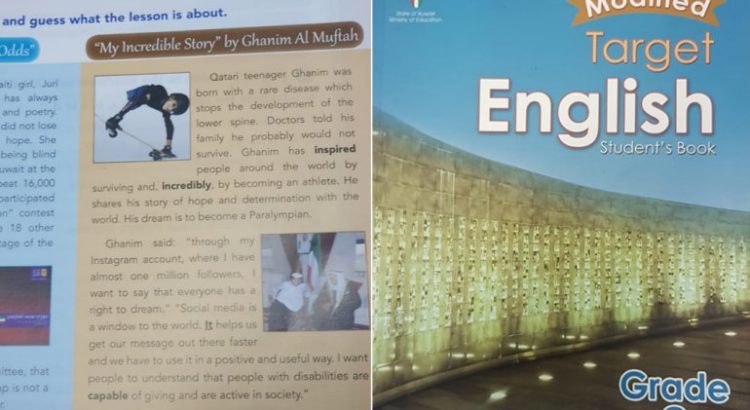
In Kuwait his story is published in 8th grade English book. A user tweeted a picture of the lesson and the cover, which was posted on Instagram and Twitter by  Ghanim.
The lesson is titled «My incredible story» by Ghanim Al Muftah.

“Qatari teenager Ghanim was born with a rare disease which stops the development of the lower spine. Doctors told his family he probably would not survive. Ghanim has inspired people around the world by surviving and, incredibly, by becoming an athlete. He shares his story of hope and determination with the world. His dream is to become a Paralympian,” the lesson continued.

«Through my Instagram account, where I have almost one million followers, I want to say that everyone has the right to dream. Social media is a window to the world. It helps us get our message out there faster and we have to use it in a positive and useful way. I want people to understand that people with disabilities are capable of giving and are active in society,” Ghanim said in the lesson.

Thanking the Ministry of Education of Qatar and Kuwait he tweeted (translation from Arabic):

“The Ministry of Education in Qatar has had my profile in grade 10 curriculum of life and vocational skills subject. This was great encouragement, I thank you to all.”

“Today, I would also like to thank the Ministry of Education in the State of Kuwait for their generous initiative to develop a profile in the eighth-grade curriculum. Thank you from the heart and I wish to be a good ambassador of my country Qatar.”

Ghanim al Muftah is an inspiration to many. At an young age, this budding entrepreneur, aspirational Para-Olympian and social media success has won the hearts of nearly 1 million followers on Instagram and practically everyone he’s ever met. Ghanim has only ever confronted his situation with courage and determination. Although still just a teenager, Ghanim has achieved so much in his lifetime, despite his physical impediments.

He has set up his own charities, is active in various sports activities and is also an entrepreneur after setting up his own ice cream shop.

Source of the notice: https://thepeninsulaqatar.com/article/19/09/2018/Qatari-teen-wonder-featured-in-Qatar-and-Kuwait-school-textbooks
Comparte este contenido:

Malaysia: Education, key to protecting our planet

Asia/Malaysia/24.09.18/Source: www.thestar.com.my.

MALAYSIA is recognised as one of the top 12 mega-biodiversity countries in the world. Our country is home to a great variety of natural resources that provide for the well-being and economic development of its people.

However, the pursuit of growth at the expense of the environment poses many threats to these resources and the people who depend on them. There has been a continuous and alarming decline of forest cover across Malaysia, and this contributes to flooding problems and the pollution of rivers from fine sediment washed from the land surface.

The loss and fragmentation of natural habitats, made worse by poaching and illegal wildlife trade, have caused a collapse of wildlife populations in our country.

Off our coastlines, unsustainable fishing to feed the demand for seafood has caused fish stock depletion while related pollution and bycatch threaten a range of other marine life. The responsibility to protect the one and only planet we have lies within every individual from all walks of life.

We believe that education is the key to ensuring protection of our planet and its natural resources. Education is the foundation – everything a child sees or learns becomes a part of him or her, and helps shape his or her perceptions and attitudes towards the world. Therefore, an early and well-designed exposure to environmental issues is a critical step towards conservation – it creates good citizens.

Pakatan Harapan’s aspiration to be business friendly and to balance economic growth with environmental protection (Promise 39 of Pillar 3), require a holistic Environmental Education (EE).

There should be a focus on young people, but this education should also be directed at parents, teachers, lecturers and administrators. In short, we believe that EE is fundamental to realising the Government’s promise.

There are four recommendations that we feel strongly about and which could shift the paradigm of EE. Firstly, the formulation and introduction of a policy on Education for Sustainable Development. This will help emphasise that EE plays an integral part of the education system and it needs to be addressed in a holistic manner across all discipline areas. Currently there is no systematic approach to the integration of EE in the classroom – it is taught ad hoc and very much left to the personal efforts, priorities or time available to those involved in teaching and education.

Secondly, we advocate the ministry to establish smart partnership with students, parents, teachers, education advisers, private organisations, research institutions, environmental and social NGOs and business regulators, as well as local communities. This will allow all partners to advance their common interests and learn from each other’s expertise in order to provide mutual support, and to increase commitment to a particular set of decisions they all consider important.

Thirdly, we call on the ministry to harness the network of higher learning institutions, research institutes, environmental and social NGOs to capitalise on their technical expertise and capacity for leadership. Currently, many research outcomes related to EE are not integrated within either curricula or approaches to teaching and learning. Harnessing the expertise available to us is crucial in designing curricula for all levels of education, adopting best practice in teaching and educational approaches.

Finally, we are aware that funding is an essential part of the implementation process; hence, we encourage the ministry to make available the resources necessary for successful delivery of EE, as well as ongoing monitoring of this education so that its success can be evaluated.

It is both imperative and timely that we realise EE is more than information about the environment. EE inspires students to consider and balance environmental issues along with others. It develops their critical thinking and reasoning skills that will in turn enhance their problem-solving and decision-making abilities throughout life.

This is in line with the ministry’s aspiration to instil Love, Happiness and Mutual Respect among students.

This open letter to Education Minister Dr Maszlee Malik has been prepared on behalf of our members and supporters, who believe that education is fundamental to developing the next generation of leaders for Malaysia – leaders who will push for sustainable development as the country’s main agenda.

We urge you to make Environmental Education a priority.

We thank you for taking the time to read this letter and look forward to your considered response.

Malaysian Environmental NGOs (MENGO) coalition members offer our full support to the development and implementation of a comprehensive Environmental Education system in Malaysia.

Source of the notice: https://www.thestar.com.my/news/education/2018/09/02/education-key-to-protecting-our-planet/

Comparte este contenido:

Varios niños muertos y heridos tras un atentado en Afganistán

Redacción: Actualidad

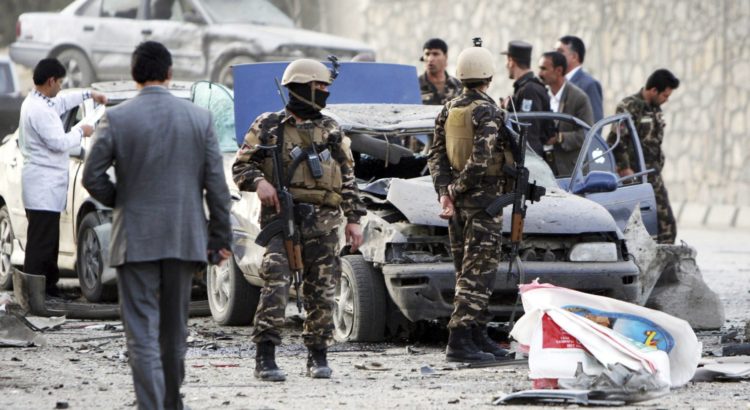
Al menos siete niños murieron y otros cinco resultaron heridos el viernes en una explosión en la provincia de Faryab, informa la agencia Tolo News. De acuerdo con la Policía local, el hecho ocurrió en un área del distrito de Sherentagab, que cayó en manos de los talibanes la semana pasada.

Las autoridades indican que los talibanes habían colocado un artefacto explosivo improvisado en la localidad de Koh Sayyadarea. Varios niños que jugaban en el área fueron alcanzados. Dos menores heridos perdieron sus extremidades y se encuentran en estado crítico.

Fuente: https://actualidad.rt.com/actualidad/289416-muertos-heridos-atentado-afganistan

Comparte este contenido:

Turquía podría eliminar a Darwin de sus libros escolares

Redacción: América Economía

El gobierno turco está prohibiendo a Charles Darwin sus libros de texto. También aprenderán sobre el jihad en las clases de religión por primera vez.

ara final de este mes, el capítulo “Seres Vivientes y el Ambiente” tomará el lugar del capítulo “Sobre los orígenes de la vida y la evolución”, que narra la teoría de la evolución de Darwin, en los libros de biología para los mayores de 15 años en los colegios de Turquía.

También, por primera vez, los estudiantes aprenderán sobre la historia del jihad (guerra santa) en las clases de religión, en un giro hacia las creencias religiosas mucho más extremo que en años anteriores.

En marzo, Kati Pari, miembro del Parlamento Europeo y autor de un informe de la comisión parlamentaria sobre Turquía, escribió en Twitter que el «pensamiento crítico» era un «esfuerzo peligroso en la ‘nueva Turquía'». Y el año pasado, Atilla Yeşilada, un economista, dijo que la gente en Turquía vivía en «la muerte del pensamiento crítico». Este último movimiento parece confirmar sus palabras.

La propuesta fue impulsada desde agosto de 2017 por un anti darwinista que ha hecho pública su postura, Adnan Oktar.

De acuerdo con el portal Index of Censorship, este ministro (religioso) es un fenómeno mediático y es una cara frecuente en la televisión turca. Conduce su propio show llamado Allah Artistry. “Él y otros predicadores afines han fundado instituciones educativas islamistas, periódicos y ONG para desmantelar el racionalismo en Turquía. Gracias al gobernante Partido Justicia y Desarrollo (AKP), han tenido mucho éxito”, se lee en el portal.

“Somos conscientes de que si nuestros estudiantes no tienen los antecedentes para comprender las premisas e hipótesis, o si no tienen el conocimiento y el marco científico, no podrán entender algunos temas controvertidos, por lo que hemos omitido algunos de ellos”, dijo Alparslan Durmus, jefe de la junta nacional de educación de ese país en 2017, cuando se anunció la medida que entra en vigencia este mes.

Según Reuters, la teoría de la evolución de Charles Darwin es rechazada por los creacionistas cristianos y musulmanes. El viceprimer ministro Numan Kurtulmus dijo a principios de este año que la teoría de Darwin, publicada por primera vez en el siglo XIX, era «vieja y podrida» y no necesariamente tenía que ser enseñada.

Los cambios son parte de un nuevo plan de estudios que entrará en vigencia al inicio del año académico 2017-2018 y fue formulado de acuerdo con los «valores turcos», dijo Durmus.

Se han modificado un total de 51 programas de cursos desde la escuela primaria hasta la escuela secundaria, incluidos los de las escuelas religiosas «Imam Hatip» promovidas por Erdogan.

La Fundación de Investigación Científica de Oktar, que tiene miles de miembros, está detrás de casi 5.000 casos judiciales abiertos contra los secularistas turcos en la última década como el pianista Fazil Say, quien fue condenado inicialmente en 2013 por incitar al odio contra el Islam siguiendo tweets que hizo, incluido retuitear un verso de un poema del poeta del siglo XI Omar Khayyám sobre la hipocresía. Say recibió una sentencia de prisión suspendida de 10 meses antes de ser absuelto en 2016.

«El Islam sunita se ha convertido en el tema de las clases de ética», le dijo Tarik Günersel, poeta y secretario internacional de partido secular turco, a Index of Censorship. “La evolución está excluida de los planes de estudios. Incluso las danzas folclóricas han estado prácticamente prohibidas en las escuelas durante más de una década, porque las niñas y los niños se toman de las manos mientras los practican”, dijo.

Desde 2002, cuando el Partido de la Justicia y el Desarrollo (AKP) subió al poder por primera vez,  el número de escuelas religiosas en Turquía se ha multiplicado por diez. Un informe de la Iniciativa de Reforma Educativa, un grupo de expertos, mostró que las escuelas de capacitación clerical musulmanas financiadas por el estado aumentaron un 73% desde 2010.

Fuente: https://mba.americaeconomia.com/articulos/notas/turquia-podria-eliminar-darwin-de-sus-libros-escolares


Comparte este contenido:

Un alto cargo chino defiende «la reforma mediante la educación» para los presos en Xinjiang

Redacción: Europa Press

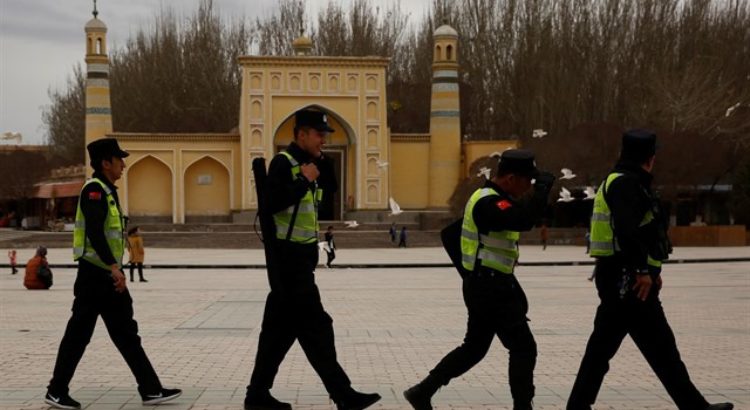
El ministro de Seguridad Interior chino, Guo Shengkun, ha abogado por reforzar la «reforma mediante la educación» para los prisioneros en la región de Xinjiang, en el oeste del país, según han informado este viernes los medios estatales, en medio de la creciente preocupación internacional por la situación de los Derechos Humanos de los uigures.

Los uigures son una minoría étnica de fe musulmana que denuncia una persecución por parte de las autoridades de Pekín. En estos últimos años, han protagonizado varias protestas que en su mayoría han derivado en enfrentamientos con las fuerzas de seguridad –las de 2009 se saldaron con más de 200 muertos–.

El Comité de Naciones Unidas para la Eliminación de la Discriminación Racial ha acusado a las autoridades chinas de encerrar a un millón de miembros de la minoría uigur en campos de concentración y de llevar a «campos de adoctrinamiento político» a otros dos millones.

Por su parte, la nueva Alta Comisionada de la ONU para los Derechos Humanos, Michelle Bachelet, ha pedido a China que permita la entrada al país de observadores, mientras que Estados Unidos está barajando sanciones contra funcionarios y compañías chinas vinculados con las denuncias de abusos de los derechos fundamentales en Xinjiang.

El Gobierno chino defiende que se enfrenta a una amenaza seria por parte de milicianos islamistas y separatistas en esta región y ha rechazado las acusaciones de malos tratos. No obstante, sí ha reconocido que algunas personas son sometidas a cursos de tipo «vocacional» para evitar la propagación del extremismo.

Tras una visita de tres días a la región, Guo ha subrayado que ha costado lograr la estabilidad en Xinjiang y «debería ser cuidada y consolidada continuamente», según ha informado el ‘Diario del Pueblo’.

«Deberíamos adoptar educación política, asesoramiento psicosocial y formación profesional, innovar y reforzar la reforma mediante el trabajo educativo para los prisioneros y hacer esfuerzos para que estos pasen una nueva página», ha defendido el ministro.

Asimismo, Guo ha subrayado la necesidad de que la Policía de Xinjiang haga más para promover «el servicio de gestión en red» a nivel local para «permitir que las masas se sientan más seguras».

Las autoridades también deberían seguir visitando las casas de las familias de la minoría para mejorar su entendimiento de la cultura china, el Partido Comunista Chino y «la gran madre patria» para que «estemos realmente unidos estrechamente».

Fuente: http://www.europapress.es/internacional/noticia-alto-cargo-chino-defiende-reforma-educacion-presos-xinjiang-20180921122227.html

Comparte este contenido:

Afganistán: Tablas de ‘skate’ para combatir la exclusión social

Redacción: El País

La plataforma The Skate Room y la ONG Skateistan combinan el arte, el ‘skateboarding’ y la educación para empoderar a niños y jóvenes en Afganistán, Camboya y Sudáfrica

Como a cualquier otro skateboarder, a Charles-Antoine Bodson le apasionan los monopatines y sus diseños. De joven, coleccionó cientos de ellos durante diez años sin saber que, algún día, esas tablas de madera acabarían ayudando a miles de niños y niñas. “Hace seis años recibí la visita de Oliver Percovich en mi galería de arte en Bruselas, donde vendía mi colección de tablas”, cuenta Bodson. “Me habló de su ONG Skateistan y de la labor que hacían a través del skateboardingen Afganistán. Quería abrir otro centro en Camboya, pero necesitaba financiación. Me gustó tanto la idea que decidí ayudarlo”. Bodson vendió parte de su colección y donó 100.000 dólares (unos 86.000 euros) para la apertura del nuevo centro. “Meses más tarde estaba frente a este complejo deportivo. No me podía creer que yo hubiese ayudado a crear aquello”, añade.

Bodson cerró su galería de arte para dedicarse íntegramente a este proyecto. “Continué vendiendo mi colección, pero me di cuenta de que pronto acabaría por agotarse. Había que seguir produciendo y coleccionando nuevas tablas”. Así nació The Skate Room, un proyecto social en colaboración con artistas internacionales que produce ediciones únicas de obras de arte en tablas de skateboarding que pueden colgarse en una pared, como una pintura, o patinar sobre ellas.

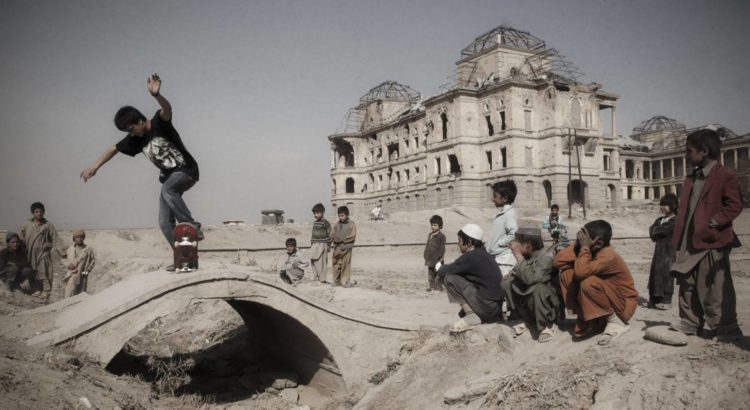
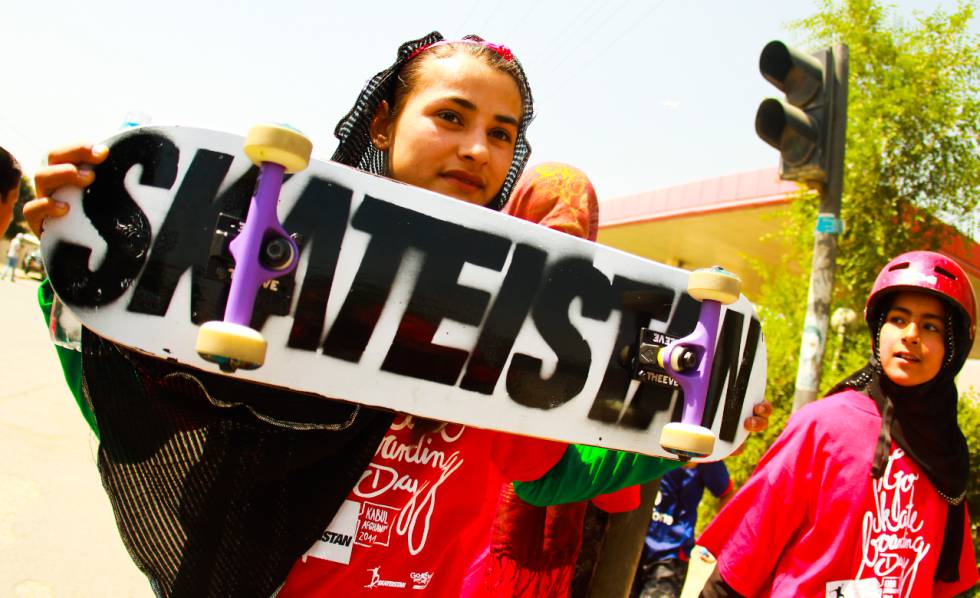
The Skate Room es uno de los principales patrocinadores de Skateistan. Esta organización sin ánimo de lucro une el skateboarding y la educación para ayudar a menores de edad en riesgo de exclusión social en países como Afganistán, Camboya y Sudáfrica. Actualmente, más de 1.500 niños y jóvenes (de 5 a 17 años) se benefician cada semana de los programas educativos que ofrece la ONG. Skateistan trabaja también para combatir la desigualdad de género (más del 60 por ciento de los participantes son niñas). “El skateboarding es un deporte que te relaciona directamente con tu ciudad, con sus calles, te permite conocer gente y crear nuevas amistades”, opina Bodson. “No requiere de materiales caros y cualquiera puede practicarlo”, agrega.

Instalación de The Skate Room.
Uno de los artistas internacionales que ha colaborado con The Skate Room es el artista disidente chino Ai WeiWei. “La primera vez fue hace cuatro años y su obra se vendió en apenas unas horas”, dice Bodson. En 2016, cuando Donald Trump ganó las elecciones presidenciales de Estados Unidos, el artista volvió a llamar a Bodson. “Levanté el teléfono y al otro lado estaba Ai WeiWei. Me dijo que quería volver a colaborar con nosotros y que ya tenía un diseño en mente. Inmediatamente después, me mandó una foto de sí mismo frente a la Casa Blanca haciendo un corte de mangas”, se ríe el fundador de The Skate Room. Aquella imagen se imprimió sobre un tríptico de tres tablas y una edición limitada de aquel diseño se puso a la venta coincidiendo con los cien días de Donald Trump al frente del gobierno. A las pocas horas se habían vendido todas las tablas.

Con Afganistán y Camboya funcionando, el siguiente objetivo de The Skate Room y Skateistan era crear un nuevo centro en Johannesburgo, Sudáfrica. “Necesitábamos 300.000 dólares, así que le pedimos un diseño al artista norteamericano Paul McCarthy. Sus tablas comenzaron a exhibirse hace cuatro años en el MOMA de Nueva York para su venta”, cuenta Bodson. En 2016, lograron el dinero para construir el nuevo centro sudafricano, inaugurado por la leyenda del skateboarding Tony Hawk.

Después de todas estas experiencias, Bodson está totalmente convencido de que el consumo también puede mejorar el mundo. “Todo lo que compramos –casas, móviles, gafas, coches, etcétera– puede contribuir a cambiar las cosas si se dona un porcentaje de los beneficios”.

Recientemente, The Skate Room ha comenzado a preparar la producción de tablas de skateboarding que financiará el nuevo proyecto de Skateistan en Jordania, el centro más grande hasta la fecha. “La reina Rania ha cedido un territorio en la frontera con Siria muy cercano al campo de refugiados de Zaatari”, explica Bodson. Y concluye: “Costará un millón de dólares y queremos que esté listo antes de los Juegos Olímpicos de Tokio de 2020 en los que por primera vez se incluirá el skateboarding como disciplina olímpica”.

Un chaval con una de las tablas del proyecto de Skateistan.

 Fuente: https://elpais.com/elpais/2018/08/31/tentaciones/1535737369_065225.html

Comparte este contenido:
Page 252 of 773
1 250 251 252 253 254 773