Page 297 of 773
1 295 296 297 298 299 773

India: Making educational innovations scalable

Por: thehindubusinessline.com/Rohan Sandhu /11-04-2018

Demonstrated impact, cost-effectiveness, and the ability to work with the existing system are crucial

India is reported to have about 15 million NGOs in the education sector. Combined with the proliferation of social enterprises in recent years, the space for non-government education innovations is rapidly becoming a network of cottage industries, with interventions often reinventing the wheel and successful practices not being appropriately leveraged to address India’s learning crisis at scale.

Former US President Bill Clinton’s observation while reviewing school reform initiatives in the US may hold true for India as well: “Nearly every problem has been solved by someone, somewhere. The frustration is that we can’t seem to replicate (those solutions) anywhere else.”

Over the past year, however, India’s Ministry of Human Resource Development (HRD) has made significant efforts to identify NGO-led innovations around the country and create platforms for them to present to and engage with state education departments.

HRD Secretary, Anil Swarup, calling himself a “principal facilitator,” travelled across States to identify innovative models and organised five workshops to showcase such education innovations. “A government champion,” the Brookings Institution’s Millions Learning report finds, is often the “linchpin behind experimentation and greater participation in policy-making.”

Complex undertaking

But, while a government leader’s backing is crucial, scaling is a complex undertaking that comes with some fundamental questions, and the need to recognise that not all innovations are necessarily scalable. Experiences of a number of educational innovations point to factors that are critical for an innovation to be one that is scalable — demonstrated impact, cost-effectiveness, and the ability to work with the existing system.

At the outset though, the definition of “scaling” itself must be clarified. Key here is the question of what should be scaled — an intervention as a whole or some critical components. The Millions Learning report, studying a multitude of case studies, concludes that the process of scale requires that a balance be struck between the non-negotiable elements that are imperative to the success of a programme and must be replicated, and other elements that can be adapted as per specific requirements of individual contexts.

This portends the need for rigorous impact metrics or proof of concept, and the ability to disaggregate the outcomes generated by an intervention’s myriad elements. But, as Mary Burns writes, “educational projects do not undergo the kind of meaningful or rigorous impact evaluations that determine whether they are indeed worthy of being scaled.”

A survey of about 40 technology-based education innovations in India corroborates this. While most innovations report their reach, information on their outcomes is seldom available. This, though, is linked to a larger systemic challenge — the absence of a universal assessments or monitoring framework, because of which there is no common benchmark against which outcomes across different models may be evaluated and compared. It is critical that this gap is addressed before innovations are scaled based on personal relations and adhoc decisions instead of well-defined impact metrics.

Apart from delivering impact, for a country like India, models that seek to scale must also do so in a cost-effective manner. As Venkatesh Malur, who led Sampark Foundation’s Pedagogy Framework — reaching over 2.8 million children studying in 46,000 primary schools in India — summarised inAccelerating Access to Quality Education that Subir Gokarn and I co-edited a few years ago, “There is a need to prioritise frugal innovations in classroom transactions and work in sync with the existing system that will leverage the existing teachers, systems, and infrastructure.”

In line with Malur’s point on frugality, Sampark’s Smart Class Kit costs one dollar per child per year. Other innovations which have attempted to scale reinforce this. Gyan Shala, which scaled its operations in Ahmedabad, Gujarat, to cover schools in West Bengal, Bihar, and Uttar Pradesh, operates with a total cost of education per student amounting to 3,000 per year. The Bharti Foundation’s schools similarly seek to deliver education at a rate that is lower than the government school system, so that they may be easily replicated by the latter.

In a similar vein, models that are able to scale must be able to operate within the constraints of the existing system, with the current set of teachers, school leadership, and government machinery. Often, social enterprises and NGOs, in an attempt to see some quick successes, actively avoid engaging with governments and teachers.

But if they wish to scale, such an attitude can prove deleterious. In several cases, pilots succeed in specific contexts with favourable conditions, but fail without these. In Kenya, for instance, limited understanding of public sector and political economy constraints prevented a contract teacher programme that was able to raise students’ test scores when implemented by an NGO, to show the same positive outcomes when implemented at scale by the government.

Studies attribute this difference to the “lack of attention to the interaction between the intervention being tested and the broader institutional context.” Ark, which designed a School Quality Assessment framework for 120,000 schools in Madhya Pradesh, sought to create a product that had government ownership from the very beginning and was “delivered with existing public sector capacity, rather than being dependent on a major skills upgrade” (Accelerating Access to Quality Education).As an innovation scales, partnering with the government system to build its capacity becomes even more critical since scaling is not just a straightforward process of replication, but a more complicated one of adaptation. Binswanger and Aiyar (2003) recommend real-time process-monitoring that provides “continuous feedback that enables the scaling-up process to constantly be improved.”

Given the state’s institutional capacity constraints, Malur writes how Sampark works “hand-in-hand with the state machinery,” providing support and strengthening it. Teachers, too, are provided constant support through continuous trainings, frequent visits from Sampark’s coordinators, and a helpline that is available at all times. On a related note, innovators must be flexible and open to deviating from their initial model. Ark’s SQA design underwent at least four changes over just one year based on constant testing. “The team rapidly discovered that their original ‘premium’ design was too complex for operating in the contexts, and with the resources, available.”

Ultimately, the success of scaling hinges upon a productive partnership between the innovation and the government and teacher system. This is a partnership that must be established at the very outset — embedded in the core design of the model — and one that needs to be deepened as the innovation is scaled up.

Remedial measures

Finally, the quest to scale should not cause us to ignore some fundamental issues. Several innovations — like remedial programmes — have actually cropped up in response to the challenges imposed by flawed policies. Scaling educational innovations is a worthy endeavour, but it is crucial that we don’t replicate band-aid solutions, while ignoring deeper malaises.

Additionally, it isn’t enough to think of innovation as being the domain of just NGOs and social enterprises. The narrative about the top-down centralised nature of the Indian education system that gives little agency to teachers, school leaders, and frontline administrators, is well-established. While there is undoubtedly a rich supply of innovations outside this system, the demand to adapt and scale these will only be amplified and made more organic if last-mile functionaries and implementers are given the time and space to deviate from the rigidities of the current governance framework.

The writer is an Associate Director at the International Innovation Corps, University of Chicago. This article is by special arrangement with the Center for the Advanced Study of India, University of Pennsylvania

*Fuente: https://www.thehindubusinessline.com/opinion/columns/making-educational-innovations-scalable/article23495239.ece
Comparte este contenido:

Hacia la Postguerra del Gran Medio Oriente.

Por: Thierry Meyssan. Red Voltaire. 11/04/2018

Contradiciendo las apariencias que tanto aprecia la propaganda atlantista, Thierry Meyssan prefiere interpretar las relaciones internacionales a largo plazo. Estima que lo sucedido en Siria durante los 7 últimos años no fue una guerra civil sino una agresión externa y parte de una guerra regional de 17 años en el Gran Medio Oriente. De ese vasto conflicto, en el que Rusia sale vencedora ante la OTAN, está surgiendo poco a poco un nuevo equilibrio mundial.

Todas las guerras terminan con vencedores y vencidos. Los 17 años que acabamos de vivir en el «Medio Oriente ampliado», o Gran Medio Oriente, no serán la excepción de esa regla [1]. Saddam Hussein y Muammar el-Kadhafi fueron eliminados, Siria está ganando, pero no hay otro perdedor que el pueblo árabe.

Lo más que puede hacerse es fingir creer que el problema es sólo en Siria. Y que, en Siria, es sólo en la Ghouta. Y que, en la Ghouta, el Ejército del Islam [2] ha perdido. Pero ese simple episodio no bastará para proclamar el fin de las hostilidades que asolan la región, destruyen ciudades enteras y provocan la muerte de cientos de miles de hombres, mujeres y niños.

Sin embargo, la fábula de la extensión por contagio de las «guerras civiles» [3] permite a los 130 países y organizaciones internacionales que participaron en las reuniones cumbres de los «Amigos de Siria» negar sus responsabilidades y mantener la frente alta. Y, como nunca reconocerán su fracaso, seguirán perpetrando abusos y crímenes en otros teatros de operaciones. En otras palabras: la guerra que desataron en esta región terminará pronto, pero continuará en otra parte.

Desde ese punto de vista, lo que se puso en juego en Siria a partir de la declaración de guerra de Estados Unidos –la adopción en el Congreso estadounidense de la Syrian Accountability Act, en 2003, o sea hace casi 15 años– habrá moldeado el orden mundial que está surgiendo. En efecto, aunque casi todos los países del «Medio Oriente ampliado» se han visto debilitados por lo sucedido, y algunos incluso destruidos, sólo Siria se mantiene en pie e independiente.

Por consiguiente, el Pentágono ya no podrá poner en práctica la estrategia del almirante estadounidense Cebrowski, tendiente a destruir las sociedades y Estados de los países no globalizados y a obligar los países globalizados a pagar por la protección de los ejércitos estadounidenses para tener acceso a las materias primas y las fuentes de energía de los países destruidos. Aplicar esa estrategia será imposible en esta región, pero tampoco será posible en otros lugares del mundo.

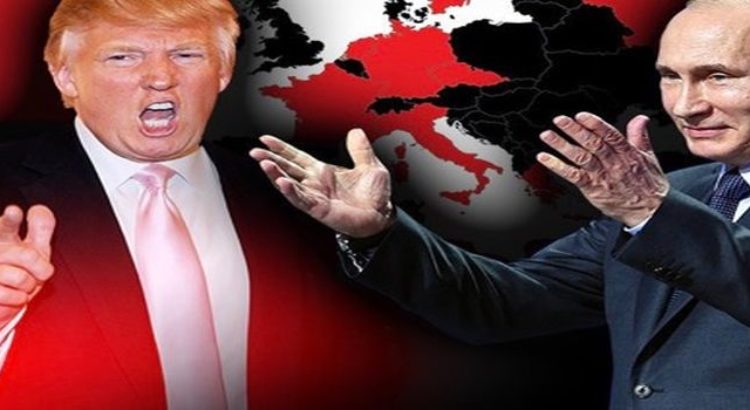
Por iniciativa del presidente Donald Trump, las fuerzas armadas estadounidenses están abandonando lentamente su respaldo a los yihadistas y comienzan a retirarse del campo de batalla. Pero eso no convierte a la administración Trump en un gobierno de filántropos, sólo están siendo realistas y esa actitud debería poner fin a su implicación en la destrucción de Estados.

Volviendo a las bases de la Carta del Atlántico, en la que Londres y Washington se ponían de acuerdo, en 1941, para controlar juntos los océanos y el comercio mundial, Estados Unidos se prepara también para sabotear el comercio de su rival chino. Donald Trump está reformando el grupo QUADS (al que también pertenecen Australia, Japón y la India) para limitar los desplazamientos de la flota mercante china en el Pacífico. Simultáneamente, nombra como consejero para la seguridad nacional a John Bolton, cuya gran realización –bajo la administración de Bush hijo– fue implicar a los países de la OTAN en la vigilancia militar de los océanos y del comercio global.

Es muy probable que el gran proyecto chino de creación de «rutas de la seda», terrestres y marítimas, no llegue a concretarse en los próximos años. Como Pekín ha decidido hacer transitar sus mercancías a través de Turquía –en vez de hacerlo a través de Siria– y de Bielorrusia –en vez de Ucrania–, seguramente seremos testigos de la aparición de «desórdenes» en los países seleccionados como vías de paso.

En el siglo XV, China trató de reabrir la «Ruta de la Seda», construyendo para ello una gigantesca flota de 30 000 hombres, bajo las órdenes del almirante musulmán Zheng He. A pesar de la calurosa acogida que aquella flota pacífica recibió en el Golfo Pérsico, en África y en el Mar Rojo, aquel proyecto fracasó. El emperador ordenó quemar toda la flota y China se replegó sobre sí misma durante 5 siglos.

El presidente Xi se inspira hoy en aquel ilustre precedente para concebir la «Belt and Road Initiative» (Iniciativa del Cinturón y Ruta de la Seda). Pero, al igual que el emperador Ming Xuanzong, el presidente Xi podría verse obligado a renunciar a ese proyecto, lo cual implicaría la pérdida de las enormes sumas que su país está invirtiendo para concretarlo.

Por su parte, el Reino Unido no ha renunciado a su plan de nueva «revuelta árabe», que reedita la maniobra que le sirvió –en 1915– para poner a los wahabitas en el poder, desde Libia hasta Arabia Saudita, aunque la llamada «primavera árabe» de 2011, destinada a poner el poder en manos de la Hermandad Musulmana, se ha estrellado contra la resistencia siro-libanesa.

Londres pretende aprovechar el «giro hacia Asia» de Estados Unidos para restaurar su propio esplendor en las tierras de su antiguo imperio. Hoy se dispone a salir de la Unión Europea y orienta sus fuerzas armadas en contra de Rusia. Ha tratado de reunir a su lado el mayor número posible de aliados mediante la manipulación del «caso Skripal», pero ha sufrido numerosas decepciones, como la negativa de Nueva Zelanda a seguir haciendo el papel de dócil «dominion». Lógicamente, Londres reorientará a sus yihadistas en contra de Moscú, como ya lo hizo antes, durante las guerras desatadas en Afganistán, Yugoslavia y Chechenia.

Rusia, única gran potencia que sale victoriosa del conflicto en el Medio Oriente, ha logrado concretar el objetivo que Catalina La Grande [4] se había fijado: tener acceso al Mediterráneo y salvar la cuna del cristianismo, pilar de la cultura rusa.

Moscú debería ahora desarrollar la Unión Económica Euroasiática, a la que Siria desea integrarse –Damasco ya presentó su candidatura en 2015. En aquel momento, la adhesión de Siria a esa asociación de países quedó en suspenso a pedido de Armenia, inquieta ante la entrada de un país en guerra en ese espacio económico común.

El nuevo equilibrio del mundo ya es bipolar desde el momento en que Rusia dio a conocer su nuevo arsenal nuclear. Es muy probable que el mundo se divida en dos, pero no por que exista una «cortina de hierro» sino sólo por voluntad de las potencias occidentales, que ya están separando los sistemas bancarios y que pronto tratarán de hacer lo mismo con internet. Ese orden mundial bipolar se basaría en la OTAN, que ya no tendría enfrente el Pacto de Varsovia sino la Organización del Tratado de Seguridad Colectiva (OTSC). En un periodo de 30 años, Rusia ha pasado la página del bolchevismo y ha desplazado su influencia del centro de Europa hacia el Medio Oriente.

Mientras tanto, en un movimiento de balanza, Occidente –el antiguo «mundo libre»– se convierte en un conjunto de sociedades coercitivas de falso consenso. La Unión Europea se dota de una burocracia más grande y opresiva que la de la desaparecida Unión Soviética, mientras que Rusia vuelve a ser el defensor del Derecho Internacional.

*Fuente: http://www.voltairenet.org/article200455.html

Comparte este contenido:

Unicef: Agresión a Yemen priva a 2 millones de niños de ir a la escuela

UNICEF – Yemen/ 10 de abril de 2018/Fuente: https://www.hispantv.com


https://www.youtube.com/watch?v=jaAXh8vqPI4

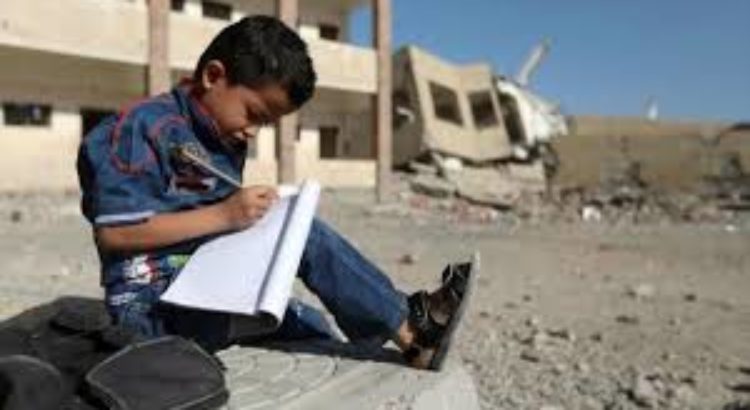
El Fondo de las Naciones Unidas para la Infancia (Unicef) ha llamado la atención este martes sobre una ‘crisis más silenciosa’ que está afectando al futuro de Yemen destacando que 2 millones de niños yemeníes se ven privados de ir a la escuela debido a la agresión de Arabia Saudí a su país.

El estudio de Unicef, titulado ‘If Not In School’, publicado la jornada de hoy, afirma que cerca de medio millón de niños no va a la escuela desde el inicio de las operaciones militares contra Yemen en marzo de 2015, lo que eleva a dos millones el número de menores sin escolarizar.

Por otra parte, casi tres cuartas partes de los profesores de las escuelas públicas no perciben sus salarios desde hace más de un año, lo que pone gravemente en peligro la educación de 4,5 millones de niños más, agrega.

“La de la educación es una crisis más silenciosa que no ha llamado la atención pero que puede tener efectos devastadores para el futuro”, ha advertido la representante de Unicef en Yemen, Meritxell Relaño, en una entrevista con motivo del tercer aniversario de la agresión saudí al país más pobre del mundo árabe.

Según el estudio, más de 2500 escuelas no pueden ser utilizadas: dos tercios de ellas fueron dañadas por los ataques, el 27 % están cerradas y el 7 % se utilizan con fines militares o como refugios para desplazados, sin mencionar los riesgos que corren los niños en su trayecto hasta el colegio debido a la guerra.

El lunes, se cumplieron tres años del inicio de los bombardeos y las matanzas cometidos por Arabia Saudí contra la población yemení, apoyados por EE.UU. y varios países europeos con el suministro de armamento y aviones de combate.

Conforme al Ministerio de Derechos Humanos de Yemen, la campaña militar saudí ha matado y herido a más de 600.000 civiles, incluido más de un cuarto de millón de niños.

La Organización de las Naciones Unidas (ONU) advirtió el pasado mes de febrero de la situación “catastrófica” en Yemen y de un creciente riesgo de hambruna y de cólera, en lo que dio en describir como la peor crisis humanitaria del país árabe tras tres años de guerra.

Riad sigue su campaña mientras la comunidad internacional ha llamado una y otra vez al régimen de Al Saud a poner fin, de una vez por todas, a esta “estúpida guerra”

Fuente de la Noticia:

https://www.hispantv.com/noticias/yemen/372452/unicef-ninos-escuela-agresion-saudita

Comparte este contenido:

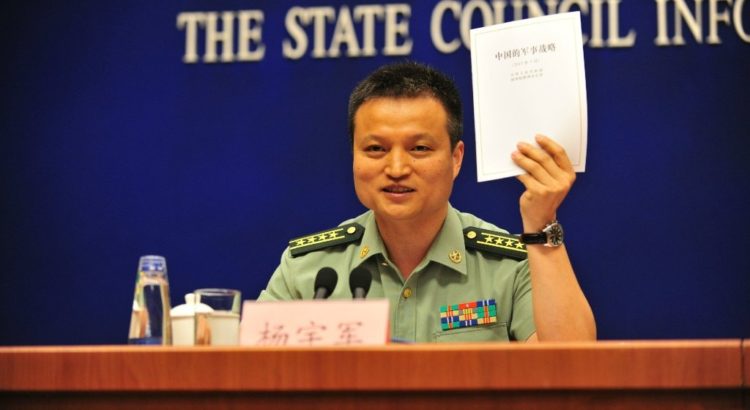
Libro blanco constata mejora educación religiosa en China

China/ 10 de abril 2018/Fuente: http://spanish.people.com.cn

El sistema de educación religiosa en China ha seguido mejorando, según un libro blanco publicado hoy martes.

El documento oficial, titulado «Políticas y prácticas de China para proteger la libertad de creencia religiosa», fue divulgado por la Oficina de Información del Consejo de Estado, el gabinete de China.

Al cierre de septiembre de 2017 había 91 escuelas religiosas en China, cuyo establecimiento fue aprobado por la Administración Estatal de Asuntos Religiosos (SARA, en sus siglas en inglés), incluidas 41 escuelas budistas, 10 taoístas, 10 islámicas, 9 católicas y 21 protestantes, enumera el libro blanco.

Hay seis colegios religiosos de nivel nacional; a saber: la Academia Budista de China, el Colegio Budista Tibetano de Alto Nivel de China, el Colegio Taoísta de China, el Instituto Islámico de China, el Seminario Nacional de la Iglesia Católica en China y el Seminario Teológico de la Unión de Nanjing, indicó el documento.

Más de 10.000 alumnos estudian en la actualidad en estas escuelas religiosas, de las que ya se han graduado más de 47.000.

Los textos religiosos y la literatura se publican según lo prescrito por la ley, de acuerdo con el libro blanco.

La impresión, publicación y difusión de textos religiosos en diferentes idiomas y ediciones, y de trabajos impresos, productos audiovisuales y libros electrónicos que registran, explican y/o glosan las doctrinas y cánones religiosos han satisfecho las diversas demandas de los ciudadanos con creencias religiosas de los distintos grupos étnicos, asegura.

Se han recopilado y publicado varias grandes colecciones de clásicos religiosos, incluidos el Canon budista chino, el Canon taoísta chino y Una colección de ediciones y comentarios para laozi, según el documento.

Las editoriales tradicionales de sutras en los templos budistas tibetanos han sido bien conservadas y desarrolladas. Ahora hay 60 casas editoriales de sutras, incluida la del Palacio de Potala, que pueden imprimir 63,000 sutras diferentes cada año, señala.

Clásicos islámicos como el Corán se han traducido y publicado en chino, uigur, kazajo y kirguiso. La publicación y difusión de la Nueva colección de las series de discursos de Al-Wa’z y otros materiales de lectura y revistas han superado los 1,76 millones de copias, según el documento.

China ha impreso más de 160 millones de copias de la Biblia en más de 100 idiomas diferentes para más de 100 países y regiones, incluyendo 80 millones de copias impresas en idioma chino, 11 en idiomas de minorías étnicas y en braille para las iglesias de China, agrega.

Fuente de la Noticia:

http://spanish.people.com.cn/n3/2018/0403/c31621-9445352.html

Comparte este contenido:

Pakistan: Public Private Partnership produced good results in education sector: CM

Pakistan/April 10, 2018/BY AFTAB CHANNA/Source: https://www.pakistantoday.com.pk

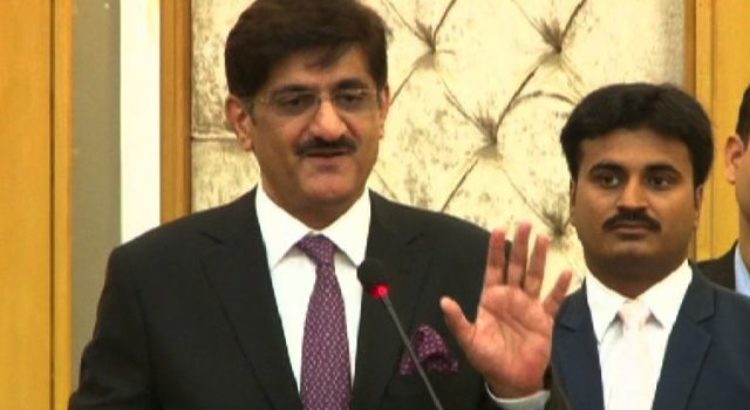
Sindh Chief Minister Syed Murad Ali Shah has said that the Public Private Partnership (PPP) in education sector has produced best results and its one of the success story is the toddlers who speak fluent English at DCTO English medium schools in Lyari.

This he said while addressing administration, teaching staff and students at DCTO English Medium High School, Lyari operating on PPP mode by Kiran Foundation, which he visited on Saturday. When the chief minister reached at school he was received by Education Secretary Iqbal Durani, Sindh Education Foundation (SEF) MD Nahid Durrani, administrator of school Nazir Tunio and others.

He said that Lyari was once a beautiful, peaceful and a vibrant area in the city. It used to remain opened the whole night. “I had also the honour to enjoy milk tea at restaurants at night but later something painful happened and Lyari turned into a most disturbed area in terms of peace and tranquility.

Murad Ali Shah added that drug dealers, paddlers and other out laws established their sway in the Lyari. The government worked day and night and fought bravely with mafias and restored peace there and then started developing the area to restore its past glories.

This DCTO school is one of the oldest schools from pre-partition. Originally it was established in 1930s by Deepchand T Ojha. This school was a preferred choice for schooling till 1970s. Later, this institution saw a great decline resulting in poor standard of education and dilapidated school building. He added that by 2002, the DCTO school had three double storey buildings where 13 schools were running within the same premises but there were barely any children getting education.

The government decided to hand over the school to Kiran Foundation in 2016, the chief minister said and added the Kiran Foundation runs this school from pre-nursery to high school. “The most encouraging move I have witnessed here at DCTO school is that the parents, particularly the mothers of students are given proper training to handle their kids at home DCTO,” he said and added this shows that mother and child education and training are taking place simultaneously at DCTO.

This novel but practical approach would definitely create [a child] father of nation. “These children who live in Lyari and have recently liberated themselves from the shekels of gang wars are speaking fluent English and know how to receive elders and how to talk and even they have good knowledge of history and geography.  “I assure you they are our best future and they would lead Layri to a prosperous, educated and culture Lyari,” he hoped.

The chief minister sharing his personal experience with the audience said that a little girl in a nursery class brilliantly briefed him about the geographical location of different province on the map of Pakistan. “They [students] are good at mathematics, science and history- this is what I have learnt by interacting with them in their class rooms.

Murad Ali Shah said that just after taking over as a chief minister he had visited this school and had made some promises with them to construct additional storey in school building to accommodate more students. “Today, I have visited that portion and heaved a sigh of relief to see wide and airy class rooms, labs and airy veranda,” he said and added the school administration has told him that 800 students are enrolled there and for academic session more three candidates/students had applied for admission but due shortage of space they could hardly accommodate 100 students.

The chief minister directed secretary education Iqbal Durani to locate a suitable school building in the area and hand over them to expand this DCTO school. “If you are giving good education, shaping up the future of students and training their mothers, I am with you- there is no service above it,” he said and vowed to support them in all intents and purposes.

Source:

https://www.pakistantoday.com.pk/2018/04/07/public-private-partnership-produced-good-results-in-education-sector-cm/


Comparte este contenido:

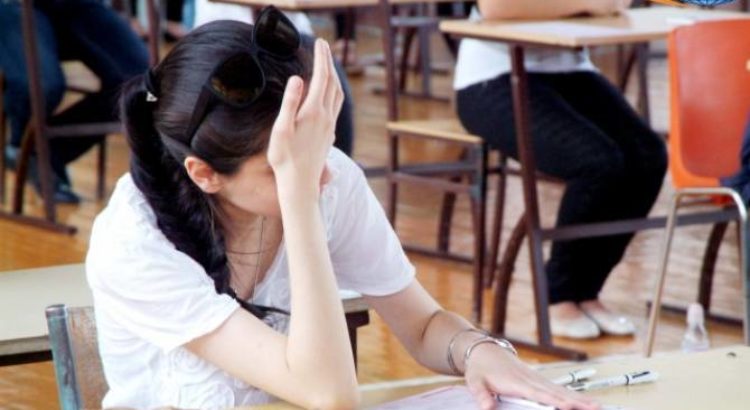
Armenia: Education ministry seeks to abolish re-examination opportunity in universities, academic staff express various positions

Armenia/April 10, 2018/Source: https://armenpress.am

The ministry of education and science of Armenia had earlier suggested a new bill whereby the re-examination opportunity for students would be abolished. Under the current system, students of universities are entitled to three re-examination attempts in case of failing an exam. The bill suggest using solely the minimal and maximal credits system – a student either gains enough credits during the year to pass to the following year, or he/she doesn’t.

But executives of universities say that although the model is being used worldwide, the transitioning in Armenia won’t be swift and easy.

ARMENPRESS talked with Vice Rectors of several universities about this proposed change, as well as another change – the attempt to decrease the number of admission applications based on randomly selected professions, and applicants will give the exams partly.

Yerevan State University’s Vice Rector for Academic Affairs Alexander Grigoryan says abolishing the re-examination model is a familiar method which is applied abroad. Grigoryan says transitioning to the model will certainly be difficult, because the complete preparation of the universities requires time.

“Serious work is required and I think the Yerevan State University will be ready for the new bill”, he said.

Tsolak Akopyan, Vice Rector of Academic Affairs of the Valery Brusov State University of Languages and Social Sciences, said a transition-at once will be difficult.

“But the fact that students will chose how many credits during how many years and when to graduate – in four or six years, this is an  accepted option”,  he said.

Arkadi Barkhudaryan, Vice Rector of for Academic Affairs of the national university of architecture and construction, said he opposes the bill and students should at least have one re-examination chance.

Source:

https://armenpress.am/eng/news/929061/

Comparte este contenido:

Syrian: The world’s toughest place to study?

Syrian/09.04.2018/ Fom: BBC.com.

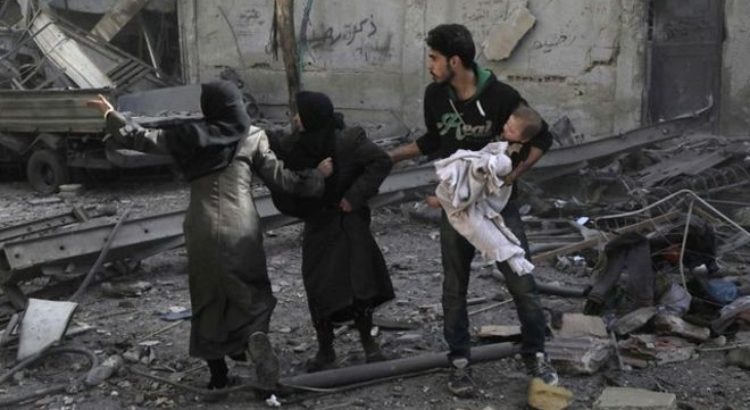
In the rubble of Syria’s long war, there are all kinds of images of destruction and despair.

But despite all the odds, in the depths of the siege of Eastern Ghouta, there are young people still trying to study and plan for a future.

Such students rely on universities offering online degrees – and as well as the challenges of staying alive, they have to find access to electricity and internet connections.

Mahmoud, a 20-year-old in Eastern Ghouta, has been studying computer science with the US-based University of the People, which offers degrees to people out of reach of conventional higher education.

‘Heavy shelling’

He took classes at secondary school in Eastern Ghouta through years of civil war and the siege – but then had nowhere to continue his studies into university.

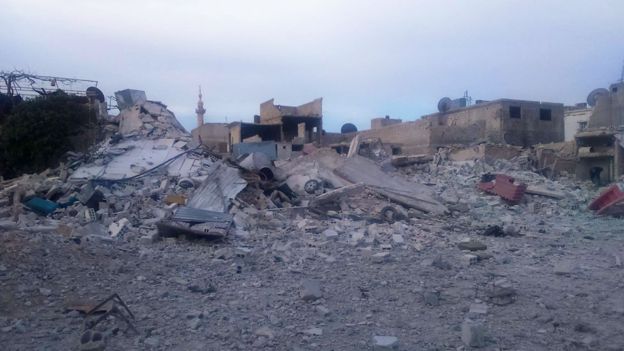
House of a student in Eastern Ghouta
Image captionThe shattered home of a student in Eastern Ghouta. He survived by being elsewhere at the time it was hit.

«When I finished high school I couldn’t find a university that offered computer science degrees,» he tells the BBC.

Studying and getting a degree are important as a way of looking forward, says Mahmoud, a symbol of something better in the future.

«I think I’ve put my first step on the road,» he says.

The University of the People is billed as the alternative university for people with no other alternative. It was used by Syrian students during the battle for Aleppo when the city’s own university was hit by rockets.

Siege of Eastern Ghouta
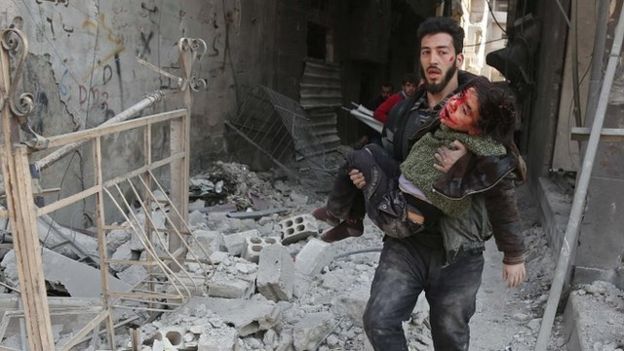
Image copyrightGETTY IMAGES
Image captionRescuing a child after an air strike during the siege

It allows students to study for an accredited degree entirely online, with support from the likes of Google and the Gates Foundation, and staffed by volunteer academics and retired university lecturers.

In Eastern Ghouta, described by the UN secretary general as «hell on earth», the university has about 10 students still following courses.

‘Survival’ and ‘hope’

But how can anyone focus on studying during such attacks?

«Of course there are a lot of psychological effects because of what is happening around us,» says Mahmoud.

«When the bombardment, the shelling, gets very heavy, the only thing we think about is our survival.

«And then when the bombardment gets better, even for a short amount of time, we go back to thinking about our jobs, our studies, what are we going to do in the future.

«I think personally that this dilemma is a psychological problem in itself.

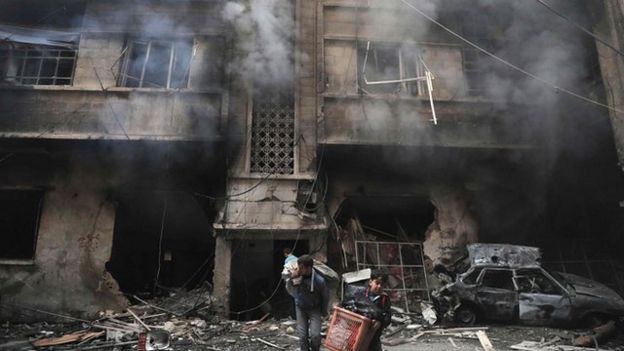
The aftermath of an air raid
Image copyrightGETTY IMAGES
Image captionMoving through the smoking ruins after an attack last week

«Because our minds wander between two separate lives – the life of a young person trying to complete his studies and achieve his goals – and the life of a 20-year-old just trying to get through the day and to survive again to see another day.»

But having the opportunity to study, in a place cut off and encircled, is a rare source of «optimism», he says.

«I want to graduate, to have a degree. For us under siege that’s a very big opportunity. It gives students hope.»

It’s a remarkable type of determination.

«I’m motivated to learn and want to keep learning. If I have the chance, I want to be part of the process of rebuilding the country again,» says Mahmoud.

‘We’ve had a bloody day today’

But it’s far from easy.

Until last month, it was «difficult but manageable» to keep up his studies, relying for power on local generators.

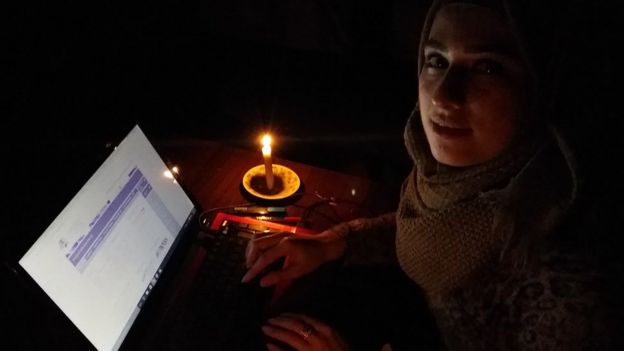
Mariam Hammad
Image captionMariam – a student who worked by candlelight during the battle for Aleppo

«Things like electricity, internet connection, everything I need for my virtual study was hard to get because of the siege and sometimes not available at all.»

But the situation has worsened.

All the families in his building have had to move down to take shelter together in the basement, he says.

Another computer studies student, Majed, has had his home demolished by an air raid. He has been struggling with unreliable internet connection and problems charging his phone.

While many students around the world are preparing for exams, he sent a message last week to say: «We’ve had a bloody day today. Dozens of air strikes.»

On Tuesday, Majed said a ceasefire for negotiations seemed to be holding.

Family in siege of Eastern Ghouta
Image copyrightGETTY IMAGES
Image captionFamilies emerging from underground shelters earlier this week

But food and power remained scarce and very expensive and people had moved to makeshift bomb shelters to escape the shelling.

He fears for Syria’s next generation, missing out on education and with the risk of «ignorance and child labour».

While other students are counting down the days to final exams, he has been counting the numbers of victims.

But Majed says he still has «faith» and is looking to the future. He wants to get a PhD.

«Our lives should continue, the war should not prevent us. In the end we’re the ones to rebuild the country and repair the damage.

«I believe education will help us build our future.»

From: http://www.bbc.com/news/business-43555596

Comparte este contenido:
Page 297 of 773
1 295 296 297 298 299 773