Page 365 of 772
1 363 364 365 366 367 772

Abe promete dar prioridad a gasto en educación por encima de equilibrio fiscal de Japón

Japón/ 24 de octubre de 2017/Por Tetsushi Kajimoto/ Fuente: https://www.swissinfo.ch

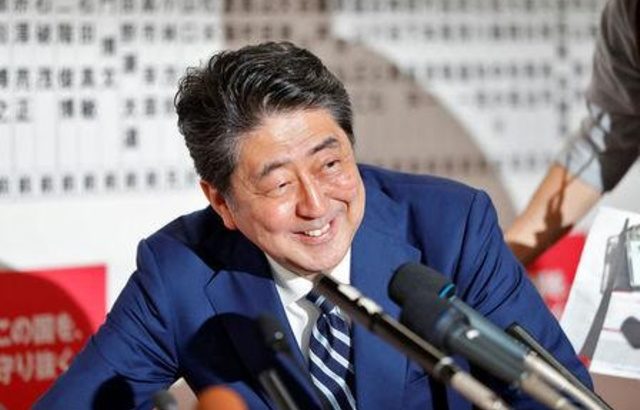
El primer ministro de Japón, Shinzo Abe, prometió el lunes hacer de la educación y el cuidado de los niños una prioridad de su Gobierno por encima del equilibrio fiscal tras ganar un nuevo mandato en elecciones legislativas, en momentos en que el veloz envejecimiento de la población amenaza sus esfuerzos por reactivar la economía.

La coalición oficialista de Abe logró una victoria aplastante en las urnas el domingo, ayudada por sus promesas de campaña de invertir más en educación y el cuidado de menores, en parte alentada por la necesidad de incentivar a más mujeres a unirse a la fuerza laboral.

El primer ministro también dijo que seguirá presionando a las cautelosas firmas japonesas para que inviertan sus enormes volúmenes de efectivo en mejorar los salarios de sus empleados, a fin de avivar el ciclo del crecimiento mediante el consumo.

Ante la continuidad de su llamada estrategia «Abenomics» enfocada en una política monetaria ultra relajada, el sólido triunfo de Abe también aumentó las expectativas de que Haruhiko Kuroda vuelva a ser nombrado gobernador del Banco de Japón a inicios de abril cuando expire su actual mandato de 5 años.

El triunfo electoral de Abe elevó las acciones globales y el dólar el lunes, además de enviar al índice referencial de la bolsa de Tokio, el Nikkei, a máximos de 21 años.

Abe llegó al poder en el 2012 tras prometer revivir la economía japonesa, la tercera más grande del mundo, luego de casi dos décadas de deflación y estancamiento.

La economía se está recuperando gradualmente pero el lento crecimiento de los salarios mantiene los gastos de los consumidores y la inflación débiles, aunque las empresas afrontan una escasez de trabajadores debido a la baja tasa de natalidad y al rápido envejecimiento de la población.

El primer ministro prometió ofrecer educación preescolar gratuita para todos los niños entre 3 y 5 años y para los bebés de 2 o menos años de familias con rentas más bajas.

«La clave para el crecimiento sostenido de Japón es cómo respondemos al envejecimiento de la población, que es el mayor desafío del ‘Abenomics'», dijo Abe en rueda de prensa.

Si Japón aplica de inmediato la educación preescolar gratuita para todos los niños, esto tendría un costo de 1,2 billones de yenes (10.540 millones de dólares), de acuerdo a estimaciones del Gobierno.

(1 dólar = 113,85 yenes)

(Reporte adicional de Linda Sieg. Editado en español por Carlos Aliaga y Marion Giraldo)

Fuente de la Noticia:

https://www.swissinfo.ch/spa/abe-promete-dar-prioridad-a-gasto-en-educaci%C3%B3n-por-encima-de-equilibrio-fiscal-de-jap%C3%B3n/43618118
Comparte este contenido:

Biggest Education Exhibition of Pakistan

Pakistan/October 24, 2017/Source: http://middleeast-business.com

BIGGEST EDUCATION EXHIBITION OF PAKISTAN TO TAKE PLACE ON 28-29 APRIL 2018

EdEx Pakistan – The Higher Education & Training Exhibition will be held from 28 – 29 April 2018 at the Karachi Expo Centre. The largest Education Expo to be held in Pakistan, it will feature over 80 leading local and international universities, colleges and higher education institutes, various training institutes from all across the globe.

Organized by Expology Private Ltd., EdEx Pakistan will provide an ideal platform for local and international universities and colleges to promote their accredited courses – ranging from Bachelor›s Degree, Post-Graduation/Masters and Doctorate Programmes. The Expo also opens a window of opportunity for these higher education institutes to meet with key Government entities, professionals and local students seeking to study abroad.

Apart from playing a prominent role in the country’s development, the exhibition is organized with the objective of helping institutes of higher learning reach a cross section of Pakistani students who have the qualification and the means to contemplate further education in Pakistan or abroad. Faculty, admission officers and career counselors will interact with the visiting students directly on a one-on-one basis.

One of the largest and complete education fairs, EdEx Pakistan sets the stage to meet aspiring and promising students interested to study in Pakistan and abroad. You cannot afford to miss out Pakistan’s most important event of international universities, business schools and colleges which brings you thousands of potential students face-to-face, parents and agents from all over the country. Students can be informed about the study opportunities offered at your campus.

EdEx Pakistan is a unique education fair showcasing universities, colleges and other educational Institutions from all across the world. This fair is the most exciting platform for introducing your institutions to an eager and growing market of potential students ready to study abroad.

Pakistan is one of the leading international markets in Asia for recruiting students in to educational institutions from all over the world.

For Exhibiting Enquiries and Sponsorship Opportunities in EdEx Pakistan, please contact Mr. Muhammad Usman, Expology on Mobile No: +92 322 2711608 or e-mail media@edexpak.com, Website: www.edexpak.com

Source:

Biggest Education Exhibition of Pakistan

Comparte este contenido:

Skills Gap – The achilles of Sri Lanka’s education sector

Sri Lanka/October 24, 2017/Source: Lanka Bussines Online

As Sri Lanka enters an increasingly competitive international environment with a renewed emphasis on transforming itself into a modern economy, the importance of promoting technological innovationsand generating an educated workforce with market oriented skills cannot be over emphasized. High quality human resources with science and technology knowledge and a skilled labour force are necessary to keep up and improve on the country’s global competitiveness.

Link between Access to Tertiary Education and Skills Mis-match

As of 2014, only 5 per cent of 20-24 year olds were enrolled at a university, while another 8 per cent were enrolled in other educational institutions and only a 3 per cent of the same age group were enrolled in technical education and vocational training (TEVT) courses. The main reasons behind this lower tertiary enrolment include capacity constraints of the state university system, unavailability of a proper parallel higher education system with private sector involvement, and an underdeveloped TEVT sector. Given these, most of the school leavers usually find unskilled work or engage in casual jobs. This limited higher educated human capital acts as a constraint in catering to the labour market demand for advanced skilled workers.

ICT and English language are the most demanded soft skills in the country. Individuals competent in English have access to better quality jobs with higher salaries and benefits in the domestic labour market as well as internationally. However, the Census of Population and Housing 2012 dataconducted by the DCS reveals that of the age 15 and above population, English literacy (ability to speak, read and write) and computer literacy were around 22 per cent and 23 per cent, respectively. This situation creates a gap in meeting the demand for soft skills as previously noted.

The primary reason behind this skills mismatch is that the quality of the general and higher education systems – provided mainly by the public sector – does not transmit much productive skills to students. Also, there are supply side bottlenecks for more demanding subjects such as Science, ICT education, etc. at the school level — out of 10,162 schools only 10 per cent have the facilities to teach A-Level in the science stream.These have resulted in mismatches between the demands of the market and the skills of school and university graduates.

Sri Lanka also does not appear to produce graduates with the necessary skills needed for the job market. There is a mismatch in the courses offered by universities and competencies needed by the private sector. A major reason for the skill mismatch is the outdated curricula, aggravated by the lack of interaction with the private sector when designing degree programmes. For example, of those who do attend a university, nearly one-third are studying in the Arts Stream, whereas these Arts graduates are less employable when compared to graduates of other subject streams.Finally, there is no proper career guidance system to advise school leavers leading to an inadequate flow of information between youth and the labour market. Inadequate information flows between the youth and the labour market such as of the types of job opportunities in the labour market, limit the aspirations, and life goals of youth.

Reforms to BridgeSkill Gaps to World of Work

It is essential to reform the school and university curricula by introducing more market oriented subjects such as ICT/technological subjects as core subject in each A-Level subject stream, especially in the arts stream, in order to bridge the gap between demand and supply for these vital skills.

It is also a necessity to provide access to equal opportunities for education to all students across the country. Opportunities for education in science should be extended to remove involuntary discrimination for science education. While the number of science teaching schools needs to be increased to address equitable distribution, the technology stream should be strengthened where provision of science teaching is not possible.

It is essential setting national standards for all tertiary providers to revamp controversy surrounding of private higher education providers. Also, state universities should change to become dynamic centers of teaching and learning that will react to changes in the market in a timely manner. Curriculum should be reformed to match the skills demands of the globalized labour market with sufficient practical applications. Linkages should be developed between universities and private sector when designing the courses, securing the relevance of training to the changing needs of enterprises and labour markets.

A minimum of two years training is recommended for students after sitting for O-Levels to address the skill gaps of school leavers. Training programme should be more work-oriented technical training in different fields such as hotel, construction, textile and garment sectors, etc. Vocational education systems should be linked with industries that can absorb these students.

To address the labour market information gap among school leavers, awareness and absorptive capacities of industries, as well as education and training institutes needs to be developed. Raising awareness should be done at the school level after sitting for O-Levels. This awareness campaign should be done in a well-planned manner, with the involvement of vocational training authorities, private sector institutes, etc.

Source:

http://education.einnews.com/article/411285973/pEyjzJxrAfoM0Pk0?lcf=eG8zt30RHq4WcGF5PkFdHg%3D%3D

Comparte este contenido:

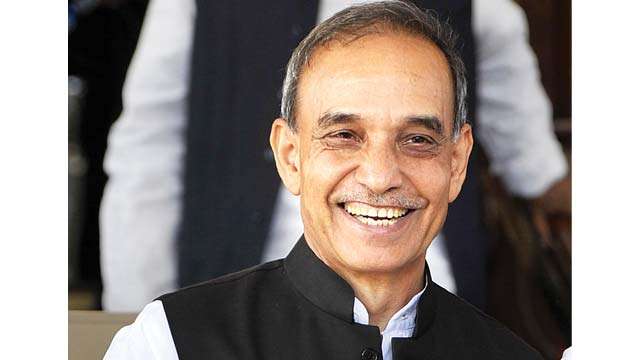
Indian government to announce new education policy in December: Union minister

Indian/October 24, 2017/Source: Times of Oman

A new education policy to «correct» the education system, which follows a «colonial» mindset, will be brought out in December, Union minister Satya Pal Singh said on Monday.

He said threadbare discussions were held on the new education policy, which is in its final stages. «The NDA government’s new education policy is in its final stages and the same will be out in December. The policy envisages correcting the education system that has followed a colonial mindset,» the minister of state for human resources said.

After Independence, most academicians unfortunately followed the footsteps of British and western scholars and «deliberately» denigrated Indian culture, he said.

The minister said the biggest challenge facing the education system and government was how to «decolonise» the Indian mind, and added that the nation has to keep pace with the world in this field. Some issues to be addressed are — improving the quality of education at the primary level, making higher education affordable and ensuring more people have access to education, he said after inaugurating the National Academic meet here.

Skill development was a major area to which the government has given thrust. But more has to be done on this, Singh said. To prevent exodus of students abroad for education,he said higher education institutions matching the standards of centres of international excellence should be developed.

The MoS said accessibility to higher education in India was only 25.6 per cent while it was 86 per cent in USA, 80 per cent in Germany and 60 per cent in China.

«The aim is to improve the higher education system in the country to make it available to more,» he said. Singh said the challenge before the government was to remove social and regional disparities in students having access to higher education and to make it affordable to all.

«In some places access to higher education is as low as nine per cent, but in others it is 60 per cent…higher education is very expensive and has to be made more affordable to all sections of the society,» he said.

Singh pointed out that 50 per cent of the teachers posts were lying vacant in universities. «In Delhi University, there are 4,000 vacancies,» he said. Singh said though India produces 30,000 to 40,000 PhD holders every year, the nation’s contribution to the world economy was only 0.2 per cent and added that a lot of improvement has to be brought about in research and development in the country. He said changes are necessary in the Right to Education Act as the act «lacked teeth».

«The Act provides the right to compulsory primary education. But what is the remedy if parents do not send their children to school? So many things have to be done to improve primary education in the country,» he added.

The meet was organised by Bharatheeya Vichara Kendram as part of the navathi celebration of P. Parameswarn, Sangh Parivar ideologue and director of the BVK.

Source:

http://education.einnews.com/article/411328283/kmri2asCGk8J4fKb?lcf=eG8zt30RHq4WcGF5PkFdHg%3D%3D

Comparte este contenido:

New school offers education ‘salvation’ for Syrian girls in Lebanon

Lebanon/October 24, 2017/By: Dahlia Nehme/Source: http://uk.reuters.com

A new girls’ school for Syrian refugees in Lebanon’s poor Bekaa region is aiming to give girls from conservative backgrounds the chance at a formal education.

Gaining access to education in general is difficult for Syrian refugees in Lebanon, but for girls from socially conservative families who disapprove of mixed schools, it is even harder.

Zahra al-Ayed, 14, and her sister Batoul, 17, were from a village in Syria’s northern Idlib province where women were expected to marry young.

 But the experience of fleeing war and living in harsh poverty woke her parents to the life-changing importance of education, the girls’ mother Mirdiyeh al-Ayed said.

“My eldest daughter tells me that she will not marry until after she finishes her education. She even wants to travel abroad and learn,” she said.

Human Rights Watch organisation said in its latest report in April that more than half a million refugee children are out of school in Jordan, Lebanon and Turkey.

In Lebanon, international donors paid for 200,000 public school spaces for Syrian children in 2015-2016, according to the HRW report, but only 149,000 children actually enrolled.

Lebanese and international non-governmental organisations have been striving to fill the gap, and to eliminate the legal, financial and language barriers preventing refugee children from getting their education.

For the al-Ayed family, used to Syria’s system of gender segregation after the age of 12, one big barrier to enrolling the girls was the lack of single-sex schools in Lebanon that accept refugees.

SYRIAN REFUGEES

The new school that Zahra will attend is in Bar Elias in the Bekaa valley and was opened on Thursday by the Kayany Foundation, a Lebanese charity. It educates 160 Syrian girls aged from 14-18 who have missed school for several years.

Those who manage to pass the Lebanese system’s eighth grade exams – usually taken at the age of 14 or 15 – can join the local Lebanese public school in Bar Elias, which Batoul al-Ayed has done.

The Kayany Foundation school teaches the official Lebanese curriculum, which includes science, mathematics, Arabic and English, in addition to vocational skills.

The school, built from colourful pre-fabricated classrooms, is its seventh in the Bekaa valley, where the majority of the Syrian refugee communities are located in Lebanon.

It was meant to address the Syrian parents’ concerns about sending their teenage daughters to schools for both girls and boys. All its teachers are women and it provides transportation for students between home and school.

 “Education is salvation for the refugee girls,” said Nora Jumblatt, head of the Kayany Foundation, at the opening ceremony.

Funding for the school was secured for this year from international charity Save the Children and the United Nations Women For Peace Association, according to Kayany officials.

“I have a dream to become a pharmacist,” Rama, 19, who is preparing to apply for the eight grade exams at Kayany school said. In normal times, Rama would already have been applying for university at that age.

“I still want to go back to Syria and fulfill my dream there, in Damascus University,” she added.

Source:

http://uk.reuters.com/article/uk-mideast-crisis-lebanon-education/new-school-offers-education-salvation-for-syrian-girls-in-lebanon-idUKKBN1CS2C8

Comparte este contenido:

Preocupación en Vietnam por preservar lenguas de minorías étnicas

Vietnam/23 octubre 2017/Fuente: Prensa Latina

Aunque una veintena de ciudades y provincias imparten cursos de idiomas de las minorías étnicas vietnamitas y crece su presencia en los programas escolares, expertos estimaron hoy que son necesarias otras acciones para preservarlos.
Un seminario celebrado por el Frente de la Patria (VFF, la mayor organización de masas del país) evaluó diversas acciones para propiciar el proceso de enseñanza-aprendizaje de las lenguas de los 54 grupos étnicos existentes en la nación indochina.

La vicepresidenta del VFF, Ha Thi Khiet, hizo notar que la mitad de ellos poseen grafías propias e instó a propiciar la enseñanza oral y escrita de esos idiomas hasta en las zonas más apartadas para salvaguardar el rico patrimonio cultural de Vietnam.

En representación del Ministerio de Educación, Tran Van Thuy apuntó que siguiendo un criterio de presencia de las etnias, en la actualidad sus lenguas se imparten en 782 escuelas, pero reconoció que el número de maestros solo satisface el cinco por ciento de la demanda.

El profesor Nguyen Huu Hoanh, de la Academia de Ciencias Sociales, recalcó que la protección de la diversidad cultural y lingüística es una tarea urgente en el contexto de la industrialización, la modernización y la integración internacional.

Numerosos delegados expusieron la necesidad de una mayor coordinación entre ministerios, organismos y agencias especializadas para garantizar la defensa y preservación de los valores culturales de las etnias.

Entre los grupos étnicos del país, los viet son mayoritarios (87 por ciento en una población de alrededor de 94 millones de personas), seguidos por los Tay, los Thai, los Muong, los Hoa y los Khmer, con alrededor de un millón de miembros cada uno.

Entre los restantes, algunos apenas llegan a unos cientos de integrantes.

Fue solo a partir de la independencia de la parte norte de Vietnam (2 de septiembre en 1945, contra Francia) cuando las minorías pudieron ser tomadas en cuenta en el gran proyecto de unidad nacional.

Pero debieron transcurrir tres décadas de guerra frente al invasor estadounidense antes de poder completar la verdadera integración de todas las etnias bajo la bandera nacional.

Tras la liberación y reunificación del país, las instituciones científicas confeccionaron un primer mapa de la composición de los grupos étnicos, cuyas peculiaridades se muestran en el muy concurrido y útil Museo Etnológico en Hanoi.

Fuente: http://prensa-latina.cu/index.php?o=rn&id=124919&SEO=preocupacion-en-vietnam-por-preservar-lenguas-de-minorias-etnicas

Comparte este contenido:

En la última década, China ha subvencionado cerca de 800 millones de estudiantes de bajos ingresos

China/23 octubre 2017/Fuente: Spanish People Daily

Los datos publicados por el Ministerio de Educación de China demuestran que durante la última década, China ha subvencionado 775 millones de estudiantes, dedicando más de un billón de renminbi (unos 150 mil millones de dólares) a esta actividad, permaneciendo fiel al principio de «no dejar a ningún estudiante de bajos ingresos fuera del aula, debido a dificultades económicas familiares».

En mayo del 2007, por primera vez el Consejo de Estado de China emitió un documento que contenía la planificación y un diseño exhaustivo y sistemático sobre el sistema de financiamiento para los estudiantes chinos. Durante la última década, el número de estudiantes subvencionados aumentó año tras año, mientras que los recursos dedicados a esta noble actividad social no dejaron de crecer.

Analizando los porcentajes de inversión, los fondos fiscales siempre ocupan el lugar principal. En 10 años, la inversión fiscal cifró más de 726.096 millones de renminbi (alrededor de 109.800 millones de dólares), valor que representa el 68.87% del financiamiento total. Las medidas y políticas implementadas para apoyar al sector alcanzaron más de 40 lineamientos, con 29 contenidos sobre este tema en particular, logrando «la tríada completa de coberturas»: desde la educación preescolar hasta el postgrado, en escuelas públicas como en privadas y subvención para todos los estudiantes provenientes de familiares de bajos ingresos.

Un estudio de la UNESCO evidencia que el aumento de la productividad laboral varía en dependencia de los diferentes niveles de educación obtenidos: 300% en graduados universitarios, 108% en aquellos que terminaron la enseñanza secundaria y apenas un 43% en las personas que solamente poseen estudios primarios. También entre los años per cápita de educación y el PIB per cápita, el coeficiente de correlación es del 0,562. Es por ello por lo que el papel de la educación es fundamental en la lucha contra la pobreza y la prevención del retorno al círculo de penurias económicas. Con el indetenible y gradual avance de la estrategia de reducción de la pobreza que China ha precisado en detalle, garantizar la educación universal deviene una tarea de primer orden.

”Para vencer la pobreza, primero hay que vencer la ignorancia”, aseguró el presidente Xi.

El Informe sobre Desarrollo Humano China 2016, publicado por el Programa de Desarrollo de las Naciones Unidas (PNUD, por sus siglas en inglés), enfatiza que el «epopéyico» desarrollo en la reducción de la pobreza que China ha logrado, es uno de los resultados más importantes de las últimas décadas.

Garantizar el acceso universal a la educación es una de las herramientas decisivas para alcanzar los objetivos trazados y superar este indeseable flagelo social.

Fuente: http://spanish.peopledaily.com.cn/n3/2017/1021/c31621-9283068.html

Comparte este contenido:
Page 365 of 772
1 363 364 365 366 367 772