Page 393 of 773
1 391 392 393 394 395 773

La educación, un derecho que se les niega a los niños palestinos por culpa de Israel

Palestina / 3 de septiembre de 2017 / Autor: Daud Abdullah / Fuente: Monitor de Oriente

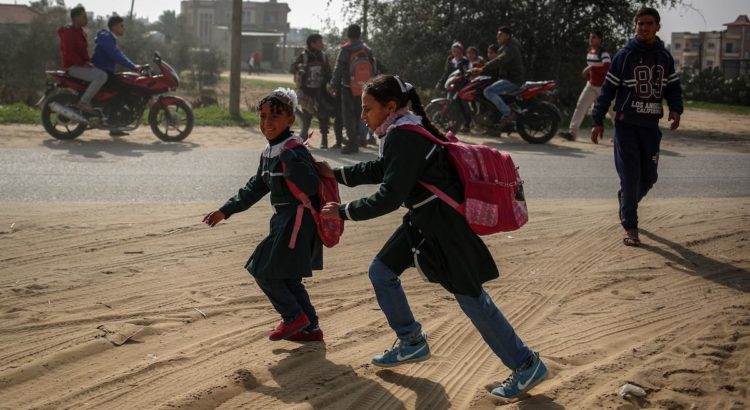
¿Recuerdas la emoción del primer día de colegio? ¿La alegría de pasar a una nueva clase, de ver a viejos y nuevos amigos y de reconectar con los profesores? Todos eran parte de la experiencia que, para la mayoría de la gente, hizo de la educación primaria y secundaria algo agradable y gratificante. Sin embargo, para muchos de los 1.250.000 niños palestinos que empezaron el nuevo curso académico la semana pasada, la ocasión no estuvo a la altura de tales expectativas.

En algunos casos, llegaron a encontrarse con su escuela derribada por el ejército de ocupación israelí. Al menos 55 escuelas en la Cisjordania ocupada están bajo amenaza de demolición. Además, muchos alumnos llegaron llenos de esperanza al nuevo curso, sólo para descubrir que cientos de sus compañeros languidecen en cárceles israelíes. En la Jerusalén ocupada, otros muchos recibieron la noticia de que sus profesores habían sido despedidos por supuesta “incitación”.

En cuanto a los niños de la Franja de Gaza, su desafío es otro completamente diferente. El asedio de ya 10 años de Israel continúa empujándoles hacia el límite. La electricidad escasea; miles estudian a la luz de las velas, cuando consiguen velas; y, para empeorarlo todo, la autoridad de Ramala ha obligado a decenas de profesores a jubilarse con anticipación y ha dejado de pagar los salarios a otros cientos.

Existen ciertos paralelismos obvios entre la realidad palestina y la experiencia de los afroamericanos. En el auge del movimiento por los derechos civiles en 1964, el reverendo Martin Luther King Jr. destacó el valor de una buena educación: “La educación es uno de los derechos más difíciles de alcanzar para los negros, precisamente porque es el camino hacia la igualdad y la ciudadanía”, dijo King.

Martin Luther King, durante la Marcha sobre Washington del 28 de agosto de 1963 [Rowland Scherman / US National Archives]

“La falta de una educación igualitaria para los negros es parte del diseño histórico para aislarnos en el estatus de segunda clase. Por lo tanto, mientras los negros luchan por la libertad, deben luchar por la oportunidad de una educación decente.” 

Como ocurrió en el Estados Unidos segregado, las sucesivas generaciones de palestinos han sido privadas de la oportunidad de una educación apropiada, simplemente porque sus opresores – Israel y sus aliados – creen que es la mejor manera de subyugarlos. Aún así, los palestinos se dieron cuenta hace tiempo de que su libertad está intrínsecamente vinculada con la educación.

Hace tres años, una joven palestina, Eqbal Assad, de 20 años, se convirtió en la médica más joven del mundo; su logro llegó al Libro Guinness de los Récords. Eqbal, hija de una familia de refugiados en el valle de Bekaa, Líbano, se matriculó en la Facultad de Medicina de la Universidad de Cornell, en Qatar, con tan solo 14 años.

Del mismo modo, el año pasado, Hanan Al-Hroub, criada en el campamento de refugiados de Dheisheh, a las afueras de Belén, ganó el Premio Global de Maestros de la Fundación Varkey. Empezó con la enseñanza después de que tres de sus hijos – dos gemelas y un niño, de nueve y seis años respectivamente – fueran disparados por soldados israelíes en octubre del 2000. Su propia exposición a la violencia en el campamento le ayudó a desarrollar las técnicas con las que trabaja con niños traumatizados por los excesos de la brutal ocupación militar de Israel.

Si se les diese la oportunidad de perseguir sus sueños educativos, incontables niños palestinos igualarían, o incluso quizás superarían, los logros de Eqbal y Hanan. Esto es lo que hace de su educación algo tan reprensible. Cuando los primeros sionistas presionaron a los gobiernos europeos para apoyar su colonización de Palestina hace 100 años, afirmaron que allí formarían un “puesto avanzado de civilización, opuesto a la barbarie”. La denegación a la educación de hoy en día para los palestinos indígenas confirma que estas afirmaciones eran un engaño para convencer a los líderes de Europa. Pocas cosas son más bárbaras que negarles a los niños su educación.

La experiencia de los palestinos en el pasado, presente y futuro próximo debe servir de advertencia para los países de África y Latinoamérica que están siendo tanteados por el actual gobierno israelí con promesas de “ayuda y desarrollo”. Están mintiendo, tienen objetivos más nefastos; cuidado con los regalos de los sionistas.

Además, una minoría de individuos influyentes siempre preferirá no desafiar estos asaltos contra los derechos de los palestinos. Mientras proporcionan a sus niños y ciudadanos la mejor educación posible, hacen oídos sordos a la situación en la Palestina ocupada. El ex Primer Ministro británico Tony Blair es uno de ellos. Su eslogan electoral, “educación, educación, educación”, está ahora canonizado en The Oxford Dictionary of Thematic Quotations. Sin embargo, bajo su posición de enviado de paz a Oriente Medio, Israel desarrolló aún más la mecánica de ocupación utilizada para negarles a los niños palestinos una educación decente. Vale la pena recordar que los niños palestinos han sido atacados y asesinados en sus pupitres, y que sus escuelas han sido bombardeadas por Israel con bombas de fósforo.

Sin embargo, a pesar de todo, la solidaridad internacional con Palestina y su pueblo crece cada día. De la misma manera que los empresarios e instituciones conscientes de la situación han retirado las empresas que se benefician de la ocupación israelí en Palestina, podemos confiar en que, tarde o temprano, las universidades e instituciones culturales boicotearán a sus homólogas israelíes, así como los eventos culturales y deportivos en los que participen israelíes.

La educación es un derecho universal, no un privilegio. Todo niño, independientemente de su raza, religión o color, tiene derecho a ser educado. La negación de este derecho en Palestina ha de ser una cuestión de interés internacional. Durante su lucha contra el apartheid sudafricano, Nelson Mandela dijo una vez: “La educación es el arma más poderosa para cambiar el mundo”. Ahora, en la lucha global contra el apartheid israelí, debemos hacer todo lo posible para asegurar una educación decente para los niños palestinos.

Fuente del Artículo:

https://www.monitordeoriente.com/20170829-la-educacion-un-derecho-que-se-les-niega-a-los-ninos-palestinos-por-culpa-de-israel/

Comparte este contenido:

China: Nuevas carreras profesionales al calor del boom del comercio electrónico

Asia/China/03 Septiembre 2017/Fuente: spanish/Autor:Sonia

¿Ir de compras puede ser un trabajo? ¿Y convertirse en toda una carrera profesional? Puede parecer un sueño para muchos adictos a las compras, pero para algunos es toda una realidad.

Es el caso de Sun Jing, compradora de moda y propietaria de una tienda en línea en el portal de comercio electrónico Taobao, uno de los más populares de China. Sun comenzó a publicar entradas sobre compras en 2005 cuando aún estudiaba en la universidad. Apodada “profesora Vivi” en muchos foros de moda chinos, Sun comparte sus consejos sobre cómo encontrar ropa barata y de calidad en los mercados mayoristas de bajo coste, así como consejos sobre estilo al vestir.

Ahora, varios años después de comenzar a publicar y tras haber sacado al mercado dos libros sobre sus experiencias de compras, Sun ha abierto su propia tienda en línea en Taobao.

En su calidad de mayor portal de tiendas minoristas de China, Taobao.com alberga un gran número de tiendas individuales que venden artículos en línea a precios de ocasión. Tras el auge del comercio electrónico, las profesiones relacionadas, como fotógrafos callejeros y ‘shoppers’ (compradores profesionales) están experimentando también un boom.

“No soy un comprador a la manera como la mayoría suele pensar sobre esta profesión”, explica Sun, añadiendo que la impresión general es que los compradores viajan al extranjero para comprar artículos de moda de alta gama o de grandes marcas, pero comprando la mayor parte de los artículos en el mercado nacional, apuntando al mercado mayoritario.

Una afición convertida en profesión

Inicialmente, Sun sólo quería compartir sus experiencias sobre compras cuando se dio cuenta de que era posible encontrar ropa de calidad en los mercados de bajo coste. Con su éxito a la caza de las gangas en mercados de Pekín, Shanghái y Tianjin, Sun se convirtió de experimentada compradora a una profesional del ‘shopping’ que no sólo compra para sí, sino que también ayuda a otras mujeres a comprar. Luego llegaron sus apariciones en televisión y revistas y su celebridad se expandió más allá del ciberespacio.

Sin embargo, empezar un negocio no es fácil y muchos no cuentan con los recursos financieros ni la experiencia necesaria para abrir sus propias tiendas. Algunos optan por trabajar como compradores para empresas ya establecidas.

Un ejemplo es Hstyle, una empresa de venta minorista de moda establecida en 2008, se concentra principalmente en las tendencias de Corea del Sur. Cuenta con 1.200 empleados y un millón de visitas al día en su página web.

Li Xiaona, 27 años, trabaja en esta empresa como compradora profesional. Estudió diseño de moda en la universidad y, tras graduarse, entró en la industria como diseñadora. Más tarde, encontró su trabajo en Hstyle, con el que se siente a gusto.

Los trabajadores de Hstyle visitan cada día numerosas webs de moda surcoreanas en busca de prendas. Los mánagers toman las decisiones finales sobre compras, en general de dos a tres artículos por cada comprador al día.

La gran carga de trabajo está apoyada en un gran grupo de compradores profesionales, cada uno con una tarea distinta, desde elegir las prendas, asistencia, márketing, gestión de almacén y administración. “Son como el departamento de investigación y desarrollo”, cuenta Chen Xin, directora de relaciones públicas de la firma. “Se diferencian de los vendedores minoristas tradicionales en que cuentan con procedimientos específicos”, añade.

Según Li, la presión en el sector es cada vez mayor, debido al aumento de la competencia por el mayor número de profesionales en este campo, así como las crecientes expectativas de los clientes. No obstante, sigue siendo un trabajo ideal para muchos jóvenes en un mercado cuyos clientes meta son, igualmente, jóvenes.

Fuente de la noticia: http://spanish.china.org.cn/economic/txt/2012-08/22/content_26306546.htm

Fuente de la imagen: http://images.china.cn/attachement/jpg/site1006/20120822/001372a9aeaf119ece7319.jpg

Comparte este contenido:

Más estudiantes universitarios chinos optan por el Ejército

Asia/China/02 Septiembre 2017/Fuente: Prensa Latina

El Ministerio de Educación chino informó hoy que 1,08 millones de estudiantes universitarios se han enrolado en el Ejército hasta agosto de este año, un incremento interanual de 5,58 por ciento.
De acuerdo con el portavoz Xu Mei, la cifra evidencia que a más estudiantes de la enseñanza superior les interesa dedicarse a la defensa nacional y a servir el país.

Según Xu, el ministerio ayudará en la aplicación de los exámenes físicos y políticos para reclutar a más soldados en las universidades.

El incremento coincide con el llamado que hizo el Ejército en julio de este año para elevar la proporción de reclutas entre los alumnos universitarios.

Durante los últimos cinco años las fuerzas armadas de China viven una reforma que abarca lo político, la estructura organizativa, el sistema de la fuerza militar y los métodos de trabajo.

Fuente: http://www.prensa-latina.cu/index.php?o=rn&id=111803&SEO=mas-estudiantes-universitarios-chinos-optan-por-el-ejercito
Comparte este contenido:

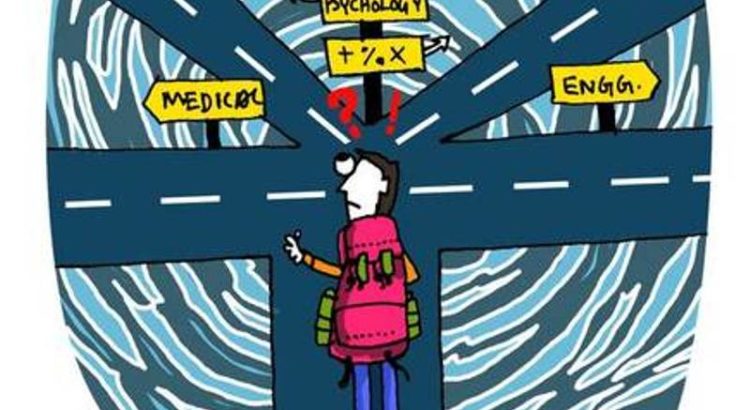
India : At a crossroads of choice

Asia/India/Septiembre del 2017/Noticias/http://www.thehindu.com/

Build on your strengths to face situations positively.

Two roads diverged in a wood and I, I took the road less travelled by, and that has made all the difference.”

These lines from the poem, The Road not taken by Robert Frost, resonates with simplicity, couched in the wisdom of human experience.

As you are reading this, it is possible that you might be going through a similar dilemma, which is manifesting in various forms. It could be an uncertainty, about which course to apply for after school or if employed, wondering whether there are other choices to explore.

Whatever the scenario, it is the nature of the trajectory of life, to give us this hidden blessing to ask ourselves, “What do we do next?”, “Which road shall I take?”

Decisions

In personal interactions with students, one finds that the lack of introspection and self-reflection drowns out their own authentic voice. The barrage of noise from the expectations of their family, society or the opinions of friends, leaves them only more confused. Often, just the sheer demand of preparing for entrance exams and scoring marks, leaves very little time for harassed families and students to pay attention, to their calling within.

In this anxiety, decisions are made from a foundation of fear and anxiety. The decision to pursue a rigorous course of study such as medicine, engineering and law, is taken without understanding the nature of these professions. When we would ask students who opted for engineering, whether they had an idea of what an engineer’s work entails, the various branches in this field or whether they have an aptitude to create solutions, they would often reply that their choice of course was solely decided by a combination of marks and peer pressure.

What one forgets in this race is that these careers have both a high financial and time commitment, and unless one is aware of this, joining a course offers only temporary security. Many of us have faced such situations where we enrolled in courses only to find that we have neither the interest nor aptitude.

Practical measures

There are a few steps that one can take on a practical basis.

Firstly, understand that it is perfectly legitimate to be confused. This period of confusion, if approached in a healthy manner, can clear the way for what really needs to happen. If you view it is a gift that life has given to you, to channelise your frustration to actively research possibilities, you will find that this positive approach helps you, build your own strengths to face future situations.

Use your time to investigate the various options available. For example, if you feel that you are interested in human behaviour and helping people, explore the diverse areas where these skills can be used. You might want to look at psychology and find out the various fields where you can work. While being a psychologist maybe one option, the field of psychology has an important role in areas as diverse as armed forces and hospitality management. It is important to talk to people in the field, so you get a holistic perspective.

During your summer vacation, you might even want to consider volunteering or interning in your areas of interest. A young student of mine worked in a cancer hospice centre where she became very interested in building design and architecture, thinking about ways buildings can be spaces for healing! Open your mind and do not be afraid to move out of your comfort zone; you never know when the next opportunity is waiting to present itself.

Examples in history

Finally, understand and trust that we all have the potential to contribute in some way to the world we live in. There is no compulsion to have all the answers before you begin. The greatest leaders in history like Gandhi have harnessed immense, when everything they were secure about, crumbled.

Gandhi describes how being thrown out of a first class railway compartment in South Africa. The pain of a bruised ego and watching his identity as a lawyer crumble, was the stimulus for an inner calling, which led to a resistance movement that transformed a nation and continues to inspire many.

Our own stories may not be as dramatic! All we need to do is to trust those moments when we are at a crossroads of choice, and in complete humility, accept we do not know.

An adventure of unexplored trails will open itself and you will meet and live life, from your own reservoir of strength.

Fuente:http://www.thehindu.com/education/at-a-crossroads-of-choice/article19564854.ece

Imagen: https://lh3.googleusercontent.com/omCRKbXgB36MaXE_dDYzPpKFFEP7l6Fl-NeOAElH2MlykbPz1zSOzr4R9c8BOlA33_AX=s85

Comparte este contenido:

India: Is there a real you?

Asia/India/Septiembre del 2017/Noticias/http://www.thehindu.com

Who amongst us has not seen an usually mild person exploding into action when deeply moved or provoked? “This is not the Mahesh we know!” or “This is not like our mother at all!” is what we think or say.

Just as we slowly form impressions about another person, we build self-images as well. We gradually become so attached to this image of ourselves that any departure from it startles both us and others.

Is that person really you? Yes and no.

Many theatrical forms and dances have a way of signalling a change in the persona of the performer. He or she swings away from the audience and twirls back with a visible alteration of manner and expression. Suddenly, the shoulders either straighten or droop; the torso appears to grow or shrink or stoop; the mood alters. The whole audience understands and is ready to respond to the switch.

Dormant

Why do you think this is so? Because all of us recognise that every one of us is made up of different personalities. Even a Pope is a friend and a son, a brother and cousin, a student of or a teacher to someone else. Perhaps it is in realisation of this, that famous film star Peter Sellers said in an interview, “There used to be a me, but I had it surgically removed.” He sounds like he was joking, but to build his career he could not afford to have too strong a sense of the non-actor Peter Sellers.

Then, we have proof of how great and inspired teachers and leaders succeed in releasing a ‘you’ which you didn’t know was lying dormant in you. You may have read how a single exposure to Gandhiji’s talks or presence caused many people to abandon their everyday lives, even their families and careers, and join the struggle for swatantra. Ordinary women who were not even politically informed or motivated and for whom their jewellery was the last security, donated their ornaments in response to Gandhiji’s appeal for funds.

There could be a ‘real me’ that is added or implanted by someone — either casually with no ulterior motive, or with a plan to send you tumbling towards a future you did not plan for yourself.

So, the first rule of awareness of the self is, be aware! There may be hidden facets to your personality and instincts which could be stirred by unusual events or when you are under unnatural pressure.

National identity

Let’s take another look: we have slotted most people into ‘this sort of person’ and ‘not that sort of person’ and even go on to stereotype whole nations in the same manner. In the book Prejudice and Pride: School Histories of the Freedom Struggle in India and Pakistan, Krishna Kumar describes how differently the same incidents at the time of the Partition are recorded in history textbooks published in India. Pakistani scholar Rubina Saigol has confirmed this in her research as well. Perhaps we can ask ourselves some questions about the nature of this ‘me’ or ‘you’. In other words — identity.

Hence, as we mark yet another anniversary of the month that Britain let go of her colossal possession, here is a thought: Is there a national identity? Should there be one?

The late great Hindi novelist Nirmal Verma wondered how we could wipe the grime and fatigue of thousands of years and went on to say that our tradition has three epics: the Ramayana, the Mahabharatha and the unwritten epic of Indian civilisation itself, which is a fabulous mix of the eight different faiths that have flowered in the subcontinent.

Fuente: http://www.thehindu.com/education/is-there-a-real-you/article19564936.ece

Imagen:  https://lh3.googleusercontent.com/E7EFZN8jHPcQ097eQ0GRz6u2HVja2ht6oupWe-k0-CrZb6ay_8uXc8jcxkAkW7KWP9jK=s85

Comparte este contenido:

India: The creativity quotient

Asia/India/Septiembre del 2017/Noticias/http://www.thehindu.com

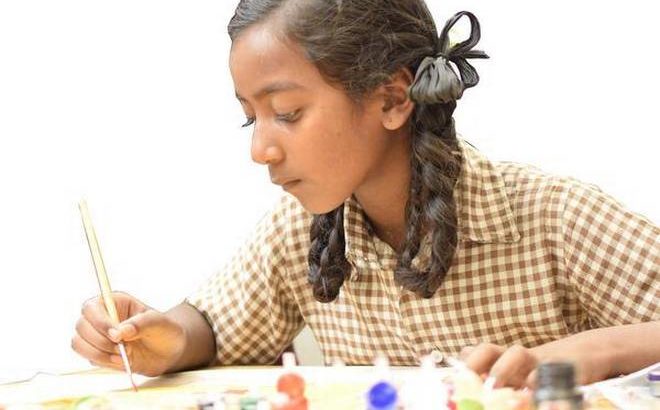
Think back to your earliest memories of effectively learning anything — even something as simple as discovering an instrument that helps you write. When your mother handed you a crayon and turned a blind eye when you scribbled arbitrary, yet colourful lines on the wall? Or in arts-and crafts class in pre-school, when you gleefully tried to fashion a paper boat from colour paper? Or was it when you emphatically mouthed Mark Anthony’s speech, along with the actor on stage — “Friends, Romans, countrymen….” — as you learnt about the skill of oration for your literature class?

While math and science are shoved down every student’s throat, irrespective of whether or not any interest is evinced, what about imparting knowledge on subjects that contribute to students’ all-round development — one that not only helps them ace exams but also sensitises them to the world around them? For instance, inculcating lateral thinking, the ability to come up with need-based solutions to a given problem, thinking out-of-the-box, and so on. This is where integrating the arts into teaching assumes paramount significance.

This explains why Nisha Nair, founder, Artsparks Foundation in Bengaluru, set up the organisation in 2014, with the intent of contributing to the dialogue, building awareness, and support for robust arts education in India. Nair, has spent two decades in the U.S. and worked towards improving the quality of education. Having spent her childhood in Bengaluru, she was determined to effect change in the Indian education system.

“Research indicates that meaningful experiences with visual art contribute to the development of valuable thinking skills and attitudes whose benefits extend well beyond the art room,” she elaborates. “The ability to pose questions, test ideas, take creative risks, solve problems, think flexibly and divergently, deal with ambiguity, persevere, and collaborate effectively, are just some of the many skills and attitudes that are developed and strengthened through engagements with visual art. Involvement in the visual arts is also associated with gains in critical thinking and communication skills. Beyond this, visual arts learning helps improve motivation, concentration, confidence, and teamwork.”

Role of the teacher

Anupama Gowda, Founder, Workbench Projects, and Open Minds Education Initiative also led Kali-Kalisu, a few years back. It is a joint initiative of the Goethe-Institut/Max Mueller Bhavan, the German Cultural organisation and India Foundation for the Arts, Bengaluru. She explains how teacher training is of utmost importance in terms of imparting arts-led education.

Kali-Kalisu is a working philosophy which places the school teacher as the single most important agent in the Indian educational scenario — the agent of positive cultural engagement and a meaningful development. Hence, Kali-Kalisu continues to be an arts-based teacher training programme for government school teachers across the length and breadth of Karnataka,” explains Anupama. “The Kannada words, Kali-Kalisu, translate to ‘learn and teach’, and serve to remind teachers that education is a lifelong quest, and that the joy of learning stems from the joy of teaching,” she adds.

Anupama opines that an education steeped in the arts can equip students for the rigours of the working environment of the future. She cites the example of TheAims of Education, a position paper by NCERT, which emphasises that “education should be a liberating process” and that the curriculum should promote three key areas of development in the student — aid in the self-development of the individual through an exposure to the right set of values, impart sound knowledge in “constructivist” ways, and foster a sense of curiosity and excitement about learning.

“Within the space of the classroom, the arts can address gaps in curriculum, pedagogy, and the imagination that emerge from the putative “banking concept” of education, with its hierarchical and unilateral dispensing of information,” she says.

Nair believes that rote learning, the consequent regurgitation of facts, a one-dimensional approach to problem-solving — terms that are often synonymous with our education system— hinder authentic engagement, restrict deep understanding, discourage independent thought, and limit notions of intelligence. “The alternative is to offer students numerous opportunities to explore, experiment, and arrive at their own solutions. At ArtSparks, we believe that a great education should equip children with these 21st century skills to handle life’s complexities — skills such as flexible thinking, positive risk-taking, attention to detail, and more,” she says.

Creativity and confidence

Educator Shaheen Mistri, CEO, Teach for India, believes, “A visual platform of disseminating knowledge has always been effective in better assimilation of the subject on hand, by students, as opposed to the conventional chalk-and-blackboard methods.” Around 23 years ago, when she was part of Akanksha Foundation, she explains how she noticed that whenever kids were given anything to work on creatively, and linked to the arts, not only was there a spike in their interest levels, there was also a direct correlation to how kids felt about themselves in terms of their confidence. She believes that arts can be effectively integrated to teach academics in a much more memorable way.

She elaborates on how such an education becomes even more important during high-school and college as students are exposed to a lot more stress and there is more pressure on them to perform. It would help if the academic content is taught through the lens of art. “Imagine learning about the French revolution through role play as opposed to making notes and learning it from notebooks!” she says, and her excitement is palpable.

So, how does an art-based education help students arm themselves for the working environment of the future?

Nair is quick to add, “Today’s organisations need a workforce that is equipped with skills beyond the fundamentals of reading, writing and arithmetic. To be successful in the workplace of the information age, one needs to be able to think about issues, critically. In an age where change is the only constant, understanding and applying 21st century learning skills allows us to be adaptive and innovative in responding to new demands and changing circumstances.”

Anupama concurs. She explains how, the arts in education, instead of positioning the child as a passive recipient of information and knowledge which finds no points of reference in his/her own lived reality, positions the child as an active and autonomous subject who investigates his/her reality and exercises his/her imaginative capacities on what she/he has an immediate connection to. In this manner, the arts can help students find their own voice instead of speaking in a borrowed voice that the system legitimises. “The intervention of the arts in education can promote cultural diversity, counteracting Indian education’s centralised way of defining what and how a student must learn. This is how arts education can become a force for diversity, where diversity is understood as committed to accommodating contending interests, positions, preferences and perspectives, or ensuring a level playing field for rival conceptions of the meaningful or worthwhile,” she concludes.

Fuente :http://www.thehindu.com/education/the-creativity-quotient/article19564815.ece

Imagen: https://lh3.googleusercontent.com/Uvebsl4w_NYOWJYzteMpmIDamTlhO4lYFprPHdki7VWc4nKj0FRJA1h4tYv0YR5ElS6BOg=s85


Comparte este contenido:

Japón: New education chief looks to repair ministry’s tarnished image

Japón/Agosto de 2017/Autor: Mizuho Aoki/ Fuente: The Japan Times

Resumen:  El nuevo ministro de Educación dice que decidirá si aprueba la candidatura de Kake Gakuen, operador de la escuela contaminada por el escándalo, para abrir un nuevo departamento veterinario después de sopesar los resultados de una evaluación continua por el panel de expertos del ministerio. «Quiero respetar el juicio del panel», dijo Yoshimasa Hayashi el miércoles durante una entrevista conjunta con medios de comunicación como The Japan Times. «Quiero que lleven a cabo evaluaciones exhaustivas desde el punto de vista de los expertos.» El panel está examinando la solicitud para abrir un departamento de veterinaria en una universidad dirigida por Okayama-basado Kake Gakuen, presidido por el primer amigo del primer ministro Shinzo Abe Kotaro Kake. La solicitud ha estado en el centro de la alegación de favoritismo por parte de Abe y su Gabinete.

The new education minister says he will decide on whether to approve scandal-tainted school operator Kake Gakuen’s bid to open a new veterinary department after weighing the results of an ongoing screening by the ministry’s panel of experts.

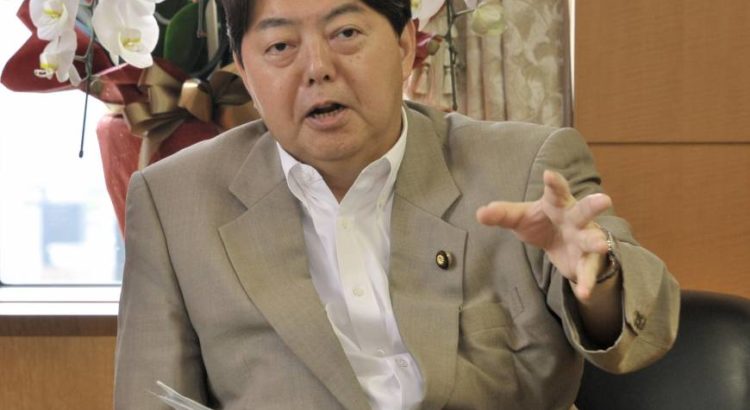
“I want to respect the panel’s judgment,” Yoshimasa Hayashi said Wednesday during a joint interview with media outlets including The Japan Times. “I want them to conduct thorough assessments from the point of view of experts.”

The panel is examining the application to open a veterinary department at a university run by Okayama-based Kake Gakuen, chaired by Prime Minister Shinzo Abe’s close friend Kotaro Kake. The application has been at the center of allegation of favoritism on the part of Abe and his Cabinet.

In January, Kake Gakuen won government approval to launch the department in a special deregulation zone in Imabari, Ehime Prefecture. But like other universities, it must pass screening by the ministry’s panel and win approval from the education minister.

The panel is examining whether the university can secure enough qualified teachers in addition to looking at its facilities and the proposed curriculum. In addition to the screening of documents, the panel could also conduct on-site inspections and interviews.

Based on the screening, the panel will make a recommendation to the education minister. Although results were initially expected by the end of this month, the panel reportedly requested an additional two months to conduct its probe before it renders judgment.

Hayashi also said he will work on recovering the ministry’s damaged credibility. He said the ministry lost public trust because of the way it handled an internal investigation to search for leaked documents related to the scandal.

Former top education ministry bureaucrat Kihei Maekawa’s remarks over the alleged favoritism also played a part in the deteriorating credibility, Hayashi said.

“From now on, I’d like to provide more complete explanations in order to increase transparency,” he said.

On other issues, Hayashi said he wants to beef up measures to support the growing number of non-Japanese students and returnees at public schools who are in dire need of Japanese language help. The number of students who need language support hit a record 43,947 in the ministry’s latest survey released in June.

Given the rising demand, the ministry plans to increase the number of teachers who can offer support and offer subsidies for municipalities dispatching instructors to schools.

“It’s a really important issue,” Hayashi said. “We will bolster measures for those students.”

Fuente: https://www.japantimes.co.jp/news/2017/08/10/national/politics-diplomacy/new-education-chief-looks-repair-ministrys-tarnished-image/#.Waisg_Pyi00

Comparte este contenido:
Page 393 of 773
1 391 392 393 394 395 773