Page 395 of 773
1 393 394 395 396 397 773

China saca a más de 10 millones de personas de la pobreza cada año

China/31 agosto 2017/Fuente: Prensa Latina

China sacó de la pobreza a 13,91 millones de personas cada año entre 2012 y 2016, reveló un informe publicado hoy por el Consejo de Estado.
De acuerdo con el documento, los ingresos anuales per cápita de las áreas rurales pobres crecieron un 10,7 por ciento cada año.

Este informe sobre el alivio de la pobreza fue entregado para su revisión en la sesión bimestral del Comité Permanente de la Asamblea Popular Nacional.

Según Liu Yongfu, director de la Oficina del Grupo Dirigente del Alivio de Pobreza y Desarrollo del gobierno chino, el Consejo de Estado ha hecho muchos esfuerzos para erradicar esta situación.

El máximo órgano legislativo del país recibió también un informe con sugerencias y medidas específicas para el alivio de este flagelo.

Algunas de las ideas propuestas son la integración y el uso apropiado de las finanzas gubernamentales destinadas a la agricultura para mejorar su eficiencia y sostenibilidad.

Además, asesores políticos de china sugirieron en ese documento mejorar los servicios médicos y de salud en regiones pobres, al tiempo que subrayaron la importancia de la educación en esos lugares.

Al cierre de 2016, 43,35 millones de personas en China aún vivían por debajo de la línea de pobreza, que supone tener unos ingresos anuales de dos mil 300 yuanes (unos 344 dólares).

Para alcanzar el objetivo de una sociedad modestamente acomodada en 2020, China debe sacar anualmente a más de 10 millones de personas de la pobreza.

Fuente: http://www.prensa-latina.cu/index.php?o=rn&id=111484&SEO=china-saca-a-mas-de-10-millones-de-personas-de-la-pobreza-cada-ano

Comparte este contenido:

Siria: las escuelas producen alimentos en el patio del recreo 5h

Siria/30 agosto 2017/Fuente: El Mercurio Digital

Con el inicio del curso la próxima semana en Siria, miles de niñas y niños en edad escolar podrán contar con un programa de educación alimentaria y nutricional que utiliza los huertos escolares para enseñar a los estudiantes la importancia de consumir frutas y hortalizas dentro de una dieta equilibrada y saludable.

Con casi la mitad de la población siria necesitada de ayuda alimentaria y unos 7 millones de personas en situación de inseguridad alimentaria, los niños de corta edad suelen ser los más vulnerables a la malnutrición, que puede tener efectos graves y duraderos en su crecimiento y desarrollo futuro.“La actual crisis en Siria está teniendo un efecto devastador en la salud y la nutrición de toda una generación de niños”, ha advertido Adam Yao, Representante en funciones de la FAO en Siria. “Pero a través de estos huertos escolares –añadió-, los niños aprenden ahora los conceptos clave de la alimentación y la nutrición, a la vez que tienen acceso a frutas y verduras nutritivas”.

Escolares y sus profesores plantan lechugas en su escuela en Tartous, Siria. ©FAO/Zaki Khozam

Es la primera vez que se introducen huertos escolares en Siria en la escuela primaria, con 300 profesores que han sido formados en 17 escuelas, algunas situadas en zonas en conflicto como Alepo, Hama, Homs, Idleb y Damasco rural. A través del programa, más de 3 400 niños no sólo reciben formación sobre alimentación y nutrición, sino que también incrementan su consumo de frutas y hortalizas. La iniciativa forma parte de un programa más amplio –financiado con 6,5 millones de dólares EEUU por la Unión Europea- para reforzar la seguridad alimentaria en el país asolado por la guerra.

“Los huertos escolares son como un aula al aire libre, donde los niños aprenden de forma práctica”, explicó Yao, añadiendo que los beneficios van más allá del aula y el patio de recreo e incluyen a las familias y comunidades.

“Una nutrición adecuada es la primera defensa de un niño contra las enfermedades más comunes y es importante para que puedan llevar una vida activa y saludable”, según Yao.

“A menudo las escuelas –añadió- son el único lugar donde los niños adquieren importantes destrezas para la vida, por lo que estos huertos escolares son una herramienta poderosa no sólo para mejorar la nutrición de los niños, sino también para ayudarles a desarrollarse y crecer”.

Con los insumos proporcionados, cada escuela ha desarrollado un huerto escolar de cerca de 500 m2, equipado con depósitos de agua y un sistema de riego por goteo. Con el apoyo de la FAO y de una ONG local que se ocupa del día a día de la producción, los huertos escolares han producido en conjunto unas 12 toneladas de frutas y verduras.


La educación nutricional es vital. Escolares y personal de la FAO en una lección sobre nutrición en un huerto escolar en Hama, Siria. ©FAO/Wajdi Skaf

La educación mejora la eficacia de los programas de seguridad alimentaria

“Cada vez hay más evidencias de que la producción de alimentos por sí sola tiene poco impacto en los hábitos alimentarios, a menos que esté respaldada por la educación alimentaria nutricional. De la experiencia pasada hemos visto que la combinación de educación nutricional y horticultura tiene un impacto probado en la dieta”, señaló Ahmed Raza, Oficial de Nutrición y Sistemas Alimentarios de la FAO.

Por ese motivo el programa de huertos escolares de la FAO, financiado por la UE, promueve un enfoque de escuela completa en la educación alimentaria y nutricional, en el que el aprendizaje en el aula está vinculado a actividades prácticas, reforzado por un entorno escolar atento a la nutrición y la salud, que cuenta con la participación de todo el personal docente, las familias y la comunidad.

“En la escuela hemos aprendido sobre coles, pimientos, tomates, berenjenas, lechuga y muchos otros alimentos. También nos explicaron la pirámide alimentaria y todo sobre las vitaminas y cómo nos beneficiamos de ellas”, asegura Bilasan, una estudiante de quinto grado de la Escuela Primaria Bahaa Eddin Sajer en la gobernación de Damasco rural. La madre de Bilasan también está empezando a ver los beneficios de lo que aprende su hija: “en casa plantó fresas y cada mañana toma la manguera y riega las plantas y me dice esto es lo que aprendí en la escuela, mamá”.

El proyecto se está implementando con el apoyo de UNICEF y el programa de almuerzos escolares del Programa Mundial de Alimentos(PMA), y pronto se ampliará a otras 35 escuelas en Alepo y Damasco rural gracias a fondos adicionales del Gobierno de Japón.

Un exuberante huerto escolar en Tartous. Los alumnos cultivan pimientos, tomates, lechuga y berenjenas. ©FAO/Wajdi Skaf

Fuente: http://www.elmercuriodigital.net/2017/08/siria-las-escuelas-producen-alimentos.html
Comparte este contenido:

China amplía contratos de publicación en cita literaria internacional.

Asia/China/29.08.2017/Autor y Fuente: http://www.prensa-latina.cu
La XXIV Feria Internacional del Libro de Beijing finalizó hoy con un total de cinco mil 262 contratos de cesión de derechos de autor firmados entre China y países extranjeros, un aumento interanual del 4,9 por ciento.
De acuerdo con la prensa oficial, tres mil 244 son contratos de exportación y asociación, un 5,5 por ciento más que en 2016, mientras que dos mil 18 resultaron acuerdos de importación.

Los libros de literatura, cultura, educación, economía, filosofía e infancia fueron los más populares y más traducidos a otros idiomas como el francés, japonés, ruso o árabe.

La edición de la Feria este año atrajo a más de dos mil 500 expositores provenientes de 89 países y regiones.

En el marco de este evento, expertos chinos defendieron la importancia de traducir los textos latinoamericanos, más allá del premio Nobel de Literatura Gabriel García Márquez.

El exsubdirector de la Oficina Central de Recopilación y Traducción, Yin Chendong, dijo que su entidad ha traducido y publicado hasta la fecha seis libros de autores latinoamericanos, cifra que debe llegar a 10 antes de terminar el año.

Ahora intentamos introducir en China a otros excelentes escritores latinoamericanos contemporáneos posteriores al boom latinoamericano y contribuir así al intercambio cultural, destacó Yin.

Por su parte, Lou Yu, secretaria de la Asociación de Investigación sobre Literatura en Español y Portugués, comentó en un simposio de la Feria que entre 1949 y 2016 se introdujeron y tradujeron en China 506 obras de América Latina de 210 escritores.

Fuente: http://www.prensa-latina.cu/index.php?o=rn&id=111050&SEO=china-amplia-contratos-de-publicacion-en-cita-literaria-internacional
Imagen:  http://www.prensa-latina.cu/images/2017/agosto/27/china-libros.jpg
Comparte este contenido:

Psakistan: Workshops on evolving techniques of Child Friendly Education held

Pakistan/ August 29, 2017/ Source: https://www.thenews.com.pk

Teachers from various schools and madaris (seminaries) were trained on the evolving techniques of Child Friendly Education (CFE) Sunday, aiming to improve the teaching and learning environment in schools and religious seminaries of Khyber Pakhtunkhwa.

Two separate workshops for male and female teachers of different schools and madaris, organised by Peace Education And Development (PEAD) Foundation in collaboration with UNICEF Pakistan and Elementary and Secondary Education department KP, were part of the ongoing Social Cohesion and Resilience Programme.

Senior educationists and instructors from education department including Dr Jahangir Adil, Noreen Elahi and Arshad Khan conducted the workshops as lead trainers.

Addressing the opening ceremony of the workshop, Tariq Hayat, Programme Manager PEAD, emphasized the need to put the interests of child at the center of all planning processes in learning institutions. He said in order to enable the children reach their full potential in every walk of life and teach them to abstain from any social, religious and other discriminations and thus to contribute towards their bright future, it was imperative to provide them with the quality education, train their teachers periodically on modern and needed concepts of teaching and learning.

Senior instructor for PITE, E&SE KP, Dr Jehangir Adil, said that the participating teachers from schools and

madaris had already been trained by the CFE under the project and the current one day workshop was aimed to serve as refresher for the teachers to develop a school development plan based on CFE approaches.

He said teachers from state-run schools and madaris whole-heartedly participated and termed it a unique and great experience.

DDEO Peshawar Azam Khan in his closing remarks appreciated the initiative and said, “We need to prioritize education and our own personal needs. He appreciated the initiative of PEAD, UNICEF and other organisations assisting the department of E&SE to develop a system of education with essential components for the complete mental and physical nourishment of child.”

He stressed the trained teachers to share the word further and adopt the new teaching approaches to upgrade the existing schooling system with its true spirit.

Source:

https://www.thenews.com.pk/print/226562-Workshops-on-evolving-techniques-of-Child-Friendly-Education-held

Comparte este contenido:

DECC UK Department of Energy and Climate Change : UK-India partnership through education, skills and entrepreneurship

UK-India/August 29, 2017/Source: http://www.4-traders.com

Delighted to be here and interact with this next gen group from different educational streams.

The UK and India have a long relationship and we are looking towards partnering India in the future particularly in education, skills and entrepreneurship. I am glad to know that a significant number of students from the Heritage school and colleges go to the UK for higher studies and work.

The UK welcomes the brightest and best international students to our world-class universities.

A British education is a quality-mark and a passport to global success. The UK is home to some of the oldest and most respected universities in the world, and some of the very best. The UK hosts four of the world’s top 10 universities (Cambridge, UCL, Imperial College London and Oxford) and is home to 30 of the world’s top 200 universities.

Oxford has been ranked the best university in the world by Times Higher Education World University rankings. Oxford knocked five time champion California Institute of Technology into second place as Cambridge and Imperial College joined the top 10.

A British education offers excellent value for money. British degree courses are more intense than in many other countries, with students receiving top quality education in a shorter period, costing less overall than other destinations like Australia, the US and Singapore.

Studying in the UK is a truly international experience. We attract more overseas students than any other country except the US. The UK is a diverse, multicultural society, home to an Indian diaspora of 1.5 million.

And it is not that students always pay for the courses themselves. The UK in India hosts the largest Chevening Scholarships and Fellowships country programme in the world, with a £2.6 million budget to fund about 130 fully funded scholarships and fellowships for future Indian leaders. Besides scholarships for Masters’ programmes, short term fellowships are offered in financial services, journalism, cyber security, science & innovation and leadership & management.

The British Council will be familiar to all of you. I believe the Heritage School has a very effective ongoing partnership with the British Council. The council offers the GREAT scholarships for a range of subjects ranging from engineering and law to art and design and information technology across England, Scotland, Wales and Northern Ireland.

The Commonwealth Scholarships for students from developing Commonwealth countries are offered Master’s, PhD, and split-site (PhD) study in the UK. These scholarships are funded by the UK’s Department for International Development. On average 60 Indian students are supported by the Commonwealth programme each year.

I know some of you feel that it is difficult to get a UK visa. The student visa process is straightforward for genuine students. In 2016, 95% of student entry clearance visa applications were approved, a number that has risen every year since 2010, and the issue rate in India is 91%.

A recent research done by the British Council revealed that one in 10 current world leaders have studied in the UK. Notable alumni from UK universities include the former Australian Prime Minister Tony Abbott, Queen Margrethe II of Denmark, and Hassan Rouhani, the Iranian president.

Around 38% of Nobel Laureates who have studied at universities abroad, studied in the UK – more than any other country.

Earlier this year the first Newton Prize Competition was held in India with a prize of £1 million. The competition focused on public health and wellbeing, including issues such as anti-microbial resistance, disease, healthcare, and nutrition.

The UK Science Ministry also announced a series of research programmes from the Newton Fund worth up to £80 million to address global challenges affecting people in India. The investments were announced on the sidelines of the India-UK TECH Summit in New Delhi – India’s premier science and technology showcase.

The new programmes take the total joint UK-India investment in research through the Newton Fund up to £200 million by 2021, demonstrating the fund as a major bilateral initiative in India. It brings together the world class excellence of the UK and India to address global challenges through science and technology.

India is currently the world’s ninth largest economy, and is predicted to become the third largest by 2050. It is currently the world’s fastest growing economy. However, it is also home to a third of the world’s poor, ranks 142nd on the World Bank’s ease of doing business index and 94th on transparency international’s corruption index. Additionally it is the third largest emitter of greenhouse gases despite 300 million people lacking access to energy.

India’s economic success and development are vital to the global economy, to UK interests across South Asia and to global priorities like the sustainable development goals.

In this context, the target action areas include improvements in the business environment, skill development, employment generation, energy security and developing smarter cities as engines of growth.

The TECH Rocketship Awards from our Department for International Trade supports globally aspirational start-ups across sectors with a technology backbone. The focus over the last few years has been on innovations that impact energy, education, health and finance sectors.

The exchange of ideas and skills is a two way process. The Generation UK-India Programme supports young people from the UK gain skills and experience in India over the next five years. For example – in partnership with TCS for 1,000 internships for UK students. Generation UK-India will work with Indian institutions to create opportunities for young people in the UK to undertake cultural immersions placements, teaching partnerships and work placements.

The UK India Education and Research Initiative in its first two phases has supported over 1000 new education and research partnerships that aim to deliver long term prosperity benefits for both the UK and India. The programme has also facilitated 25,000 exchanges of academicians, researchers, staff and students, creating lifelong links between the UK and India and over 35 million young people have benefitted through train the trainer programmes.

I see education, skills and entrepreneurship as the backbone of the UK-India future partnership and hope the next gen in both countries will take advantage of the opportunities available to become Living Bridges connecting the people of both nations across political, economic and social platforms.

Source:

http://www.4-traders.com/news/DECC-UK-Department-of-Energy-and-Climate-Change-UK-India-partnership-through-education-skills-and–25017970/

Comparte este contenido:

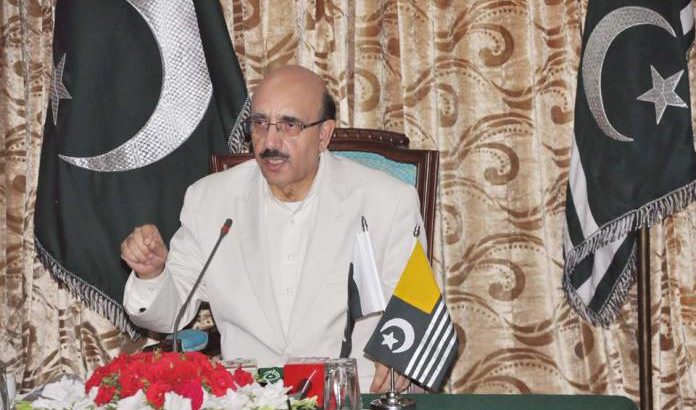
Pakistan: Higher education to get priority in AJK: Masood

Pakistan/August 29, 2017/ Source: http://pakobserver.net

Sardar Masood Khan, President AJK chaired a joint meeting of Vice Chancellors of AJK Public Sector Universities, Chairman Higher Education Commission, Dr. Mukhtar Ahmad and senior officials of HEC at his office here in Islamabad. Dr. Mukhtar praised the AJK government for prioritizing higher education and emphasized the importance of a knowledge based economy.

President AJK acknowledged the Chairman HEC for taking special interest in promoting higher education in AJK. The President said that, “The difference between a developed and a undeveloped country is the knowledge base and the preference their Government gave to education especially higher education”. Chairman HEC highlighted the importance of research in universities in order to raise the academic worth of the students studying in various universities throughout the country. Dr. Mukhtar said it was commendable that 9 out 10 districts with in AJK had a University or a sub-campus to cater to the general public.

The Chairman informed that in order to fill the gap of qualified students, HEC has allocated 111 scholarships for AJK Universities among which 28 PhD scholars have completed their doctorate and over 431 merit based scholarships were filled by students of AJK in the previous years. Infrastructure and up gradation of various universities in AJK was prioritized in the HEC agenda and under 23 various projects a sum of Rs.5.4 billion was distributed to the Universities.

During the meeting it was decided that a sub-campus of University of Poonch at Forward Kahota, District Haveli will be established to cater to the local populace. Chairman HEC said that all sub-campuses must acquire an NOC from HEC in order to avail the full support of HEC in their academic and financial spheres. The President recommended for introducing further disciplines at MongSabz Ali Khan sub-campus of University of Poonch, It was proposed that a committee comprising of two VCs, Secretary to the Azad Government and HEC representative maybe constituted to report on the matter which will assess the on ground situation and regularization of the campus.

The report in this regard along with recommendations will be submitted for further deliberations in one month of the committees’ constitution. The President also desired that all inductions and recruitments at the Universities must be made on merit and faculty of the highest qualification be inducted.

The Chairman HEC while hearing various issues of the VCs presented his recommendations that strict security measures may be adopted to ensure a conducive environment and also asserted the need for extra-curricular activities at the Universities. The President also reiterated the need for Technical Skill Development Institute at Sudhanoti District for which the assistance of TEVTA and NAVTTC may be also sought.—PR

Source:

http://pakobserver.net/higher-education-get-priority-ajk-masood/


Comparte este contenido:

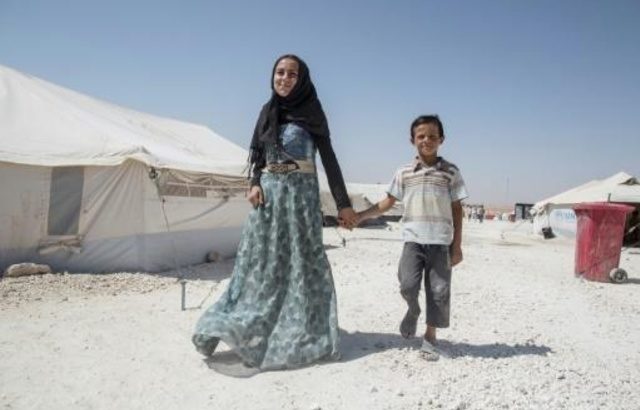
Siria: Save the Children alerta de que los niños de Raqa necesitan urgente ayuda psicológica

Siria/28 agosto 2017/Fuente: Swissinfo

Durante noches enteras Rashida, de 13 años, no lograba conciliar el sueño por el trauma infligido por los horrores que presenció en Raqa, bastión del grupo EI en Siria. Como ella, otros menores viven «atormentados» y necesitan con urgencia apoyo psicológico, denunció este lunes la ONG Save the Children.

La organización advirtió de que podrían ser necesarias décadas para que estos menores puedan superar las heridas psicológicas derivadas de haber vivido en Raqa, una localidad que se convirtió en el bastión del grupo yihadista Estado Islámico (EI).

La ONG entrevistó a menores que junto a sus familias lograron huir de la ciudad ante la ofensiva de las milicias kurdo-árabes, apoyadas por Estados Unidos.

«Los niños de Raqa pueden parecer normales pero por dentro muchos están atormentados por todo lo que han visto», dijo la directora de la ONG para Siria, Sonia Khush.

Rashida huyó con su familia hace tres meses hacia un campamento de desplazados en el norte de Raqa.

«El EI decapitó a gente y dejó sus cadáveres en el suelo. Yo vi esto y no pude soportarlo», contó. «Quería dormir pero no puedo cuando recuerdo esas cosas que vi. Y no duermo y me quedó despierta por el miedo que siento», agregó.

Desde que el grupo EI se hizo con la ciudad al principio de 2014, la localidad se convirtió en el símbolo de los crímenes del grupo: decapitaciones públicas, dilapidaciones y propaganda yihadista en las escuelas.

«Ya no se puede hablar de infancia», dijo el padre de Rashida, que intentó que sus hijos no presenciaran esos horrores, pero poco a poco se fueron acostumbrando a esos macabros incidentes.

Cerca de 25.000 personas, de los cuales la mitad son niños, permanecen atrapados en Raqa, según la ONU.

Yaacoub, sus nueve hermanos y sus padres tuvieron que escapar de la mira de un francotirador para salir de Raqa hace tres meses.

El niño de 12 años y su familia vieron todos los castigos que el grupo EI ejerció contra la población civil: dilapidaciones, amputaciones de los dedos a los fumadores y personas a las cuales se les cosió la boca.

«Ellos llenaron la glorieta con las cabezas que habían cortado. Los vimos haciéndolo y cortándoles las manos», contó Yaacoub.

«Es crucial que los niños que han sobrevivido reciban apoyo psicológico para ayudarlos a superar el trauma», dijo Khush, que advirtió que de lo contrario se podría «condenar a una generación de niños a una vida entera de sufrimiento».

Fuente: https://www.swissinfo.ch/spa/afp/save-the-children-alerta-de-que-los-ni%C3%B1os-de-raqa-necesitan-urgente-ayuda-psicol%C3%B3gica/43474204

Comparte este contenido:
Page 395 of 773
1 393 394 395 396 397 773