Page 68 of 772
1 66 67 68 69 70 772

Corea del Norte: Why the United States Needs a Special Envoy for North Korean Human Rights

Why the United States Needs a Special Envoy for North Korean Human Rights

As the Biden administration turns its attention to North Korea, it should signal its support for human rights by reappointing a special envoy for the position on North Korea left vacant for the past four years. The reappointment will give meaning to US President Joseph Biden’s vow to return values to US foreign policy. It will also alert North Korea that ending its isolation and joining the rest of the international community, and especially normalizing its relations with the United States, will have to be accompanied by a lessening of oppression of the North Korean people. Denuclearization will remain the overriding objective of US policy toward North Korea, but human rights and humanitarian issues will play an important part.

Background

In 2004, Congress, with strong bipartisan support, created the special envoy position “to coordinate and promote efforts to improve respect” for the human rights of North Korea’s people. The envoy’s responsibilities, as set forth in the North Korea Human Rights Act, include “discussions with North Korean officials” and “international efforts” with other states, especially at the United Nations. Congress reauthorized the Act three times, most recently in 2018 with a unanimous vote. But the Trump administration, alleging the need to save costs, proposed “dual-hatting” the envoy’s functions to another US Department of State position, which was then eliminated. In the House of Representatives, the Republican and Democratic co-chairs of the Tom Lantos Human Rights Commission appealed unsuccessfully to the president in 2018 to fill the post so that human rights could be effectively incorporated into talks with North Korea.

Why Now?

President Biden has expressed his commitment to restoring values in American foreign policy and more broadly, to promoting human rights and democracy abroad. To dismiss the human rights situation in North Korea would be contrary both to US values and its national security interests. What makes the reappointment of a special envoy so compelling is the extraordinary nature of North Korea’s human rights situation. For the past 75 years, Kim family rule has largely cut off the people of North Korea from the rest of the world, put them under heavy surveillance, and enforced its authority with political prison camps, public executions, forced labor and other grave abuses. Many have had to endure chronic hunger, poor or non-existent medical care and extreme poverty.

President Obama described North Korea’s government as “probably the worst human rights violator in the world.” President Trump himself told Congress, “no regime has oppressed its own citizens more totally or brutally than the cruel dictatorship in North Korea.” In 2014, the United Nations (UN) Commission of Inquiry (COI), after a yearlong investigation, found the Kim government to be committing “crimes against humanity”—the most serious human rights violations—on a systematic basis as state policy.[1]

President Biden has also emphasized the need for the US to promote its values by strengthening America’s relations with other democracies. The United Nations is one of the most promising forums for a united front on human rights in North Korea, and a special envoy is sorely needed there to promote multilateral cooperation on the protection of human rights. North Korea’s human rights situation is on the agenda of the UN General Assembly and Human Rights Council, and the UN Commission of Inquiry’s nearly 400-page report in 2014 has made recommendations that are waiting to be implemented.

The previous envoy, Robert King, together with representatives from the European Union, Japan and South Korea, played a robust role in mobilizing states to adopt and co-sponsor resolutions on the human rights situation, and in particular to endorse the COI’s creation and its findings. With additional allies like Australia, the coalition successfully placed the issue on the Security Council’s agenda—the highest UN body—from 2014-2017 so that attention could be drawn to the impact of North Korea’s human rights conditions on international peace and security. But after 2018, the human rights situation in North Korea remained absent from the Security Council agenda, and in 2019 the US withdrew its support from the effort; in 2020, only a private (unofficial) meeting was held.

The UN’s Human Rights Council was also in disarray. Neither the US, South Korea, nor Japan co-sponsored the human rights resolution in 2019, and at the General Assembly, South Korea failed to co-sponsor the resolution on North Korean human rights in 2019 and 2020. Clearly, an envoy is needed to build back unity on this issue so that the full potential of the UN forum can be mustered.

The Nexus Between Human Rights and Security

Within the US government, an envoy is needed to develop a coherent strategy on promoting human rights in North Korea that is meshed with negotiations over nuclear weapons and other security issues. Over the past four years, the Trump administration has used human rights as a pressure point one moment and then dropped it at another—achieving, in the end, neither the nuclear agreement for which forsaking human rights was presumed necessary nor building trust in any other area. But nuclear security arrangements require trust as well as effective verification.

The denuclearization and human rights agenda are inextricably intertwined, observed Korea specialist Victor Cha. “The threat” posed by North Korea stems not only from nuclear weapons but from a government possessing those weapons that is “capable of a level of abuse of its own citizens unprecedented in modern human history.” Improvements in North Korea’s human rights conditions “would reflect the leadership’s commitment to reform and make a denuclearization commitment by the DPRK more credible.”

Respect for human rights has even been called the ultimate test of whether Pyongyang will come through on any nuclear deal. The UN Special Rapporteur on Human Rights in the DPRK has called for “a binding agreement” to be negotiated in the course of peace and denuclearization talks, “requiring” North Korea to “cooperate with the United Nations human rights mechanisms and engage with and grant access to independent human rights monitoring…”[2]

An envoy sensitive to both human rights and security concerns can help integrate human rights and humanitarian issues into a comprehensive policy. The envoy can coordinate with all the pertinent bureaus and offices in the State Department, National Security Council and government departments while assuring that human rights and humanitarian concerns are reflected in major statements of the US president, the US secretary of state, the UN Ambassador and other senior officials, and are added to Group of Eight (G8) or comparable communiques and promoted in dialogues with China and other governments.

An Agenda for the Special Envoy

Special Envoy King found that he was able to raise human rights concerns with North Korean officials, including a first vice foreign minister, in the course of discussions about humanitarian aid in 2011. He was further able to gain the release on humanitarian grounds of an American detained for six months in North Korea on unspecified charges. To encourage North Korea to hold talks in the future, political and economic incentives could be applied in a comprehensive policy.

Integrating human rights concerns in other policy areas would also be important, for example, making sure workers’ rights are included in any commercial or development arrangement that might arise, that significant women’s participation is insisted upon in NGO-funded training programs, or that food and medical aid be stringently monitored and distributed equitably so as to reach the most vulnerable, including those in detention facilities, a point accepted by North Korea in 2019 at the UN Universal Periodic Review.

The special envoy’s expertise would further come into play in evaluating the extent to which North Korean human rights practices warrant the lifting of US sanctions. Under the North Korea Sanctions and Policy Enhancement Act of 2016, for sanctions to be suspended, North Korea must show progress in prison conditions, the release of political prisoners, the repatriation of abducted foreigners, family reunification meetings, and the cessation of censorship and other political restrictions.[3] Although such provisions can presumably be waived on national security grounds, explaining them to North Korean officials should be a part of discussions.

A prioritizing of human rights issues would also be important. Some argue that the most sensitive concerns should not be among the initial ones raised with North Korea. King, for example, recommends that given North Koreans’ limited access to information, “We could press the North Koreans for more contact, for more openness, more travel for North Koreans” and encourage greater “flow of information.” Others recommend beginning with what is called “low hanging fruit,” or topics to which North Korea might be more amenable, involving women, the disabled or greater access to orphanages. Still others believe it’s time to raise the tougher issues because they are widely known, given the COI report, the consensus adoption of General Assembly resolutions since 2016 and US legislation on the subject.

North Korea, it is pointed out, has in the past made some concessions when it found it in its interest, such as admitting the existence of reeducation through labor camps, releasing a small number of abducted Japanese, allowing into the country the UN special rapporteur on disabilities, and even negotiating with a humanitarian organization in recent years to allow its entry to prisons for health reasons, although the effort to date has failed to come to fruition.

Conclusion

If the United States is truly interested in addressing human rights in North Korea, it must begin by appointing a special envoy. The envoy’s public education and liaison roles have had ripple effects internationally with NGOs, academics, think tanks and governments; the encouragement of increased broadcasting into North Korea by Voice of America and Radio Free Asia has also had an impact inside the country.

North Korea would certainly become far less of a danger to the world if it could be encouraged to move toward a more open society with respect for human rights. Both Presidents Carter and Ronald Reagan, in their dealings with the highly nuclearized former Soviet Union, found that the promotion of human rights reinforced their strategic objectives. President Biden should follow their example. North Korea cannot be expected to honor a nuclear weapons agreement and normalize relations without opening up its country to scrutiny.


  1. [1]

    United Nations, Human Rights Council, Report of the detailed findings of the commission of inquiry on human rights in the Democratic People’s Republic of Korea, A/HRC/25/CRP. 1, para. 1160, February 7, 2014, https://www.securitycouncilreport.org/atf/cf/%7B65BFCF9B-6D27-4E9C-8CD3-CF6E4FF96FF9%7D/a_hrc_25_crp_1.pdf.

  2. [2]

    United Nations, General Assembly, Situation of human rights in the Democratic People’s Republic of Korea, A/74/275, para. 5, August 2, 2019, https://undocs.org/en/A/74/275.

  3. [3]

    US Congress, House,  North Korea Sanctions and Policy Enhancement Act of 2016, HR 757, Sec. 401., 114th Congress, became law February 18, 2016, https://www.congress.gov/bill/114th-congress/house-bill/757/text?overview=closed.

    Fuente de la Información: https://www.38north.org/2021/01/why-the-united-states-needs-a-special-envoy-for-north-korean-human-rights/

Comparte este contenido:

India – Coronavirus live updates: Maharashtra reports 63,729 new Covid cases, Delhi over 19,486 in record surge

Coronavirus live updates: Maharashtra reports 63,729 new Covid cases, Delhi over 19,486 in record surge

The cumulative number of Covid-19 vaccine doses administered in the country crossed 11.72 crores on Friday as part of the world’s largest vaccination drive, the Union health ministry has informed. According to the ministry, cumulatively, 11,72,23,509 vaccine doses have been administered through 17,37,539 sessions, as per the provisional report till 7 am on Friday. Stay here for all live updates

Order of 90,000 Remdesivir injections has been placed, 2000 to be received in 2 days and another 28000 within in a week. Thereafter, we will receive 30000 injections per week. Soon, shortage of Remdesivir injections will be met.

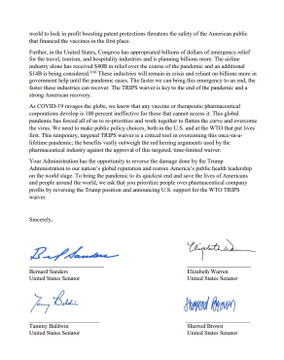
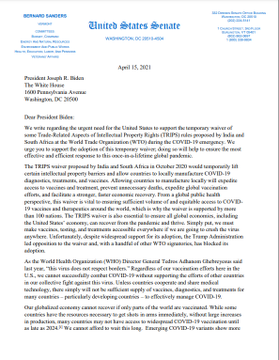
US senators including Bernie Sanders & Elizabeth Warren write to President Biden to accept India and South Africa’s proposal for Trade-Related Aspects of Intellectual Property Rights (TRIPS) waiver for Covid.

Image

Image

Image

Image

Jharkhand reports 3,843 new Covid-19 cases and 56 deaths; case tally at 1,55,115 death toll at 1,376 (ANI)

00:12 (IST) Apr 17

Amid surge in Covid cases, routine OPD and OT services to be suspended from April 17 till further order.Trauma and Emergency services, Labour and Emergency OT services to continue.Telemedicine service to be available for patients. 30 beds added in Covid-19 ward, says AIIMS Raipur (ANI)

Fuente de la Información: https://timesofindia.indiatimes.com/india/coronavirus-lockdown-in-india-covid-19-vaccine-cases-live-updates-16-april-2021/liveblog/82093883.cms


Comparte este contenido:

Israel: El Ministerio de Salud respalda la apertura de todas las escuelas sin cápsulas

l Ministerio de Salud dijo el lunes que presentará al Gabinete un nuevo esquema que permitirá que las escuelas de Israel se abran por completo sin cápsulas.

Casi todas las restricciones del coronavirus de Israel se han levantado debido a la campaña de vacunación de alto ritmo del país. Sin embargo, dado que los niños menores de 16 años actualmente no pueden ser vacunados, se han mantenido muchas restricciones en el sistema educativo, pero están programadas para expirar la medianoche del martes.

El nuevo plan proporcionará una amplia gama de opciones de prueba y monitoreo en todo el sistema educativo para detectar brotes antes de que se propaguen.

Cuando un estudiante da positivo, toda la clase y el personal docente se someterán a pruebas de coronavirus antes de regresar a sus aulas, además del aislamiento obligatorio.

«La morbilidad en el sistema educativo es minúscula y está completamente bajo control, con altas tasas de vacunación entre estudiantes y maestros, pero el sistema educativo aún está sujeto a restricciones», dijo un funcionario del Ministerio de Educación.

«El mensaje oculto transmitido a los estudiantes, especialmente a los de la escuela secundaria, es que pueden estar en cualquier lugar excepto en las escuelas».

El funcionario también enfatizó que el peligro de que los niños no asistan a la escuela es mucho mayor que el de infectarse.

Según un informe que presentó, el número de estudiantes infectados se redujo de 9,820 el mes pasado a 877 en la actualidad, con 4,200 actualmente en cuarentena. No se ha cerrado ninguna escuela y más del 90% no ha informado de ningún caso.

El mismo informe mostró que ha habido una disminución del 30% en las habilidades básicas de lectura entre los estudiantes en los grados 1-3, una caída del 25% en las habilidades de matemáticas y lenguaje para los estudiantes en los grados 4-6 y una caída de alrededor del 30% en los cursos básicos. asignaturas como matemáticas, lenguaje, ciencias e inglés entre los estudiantes en los grados 7-10.

Fuente: https://itongadol.com/israel/el-ministerio-de-salud-respalda-la-apertura-total-de-escuelas-sin-capsulas

Comparte este contenido:

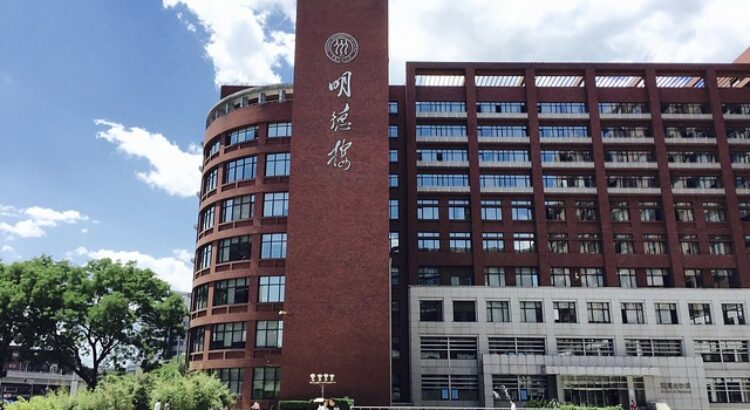
Educación profesional sube a nuevas alturas en China

Asia/China/16-04-2021/Autor(a) y Fuente: Spanish.xinhuanet.com 

China es el hogar de unos 30,88 millones de estudiantes que adquieren habilidades en 11.300 instituciones de educación profesional, según las estadísticas del Ministerio de Educación.

El ministerio ha aprobado a 27 instituciones que ofrecen educación profesional a nivel de pregrado desde 2019, cuando el Consejo de Estado lanzó un plan para reformar el sistema de educación vocacional.

Entre las 1.349 especializaciones que figuran en un nuevo catálogo de especialidades profesionales publicado por el ministerio este año, 247 son carreras de pregrado, agregó.

El ministerio ha venido trabajando por promover el trato justo a estudiantes que reciben la educación profesional, garantizando que disfruten de igual oportunidad que los de escuelas regulares en términos de inscripción, empleo y ascensos laborales, según un funcionario del ministerio.

Fuente: http://spanish.xinhuanet.com/2021-04/11/c_139872973.htm

Comparte este contenido:

Japón: Temprana floración de cerezos en Japón por el cambio climático

Temprana floración de cerezos en Japón por el cambio climático

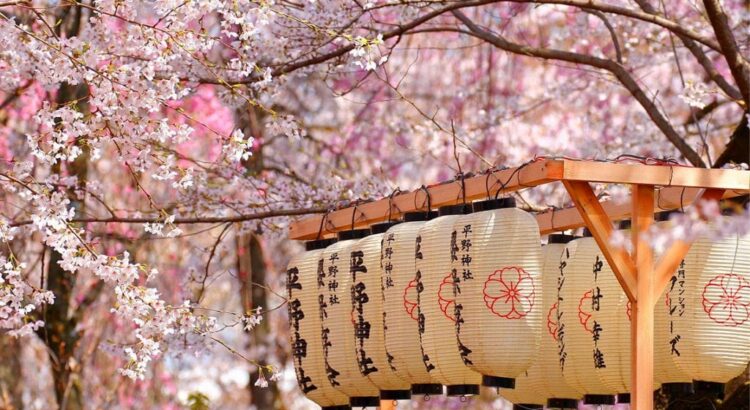
La floración de cerezos en Kioto llegó a su punto de máximo esplendor el pasado 22 de marzo, unos diez días antes que el promedio histórico.

Esta primavera de 2021 trajo un nuevo récord para la floración de cerezos según lo informara la agencia meteorológica nacional y relaciona el hecho con las cálidas temperaturas del cambio climático a nivel mundial.

Nuestros estudios han demostrado que el inicio de la temporada de los cerezos en flor está estrechamente relacionado con la temperatura promedio en febrero y marzo“, en declaraciones para la Agencia de Prensa Francesa (AFP) Shunji Ambe, funcionario de la Agencia Meteorológica de Japón.

cerezos en flor, hanami, sakura, Tokio, cambio climático

Nuestras observaciones de la vida vegetal muestran que los fenómenos primaverales (como las flores de cerezo y ciruelo) tienden a ocurrir antes, mientras que los fenómenos otoñales se retrasan“.  “Creemos que estos fenómenos reflejan una tendencia al alza de la temperatura“, finaliza.

Normalmente, los cerezos de Tokio florecen en su máximo esplendor alrededor del 2 de abril, pero este año alcanzaron su punto máximo el 22 de marzo, un día más lento que el primero registrado en 2002.

Son 58 los árboles de cerezo que se monitorean anualmente para obtener información. De ellos, unos 24 iniciaron la floración más temprana registrada hasta entonces y 14 llegaron a su floración plena también en tiempo récord.

La tradición del Sakura y los cerezos en flor

La mayoría de estos cerezos pertenecen a la variedad yoshino, una de las más conocidas y apreciadas en el país por sus bellas flores blancas y rosadas que luego de unas dos semanas de esplendor, dejan caer sus pétalos como una hermosa “lluvia”.

Este espectáculo de la naturaleza es conocido como la temporada de sakura o cerezo en flor de Japón y es muy esperado tanto por los habitantes de la capital como por los turistas.

Las personas celebran tradicionalmente con hanami, picnis bajo los árboles y espectáculos. Pero este año, esta maravilla se ha visto algo opacada por las restricciones existentes en el marco mundial de pandemia por coronavirus.

Ecoportal.net


Fuente de la Información: https://www.ecoportal.net/paises/floracion-cerezos-cambio-climatico/

Comparte este contenido:

China’s educated housewives feel overworked and underappreciated

China’s educated housewives feel overworked and underappreciated

  • Women account for more than half of China’s students but their presence in the workforce is diminishing
  • ‘Women face rampant and overt labour market gender discrimination,’ academic says


When Cai Ning moved to China from Belgium with her family five years ago, she did not expect her life as a full-time housewife in her home country to be so hard.

Devoting most of her time to housework and caring for her two sons in the eastern city of Nanjing, the 38-year-old said the most frequent comments she got when people learned she had a PhD were: “What a waste” and: “Your husband must earn a lot of money!”

While full-time mothers with degrees are not uncommon in Belgium, they are a rarity in China, where grandparents usually take on the role of childcare so both parents can work.

Fuente de la Información: https://www.scmp.com/news/china/society/article/3107969/chinas-educated-housewives-feel-overworked-and-underappreciated

Comparte este contenido:

South Korean Man Gets 34 Years for Running Sexual Exploitation Chat Room

South Korean Man Gets 34 Years for Running Sexual Exploitation Chat Room

Moon Hyeong-wook, 25, was accused of luring young women with promises of high-paying jobs and then forcing them into pornography.

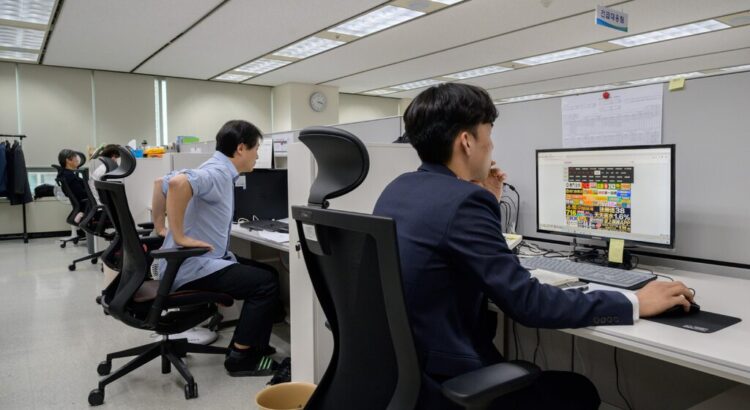
SEOUL — A South Korean man was sentenced to 34 years in prison on Thursday as part of the country’s crackdown on an infamous network of online chat rooms that lured young women, including minors, with promises of high-paying jobs before forcing them into pornography.

The man, Moon Hyeong-wook, opened one of the first such sites in 2015, prosecutors said. Mr. Moon, 25, operated a clandestine members-only chat room under the nickname “GodGod” on the Telegram messenger app, offering more than 3,700 clips of illicit pornography, they said.

Mr. Moon, an architecture major who was expelled from his college after his arrest last year, was one of the most notorious of the hundreds of people the police have arrested in the course of their investigation. Another chat room operator, a man named Cho Joo-bin, was sentenced in November to 40 years in prison.

“The accused inflicted irreparable damage on his victims through his anti-society crime that undermined human dignity,” the presiding judge, Cho Soon-pyo,​ said of Mr. Moon in his ruling on Thursday.​ The trial took place in a district court in the city of Andong in central South Korea​.

Mr. Moon was indicted in June on charges​ of forcing 21 young women, including minors, into ​making ​sexually explicit videos between 2017 and early last year.​

He ​approached young women looking for high-paying jobs through social media platforms​, then lured them into making sexually explicit videos, promising big payouts​, prosecutors said​.​ He also hacked into the online accounts of women who uploaded sexually explicit content, pretending to be a police officer investigating pornography.

​Once he got hold of the images and personal data, he used them to blackmail the women, threatening to send the clips to their parents unless the victims supplied more footage, prosecutors said.

Prosecutors demanded a life sentence for Mr. Moon.

Last December, the police said​ they had investigated 3,500 suspects, most of them men in their 20s or teenagers, as part of their investigation of the online chat rooms that served as avenues for sexual exploitation and pornographic distribution​. They arrested 245 of them.

The police also identified 1,100 victims.

The ​scandal, known in South Korea as “the Nth Room Case,” caused outrage over the cruel exploitation of the young women​. Women’s rights groups picketed courthouses where chat room operators were on trial, accusing judges of condoning sex crimes by handing down what they considered light punishments.

On Thursday, outside the Andong courthouse, advocates held a rally demanding the maximum punishment for Mr. Moon.

In recent years, the South Korean police began cracking down on sexually explicit file-sharing websites as part of international efforts to fight child pornography. As smartphones proliferated, ​they soon realized that much of the illegal trade was migrating to online chat rooms on messaging services like Telegram.

The police said they had trouble tracking down customers of the online chat rooms because they often used cryptocurrency payments to avoid being caught.

Fuente de la Información: https://www.nytimes.com/2021/04/08/world/asia/korea-sex-crime-chat-rooms.html


Comparte este contenido:
Page 68 of 772
1 66 67 68 69 70 772