Page 67 of 772
1 65 66 67 68 69 772

Más de 200 detenidos en Turquía durante el Primero de mayo

La policía turca detuvo hoy a más de 200 personas y empleó gases lacrimógenos para dispersar a manifestantes en Estambul durante el Primero de Mayo, en medio de un confinamiento total para frenar el coronavirus.

La gobernación de Estambul informó en un comunicado que 212 personas fueron detenidas cuando intentaban entrar en la plaza de Taksim, que desde ayer está sellada entre grandes medidas de seguridad.

Otras fuentes sindicales y laborales aumentan la cifra de detenidos hasta alrededor de 230.

La plaza de Taksim es un lugar simbólico para la izquierda y el movimiento sindical en Turquía después de los sangrientos incidentes del Primero de Mayo de 1977, cuando grupos ultranacionalistas abrieron fuego contra los allí reunidos y mataron a unas 40 personas.

Por la mañana, pequeños grupos en representación de los principales sindicatos accedieron a Taksim para conmemorar la masacre de 1977 y colocaron flores en un monumento dedicado a las víctimas.

Más tarde, simpatizantes de izquierda y estudiantes universitarios intentaron también entrar en la plaza por distintos accesos, pero fueron bloqueados y muchos de ellos detenidos por policías antidisturbios y agentes de paisano que se emplearon con contundencia.

Los detenidos portaban carteles a favor de la lucha obrera y gritaban consignas como «Taksim no puede cerrarse a la gente» y «Viva nuestra lucha por el Primero de Mayo».

Los medios turcos también informan de detenciones en otras ciudades de Turquía de personas que querían conmemorar el Primero de Mayo.

En la capital, Ankara, la policía detuvo al menos a cuatro personas, mientras que en Izmir son al menos ocho los arrestados.

Turquía introdujo esta semana un confinamiento total hasta el 17 de mayo, que impone quedarse en casa así como el cierre de escuelas y algunas empresas, para frenar los contagios.

La covid causó el viernes 394 muertes, un 16 % más que el jueves y una cifra récord desde el inicio de la pandemia en el país.

Fuente: https://www.swissinfo.ch/spa/primero-de-mayo-turqu%C3%ADa_m%C3%A1s-de-200-detenidos-en-turqu%C3%ADa-durante-el-primero-de-mayo/46582388

Comparte este contenido:

China reduce tareas de estudiantes de escuelas primarias y secundarias

Asia/China/30-04-2021/Autor(a) y Fuente: Spanish.xinhuanet.com 

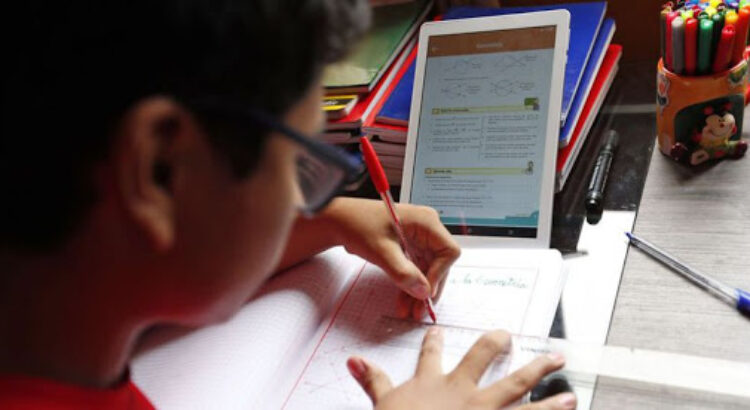
 Los estudiantes chinos de las escuelas primarias y secundarias ya no estarán sobrecargados con los deberes asignados por sus maestros o instituciones de enseñanza extraescolar.

Las escuelas primarias deben asegurarse de que los alumnos de primer y segundo grado no tengan tareas escritas, y los de los grados superiores puedan completarlas en no más de una hora, según una circular emitida por el Ministerio de Educación.

Los alumnos de secundaria dedicarán como máximo una hora y media a sus tareas escritas todos los días, estipula el aviso oficial, que pide que sea adecuada la cantidad de tareas incluso para los fines de semana y las vacaciones de verano e invierno.

Las instituciones de enseñanza extraescolar tienen prohibido asignar tareas a los estudiantes de primaria y secundaria, según la circular.

Además de la cantidad de tareas, las escuelas también deben ajustar sus formas y contenidos de acuerdo con las características de las diferentes etapas y asignaturas escolares, así como las necesidades y habilidades de los estudiantes.

La circular solicita que se asignen tareas diversificadas que abarquen ciencias, ejercicio físico, arte, trabajo social y deberes individualizados e interdisciplinarios.

También prohíbe asignar tareas a los padres, directa o indirectamente, incluyendo la de ayudar a hacer correcciones.

Fuente e Imagen: http://spanish.xinhuanet.com/2021-04/25/c_139905287.htm

Comparte este contenido:

Myanmar Women: ‘Our Place Is In The Revolution’

Myanmar Women: ‘Our Place Is In The Revolution’

Every day at sunrise, Daisy* and her sisters set out to spend several hours in the heat cleaning debris from the previous day’s protests off the streets of Yangon, Myanmar’s largest city.

Protests have erupted around the country since the military seized control of the government after arresting democratic leader, Aung San Suu Kyi, on 1 February, and declared a year-long state of emergency.

According to the Assistance Association for Political Prisoners (AAPP), a non-profit rights organisation formed by former political prisoners from Myanmar and based in Thailand, 715 civilian protesters have been killed and more than 3,000 people have been charged, arrested or sentenced to prison for taking part in protests. 27 March marked the deadliest day of the anti-coup protests so far, with more than 100 deaths in a single day.

Daisy, a 29-year-old elementary school teacher, has been out of work since the first week of February, because schools have been closed as a result of the protests, but is the sole earner and carer for her two younger sisters, aged 15 and 13. Despite this, she spends a portion of whatever money she has left to help feed hungry protesters.

The military makes use of dalans – local people who are forced to spy on their neighbours and, in particular, to target women living alone whose homes are easy targets for looting and harassment. As a result, Daisy and her sisters have been forced to move home three times and are now in hiding with relatives.

“The military are preying on vulnerable women, breaking in and raiding where we live to seize our belongings and lock us up for no reason,” Daisy says. But despite having little financial security, Daisy continues to help with the protests. “As women, we are the most at risk under the military but however large or small, our place is in the revolution.”

Outrageous Displays Of ‘Profanity’

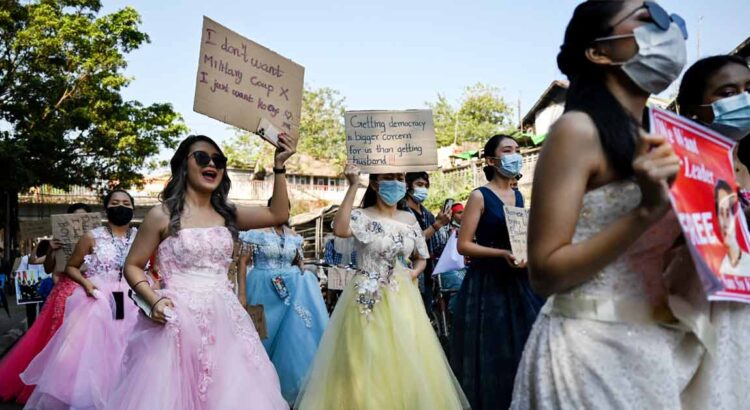
Across Myanmar, women protesters have lined the streets with vibrant traditional women’s clothing and undergarments in the hope of challenging a long-held taboo around women’s clothing. “Htaimein – Burmese for sarongs and intimate women’s wear – are perceived as ‘unclean’ in traditional Buddhist belief and thus considered inferior in Burmese society,” explains 25-year-old Su, an activist and university student who does not wish to give her full name for fear of reprisals. Su is originally from Dadaye, a town in the Ayeyarwady region of southwest Myanmar.

“Coming into contact or walking under these is believed to bring bad luck, reducing one’s hpone – masculine superiority – in Buddhist belief.”

She says hanging up sarongs has been an effective deterrent to keep the military from attacking the protesters as their staunch beliefs will not allow them go anywhere near the orchestrated clothing lines.

Women are also using their sarongs to create flags and hats for men to parade alongside banners that read “our victory, our htaimein” to celebrate wielding a degrading superstition about women as a successful defence strategy.

In a similar vein, women have been hanging sanitary towels drenched in red paint to emulate blood over photos of the military general, Min Aung Llaing. “For a society where men, including Min Llaing, detest the idea of menstruation, smearing his face with what he finds the dirtiest is unimaginably humiliating,” Su explains. “Sarongs and sanitary napkins are symbolic of the women in Myanmar and how they are regarded as inferior to men in society.”

By weaponizing these displays of “profanity”, women say they are reclaiming their status against the same patriarchal attitudes that perceive them as lesser in society.

Civil Disobedience As A Means Of Resistance

The Women’s League of Burma, an organisation which seeks to increase women’s participation in public life in Myanmar (which was formerly called Burma), estimates that 60 percent of those protesting are women, while the AAPP says women make up almost 40 percent of those arrested.

The Civil Disobedience Movement (CDM) has brought the country’s public services, including healthcare, schools and banks, to a halt. It is also behind efforts to deprive the military of its income by boycotting military-owned services and products such as tobacco, alcohol, coffee and oil, and refusing to pay government taxes.

Chit*, a 26-year-old doctor-in-training from Yangon, has been part of a group of female medical volunteers tending to the wounded during the protests. She believes providing medical care to protesters is a duty for all doctors. She says she has heard of one female doctor who was shot by the military while trying to aid a patient. “As women, we are expected to stay in ‘safe’ areas of the protests but we know our place is wherever help is needed.”

Female lawyers and bankers have formed an informal group to offer legal and financial advice to civilians, especially those trying to flee the country. “We want to offer our services to those in general need of legal routes or financial advice. We know the public have been put in a compromising position given a pandemic then a coup so free verbal consultations, advice, and going through documents with them is an extension of our efforts against the military,” explains Min Thwaw, a private lawyer practising in the capital, Naypyidaw.

“Many white-collar workers have lost their jobs and those females workers continue to be threatened by authority figures but the military need us [the workers] more than we need them. Without us, the banking system will collapse soon and economic crisis will remain irreversible – a price we are willing to pay to cripple the military,” she adds.

Economic uncertainty caused by the military takeover is likely to have a negative effect on the country’s US$6 billion garment and footwear industry. As a result, thousands of garment workers, predominantly young women, have taken part in demonstrations, urging the multinational companies they work for to denounce the coup and protect workers from being fired or even killed for protesting.

While some Western brands have remained silent over the military takeover in Myanmar, the Benetton Group, H&M, Primark and Bestseller all suspended new orders from factories there until further notice, following pressure from within and outside Myanmar. Despite this, trade unions in Myanmar stress companies are not doing enough and are demanding more “concrete action” like documenting and addressing human rights abuses with their respective governments and committing to partial payments of orders.

Many garment workers have left their family homes for the safety of other family members in order to participate in the strikes. They include 27-year-old Jasmine (who did not wish to give her full name) and five of her colleagues. They live together in a 250-square-foot flat in Yangon, surviving on food donations from the wider community as well as community money handouts – funds raised by local and international supporters of the CDM to finance the movement from afar – a portion of which they need to send back to their home villages to support their families as well.

These young women march defiantly together in large human chains with arms interlocked. Jasmine says this is an effective tactic adopted by garment workers who are protesting to ensure the police do not separate them from each other. “They yank protesters away to break the chain then abuse those they capture in jail or publicly.”

On 18 February, about 1,000 garment workers producing clothes for Primark were reportedly locked in GY Sen Apparel Company’s factory for taking part in the protests by supervisors who sympathised with the military.

Upon breaking free after several hours, many of them were fired. Jasmine also says that she and her colleagues have been intimidated with verbal abuse by factory owners, who confront the women physically, they say, and who have been trying to fire them for protesting. For now, Jasmine still has her job, although many of her colleagues have been laid off.

“These are the challenges we are faced with on top of a coup; borderline starvation and no pay. We need the companies we work for to denounce these heinous acts, recognise what we are going through and protect us,” she says. Since the women live together, they have been easy targets for the military and factory owners.

During the day, the workers liaise with activists to gather information about locals collaborating with the military by providing details about people’s whereabouts and public gatherings. This way, they can find out about potential morning break-ins into workers’ homes and abductions by the military and police carrying out military orders. As the evening sets in, workers quietly gather in one house to make plans for the next day’s protests.

The military blacks out the internet every night from 1:00 am to 9:00 am and has banned all social media to stop protesters from informing each other about arrests or possible military targets. It is meticulously tracking telecommunications. It also imposes a strict overnight curfew and deploys soldiers with orders to shoot on sight anyone who breaks it.

Jasmine and her friends have heard frightening rumours about people being shot or abducted if they are found to be breaking curfew. The women, therefore, move carefully on foot from one house to another in the dead of night to relay crucial information regarding potential break-ins, abductions and to make plans for protests.

“We cannot afford to risk brushing off anything heard through the grapevine as hearsay. Nobody is here to protect us but ourselves,” says Jasmine. – Al Jazeera

*Names changed to protect identities.

Fuente de la Información:  https://theaseanpost.com/article/myanmar-women-our-place-revolution

Comparte este contenido:

Corea del Norte: How Extreme Flooding in the DPRK Affects Daily Life

How Extreme Flooding in the DPRK Affects Daily Life

With contributions from aid workers.

The North Korean people have faced truly extreme humanitarian challenges in 2020. Before this summer, the DPRK was dealing with high levels of chronic malnutrition and severe economic disruptions caused by COVID-19 shutdowns and ongoing sanctions. The multiple typhoons that have hit over the past few weeks causing widespread flooding around the country exacerbate an already difficult year. Even after decades of visiting the North, it is devastating to witness the array of grave humanitarian difficulties that the North Korean people must endure. Sadly, humanitarian assistance for relief, recovery and rebuilding is unlikely to be delivered any time soon.

The Tyranny of Geography

The topography of the Korean Peninsula, featuring steep mountains and narrow valleys, makes it vulnerable to flooding; every mid-summer, it receives significant rainfall. In a normal season, as much as half of the annual rainfall can come during the roughly month-long “rainy season” that ordinarily begins in late June and ends by mid-July. As long as the rain showers are gentle, the hillside vegetation and natural drainage system of creeks, lakes, reservoirs and rivers can absorb and remove the excess water without widespread damage. But if the rainy season is prolonged, or if typhoons bring high winds and dump large amounts of rainfall in a short period of time, the system is quickly overwhelmed, causing mudslides, large-scale flooding and crop damage, loss of homes and infrastructure, and lives.

2020 Has Been a Bad Year

The rainy season of 2020 was prolonged and heavy, and was followed by three typhoons that struck different parts of the country in a two-week period: Bavi (August 26-27), Maysak (September 2-3) and Haishen (September 7). These storms brought further damage to already hard-hit communities, and new levels of hardship to other cities and regions that were spared mass flooding earlier in the season. Meanwhile, the risk from more typhoons continues into the fall.

According to a September 16, 2020 Pyongyang Times article, the summer of 2020 brought the second-highest level of precipitation recorded in the DPRK in the last 25 years. During the typhoons, the North Korean government issued emergency warnings and permitted unusual live, on-the-scene reporting showing significant flooding in Wonsan (North Korea’s fifth-largest city) and other areas. Yet so far, although the current flooding is likely much worse and more widespread than prior years, North Korea has neither publicly requested outside assistance nor shared precise damage estimates or casualty figures. Since the outbreak of COVID-19, the fight against the pandemic has been the government’s top priority, meaning tight quarantine measures and travel and economic restrictions remain in place. These priorities were further reiterated on August 14 when Kim Jong Un reportedly said at a Politburo meeting, “The worsening coronavirus situation around the globe calls for tighter border closures and stricter virus prevention measures, and not allowing any outside assistance whatsoever regarding the flood damage.” However, even though detailed casualty and damage figures are not available, much can be gleaned from the broadcast footage and experience gained from extensive United Nations (UN) and NGO travel and prior humanitarian engagement in the country.

The View From Ground Zero

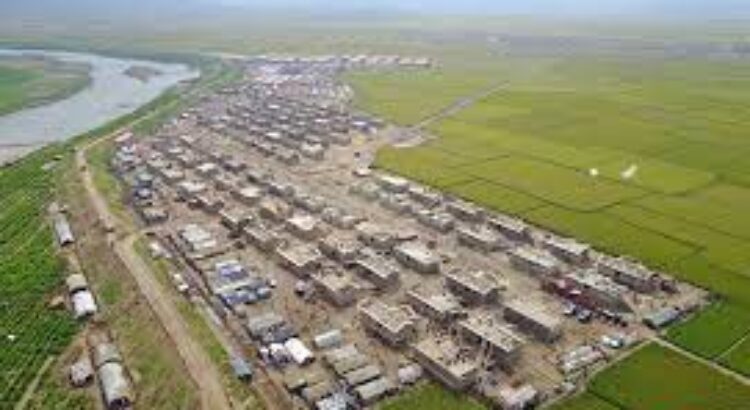
The Korean Peninsula north of the Demilitarized Zone (DMZ) ranges from coastal rice-growing areas and lowlands planted with corn, soybean, vegetables, fruit trees and other crops, to mountainous areas. Steep mountain slopes are drained by small creeks running down narrow valleys, feeding into larger rivers that meander through agricultural areas, villages and towns to the sea. On previous visits to the North, aid workers have seen firsthand the widespread devastation that happens when too much water falls in these vulnerable areas in too short a time. Homes, schools, clinics and other buildings rim the edges of the narrow valleys, and when heavy rains hit steep slopes, the small creeks that drain these valleys turn into rushing torrents that soon sweep away everything in their path. Mountainsides lacking in cover vegetation can quickly become saturated and slough off, burying buildings below in mud. Standing water around the base of mud-brick buildings can cause them to “melt” and collapse. Outhouses and open waste channels are soon overrun, contaminating the floodwaters. Perimeter walls built for security collapse. Phone and electric lines are severed. Rural dirt roads turn into mud, making the surface impassible. Bridges break as abutments wash away.

As the ground becomes saturated and rivers overflow, nearby croplands are inundated. Crops like corn, soybean and rice that were weeks away from being harvested instead risk rotting in the fields. Farmers and community members will do what they can to try to salvage crops by tying them up, to hopefully allow them time to finish ripening for harvest. But if the damage is too widespread, it is simply an overwhelming task.

Swollen rivers inundate towns, uproot trees and vegetation, wash away topsoil, and deposit rocks, refuse and waste that have been pulled into the churning waters. Entire towns can be swept away, the landscape forever changed once the waters recede. It will take months of backbreaking work to rebuild homes, roads, rail lines and bridges and to remove debris from agricultural fields. With topsoil buried or washed away, the productivity of affected fields is often reduced going forward, making life even harder for those working the ground.

In the immediate aftermath of flooding, those who have lost their homes and personal belongings may be housed in the small apartments or residences of family or friends, or find shelter in community buildings, while communities try to rebuild housing. In some cases, “shock troops” of soldiers or organized volunteer laborers from various sectors of the society may be sent by the government to quickly reconstruct devastated homes and other buildings in larger communities. But in poorer areas, it seems that local communities and even individual families are left to try to rebuild and repair on their own—with few resources, an already overburdened workload and with winter just around the corner.

Inundated or partially inundated homes must be repaired; mounds of mud must be removed and belongings cleaned—yet in most cases, the only water available for cleaning is contaminated. Kitchen gardens that individual households heavily depend on must be immediately replanted, but that may be impossible if seed stocks have been lost in the flooding. People who are already malnourished and suffering will struggle even more for basic survival in the coming weeks and months from increased incidence of diarrhea caused by contaminated water sources, the sudden loss of food stocks, garden produce, or fuel, and the hugely increased workload.

Help Is Not on the Way

The damage to the roads alone makes it very difficult for relief supplies, if available at all, to be delivered. Remote communities can be entirely cut off for days or weeks while mudslides are removed, often by hand, and roads are repaired enough to restore even basic travel. Furthermore, under normal circumstances, September and October are some of the busiest months in the DPRK as they are critical for harvesting the main food crops of corn, rice and soybean. Roads must be passable in order for crops to be harvested and moved from the fields to the threshing areas and out for distribution, and electricity lines and supply must be restored in order to run the threshing machines.

The virtual closure of the border with China and the halt in nearly all external relief shipments since January 2020 out of concern for COVID-19 will make longer-term recovery efforts even more difficult. Vehicles of all kinds are needed for rebuilding efforts—to transport building materials like sand, gravel and concrete. But the parts and tires needed to keep these vehicles operational usually come from China. With trade cut off due to COVID-19 quarantines, many of these vehicles will break, further limiting transportation and supply networks. Similarly, while greenhouses have greatly expanded food production in the shoulder seasons between late fall and early spring, the supply of replacement greenhouse plastic is critical—which has also very likely been significantly curtailed due to border closures related to COVID-19 measures.

People injured during the flooding or the rebuilding effort have no option but to seek treatment at clinics or hospitals that are overwhelmed and ill-equipped to feed or house them, let alone provide them with significant medical help. Besides those already at the margins of society and highly vulnerable to shocks of any kind (children under five, pregnant and nursing women, the elderly, the disabled, those who are sick, etc.), those who lost their homes to the flooding, and communities most affected will be particularly vulnerable to increased rates of malnutrition. As people crowd together in small spaces due to the loss of shelter, there is not only the potential for the spread of COVID-19, but also the transmission of more common communicable diseases like tuberculosis or multidrug-resistant tuberculosis.

Perhaps most devastating is the emotional impact and disruption caused by the loss of loved ones, homes or livelihoods on people already on a knife-edge of survival, and the overwhelming workload. Usual tasks must be completed (on top of urgent flood restoration duties at both the community level and at the household level) before the cold of winter sets in. For millions of North Koreans, the challenge is formidable but help will not be on the way until outside humanitarian assistance and related travel is again facilitated by North Korea, a reality recognized on September 11 by US Deputy Secretary of State Stephen Biegun in remarks to the National Committee on North Korea (NCNK):

We recognize that North Korea is facing an unusually severe set of challenges this year that perhaps is making it more difficult for Pyongyang to make the decision to engage. But I can assure you we will be ready when the DPRK is ready. In the meantime, it is critical that we and the international community remain focused on the humanitarian challenges faced by the North Korean people.

Conclusion

Even after visiting the DPRK over two decades, it is heartbreaking to witness the damage and setbacks caused by floods. This year, it is even more difficult to see the devastation on communities and lives from afar without being able to lend a helping hand.

Fuente de la Información: https://www.38north.org/2020/09/nkflooding092320/

Comparte este contenido:

Siria, el país al que los niños no quieren volver

Se cumplen diez años de un conflicto en Siria que ha generado millones de refugiados, como calcula ACNUR y que ha impactado a los más jóvenes. Así son los datos y las políticas de acogida en España una década después. ACTUALIZACIÓN 5/03/2021

Esta semana la Unión Europea y las Naciones Unidas celebran la quinta conferencia de “Apoyo al futuro de Siria y la región” cuyo objetivo es apoyar al pueblo sirio y movilizar a la comunidad internacional para alcanzar una solución al conflicto.

Esta reunión coincide con el décimo aniversario del inicio de la guerra en Siria y sexto desde que estallara la crisis migratoria. En 2016 la Unión Europea llegó a un acuerdo con Turquía para que Ankara gestionase los flujos migratorios. Según datos de ACNUR, Alemania es el país de la Unión Europea con más solicitantes de asilo reconocidos como refugiados desde 2015: un total de 389.574. En cambio, como señalan estos datos, España ha reconocido a 163 refugiados en el mismo periodo de tiempo. Por otro lado, si se consideran los reconocimientos de protección complementaria aprobadas, Alemania tendría 223.434 y España 13.760, como recoge ACNUR.

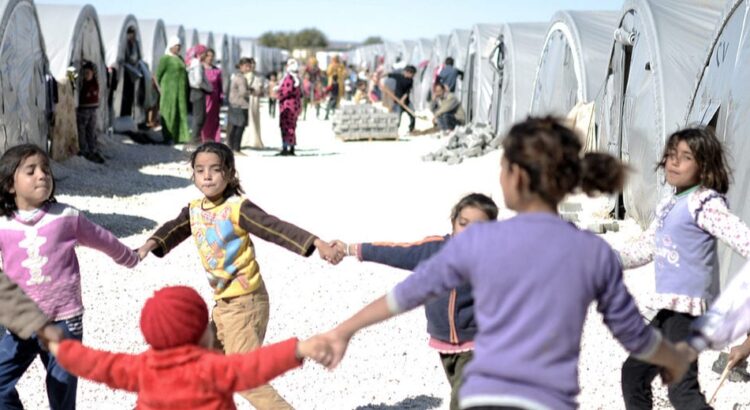
Asma tenía nueve años cuando comenzó el conflicto en Siria. Ahora, con 18, cuenta a Newtral.es su experiencia: “Al principio no había bombas”. Tras el inicio de la guerra marchó junto a su familia a otras zonas dentro del país, se convirtió así en desplazada interna. Viajó a Al Raqqa, regresó a otro pueblo y cambió de ciudad varias ocasiones hasta finalmente acabar en un campo de refugiados en Turquía en el que estuvo durante ocho meses.

La joven llegó a Madrid con 13 años como refugiada junto a su familia. Al ser preguntada sobre su estancia en Madrid, asegura que “le gusta mucho la ciudad”. “En Madrid hay muy buena gente, no como otros países en los que hay mucho racismo”, señala.

Según un informe publicado por Save the Children, el 86% de los niños y niñas refugiados sirios entrevistados por la organización en Jordania, Líbano, Turquía y Países Bajos, no quiere regresar a su país de origen.

En este sentido, Asma es de la misma opinión, en el caso de regresar a su país sería para visitar a su familia. Pero no es algo que haría a corto plazo.

Siria, refugiados y asilados: Diferencias de términos

La concesión de asilo se da a aquellas personas reconocidas como refugiadas según la Convención de Ginebra de 1951, como señala María Jesús Vega, de ACNUR. Por otro lado, la protección subsidiaria se concede a aquellas personas que aunque no cumplan con los requisitos de refugiado, existen motivos para creer que al regresar a su país se enfrentarían a poder sufrir algún daño..

Por otro lado, habría que tener en cuenta otro concepto, el reasentamiento, que consiste en el “traslado de refugiados de un país de asilo a otro – que ha acordado admitirlos -, generalmente por motivos de protección o de especial vulnerabilidad”, como define ACNUR.  “Se trata de un instrumento de protección internacional que salva vidas, y que ha sufrido un fuerte revés en 2020 en cuanto a las cuotas ofrecidas y los traslados por la pandemia” explica María Jesús Vega desde ACNUR.

Situación en España

David del Campo, Director de Cooperación Internacional y Acción Humanitaria de Save the Children, considera que el conflicto ha ido empeorando año a año y, como ha señalado a Newtral.es, se trata de “una guerra contra la población civil y contra la infancia en Siria”.

Además, Del Campo critica la posición de España ante el conflicto y lo califica de “ausente” en ayuda y cooperación tanto con el gobierno actual como en el anterior. En 2019 el gobierno español reconoció el derecho a la protección subsidiaria (estatus diferente al de refugiado o concesión de asilo) a 561 personas menores de origen sirio de entre 0 y 17 años, según datos del Ministerio del Interior. En 2018 fueron 1.037.

Dentro de España, los datos entre ambas categorías varían bastante. A lo largo de 2019 se reconoció la condición de refugiado y la concesión de asilo a 6 menores de origen sirio. Como explica Vega, en muchas ocasiones los reconocimientos se muestran con retraso y se acumulan en otros años.

“Hay una premeditación para hacer muy difícil que una persona que vive el conflicto de una guerra sea alojado. Las complicaciones jurídicas están hechas para que eso no ocurra”, indica Del Campo.

Asimismo, explica que en la organización han trabajado con familias que se han desplazado hasta tres veces dentro de Siria desde que se inició el conflicto, lo que genera “desarraigo y problemas psicológicos”. Esto se ve reflejado dentro de la encuesta, ya que los desplazados dentro del propio país eran los que tenían menos vínculos con sus comunidades.

Asma define como “terribles” sus años de desplazada interna en Siria y en Turquía: “los años que estuve en Siria los pasé fatal, no había comida, no había agua. Ahí murió mi abuela y mi prima. No se puede contar con palabras”. Asma quería ser doctora, pero ahora mismo no sabe qué hará en el futuro, quiere centrarse en empezar bachillerato y quizás, en viajar cuando acabe de estudiar.

Fuente: https://www.newtral.es/siria-refugiados-ninos-conflicto/20210403/


Comparte este contenido:

China: Bibliotecas chinas publican copias digitales de libros antiguos

Asia/China/23-04-2021/Autor(a) y Fuente: Spanish.xinhuanet.com

La Biblioteca Nacional de China (BNCh), en colaboración con otras nueve bibliotecas en todo el país, ha puesto a disposición digitalmente más de 1.700 libros antiguos, en un intento por preservar los libros y hacerlos más accesibles al público.

Los recursos recién cargados, que incluyen copias de libros antiguos en idioma tibetano y de medicina tradicional China, han elevado el número total de libros antiguos digitalizados a 74.000, dijo la BNCh en un comunicado emitido este miércoles.

Los recursos bibliográficos, en diversos idiomas y temas y que se remonta a diversas dinastías, incluyen manuscritos, documentos y estudios, entre otros.

La BNCh, con sede en Beijing, ha encabezado la creación de una base de datos dedicada a libros antiguos digitalizados. Desde su lanzamiento en 2016, se han puesto a disposición más de 33.000 libros antiguos, que representan más de dos terceras partes de la colección total de libros antiguos de la biblioteca que se encuentran relativamente en buen estado.

También se ha creado una base de datos de registro para proteger mejor los libros antiguos, con información de cerca de 8 millones de libros antiguos cargados en la plataforma.

Fuente: http://spanish.xinhuanet.com/2021-04/21/c_139896709.htm

Comparte este contenido:

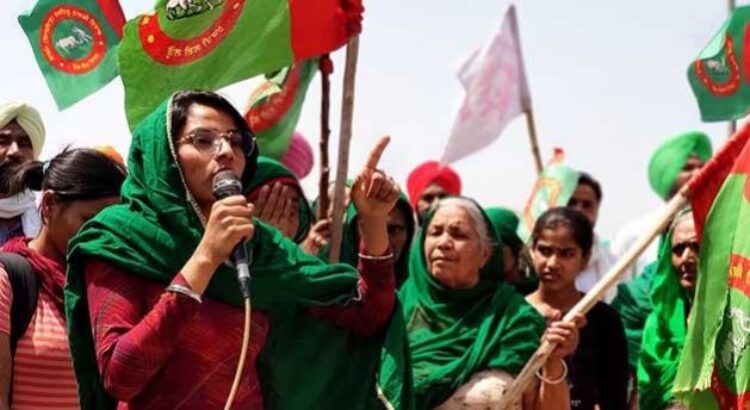
Una mujer dalit se convierte en la voz de los agricultores en India

El 12 de enero de este año, en algún lugar de las afueras de la capital de India, la activista dalit Nodeep Kaur fue arrestada por la policía por protestar frente a una fábrica. Al cierre de 2020, ella se unió a una organización local de derechos de los trabajadores llamada Mazdoor Adhikar Sangathan (MAS) en el área industrial de Kundli, en Haryana.

En enero, fue acusada de maltratar presuntamente a la dirección y al personal de una zona industrial durante una protesta y también de agredir al equipo policial.

Kaur, de 24 años, también había estado participando en la protesta de los agricultores contra las nuevas y profundas reformas del sector agrícola del gobierno nacional del primer ministro Narendra Modi, en lo que ya representa una de las mayores movilizaciones de la historia de este país de 1300 millones de personas.

Fue detenida y acusada en tres casos separados en virtud de los artículos de la ley india que incluían intento de asesinato, extorsión, reunión ilegal, disturbios e intimidación criminal. Se le concedió la libertad bajo fianza, pero sus procesos aún están pendientes. El caso de Nodeep Kaur pasó a ser cubierto ampliamente por los medios internacionales luego que Meena Harris, sobrina de la vicepresidenta estadounidense Kamala Harris, pidió su liberación.

«Soy mujer, soy dalit y le estoy dando voz a las personas que a menudo son reprimidas con mucha facilidad», dijo Kaur en una entrevista con IPS.

“Me arrestaron, me golpearon, me maltrataron, incluso dentro de la prisión había tanto prejuicio entre la gente de casta superior y de casta inferior”, explicó en referencia al sistema de castas del hinduismo que de hecho aún prevalece en India y en que la dalit (paria) es la más marginalizada en esa estratificación social.

“Me torturaron mucho, no podía caminar, tenía tanto dolor, no me dieron acceso a un médico y me mantuvieron aislada durante días. Agradezco haber salido con vida y estar aquí, donde se supone que debo estar, con mi gente, con la clase trabajadora y con los agricultores”, detalló sobre los días encarcelada.

Kaur proviene de una familia de activistas y sus padres se han asociado con el sindicato de agricultores en Punjab. En 2014, su madre Swaranjeet Kaur encabezó una protesta exigiendo justicia para una niña dalit menor que sufrió una violación en grupo en su aldea. Ella enfrentó múltiples amenazas de muerte, fue arrestada y mantenida bajo custodia durante días.

“Soy quien soy hoy gracias a mi madre. Nuestra sociedad no se crea igual, hay muchos prejuicios basados en las castas y si eres una mujer y una mujer de mi origen (dalit), es un desafío mayor. Desde muy joven aprendí a luchar no solo por mí, sino también por los demás”, dijo la activista.

En febrero, cuando a Kaur se le concedió la libertad bajo fianza, una de las primeras declaraciones que hizo justo después de salir de la prisión fue: «Definitivamente iré a la frontera de Singhu y me sentaré con los granjeros».

Semanas después, Kaur se ha convertido en una de las voces más fuertes y escuchadas que está liderando la protesta del campesinado del país.

“Esta solidaridad que se ve hoy entre los agricultores y la clase trabajadora es tan poderosa. ¿Se imaginan lo que puede suceder ahora que todos estamos unidos y defendiéndonos unos a otros?» dijo. “Mi batalla comenzó con la lucha por el impago de salarios y el trato injusto a la clase trabajadora en una zona industrial, y desde allí, hoy estoy aquí apoyando y dando mi voz a los agricultores”, añadió.

“No sé cómo ni cuándo sucedió, pero me llaman su líder y no los voy a defraudar», sentenció.

Miles de agricultores, en su mayoría de los estados de Punjab, el corazón agrícola indio, Haryana y el oeste de Uttar Pradesh, han protestado en las inmediaciones de Nueva Delhi desde noviembre de 2020 contra tres nuevas leyes agrícolas, aprobadas en septiembre de ese año, que desregulan y flexibilizan el sector.

Se trata de la Ley de Comercio de Productos Agrícolas y Comercio, el Acuerdo de Protección y Empoderamiento de los Agricultores sobre Garantía de Precios y Servicios Agrícolas y la enmieda de la Ley de Commodities.

Los agricultores también han exigido una garantía legal sobre los precios mínimos de apoyo (MSP, en inglés) para sus cultivos y también que retiren el proyecto de enmienda de la ley de electricidad, presentado también en 2020, ya que temen que eventualmente conlleve al fin de la electricidad subsidiada.

“Todo lo que pedimos es retirar esas tres leyes que desregularán la venta de nuestros cultivos”, dijo Sukhdev Singh, secretario general de Estado del Sindicaro Bharti Kisan.

“Nuestra mayor preocupación es que las leyes recientes que han sido promulgadas por el gobierno central desmantelarán por completo el sistema de MSP, solo los agentes privados se beneficiarán y nosotros los agricultores terminaremos sin actividad”, dijo en diálogo con IPS.

Singh subrayó que “no podemos darnos el lujo de cerrar el «sistema mandi«, así es como tenemos ingresos”.

Los mandis son unos 7000 mercados mayoristas regulados por el gobierno, que junto con el sistema de MSP han protegido por muchas décadas de los vaivenes del mercado a los campesinos en India, aunque para su prejuicio se ven cada vez más desvirtuados por los intermediarios y otras distorsiones.

Modi quiere romper con un desequilibrio: más de la mitad de la población india trabaja en la agricultura, pero esta representa solo un sexto del producto interno bruto (PIB) de este país del sudeste asiático y donde 68 por ciento de los productores agrícolas posee menos de una hectárea. Pero el campesinado considera que su reforma solo beneficiará a los grandes productores y empeorará sus ya precarias condiciones.

“Más de 300 agricultores han muerto hasta ahora mientras acampaban y protestaban en estas fronteras en Delhi. Ya hemos perdido mucho, pero nuestra lucha continuará”, aseguró Singh al explicar la determinación de los campesinos y las crecientes organizaciones sociales que los respaldan.

Mujeres, en la vanguardia

La protesta del campesinado se considera una de las mayores que se ha llevado a cabo en India, no solo por su tamaño, alcance y duración, sino también porque ha puesto a las mujeres en la vanguardia, que ahora a menudo se ven liderando la protesta a pesar de que se les pidió que se fueran.

«Esto es una revolución, estamos aquí para alzar la voz, si no lo hacemos hoy, ¿qué tendrán nuestras generaciones futuras», sostieve Ratinder Kaur, una agricultora de 65 años llegada desde Punjab.

Ella acampa en la entrada de Singhu a la capital desde enero de 2021 y planea permanecer en la protesta mientras su esposo tuvo que regresar a su finca en la primera quincena de abril para cosechar sus cultivos.

«¿Cómo puede alguien decirnos que no podemos participar? Las mujeres también somos agricultoras, vamos al campo, cultivamos, hacemos otros trabajos de incentivo laboral y también cuidamos de nuestras familias”, dijo esta mujer cuyo nombre es ficticio a su pedido.

El grupo humanitario internacional Oxfam afirma que casi 80 por ciento de los trabajadores a tiempo completo en las granjas indias son mujeres. Ellas suponen 33 por ciento de la fuerza laboral agrícola y 48 por ciento de los agricultores autónomos, pero representan solo alrededor de 13 por ciento de las personas propietarias de la tierra.

Las sociedades agrarias de India son extremadamente patriarcales, caracterizadas por estructuras feudales profundamente arraigadas en las que mujeres y hombres rara vez tienen el mismo acceso a los recursos.

Cerrar esta brecha de género es fundamental para acelerar el ritmo de crecimiento del sector agrícola, coinciden analistas, mientras la discriminación basada en el género continúa prosperando en el país de diferentes maneras.

A las mujeres agricultoras en India aún no se las reconoce como productoras en las políticas del país, “negándoles así el apoyo institucional de bancos, seguros, cooperativas y departamentos gubernamentales”, advierte la organización asistencialista Oxfam.

“¿Sabes por qué llamamos a Nodeep nuestro líder? Ella es como nosotras, las agricultoras, fuerte y resistente. Nada puede detenerla y cuando sube al escenario y habla, todos escuchan”, dice Kiranjeet, una agricultora de 57 años, también de Punjab que se unió a los manifestantes que acamparon en primero en el límite de Tikri con Nueva Delhi y desde marzo se trasladaron a la de Singhu.

“Dejé a mis hijos en casa en Punjab y me quedaré aquí, al igual que mis otras hermanas agricultoras. Es importante para nosotras las mujeres pelear esta batalla, cuando la inflación golpea, cuando los precios suben, cuando no hay dinero en casa, sabemos cuánto hemos luchado para conseguir la próxima comida”, dijo esta mujer, cuyo nombre también se alteró a su pedido.

“Nodeep es el futuro, necesitamos jóvenes como ella y tantas otras hermanas que vinieron a apoyarnos. Cuando una mujer habla, muchas otras se le unen. Nuestros maridos han vuelto a casa de su temporada de corte de cultivos y ahora vamos a estar aquí durante los próximos meses, es nuestro derecho y nuestra lucha”, aseguró.

La protesta de agricultores no es la primera en la que las mujeres indias asumen roles de liderazgo, tanto en movimientos políticos como en protestas masivas.

Las mujeres constituyeron una proporción significativa de los manifestantes durante las protestas de por la Ley de Enmienda de Ciudadanía (CAA, en inglés), vigente en el país desde diciembre de 2019.

Sin embargo, el mayor desafío en la India sigue siendo cómo transformar su liderazgo en una representación paritaria en puestos gubernamentales de alto nivel, sin prejuicios de género, casta o religión.

La sola idea de que el movimiento de agricultores en el país está transformando la presencia e influencia de las mujeres dentro de sus propias configuraciones patriarcales y, a menudo, basadas en prejuicios de castas, no puede volver a empujarlas a su tradicional espacio de invisibilidad.

“Sin mujeres no hay revolución”, dijo Nodeep Kaur en su entrevista con IPS.

“Nosotras (las mujeres) hemos pasado por tanto, hemos luchado tanto, hemos sobrevivido tanto, pensaron que podían meterme en una prisión y callarme. Estoy aquí para luchar y para quedarme, pase lo que pase, ellos me han hecho la líder de su pueblo y no los voy a defraudar”, sentenció esta líder del movimiento de los agricultores de India, cuyo desenlace determinará el futuro del sector.

Fuente: https://rebelion.org/una-mujer-dalit-se-convierte-en-la-voz-de-los-agricultores-en-india/

Comparte este contenido:
Page 67 of 772
1 65 66 67 68 69 772