Page 82 of 772
1 80 81 82 83 84 772

China considera ley de educación familiar

Asia/China/22-01-2021/Autor(a) y Fuente: Spanish. xinhuanet. com

Legisladores chinos están considerando una ley de educación familiar que proponga que los padres u otros tutores de menores no cometan violencia en la educación familiar.

Se presentó el miércoles un borrador de la legislación a la sesión actual del Comité Permanente de la Asamblea Popular Nacional, el máximo órgano legislativo de China, para la primera lectura.

Al educar a los menores, los padres o tutores no discriminarán a los menores por su género o condición física, no cometerán violencia ni los obligarán a cometer actos delictivos o inmoralidad social, señala el borrador.

Los padres u otros tutores tienen la responsabilidad primordial en la educación de los niños, dice el borrador, y agrega que deben aprender a conocer la educación familiar para mejorar las capacidades al respecto.

El proyecto también estipula las responsabilidades y deberes del gobierno, las escuelas y otros sectores para mejorar la educación familiar.

Fuente: http://spanish.xinhuanet.com/2021-01/20/c_139684518.htm

Comparte este contenido:

China mulls family education law

China mulls family education law

BEIJING, Jan. 20 (Xinhua) — Chinese lawmakers are considering a family education law, proposing that parents or other guardians of minors shall not commit violence in family education.

A draft of the legislation was presented on Wednesday to the ongoing session of the Standing Committee of the National People’s Congress, China’s top legislature, for the first reading.

When educating minors, parents or guardians shall not discriminate against minors due to their gender or physical condition, commit violence, or coerce them into criminal acts or social immorality, according to the draft.

Parents or other guardians bear primary responsibility in educating children, the draft says, adding that they shall learn knowledge about family education to enhance capabilities in this regard.

The draft also stipulates the responsibilities and duties of the government, schools and other sectors in improving family education. Enditem

Fuente de la Información: http://www.xinhuanet.com/english/2021-01/20/c_139684413.htm

Comparte este contenido:

Irán insta al OIEA a evitar la publicación de detalles «innecesarios» sobre su programa nuclear

Irán insta al OIEA a evitar la publicación de detalles «innecesarios» sobre su programa nuclear

Las declaraciones llegan un día después de que Alemania, Francia y el Reino Unido señalaran que Teherán no tiene «ningún uso civil creíble» para el desarrollo de uranio metálico.

Irán instó este domingo al Organismo Internacional de Energía Atómica (OIEA) a evitar la publicación de detalles «innecesarios» sobre su programa nuclear, según informó AP citando la televisión estatal iraní.

«Se espera que el OIEA evite proporcionar detalles innecesarios y evite pavimentar el terreno para malentendidos«, declaró el departamento nuclear de Irán.

La noticia llega un día después de que Alemania, Francia y el Reino Unido señalaran que Teherán no tiene «ningún uso civil creíble» para el desarrollo de uranio metálico. Las naciones europeas presionaron a Irán para que retrocediera en su plan de desarrollar uranio metálico, calificándolo de «la última violación planificada» del acuerdo nuclear de 2015.

Este jueves, el OIEA indicó que Irán le había informado que había comenzado a instalar equipos para la producción de uranio metálico, agregando que el país mantiene sus planes para realizar investigación y desarrollo sobre la producción de uranio metálico como parte de su «objetivo declarado de diseñar un tipo mejorado de combustible».

Fuente de la Información: https://actualidad.rt.com/actualidad/380470-iran-oiea-evitar-publicacion-detalles-programa-nuclear


Comparte este contenido:

China: Protesters Who Fled Hong Kong Arrive in U.S., Seeking Asylum

Protesters Who Fled Hong Kong Arrive in U.S., Seeking Asylum

The five men fled by boat to Taiwan in July, soon after China imposed Hong Kong’s harsh national security law. This week, they landed in New York.

Last July, five young men boarded a recreational boat in a remote harbor in Hong Kong. They passed through waters patrolled by the Chinese authorities and headed east, across the South China Sea.

When they neared Taiwan, they cut off their motor, hoping to be rescued by the Taiwanese Coast Guard. They were in luck.

Now, after months in Taiwan, they intend to seek asylum in the United States, where they arrived at Kennedy International Airport in New York on Wednesday.

They are part of a trickle of political activists who have fled Hong Kong since China’s central government imposed a harsh national security law on the city in June, snuffing out many forms of political dissent, including the pro-democracy protests in which the five men had participated.

The account of their escape from Hong Kong, their stay in Taiwan and their arrival in the United States was provided by Samuel Chu, founder of the Hong Kong Democracy Council, a Washington-based advocacy group that arranged for the men’s travel and lodging and is helping them apply for asylum. None of the five men wanted to be identified out of concern that it could endanger their relatives in Hong Kong. One of them spoke on the condition of anonymity.

While in Taiwan, they were held on a military base and not allowed to communicate with their family and friends, though the man who agreed to be interviewed said they had been treated well. They believed that the United States offered the best chance for them to restart their lives, he said.

NICHOLAS KRISTOF: A behind-the-scenes look at Nicholas Kristof’s gritty journalism, as he travels around the world.
Fuente de la Información: https://www.nytimes.com/2021/01/16/world/asia/hong-kong-us-asylum.html
Comparte este contenido:

Tailandia – Paint Protest: Thai Students Mark Teachers’ Day

Paint Protest: Thai Students Mark Teachers’ Day

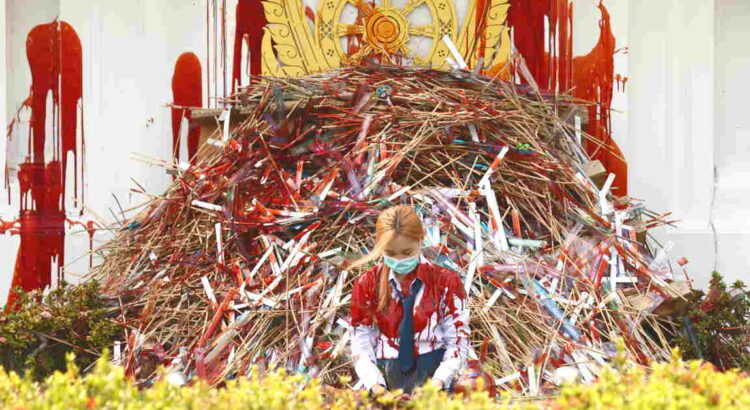
17 January 2021A protester kneels in front of a heap of stationery and bamboo canes during a «Bad Student» demonstration outside the Ministry of Education in Bangkok on 16 January, 2021, on the occasion of Teachers’ Day in Thailand. (AFP Photo)

Students piled bamboo canes and stationery in front of Thailand’s Ministry of Education and splashed crimson paint on it to protest corporal punishment, one of several protests that took place across the capital on Saturday.

The small demonstration to mark Teachers’ Day was staged by the «Bad Student» group, who have been part of an ongoing youth-led pro-democracy movement that has roiled the kingdom for six months.

The leaderless movement is largely united in its demands for an overhaul to Premier Prayut Chan-o-cha’s government, and for reforms to the monarchy.

But some have also harnessed the protests to highlight their grievances with the status quo – such as the treatment of various marginalised communities, and the education system.

Protest leader Lapanapat Wangpaisit said Saturday the demonstrators wanted to use «Wai Kru Day», or Teachers’ Day, to show the «two sides» of Thailand’s education system.

«There’s a beautiful side and a dark side – a side in which teachers hurt students,» said Lapanapat.

«We want to let the ministry know and fix this problem.»

Thailand’s ultra-conservative education system has long faced criticism for emphasising rote learning, as well as its rigid rules.

Students face severe punishment and public humiliation if they are perceived to be disobedient.

The Bad Student group – whose tactics have earned its members legal threats – are calling for cultural change, a curriculum overhaul, and a relaxation of rules governing everything from hairstyles to skirt lengths.

On Saturday, a female student in a school uniform threw blood-red paint at the ministry’s entrance, which had rulers, scissors, and slender bamboo canes piled high in front of it.

Then she poured the paint on herself, saying it was symbolic of «students’ experience in school», and held up the three-finger salute – a gesture the pro-democracy movement has borrowed from «The Hunger Games» film trilogy.

Mob 16 January

Earlier Saturday, another group gathered at Bangkok’s Victory Monument to unfurl a 112-metre (370-foot) long banner criticising the kingdom’s draconian royal defamation law – which shields Thailand’s monarchy from criticism and is referred to as section 112.

At least two protesters were arrested by police who said the group was violating anti-gathering rules, and the demonstration was dispersed.

But the brief altercation with authorities sent the hashtag «Mob 16 January» trending on Thai Twitter, drawing a flash protest to Bangkok’s Samyan district to call for their comrades’ release.

The three protests came after the national police commissioner on Saturday morning called for a step-up in law enforcement to stop guerrilla demonstrations, saying the police «must not hesitate to use force».

So far, scores of people involved in the movement have been slapped with serious charges like sedition, while more than 40 have been charged under the lese majeste law. – AFP

Fuente de la Información: https://theaseanpost.com/article/paint-protest-thai-students-mark-teachers-day


Comparte este contenido:

Israel Is Leading the World in COVID-19 Vaccination. But Palestinians Aren’t on the List

Israel Is Leading the World in COVID-19 Vaccination. But Palestinians Aren’t on the List

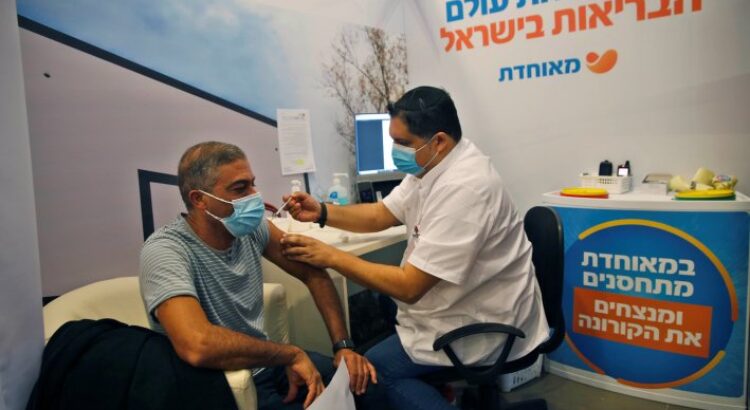
Israel, which has already vaccinated more than 2 million of its citizens, is ramping up COVID-19 shots to 250,000 per day, meaning most Israelis over the age of 16 are on track to have two doses by the end of February.

But even as the country wins plaudits for the world-leading pace of its vaccine rollout, its government is facing rising criticism for excluding millions of Palestinians from the program.

Some 75% of citizens over the age of 60 have been inoculated so far, including Palestinian (or “Arab Israeli”) citizens of Israel and occupied East Jerusalem, and Israelis living in illegal West Bank settlements.

Not included, however, are more than 4.5 million Palestinians living under Israel’s direct or indirect military control in the West Bank and Gaza. Gerard Rockenshlaub, the head of the World Health Organization Office for the occupied Palestinian territory told TIME on Jan 13 that “unequal access to essential vaccines is hardly anywhere as visible as it is in this particular context.”

Israel has a “duty” to vaccinate Palestinians, the Palestinian Authority said in a statement it released on Jan 10. Not doing so constitutes “racial discrimination against the Palestinian people and a denial of their right to healthcare.”

In a Jan. 14 statement, The UN’s body for human rights also called on Israel to ensure swift and equitable access to the COVID-19 vaccine for the Palestinian people, in accordance with its responsibilities as an occupying power under the Geneva Convention.

Israel’s successful vaccination rollout can be credited to a combination of its small size, its strong public healthcare system, and its early acquisition of vaccines. But critics also point to the fact that Prime Minister Benjamin Netanyahu—who is facing a criminal trial on three criminal charges and months of protests over his handling of the economy—is in dire need of a political win ahead of an unprecedented fourth election in two years slated to take place in March.

Here’s what to know about Israel’s vaccination program, and how its reputation—and efficacy—could be undone if Palestinians are not inoculated too:

Why has Israel’s vaccination rollout been so successful?

As of Jan. 14, more than 20% of Israeli citizens had been given the shot. The UAE came in next at around 10%, of its population, while the U.K., the U.S., and Denmark all hovered around the 2% mark. Vaccine hesitant countries like France, where surveys indicate that only 40% of people intend to get the jab, are far further behind.

Vaccine hesitancy based on misinformation and conspiracy theories was also an issue in Israel. But the Health Ministry’s multi-channel public information campaign—including Netanyahu receiving the country’s first shot on live television—and outreach to minority community leaders such as Ultra-Orthodox rabbis helped create a consensus, says the Chief Medical Officer for the Israel Defence Forces (IDF) Col. Dr. Tomer Koler. “In the end, I think all the groups will be vaccinated because they want to be,” he tells TIME.

Collaboration between the military and Israel’s strong public healthcare system is another factor in the efficiency of Israel’s COVID-19 response, Koler says. “The IDF and the medical corps and the homefront command are intertwined with civilian life in Israel,” he says, adding that the IDF called up and trained 700 reservist medics to support the government-funded healthcare providers with the program. Israel’s small geographical size—barely bigger than New Jersey by pre-1967 borders—helps too when it comes to transporting the Pfizer shot, which has to be kept at minus 75 degrees Celsius (about minus 103 degrees Fahrenheit).

How did Israel get so many vaccines so quickly?

That’s down to a deal Israel’s government struck with U.S. pharmaceutical giant Pfizer, Netanyahu revealed on Jan. 7. Under the deal, Israel gets 10 million doses of the BioNtech-Pfizer vaccine in return for sharing anonymized biometric data on who receives it and how it affects them, Politico reports. Israel’s public broadcaster also reported that its government paid more than other countries for BioNtech-Pfizer and Moderna vaccines—at an average of $47 per person for the two-dose inoculation. The Washington Post reported in December that the US was paying Pfizer/BioNTech $19.50 per dose while the EU was paying $14.76.

Despite Israel’s economic woes, the reported premium has drawn scant pushback. ”Maybe it was more expensive, but it was worth paying for,” says lawmaker Nitzan Horowitz, leader of Israel’s left-wing Meretz party, “I think that is something we all agree on.” Where Horowitz does disagree, is on Israel’s responsibilities: vaccinating Palestinians in the West Bank after Israelis is “our moral obligation,” he says. Israeli rights organization Rabbis for Human Rights has similarly argued that Israel has a “moral imperative” to vaccinate Palestinians, especially in Gaza.

Does Israel have a responsibility to inoculate Palestinians?

According to the U.N., it does. Israel first occupied the West Bank and Gaza during the war with its Arab neighbors in 1967. Its military withdrew from the Gaza Strip in 2005—which has since 2007 been governed by the militant group Hamas—but it continues to control the movement of goods in and out of the territory via an air, land, and sea blockade.

When Gazans were under full lockdown this summer, for example, Israel restricted fuel supplies in response to rocket attacks Hamas launched against Israel. That amounts to “collective punishment” of Palestinians, says Miriam Marmur, spokesperson for the Tel Aviv-based rights group Gisha, “which plunged people into darkness most hours of the day.”

Some commenters—and Israel’s coordinator of government activities in the occupied Palestinian territories, COGAT—have argued that Israel is not responsible for the health of Palestinians because the Oslo Accords, the historic agreements Israel signed with the Palestinian Liberation Authority in the early 1990s, give the Palestinian Authority oversight of public health under the principles of self-determination.

“It’s important to mention that Israel has not denied any request for medical assistance that has reached its doorstep,” a spokesperson for COGAT told Al Jazeera for a story published on Jan. 13. Until their public statement on the matter on Jan. 10, Palestinian officials had made contradictory claims on whether or not they had asked Israel for vaccinations.

But Israeli authorities citing the Oslo accords is an example of how they do so “at their convenience,” says Marmur. “In reality, Israel has undermined the ability of the Palestinian Authority and also of the de-facto Hamas Authorities in Gaza to actually take full responsibilities for health as was provided for in the Oslo agreement.” U.N. human rights experts say that the Oslo Accords must be “interpreted and applied consistently with international law, and cannot derogate from its broad protections,” according to the Jan. 14 OCHA statement.

The exclusion of Palestinians from Israel’s vaccination program is “reflective of a system of apartheid,” says Dr. Mustafa Al Barghtoy, a physician and former Palestinian minister who serves on the Palestinian health committee dealing with COVID-19. The injustice is underscored by the fact that hundreds of thousands of Israeli settlers are eligible to receive the vaccine, he says, while their Palestinian neighbors are not. Meanwhile, Israel will be vaccinating prison guards, but not the Palestinian political prisoners they oversee, he adds.

How urgent is the need for vaccinations in the Palestinian territories?

In total, more than 160,000 Palestinians in the occupied territories have tested positive for the coronavirus since March 2020, with more than 1,700 deaths related to COVID-19, according to the U.N’s figures. But those numbers might not tell the whole story: among those who are tested, the rate of infection in the occupied territories is 30%, compared to 7.4% in Israel, says Barghtoy.

Many had feared that COVID would especially devastate the Gaza strip—one of the world’s most densely populated areas, with an ill-equipped health system. As of Jan. 14. Gaza’s health ministry had reported almost 47,000 cases and 464 deaths due to the virus. That’s an alarming number, but still lower per-capita than the more than half a million cases Israel’s Health Ministry reported on Jan. 12.

The impact has in part been mitigated by the international community’s “tremendous” efforts to shore up Gaza’s health system, says the WHO’s Rockenschaub. That includes substantially scaling up the strip’s intensive care unit capacity and mobilizing vital supplies such as oxygen and ventilators. Still, vaccinations are an urgent concern. “The sooner we can move in vaccinating and protecting essential health workers the better,” he says, “because we see quite a substantial number of the health workforce being infected.”

Before the PA formally said Israel is responsible for vaccinating Palestinians, the WHO had informally requested Israel provide vaccinations to inoculate frontline Palestinian health workers. Israel denied that request on the basis of vaccine shortages for its own citizens.

Can Israel achieve herd immunity without inoculating Palestinians?

With the IDF moving throughout the West Bank, and some 130,000 Palestinians working in the settlements or Israel, not making the vaccine available is “counterproductive” in terms of achieving herd immunity, Barghotoy says.

The Palestinian Authority has made efforts to import vaccines independent of Israel. Its health ministry on Jan 11 announced it had given emergency approval to Russia’s Sputnik V Covid-19 vaccine for use in areas it administers under limited Palestinian self-rule; it also says it has struck a deal with AstraZeneca for vaccines it expects to receive in late February. On top of that and the first shipment of vaccines under the WHO’s COVAX program could become available as early as February.

For the next few weeks at least, they will be forced to wait. “Our main concern is really that we can only overcome this pandemic in solidarity and in a collaborative spirit,” says Rockenschaub, “We will either succeed together or we will fail together.”


Fuente de la Información: https://time.com/5930060/israel-covid-vaccine-palestinians/


Comparte este contenido:

Scores of Civilians Killed in Nagorno-k Karabakh Conflict

Scores of Civilians Killed in Nagorno-k Karabakh Conflict

The Armenian and Azerbaijani forces’ repeated use of notoriously inaccurate and indiscriminate weapons – including cluster munitions and explosive weapons with wide area effects in populated civilian areas – violated international humanitarian law and killed scores of civilians, injured hundreds and destroyed homes and key infrastructure in the recent conflict, Amnesty International said today.

The organization’s new report, In the Line of Fire: Civilian casualties from unlawful strikes in the Armenian-Azerbaijani conflict over Nagorno-Karabakh, is based on an on-the-ground investigation on both sides and details 18 strikes by Armenian and Azerbaijani forces which unlawfully killed civilians. In all, at least 146 civilians, including multiple children and older people, died in the 44-day conflict between late September and early November 2020.

Armenian forces employed inaccurate ballistic missiles, unguided multiple launch rocket systems (MLRS), and artillery. Azerbaijani forces also used unguided artillery and MLRS. Authorities on both sides have denied launching indiscriminate strikes against civilian areas and using cluster munitions – despite clear evidence that they both have done so.

“By using these imprecise and deadly weapons in the vicinity of civilian areas, Armenian and Azerbaijani forces violated the laws of war and showed disregard for human life,” said Marie Struthers, Amnesty International’s Director for Eastern Europe and Central Asia.

By using these imprecise and deadly weapons in the vicinity of civilian areas, Armenian and Azerbaijani forces violated the laws of war and showed disregard for human life.

Civilian casualties would almost certainly have been much higher were it not for the fact that many people had either fled affected areas or taken shelter in basements when the conflict started.

The organization interviewed 79 survivors, witnesses and relatives of civilians killed and injured in the strikes, in addition to local civilian and military authorities, NGO workers and journalists.

Amnesty International’s Crisis Response team analyzed fragments of munitions used in the attacks and examined videos, photographs, and satellite images taken during the conflict.

“Our research revealed a pattern of indiscriminate and disproportionate strikes by both sides that killed and harmed civilians and damaged civilian objects. Attacks were repeatedly carried out on civilian residential areas far from frontlines, and where there often did not appear to be any military targets in the vicinity,” said Marie Struthers.

Attacks by Armenian forces

Amnesty International documented eight strikes carried out by Armenian forces on towns and villages in Azerbaijan which killed a total of 72 civilians.

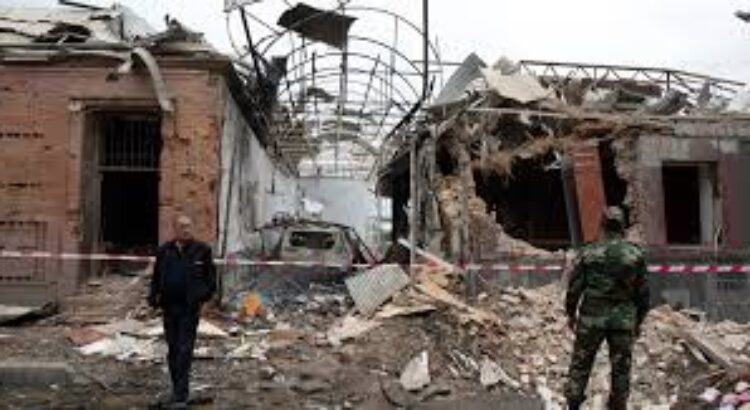
In the city of Ganja on 17 October, 21 civilians were killed and more than 50 injured when a SCUD-B ballistic missile hit the Mukhtar Hajiyev neighbourhood. Sudaba Asgarova’s daughter Nigar was killed in the strike, a day before her 15th birthday. “She was my only child. She was all I had,” Sudaba told Amnesty International.

Ramiz Gahramanov, 64, told Amnesty International that in the same strike his daughter Khatira, 34, was killed along with her son Orhan, 11, and two daughters Maryam, six, and Laman, 18. In the aftermath of the blast, Ramiz said: “I looked down and when I saw that the house had been completely destroyed, I immediately knew that they had all died because nobody could have survived such destruction.

Fuente de la Información: https://www.amnesty.org/en/latest/news/2021/01/azerbaijan-armenia-scores-of-civilians-killed-by-indiscriminate-use-of-weapons-in-conflict-over-nagorno-karabakh/

Comparte este contenido:
Page 82 of 772
1 80 81 82 83 84 772