Page 1173 of 2741
1 1.171 1.172 1.173 1.174 1.175 2.741

La protesta de la generación «cambio climático»

Por: Jens Thurau.

Las cifras de la protesta estudiantil de este viernes: manifestaciones en más de 1.500 ciudades de todo el mundo, 200 de ellas en Alemania. Es hora de tomar más en serio esta protesta, dice Jens Thurau.

¿Qué es lo que pasa todos los viernes en las ciudades alemanas, y en ciudades de todo el mundo? Los jóvenes -escolares y estudiantes universitarios- abandonan las aulas y salen a la calle a proteger el clima. A menudo con la venia de los padres y también de las escuelas, que tienen que ir pensando cómo hacer frente a la seriedad con la que la joven generación toma este día. ¿Se trata de una politización pasajera que no debe tomarse en serio, como algunos políticos sospechan? ¿O hay más detrás de esto?

La atracción por lo prohibido

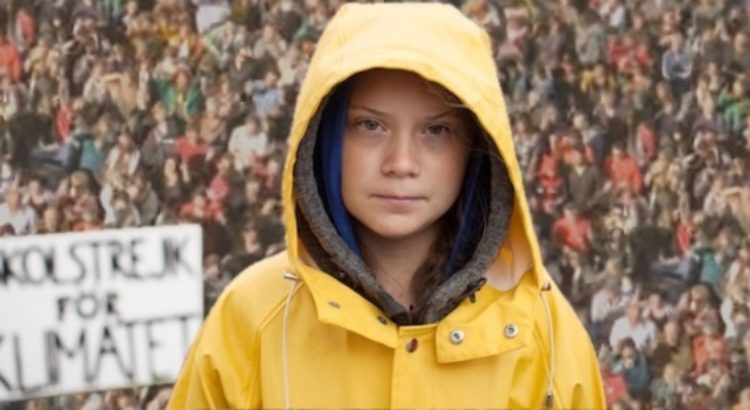
En primer lugar, las grandes masas que surgen es sorprendente; solamente provocada por la profunda seriedad y determinación de la joven sueca Greta Thunberg, que a mediados del año pasado se sentó frente al edificio del Parlamento en Estocolmo en lugar de ir a la escuela. Por supuesto: el atractivo por lo prohibido juega ciertamente un papel, al igual que el hecho de tener unas horas emocionantes fuera de las paredes de la escuela, sin tener que ser expulsado de ella. Pero reducir el movimiento #FridaysforFuture a esto sería bastante arrogante.

Donde sea que veamos las manifestaciones de los viernes, se nota una organización perfecta. Y realizada por los propios estudiantes. Grupos ecologistas reconocidos como Greenpeace ofrecen su ayuda, que también es aceptada, pero los niños no se dejan engañar. Y con esa misma seriedad nos muestran el espejo, a la generación de padres, como lo ha hecho todo movimiento juvenil exitoso en su tiempo. Los estudiantes del año 1968 preguntaban a sus padres dónde habían estado cuando Alemania, en contra de todo lo logrado por la civilización, se hundió en una profunda barbarie. Por otro lado, el movimiento pacifista de principios de los años ochenta se negó rotundamente a seguir la lógica política de la carrera armamentista.

Los jóvenes de hoy en día viven a menudo en una sociedad extremadamente orientada al consumo, también ejemplificada por sus padres, que están obsesionados con la autorrealización. Y sin embargo, se dan cuenta de cómo las certezas y las obligaciones disminuyen, cómo se disuelven las familias. Y cuán grande es la contradicción entre la exigencia y la realidad, especialmente para los padres. Es esta generación de padres la que anuncia en cada encuesta lo importante que es proteger el clima. Y aún así están gastando cada vez más dinero en viajes aéreos y en el último modelo de auto. Por eso, la protección del clima es el tema ideal para los adolescentes de hoy.

Huelga escolar vs. asistencia obligatoria

Un problema puede resultar rápidamente como medio de protesta: la huelga. En Alemania existe al menos la obligación de asistir a la escuela. Padres, maestros y políticos no pueden quedarse mirando para siempre a que Greta Thunberg y sus compañeros de campaña anuncien que quieren permanecer en huelga hasta que finalmente suceda algo para proteger el medio ambiente. Para luego cambiar la forma de protestar. El movimiento en sí no tiene por qué detenerse.

Desde la Conferencia de las Naciones Unidas sobre el Medio Ambiente celebrada en Río de Janeiro en 1992, cuando aún existía el multilateralismo, la comunidad internacional ha intentado con más o menos éxito proteger el medio ambiente. En 2007, el Grupo Intergubernamental de Expertos sobre el Cambio Climático y el exvicepresidente de Estados Unidos, Al Gore, fueron galardonados con el Premio Nobel de la Paz. Pero las emisiones siguen aumentando rápidamente. Ahora Greta Thunberg ha sido nominada para el Premio Nobel. Queda por ver si esto le hará algún favor. Pero el hecho de que la protección del clima se esté convirtiendo en el tema de una generación joven que, al igual que sus padres, ya no quiere simplemente tomar nota del aumento del nivel del mar y de los registros de calor con cargos de conciencia, no debería sorprendernos: esta generación será la primera que tendrá que vivir con las consecuencias cada vez más notorias del calentamiento global.

Fuente del artículo: https://www.dw.com/es/opini%C3%B3n-la-protesta-de-la-generaci%C3%B3n-cambio-clim%C3%A1tico/a-47943716

Comparte este contenido:

South Africa is failing the rights of children to education and health

By: Magnus Killander.


Is South Africa regularly denying children their right to access education as well as health care on the grounds either of petty bureaucracy or by a misinterpretation of the country’s laws and international obligations?

The answer is yes.

The country places limitations on children’s access to education and affordable health care. This is particularly true of migrant children. These limitations are, in my view, unconstitutional and in violation of South Africa’s international obligations. For example, South Africa is bound by the International Covenant on Economic, Social and Cultural Rights. In the interpretation of this convention, the United Nations Committee on Economic Social and Cultural Rights has emphasised that:

all children within a state, including those with an undocumented status, have a right to receive education and access to adequate food and affordable health care.

However, South Africa isn’t living up to this promise.

What’s clear is that South Africa’s current school admission policy has a serious effect on the access to basic education of both children who are South African citizens and those who are foreign nationals or stateless.

The challenges for those who are not South African citizens and don’t have the required permits are compounded by section 39 of the Immigration Act 13 of 2002. This states that a “learning institution” may not provide “training or instruction” to an “illegal foreigner”. Principals of schools that enrol a child who is an “illegal foreigner” can be charged and may face penalties.

Children who are not South African citizens often also struggle to access affordable health care through what’s been called “medical xenophobia”.

A recent Constitutional Court ruling gives some hope that the requirements of birth certificates and study permits for children to enrol in school will eventually be relaxed. However, litigation is still ongoing and as with access to affordable health care, there’s often a discrepancy between what the law provides and the actual situation on the ground.

Denial of rights

On 10 December 2018, the Grahamstown High Court gave an order dismissing an urgent application by the Centre for Child Law that 37 children should be admitted to a public school pending final determination of a case instituted by the Centre in 2017, in which the applicants, among others, requested an order that:

no learner may be excluded from a public school on the basis that he or she does not have an identity number, permit or passport.

The 37 children were among the many children whose guardians have not managed to secure the paperwork needed to be allowed to register in a school under the 1998 Admission Policy for Ordinary Public Schools.

On 15 February 2019 the Constitutional Court granted leave of appeal against the High Court order and overturned it, ordering that the children should be admitted and enrolled in school by 1 March. However, this order does not finally decide the issue of requirements for enrolling in school as the case instituted in 2017 is still pending before the High Court.

The right to health care is provided for in article 27 of the Constitution. The National Health Act 61 of 2003 provides for free health care at public facilities for children under six years old, unless a child is covered by private medical insurance.

According to the Uniform Patient Fee Schedule all non-South African citizens – except those with permanent or temporary residence and citizens of the member states of the Southern African Development Community who “enter the (the republic) illegally” – are classified as full-paying patients. Children without the required permits who are over six years old, who lack medical insurance and are not from a Southern African Development Community member state therefore lack access to subsidised health care.

International obligations

The Global Compact for Safe, Orderly and Regular Migration was adopted in December 2018 with South Africa’s support. Among other things, the global compact calls on states to adopt child sensitive migration policies. It also promotes international legal obligations in relation to the rights of the child, and upholds the principle of the best interests of the child at all times.

The principle of the best interest of the child was first set out in an international treaty 30 years ago in the United Nations Convention on the Rights of the Child. It was reiterated in the African Charter on the Rights and Welfare of the Child. South Africa is party to both these treaties. In addition, the South African Constitution provides that:

a child’s best interests are of paramount importance in every matter concerning the child.

A child is defined as anyone below the age of 18.

The right-holder in the bill of rights in the Constitution, is with few exceptions “everyone”. Clearly this includes not only South African citizens but everyone who is in the country. Most rights are not absolute and may be limited under section 36

in terms of law of general application to the extent that the limitation is reasonable and justifiable in an open and democratic society based on human dignity, equality and freedom.

The Immigration Act is a “law of general application”. However, the child’s best interest is “of paramount importance”.

In my view, the rights of children to basic education and affordable health care in South Africa can’t be limited and “everyone” must be read to include every child, irrespective of their immigration status. When it comes to access to health care the situation is even clearer as there are no limitations set out in the country’s laws. The Uniform Patient Fee Schedule should therefore be revised to provide for subsidised health care for all children whose guardians cannot afford medical insurance.

Source of the article: https://theconversation.com/south-africa-is-failing-the-rights-of-children-to-education-and-health-112707

Comparte este contenido:

Hungry, unwashed children fill our schools – how has it come to this?

By: .


According to a survey from the headteachers’ union, the Association of School and College Leaders, schools have become “an unofficial fourth emergency service” for the families worst affected by austerity across England and Wales.

A majority of the 400 school leaders surveyed said schools were increasingly forced to help pupils, despite less help from councils, and have had to cut budgets. Schools are helping with food parcels, equipment, shoes and hygiene – nine out of 10 give out clothes, while nearly half do laundry for them. Some are running impromptu food banks or sourcing beds.

How could it not be a source of national shame that there are food banks in any schools in England and Wales? When did it become normal for schools to wash pupils’ clothes? As for anyone wishing to start ranting about parents sitting, smoking, with cans of lager, in front of wide-screen televisions – spare me. Wasn’t it precisely these Tory cartoons of the unemployed and low-income workers that gave austerity measures credibility in the first place? That fake standoff between “striver” and “skiver” (remember that?) pitted people against each other, when, in truth, they had all too much in common.

While it’s just one survey, it’s far from a one-off – schools keep trying to speak up about how much they’re helping pupils. It’s happening on too large a scale for it to be dismissed as straightforward parental failure. Pupils have come to this because they reflect the reduced circumstances of their families – they are merely the school-aged manifestation of peak-impact austerity. Swaths of the population have been crushed to the point where basics (food, clothes, heating, hot water) have become unaffordable. Underresourced schools have been left to cope with the fallout and teachers are only able to teach pupils after they’ve dealt with their basic needs.

This fundamentally undermines what schools are supposed to be – educational establishments. While there has always been an element of social work to teaching, it shouldn’t be so dominant. What should be a place about teaching and learning becomes a barely disguised holding pen, with a bit of ABC thrown in. It wouldn’t just be a relief if these children manage to reach their full potential – it would be a miracle.

While schools go above and beyond for their pupils, why does the buck stop there? Long-term austerity seems to have numbed people into accepting relentless struggle as normality, almost as though it’s all a terrible, inexplicable enchantment in a warped austerity-themed fairytale.

In reality, there’s a context (actual policies, brazen cuts) explaining how it all happened and telling us exactly who is responsible. So, yes, it’s very sad to hear about these children who arrive at school needing food and clothes before they can even think about algebra. It’s also the government’s responsibility to own its mess and do something about it.

The gossip mill continues to churn about the actress Kate Beckinsale, 45, dating the 25-year-old comedian Pete Davidson. And when I say “gossip mill”, I mean, saddos like me, who tragically feel the compulsion to gawp at happy couples, forensically examining photos of them, say, smooching at hockey games, in order to pass ill-informed judgment on their relationship. So, let’s do it.

Considering the sexist “cradle-snatching” fuss, you’d have thought that Davidson was in his teens, not a high-achieving grown man. Although some of us might not want to deal with the “extra admin” that seems to go with a large age difference (“They used to be called Marathon bars, goddammit!”), if others are up for it, then more power to them. While Davidson is punching above his weight, he’d probably admit to “punching” just as hard with his erstwhile fiancee, Ariana Grande, similar in age. Besides, he has already sagely pointed out that the older-male/younger-female celebrity dynamic is practically Hollywood’s 11th commandment.

With age-gap couples such as Beckinsale and Davidson, the focus is always on it being a “terrible shame” that they aren’t similar ages, at the same stage in life. However, who’s to say that they would have got on as well if they had been at the same life-stage? They could have irritated, even disliked, each other. Their differences might have mattered more – there could have been more niggles and clashes – over values, perspectives, anything. It’s quite possible that their age gap is making them not sweat the dreaded “small stuff” and have more fun.

Best of luck to Beckinsale and Davidson, an odd couple who could be living proof that sometimes age differences aren’t the problem, they’re the things that make it work.

Are women too wary of corporate tokenism? The Investment Association, a £7.7tn investor group, has joined the Hampton-Alexander review, a diversity study, to send letters to 66 FTSE 350 firms that have only one female board member. Good. “One and done” syndrome is a joke, when the government target is around 33%.

However, another problem lies with the wider negative perception of female quotas and targets, when even qualified, credible female candidates find themselves dismissed as not getting there entirely on merit. This gives quotas an undeserved bad name, even among women, who worry that their achievements could be dismissed as token. All completely understandable, but still – phooey!

Women worrying about tokenism need to remember that, over the years, structural sexism has given far more men far more opportunities to pursue and exploit unfair advantage. When there’s a rare attempt to redress the balance, the very last thing women should feel is guilty.

I dream of a scenario where a female board member gets some envious threatened male idiots grumbling about tokenism and she just smiles delightedly and says: “I know, great, isn’t it?”

Odds are, she’d still be some way from being as shameless as they’d be, given half the chance.

Source of the article: https://www.theguardian.com/commentisfree/2019/mar/16/hungry-unwashed-children-fill-our-schools

Comparte este contenido:

What Universities Can Do to Limit the Cybersecurity Risk of Personal Devices on Campus

What Universities Can Do to Limit the Cybersecurity Risk of Personal Devices on Campus

As the number of personal devices increases, universities will have to protect against an incoming threat to network security.

On any college campus today, there are likely at least three devices for every one student or faculty member. Laptops, smartphones, tablets, printers, watches — all are synonymous with the modern college experience.

As of 2018, 73 percent of adults in the U.S. own computers and 53 percent have tablets, according to the Pew Research Center. Among Americans ages 18-29 years old, 94 percent own a smartphone, and roughly 4 out of 10 people in this age group report they are online “almost constantly.”

Devices are everywhere and people are always online, which makes security imperative. When “bring your own device” (BYOD) is the name of the game, however, cybersecurity is a profound challenge for university campuses.

MORE–FROM–EDTECH: See how students are relying more on their mobile devices to complete coursework.

Doing More to Secure BYOD Environments

Institutions of higher learning should get ahead of potential cyber problems by educating everyone. Training alone may not solve the entire problem, but it is still critical to provide people with general cybersecurity best practices.

This includes not clicking on email links from unknown sources, which can lead to phishing attacks, and not connecting to unknown Wi-Fi accounts, which can allow nearby hackers to penetrate devices.

It is also the responsibility of university IT staffs to enforce reasonable security policies. For example, they can set limits on the types of operating systems, memory, storage and processing even while encouraging online access to network resources.

Another precaution institutions can take is requiring students and faculty to register every device on campus so any unit, whether it is a laptop, smartphone or even a gaming console, can be mapped back to its owner.

Students and faculty will bring their own devices to campus; this is a fact of campus life. Savvy universities will head off cyberthreats with a balanced program of training, security policies and technology security solutions.

Common Reasons Hackers Target University Networks

Hackers target institutions of higher learning for three common reasons: identify theft, espionage and notoriety. Because of this, campus IT departments need to be especially proactive about securing mobile and connected devices against the variety of threats BYOD presents.

  • Identity Theft: Many students are just getting their first credit cards, checking accounts and loans. Their inexperience makes them especially vulnerable. When creating or accessing accounts using unsecure, connected devices, students often expose sensitive financial data — such as Social Security numbers, ATM codes and computer passcodes — to the digital world. Because students do not have much of a transaction history, attacks can be more difficult to spot. College-aged students are three times more likely to lose money from fraud than older adults, according to a 2018 Federal Trade Commission report.
  • Espionage: When imagining espionage scenarios, we do not often think of universities. The truth is, they are becoming prime hacking targets because of personal data and valuable research that are inadequately protected. While it is nearly impossible in most cases to clearly tie such incidents to devices students and faculty bring onto campus, it is highly likely they play at least some role.
  • Notoriety: Money and information are prime draws for hackers, but one of the longest-standing drivers continues to be the thrill of undermining networks for sport. This reason has become more prevalent with so many tempting connected devices on campuses globally. Many hackers are willing to show off their skills in sanctioned places, such as sponsored hackathons or “white hat” hacking events, such as the annual DEF CON conference in Las Vegas. Still, about 11 percent of unauthorized attacks against universities are “just for fun,” according to Verizon’s “2018 Data Breach Investigations Report.”
RyanJLane/Getty images
Comparte este contenido:

La 4t, sin proyecto para la SEP

Por: Lev M Velásquez Barriga.


Los movimientos de transformación latinoamericanos que instituyeron gobiernos progresistas se hicieron acompañar a su vez de procesos educativos; ninguno logró desvincularse por completo de los preceptos hegemonizados mediante la Organización de las Naciones Unidas para la Educación, la Ciencia y la Cultura o más recientemente de la Organización para la Cooperación y el Desarrollo Económico (OCDE), pero sí le imprimieron un sello propio a la educación, recuperando de su historia la tradición liberadora, nacionalista e indígena en algunos casos.

De modo que el ideario pedagógico de José Martí, Simón Rodríguez o de las cosmovisiones de los pueblos originarios andinos se plasmó en las constituciones cubana, venezolana y boliviana, abriendo posibilidades a nuevos aprendizajes más cercanos a las necesidades populares y al fortalecimiento de las rutas para la democratización de cada país.

Sin embargo, la forma en cómo ha evolucionado hasta el momento el proceso fallido para la cancelación de la reforma neoliberal y la construcción de una nueva propuesta educativa, luego de 100 días de la llegada de este gobierno que se autoproclamó como la Cuarta Transformación de la vida nacional, como la síntesis de las luchas históricas del pueblo mexicano por su independencia, su autonomía y su emancipación social, podemos decir que no han aportado nada propio en la educación básica y ni siquiera transcendente en nuestro país que dé continuidad a ese ciclo de transformaciones profundas.

Lo que está sucediendo en la Cámara de Diputados es un síntoma de esta falta de proyecto propio y de compromiso histórico. El titular de la Secretaría de Educación, las y los legisladores de lo que fue la coalición Juntos Haremos Historia están pactando con la derecha parlamentaria una reforma educativa que sería aprobada sin mayores compli-caciones en el pleno legislativo; el planteamiento de decreto de la reforma castra su propia propuesta de Cuarta Transformación que se había convertido en el sello narrativo de la política del nuevo gobierno.

La iniciativa de origen del presidente López Obrador pretendió introducir al texto constitucional que el objetivo del derecho a la educación sería el bienestar social y no la calidad como versa la ley vigente; sin embargo, en el acuerdo PT-Morena con los partidos del Pacto por México se niega lo que hubiera sido su aportación a la educación nacional y afianza el concepto de educación de excelencia, parafraseando la noción de calidad que ya se encuentra en la Constitución actual y desechando la recomendación de varios académicos de las instituciones más importantes del país que hicieron público su rechazo a ese término en las sesiones del parlamento abierto.

Los congresistas de la Cuarta Transformación no sólo están traicionando su proyecto, sino que además están aceptando reproducir y mejorar los dispositivos de la educación neoliberal. No quiero desestimar la propuesta para desvincular la evaluación de la permanencia, lo cual me parece un importante avance, pero sí señalar que, distinto a la iniciativa del jefe del Ejecutivo federal, están acordando mantener en el artículo tercero el régimen de excepción laboral para los maestros, como no se había hecho con ninguna otra profesión en el país.

Sobre el ente descentralizado para sustituir al Instituto Nacional para la Evaluación de la Educación, que aparece en el proyecto de decreto de la reforma educativa, no sólo es que cambie de nombre, además se refuerza y amplían sus funciones para adentrar y avalar a las instituciones privadas en el negocio de la certificación educativa; por un lado garantiza su independencia del gobierno sin que necesariamente se haga referencia a su total autonomía y por otro abre nuevos espacios en su estructura orgánica para la intromisión directa de los mercaderes de la educación.

Llama la atención que la derecha parlamentaria asegura su participación decisiva para negociar el nombramiento de los integrantes del nuevo instituto, que para ser elegidos tendrían que contar con el aval de dos terceras partes del Senado

Así anularían las potencialidades que tendrían los congresistas de la Cuarta Transformación contando con mayoría relativa.

En lo que respecta a las responsabilidades del Poder Ejecutivo federal y de la Secretaría de Educación, tampoco han realizado cambios sustanciales; las medidas anunciadas por Esteban Moctezuma Barragán en su mensaje a la última reunión mensual de los Consejos Técnicos Escolares resultaron tibias y conservadoras; ciertamente la reducción de la carga administrativa es una cuestión necesaria, no obstante impera ahí una lógica eficientista y no un cambio de rumbo de la educación. Lo mismo sucedió con los programas gubernamentales que acompañaron la reforma de Enrique Peña Nieto y que en la actualidad siguen avanzando ¿Dónde están los nuevos programas de educación básica para el bienestar que desplazarían a la educación de calidad?

Para concluir, reitero lo que dije en este mismo espacio de La Jornada hace dos meses, pero con mayor urgencia porque los tiempos para aprobar un nuevo artículo tercero están encima: sin la reanimación de las voces críticas y de las fuerzas democráticas opositoras a la reforma educativa neoliberal, el gobierno y los legisladores del Cuarta Transformación definirán el rumbo de la educación con la derecha parlamentaria y con la OCDE a espaldas de lo que se expresó en las urnas, en los foros de consulta y ahora en el parlamento abierto.

Fuente del artículo: https://www.jornada.com.mx/2019/03/17/opinion/007a1pol

Comparte este contenido:

Líderes anónimos que catalizan el malestar global

Por: Milagros Pérez Oliva.


Los movimientos del ‘Me Too’ y de los estudiantes por el clima tienen en común la rapidez del contagio a escala planetaria

Primero fue el Me Too de las mujeres y ahora es el dedo acusador de los estudiantes por el clima el que se extiende por más de cien países. Ambos movimientos tienen en común elementos que explican el nuevo terreno en el que nos movemos. El primero, la inusitada rapidez con la que puede convertirse en global una iniciativa que surge de forma local. Una mujer que denuncia públicamente un acoso. Una niña solitaria que deja la clase y se planta con su pancarta ante el Parlamento de su país. La capacidad de contagio instantáneo es una de las características del nuevo ecosistema y es fruto de la sinergia entre las redes, que forman una malla tupida capaz de cubrir todo el planeta, y los grandes medios de comunicación, cuya capacidad de difusión e impacto es también, gracias a Internet, global. Este complejo sistema combina la verticalidad con la horizontalidad: cada receptor se convierte en un nuevo foco emisor.

El segundo elemento diferencial es la naturaleza de los liderazgos que los mueven. Personas anónimas capaces de encarnar en un momento dado una corriente profunda que no acaba de encontrar su cauce de expresión. Es un liderazgo “catalizador”, en el doble sentido de la palabra: 1) Causar o provocar un proceso o una reacción de cualquier tipo. 2) Atraer, conformar y agrupar fuerzas, opiniones, sentimientos, etcétera. Exactamente eso. Si el malestar que los alimenta es global, lo natural es que la respuesta también lo sea.

El tercer elemento es la radicalidad de las reclamaciones. Las mujeres saben que solo con leyes no se alcanzará la igualdad porque hay mil formas de incumplirlas. Que no habrá igualdad sin un cambio profundo de las estructuras. También los estudiantes que siguen a Greta Thunberg reclaman transformaciones radicales: “Para intentar hacer algo por el clima hemos de cambiar el sistema”, escribían ayer sus líderes. En el caso de las mujeres, el combustible que las mueve es el hartazgo por la persistente humillación. En el de los jóvenes por el clima, la urgencia: “Si los que ahora están en el poder no actúan, será nuestra generación la que pagará las consecuencias”. “No podemos seguir esperando”. Dicen que no quieren esperanza, quieren que los adultos sientan pánico y hagan algo. La cuestión es cuánta fuerza serán capaces de acumular y si tendrán capacidad de perdurar.

Fuente del artículo: https://elpais.com/elpais/2019/03/15/opinion/1552676735_590436.html


Comparte este contenido:
Page 1173 of 2741
1 1.171 1.172 1.173 1.174 1.175 2.741