Page 1408 of 1648
1 1.406 1.407 1.408 1.409 1.410 1.648

Ecologically Sustainable Growth Is Possible: An Interview With Robin Hahnel

Mundo / 10 de julio de 2016 / By Kevin Young

While the world must reduce its resource consumption and output of pollution in the face of climate change, we don’t need to demand that people sacrifice their economic well-being, says radical economist Robin Hahnel. «Green growth is possible.»

Can we have economic growth while confronting climate change? In this interview, radical economist Robin Hahnel argues that ecological sustainability is perfectly compatible with increases in economic well-being. While we must drastically reduce the physical matter used and discharged within the global economy («throughput»), we can simultaneously improve life for most people. Fighting for an ecologically sustainable form of growth must be central to the work of the climate justice movement.

Kevin Young: Many environmentalists argue that we must limit economic growth or even undergo de-growth in order to adequately reduce greenhouse gas (GHG) emissions. Many economists argue that it’s possible to «decouple» growth and emissions. Who’s right?

Robin Hahnel: With few exceptions economists were completely oblivious to the fact that our economic train was barreling toward environmental disaster. So we owe a huge «thank you» to environmentalists for warning us that the kind of economic growth we have been pursuing will not only continue to damage the environment in myriad ways, it is on course to trigger irreversible, cataclysmic climate change within a few decades.

However, those who point out that it is possible for economic well-being per capita to grow indefinitely while protecting the environment are correct. Yes! Green growth is possible. When spokespeople for the steady-state and de-growth movements deny that green growth is possible and say that we must reconcile ourselves to stagnant or declining living standards to avoid environmental disaster, they are wrong, and do the environmental movement great harm.

What cannot continue to grow indefinitely is throughput. Ecological economists define throughput as physical inputs from the natural environment (e.g., iron ore or topsoil) used in production processes, as well as physical outputs of production (usually thought of as waste or pollution) such as airborne particulate matter and greenhouse gases released back into the environment where they are absorbed in natural «sinks.» Throughput must be measured in some appropriate physical units such as tons of iron ore, cubic meters of topsoil, and cubic tons of carbon dioxide.

What economists define as economic growth is not the same as growth of throughput. When economists refer to economic growth they mean growth of GDP, the value of the final goods and services produced during a year. Of course, growth of GDP fails to represent growth of economic well-being for a host of reasons that are well known. Nonetheless, assuming it could be measured properly, economic well-being can grow even as throughput remains constant or decreases. In the literature this is called decoupling, which means separating the growth of the value of what we produce from the quantity of throughput we use to produce it.

Where critics are correct is that business-as-usual economic growth has failed to decouple. In fact, it has us on a suicidal trajectory! But that does not mean that a different kind of growth — growth that increases throughput efficiency at the same rate that it increases labor productivity, and therefore puts no more strain on the environment — is impossible. And that is what decoupling means: increasing throughput efficiency as much as we increase labor productivity. (As long as the rate of growth of productivity rises no faster than the rate of growth of throughput efficiency, throughput will not increase.) Moreover, there is plenty of evidence that decoupling is possible. We are doing it right now for greenhouse gas throughput. Of course we have to reduce GHG throughput much faster still to avoid cataclysmic climate change. The name of the game is to decouple increases in economic well-being from throughput big time. But anyone who argues that decoupling is impossible is wrong on both theoretical and empirical grounds.

From the perspective of the climate justice movement, what are the concrete implications of the debate about growth?

Those who deny the possibility of decoupling are both wrong and detract us from the task at hand. Worse still, they make it impossible to build a political coalition sufficiently numerous and powerful to prevent climate change. Why would lower classes in advanced economies support a movement that says their children cannot aspire to a higher standard of living? Why would any of the four billion people living in less developed economies who have yet to enjoy the benefits of economic development sign onto a movement that tells them they must give up any hope of enjoying those benefits? The answer is they won’t! Because economic growth is necessary to improve the lives of most of the world’s population, a «de-growth» platform is suicidal when trying to build a mass movement to prevent climate change. The tragedy is that our environmental movement does not have to preach this self-defeating sermon. Preventing climate change, and better protecting the environment in general, is perfectly compatible with increases in economic well-being.

Some argue that while ecologically sustainable growth is hypothetically possible, it is impossible within a capitalist system. Richard Harris, for instance, claims that green-growth advocates «assume that capitalism is sufficiently malleable that capitalist fundamentals can be ‘inverted’ such that corporations can, in one way or another, be induced to subordinate profit-making to ‘saving the Earth.'»

Capitalism can become a lot more green than it has been to date — which is damn lucky since replacing capitalism with eco-socialism isn’t going to happen fast enough to prevent climate change. Capitalists pursue profits via the easiest route. Of course they are not going to save the Earth out of the goodness of their hearts. But there is no reason we cannot make the route to profits from extracting and burning fossil fuels more difficult or impossible. And there is no reason we cannot make the route to profits by producing renewable energy and retrofitting buildings much more lucrative. There are many ways to intervene in markets to change results, and we will have to use all of them over the next decades because the kind of green new deal we need is going to have to be launched while economies are still very much capitalist.

What would a «green new deal» look like under capitalism? And are there any precedents for that kind of massive shift in economic priorities?

Replacing fossil fuels with renewables, transforming not only transportation but industry and agriculture as well to be much more energy efficient, and rebuilding our entire built infrastructure to conserve energy, will be an immense, historic undertaking. What is needed if we are to avoid unacceptable climate change is the greatest technological «reboot» in economic history. This is the only way to avoid literally broiling ourselves to death at some point in the century ahead, and, I might add, the only way to re-employ the tens of millions who lost their jobs in the Great Recession and the hundred million young people who will need jobs over the next two decades. The precedent is the massive shift of economic priorities the US economy went through between 1939 and 1942. Just as we responded to the menace of global fascism by shifting over 50 percent of production from consumption goods to war materials, we need a similar response to the equally dangerous menace of cataclysmic climate change.

Robert Pollin and collaborators at the Political Economy Research Institute have fleshed out the details of what a Green New Deal would look like not only for the United States, but also for many other parts of the world economy. A major finding is how little it would cost over the next several decades for the world to become free of fossil fuels. In short, Pollin and his collaborators demonstrate that the barriers to preventing climate change are political, not technological.

To what extent does confronting the climate crisis require changes in the consumption of the average working person in the global North?

What we consume will have to change. Where and how we live and work and transport ourselves will have to change. We will live more compactly. We will share larger, superior open spaces than we have today. We will consume more public and fewer private goods. But there is no reason that economic well-being cannot increase for future generations in the global North while adequately protecting the environment. Decarbonization will require that we live differently, but we can all live far better — and that is the message the environmental movement needs to emphasize.

You’ve also written a lot about international climate policy. Could you comment on the strategy of the Climate Justice Movement (CJM) vis-à-vis the 2015 COP 21 meeting in Paris?

The Climate Justice Movement made a strategic blunder. After every country announced its emission reduction pledge, the CJM had the opportunity to launch a major international campaign explaining which pledges were consistent with a country’s responsibilities (for creating the problem) and capabilities (for making contributions toward solving the problem.) Before the Paris meetings equity researchers had reached a broad consensus for how to judge proposals, and evaluations were readily available (see for example the Climate Equity Calculator). These evaluations showed that the pledges of more developed countries in most cases fell far short of their fair shares, while most pledges from less developed countries were consistent with their fair shares. The CJM should have made support for countries making fair pledges, and criticism of countries whose pledges fell short, its major priority in Paris. Progressives’ suspicions of global climate deals stem partly from the carbon trading mechanisms included in prior accords. Most leftists in the global North seem to reject carbon trading unequivocally, as a scam devised by polluters to thwart real change. But you’ve argued that carbon trading can be an effective short-term way to cut emissions while we work toward the longer-term goal of replacing the capitalist system.

The amount of ill-informed criticism of carbon markets, carbon trading, carbon offsets, etc., from the left over the past two decades would fill an ocean. Two things drive this fury: (1) None of us likes the idea of placing a price on nature and putting nature up for sale. In other words, rejection of carbon markets in any form is part of a justifiable disgust with the commercialization of life. (2) Many on the left — although by no means all — understand that markets are part of the problem. The problem is not just private ownership of the means of production. Coordinating our economic activities through markets is also an integral part of the economics of competition and greed we need to extricate ourselves from. So, people reason, if markets are part of the problem, how can a carbon market be part of the solution?

But besides massive ignorance regarding how carbon markets do and can work, here is what many leftists fail to understand: We live in a market system. And until we do not, the only way to change what happens is to intervene in or regulate markets. Do socialists denounce campaigns to raise the minimum wage on grounds that anything short of eliminating wage slavery altogether is a «false solution?» No. We recognize that until we can eliminate wage slavery, a higher price for wage-slaves is better than a lower one. The same holds for cutting carbon emissions. Until we can replace the market system we need to intervene in the market system to reduce GHG emissions. Right now those who find it in their interests to abuse nature by releasing GHGs into the atmosphere do so without paying a cent. In a market system one way to reduce emissions is to force emitters to pay for the damage they cause by charging them a tax per unit of emissions. Another way is to cap total emissions and require emitters to purchase permits for whatever they emit. In both cases we are selling off rights to abuse nature. Sorry about that, but until we replace the market system there is no alternative except to allow businesses to abuse nature.

Publicación original: http://www.truth-out.org/news/item/36723-ecologically-sustainable-growth-is-possible-an-interview-with-robin-hahnel

Comparte este contenido:

Empleados de Google y Apple tienen a sus hijos en escuelas sin computadora

 Noticia / 10 de julio de 2016 / Por: Revista Vinculando

«La pantalla perturba el aprendizaje. Disminuye las experiencias físicas y emocionales», dice un empleado de Microsoft que, al igual que muchos de Google, Apple y otras empresas de computación, escogió para sus hijos una escuela que no usa computadoras.

La Escuela Waldorf de Península, en California, ha sido elegida por muchos empleados de Google, Apple, Microsoft y otras grandes empresas de computación para que sus hijos se eduquen alejados de las pantallas, de acuerdo con el diario Le Monde. De hecho, ¾ partes de los alumnos inscritos, son hijos de personas que trabajan en el área de las nuevas tecnologías.

¿Por qué enviar a los hijos a una escuela que no usa computadoras, sobre todo este tipo de personas que se dedica a esta área?

Uno de estos padres, Pierre Laurent, que ha trabajado 12 años en Microsoft, recuerda que las computadoras son sólo herramientas «El que sólo tiene un martillo piensa que todos los problemas son clavos», dice. Además, «la pantalla perturba el aprendizaje. Disminuye las experiencias físicas y emocionales».

Laurent cuestiona a la tendencia actual de introducir a los niños al ámbito de las computadoras a una edad cada vez más temprana, Cuando le preguntan si no le preocupa que sus hijos estén en desventaja con el mundo acelerado, responde: «no sabemos cómo será el mundo dentro de 15 años, las herramientas habrán tenido tiempo de cambiar muchas veces.

El placer de la desconexión

Así como muchas otras personas, a Richard Stallman, el gurú del software libre, le gusta vivir desconectado: «la mayor parte del tiempo no tengo Internet. Una o dos veces por día, a veces tres, me conecto para enviar y recibir mis correos».

Hoy en día hay tanto personas que sufren de nomofobia, (miedo a no estar conectado teléfono, Internet, etcétera), como otros que buscan formas que los mantengan desconectados.

Por un lado hay niños y adolescentes que envían SMS y están conectados a las redes sociales a la hora de la comida, y adultos que pasan hasta 90% de su tiempo de trabajo entre correos electrónicos. Por otro lado hay programas que bloquean el acceso a internet por un tiempo determinado o que restringen el acceso a Facebook y Twitter, para así trabajar sin distracciones.

Esta actitud de quienes trabajan para las grandes compañías de la computación da mucho para reflexionar. ¿Qué tanto tiempo vamos a permitir a nuestros hijos que naveguen en una realidad virtual en lugar de disfrutar una vida real?. Artículo publicado en La Jornada.

N. del E. Artículo originalmente publicado el 8 de noviembre de 2012.

Para citar este artículo (APA):

Revista Vinculando, (2016). Empleados de Google y Apple tienen a sus hijos en escuelas sin computadora. Recuperado de Revista Vinculando: http://vinculando.org/noticias/hijos-de-empleados-de-google-y-apple-asisten-a-escuelas-sin-computadora.html

Comparte este contenido:

Alemania: debate sobre la educación sexual inclusiva en ambientes educativos

Europa / Alemania / 10 de julio de 2016 / Por: Sputnik Mundo

En el estado alemán de Renania del Norte-Westfalia se desató una nueva polémica por los programas de educación sexual, implementados en las escuelas, que explican a los niños qué son el sadomasoquismo, el sexo anal o los cuartos oscuros. Según sus creadores, el método pedagógico busca fortalecer el respeto a los grupos no heterosexuales.

En su artículo para Die Welt, Till-Reimer Stoldt explica que el programa fue elaborado por especialistas en pedagogía sexual y activistas LGBT y consta de lecciones, seminarios y escenificación de algunas situaciones.

Dichos materiales pedagógicos se recomiendan a los profesores en toda Alemania y se denominan ‘La escuela de la diversidad’. Los programas son promulgados por el Ministerio de la Educación Escolar de Renania del Norte-Westfalia y por el grupo autodenominado ‘La Federación Alemana de Lesbianas y Gais’ —Schwul-lesbische Aufklärung, en alemán—.

Los autores del estudio ‘La pedagogía sexual de la diversidad’, Elisabeth Tuider y Stefan Timmermanns, amparan el método y afirman que busca demostrar a los jóvenes «diferentes posibilidades de identidad sexual».

De esta manera, los expertos proponen mostrar a los niños a partir de 13 años escenas sobre temas como el sexo anal e incluso utilizar los materiales «metodológicos», como los juguetes sexuales. Los autores del programa consideran útil el proyecto, donde a los estudiantes se les ofrece construir un «prostíbulo para todos» —se supone que en dicho establecimiento las personas con distintas preferencias sexuales deben sentirse cómodas—.

Mientras los programas recibían críticas en otros estados del país, el autor de Die Welt recalca que nadie reaccionó en Renania del Norte-Westfalia.

El autor da como ejemplo a Yvonne Gebauer, miembro del Partido Demócrata Libre, el antiguo miembro del Consejo del Ayuntamiento de Colonia. Gebauer insistía hace 8 años en la lucha contra la homofobia y apoyaba el proyecto ‘La escuela sin homofobia’ y, hasta ahora, se atiene a estos principios. Sin embargo, reconoce que la pedagogía sexual de Renania del Norte-Westfalia está sobrepasando ciertos límites. Ahora, una organización de la región anunció sus planes de aumentar la «sensibilidad» hacia la problemática, recalca el autor.

La secretaria de prensa de Educación, Sylvia Löhrmann, reconoció la existencia de dichos programas, pero afirmó que las instrucciones de los mismos no contienen asuntos relacionados con el sadomasoquismo o los cuartos oscuros. Por lo visto, el Ministerio no conoce bien los materiales de la ‘Escuela de la diversidad’, pone de relieve Till-Reimer Stoldt en su escrito, puesto que se puede encontrar la información fácilmente con un clic en el sitio web de la escuela.

«Claro que es importante desarrollar el respeto hacia las personas con orientación homosexual, pero no se puede sacrificar la inocencia de los niños. Para fortalecer la tolerancia, no es necesario que los pequeños vean en su clase lo que es un orgasmo o lo que se hace en un cuarto oscuro», prosigue Yvonne Gebauer.

El autor señala que los profesores deben estar listos si un estudiante quiere hablar con ellos sobre estos temas. «Necesitan una conversación cara a cara, y no interpretar roles propios de los adultos ante los demás», concluyó.

Hasta el momento, nadie verificó si los profesores de Renania del Norte-Westfalia recurren a menudo a estos métodos. La federación de Lesbianas y Gais sigue promoviendo su libro, posicionándolo como un libro con los «mejores métodos pedagógicos». El Ministerio de Educación Escolar de Renania del Norte-Westfalia respondió que no está entre sus competencias decidir estas cuestiones y que la elección de los materiales para los niños la realizan los profesores bajo su responsabilidad personal.

Fuente de la información: http://mundo.sputniknews.com/sociedad/20160622/1061054594/educacion-alemania-anal-bdsm-escuelas.html


Comparte este contenido:

España: 3.800 profesores se jubilarán en los próximos cinco cursos

Europa/España/10 Julio 2016/Fuente y Autor: Redacción Eitb

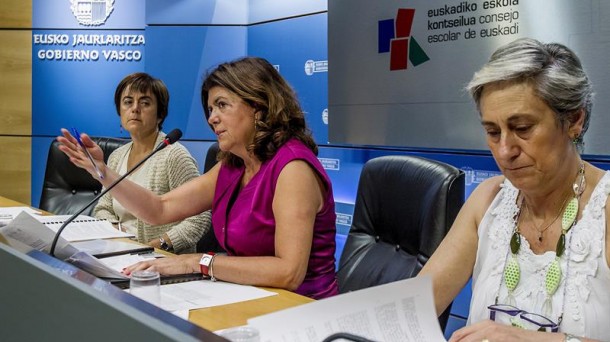
El Consejo Escolar de Euskadi ha presentado un informe sobre la educación en Euskadi, que alude a aspectos como la financiación y la planificación del sistema educativo vasco.

El Consejo Escolar de Euskadi ha advertido este viernes, 8 de julio, que un total de 3.800 profesores se jubilarán en los próximos cinco cursos, por lo que ha pedido al Departamento de Educación que haga públicas “lo antes posible” las necesidades de personal y el perfil requerido.

Maite Alonso Arana, la presidenta del citado organismo, ha presentado el Informe sobre la Educación en Euskadi 2013-2015, que alude a aspectos como la financiación y la planificación del sistema educativo vasco.

Alonso ha destacado la “complejidad” del sistema educativo vasco, puesto que el euskera se utiliza para atender a una población que en un 75% es castellano-hablante.

En ese sentido, ha señalado que el alumnado de 2º de la ESO utiliza menos este idioma que los escolares de 4º de Primaria, por lo que deduce que con el paso de los años los estudiantes dejan de utilizarlo fuera del aula.

El informe también recoge que los resultados en euskera y en matemáticas, tanto en 2º de la ESO como en 6º de Primaria, “acumulan porcentajes menores de superación”, por lo que sugiere un “seguimiento especifico en ambos niveles”.

Además, solicita una “atención preferente” para los centros públicos o concertados de perfil socioeconómico más bajo y con alumnos en riesgo de exclusión para “compensar las carencias garantizar el pleno desarrollo de los escolares”.

Por otro lado, esta entidad ve necesario promover un debate sosegado con la participación de los agentes involucrados para poder garantizar el derecho del alumnado a recibir una enseñanza de calidad.

Respecto a las críticas que recibe el alumnado inmigrante ha remarcado que muchos de ellos presentan las mismas características que los autóctonos, los cuales tampoco hablan euskera y pertenecen a familias con nivel socioeconómico bajo.

Fuente de la noticia: http://www.eitb.eus/es/noticias/sociedad/detalle/4222192/3800-profesores-se-jubilaran-proximos-cinco-cursos/

Fuente de la imagen:http://www.eitb.eus/multimedia/images/2016/07/08/1995796/636035810365173357w_foto610x342.jpg

Comparte este contenido:

Portugal: Tribunal dá razão a colégio na guerra contra o Ministério da Educação

Europa/Portugal/10 Julio 2016/Fuente: DN/Autores: Joana Capucho e Pedro Sousa Tavares

Resumen: Los jueces de Braga aprobaron la acción de suspender la orden que limitaba las candidaturas de los contratos de asociacion y alumnos residentes en el municipio donde los colegios funcionan.

Juízes de Braga aceitaram ação para suspender despacho que limitava as candidaturas aos contratos de associação a alunos residentes na freguesia onde os colégios estão implementados

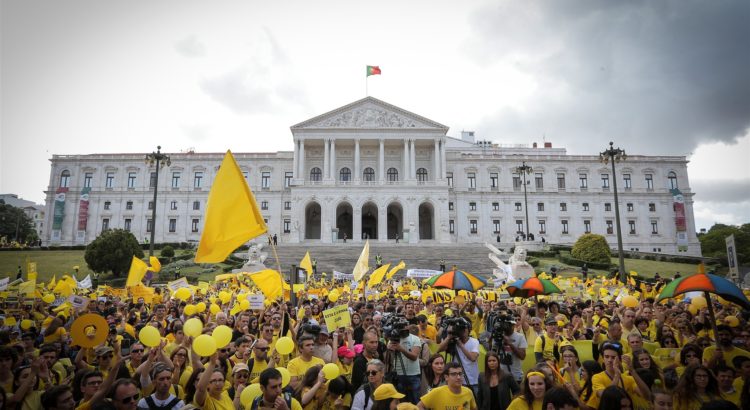
Os colégios ganharam uma batalha na luta com o Ministério da Educação em torno dos contratos de associação. O Tribunal Administrativo e Fiscal de Braga aceitou uma providência cautelar, interposta por um estabelecimento financiado pelo estado, que suspende provisoriamente o despacho que determina que os alunos têm de viver na mesma freguesia onde o colégio está implementado, informou hoje a Associação de Estabelecimentos de Ensino Particular e Cooperativo (AEEP).

O colégio argumentou que o Estado Português «violou as obrigações contratuais assumidas no contrato celebrado que impõe a gratuitidade e a manutenção do financiamento durante todo o período de vigência do contrato» e que o despacho normativo viola de forma clara «os princípios da liberdade de escolha, igualdade e proporcionalidade».

O despacho em causa determina que «a frequência de estabelecimentos de ensino particular e cooperativo com contrato de associação, na parte do apoio financeiro outorgado pelo Estado, é a correspondente à área geográfica de implantação da oferta abrangida pelo respetivo contrato».

Em comunicado, a AEEP explica que o tribunal decidiu suspender a norma porque «sendo do conhecimento comum a necessidade de o processo de matriculas estar finalizado em Julho, por forma a que findo o mês de férias em Agosto, o ano letivo se inicie em condições normais em meados de Setembro», o não decretamento imediato da providência cautelar poderia vir a tornar inútil o processo por o normativo em causa «impedir a possibilidade de se matricularem no estabelecimento de ensino da Requerente os alunos que residem fora daquela área de implantação geográfica».

A AEEP «congratula-se com o sentido desta sentença judicial, esperando que o Ministério da Educação, de boa-fé, respeite a decisão da justiça e, em nome do superior interesse das crianças e suas famílias, revogue de imediato as normas agora suspensas.»
Em maio, o Movimento de Escolas com Ensino Público Contratualizado informou que o Tribunal Administrativo e Fiscal de Coimbra também aceitou uma providência cautelar a favor dos colégios privados, relativamente ao mesmo despacho.

O Ministério da Educação já respondeu, relativizando o impacto da decisão: «Em mais de 20 providências, apenas uma foi decretada provisoriamente, sendo todos os outros pedidos de decretamento provisório – quando foram efetuados – recusados pelos Tribunais», afirmou o gabinete de Tiago brandão Rodrigues. «Para mais, este decretamento só tem impacto para este processo, referindo-se tão somente à aplicação do despacho normativo de matrículas e não a abertura de ciclos».

«Na prática», prossegue o ministério, «o único efeito para o caso concreto é permitir que alunos já inseridos em turmas nos anos anteriores naquele colégio continuem o seu percurso no respetivo ciclo independente da sua origem geográfica, situação que o Ministério da Educação já por diversas vezes tinha afirmado que garantiria. Os tribunais fazem o seu trabalho e o Ministério encara todo o processo com normalidade e tranquilidade», conclui.

A ação, tal como refere o gabinete do ministro, não está relacionada com a decisão do ministério de cortas os contratos de início de ciclo (5.º, 7.º e 10.º anos) em cerca de 40 colégios, ainda que as escolas privadas já tenham confirmado a intenção de recorrer aos tribunais também devido a essa questão.

Fuente de la noticia: http://www.dn.pt/portugal/interior/tribunal-da-razao-a-colegio-na-guerra-contra-o-ministerio-da-educacao-5270858.html

Fuente de la imagen:  http://static.globalnoticias.pt/storage/DN/2016/dn2015_detalhe_topo/ng7245292.jpg

Comparte este contenido:

Libro: Cándido o El Optimismo, del autor Voltaire

Europa /Francia/ Julio del 2016/Reseña/http://www.elresumen.com

En esta célebre fantasía filosófica, el joven Cándido, discípulo del doctor Pangloss -a su vez discípulo de Leibniz, filósofo del optimismo- sufre el infortunio de creer que el nuestro «es el mejor de todos los mundos posibles».

Tras numerosas desventuras, se retira junto a sus compañeros a orillas de la Propóntide, en donde descubre que el secreto de la felicidad reside en  «cultivar nuestro huerto».

Cándido, quizás el relato mas famoso de Voltaire, es una novela de aprendizaje, y su héroe un optimista que cree a pies juntillas que el mundo es un paraíso, a pesar que, desde la primera línea, la realidad se encarga de negarlo.

La estructura tiene un hilo conductor claro: el viaje; los vientos de la vida llevan de aquí para allá a Cándido, convertido en un juguete del destino que recorre un mundo estragado por catástrofes naturales, por designios humanos y, sobre todo, por las religiones.

Voltaire ataca, con ironía y sarcasmo, la intolerancia, el fanatismo, los abusos de la colonización europea en América, los engaños y artificios sociales, y las matanzas de las guerras.

 Acerca del autor:

Voltaire fue escritor y filósofo, la figura intelectual dominante de su siglo. Ha dejado una obra literaria heterogénea y desigual, de la que resaltan sus relatos y libros de polémica ideológica.

Género: Clásicos Universales / Novelas / Ficción y Literatura

Idioma: Español

Fuente:http://www.elresumen.com/libros/candido_o_el_optimismo.htm

fuente Imagen:http://www.elresumen.com/libros/candido_o_el_optimismo.jpg

Comparte este contenido:

Reino Unido: The Think Project, Brexit and the urgent need for better citizenship education

Europa/Reino Unido/Julio 2016/Autor: Rocio Cifuentes  / Fuente: opendemocracy.ne

Resumen: The Think Project in Gales, que nace de un proyecto para combatir el naciente extremismo islámico, demuestra que la discusión abierta puede aprovechar eficazmente a los jóvenes en riesgo de las ideologías de extrema derecha.

Last Friday’s momentous decision by the majority of the voting UK population to leave the EU was shocking, but, in retrospect, not surprising. It is now glaringly obvious that too many people for too long have been without prospects, without education and without hope. For these people, the benefits of the EU – including the possibility to live and work in one of 27 countries, or the many jobs it funded, were simply never considered as relevant or accessible to them. The imagined disadvantages however – of too many immigrants, and EU bureaucracy – were shouted out to them daily for more than a decade through the populist mainstream media, and legitimised more recently by opportunist mainstream politicians anxious to seem in touch with their concerns.

Indeed Brexit is just a moment on a journey which arguably began after the terrorist attacks in New York on 9/11 and London on 7/7. This is when historical dichotomies of east vs west and narratives of anti-Islam were energetically revived, quickly evolving into anti-anyone-who-looks-Muslim as we saw with the mistaken killing of the Brazilian Jean DeMenezes on the London underground. The global financial crash and acceleration of austerity measures in the UK offered the perfect storm in which foreigners, asylum seekers and Muslims could all be blamed for ‘taking all the jobs and all the houses’.

Preventing extremism with dialogue
In this UK context of increasing racism, xenophobia and Islamophobia, the Ethnic Youth Support Team – a charity established in 2005 to support young ethnic minorities living in Wales – saw a need to do something more practical than simply support victims of, or condemn or report racist hate crime. We knew from our experience delivering projects to address Islamist extremism that young people’s resilience can be increased by simply allowing them to air their grievances and concerns in a safe and respectful environment, coupled with giving them facts and ideas to counter extremist narratives. We also knew, from 10 years of working with a wide range of young people that, given the time, space and opportunity, most have a huge capacity to learn and to change.

Consequently, we developed the ‘Think Project’ – a practical educational programme designed to engage with and educate the most ‘disadvantaged’ young people. These are arguably those most vulnerable to far-right messages, and they include those excluded from mainstream schools in alternative education, and those in the youth offending system, youth prisons, and so on. It was designed as a three-day educational programme giving young people the truth about immigration, about asylum and about Muslims, and changing their views on these issues for the better.

Delivered by ethnically diverse and engaging youth workers, its uniqueness stems from the fact that it combines facts about immigration, Islam and asylum, with a positive first-hand experience of diversity. Also central to its success is its emphasis on open dialogue and debate, allowing young people to say openly how they really feel about migration and Muslims, before those views can be debated and challenged.

The proof of the pudding is in the eating
Following a successful pilot, the Think Project was funded by the Big Lottery Innovation Fund, and between 2012 and 2015 438 young people completed the three-day programme. The project’s formal evaluation found a 95% success rate in radically changing young people’s views from being anti to pro-diversity. As one young man from Merthyr Tydfil said: “I’ve always been a bit racist, I’m not gonna lie, but this project has changed the way I look at things, I see everything completely differently now – it’s changed my life”.

What stood out was the degree of misconception surrounding the issues of immigration, asylum and Islam. At the beginning of the programme, 96% of young people did not know what an asylum seeker was, and those who tried to define it understood it as ‘someone who comes here to take our jobs and benefits’. By the end 83% did know what the term meant, and could link it to the human right to be offered sanctuary from war and persecution. One of the most valued parts of the programme, which was mentioned repeatedly by project participants, was the opportunity to meet and hear first-hand the experiences of someone who had sought asylum in the UK, which they said was something they would never forget.

Crucially, and illuminatingly in light of the Brexit decision, the vast majority of young people grossly overestimated the number of people from a different ethnic background to themselves living in Wales – over half of the young participants estimated that this was more than 50%, and about a quarter thought it was over 75%. By the end of the programme 89% correctly put the figure at under 10%. Distorted perceptions of reality chime perfectly with the message of the Brexiteers; the UK is being over-run with immigrants, who are here to take jobs, houses and benefits, and that we are indeed at a ‘breaking point’. However, our programme shows that given the opportunity to learn the facts, and given a positive first-hand experience of meeting and talking to Muslims and refugees, all this can be changed, making these young people significantly more resilient to the messages and ideology of far-right extremists.

The shame is not that the popular press has been allowed to peddle these myths and misrepresentations for so many years, nor that opportunist politicians have capitalised and exploited these stereotypes, turning vulnerable groups into scapegoats for austerity. No, the greatest shame has been that educational institutions, charged with giving young people the tools to become positive and active contributors to society, have failed to give such a large proportion of young people a clear understanding some of the biggest issues and challenges facing contemporary societies. And of course there have been personal tragedies and victims along the way, including most recently the murder of MP Jo Cox at the hands of a far-right terrorist. If we are to avoid more tragic murders, we need to stop such home grown terrorism in its tracks, and prevent it from taking root in the minds and hearts of our young people.

Citizenship, diversity and democracy all need to become core parts of the national curriculum taught to all young people at every stage of their education. However this should not be the preserve of the high-flying elite. Such programmes rather need to reach out in a more targeted and proactive way to those young people who arguably need it the most, including those who miss out on mainstream schooling, and whose life prospects are limited due to other complex factors linked to poverty and deprivation.

There are much wider challenges involved in addressing the entrenched and inter-generational poverty facing many young people today, and it is no wonder that many feel aggrieved. However, it is essential that schools and educational institutions in particular work proactively to counter and challenge the anti-immigrant and anti-Muslim narratives which have been enjoying a resurgence in the UK and across Europe in recent years, and equip young people to question and critique the media, politicians and extremist groups.

The Think Project is one example of such an approach which has been shown to be effective.

Fuente de la noticia: https://www.opendemocracy.net/rocio-cifuentes/think-project-brexit-and-urgent-need-for-better-citizenship-education

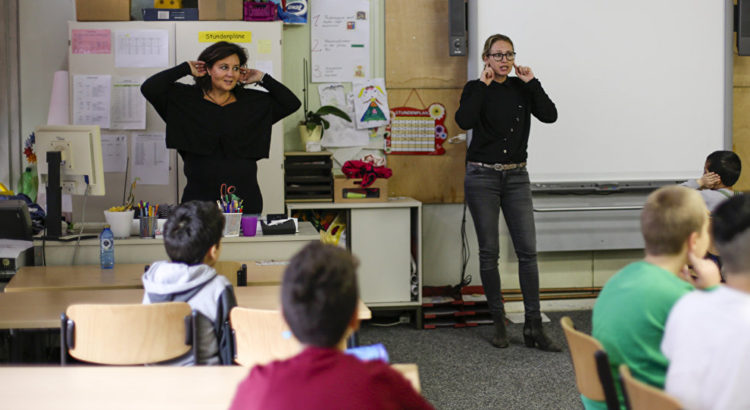
Fuente de la imagen: https://cdn.opendemocracy.net/files/u555228/PA-7708644_920.jpg

Comparte este contenido:
Page 1408 of 1648
1 1.406 1.407 1.408 1.409 1.410 1.648